Which of the following mechanisms best explains the contraceptive effect of birth control pills that contain both synthetic estrogen and progestin?
Which of the following surgical sterilization procedures, if performed in a woman, leaves no potential for reversal?
What is the amount of estrogen in Mala D?
Which of the following is NOT a contraindication to the use of combined oral contraceptives?
All of the following are beneficial effects of oral contraceptive pills, EXCEPT:
Which of the following statements regarding DMPA is FALSE?
What is the iron content of the MALA-D contraceptive?
What is the recommended dose of levonorgestrel for emergency contraception?
All of the following are non-contraceptive benefits of oral contraceptive pills except?
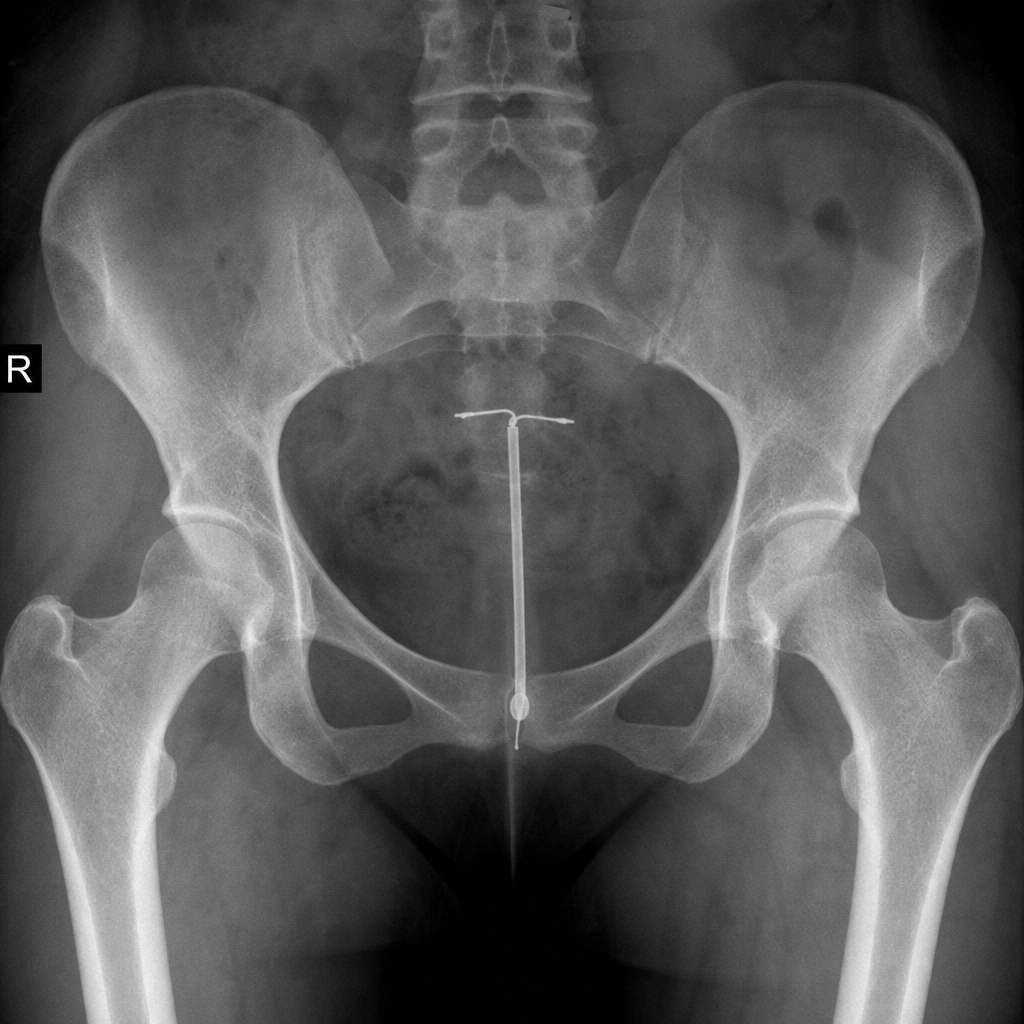
Which of the following is NOT a mechanism by which an Intrauterine Contraceptive Device (IUCD) acts as a contraceptive?
Explanation: **Explanation:** The primary mechanism of action of Combined Oral Contraceptive Pills (COCPs) is the **inhibition of ovulation** via negative feedback on the hypothalamic-pituitary-ovarian axis. 1. **Why Option B is Correct:** * **Progestin component:** This is the most critical factor. It suppresses the secretion of Luteinizing Hormone (LH), thereby preventing the **LH surge** necessary for ovulation. * **Estrogen component:** It suppresses Follicle Stimulating Hormone (FSH) secretion, which prevents the recruitment and selection of a dominant follicle. Together, they ensure the ovaries remain in a quiescent state. 2. **Why Other Options are Incorrect:** * **Option A:** Oocyte maturation is arrested in prophase I since fetal life; COCPs do not directly interfere with this cellular process but rather prevent the release of the egg. * **Option C:** COCPs do not produce "toxic" secretions. Instead, progestins cause the cervical mucus to become thick and viscous, creating a physical barrier to sperm penetration. * **Option D:** While COCPs do affect the endometrium, they cause **atrophic/hypoplastic** changes (making it thin and unreceptive), not hyperplastic changes. Hyperplasia is typically a result of unopposed estrogen. **High-Yield Clinical Pearls for NEET-PG:** * **Primary Mechanism:** Inhibition of ovulation (LH surge suppression). * **Secondary Mechanisms:** Thickening of cervical mucus (hostile to sperm) and endometrial atrophy (prevents implantation). * **Pearl:** If a patient misses a pill, the risk of "escape ovulation" increases because FSH levels rise, leading to follicular development. * **Drug Interaction:** Rifampicin is a potent enzyme inducer that decreases the efficacy of COCPs, necessitating additional contraception.
Explanation: **Explanation:** The goal of surgical sterilization is to prevent the union of the ovum and sperm. The potential for reversal (tubal re-anastomosis) depends on the preservation of the **fimbriae** and the length of the healthy fallopian tube remaining. **Why Fimbriectomy is the correct answer:** Fimbriectomy (Kroener’s technique) involves the complete surgical removal of the distal end of the fallopian tube, including the fimbriae. Since the fimbriae are essential for "picking up" the ovum from the ovary, their removal results in **permanent and irreversible** sterility. There is no distal segment left to re-attach, making surgical reversal impossible. **Analysis of Incorrect Options:** * **A. Pomeroy Method:** This is the most common technique. A loop of the mid-segment of the tube is ligated and excised. Because the distal (fimbrial) and proximal segments are preserved, it has the **highest success rate for reversal** via microsurgical tubal re-anastomosis. * **B. Aldridge’s Method:** This is a "temporary" sterilization technique where the fimbrial end is buried under the broad ligament or into a pouch in the peritoneum. It is designed to be reversible by simply freeing the fimbriae. * **C. Madlener Operation:** This involves crushing a loop of the tube and ligating it with non-absorbable suture without excision. While it has a higher failure rate (re-canalization), the anatomical structures remain intact, allowing for potential reversal. **High-Yield Clinical Pearls for NEET-PG:** * **Most common method used:** Pomeroy’s Method (due to simplicity and reversibility). * **Most common cause of failure:** Spontaneous re-canalization or formation of a tuboperitoneal fistula. * **Ideal time for Postpartum Sterilization:** 24–48 hours after delivery. * **Failure rates (Pearl Index):** Fimbriectomy has a very low failure rate, but the **Irving and Uchida methods** are technically considered the most effective (lowest failure rates) among tubal ligations.
Explanation: **Explanation:** **Mala D** is a combined oral contraceptive pill (COCP) supplied by the Government of India under the National Family Welfare Programme. It is a low-dose monophasic pill designed to provide effective contraception with minimal side effects. 1. **Why 30 μg is correct:** Mala D contains **30 μg of Ethinyl Estradiol** (the estrogen component) and **0.15 mg (150 μg) of Levonorgestrel** (the progestogen component). Modern COCPs are categorized as "low-dose" when they contain less than 50 μg of estrogen, which is sufficient to suppress ovulation by inhibiting FSH while reducing the risk of thromboembolic events. 2. **Analysis of Incorrect Options:** * **50 μg:** This was the dosage in older, "high-dose" pills. These are no longer used for routine contraception due to a significantly higher risk of deep vein thrombosis (DVT) and cardiovascular complications. * **10 μg:** This dose is too low to consistently inhibit the hypothalamic-pituitary-ovarian axis and would result in high failure rates and poor cycle control (breakthrough bleeding). * **80 μg:** Estrogen doses this high are never used in oral contraception; they would be associated with severe hepatotoxicity and thromboembolism. **High-Yield Clinical Pearls for NEET-PG:** * **Mala N vs. Mala D:** Both have the same composition (30 μg Ethinyl Estradiol + 0.15 mg Levonorgestrel). The only difference is that **Mala N is free** of cost at government centers, while **Mala D is subsidized** (D for "Dhamaka" or "Dina" - sold at a nominal price). * **Packaging:** Each pack contains 28 tablets: 21 hormonal pills and **7 brown iron tablets** (containing 60 mg elemental iron as Ferrous Fumarate) to maintain the habit of pill-taking and combat anemia. * **Mechanism:** Primarily works by preventing ovulation (suppressing LH surge) and thickening cervical mucus. * **Centchroman (Chhaya):** Remember that this is the non-steroidal, non-hormonal alternative provided by the government (taken twice weekly for 3 months, then once weekly).
Explanation: **Explanation:** The use of Combined Oral Contraceptive Pills (COCPs) is governed by the **WHO Medical Eligibility Criteria (MEC)**. COCPs contain estrogen, which is associated with an increased risk of thromboembolism, cardiovascular events, and stimulation of certain hormone-sensitive tissues. **Why "Suspected Osteosarcoma" is the Correct Answer:** Osteosarcoma is a primary bone malignancy. Unlike breast or endometrial cancers, bone tumors are **not hormone-dependent**. Therefore, a history or suspicion of osteosarcoma is not a contraindication to COCP use. In fact, COCPs are known to have a protective effect against certain cancers (Ovarian and Endometrial) and have no impact on bone malignancy. **Analysis of Incorrect Options (MEC Category 4 - Absolute Contraindications):** * **Migraine with focal neurological deficit:** Estrogen increases the risk of ischemic stroke. In patients with focal neurological symptoms (aura), the baseline stroke risk is already elevated; COCPs further multiply this risk. * **Coronary Artery Disease (CAD):** Estrogen can promote a pro-thrombotic state and alter lipid metabolism, worsening underlying atherosclerotic disease and increasing the risk of myocardial infarction. * **Diabetes with vascular involvement:** While uncomplicated diabetes is a relative contraindication (MEC 2), diabetes with **nephropathy, retinopathy, neuropathy,** or duration >20 years is an absolute contraindication (MEC 4) due to the high risk of cardiovascular complications. **High-Yield Facts for NEET-PG:** * **MEC Category 4 (Absolute Contraindications):** Smoker >35 years (≥15 cigarettes/day), History of DVT/PE, Breast Cancer (current), Liver Cirrhosis (decompensated), and Hypertension (≥160/100 mmHg). * **Protective Effects:** COCPs reduce the risk of Ovarian cancer, Endometrial cancer, and Benign Breast Disease. * **Drug Interactions:** Rifampicin and Antiepileptics (except Valproate) decrease COCP efficacy by inducing hepatic enzymes.
Explanation: **Explanation:** **Why Option C is the Correct Answer:** Combined Oral Contraceptive Pills (COCPs) do **not** decrease blood pressure; in fact, they are known to cause a mild increase in blood pressure in some women. This occurs because the estrogen component (Ethinyl Estradiol) stimulates the hepatic production of **angiotensinogen**, which activates the Renin-Angiotensin-Aldosterone System (RAAS), leading to sodium and water retention. Hypertension is a known side effect and a relative contraindication for COCP use. **Analysis of Incorrect Options:** * **A. Decreased risk of ectopic pregnancies:** COCPs prevent ovulation. Since no ovum is released, the absolute risk of both intrauterine and ectopic pregnancies is significantly reduced compared to women not using contraception. * **B. Prevention of atherogenesis:** Estrogen in COCPs increases HDL (good cholesterol) and decreases LDL (bad cholesterol), which can have a protective effect against the formation of fatty plaques in the arteries. * **D. Increase in bone density:** The estrogen component inhibits osteoclast activity, thereby reducing bone resorption. Long-term use is associated with higher bone mineral density, offering protection against osteoporosis. **NEET-PG High-Yield Pearls:** * **Protective Effects (The "Big Three"):** COCPs significantly reduce the risk of **Ovarian cancer** (by 50%), **Endometrial cancer** (by 50%), and **Colorectal cancer**. * **Benign Conditions:** They reduce the risk of Pelvic Inflammatory Disease (PID), Benign Breast Disease, and functional ovarian cysts. * **Menstrual Benefits:** They are used to treat menorrhagia, dysmenorrhea, and PCOS. * **Contraindications:** History of Thromboembolism (VTE), undiagnosed vaginal bleeding, breast cancer, and smokers >35 years old.
Explanation: **Explanation:** **1. Why Option D is the Correct (False) Statement:** While Depot Medroxyprogesterone Acetate (DMPA) provides significant protection against **Endometrial Cancer** (due to its progestogenic effect opposing estrogenic stimulation), its role in protecting against **Ovarian Cancer** is not as well-established or significant as that of Combined Oral Contraceptive Pills (COCPs). In the context of standard medical examinations like NEET-PG, the "protective effect against ovarian cancer" is a classic hallmark of COCPs, not primarily DMPA. **2. Analysis of Other Options:** * **Option A (Failure Rate):** The typical use failure rate of DMPA is approximately **3%** (though perfect use is 0.2%). In competitive exams, 3% is the standard figure cited for typical use. * **Option B (Menorrhagia):** DMPA causes endometrial atrophy, leading to amenorrhea in about 50-70% of users after one year. This makes it an excellent therapeutic choice for managing **menorrhagia** and endometriosis. * **Option C (Seizures):** DMPA is the **contraceptive of choice for women with epilepsy**. It has an inherent anticonvulsant effect (raises the seizure threshold) and its metabolism is not significantly affected by enzyme-inducing anti-epileptic drugs, unlike COCPs. **High-Yield Clinical Pearls for NEET-PG:** * **Dose:** 150 mg intramuscularly every 3 months (12 weeks). * **Mechanism:** Primarily inhibits ovulation by suppressing the LH surge. * **Side Effects:** Most common is **irregular bleeding/spotting**; most concerning is a reversible decrease in **Bone Mineral Density (BMD)**. * **Return to Fertility:** There is a characteristic delay in return to fertility (average 7–10 months after the last dose).
Explanation: **Explanation:** Mala-D is a Combined Oral Contraceptive Pill (COCP) provided under the National Family Welfare Programme in India. Each cycle pack contains **28 tablets**: 21 hormonal (active) tablets and 7 non-hormonal (placebo) tablets. **1. Why 19.5 mg is correct:** The 7 brown-colored placebo tablets in the Mala-D pack are not empty; they contain **Ferrous Fumarate**. Each of these 7 tablets contains **60 mg of Ferrous Fumarate**, which provides exactly **19.5 mg of elemental iron**. This is included to maintain the habit of daily pill-taking and to supplement iron stores, as many women in the reproductive age group in India suffer from iron-deficiency anemia due to menstrual blood loss. **2. Analysis of Incorrect Options:** * **10 mg:** This is a distracter and does not correspond to standard iron formulations in OCPs. * **29.5 mg:** This is often confused with the elemental iron content of other supplements. * **40 mg:** While some therapeutic iron doses are higher, the standard prophylactic dose in Mala-D remains 19.5 mg elemental iron. **3. High-Yield Clinical Pearls for NEET-PG:** * **Composition of Active Pill:** 0.15 mg Levonorgestrel + 0.03 mg Ethinyl Estradiol. * **Mala-N vs. Mala-D:** Both have the same composition. The only difference is that **Mala-N is free** of cost at government centers, while **Mala-D is subsidized** (social marketing). * **Centchroman (Chhaya):** A non-steroidal, once-a-week pill (Selective Estrogen Receptor Modulator). * **Failure Rate:** The Pearl Index of COCPs with perfect use is 0.1 per 100 woman-years.
Explanation: **Explanation:** The standard of care for emergency contraception using **Levonorgestrel (LNG)**, a synthetic progestogen, is a total dose of **1.5 mg**. **Why Option B is correct:** Current WHO and national guidelines recommend a **single dose of 1.5 mg** taken as soon as possible (ideally within 72 hours, but effective up to 120 hours) after unprotected intercourse. This single-dose regimen is preferred because it ensures better patient compliance and has been proven to be as effective as the split-dose regimen without increasing the incidence of side effects like nausea or vomiting. **Analysis of incorrect options:** * **Option A (0.75 mg single dose):** This is a sub-therapeutic dose and is insufficient to reliably prevent ovulation. * **Option C (Two 0.75 mg doses 12 hours apart):** This was the traditional "Yuzpe-like" progestin-only regimen. While effective, it is no longer the first-line recommendation due to the risk of the patient forgetting the second dose. * **Option D (7.5 mg single dose):** This is an excessively high dose and is not used in clinical practice for contraception. **High-Yield Clinical Pearls for NEET-PG:** * **Mechanism of Action:** Primarily acts by **delaying or inhibiting ovulation** (LH surge suppression). It does *not* disrupt an established pregnancy (not an abortifacient). * **Efficacy:** Effectiveness decreases with time; "the sooner, the better." It also has reduced efficacy in women with a BMI >30 kg/m². * **Failure:** If the patient vomits within **2 hours** of intake, the dose must be repeated. * **Ulipristal Acetate:** A Selective Progesterone Receptor Modulator (SPRM) given as a **30 mg single dose**; it is more effective than LNG, especially between 72–120 hours.
Explanation: **Explanation:** Combined Oral Contraceptive Pills (COCPs) offer several health benefits beyond pregnancy prevention, but they are also associated with specific metabolic and vascular risks. **Why Option D is the Correct Answer:** OCPs **increase** the risk of venous thromboembolism (VTE), rather than decreasing it. The estrogen component (usually Ethinyl Estradiol) increases the hepatic synthesis of clotting factors (II, VII, IX, X) and decreases anticoagulant factors like Protein S and Antithrombin III. This creates a hypercoagulable state, raising the risk of Deep Vein Thrombosis (DVT) and Pulmonary Embolism. **Analysis of Incorrect Options (Non-contraceptive benefits):** * **A. Reduces dysmenorrhea:** OCPs inhibit ovulation and reduce endometrial proliferation. This leads to decreased prostaglandin production, which significantly alleviates menstrual pain and reduces menstrual blood loss (menorrhagia). * **B. Reduces fibroadenomas:** OCPs have a protective effect against benign breast diseases, including fibroadenomas and fibrocystic disease. (Note: They do *not* protect against breast cancer). * **C. Reduces ovarian cancer risk:** This is a high-yield benefit. OCPs reduce the risk of epithelial ovarian cancer and endometrial cancer by approximately 50%. This protection persists for 15–20 years after discontinuing the pill. **High-Yield Clinical Pearls for NEET-PG:** * **Cancer Protection:** OCPs reduce the risk of Ovarian, Endometrial, and Colorectal cancers. However, they may slightly increase the risk of Cervical and Breast cancers. * **PID:** OCPs reduce the risk of Pelvic Inflammatory Disease (PID) by thickening cervical mucus, preventing the ascent of pathogens. * **Ectopic Pregnancy:** By preventing ovulation, OCPs reduce the absolute risk of ectopic pregnancy. * **Contraindication:** OCPs are strictly contraindicated in smokers over 35 years of age due to the synergistic risk of arterial thrombosis (MI/Stroke).
Explanation: **Explanation:** The primary mechanism of action of an Intrauterine Contraceptive Device (IUCD) is to create a **sterile inflammatory response** within the uterine cavity. This environment is toxic to both sperm and the blastocyst. **Why "Inhibits Ovulation" is the correct answer:** IUCDs (both Copper-T and Levonorgestrel-releasing systems like Mirena) act locally within the uterus. They **do not** suppress the Hypothalamic-Pituitary-Ovarian (HPO) axis. Therefore, patients using an IUCD continue to have regular ovulatory cycles. Ovulation inhibition is the primary mechanism of Combined Oral Contraceptive Pills (OCPs) and DMPA injections, not IUCDs. **Analysis of other options:** * **A. Impairs implantation:** The foreign body reaction causes biochemical and histological changes in the endometrium, making it hostile for a blastocyst to implant. * **B. Increases tubal motility:** IUCDs alter the inflammatory milieu and prostaglandin levels, which can increase tubal peristalsis, potentially leading to the premature arrival of the ovum in the uterus before it is ready for fertilization or implantation. * **D. Releases prostaglandins:** The presence of the device stimulates the endometrium to release prostaglandins, which contribute to the spermicidal effect and alter uterine/tubal motility. **High-Yield Clinical Pearls for NEET-PG:** * **Copper-T (Cu-T):** Primarily **spermicidal** (copper ions inhibit sperm motility and viability). It is the most effective **emergency contraceptive** if inserted within 5 days of unprotected intercourse. * **LNG-IUD (Mirena):** Primarily acts by **thickening cervical mucus** (preventing sperm penetration) and causing endometrial atrophy. * **Ideal Candidate:** Multiparous women in a stable monogamous relationship (to minimize PID risk). * **Most common side effect:** Cu-T (Bleeding/Menorrhagia); LNG-IUD (Amenorrhea).
Natural Family Planning Methods
Practice Questions
Barrier Methods
Practice Questions
Hormonal Contraceptives
Practice Questions
Intrauterine Devices
Practice Questions
Emergency Contraception
Practice Questions
Permanent Contraception Methods
Practice Questions
Contraception in Special Populations
Practice Questions
Contraceptive Counseling
Practice Questions
Side Effects and Complications of Contraceptives
Practice Questions
Future Contraceptive Technologies
Practice Questions
Get full access to all questions, explanations, and performance tracking.
Start For Free