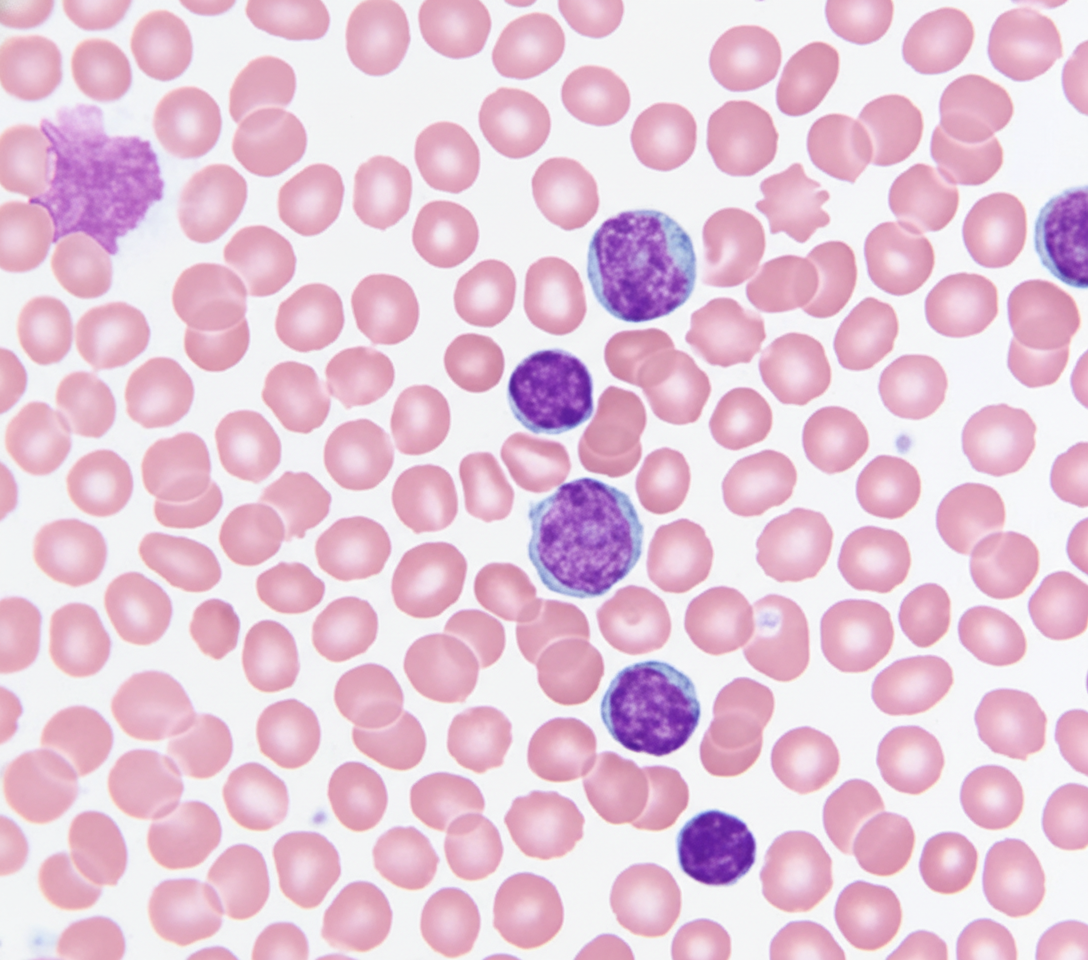
A boy presents with fever, night sweats, and neck swelling. The biopsy of swelling showed a starry sky appearance. What is the most likely genetic abnormality seen in this case?
A 20-year-old male presented with fatigue, weakness, and jaundice. What is the most likely diagnosis?
Which of the following types of leukemia is administered prophylactic methotrexate for CNS prophylaxis –
In acute myeloid leukemia, Auer rods are numerous in which?
Multiple myeloma is characterized by which of the following?
Among the following AML subtypes, non-specific esterase (NSE) staining is typically NEGATIVE in which one?
The most common cause of malignant adrenal mass is:
Which of the following is true regarding carcinoid tumor?
Which of the following is the most common hematologic malignancy associated with Neurofibromatosis-1 (NF-1) in a child?
A 40-year-old patient presents with complains of low back pain and development of pallor. During workup very high levels of urinary beta2 microglobulin was noted. X-ray skull was performed. Bone marrow aspiration shows >10% plasma cells and serum electrophoresis shows M protein >30 g/L. All are useful for management of this patient except?
Explanation: ***MYC*** - The clinical presentation of **fever, night sweats, and neck swelling** in a child, coupled with a **starry sky appearance** on biopsy, is highly suggestive of **Burkitt lymphoma** [2, 3]. - **Burkitt lymphoma** is characterized by a **translocation involving the *MYC* gene** on chromosome 8, most commonly t(8;14), which leads to its overexpression and uncontrolled cell proliferation [1]. *RAS* - Mutations in the **RAS family of genes (HRAS, KRAS, NRAS)** are commonly found in a wide variety of cancers, including **leukemias, pancreatic cancer, and colorectal cancer**. - While *RAS* mutations drive proliferation, they are **not the primary genetic driver** of Burkitt lymphoma, nor are they linked to the characteristic starry sky appearance. *BCR-ABL* - The **BCR-ABL fusion gene**, resulting from the **Philadelphia chromosome (t(9;22))**, is the defining genetic abnormality of **chronic myeloid leukemia (CML)**. - CML presents with different symptoms and a distinct peripheral blood and bone marrow morphology, **not the "starry sky" appearance** seen in Burkitt lymphoma. *p53* - The **p53 tumor suppressor gene** is frequently mutated or inactivated in over half of all human cancers, leading to a loss of cell cycle control and apoptosis. - While **p53 mutations can occur in aggressive lymphomas**, including Burkitt lymphoma, the **primary and characteristic genetic abnormality** associated with Burkitt lymphoma and its presentation is the *MYC* translocation, not solely *p53* mutations. **References:** [1] Kumar V, Abbas AK, et al.. Robbins and Cotran Pathologic Basis of Disease. 9th ed. Neoplasia, pp. 324-325. [2] Kumar V, Abbas AK, et al.. Robbins and Cotran Pathologic Basis of Disease. 9th ed. Diseases of White Blood Cells, Lymph Nodes, Spleen, and Thymus, pp. 605-606. [3] Kumar V, Abbas AK, et al.. Robbins and Cotran Pathologic Basis of Disease. 9th ed. Diseases of White Blood Cells, Lymph Nodes, Spleen, and Thymus, p. 606.
Explanation: ***Acute myeloid leukemia*** - Presents with **fatigue** and **weakness** due to bone marrow infiltration and resultant cytopenias, typical in this age group [1]. - Often shows **myeloblasts** on peripheral blood smear, confirming the diagnosis [2]. *Chronic myeloid leukemia* - Usually occurs in **older adults** and characterized by **elevated white blood cell counts** with a predominance of mature neutrophils. - Symptoms like fatigue may arise, but there are distinct **Philadelphia chromosome** findings and typically a **longer symptom duration**. *Acute lymphoblastic leukemia* - More common in **younger children** and often associated with **lymphadenopathy** and **thrombocytopenia**, rather than fatigue alone. - Characteristically shows **lymphoblasts** in the blood, which are not mentioned in this patient's presentation. *Chronic lymphocytic leukemia* - Typically presents in adults over **50 years** and is characterized by **lymphocytosis** and often asymptomatic in early stages. - Fatigue may occur but lacks the acute presentation and findings seen in **acute leukemias**. **References:** [1] Cross SS. Underwood's Pathology: A Clinical Approach. 6th ed. Common Clinical Problems From Blood And Bone Marrow Disease, pp. 607-608. [2] Kumar V, Abbas AK, et al.. Robbins and Cotran Pathologic Basis of Disease. 9th ed. Diseases of White Blood Cells, Lymph Nodes, Spleen, and Thymus, pp. 621-622.
Explanation: ***ALL*** - **Acute Lymphoblastic Leukemia (ALL)** has a high propensity for **central nervous system (CNS) involvement**, necessitating prophylactic intrathecal methotrexate to prevent CNS relapse [1]. - Prophylactic treatment of the CNS is a standard component of ALL treatment protocols due to the risk of leukemic cell infiltration into the brain and spinal cord [1]. *AML* - **Acute Myeloid Leukemia (AML)** has a lower incidence of CNS involvement compared to ALL, so prophylactic CNS treatment is generally not routine unless specific risk factors are present. - While CNS involvement can occur in AML, it is more commonly treated with systemic chemotherapy that has CNS penetration or intrathecal treatment only when CNS disease is confirmed. *CLL* - **Chronic Lymphocytic Leukemia (CLL)** rarely involves the CNS, and prophylactic CNS treatment is not part of standard management. - When CNS involvement does occur in CLL, it is an aggressive, late-stage complication and typically requires specific, targeted therapy rather than prophylaxis. *CML* - **Chronic Myeloid Leukemia (CML)** has an extremely low risk of CNS involvement, especially in the chronic phase, and therefore, prophylactic CNS treatment is not administered. - CNS involvement in CML is usually seen during a blast crisis and is rare, making prophylaxis unnecessary.
Explanation: ***M3*** - In acute myeloid leukemia (AML), **M3 subtype (promyelocytic leukemia)** is characterized by a high number of **Auer rods** in the leukemic cells [1][2]. - These *Auer rods* play a significant role in the diagnosis of this specific type of AML and are often associated with a **hypergranular promyelocyte** morphology [1]. *M5* - M5 is known as **acute monocytic leukemia**, which primarily features **monoblasts** and lacks Auer rods. - The predominant findings are **extramedullary infiltration** and a higher incidence of **gum hypertrophy**. *M2* - M2 refers to **acute myeloblastic leukemia** that does demonstrate some Auer rods, but not in as significant numbers as seen in M3 [2]. - This subtype is characterized by both **myeloblasts** and **maturation** into more differentiated cells, leading to varied morphology. *M4* - M4 is defined as **acute myelomonocytic leukemia**, which may have **myeloid and monocytic blasts** but usually has fewer Auer rods compared to M3. - It often presents with features of both **myeloid and monocytic lineages**, which differ from the Auer rod prominence in M3. **References:** [1] Kumar V, Abbas AK, et al.. Robbins and Cotran Pathologic Basis of Disease. 9th ed. Diseases of White Blood Cells, Lymph Nodes, Spleen, and Thymus, pp. 621-622. [2] Kumar V, Abbas AK, et al.. Robbins and Cotran Pathologic Basis of Disease. 9th ed. Diseases of White Blood Cells, Lymph Nodes, Spleen, and Thymus, p. 620.
Explanation: ***Monoclonal gammopathy*** - **Multiple myeloma** is defined by the proliferation of a **single clone of plasma cells** that produce a characteristic **monoclonal immunoglobulin** (M-protein) detected in serum or urine [1]. - This **monoclonal expansion** leads to the accumulation of abnormal, identical **immunoglobulins** or their fragments [2]. *Presence of light chains* - While the presence of **monoclonal free light chains** (either kappa or lambda) is typical in myeloma, this option describes only a component and not the overarching characteristic that defines the disease [2]. - Not all light chain presence indicates myeloma; a **monoclonal proliferation** of these light chains is what is significant. *Bence Jones proteins* - **Bence Jones proteins** are **monoclonal light chains** excreted in the urine, a common finding in multiple myeloma [2]. - However, like the presence of light chains, this is a **consequence** or **manifestation** of the underlying monoclonal gammopathy, not the defining characteristic itself. *Hypergammaglobulinemia* - This term refers to an **elevated total level of immunoglobulins** in the blood, which can be **polyclonal** (diverse antibodies) or **monoclonal** in nature. - In multiple myeloma, the elevation is specifically due to a **monoclonal immunoglobulin**, making "monoclonal gammopathy" a more precise and defining term [1]. **References:** [1] Kumar V, Abbas AK, et al.. Robbins and Cotran Pathologic Basis of Disease. 9th ed. Diseases of White Blood Cells, Lymph Nodes, Spleen, and Thymus, pp. 606-609. [2] Cross SS. Underwood's Pathology: A Clinical Approach. 6th ed. Common Clinical Problems From Blood And Bone Marrow Disease, pp. 616-617.
Explanation: ***Acute Promyelocytic Leukemia (M3)*** - Non-specific esterase (NSE) is **negative** in Acute Promyelocytic Leukemia (M3) because NSE primarily stains cells of the **monocytic lineage**. - M3 is characterized by abnormal **promyelocytes** with heavy granulation, which are granulocytic precursors without monocytic differentiation. - M3 shows strong positivity for **myeloperoxidase (MPO)** instead, which is the characteristic marker for granulocytic lineage. *Acute Myelomonocytic Leukemia (M4)* - NSE staining is **positive** in M4 because this subtype has both myeloid and **monocytic components**. - The monocytic component (≥20% of non-erythroid cells) stains positively with NSE, which helps differentiate it from pure myeloid leukemias. - NSE positivity (inhibited by sodium fluoride) is a key diagnostic feature alongside myeloperoxidase positivity. *Acute Erythroleukemia (M6)* - NSE is typically **negative** in the predominant erythroid component of M6. - The diagnosis of M6 relies on the presence of ≥50% erythroid precursors (which are PAS positive) and ≥20% myeloblasts among non-erythroid cells. - NSE is not a characteristic marker for erythroleukemia. *Acute Monocytic Leukemia (M5)* - NSE staining is characteristically **strongly positive** in M5, which primarily consists of **monoblasts and promonocytes**. - This strong NSE positivity (inhibited by sodium fluoride) is a defining diagnostic feature demonstrating pure monocytic differentiation. - M5 typically shows weak or negative myeloperoxidase, helping distinguish it from other AML subtypes.
Explanation: ***Metastasis from another solid tissue tumor*** - The **most common cause of malignant adrenal masses** is metastasis, often originating from tumors in the **lung, breast, or kidney**. - These metastatic lesions typically present as **bilateral adrenal masses**, which differ from primary adrenal tumors. *Adrenocortical carcinoma* - Although it is a malignant tumor of the adrenal cortex, it is ***less common*** than metastases. - Adrenocortical carcinoma usually presents as a **unilateral adrenal mass** and is often associated with **endocrine symptoms** due to hormone overproduction. *Lymphoma* - Lymphoma can involve the adrenal glands, but it is not as frequent as **metastatic disease**. - It typically results in **enlargement of the adrenal glands** rather than a distinct adrenal mass, which helps differentiate it from other malignancies. *Malignant phaeochromocytoma* - This is a rare neuroendocrine tumor arising from the adrenal medulla and is not common as a cause of adrenal masses. - Phaeochromocytomas are often associated with **hypertension** due to catecholamine secretion, which does not typically apply to most malignant adrenal masses.
Explanation: ### Most common site is lung - Carcinoid tumors are more commonly found in the **gastrointestinal tract**, specifically the appendix and ileum, rather than the lungs [1]. - This statement is false as they can occur in the lungs but are not the most common site overall. ### Potentially malignant tumor - Carcinoid tumors can be classified as **malignant,** especially if they show aggressive behavior or metastasis. - Many carcinoid tumors, particularly those in the gastrointestinal tract, can be **non-functional** and less aggressive [1]. ### Neuroendocrine tumor - Carcinoid tumors are indeed a type of **neuroendocrine tumor**, arising from **neuroendocrine cells**. - This classification emphasizes their origin and potential for secretion of hormones like **serotonin**. ### Associated with serotonin production - Many carcinoid tumors produce **serotonin**, leading to symptoms like **carcinoid syndrome** when they metastasize, particularly to the liver [1]. - This statement is true, indicating their involvement in neuroendocrine secretions.
Explanation: ***Juvenile Myelomonocytic Leukemia (JMML)*** - **JMML** is a myelodysplastic/myeloproliferative neoplasm that is strongly associated with **NF-1** in children, particularly due to mutations in the *NF1* gene. - Children with **NF-1** have a significantly increased risk of developing **JMML** compared to the general pediatric population. *Chronic Myeloid Leukemia (CML)* - While CML can occur in children, it is typically associated with the **Philadelphia chromosome (BCR-ABL1 fusion gene)** and not a common tumor directly linked to NF-1. - **CML** is relatively rare in childhood compared to other leukemias and is not a characteristic complication of NF-1. *Acute Lymphoblastic Leukemia (ALL)* - **ALL** is the most common childhood cancer overall, but its association with **NF-1** is not as specific or strong as that of **JMML**. - While children with NF-1 may have a slightly increased risk of certain cancers, **ALL** is not the *most common* tumor directly linked to NF-1. *Acute Myeloid Leukemia (AML)* - **AML** has a weak association with **NF-1**, particularly specific subtypes, but it is less frequent and less specifically linked than **JMML**. - The direct genetic pathway involving the **NF1 gene** mutation in the development of **AML** is not as clearly defined as it is for **JMML**.
Explanation: ***Melphalan*** - While melphalan is used in **multiple myeloma**, its high-dose application is primarily a conditioning regimen for **autologous stem cell transplantation**, rather than a standalone maintenance or initial therapy, especially in younger patients who are transplant-eligible. - Furthermore, alkylating agents like melphalan are associated with an increased risk of **secondary malignancies**, making their long-term use less favorable in transplant-eligible patients when newer, less toxic agents are available. *Lenalidomide* - **Lenalidomide** is an immunomodulatory drug (IMiD) that is highly effective in the treatment of multiple myeloma, often used in maintenance therapy post-transplant or as part of initial induction regimens. - It works by modulating the immune system and has direct anti-myeloma activity, making it a valuable tool in the management of this patient [1]. *Bortezomib* - **Bortezomib** is a proteasome inhibitor that is a cornerstone of initial induction therapy for transplant-eligible and transplant-ineligible multiple myeloma patients [1]. - It effectively inhibits the break down of cellular proteins, leading to apoptosis of myeloma cells, and is crucial for achieving deep responses. *Autologous transplantation* - Given the patient's age (40 years old) and likely fitness, **autologous stem cell transplantation** is a standard and highly effective treatment option for multiple myeloma, aimed at achieving deep and durable remissions [1]. - It involves harvesting the patient's own stem cells, then administering high-dose chemotherapy (often melphalan) to eradicate myeloma cells, followed by reinfusion of the stored stem cells to rescue hematopoiesis [1].
Get full access to all questions, explanations, and performance tracking.
Start For Free