A hypertensive diabetic patient with microalbuminuria should receive:
A CKD patient develops serum K+ 7.2 mEq/L without ECG changes. Best initial management?
What is the physiological response of the kidney during shock?
Which of the following is not an absolute indication for hemodialysis?
Assertion: ACE inhibitors are contraindicated in bilateral renal artery stenosis. Reason: They cause acute kidney injury by reducing efferent arteriolar tone.
"Tracking" of blood pressure means:
Which of the following antihypertensive drugs is avoided in patients with high serum uric acid levels?
A 40-year-old man with a known case of hypertension presented with multiple episodes of hematuria and loin pain. His elder brother passed away due to a stroke at the age of 40. What is the probable diagnosis based on the clinical presentation?
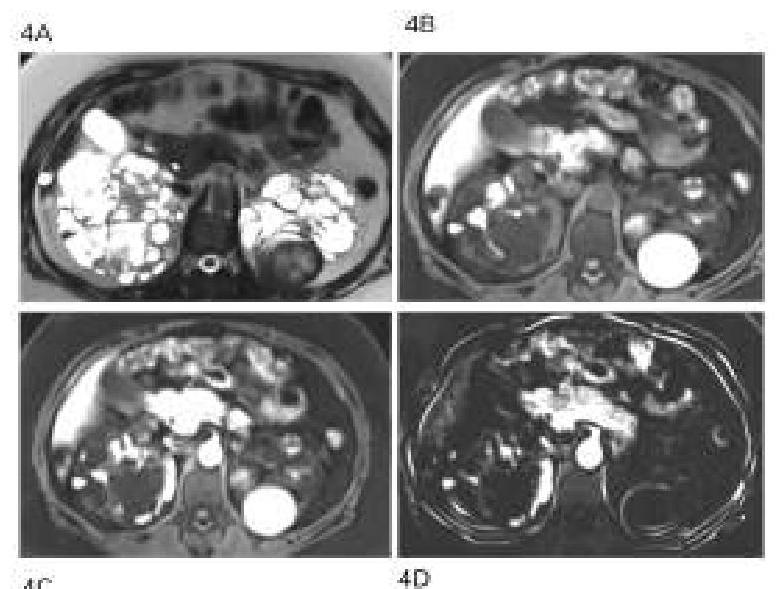
All the following are feature of polycystic disease of kidneys except:-
What is the primary effect of beta blockers in the management of thyroid storm?
Explanation: ***Losartan*** - **Losartan** is an **Angiotensin Receptor Blocker (ARB)**, which is a preferred treatment for hypertension in diabetic patients with microalbuminuria due to its **renoprotective effects**. - ARBs work by blocking the effects of **angiotensin II**, leading to **vasodilation** and a reduction in **glomerular hypertension**, thereby slowing the progression of diabetic nephropathy [2]. *Clonidine* - **Clonidine** is a centrally acting alpha-2 agonist, which can be used for hypertension but is not a first-line agent, especially in diabetic patients with microalbuminuria. - It is associated with side effects such as **sedation** and **rebound hypertension** if discontinued abruptly, and lacks the specific renoprotective benefits of ARBs. *Metoprolol* - **Metoprolol** is a **beta-blocker** that can be used for hypertension but is generally not the first choice for diabetic patients with microalbuminuria due to lack of specific renoprotective effects seen with ARBs [1]. - Beta-blockers can **mask symptoms of hypoglycemia** in diabetic patients and may also worsen **insulin resistance** in some individuals. *Amlodipine* - **Amlodipine** is a **calcium channel blocker** that is effective in lowering blood pressure but does not offer the same **renoprotective benefits** as ARBs in diabetic patients with microalbuminuria. - While safe for use in diabetics, it does not specifically address the underlying **glomerular hyperfiltration** associated with early diabetic kidney disease.
Explanation: **Calcium gluconate** - **Calcium gluconate** is the best initial management for severe hyperkalemia, particularly when the potassium level is very high (above 6.5 mEq/L) even without ECG changes [1]. It acts quickly to directly stabilize the cardiac membrane by **antagonizing the effects of potassium on myocardial excitability**, thereby preventing life-threatening arrhythmias [1]. - It provides immediate cardioprotection, buying time for other therapies to shift potassium into cells or remove it from the body. *Emergency dialysis* - While **dialysis** is the most effective way to remove potassium from the body, it is typically reserved for cases of severe, refractory hyperkalemia, or when other therapies have failed [3]. - It is not the *initial* management for immediate cardiac stabilization, especially if no ECG changes are present and calcium can be administered more rapidly. *Sodium polystyrene* - **Sodium polystyrene sulfonate (Kayexalate)** is a potassium-binding resin that works in the gastrointestinal tract to exchange sodium for potassium, thus removing potassium from the body. - Its onset of action is slow (hours to days), making it inappropriate for acute, severe hyperkalemia requiring immediate intervention. *Insulin with glucose* - **Insulin with glucose** therapy promotes the intracellular shift of potassium, temporarily lowering serum potassium levels [2]. - While effective, its onset of action is typically 15-30 minutes, and it functions as a temporary measure to redistribute potassium, not to acutely stabilize the cardiac membrane, which is the primary concern when potassium is severely elevated.
Explanation: ***Renal blood flow decreases*** - During shock, the **primary and most fundamental** physiological change affecting the kidney is a marked **reduction in renal blood flow (RBF)**. - Shock triggers intense **sympathetic activation** and **renin-angiotensin system (RAS) activation**, causing preferential **vasoconstriction** of renal vessels to redirect blood to vital organs (brain, heart). - RBF can drop to as low as **20-30% of normal** in severe shock, making this the hallmark renal response. - This reduction in RBF is the **upstream event** that triggers all other renal changes during shock. *Perfusion of kidney decreases* - While technically correct, "decreased perfusion" is **essentially synonymous** with decreased blood flow in this context. - The term "renal blood flow" is the **standard physiological terminology** used in medical literature to describe this phenomenon, making it the more precise answer. *Afferent arteriole resistance increases* - This is a **mechanism** by which RBF decreases, not the overall response itself. - Increased afferent arteriolar resistance is **secondary** to sympathetic activation and angiotensin II effects during shock. - It describes the "how" rather than the "what" of the kidney's response. *GFR decreases* - GFR reduction is a **consequence** of decreased RBF and increased afferent arteriolar resistance. - While clinically important (oliguria/acute kidney injury), it's a **downstream effect** rather than the primary physiological response. - The relationship: ↓RBF → ↓Glomerular hydrostatic pressure → ↓GFR
Explanation: ***GI bleeding*** - While patients on dialysis may experience gastrointestinal bleeding, it is not a direct indication for initiating or continuing **hemodialysis**. - **GI bleeding** in end-stage renal disease (ESRD) patients can be due to various causes and requires specific management of the bleeding itself, not necessarily an alteration in dialysis prescription. *Convulsions* - **Convulsions** in patients with renal failure, especially due to uremia, are a severe manifestation of **uremic encephalopathy**. - This is an absolute indication for **hemodialysis** as it rapidly removes uremic toxins causing central nervous system dysfunction. *Pericarditis* - **Uremic pericarditis**, characterized by inflammation of the pericardium due to accumulation of uremic toxins, is a serious complication of renal failure. - It is an absolute indication for **hemodialysis** to prevent further cardiac complications like cardiac tamponade. *Hyperkalemia of 6.5 mEq/L* - Severe **hyperkalemia** (typically > 6.0-6.5 mEq/L) is a life-threatening electrolyte imbalance that can cause cardiac arrhythmias. - **Hemodialysis** is highly effective in rapidly removing potassium from the body and is an absolute indication, especially if unresponsive to other medical therapies.
Explanation: ***Correct: Both A & R true, R explains A*** - **Assertion is TRUE**: ACE inhibitors are absolutely contraindicated in bilateral renal artery stenosis due to risk of acute kidney injury - **Reason is TRUE**: In bilateral renal artery stenosis, the kidneys depend on **angiotensin II** to maintain GFR by constricting the efferent arteriole - **R explains A**: ACE inhibitors block angiotensin II production → **efferent arteriolar dilation** → drastically reduced GFR → **acute kidney injury (AKI)** - This direct mechanistic link makes the reason a complete explanation of the assertion *Incorrect: A true R false* - While the assertion is true, the reason is also **true** (not false) - ACE inhibitors do reduce efferent arteriolar tone by blocking angiotensin II - This is the precise mechanism causing AKI in these patients *Incorrect: Both A & R true, R doesn't explain A* - Both statements are indeed true, but this option is incorrect because the reason **does explain** the assertion - The mechanism (reduced efferent arteriolar tone → decreased GFR) directly explains why ACE inhibitors are contraindicated - The causal relationship is clear and direct *Incorrect: A false R true* - The assertion is **true**, not false - ACE inhibitors are definitively contraindicated in bilateral renal artery stenosis - This is a well-established clinical contraindication to prevent renal failure
Explanation: ***High blood pressures in children tend to perpetuate in adults*** - **Blood pressure tracking** refers to the phenomenon where an individual's blood pressure percentile rank in childhood tends to be maintained into adulthood. - This means that children with higher blood pressure readings are more likely to have higher blood pressure as adults, increasing their risk for **hypertension** and cardiovascular disease. - This is the **correct definition** of blood pressure tracking in epidemiology. *Controlling high BP with nifedipine* - This describes a **pharmacological intervention** for hypertension, specifically using a calcium channel blocker like nifedipine. - It does not relate to the concept of **blood pressure "tracking,"** which is an epidemiological observation of blood pressure trends over time, not a treatment method. *Pictorial representation of serial blood pressures of an individual* - This describes **blood pressure monitoring** or charting, which is a method of recording and visualizing blood pressure data over time. - While helpful for managing individual blood pressure, it is not the definition of **blood pressure "tracking,"** which refers to the long-term persistence of blood pressure percentile levels from childhood into adulthood. *None of the options* - This option is incorrect because **"High blood pressures in children tend to perpetuate in adults"** accurately defines the concept of blood pressure tracking.
Explanation: ***Hydrochlorothiazide (Correct Answer)*** - **Thiazide diuretics** like hydrochlorothiazide inhibit the sodium-chloride cotransporter in the **distal convoluted tubule**, leading to increased sodium, chloride, and water excretion - These drugs **reduce renal excretion of uric acid** by competing for secretion in the proximal tubule, leading to **hyperuricemia** - Can precipitate or exacerbate **gout attacks** in susceptible patients - Should be **avoided or used with caution** in patients with elevated serum uric acid levels *Enalapril (Incorrect)* - **ACE inhibitor** that blocks conversion of angiotensin I to angiotensin II - Causes vasodilation and reduces aldosterone secretion - Does **not significantly affect uric acid metabolism** - Safe for use in patients with hyperuricemia *Prazosin (Incorrect)* - **Alpha-1 adrenergic blocker** causing vasodilation by blocking alpha-1 receptors in vascular smooth muscle - Mechanism does **not interfere with uric acid excretion or production** - Safe option for patients with elevated serum uric acid *Atenolol (Incorrect)* - **Beta-1 selective adrenergic blocker** that reduces heart rate, cardiac output, and renin release - Does **not have clinically significant impact** on renal uric acid handling - Can be used in patients with hyperuricemia
Explanation: ***Autosomal dominant polycystic kidney disease*** - The patient's presentation with **pain**, **hematuria**, and **hypertension** is typical for **ADPKD**. The family history of a brother dying of a **stroke** at a young age suggests a genetic predisposition to vascular abnormalities, common in ADPKD. - **Cerebral aneurysms**, which can lead to stroke, are a known extranal manifestation of ADPKD, and early onset stroke in a sibling strengthens the diagnosis despite it not being the defining feature of ADPKD itself. *Renal cell carcinoma* - While **hematuria**, **loin pain**, and **hypertension** can be symptoms of renal cell carcinoma, the bilateral nature of the cysts seen in the image and the family history of **early stroke** make ADPKD a more probable diagnosis. - Renal cell carcinoma usually presents as a **unilateral** solid mass, not diffuse cystic changes in both kidneys. *Tuberculosis of the kidney* - Renal tuberculosis would present with symptoms like sterile pyuria, dysuria, and flank pain, but less commonly with the dramatic cystic changes and family history of stroke seen here. - The imaging would typically show cavitary lesions or hydronephrosis rather than widespread bilateral cysts. *Autosomal recessive polycystic kidney disease* - **ARPKD** typically presents in **infancy or childhood** with severe renal failure and liver involvement. - The patient's age (40 years) makes ARPKD highly unlikely, as individuals with this condition rarely survive into adulthood without significant medical intervention.
Explanation: Polycystic kidney disease (PKD) is an autosomal dominant condition where multiple cysts enlarge slowly, compressing and damaging surrounding kidney tissue [1]. ***Erythrocytosis*** - **Polycystic kidney disease (PKD)** typically leads to **anemia** due to reduced erythropoietin production by the damaged kidneys [2]. - **Erythrocytosis** (an abnormally high red blood cell count) is not a common feature of PKD; it is more often associated with conditions like **renal cell carcinoma** or certain chronic hypoxic states. *Renal failure* - **Progressive cyst growth** in PKD eventually destroys functional kidney tissue, leading to a decline in renal function and often culminating in **end-stage renal disease**, which occurs in about 50% of PKD1 patients [1]. - **Renal failure** is a common and serious complication of PKD, necessitating dialysis or kidney transplantation. *Hematuria* - **Cysts in PKD** can rupture into the collecting system, leading to **gross hematuria** (visible blood in urine) or microscopic hematuria [1]. - Trauma to the flank or infection within a cyst can trigger an episode of **hematuria** [1]. *Hypertension* - **Hypertension** is a very common early manifestation of PKD, often preceding any significant decline in glomerular filtration rate. - It results from activation of the **renin-angiotensin-aldosterone system (RAAS)** due to renal ischemia caused by cyst enlargement [1].
Explanation: Detailed management of thyrotoxic crisis (thyroid storm) is a medical emergency where patients should be given propranolol, either oral or intravenous, to manage life-threatening symptoms [1]. ***Provides rapid relief of symptoms*** - Beta blockers primarily address the **adrenergic manifestations** of thyroid storm, such as **tachycardia**, **tremors**, anxiety, and palpitations [1]. - By blocking **beta-adrenergic receptors**, they provide rapid symptomatic relief and reduce cardiovascular stress, without affecting hormone levels [2]. Thyroid hormones normally increase the expression of genes for beta-adrenergic receptors and G-proteins, leading to increased heart rate and force of contraction [2]. *Increases metabolism of thyroxine* - Beta blockers do not increase the **metabolism** or breakdown of thyroxine; their action is primarily on the **peripheral effects** of thyroid hormones. - While some beta blockers like **propranolol** can inhibit the peripheral conversion of T4 to T3, this is a secondary effect and not their primary role in providing rapid symptomatic relief [1]. *Blocks thyroxine receptors* - Beta blockers do not block **thyroxine receptors**; thyroid hormones exert their effects by binding to intracellular receptors, not adrenergic receptors [2]. - Their action is on the **adrenergic system**, which is overstimulated by the high levels of thyroid hormones. *Decreases synthesis of thyroxine* - Beta blockers do not directly decrease the **synthesis of thyroxine** by the thyroid gland. - That action is performed by **antithyroid drugs** like methimazole and propylthiouracil, which inhibit hormone production [1].
Get full access to all questions, explanations, and performance tracking.
Start For Free