Which intervention has shown the highest return on investment in national STI control programs?
A resource-limited setting shows high rates of congenital syphilis despite antenatal screening programs. Lab records show stock-outs and delayed results. Which integrated approach is most cost-effective?
The web-based IT system for case-based surveillance under National Tuberculosis Elimination Programme (NTEP, formerly RNTCP) is
The commonly used theory to predict individual's behaviour regarding preventive health care is:
Which of the following is NOT a side effect of digitalis?
According to Sustainable Development Goal 3 (SDG 3) - 'Ensure healthy lives and promote well-being for all at all ages', what is the target for reducing the global maternal mortality ratio by 2030?
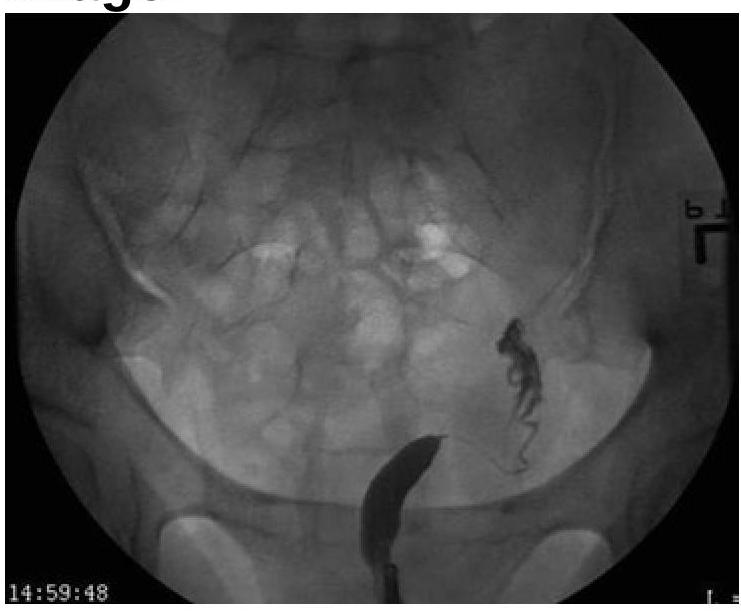
Based on the provided image, which of the following is the correct diagnosis?
In a village, despite health education for oral cancer, people don't follow instructions even after referral. Despite persuasive reminders, people are still reluctant. This best fits under which model:
Which statement best describes the concept of web of causation in disease?
Improving Quality of Labour room is covered under which program?
Explanation: ***Integration with HIV services*** - This approach offers the **highest return on investment** for national STI control programs as it leverages existing infrastructure and funding for HIV services, maximizing resource utilization. - **Syndromic management of STIs integrated with HIV care** allows for efficient screening, diagnosis, and treatment of both conditions simultaneously, reaching high-risk populations effectively. - **India's National AIDS Control Programme (NACP)** successfully demonstrates this model, with STI/RTI services integrated into HIV testing and counseling centers, reducing duplication and operational costs. - **WHO guidelines strongly recommend** this integration strategy as the most cost-effective approach for national STI control programs, particularly in resource-limited settings. *Mobile testing units* - While helpful for reaching underserved populations, **mobile units have high operational costs** including staffing, vehicle maintenance, and equipment, which significantly limit their overall return on investment. - Their effectiveness is often localized and may not provide broad, sustainable impact across an entire national program compared to integrated services. *Online partner notification* - This method's reach is limited by **digital literacy and access barriers**, potentially excluding high-risk groups without internet access, particularly relevant in the Indian context. - While it can improve partner tracing in certain populations, the initial setup costs and limited universal applicability reduce its overall cost-effectiveness compared to integrated clinical services. *Mass media campaigns* - These campaigns require **significant financial investment** for broadcast time and creative development, with outcomes that are difficult to quantify in terms of direct STI reduction. - While effective for raising general awareness, they generate less measurable return on investment for direct STI control services compared to targeted clinical interventions like integrated service delivery.
Explanation: ***Implementation of point-of-care testing with same-day treatment*** - This approach directly addresses **stock-outs** and **delayed results** by providing immediate diagnosis and treatment, significantly reducing the window for mother-to-child transmission. - **Point-of-care testing (POCT)** eliminates the need for complex lab infrastructure and transport, making it highly cost-effective and efficient in resource-limited settings. *Enhanced partner notification only* - While important for controlling syphilis spread, **partner notification alone** does not solve the fundamental issues of delayed diagnosis and treatment for the pregnant woman. - It would not prevent congenital syphilis in cases where the mother's infection is already established and untreated due to diagnostic delays. *Universal prophylactic treatment* - Administering **universal prophylactic treatment** without a confirmed diagnosis is not cost-effective due to unnecessary drug use, potential for antibiotic resistance, and wastage of resources. - It would also not address the underlying systemic issues of screening program failures, only providing a broad, untargeted intervention. *Increased lab capacity with result tracking system* - This option addresses **delayed results** and **stock-outs** but requires significant financial investment in infrastructure, equipment, and personnel, which may not be feasible or as rapid in implementation as POCT. - Even with increased capacity, transport of samples and results can still introduce delays, and the cost-benefit might be lower compared to immediate POCT.
Explanation: ***NIKSHAY*** - **NIKSHAY** is the official web-based IT system used by the National Tuberculosis Elimination Programme (NTEP, formerly RNTCP) in India for **case-based surveillance** and monitoring of TB cases. - Launched in 2012, it facilitates **real-time data entry**, tracking of patient outcomes, drug logistics management, and program monitoring, significantly improving the efficiency of TB control efforts. - It enables **notification of all TB cases**, both from public and private sectors, ensuring comprehensive surveillance. *E-TB Tracker* - **E-TB Tracker** is not the designated IT system for TB surveillance under NTEP in India. - This term may refer to other electronic tracking systems used in different contexts, but NIKSHAY remains the official platform for India's TB programme. *SURAKSHA* - **SURAKSHA** means safety or protection in Hindi and is not associated with any specific web-based IT system for TB surveillance under NTEP. - This is not a recognized TB surveillance platform in the Indian context. *SAFETY-NET* - **SAFETY-NET** is a generic term referring to social protection programs or health support systems. - There is no specific NTEP initiative for TB surveillance identified by this name.
Explanation: ***Health belief model*** - This model is widely used for **predicting preventative health behaviors**, as it focuses on an individual's perceptions of threat and benefits. - It considers factors like **perceived susceptibility, perceived severity, perceived benefits, perceived barriers**, cues to action, and self-efficacy in motivating health actions. *Salutogenic model* - The salutogenic model emphasizes factors that **promote health and well-being**, rather than focusing on disease or risk factors. - It centers around an individual's **sense of coherence**, which is their capacity to comprehend, manage, and find meaning in life's challenges. *Transtheoretical model* - This model describes **stages of change** that individuals go through when modifying a health behavior, such as precontemplation, contemplation, preparation, action, and maintenance. - While useful for understanding behavior change, it is more about the **process of change** rather than predicting initial engagement in preventative care. *Social cognitive theory* - Social cognitive theory emphasizes the role of **observational learning, social experiences, and self-efficacy** in the development of personality and health behaviors. - While it explains how individuals learn and perform health actions, it is not as directly focused on the **cognitive factors influencing preventative care decisions** as the Health Belief Model.
Explanation: **Vasodilatation** - **Digitalis**, primarily digoxin, is known for its **positive inotropic effect**, increasing myocardial contractility, and for its **vasoconstrictive properties** at higher doses due to sympathetic activation and direct smooth muscle effects, not vasodilatation. - While it can indirectly improve cardiac output and thus tissue perfusion, its direct vascular effects do not typically include widespread vasodilatation. *Ventricular tachycardia* - **Digitalis toxicity** can lead to various arrhythmias, including **ventricular tachycardia**, which is a potentially life-threatening side effect. - This occurs due to increased automaticity and delayed afterdepolarizations in ventricular myocytes. *Nausea and vomiting* - **Gastrointestinal symptoms** such as **nausea and vomiting** are common early signs of digitalis toxicity. - These effects are thought to be mediated by the drug's action on the chemoreceptor trigger zone in the brainstem. *Ventricular Bigeminy* - **Ventricular bigeminy**, characterized by alternating normal and premature ventricular beats, is another classic manifestation of **digitalis toxicity**. - This arrhythmia results from enhanced automaticity and altered conduction properties in the ventricles.
Explanation: ***70*** - SDG 3 aims to reduce the **global maternal mortality ratio** to less than **70 per 100,000 live births** by 2030. - This target emphasizes improving maternal health outcomes worldwide and preventing deaths related to pregnancy and childbirth. *100* - While a reduction is sought, a target of 100 per 100,000 live births is **not ambitious enough** to meet the specific goal set by SDG 3. - The established global target is lower, reflecting a greater commitment to maternal health. *50* - A target of 50 per 100,000 live births would be **more ambitious** than the SDG 3 goal. - While desirable, it is not the specific, agreed-upon target for the global average under SDG 3. *90* - A target of 90 per 100,000 live births is **higher** than the established SDG 3 goal. - This value does not align with the specific global maternal mortality ratio target set for 2030.
Explanation: ***Unicornuate Uterus*** - The image distinctly shows **only one fallopian tube and one rudimentary uterine horn** on the right side, indicating a unicornuate uterus. - This malformation results from the **incomplete development of one Müllerian duct**, leading to a single, banana-shaped uterine cavity. *Uterus didelphys* - This condition involves **two completely separate uteri**, each with its own cervix and vagina. - The image does not show evidence of two distinct uterine bodies or cervices. *Bicornuate Uterus* - A bicornuate uterus is characterized by **two uterine horns that fuse caudally**, creating a heart-shaped appearance with a shared cervix. - The image clearly lacks the characteristic heart shape and shows only one functional horn. *Septate uterus* - A septate uterus has a **fibrous or muscular septum** dividing the uterine cavity, while the external uterine contour remains normal. - The image does not show a septum or a normal external uterine contour with an internal division; instead, it presents with a single underdeveloped horn.
Explanation: ***Trans-theoretical model*** - This model emphasizes that individuals move through distinct stages (precontemplation, contemplation, preparation, action, maintenance) when adopting a new behavior. The villagers' reluctance to follow instructions, despite education and reminders, suggests they are likely in the **precontemplation** or **contemplation** stages, where they are either unaware of the problem or are not yet ready to take action. - The model accounts for the **difficulty in behavior change** even with external efforts, as readiness to change is internal and stages are progressive. *Health belief model* - This model focuses on an individual's perception of the **threat of a health problem** and the **pros and cons of taking action**. While education might address perceived susceptibility and severity, the model doesn't fully explain why people remain reluctant even after persuasive reminders, suggesting other factors beyond belief are at play. - It primarily explains *why* individuals might *consider* changing their behavior but not necessarily *how* they progress through the actual change process. *Public health model* - The public health model is a broad framework used to understand and address health issues at a population level, often focusing on **prevention, promotion, and interventions**. While addressing oral cancer in a village fits within this model's scope, it doesn't specifically explain the *individual psychological barriers* to behavioral change, like reluctance despite education and reminders. - This model is more about **strategies and policies** for population health rather than individual behavior change. *Social compliance* - Social compliance refers to individuals conforming to rules or requests from authority figures or social norms. The scenario explicitly states that despite "persuasive reminders," people are "reluctant," indicating a **lack of compliance** rather than an explanation for the behavior itself. - This term describes the *outcome* of behavior in a social context, not the *underlying psychological process* of behavior change over time.
Explanation: ***Considers all relevant factors associated with disease causation.*** - The **web of causation** model acknowledges that diseases often arise from a complex interplay of multiple interconnected factors, rather than a single cause. - It emphasizes that **no single factor is sufficient or necessary** for disease occurrence, but rather a combination of factors increases susceptibility or triggers the disease process. *Applicable primarily to common diseases.* - The web of causation model is a **universal concept** in epidemiology, applicable to both common and rare diseases. - Its utility lies in explaining the complex etiology of diseases regardless of their prevalence. *Focuses on epidemiological ratios.* - While epidemiological ratios (e.g., odds ratios, relative risk) measure associations between factors and disease, the **web of causation** provides a conceptual framework for understanding the *nature* of these associations. - It describes the **interconnections and causal pathways**, not just the statistical strength of association. *Aids in interrupting the transmission of diseases.* - This statement is more descriptive of **public health interventions** based on understanding disease transmission dynamics. - While insights from the **web of causation** can inform interventions, the model itself describes the *etiology* rather than directly outlining methods for interrupting transmission.
Explanation: ***LaQshya*** - **LaQshya (Labour Room Quality Improvement Initiative)** is specifically designed to improve the quality of care in labour rooms and maternity OTs. - Its goal is to reduce preventable maternal and newborn mortality, morbidity, and stillbirths associated with childbirth by implementing **quality improvement interventions**. *Ayushman Bharat Scheme* - This is a national health protection scheme aimed at providing **health insurance coverage** and access to comprehensive primary healthcare services. - While it aims to improve overall health outcomes, it is not a direct program focused solely on **labour room quality improvement**. *JSSK* - **Janani Shishu Suraksha Karyakram (JSSK)** provides **cashless services** to pregnant women and sick infants in public health institutions. - Its focus is on providing financial protection and free services, not on the specific **quality improvement of the physical labour room infrastructure or processes**. *Improving care of newborn* - This is a general objective or a component of broader maternal and child health programs. - It does not refer to a specific, named program focused on **labour room quality improvement** in the way LaQshya does.
Get full access to all questions, explanations, and performance tracking.
Start For Free