What does the Bristol Stool Scale assess?
All the following are features of Wilson's disease except?
What is the main clinical significance of a sliding type hiatus hernia?
A 14-year-old boy presents with difficulty in walking and behavioral disturbances. He recently recovered from prolonged jaundice and has bluish pigmentation over his lunulae. What is the next most appropriate investigation?
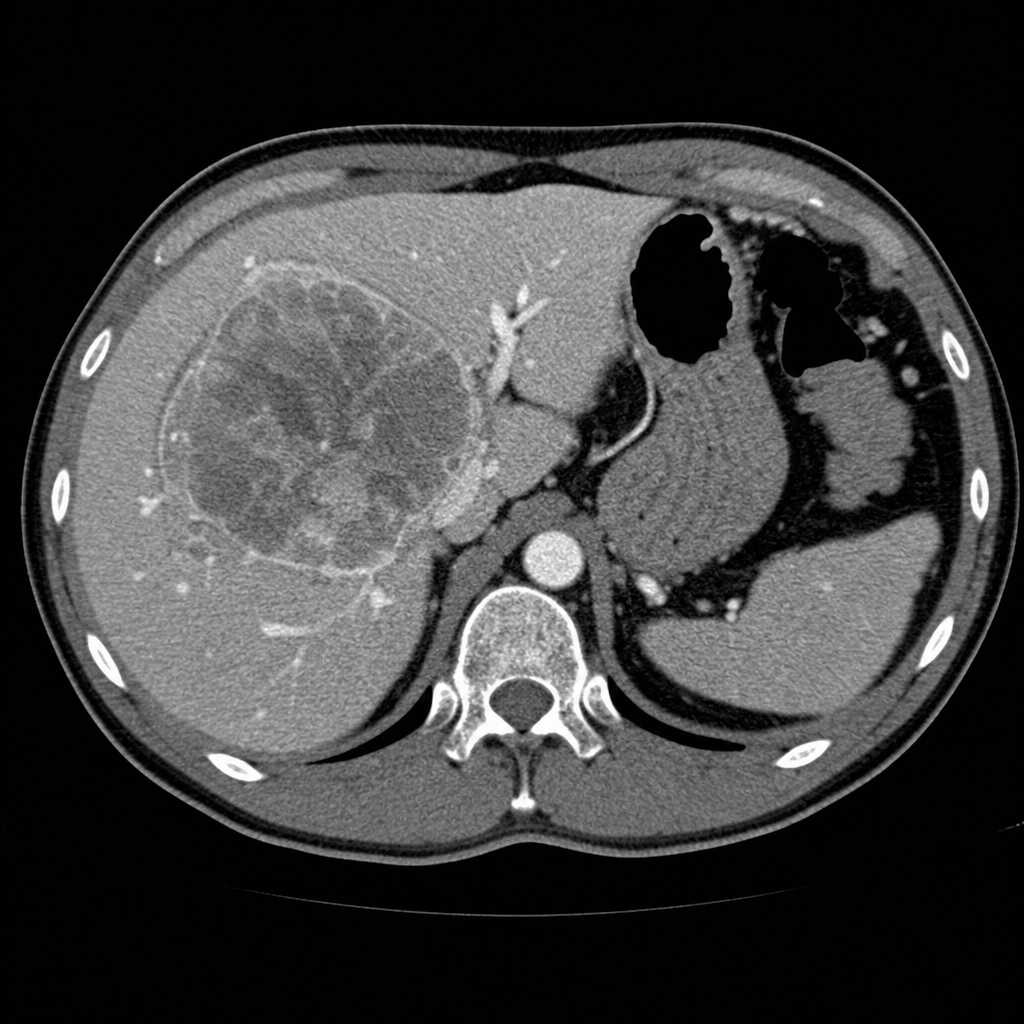
Which of the following is a diagnosis?
What is the minimal amount of fluid detectable as ascites through clinical examination?
Which of the following can be associated with fatty liver, except?
Quadrivalent Meningococcal vaccine is not used for which serotype?
What is true about Plummer-Vinson syndrome?
The MELD score includes all of the following except?
Explanation: **Explanation:** The **Bristol Stool Scale** (or Bristol Stool Chart) is a diagnostic medical tool designed to classify the form of human faeces into seven distinct categories [1]. It was developed at the University of Bristol as a clinical assessment tool to estimate **colonic transit time** [2]. 1. **Why Option A is correct:** The scale assesses **stool consistency** and shape. The transit time (the time it takes for food to pass through the digestive system) determines the amount of water reabsorbed in the colon [2]. * **Types 1–2:** Indicate slow transit (constipation) [1]. * **Types 3–4:** Represent "ideal" stools (especially Type 4), which are easy to pass. * **Types 5–7:** Indicate rapid transit (diarrhea or urgency). 2. **Why other options are incorrect:** * **Option B (Nocturnal enuresis):** Refers to involuntary urination during sleep (bedwetting), usually assessed via history and voiding diaries, not stool scales. * **Options C & D (Mental/Cognitive development):** These are assessed using scales like the **Intelligence Quotient (IQ)**, **Mini-Mental State Examination (MMSE)**, or **Denver Developmental Screening Test (DDST)**. **High-Yield Clinical Pearls for NEET-PG:** * **Type 1:** Separate hard lumps (severe constipation) [1]. * **Type 7:** Watery, no solid pieces (entirely liquid). * **Clinical Use:** It is a key component in diagnosing **Irritable Bowel Syndrome (IBS)** subtypes (IBS-C, IBS-D, or IBS-M) based on the predominant stool form [1]. * **Rome IV Criteria:** Often utilizes the Bristol Stool Scale to standardize patient reporting of bowel habits in functional gastrointestinal disorders.
Explanation: **Explanation:** Wilson’s Disease (Hepatolenticular Degeneration) is an autosomal recessive disorder caused by a mutation in the **ATP7B gene** on chromosome 13. This defect impairs biliary copper excretion and the incorporation of copper into apo-ceruloplasmin. **Why Option B is the Correct Answer:** In Wilson’s disease, the hallmark laboratory finding is **decreased serum ceruloplasmin levels** (typically <20 mg/dL) [2]. Because copper cannot be properly linked to the carrier protein (apo-ceruloplasmin), the resulting ceruloplasmin is unstable and rapidly degraded in the circulation. Therefore, "Increased ceruloplasmin" is incorrect and the right choice for an "except" question. **Analysis of Other Options:** * **A. Increased copper content in liver:** This is the primary pathology. Failure of biliary excretion leads to toxic accumulation of copper in hepatocytes, eventually exceeding 250 μg/g dry weight (Gold Standard for diagnosis). * **C. Mental changes:** Excess copper deposits in the basal ganglia (specifically the putamen). This manifests as neuropsychiatric symptoms, including personality changes, psychosis, tremors, and dystonia [1]. * **D. Features of chronic active hepatitis:** Liver involvement is often the first sign in children/adolescents [1]. It can present as asymptomatic transaminitis, chronic active hepatitis, or progress to cirrhosis. **High-Yield Clinical Pearls for NEET-PG:** * **Kayser-Fleischer (KF) Rings:** Copper deposition in the Descemet’s membrane of the cornea (best seen on slit-lamp exam). * **Diagnosis:** Low ceruloplasmin, high 24-hour urinary copper (>100 μg), and Coombs-negative hemolytic anemia [1]. * **Treatment:** Drug of choice is **Penicillamine** (chelator). Trientine is an alternative. Zinc is used for maintenance as it inhibits intestinal copper absorption.
Explanation: **Explanation:** **1. Why Option A is Correct:** A sliding hiatus hernia (Type I) occurs when the gastroesophageal junction (GEJ) and a portion of the gastric cardia displace cranially through the esophageal hiatus into the posterior mediastinum [1]. This displacement disrupts the **anti-reflux barrier** by: * Abolishing the acute **Angle of His**. * Displacing the Lower Esophageal Sphincter (LES) from the high-pressure zone of the diaphragmatic crura. * Creating a "reservoir" for acid that refluxes easily during inspiration. Consequently, the most significant clinical association is **Gastroesophageal Reflux Disease (GERD)** [1]. **2. Why the Other Options are Incorrect:** * **Option B:** While chronic GERD is a risk factor for Barrett’s esophagus, most patients with a sliding hernia have uncomplicated GERD. Barrett’s is a long-term complication, not the primary clinical significance of the hernia itself. * **Option C:** Dieulafoy’s lesion (a large tortuous submucosal artery) is typically found in the gastric fundus and is not specifically associated with hiatus hernia. However, **Cameron ulcers** (linear erosions) are associated with large hiatus hernias. * **Option D:** Dysphagia is more characteristic of **Paraesophageal hernias (Type II, III, IV)** due to mechanical compression or volvulus [1]. Sliding hernias are usually asymptomatic or present with heartburn. **Clinical Pearls for NEET-PG:** * **Most Common Type:** Sliding hernia (Type I) accounts for >90% of all hiatus hernias. * **Schatzki Ring:** Often associated with sliding hiatus hernias (located at the squamocolumnar junction). * **Saint’s Triad:** Hiatus hernia + Cholelithiasis + Diverticulosis. * **Management:** Asymptomatic sliding hernias require no treatment; symptomatic cases are managed as GERD [1]. Surgical repair (Nissen Fundoplication) is reserved for refractory cases.
Explanation: ### Explanation The clinical presentation of a young patient with **neuropsychiatric symptoms** (difficulty walking, behavioral disturbances) and a history of **liver disease** (prolonged jaundice) is highly suggestive of **Wilson’s Disease** (Hepatolenticular degeneration) [1]. The specific clue in this question is the **bluish pigmentation over the lunulae**, known as **Azure lunulae**. This is a classic, though rare, physical sign of Wilson’s disease caused by copper deposition in the nail bed. **Why Slit Lamp Examination is the correct answer:** In a patient suspected of Wilson’s disease with neurological symptoms, the most important diagnostic step is identifying **Kayser-Fleischer (KF) rings**. These are golden-brown deposits of copper in the **Descemet’s membrane** of the cornea. While they can sometimes be seen with the naked eye, a **slit lamp examination** by an ophthalmologist is the gold standard for detection. KF rings are present in nearly 100% of patients with neurological Wilson’s disease [1]. **Why other options are incorrect:** * **Nail fold capillaroscopy:** Used to evaluate microvascular changes in connective tissue diseases like Systemic Sclerosis or Dermatomyositis. * **Biopsy of the pigmented area:** Azure lunulae are a systemic manifestation of copper overload; a local skin/nail biopsy is non-diagnostic and unnecessary. * **Ankle-brachial pressure index (ABPI):** Used to screen for Peripheral Arterial Disease (PAD), which is irrelevant to this metabolic presentation. ### High-Yield Pearls for NEET-PG: * **Wilson’s Disease Inheritance:** Autosomal Recessive (ATP7B gene mutation on Chromosome 13). * **Initial Screening:** Serum Ceruloplasmin (usually <20 mg/dL) and 24-hour urinary copper (>100 μg/day). * **Gold Standard Diagnosis:** Liver biopsy (quantifying hepatic copper concentration). * **MRI Brain Finding:** "Face of the Giant Panda" sign in the midbrain [1]. * **Treatment:** Chelators (D-Penicillamine, Trientine) or Zinc (to prevent absorption).
Explanation: **Explanation:** The correct answer is **A. Klatskin tumor**. In medical nomenclature, a **Klatskin tumor** is a specific clinical diagnosis referring to a **Hilar Cholangiocarcinoma** [1]. It is a tumor arising from the biliary epithelium at the confluence of the right and left hepatic ducts [1]. It typically presents with painless obstructive jaundice and characteristic imaging findings (dilated intrahepatic ducts with a normal extrahepatic biliary tree). **Analysis of Options:** * **B. Carolicyts:** This is a distractor. The correct clinical entity is **Caroli’s Disease** (a congenital disorder characterized by multifocal cystic dilatation of segmental intrahepatic bile ducts). "Carolicyts" is not a recognized medical term. * **C. Bryler disease:** This is a misspelling of **Byler Disease** (Progressive Familial Intrahepatic Cholestasis Type 1). While Byler disease is a diagnosis, the option provided is technically incorrect due to the spelling error, making Klatskin tumor the more accurate choice in a standard examination format. * **D. Primary sclerosing cholangitis:** While this is a valid diagnosis [2], in the context of this specific question (often sourced from classic MCQ banks), Klatskin tumor is the preferred answer as it represents a specific, localized neoplastic diagnosis. **High-Yield Pearls for NEET-PG:** * **Bismuth-Corlette Classification:** Used to stage Klatskin tumors based on the extent of involvement of the hepatic duct confluence. * **Risk Factors:** Primary Sclerosing Cholangitis (PSC) is the most significant risk factor for developing cholangiocarcinoma. * **Tumor Marker:** **CA 19-9** is the most common marker used for monitoring, though it is not specific. * **Imaging:** MRCP is the gold standard for non-invasive diagnosis of biliary anatomy and obstruction levels.
Explanation: **Explanation:** The detection of ascites on clinical examination depends on the volume of fluid present and the specific physical maneuver used. 1. **Why 300 cc is correct:** While small amounts of fluid (as little as 5–10 mL) can be detected via ultrasonography, the threshold for clinical detection is higher. The **"Shifting Dullness"** maneuver is the most sensitive physical exam finding for detecting free intraperitoneal fluid and typically becomes positive when the volume reaches approximately **300–500 mL**. Therefore, 300 cc represents the minimal clinical threshold. 2. **Analysis of Incorrect Options:** * **600 cc:** While this amount is easily detectable via shifting dullness, it is not the *minimal* amount. * **1 Litre:** This is the approximate volume required to elicit a **"Fluid Thrill"** (or fluid wave). A fluid thrill is more specific but less sensitive than shifting dullness, as it requires a significant amount of tension and volume to transmit the impulse across the abdomen. * **2 Litres:** At this volume, ascites is usually obvious on inspection (distended abdomen, everted umbilicus), far exceeding the minimal detection limit. **High-Yield Clinical Pearls for NEET-PG:** * **Gold Standard for Diagnosis:** Ultrasonography (can detect <10 mL). * **Most Sensitive Sign:** Shifting dullness (requires ~300-500 mL). * **Most Specific Sign:** Fluid thrill (requires ~1000 mL). * **Puddle Sign:** An older technique used for detecting smaller amounts (~120 mL), though it is rarely used in modern practice due to low reliability compared to USG. * **SAAG (Serum-Ascites Albumin Gradient):** The most important diagnostic calculation [1]. SAAG ≥ 1.1 g/dL indicates Portal Hypertension [1].
Explanation: The correct answer is **Chlorpropamide**. Fatty liver, or Steatosis, occurs when lipid accumulation (primarily triglycerides) exceeds the liver's capacity for export or metabolism. This is a common manifestation of drug-induced liver injury (DILI). **Why Chlorpropamide is the correct answer:** Chlorpropamide is a first-generation sulfonylurea used in the treatment of Type 2 Diabetes. Its primary hepatic side effect is **cholestatic jaundice** (due to hypersensitivity or canalicular injury), not steatosis. In fact, by improving glycemic control, it may indirectly reduce metabolic-associated fatty liver disease (MAFLD). **Analysis of Incorrect Options:** * **Amiodarone:** This anti-arrhythmic drug is a classic cause of **macrovesicular steatosis** and "pseudo-alcoholic" hepatitis [1]. It inhibits mitochondrial beta-oxidation and can lead to the formation of Mallory-Denk bodies. * **Zidovudine (AZT):** As a Nucleoside Reverse Transcriptase Inhibitor (NRTI), it causes mitochondrial toxicity by inhibiting DNA polymerase-gamma. This leads to **microvesicular steatosis** and potentially fatal lactic acidosis. * **Sodium Valproate:** This anticonvulsant interferes with mitochondrial fatty acid metabolism (beta-oxidation) [1]. It typically causes **microvesicular steatosis**, especially in children or those with underlying metabolic urea cycle disorders [1]. **High-Yield Clinical Pearls for NEET-PG:** * **Microvesicular Steatosis (High Yield):** Remember the mnemonic **"SAVA"** — **S**alicylates (Reye’s Syndrome), **A**cute Fatty Liver of Pregnancy, **V**alproate, and **A**nti-retrovirals (NRTIs). * **Macrovesicular Steatosis:** Most commonly caused by Alcohol, Obesity, Diabetes, and drugs like **Corticosteroids**, **Amiodarone**, and **Methotrexate** [1]. * **Tetracyclines:** High-dose IV tetracycline is another classic cause of microvesicular steatosis [1].
Explanation: **Explanation:** The correct answer is **Serotype B**. **Why Serotype B is the correct answer:** The standard **Quadrivalent Meningococcal Vaccine (MCV4)** is designed to protect against four specific serotypes of *Neisseria meningitidis*: **A, C, W-135, and Y**. Serotype B is excluded from the quadrivalent formulation because its capsular polysaccharide is structurally similar to human neural cell adhesion molecules (NCAM). This "molecular mimicry" makes the polysaccharide poorly immunogenic and poses a theoretical risk of inducing autoimmunity. Consequently, protection against Serotype B requires a separate vaccine (e.g., MenB-4C or MenB-FHbp) which uses **recombinant proteins** rather than capsular polysaccharides. **Analysis of Incorrect Options:** * **Options A, C, and D (Serotypes A, C, and Y):** These are all integral components of the quadrivalent vaccine. Along with Serotype W-135, these serotypes have distinct capsular polysaccharides that are highly immunogenic when conjugated to a carrier protein (like diphtheria toxoid), providing effective long-term immunity. **High-Yield Clinical Pearls for NEET-PG:** * **Composition:** Quadrivalent vaccines (Menactra, Menveo) cover **A, C, W, Y**. * **Indication in GI/Medicine:** Vaccination is mandatory for patients with **functional or anatomic asplenia** and those on **Complement inhibitors** (e.g., Eculizumab for PNH), as they are at a 1,000-fold increased risk of meningococcemia. * **Serotype B Vaccine:** Specifically recommended during outbreaks or for high-risk groups (asplenia, complement deficiency) in addition to the quadrivalent vaccine. * **Travel Medicine:** Vaccination is a prerequisite for Hajj pilgrims (specifically targeting A, C, W, Y).
Explanation: **Plummer-Vinson Syndrome (PVS)**, also known as Paterson-Brown-Kelly syndrome, is characterized by the classic triad of **iron deficiency anemia (IDA), dysphagia, and esophageal webs.** ### **Explanation of Options** * **Correct Answer (C): Post-cricoid carcinoma is common.** PVS is considered a **premalignant condition**. The chronic nutritional deficiency leads to mucosal atrophy in the hypopharynx and upper esophagus. This predisposes patients to **Squamous Cell Carcinoma**, specifically in the **post-cricoid region**. Regular endoscopic surveillance is mandatory for these patients. * **Option A & B:** While PVS is associated with iron deficiency, the anemia is specifically **Microcytic Hypochromic Anemia** (due to IDA). While "Microcytic hypochromic anemia" is a feature of the syndrome, in the context of NEET-PG "Single Best Answer" questions, the **prognostic significance** (malignant potential) or the **pathognomonic triad** is prioritized. However, if this were a "Multiple Correct" format, A and D would also be true. * **Option D:** Esophageal webs are a defining feature, typically located in the **post-cricoid/upper esophagus**. ### **High-Yield Clinical Pearls for NEET-PG** 1. **Demographics:** Most common in middle-aged Caucasian women (4th–7th decade). 2. **The Triad:** 1. Iron Deficiency Anemia, 2. Dysphagia (painless, progressive for solids), 3. Cervical Esophageal Webs. 3. **Physical Findings:** Glossitis (smooth red tongue), Koilonychia (spoon-shaped nails), and Cheilosis. 4. **Diagnosis:** **Barium Swallow** is the best initial test to visualize the web (seen as a thin projection from the anterior wall). 5. **Treatment:** Iron supplementation often resolves the dysphagia; mechanical dilation is used for persistent webs. 6. **Key Association:** Increased risk of **Squamous Cell Carcinoma** of the esophagus and pharynx.
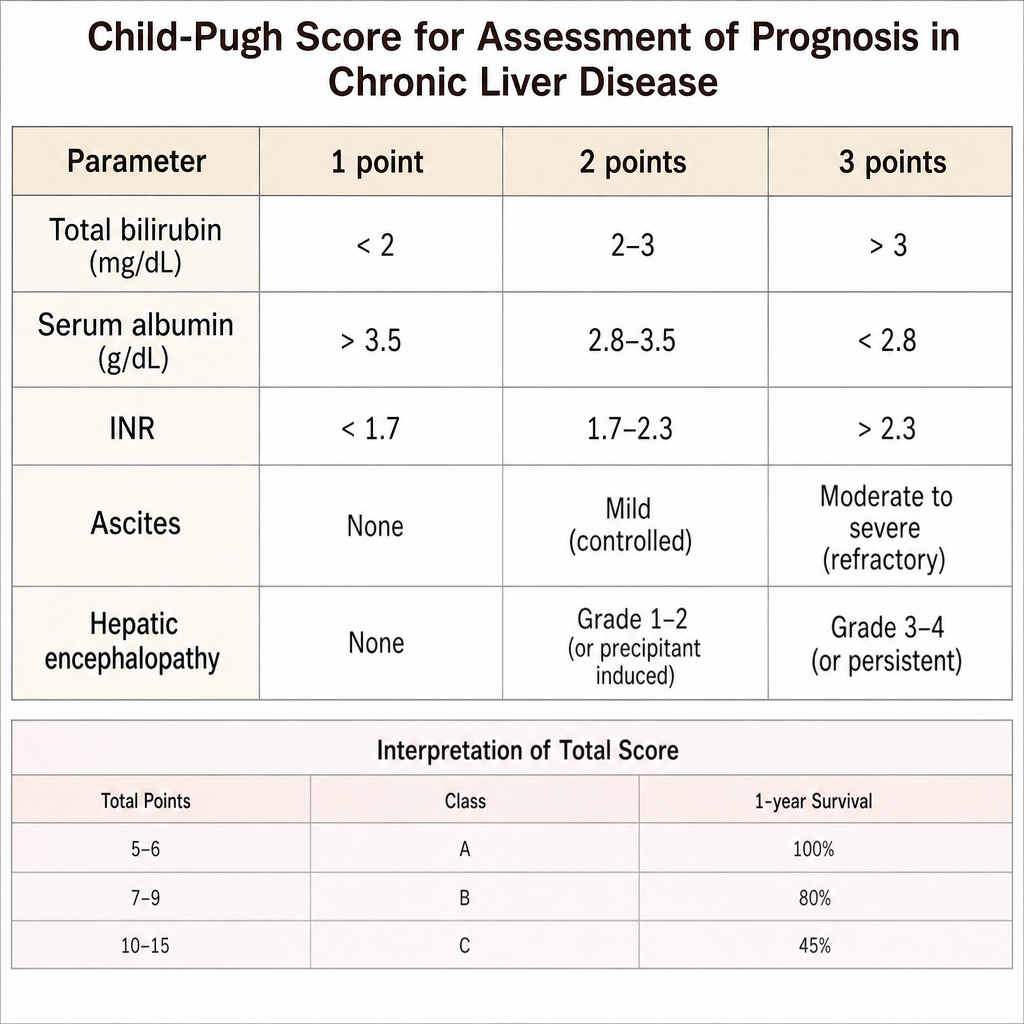
Explanation: **Explanation:** The **MELD (Model for End-Stage Liver Disease)** score is a validated scoring system used to predict the 3-month mortality in patients with chronic liver disease and is primarily used for prioritizing organ allocation for liver transplantation [1]. **Why Serum Albumin is the correct answer:** Serum albumin is **not** a component of the MELD score. While albumin is a marker of the liver's synthetic function and is included in the **Child-Pugh Score**, it was excluded from the MELD calculation because its levels can be easily influenced by external factors such as intravenous albumin infusion or nutritional status [2]. **Analysis of other options:** The original MELD score is calculated using a logarithmic formula involving three objective laboratory variables: * **Serum Bilirubin (Option A):** Reflects the liver's excretory function. * **Serum Creatinine (Option B):** Reflects renal function, which is a critical prognostic indicator in end-stage liver disease (e.g., Hepatorenal Syndrome) [1]. * **INR / Prothrombin Time (Option C):** Reflects the liver's synthetic function (specifically coagulation factors) [3]. Note: The formula specifically uses **INR**, which is derived from Prothrombin Time. **High-Yield Clinical Pearls for NEET-PG:** 1. **MELD-Na:** The modern version of the score now includes **Serum Sodium**, as hyponatremia is a strong independent predictor of mortality in cirrhotic patients. 2. **MELD vs. Child-Pugh:** Remember the mnemonic **"ABCDE"** for Child-Pugh: **A**lbumin, **B**ilirubin, **C**oagulation (INR), **D**egree of Ascites, and **E**ncephalopathy. 3. **Range:** MELD scores range from **6 to 40**; a higher score indicates a higher risk of death. 4. **PELD Score:** Used for children under 12 years; it includes Albumin and Growth Failure instead of Creatinine.
Esophageal Disorders
Practice Questions
Peptic Ulcer Disease
Practice Questions
Inflammatory Bowel Disease
Practice Questions
Irritable Bowel Syndrome
Practice Questions
Malabsorption Syndromes
Practice Questions
Pancreatitis (Acute and Chronic)
Practice Questions
Gastrointestinal Bleeding
Practice Questions
Liver Diseases and Cirrhosis
Practice Questions
Viral Hepatitis
Practice Questions
Biliary Tract Disorders
Practice Questions
Gastrointestinal Motility Disorders
Practice Questions
Gastrointestinal Malignancies
Practice Questions
Get full access to all questions, explanations, and performance tracking.
Start For Free