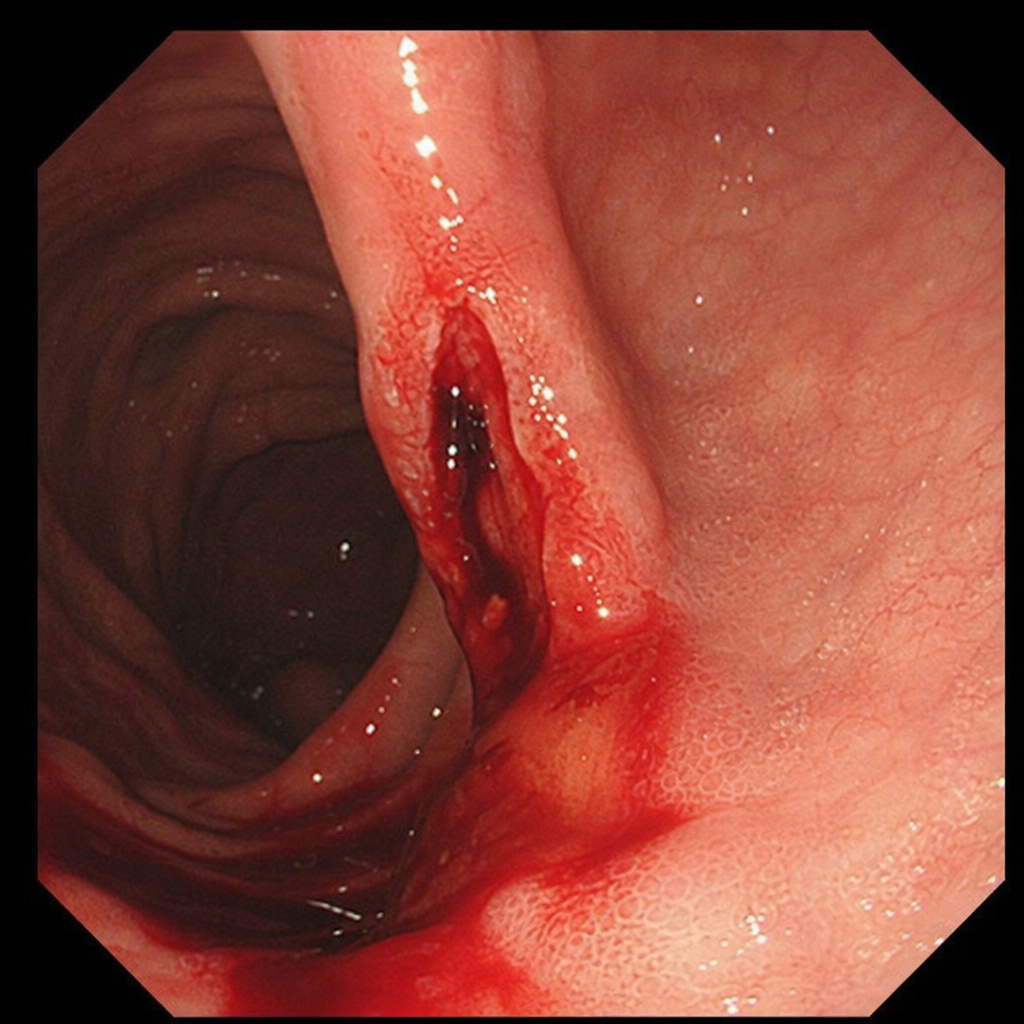
Which of the following factors does NOT precipitate hepatic encephalopathy?
Steroid refractory ulcerative colitis is defined as active disease despite treatment with which of the following regimens?
Large discrete ulcers in the esophagus are seen in which of the following conditions?
Which of the following is NOT a cause of acute pancreatitis?
In the setting of cirrhosis and ascites, Spontaneous Bacterial Peritonitis (SBP) is best treated with cefotaxime injection. What is the next best oral alternative drug for its treatment?
Which of the following is considered an extra-intestinal manifestation of inflammatory bowel disease?
Diarrhoea with ulcer responding to PPI is seen in which of the following conditions?
Which of the following is NOT a cause of secretory diarrhea?
Small intestinal stricture is not seen in which of the following conditions?
Pigment gallstones are usually not seen in which of the following conditions?
Explanation: **Explanation:** Hepatic encephalopathy (HE) is a reversible neuropsychiatric syndrome caused by the accumulation of nitrogenous substances (like ammonia) in the blood due to liver failure or portosystemic shunting. **Why Magnesium Trisilicate is the correct answer:** Magnesium trisilicate is a non-absorbable antacid used to treat dyspepsia. Unlike other medications, it does not alter the acid-base balance or nitrogenous load in the body. Therefore, it does **not** precipitate HE. In contrast, medications like **sedatives, hypnotics, and diuretics** are common triggers. **Why the other options are wrong (Precipitating Factors):** * **Infection (Option A):** Sepsis or Spontaneous Bacterial Peritonitis (SBP) increases tissue catabolism and impairs renal function, leading to increased ammonia production. * **Hypokalemia (Option C):** Low potassium levels induce intracellular acidosis in renal tubular cells. This stimulates the enzyme glutaminase, which increases **renal ammoniagenesis** (production of NH3). NH3 then crosses the blood-brain barrier, worsening encephalopathy. * **Gastrointestinal Bleeding (Option D):** Blood in the GI tract provides a massive protein load (hemoglobin). Bacteria in the gut break down this protein into ammonia, which is then absorbed into the portal circulation. **NEET-PG High-Yield Pearls:** * **Most common trigger:** Infection and GI bleeding are the most frequent precipitants. * **Metabolic alkalosis:** Often co-exists with hypokalemia; it shifts the equilibrium from NH4+ (ammonium) to NH3 (ammonia), allowing it to cross the blood-brain barrier more easily. * **Treatment Gold Standard:** Lactulose (converts NH3 to non-absorbable NH4+) and Rifaximin (reduces ammonia-producing gut flora). * **Avoid:** Constipation is a major precipitant; ensure regular bowel movements.
Explanation: **Explanation:** In the management of Ulcerative Colitis (UC), defining steroid responsiveness is crucial for determining when to escalate to second-line therapies (like Infliximab or Cyclosporine). [1] **Steroid-refractory Ulcerative Colitis** is defined as the presence of active disease despite an adequate course of corticosteroids. According to standard clinical guidelines (including Harrison’s Principles of Internal Medicine and ECCO guidelines), this is specifically defined as: * **Prednisolone up to 0.75 mg/kg/day** (or equivalent) administered orally for a period of **4 weeks**. [1] * Alternatively, in acute severe cases, it refers to a lack of response to intravenous steroids (e.g., Hydrocortisone or Methylprednisolone) within 3–7 days. **Analysis of Options:** * **Option A (0.5 mg/kg):** This dose is considered sub-therapeutic for inducing remission in moderate-to-severe flares; therefore, failure at this dose does not meet the criteria for "refractory" disease. * **Option C & D (1 mg/kg or 1.5 mg/kg):** While 1 mg/kg is often used in clinical practice for various autoimmune conditions, the specific consensus definition for UC refractory status is pegged at the 0.75 mg/kg threshold to balance efficacy with the significant side-effect profile of higher doses. **High-Yield Clinical Pearls for NEET-PG:** * **Steroid-Dependent UC:** Disease that responds to steroids but relapses when the dose is tapered below 10 mg/day or within 3 months of stopping. * **First-line for Mild-Moderate UC:** Topical or oral 5-ASA (Mesalamine). [1] * **Indication for Surgery:** Toxic megacolon, perforation, or refractory disease. [1] * **Drug of Choice for Acute Severe UC (Steroid Refractory):** IV Cyclosporine or Infliximab ("Rescue therapy").
Explanation: **Explanation:** The correct answer is **CMV esophagitis**. **1. Why CMV Esophagitis is Correct:** Cytomegalovirus (CMV) esophagitis is a common opportunistic infection in immunocompromised patients (e.g., HIV/AIDS with CD4 <50 cells/µL or transplant recipients). Endoscopically, it is characterized by **large, solitary, shallow, and discrete (well-demarcated) ulcers**, typically located in the distal esophagus. Histologically, it shows **intranuclear and intracytoplasmic inclusions** (classic "Owl’s eye" appearance) within endothelial cells or fibroblasts. **2. Why Other Options are Incorrect:** * **Achalasia Cardia:** This is a motility disorder characterized by the failure of the Lower Esophageal Sphincter (LES) to relax [1]. Endoscopy usually shows a dilated esophagus with retained food particles, not discrete ulcers. * **Plummer-Vinson Syndrome:** This presents with a triad of iron deficiency anemia, glossitis, and **esophageal webs** (post-cricoid region). It is a premalignant condition but does not typically present with large discrete ulcers. * **Esophageal Carcinoma:** While malignancy can cause ulceration, it usually presents as an irregular, friable, fungating mass or a deep, ragged malignant ulcer with heaped-up margins, rather than "discrete" ulcers. **3. NEET-PG High-Yield Pearls:** * **CMV vs. Herpes (HSV) Esophagitis:** This is a frequent "differentiating" question. * **CMV:** Large, shallow, solitary/discrete ulcers. * **HSV:** Small, multiple, deep, "punched-out" ulcers (Volcano ulcers). * **Drug of Choice:** Ganciclovir is the treatment of choice for CMV esophagitis. * **Candida Esophagitis:** The most common infectious esophagitis; presents as white, adherent plaques (cottage-cheese appearance) [2].
Explanation: Explanation: Acute pancreatitis is an inflammatory condition of the pancreas characterized by the premature activation of digestive enzymes (trypsinogen to trypsin) within the pancreatic acini, leading to autodigestion [1]. Why Starvation is the Correct Answer: Starvation is **not** a cause of acute pancreatitis. In fact, pancreatic rest (NPO status) is a cornerstone of management to reduce enzyme secretion. Conversely, **hypertriglyceridemia** (specifically levels >1000 mg/dL) and **refeeding syndrome** (after prolonged starvation) are known triggers, but starvation itself does not initiate the inflammatory cascade. Analysis of Incorrect Options: * **Gallstones (Option A):** The most common cause worldwide (approx. 40%) [1]. Obstruction of the ampulla of Vater increases pancreatic ductal pressure, triggering enzyme activation. * **Alcohol (Option B):** The second most common cause. Ethanol exerts a direct toxic effect on acinar cells and increases the permeability of ductules [1]. * **Hypercalcemia (Option C):** A recognized metabolic cause. High calcium levels promote the activation of trypsinogen to trypsin and can lead to the formation of calcium deposits in the pancreatic duct. NEET-PG High-Yield Pearls: * **Mnemonic for Causes:** **I GET SMASHED** (Idiopathic, Gallstones, Ethanol, Trauma, Steroids, Mumps/Malignancy, Autoimmune, Scorpion sting, Hypercalcemia/Hypertriglyceridemia, ERCP, Drugs like Azathioprine/Thiazides) [1]. * **Most Common Cause:** Gallstones (Overall); Alcohol (in males). * **Drug of Choice for Pain:** NSAIDs or Opioids (Hydromorphone/Fentanyl). *Note: Morphine is traditionally avoided due to theoretical Sphincter of Oddi spasm, though clinical evidence is limited.* * **Sentinel Loop:** A localized ileus of the jejunum seen on X-ray, indicating underlying pancreatitis.
Explanation: ### **Explanation** **1. Why Ofloxacin is the Correct Answer:** The gold standard treatment for Spontaneous Bacterial Peritonitis (SBP) is intravenous third-generation cephalosporins (e.g., **Cefotaxime**). However, in patients without complications (no hepatic encephalopathy, renal failure, or ileus), oral therapy is an effective alternative. **Ofloxacin** is the preferred oral agent because it achieves high concentrations in the ascitic fluid and has demonstrated clinical efficacy comparable to intravenous cefotaxime in randomized controlled trials. It covers the most common causative organisms, primarily Gram-negative aerobes like *E. coli* and *Klebsiella* [2]. **2. Analysis of Incorrect Options:** * **B. Norfloxacin:** While Norfloxacin is highly effective, it is primarily used for the **prophylaxis** (prevention) of SBP in high-risk patients (e.g., those with low ascitic protein or prior SBP episodes). It has poor systemic absorption compared to Ofloxacin, making it less ideal for treating an active, established infection. * **C. Ciprofloxacin:** Although Ciprofloxacin can be used, Ofloxacin is more specifically cited in standard guidelines (like AASLD/EASL) and classic textbooks as the primary oral alternative studied against Cefotaxime for acute treatment. [2] * **D. Pefloxacin:** This drug is rarely used in modern clinical practice for SBP and lacks the robust evidence base supporting Ofloxacin. **3. Clinical Pearls for NEET-PG:** * **Diagnosis:** SBP is diagnosed when the ascitic fluid **Absolute Neutrophil Count (ANC) is ≥ 250 cells/mm³**. Calculation of the Serum-Ascites Albumin Gradient (SAAG) is used to differentiate portal hypertension causes [3]. * **Most Common Organism:** *Escherichia coli* (followed by *Klebsiella*) [2]. * **Albumin Therapy:** To prevent Hepatorenal Syndrome (HRS), IV Albumin (1.5 g/kg on day 1 and 1.0 g/kg on day 3) should be administered if Creatinine >1 mg/dL, BUN >30 mg/dL, or Bilirubin >4 mg/dL [1]. * **Prophylaxis:** Norfloxacin (400 mg/day) is the drug of choice for long-term SBP prophylaxis.
Explanation: The correct answer is **C. Osteoarthritis**. In the context of Inflammatory Bowel Disease (IBD), joint involvement is the most common extra-intestinal manifestation (EIM). However, the specific types of joint disease associated with IBD are **inflammatory** in nature, such as **Peripheral Arthritis** (Type I and Type II) and **Ankylosing Spondylitis** [1]. **Osteoarthritis** is a degenerative joint disease characterized by "wear and tear" of cartilage; it is not an immune-mediated manifestation of IBD. **Analysis of Options:** * **A. Uveitis:** A common ocular EIM of IBD (more frequent in Crohn’s) [2]. It presents with eye pain, photophobia, and blurred vision and requires urgent treatment to prevent blindness. * **B. Sclerosing Cholangitis:** Specifically **Primary Sclerosing Cholangitis (PSC)** is a classic hepatobiliary EIM, strongly associated with Ulcerative Colitis (UC). It is characterized by fibrotic strictures of the bile ducts. * **D. Skin Nodules:** These refer to **Erythema Nodosum**, the most common skin manifestation of IBD. They are painful, red nodules typically found on the pretibial surface (shins) and often correlate with bowel disease activity. **NEET-PG High-Yield Pearls:** 1. **Activity Correlation:** Erythema Nodosum and Type I Peripheral Arthritis (pauciarticular) usually parallel the activity of the intestinal inflammation [1]. 2. **Independence from Activity:** Ankylosing Spondylitis, Sacroiliitis, and Primary Sclerosing Cholangitis follow a course **independent** of the bowel disease activity [1]. 3. **HLA Association:** HLA-B27 is strongly linked to axial involvement (Ankylosing Spondylitis) in IBD patients [2]. 4. **Pyoderma Gangrenosum:** A more severe, necrotic skin ulceration associated with IBD (mostly UC) that does not always correlate with bowel activity.
Explanation: The clinical presentation of **diarrhoea associated with peptic ulcers that respond to Proton Pump Inhibitors (PPIs)** is the classic hallmark of **Zollinger-Ellison Syndrome (ZES)**. **1. Why Zollinger-Ellison Syndrome (ZES) is correct:** ZES is caused by a gastrin-secreting neuroendocrine tumor (gastrinoma). The massive hypersecretion of gastric acid leads to: * **Peptic Ulcers:** Often multiple, refractory, or located in atypical sites (e.g., distal duodenum or jejunum). * **Diarrhoea:** High acid volume enters the small intestine, overwhelming its resorptive capacity. Furthermore, the low pH inactivates pancreatic enzymes (lipase), leading to steatorrhea and malabsorption. * **PPI Response:** Since the symptoms are acid-driven, high-dose PPIs effectively control both the ulcers and the diarrhoea. **2. Why other options are incorrect:** * **MEN 1 Syndrome:** While ZES is associated with MEN 1 (3Ps: Parathyroid, Pancreas, Pituitary), MEN 1 itself is a genetic syndrome. ZES is the specific *condition* within that syndrome causing these symptoms. * **H. pylori infection:** This is the most common cause of peptic ulcers, but it typically does not cause secretory or osmotic diarrhoea [1]. In most people, H. pylori causes localised antral gastritis associated with depletion of somatostatin and increased gastrin release, which stimulates increased acid production but rarely the severe malabsorptive diarrhea seen in ZES [1]. * **VIPoma (Verner-Morrison Syndrome):** Characterized by "WDHA" (Watery Diarrhoea, Hypokalemia, Achlorhydria). Crucially, VIPomas cause **low or absent** gastric acid, so they do not cause ulcers and do not respond to PPIs. **Clinical Pearls for NEET-PG:** * **Screening Test:** Fasting Serum Gastrin (>1000 pg/mL is diagnostic). * **Confirmatory Test:** Secretin Stimulation Test (Gastrin levels rise >200 pg/mL). * **Most common location:** Gastrinoma Triangle (Passaro’s Triangle). * **Most common site of metastasis:** Liver.
Explanation: ### Explanation The key to answering this question lies in distinguishing between **Secretory** and **Osmotic** diarrhea. **Why Lactose Intolerance is the Correct Answer:** Lactose intolerance is a classic cause of **Osmotic Diarrhea**. In individuals with lactase deficiency, undigested lactose remains in the intestinal lumen [1]. This creates an osmotic gradient that pulls water into the bowel, as symptoms are produced by the unabsorbed osmoles [2]. [3] * **Key Feature:** Osmotic diarrhea **characteristically stops with fasting** and is associated with an **increased stool osmotic gap** (>125 mOsm/kg). **Analysis of Incorrect Options (Causes of Secretory Diarrhea):** Secretory diarrhea occurs due to active secretion of electrolytes (mainly $Cl^-$ and $HCO_3^-$) or inhibition of sodium absorption. It **does not stop with fasting** and has a **low stool osmotic gap** (<50 mOsm/kg). * **Vibrio cholerae:** Produces the Cholera toxin, which permanently activates Adenylate Cyclase, increasing cAMP levels. This leads to massive secretion of water and electrolytes into the lumen (Rice-water stools) [4]. * **Gastrinoma (Zollinger-Ellison Syndrome):** Excessive gastrin stimulates massive gastric acid production. The high acid load in the duodenum damages the mucosa and inactivates pancreatic enzymes, leading to secretory diarrhea. * **Inflammatory Bowel Disease (IBD):** While IBD has multiple mechanisms, the inflammatory process leads to the secretion of fluid and mucus from the inflamed/ulcerated mucosa, fitting the secretory profile. **NEET-PG High-Yield Pearls:** 1. **Stool Osmotic Gap Formula:** $290 - 2 \times (\text{Stool } Na^+ + \text{Stool } K^+)$. 2. **Secretory Diarrhea:** Gap < 50 mOsm/kg; persists during sleep/fasting. 3. **Osmotic Diarrhea:** Gap > 125 mOsm/kg; improves with fasting; stool pH is often acidic (<5.5) due to bacterial fermentation. 4. **VIPoma (WDHA Syndrome):** Another classic cause of secretory diarrhea (Watery Diarrhea, Hypokalemia, Achlorhydria).
Explanation: The correct answer is **A. Lymphoma**. ### **Explanation** The development of a stricture depends on the nature of the inflammatory or neoplastic process within the intestinal wall. **1. Why Lymphoma is the correct answer:** Primary intestinal lymphoma (most commonly Diffuse Large B-Cell Lymphoma) typically causes **aneurysmal dilatation** of the bowel lumen rather than stricture formation [1]. This occurs because the lymphoma cells infiltrate the muscularis propria and destroy the autonomic nerve plexuses (myenteric plexus), leading to a loss of muscular tone and subsequent wall thinning and dilatation. While it can cause perforation or intussusception , luminal narrowing (stricture) is rare. **2. Why other options are incorrect:** * **Typhoid (B):** During the recovery phase of typhoid fever, the healing of longitudinal ulcers (located over Peyer's patches) can occasionally lead to fibrosis and stricture formation, though perforation and hemorrhage are more common acute complications. * **Tumour (C):** Adenocarcinomas of the small intestine typically grow circumferentially . This "napkin-ring" growth pattern leads to significant luminal narrowing and fibrotic reactions (desmoplasia), making strictures a hallmark finding. * **Tuberculosis (D):** Intestinal TB is a classic cause of strictures. The ulcers in TB are **transverse** (perpendicular to the long axis), and as they heal by fibrosis, they cause significant concentric narrowing, leading to the characteristic "hourglass" or multiple short-segment strictures. ### **NEET-PG High-Yield Pearls** * **Aneurysmal Dilatation:** Classically seen in **Lymphoma** and **Ewing’s Sarcoma**. * **Ulcer Orientation:** * **Typhoid:** Longitudinal (along the long axis). * **Tuberculosis:** Transverse (circumferential). * **Crohn’s Disease:** Serpiginous/Cobblestone. * **Most common site for Intestinal TB:** Ileocecal junction (due to increased lymphoid tissue and physiological stasis). * **Most common small bowel malignancy:** Carcinoid (overall), but Adenocarcinoma is common in the duodenum/jejunum .
Explanation: The formation of gallstones depends on the composition of bile. Gallstones are broadly classified into **Cholesterol stones** and **Pigment stones** (Black or Brown) [1]. **Why Clofibrate therapy is the correct answer:** Clofibrate (and other fibrates) increases the risk of **cholesterol gallstones**, not pigment stones. Fibrates inhibit the enzyme *cholesterol 7α-hydroxylase*, which reduces bile acid synthesis. Simultaneously, they increase the activity of *HMG-CoA reductase*, leading to increased biliary cholesterol excretion. This results in supersaturation of bile with cholesterol, promoting the formation of cholesterol stones. **Analysis of Incorrect Options:** * **Gilbert’s Syndrome:** This condition involves a deficiency in glucuronosyltransferase, leading to increased levels of unconjugated bilirubin. Chronic hyperbilirubinemia promotes the precipitation of calcium bilirubinate, leading to **black pigment stones**. * **Alcoholic Cirrhosis:** Cirrhosis is a major risk factor for **pigment stones**. The mechanism involves hypersplenism (leading to hemolysis), decreased hepatic synthesis of bile salts, and impaired gallbladder motility. * **Cystic Fibrosis:** Patients with CF often develop **pigment stones** due to bile acid malabsorption in the terminal ileum and increased biliary calcium concentrations. **NEET-PG High-Yield Pearls:** * **Black Pigment Stones:** Associated with chronic hemolysis (e.g., Thalassemia, Hereditary Spherocytosis), Cirrhosis, and Gilbert’s syndrome. They are usually found in the gallbladder. * **Brown Pigment Stones:** Associated with biliary stasis and **infections** (e.g., *E. coli*, *Clonorchis sinensis*) [2]. They often form *de novo* in the bile ducts [2]. * **Risk Factors for Cholesterol Stones (The 4 F's):** Fat, Female, Fertile, Forty. * **Ileal Resection/Disease:** Leads to bile salt malabsorption, predisposing to cholesterol stones.
Esophageal Disorders
Practice Questions
Peptic Ulcer Disease
Practice Questions
Inflammatory Bowel Disease
Practice Questions
Irritable Bowel Syndrome
Practice Questions
Malabsorption Syndromes
Practice Questions
Pancreatitis (Acute and Chronic)
Practice Questions
Gastrointestinal Bleeding
Practice Questions
Liver Diseases and Cirrhosis
Practice Questions
Viral Hepatitis
Practice Questions
Biliary Tract Disorders
Practice Questions
Gastrointestinal Motility Disorders
Practice Questions
Gastrointestinal Malignancies
Practice Questions
Get full access to all questions, explanations, and performance tracking.
Start For Free