Which one of the following clinical features suggests alcoholism as a cause of liver cirrhosis?
A 38-year-old homeless male develops sudden onset hematemesis following a bout of severe vomiting and retching. He had no complaints prior to the onset of his symptoms. On examination, he is pale and looks anxious. The vital signs are normal. Laboratory investigations show normal liver function tests, a low Hb and high MCV, and a chest X-ray is normal. What would be the likely endoscopic appearance of the problem described?
A 55-year-old man presents with abdominal cramps and diarrhea for the past month. He has a history of similar episodes for the past 20 years, with each episode lasting about two weeks and resolving spontaneously. Stool samples were positive for occult blood, but laboratory studies did not show any ova or parasites. Colonoscopy revealed diffuse, uninterrupted mucosal inflammation and superficial ulceration extending from the rectum to the ascending colon. What complication is this patient at greatest risk for developing?
Celiac disease is associated with which of the following conditions?
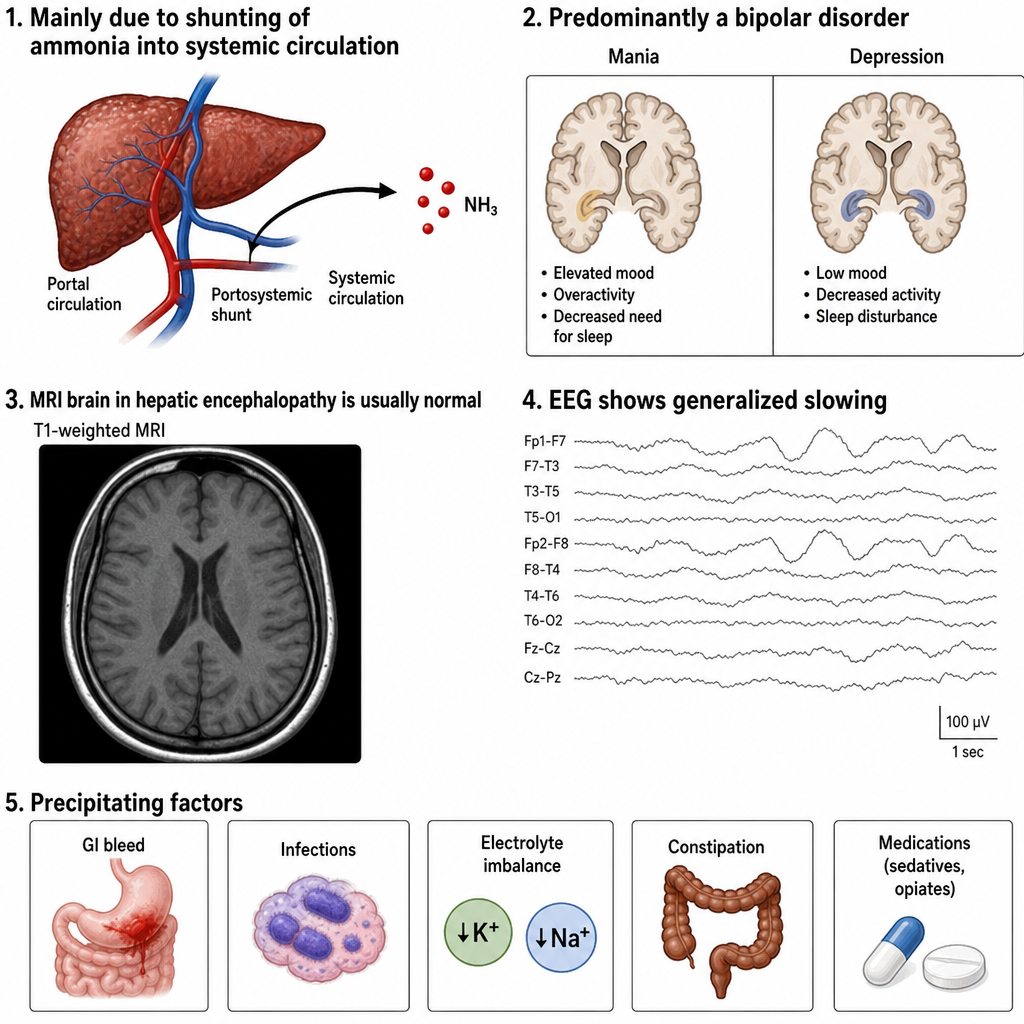
Hepatic encephalopathy may be precipitated by all of the following except:
Which of the following is NOT a cause of secondary achalasia?
High SAAG (serum-ascites albumin gradient) ascites is seen in all conditions except:
Which of the following is an example of Inflammatory Bowel Disease?
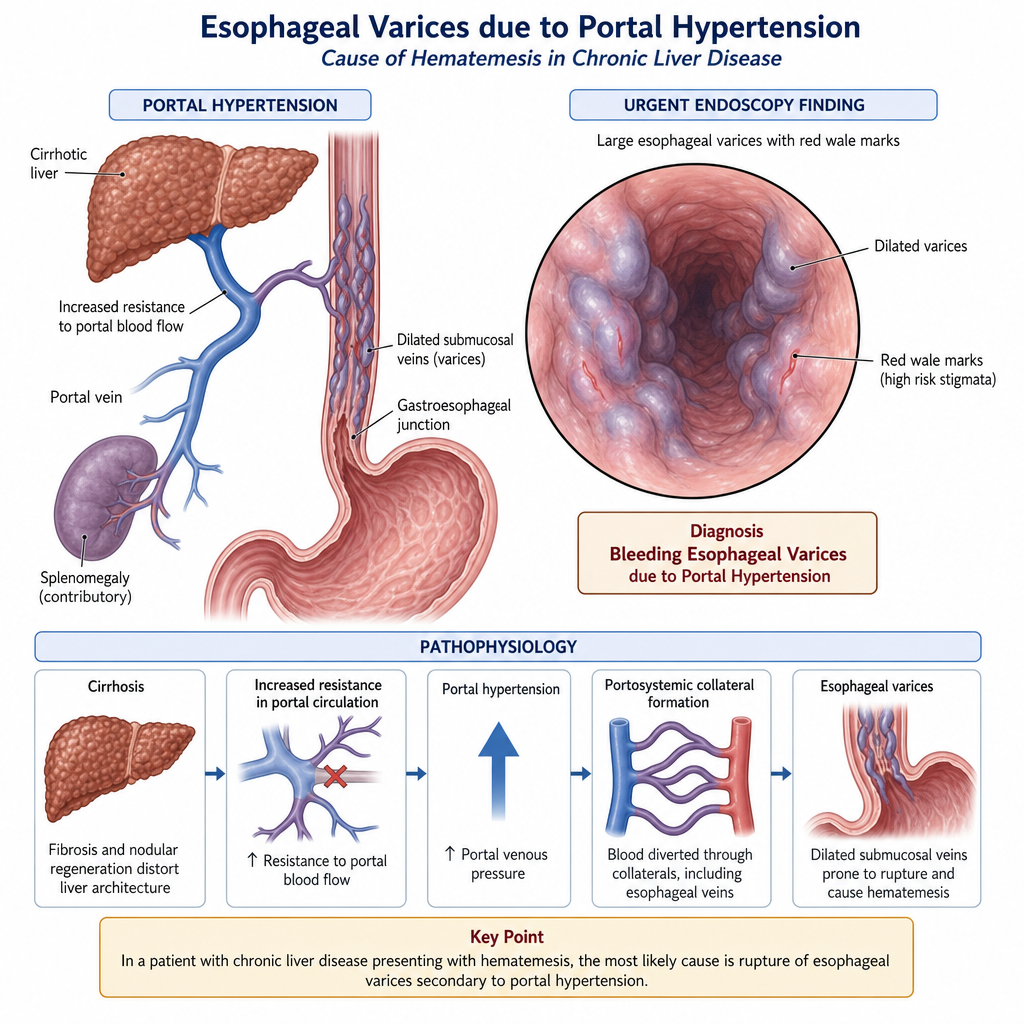
A young patient presenting with massive hematemesis was found to have splenomegaly. What is the most likely source of bleeding?
Portal hypertension is a complication of cirrhosis of the liver in all of the following except?
Explanation: While many clinical features of cirrhosis are common across all etiologies, certain signs point more strongly toward an alcoholic origin [1]. **Why Spider Angioma is the Correct Answer:** Spider angiomas (spider telangiectasias) are vascular lesions consisting of a central arteriole with radiating capillaries. While they occur in various forms of cirrhosis due to hyperestrogenism, they are **significantly more frequent and prominent in alcoholic liver disease** [1]. Their presence in large numbers (usually >5) on the face, neck, and upper chest is a strong clinical indicator of alcohol-induced damage. They often regress with alcohol abstinence, making them a dynamic marker of alcoholic liver injury. **Analysis of Incorrect Options:** * **Ascites (B):** This is a non-specific sign of portal hypertension and hypoalbuminemia [1]. It occurs in the decompensated stage of cirrhosis regardless of the cause (e.g., Hepatitis B, C, or NASH). * **Absence of ankle jerk (C):** While alcoholics may have peripheral neuropathy leading to loss of ankle jerks, this is a feature of **chronic alcoholism** itself, not a specific clinical feature of the **liver cirrhosis** process. * **Gynaecomastia (D):** This results from the failure of the liver to metabolize estrogen and increased peripheral conversion of androgens. Like ascites, it is a general feature of hepatic failure seen in various types of cirrhosis [1]. **NEET-PG High-Yield Pearls:** * **Specific signs of Alcoholic Cirrhosis:** Parotid gland enlargement, Dupuytren’s contracture, and spider angiomata. * **AST:ALT Ratio:** A ratio **>2:1** is highly suggestive of alcoholic liver disease (due to pyridoxal phosphate deficiency inhibiting ALT). * **Zieve’s Syndrome:** A triad of hemolytic anemia, hyperlipidemia, and jaundice seen in alcoholic hepatitis. * **First sign of Cirrhosis:** Often thrombocytopenia (due to congestive splenomegaly).
Explanation: ### Explanation The clinical presentation describes a classic case of **Mallory-Weiss Syndrome (MWS)**. **1. Why the Correct Answer is Right:** The hallmark of Mallory-Weiss Syndrome is **hematemesis following a bout of forceful vomiting or retching**. The sudden increase in intra-abdominal pressure causes a **longitudinal (linear) mucosal tear** at the **gastroesophageal junction** or the gastric cardia. * **Patient Profile:** Often seen in patients with alcohol use disorder (suggested here by "homeless," "high MCV" indicating macrocytosis/chronic alcohol intake, and "normal LFTs" which can occur in early or binge-drinking stages). * **Clinical Stability:** Most cases are self-limiting, explaining why the patient’s vitals remain normal despite being pale. **2. Why the Other Options are Wrong:** * **Option A (Dilated veins):** Refers to **Esophageal Varices**. While common in alcoholics, varices usually present with painless, massive hematemesis and signs of portal hypertension (e.g., abnormal LFTs, splenomegaly), which are absent here. * **Option B (Growth):** Refers to **Esophageal Carcinoma**. This would typically present with progressive dysphagia and weight loss rather than sudden hematemesis after retching [1]. * **Option D (Whitish plaques):** Refers to **Esophageal Candidiasis**. This presents with odynophagia (painful swallowing) in immunocompromised states, not acute hematemesis [1]. **3. NEET-PG High-Yield Pearls:** * **Mallory-Weiss vs. Boerhaave:** MWS is a *mucosal* tear (bleeding); Boerhaave Syndrome is a *transmural* rupture (sepsis, pneumomediastinum, and abnormal CXR). * **Diagnosis:** Upper GI Endoscopy is the gold standard [1]. * **Management:** Most (80-90%) stop bleeding spontaneously [1]. Active bleeding is managed with endoscopic clipping or epinephrine injection. * **Location:** Most commonly located just below the GE junction on the gastric side.
Explanation: The clinical presentation and colonoscopic findings are classic for **Ulcerative Colitis (UC)**. The patient exhibits chronic, relapsing diarrhea with occult blood, and colonoscopy shows **diffuse, continuous (uninterrupted) mucosal inflammation** extending from the rectum proximally—a hallmark of UC [1]. **1. Why Adenocarcinoma is correct:** Patients with long-standing Ulcerative Colitis are at a significantly increased risk of developing **Colorectal Adenocarcinoma**. The risk correlates with the **duration** of the disease (typically increasing after 8–10 years) and the **extent** of involvement (pancolitis carries a higher risk than proctitis). This patient has a 20-year history and extensive involvement (up to the ascending colon), placing him at high risk [1]. Unlike sporadic cancer, UC-associated cancer often arises from flat, non-polypoid dysplastic lesions [1]. **2. Why the other options are incorrect:** * **Diverticulitis:** This is a complication of diverticulosis (herniation of mucosa), not inflammatory bowel disease (IBD). * **Perirectal fistula:** This is a characteristic complication of **Crohn’s Disease**, which features transmural inflammation [1]. UC is limited to the mucosa and submucosa, making fistulae rare. * **Primary Biliary Cirrhosis (PBC):** While UC is strongly associated with **Primary Sclerosing Cholangitis (PSC)**, it is not associated with PBC (which is an autoimmune destruction of small intrahepatic bile ducts, typically seen in middle-aged women). **High-Yield Clinical Pearls for NEET-PG:** * **UC Distribution:** Always involves the rectum; moves proximally in a continuous fashion (no "skip lesions") [1]. * **Microscopy:** Crypt abscesses and pseudopolyps are characteristic [1]. * **Surveillance:** Annual/biennial colonoscopic surveillance for dysplasia is recommended starting 8 years after diagnosis for patients with extensive colitis. * **Extra-intestinal manifestations:** PSC is the most specific hepatobiliary association; P-ANCA is often positive.
Explanation: **Explanation:** Celiac disease (Gluten-sensitive enteropathy) is an immune-mediated inflammatory disorder of the small intestine triggered by the ingestion of gluten [1]. **Why Dermatitis Herpetiformis (DH) is the correct answer:** Dermatitis herpetiformis is considered the **cutaneous manifestation of Celiac disease**. It is characterized by intensely pruritic, symmetric, papulovesicular eruptions typically found on the extensor surfaces (elbows, knees, buttocks). The underlying pathophysiology involves **IgA deposits** in the dermal papillae. Nearly 100% of patients with DH have underlying gluten-sensitive enteropathy, though they may be asymptomatic gastrointestinally. **Analysis of other options:** * **Type 1 Diabetes Mellitus (T1DM):** While T1DM is strongly associated with Celiac disease (both share the **HLA-DQ2/DQ8** genotype), it is considered a comorbid autoimmune condition rather than a direct manifestation or the most pathognomonic association in the context of classic board questions [1]. * **Lymphoma:** Celiac disease significantly increases the risk of **Enteropathy-associated T-cell lymphoma (EATL)**, especially in refractory cases. However, it is a complication rather than a primary associated condition like DH. * **Atrophic Gastritis:** This is typically associated with Pernicious Anemia (Type A gastritis) or *H. pylori* infection, not Celiac disease. **High-Yield Clinical Pearls for NEET-PG:** * **Genetics:** Strong association with **HLA-DQ2** (95%) and **HLA-DQ8** [1]. * **Serology:** **Anti-tissue Transglutaminase (anti-tTG) IgA** is the best screening test; **Anti-Endomysial antibody (EMA)** is the most specific [1]. * **Biopsy Gold Standard:** Shows villous atrophy, crypt hyperplasia, and increased intraepithelial lymphocytes (Marsh Classification) [1]. * **Treatment:** Lifelong gluten-free diet (GFD). Dapsone is used for symptomatic relief of DH, but GFD is the definitive treatment [1].
Explanation: **Explanation:** Hepatic encephalopathy (HE) is a reversible neuropsychiatric syndrome caused by liver failure and/or portal-systemic shunting [1]. It is triggered by factors that either increase ammonia production or decrease its clearance. **Why Hyperkalemia is the Correct Answer:** **Hypokalemia**, not hyperkalemia, is a classic precipitant of HE. When serum potassium is low, the body attempts to conserve $K^+$ by exchanging it for $H^+$ ions in the renal tubules (intracellular acidosis). To compensate for this acidosis, the kidneys increase the production of ammonia ($NH_3$) from glutamine. Furthermore, hypokalemia promotes the conversion of ammonium ($NH_4^+$) to ammonia ($NH_3$), which easily crosses the blood-brain barrier, worsening encephalopathy. **Analysis of Other Options:** * **Anemia:** Acute blood loss (especially GI bleeding) is a major precipitant [1]. Blood in the gut provides a massive protein load that is broken down by bacteria into ammonia. * **Barbiturates:** Sedatives, hypnotics, and narcotics are poorly metabolized by a failing liver. They directly depress the CNS and can mask or worsen the symptoms of HE. * **Hypothyroidism:** While less common than electrolyte imbalances, hypothyroidism can precipitate HE by slowing gut motility (leading to constipation and increased ammonia absorption) and reducing the metabolic clearance of toxins. **NEET-PG High-Yield Pearls:** * **Most common precipitant:** Infection (e.g., SBP) and GI Bleeding [1]. * **Metabolic triggers:** Hypokalemia, Alkalosis (increases $NH_3$ crossing BBB), Dehydration/Azotemia. * **Dietary trigger:** High protein intake. * **Treatment of choice:** Lactulose (converts $NH_3$ to non-absorbable $NH_4^+$) and Rifaximin (reduces ammonia-producing gut flora).
Explanation: **Explanation:** Achalasia cardia is characterized by the failure of the lower esophageal sphincter (LES) to relax and the absence of esophageal peristalsis [1]. While primary achalasia is idiopathic, **secondary achalasia (Pseudoachalasia)** occurs when an extrinsic process or systemic disease mimics the clinical and manometric features of the primary disorder [2]. **Why Kala-azar is the correct answer:** **Kala-azar (Visceral Leishmaniasis)** is caused by *Leishmania donovani* [3]. It primarily affects the reticuloendothelial system (spleen, liver, bone marrow) [3]. It does **not** involve the destruction of the myenteric (Auerbach’s) plexus of the esophagus and, therefore, is not a cause of achalasia. **Analysis of Incorrect Options:** * **Chagas Disease:** Caused by *Trypanosoma cruzi*, this is a classic cause of secondary achalasia. The parasite directly destroys the inhibitory neurons in the myenteric plexus, leading to "megaesophagus." * **Allgrove’s Syndrome (Triple A Syndrome):** A rare genetic condition characterized by **A**chalasia, **A**lacrimia (absence of tears), and **A**CTH-resistant adrenal insufficiency. * **Multiple Endocrine Neoplasia (MEN 2B):** This syndrome is associated with mucosal neuromas and ganglioneuromatosis of the gastrointestinal tract, which can disrupt normal esophageal motility and lead to secondary achalasia. **NEET-PG High-Yield Pearls:** 1. **Most common cause of pseudoachalasia worldwide:** Gastric carcinoma (via direct infiltration of the LES or paraneoplastic effect). 2. **Gold Standard Investigation:** Esophageal Manometry (shows incomplete LES relaxation and aperistalsis) [1]. 3. **Barium Swallow Finding:** "Bird’s beak" appearance or "Rat-tail" appearance. 4. **Heller’s Myotomy:** The surgical treatment of choice, usually performed with a partial fundoplication to prevent GERD.
Explanation: ### Explanation The **Serum-Ascites Albumin Gradient (SAAG)** is the most reliable tool for classifying ascites, replacing the older "transudate vs. exudate" terminology [1]. It is calculated as: **SAAG = (Serum Albumin) – (Ascites Albumin)** #### 1. Why Nephrotic Syndrome is the Correct Answer A **High SAAG (≥ 1.1 g/dL)** indicates **Portal Hypertension**. In portal hypertension, hydrostatic pressure pushes fluid out of the capillaries, but albumin remains in the serum, creating a wide gradient [1]. In **Nephrotic Syndrome**, there is a profound loss of albumin in the urine, leading to severe **hypoalbuminemia** [2]. Because the serum albumin levels are extremely low, the gradient between the serum and the ascitic fluid remains narrow. Therefore, Nephrotic Syndrome typically presents with a **Low SAAG (< 1.1 g/dL)**. #### 2. Analysis of Other Options (High SAAG ≥ 1.1 g/dL) * **Cirrhosis of the liver:** The prototype for high SAAG ascites due to sinusoidal portal hypertension [1]. * **Congestive Heart Failure (CHF):** Causes post-sinusoidal portal hypertension. Note: While SAAG is high, the *total protein* in the ascitic fluid is also usually high (> 2.5 g/dL) due to preserved hepatic protein synthesis [1]. * **Chronic Renal Failure:** Can lead to high SAAG ascites if it results in fluid overload and secondary congestive heart failure (uremic cardiomyopathy). #### 3. Clinical Pearls for NEET-PG * **SAAG ≥ 1.1 g/dL (Portal HTN):** Cirrhosis, Alcoholic hepatitis, Cardiac ascites, Budd-Chiari syndrome, Portal vein thrombosis [1]. * **SAAG < 1.1 g/dL (Non-Portal HTN):** Peritoneal carcinomatosis, Peritoneal tuberculosis, Nephrotic syndrome, Pancreatitis, Biliary ascites [1]. * **High-Yield Tip:** If a question mentions "Cardiac Ascites," remember it has a **High SAAG** AND **High Protein** (> 2.5 g/dL), whereas Cirrhosis has a **High SAAG** but **Low Protein** (< 2.5 g/dL) [1].
Explanation: **Explanation:** **Inflammatory Bowel Disease (IBD)** refers to a group of chronic, idiopathic, immune-mediated inflammatory disorders of the gastrointestinal tract. The two primary subtypes are **Crohn’s Disease** and **Ulcerative Colitis**. **Crohn’s Disease** (Option D) is the correct answer because it is a classic form of IBD characterized by transmural inflammation that can affect any part of the GI tract (from mouth to anus), often presenting with "skip lesions" and non-caseating granulomas. **Analysis of Incorrect Options:** * **Irritable Bowel Syndrome (IBS):** This is a **functional** bowel disorder, not an inflammatory one. While it shares symptoms like abdominal pain and altered bowel habits, there is no structural damage or visible inflammation on endoscopy/biopsy. * **Tropical Sprue:** This is a **malabsorption syndrome** prevalent in tropical regions, likely caused by chronic bacterial colonization of the small intestine. It is characterized by blunting of villi but is distinct from the autoimmune pathology of IBD. * **Whipple’s Disease:** This is a rare **systemic infectious disease** caused by the bacterium *Tropheryma whipplei*. It typically presents with malabsorption, weight loss, and arthralgia, and is diagnosed by PAS-positive macrophages in the lamina propria. **High-Yield Clinical Pearls for NEET-PG:** * **Crohn’s Disease:** Transmural involvement, "Cobblestone" appearance, "String sign of Kantor" on barium studies, and perianal fistulae. * **Ulcerative Colitis:** Limited to the mucosa/submucosa, starts in the rectum (proctitis) and moves proximally, "Lead pipe" appearance on imaging, and associated with Primary Sclerosing Cholangitis (PSC). * **Smoking Paradox:** Smoking is a risk factor for Crohn’s Disease but appears to be protective against Ulcerative Colitis.
Explanation: ### Explanation The clinical presentation of **massive hematemesis** associated with **splenomegaly** is a classic hallmark of **Portal Hypertension** [1]. **1. Why Esophageal Varices is correct:** In portal hypertension (most commonly due to liver cirrhosis or non-cirrhotic portal fibrosis), the increased pressure in the portal venous system forces blood into collateral channels [1]. The most clinically significant site is the gastroesophageal junction, where the left gastric vein communicates with the azygos system. This leads to the formation of **esophageal varices** [1]. These thin-walled vessels are prone to rupture, causing life-threatening, massive hematemesis. Splenomegaly occurs due to chronic passive congestion of the spleen (congestive splenomegaly) caused by the same portal back-pressure. **2. Why other options are incorrect:** * **Duodenal and Gastric Ulcers (A & D):** While Peptic Ulcer Disease (PUD) is the most common cause of upper GI bleeding overall, it does not cause splenomegaly. The presence of an enlarged spleen points specifically towards a portal hypertensive etiology [2]. * **Erosive Mucosal Disease (C):** Conditions like Gastritis or Mallory-Weiss tears can cause hematemesis, but they are typically associated with alcohol use or forceful vomiting and do not involve the splenic circulation. **3. Clinical Pearls for NEET-PG:** * **Most common cause of Portal Hypertension in India:** Non-cirrhotic portal fibrosis (NCPF) and Extrahepatic portal venous obstruction (EHPVO) are common in young patients, whereas Cirrhosis is the leading cause in adults. * **Cruveilhier-Baumgarten Syndrome:** A clinical sign of portal hypertension where a venous hum is heard over the epigastrium due to recanalization of the umbilical vein. * **Management Priority:** The first step in massive hematemesis is always **hemodynamic stabilization** (ABCs), followed by pharmacological therapy (Octreotide/Terlipressin) and urgent **Endoscopic Variceal Ligation (EVL)** [2].
Explanation: The correct answer is **Gilbert’s syndrome**. **1. Why Gilbert’s syndrome is the correct answer:** Gilbert’s syndrome is a benign, autosomal recessive (or dominant) condition characterized by a mild deficiency of the enzyme **UDP-glucuronosyltransferase (UGT1A1)** [1, 3]. This leads to isolated unconjugated hyperbilirubinemia. Crucially, Gilbert’s syndrome **does not cause inflammation, fibrosis, or cirrhosis** of the liver [1]. Since the liver architecture remains normal, there is no resistance to blood flow, and thus, portal hypertension does not occur. **2. Why the other options are incorrect:** * **Wilson’s Disease:** This is a disorder of copper metabolism. Chronic copper deposition in the liver leads to chronic hepatitis, which progresses to macronodular cirrhosis and subsequent portal hypertension [3]. * **Hemochromatosis:** This involves excessive iron deposition (hemosiderin) in hepatocytes. This "bronze" cirrhosis causes structural damage and fibrosis, leading to portal hypertension. * **Hepatitis C:** Chronic infection with the Hepatitis C virus (HCV) is one of the leading causes of post-necrotic cirrhosis worldwide. The resulting architectural distortion of the liver lobules is a classic cause of portal hypertension. **Clinical Pearls for NEET-PG:** * **Gilbert’s Syndrome Trigger:** Jaundice is typically precipitated by stress, fasting, or infection [1]. * **Definition of Portal Hypertension:** A hepatic venous pressure gradient (HVPG) **> 5 mmHg**. Clinical complications (varices, ascites) usually appear when HVPG **≥ 10-12 mmHg** [4]. * **Most Common Cause:** In India and globally, cirrhosis (sinusoidal obstruction) is the most common cause of portal hypertension. * **Rule of Thumb:** If a liver condition is "isolated hyperbilirubinemia" (Gilbert’s, Crigler-Najjar, Dubin-Johnson, Rotor), it generally does **not** cause cirrhosis or portal hypertension [2].
Esophageal Disorders
Practice Questions
Peptic Ulcer Disease
Practice Questions
Inflammatory Bowel Disease
Practice Questions
Irritable Bowel Syndrome
Practice Questions
Malabsorption Syndromes
Practice Questions
Pancreatitis (Acute and Chronic)
Practice Questions
Gastrointestinal Bleeding
Practice Questions
Liver Diseases and Cirrhosis
Practice Questions
Viral Hepatitis
Practice Questions
Biliary Tract Disorders
Practice Questions
Gastrointestinal Motility Disorders
Practice Questions
Gastrointestinal Malignancies
Practice Questions
Get full access to all questions, explanations, and performance tracking.
Start For Free