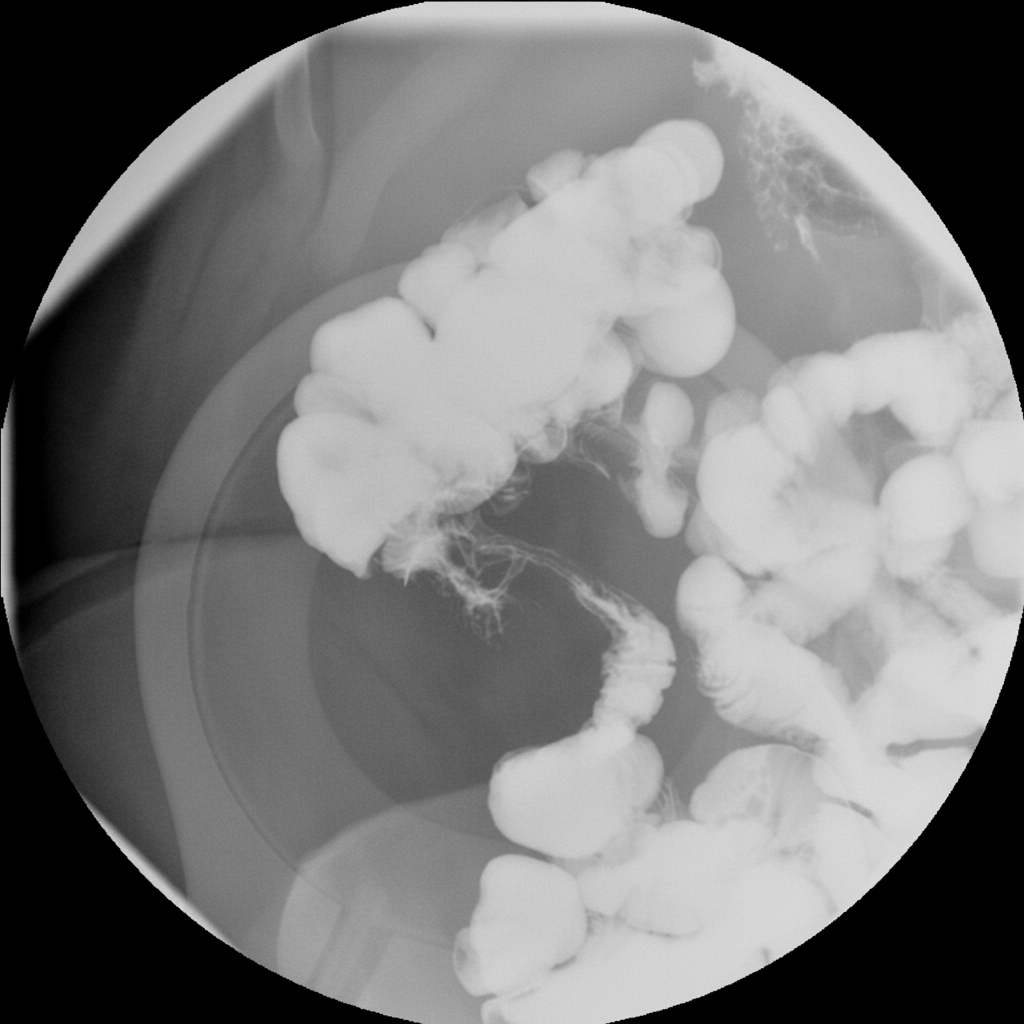
The Rockall score is used in the prognosis of which of the following conditions?
A 70-year-old man presented with itching, jaundice and a palpable mass per abdomen and clay-colored stools. Urine tests performed on his sample yielded positive results. What is the type of jaundice he is suffering from?
Which drug is effective in ulcerative colitis?
In patients with cirrhosis of the liver, where is the obstruction in the portal system typically located?
Low serum cobalamin and elevated serum folate levels are seen in?
A 35-year-old male presented with a history of persistent elevation of ALT for more than 6 months. He remains asymptomatic during this period. Other liver function tests, including ALP, bilirubin, and albumin, were normal. Diagnostic evaluation in this scenario includes all the given tests, EXCEPT:
Which of the following is the earliest symptom of Hepatic encephalopathy?
All of the following simulate chronic hepatitis except?
All of the following statements about Non-Alcoholic Fatty Liver Disease are true, except:
In 24-hour ambulatory pH testing for the diagnosis of GERD, what percentage of the day should the pH be less than 4?
Explanation: The **Rockall Score** is a clinical scoring system used to predict the risk of rebleeding and mortality in patients with **acute upper gastrointestinal bleeding (UGIB)**. It is a high-yield topic for NEET-PG as it helps clinicians decide which patients require urgent intervention versus those who can be managed as outpatients. ### **Explanation of Options** * **A. Upper Gastrointestinal Bleed (Correct):** The Rockall score incorporates both clinical criteria (age, shock/hemodynamics, comorbidities) and endoscopic findings (diagnosis, stigmata of recent hemorrhage). A score <3 carries a good prognosis, while a score >8 indicates a high risk of mortality. * **B. Lower Gastrointestinal Bleed:** While risk scores exist for LGIB (e.g., Oakland score), the Rockall score is specific to UGIB, particularly peptic ulcer disease and variceal bleeds. * **C. Hepatic Encephalopathy:** This is assessed using the **West Haven Criteria** (clinical grading) or the **Child-Pugh/MELD scores** (for overall liver prognosis). * **D. Inflammatory Bowel Disease:** Disease activity in IBD is measured using scores like the **Mayo Score** (Ulcerative Colitis) or the **Crohn’s Disease Activity Index (CDAI)**. ### **Clinical Pearls for NEET-PG** 1. **Pre-endoscopic vs. Full Rockall:** The "Clinical Rockall Score" uses only age and vitals before endoscopy; the "Full Rockall Score" is calculated after the procedure. 2. **Glasgow-Blatchford Score (GBS):** This is another vital score for UGIB. Unlike the Rockall score, the GBS is used **initially** (pre-endoscopy) to identify "low-risk" patients who do not need hospital admission. 3. **Forrest Classification:** Used during endoscopy to grade the risk of rebleeding in peptic ulcers (e.g., Class Ia is a spurting hemorrhage).
Explanation: ### Explanation The patient presents with the classic clinical triad of **obstructive (post-hepatic) jaundice**: jaundice, pruritus (itching), and clay-colored stools. [1] **1. Why Obstructive Jaundice is Correct:** * **Clay-colored stools:** This occurs due to the failure of conjugated bilirubin to reach the intestine (biliary obstruction), leading to a deficiency of stercobilin. [1] * **Itching (Pruritus):** Caused by the systemic accumulation of bile salts in the skin due to cholestasis. * **Palpable Mass:** In an elderly patient with jaundice, a palpable gallbladder (Courvoisier’s Law) often suggests malignant obstruction (e.g., periampullary carcinoma or head of pancreas) rather than gallstones. * **Urine Tests:** In obstructive jaundice, **conjugated bilirubin** (which is water-soluble) is excreted in the urine, making it dark and yielding a positive result on the foam test or dipstick. [2] **2. Why Other Options are Incorrect:** * **Hemolytic (Prehepatic) Jaundice:** Characterized by unconjugated hyperbilirubinemia. Unconjugated bilirubin is not water-soluble; therefore, it cannot appear in urine (**acholuric jaundice**). Stools are typically dark (increased stercobilin), not clay-colored. [1] * **Hepatic Jaundice:** Caused by liver parenchyma damage (e.g., hepatitis). While it can show conjugated bilirubin in urine, it usually lacks the signs of complete mechanical obstruction like a palpable mass or consistently clay-colored stools. [1] **3. NEET-PG High-Yield Pearls:** * **Courvoisier’s Law:** A palpable, non-tender gallbladder in a jaundiced patient suggests the cause is unlikely to be gallstones and more likely to be a malignancy. * **Urine Findings:** * *Obstructive:* Bilirubin (+), Urobilinogen (Absent/Low). [2] * *Hemolytic:* Bilirubin (Absent), Urobilinogen (Increased). * **Enzymes:** Obstructive jaundice shows a disproportionate rise in **Alkaline Phosphatase (ALP)** and GGT compared to ALT/AST.
Explanation: **Explanation:** The management of Ulcerative Colitis (UC) is categorized into induction of remission and maintenance of remission. **1. Why 5-ASA is the Correct Choice:** **5-aminosalicylic acid (5-ASA)**, also known as Mesalamine, is the **first-line therapy** for both inducing and maintaining remission in mild-to-moderate UC. It acts locally on the colonic mucosa to inhibit cytokine production and leukotriene synthesis. While Sulfasalazine (Option C) also contains 5-ASA, pure 5-ASA formulations are generally preferred in modern practice due to a significantly better side-effect profile (avoiding the sulfa-related toxicity). **2. Analysis of Other Options:** * **B. Steroids:** These are highly effective for **inducing** remission in acute flares (moderate-to-severe UC) but have **no role in maintenance therapy** due to significant long-term systemic side effects and lack of efficacy in preventing relapses. * **C. Sulfasalazine:** This is a prodrug consisting of 5-ASA linked to sulfapyridine. While effective, the sulfapyridine moiety causes frequent side effects (headache, nausea, hemolytic anemia). In MCQ formats, if both 5-ASA and Sulfasalazine are listed, 5-ASA is the superior answer as it is the active therapeutic moiety. * **D. Antibiotics:** Unlike in Crohn’s disease (where they treat perianal disease or abscesses), antibiotics have no proven primary role in the routine management of UC unless a secondary infection (like *C. difficile*) or toxic megacolon is suspected. **Clinical Pearls for NEET-PG:** * **Site of Action:** 5-ASA works topically; therefore, distal disease (proctitis) is best treated with **suppositories/enemas**. * **Monitoring:** Long-term 5-ASA use requires monitoring of **renal function** (interstitial nephritis is a rare side effect). * **Step-up Therapy:** For patients refractory to 5-ASA and steroids, the next steps are Thiopurines (Azathioprine) or Biologics (Infliximab/Adalimumab). * **Surgery:** Proctocolectomy with Ileal Pouch-Anal Anastomosis (IPAA) is considered **curative** for UC.
Explanation: **Explanation:** In **Cirrhosis**, the fundamental pathology involves diffuse fibrosis and the formation of regenerative nodules. This process leads to the deposition of collagen in the **Space of Disse**, causing "capillarization" of the sinusoids. This structural remodeling increases resistance to blood flow within the **Sinusoids**, making it the primary site of intrahepatic obstruction in cirrhotic portal hypertension [1]. **Analysis of Options:** * **D. Sinusoids (Correct):** Cirrhosis is the classic example of **Intrahepatic Sinusoidal** portal hypertension. The architectural distortion and myofibroblast contraction directly narrow the sinusoidal lumen [1]. * **A. Hepatic Vein:** Obstruction here is characteristic of **Budd-Chiari Syndrome**. This is classified as post-hepatic (or post-sinusoidal) venous outflow obstruction. * **B. Post-sinusoidal:** While some components of cirrhosis can affect the terminal hepatic venules, "post-sinusoidal" typically refers to conditions like **Sinusoidal Obstruction Syndrome (Veno-occlusive disease)**. In the context of cirrhosis, "Sinusoidal" is the more accurate and specific anatomical site. * **C. Extra-hepatic portal vein:** This refers to **Portal Vein Thrombosis (PVT)**, which is a "Pre-hepatic" cause of portal hypertension. **High-Yield Clinical Pearls for NEET-PG:** 1. **Pre-hepatic:** Portal vein thrombosis, Splenic vein thrombosis. 2. **Intra-hepatic (Pre-sinusoidal):** Schistosomiasis (most common worldwide), Non-cirrhotic portal fibrosis (NCPF). 3. **Intra-hepatic (Sinusoidal):** Cirrhosis (most common cause in India). 4. **Post-hepatic:** Budd-Chiari Syndrome, Constrictive pericarditis, IVC webs. 5. **HVPG (Hepatic Venous Pressure Gradient):** Normal is 1–5 mmHg. Portal hypertension is defined as >5 mmHg; Varices develop at >10 mmHg; Variceal bleed occurs at >12 mmHg [1].
Explanation: **Explanation:** The correct answer is **Bacterial Overgrowth Syndrome** (Small Intestinal Bacterial Overgrowth - SIBO). **Pathophysiology:** In SIBO, there is an excessive proliferation of colonic-type bacteria within the small intestine [1]. These bacteria compete with the host for nutrients, leading to a classic biochemical profile: 1. **Low Vitamin B12 (Cobalamin):** The bacteria (especially anaerobes) utilize and "consume" dietary B12 for their own metabolism, making it unavailable for absorption in the terminal ileum. 2. **Elevated Serum Folate:** Many enteric bacteria synthesize folate as a metabolic byproduct. This excess folate is absorbed in the proximal small intestine, leading to supranormal serum levels. **Analysis of Incorrect Options:** * **Celiac Sprue:** This is a malabsorption syndrome affecting the mucosa. It typically leads to **low** levels of both B12 and folate (along with iron) due to generalized villous atrophy and impaired absorption [2]. * **Acute/Chronic Myeloid Leukemia (AML/CML):** Myeloproliferative disorders are associated with **elevated** serum B12 levels. This occurs because of an increase in Transcobalamin I and III (haptocorrin), which are secreted by the expanded pool of granulocytes. **NEET-PG High-Yield Pearls:** * **Gold Standard Diagnosis for SIBO:** Jejunal aspirate culture showing >10⁵ CFU/mL (though non-invasive **Carbohydrate Breath Tests** using Glucose or Lactulose are more commonly used in clinical practice) [primary reference: 1]. * **Treatment of choice:** Rifaximin (a non-absorbable antibiotic). * **Blind Loop Syndrome:** A classic anatomical cause of SIBO (e.g., post-Billroth II surgery) where stasis allows bacterial proliferation [1]. * **Mnemonic:** In SIBO, bacteria **"Eat the B12, but Make the Folate."**
Explanation: This question tests your ability to differentiate between various causes of chronic asymptomatic transaminitis (elevated ALT/AST for >6 months). [2] ### **Explanation of the Correct Answer** **Antimitochondrial antibody (AMA)** is the hallmark marker for **Primary Biliary Cholangitis (PBC)**. PBC is a cholestatic liver disease characterized by the destruction of small intrahepatic bile ducts. The biochemical profile of PBC typically shows a significant elevation in **Alkaline Phosphatase (ALP)** and GGT, rather than an isolated elevation of ALT. [4] Since the patient has a normal ALP, PBC is highly unlikely, making AMA an unnecessary initial test. ### **Evaluation of Other Options** * **Anti-HCV antibody (Option C):** Chronic Hepatitis C is a leading cause of asymptomatic elevation of ALT. Screening for Hepatitis B (HBsAg) and Hepatitis C is a mandatory first-line step in evaluating chronic transaminitis. [2] * **Iron saturation percentage (Option A):** Hereditary Hemochromatosis often presents with asymptomatic transaminitis in its early stages. [2] Screening involves checking transferrin saturation and ferritin levels. * **Antinuclear antibody (ANA) (Option B):** Autoimmune Hepatitis (AIH) can present with persistent ALT elevation even in asymptomatic patients. [1] ANA and Anti-Smooth Muscle Antibody (ASMA) are the primary screening tools for AIH. [3] ### **Clinical Pearls for NEET-PG** * **Isolated ALT/AST elevation:** Think of NAFLD (most common), Chronic Viral Hepatitis, Alcohol, Hemochromatosis, or Autoimmune Hepatitis. [2] * **Isolated ALP elevation:** Think of Cholestatic diseases (PBC, PSC) or infiltrative diseases (Sarcoidosis, malignancy). [4] * **AST:ALT Ratio:** A ratio **>2:1** is highly suggestive of Alcoholic Liver Disease; a ratio **<1** is typically seen in NAFLD. * **First-line investigations** for asymptomatic transaminitis: HBsAg, Anti-HCV, Lipid profile (for NAFLD), and Iron studies. [2]
Explanation: **Explanation:** Hepatic Encephalopathy (HE) is a reversible syndrome of neuromuscular and neuropsychiatric dysfunction caused by liver failure or portosystemic shunting [1]. **Why "Change in sleep patterns" is correct:** The earliest clinical manifestation of HE is often subtle and involves a **reversal of the sleep-wake cycle** (daytime somnolence and nighttime insomnia) [2]. This occurs in **Stage 1** (Prodromal stage) of the West Haven Criteria. Patients may also exhibit mild confusion, irritability, and a shortened attention span before more overt neurological signs appear. **Analysis of Incorrect Options:** * **Asterixis (Option B):** Also known as "flapping tremors," this is the hallmark sign of HE but typically appears in **Stage 2** (Lethargy/Confusion). It is not the earliest symptom. * **EEG Changes (Option C):** Classic EEG findings (generalized slowing and high-amplitude **triphasic waves**) are characteristic of HE but usually manifest as the patient progresses into Stage 2 or 3. It is a diagnostic finding, not a presenting symptom. * **Disorientation (Option D):** While disorientation to time and place is a key feature, it typically characterizes **Stage 2** (moderate) or **Stage 3** (severe) encephalopathy. **High-Yield Clinical Pearls for NEET-PG:** * **West Haven Criteria:** The standard grading system for HE (Stage 0 to 4). * **Constructional Apraxia:** An early sign where the patient cannot perform simple tasks like drawing a five-pointed star or a clock face. * **Fetor Hepaticus:** A musty, sweet breath odor caused by dimethyl sulfide; seen in advanced HE. * **Precipitating Factors:** Always look for triggers in clinical stems, such as GI bleed, infections (SBP), constipation, or hypokalemia. * **Treatment:** Lactulose (first-line) and Rifaximin are the mainstays of management.
Explanation: **Explanation:** The core concept tested here is the distinction between viruses that cause chronic infection and those that are strictly acute. **Chronic hepatitis** is defined as inflammation of the liver lasting for more than 6 months. **Why HAV is the correct answer:** Hepatitis A Virus (HAV) is an RNA virus transmitted via the feco-oral route. It causes **acute hepatitis only** and never progresses to a chronic state or a carrier state [1]. While it can rarely cause "relapsing hepatitis" or "cholestatic hepatitis," it does not lead to chronic liver disease or cirrhosis. Therefore, it cannot simulate chronic hepatitis. **Analysis of incorrect options:** * **HBV (Hepatitis B):** This is a classic cause of chronic hepatitis. Approximately 5-10% of adults and up to 90% of neonates infected with HBV develop chronic infection, which can progress to cirrhosis and hepatocellular carcinoma (HCC). * **Haemochromatosis:** This is an autosomal recessive disorder of iron overload. The progressive deposition of iron in hepatocytes leads to chronic inflammation, fibrosis, and eventually "bronze cirrhosis," simulating the clinical picture of chronic viral hepatitis. * **Wilson’s Disease:** A disorder of copper metabolism that can present as chronic active hepatitis, especially in children and young adults. It often mimics other forms of chronic liver disease before progressing to cirrhosis. **NEET-PG High-Yield Pearls:** * **Hepatitis E (HEV):** Generally causes acute hepatitis, but can cause **chronic hepatitis in immunocompromised patients** (e.g., organ transplant recipients). * **Hepatitis C (HCV):** Has the highest rate of chronicity (approx. 75-85% of cases) [2]. * **Rule of Thumb:** Only "B, C, and D" (Hepatitis B, C, and D) cause chronic viral hepatitis in immunocompetent hosts. "A and E" are typically acute.
Explanation: ### Explanation **Non-Alcoholic Fatty Liver Disease (NAFLD)**, now increasingly referred to as Metabolic Dysfunction-Associated Steatotic Liver Disease (MASLD), is the most common liver disorder worldwide. **Why Option B is the Correct Answer (The Exception):** Clofibrate, a first-generation fibrate, has been studied for NAFLD but was found to be **ineffective** in reducing liver fat or improving histological features of the disease. Current pharmacological management focuses on insulin sensitizers (like Pioglitazone) or GLP-1 agonists. There is no single "gold standard" drug, but Clofibrate is definitively not a recommended treatment. **Analysis of Other Options:** * **Option A (Common in diabetics):** NAFLD is strongly associated with metabolic syndrome. Approximately 70-75% of patients with Type 2 Diabetes Mellitus have some form of NAFLD due to insulin resistance and increased lipolysis. * **Option C (Commonest cause of cryptogenic cirrhosis):** Historically, many cases of cirrhosis were labeled "cryptogenic" (unknown cause). Long-term follow-up and biopsy studies have proven that most of these cases are actually "burnt-out" NAFLD/NASH where the fat has disappeared but fibrosis remains. * **Option D (Associated with elevated transaminases):** While many patients are asymptomatic with normal enzymes, elevated ALT and AST (usually with an **ALT > AST ratio**) are common markers of hepatocellular injury in Non-Alcoholic Steatohepatitis (NASH). **High-Yield Clinical Pearls for NEET-PG:** * **Gold Standard Diagnosis:** Liver Biopsy (shows macrovesicular steatosis, hepatocyte ballooning, and Mallory-Denk bodies). * **First-line Management:** Weight loss (at least 7-10%) and lifestyle modification. * **Imaging of Choice:** Ultrasound is the initial screening tool; **FibroScan (Transient Elastography)** is used to assess the degree of fibrosis non-invasively. * **Key Association:** Polycystic Ovary Syndrome (PCOS) is a significant risk factor for NAFLD.
Explanation: ### Explanation **Concept:** The 24-hour ambulatory pH monitoring is the **gold standard** for diagnosing Gastroesophageal Reflux Disease (GERD), especially in patients with persistent symptoms despite normal endoscopy. The test measures the frequency and duration of acid reflux episodes. Acid reflux is defined as a drop in esophageal pH to **< 4** [1]. The most clinically significant parameter derived from this test is the **Total Acid Exposure Time (AET)**. **Why Option C is Correct:** In a healthy individual, the esophagus can handle brief periods of acidity [1]. However, a total time of **> 4.2% to 5%** (often rounded to > 5% in standard textbooks like Harrison’s) where the pH is < 4 is considered pathological. This threshold indicates that the esophageal mucosa is being exposed to acid for a duration sufficient to cause symptoms or tissue damage. **Why Other Options are Incorrect:** * **Option A (> 20%):** This value is excessively high. While severe cases of GERD or Zollinger-Ellison Syndrome might reach this level, it is not the diagnostic threshold. * **Options B & D (> 1%):** A pH < 4 for only 1% of the day is considered within the normal physiological range. Most healthy individuals experience minor reflux (especially post-prandial) that does not exceed 4%. **NEET-PG High-Yield Pearls:** 1. **DeMeester Score:** This is a composite score used to quantify GERD based on pH monitoring. A score **> 14.72** is considered abnormal. 2. **Bravo pH Monitoring:** A wireless capsule attached to the distal esophagus that allows for 48–96 hours of monitoring, offering better patient tolerance than the transnasal catheter. 3. **Indications:** pH monitoring is indicated before anti-reflux surgery (Nissen Fundoplication) or when symptoms are refractory to Proton Pump Inhibitors (PPIs). 4. **Impedance-pH Monitoring:** This is the preferred test for detecting **non-acid reflux** (pH > 4), which is useful for patients with persistent cough or hoarseness despite PPI therapy.
Esophageal Disorders
Practice Questions
Peptic Ulcer Disease
Practice Questions
Inflammatory Bowel Disease
Practice Questions
Irritable Bowel Syndrome
Practice Questions
Malabsorption Syndromes
Practice Questions
Pancreatitis (Acute and Chronic)
Practice Questions
Gastrointestinal Bleeding
Practice Questions
Liver Diseases and Cirrhosis
Practice Questions
Viral Hepatitis
Practice Questions
Biliary Tract Disorders
Practice Questions
Gastrointestinal Motility Disorders
Practice Questions
Gastrointestinal Malignancies
Practice Questions
Get full access to all questions, explanations, and performance tracking.
Start For Free