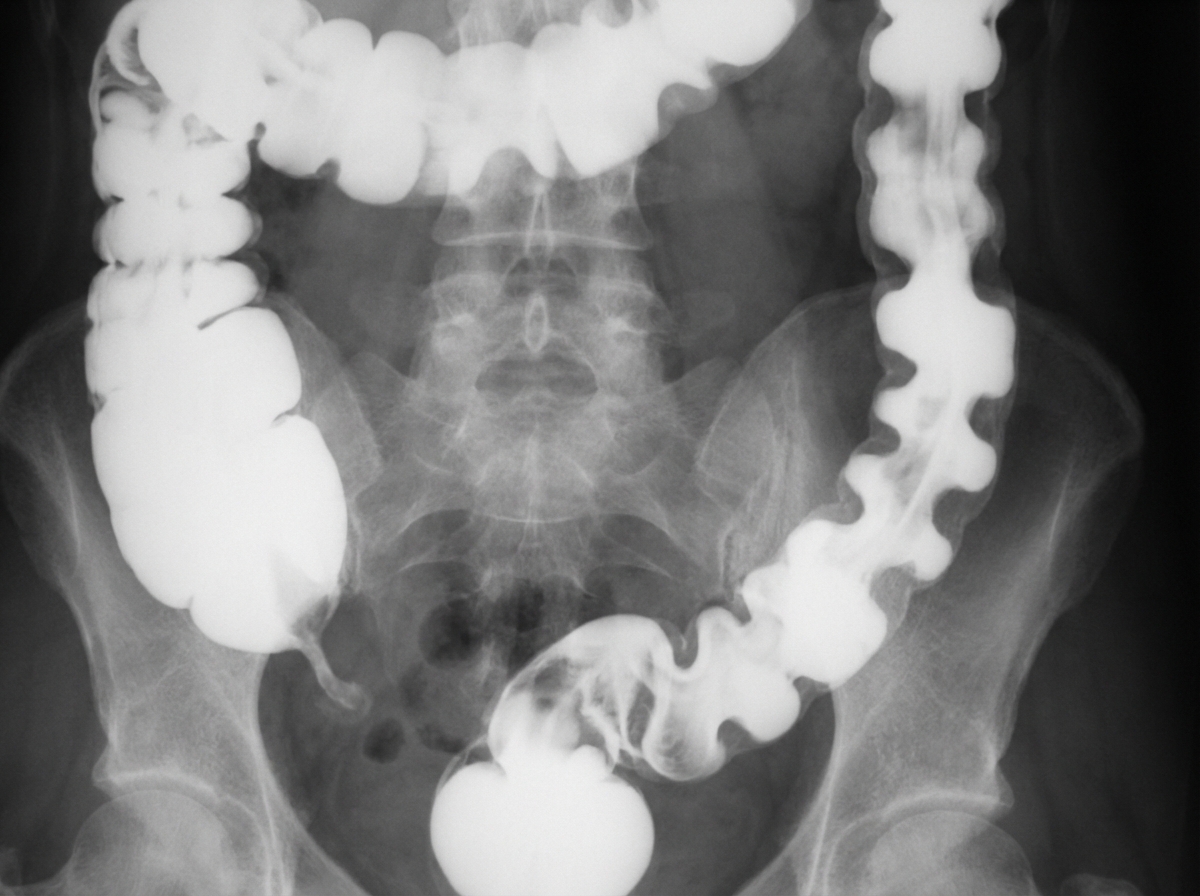
A jaundiced, 43-year-old alcoholic male presents with bright red blood in his last two stools. He denies pain on defecation or changes in his bowel habits. Which of the following would be the most likely finding on sigmoidoscopic examination?
Which of the following statements about GERD is true?
Maximum dilatation of the esophagus occurs in which condition?
What is the best screening test for Crohn's disease?
Which of the following is NOT a feature of malabsorption syndrome?
Which one of the following is the common cause of chronic pancreatitis?
Which of the following is a WRONG pair?
Which of the following are extrahepatic manifestations of Hepatitis?
What is the recommended screening for hepatocellular carcinoma (HCC) in patients with chronic liver disease?
What is capsule endoscopy used for?
Explanation: The clinical presentation describes a patient with chronic liver disease (alcoholic, jaundiced) presenting with **painless hematochezia** (bright red blood per rectum). **1. Why Hemorrhoids is correct:** In patients with cirrhosis and portal hypertension, there is increased pressure in the portosystemic venous anastomoses. While esophageal varices are the most common site of bleeding, **anorectal varices** and **hemorrhoids** are frequent causes of lower gastrointestinal bleeding. Hemorrhoids typically present as painless, bright red blood coating the stool or dripping into the toilet bowl, matching this patient's symptoms [1]. In an alcoholic patient with jaundice, portal hypertension is the most likely underlying driver for these vascular changes [3]. **2. Why the other options are incorrect:** * **Colorectal Carcinoma:** Usually presents with a change in bowel habits, weight loss, and iron deficiency anemia. While it can cause bleeding, the acute presentation in an alcoholic patient more strongly points toward portal hypertension-related issues. Combined sigmoidoscopy and proctoscopy allow for accurate detection of hemorrhoids versus distal colorectal neoplasia [2]. * **Diverticulitis:** This is an inflammatory process. It typically presents with significant left lower quadrant pain, fever, and leukocytosis. While diverticulosis causes painless bleeding, diverticulitis usually does not present with bright red hematochezia without pain. * **Hyperplastic Polyps:** These are generally asymptomatic, benign, and rarely cause significant rectal bleeding. Adenomatous polyps are more likely to bleed, but even then, they are less common than hemorrhoids in this clinical context. **Clinical Pearls for NEET-PG:** * **Portosystemic Anastomoses:** Remember the three key sites: Esophagus (Left gastric v. to Azygos v.), Umbilicus (Paraumbilical v. to Epigastric v.), and Rectum (Superior rectal v. to Middle/Inferior rectal v.). * **Anorectal Varices vs. Hemorrhoids:** While often used interchangeably in exams, true anorectal varices occur above the dentate line due to portal hypertension, whereas hemorrhoids are displacements of anal cushions. Both cause painless bright red bleeding. * **Initial Investigation:** For any patient over 40 with hematochezia, even if hemorrhoids are suspected, a colonoscopy is often indicated to rule out synchronous malignancy.
Explanation: Gastroesophageal Reflux Disease (GERD) occurs when the reflux of stomach contents causes troublesome symptoms or complications, primarily due to a transient or permanent relaxation of the Lower Esophageal Sphincter (LES) [1]. **Why Option B is Correct:** **Nissen Fundoplication** (360° wrap) is the surgical gold standard for GERD. It is indicated for patients who have failed medical therapy, have complications like strictures or Barrett’s esophagus, or prefer surgery over lifelong medication [1]. It reinforces the LES by wrapping the gastric fundus around the distal esophagus. **Analysis of Incorrect Options:** * **Option A:** *H. pylori* is **not** associated with an increased risk of GERD. In fact, some studies suggest that *H. pylori* (especially CagA+ strains) may be "protective" against GERD by causing atrophic gastritis, which reduces gastric acid secretion [1]. * **Option C:** Smoking is a **risk factor**, not protective. Nicotine relaxes the LES and reduces salivation (which neutralizes acid), thereby exacerbating reflux. * **Option D:** While PPIs are indeed the **mainstay of medical treatment**, in the context of this specific question format (often seen in older NEET-PG/AIIMS patterns), the focus is on definitive or surgical interventions when comparing options [1]. *Note: In modern clinical practice, both B and D are technically true, but Fundoplication is the classic "textbook" answer for surgical management questions.* **High-Yield Clinical Pearls for NEET-PG:** * **Gold Standard Investigation:** 24-hour ambulatory pH monitoring (DeMeester Score >14.72). * **First Investigation:** Upper GI Endoscopy (to rule out malignancy/Barrett’s). * **Barrett’s Esophagus:** Metaplasia of squamous epithelium to **specialized columnar epithelium** (with Goblet cells); it is a precursor to Adenocarcinoma [1]. * **Drug of Choice:** Proton Pump Inhibitors (PPIs) taken 30 minutes before the first meal [1].
Explanation: **Explanation:** **Achalasia Cardiae** is the correct answer because it is a chronic, progressive motility disorder characterized by the failure of the Lower Esophageal Sphincter (LES) to relax and the absence of peristalsis [1]. Over years, the persistent functional obstruction leads to massive proximal dilatation of the esophagus, often referred to as a **"Sigmoid Esophagus."** In advanced cases, the esophageal diameter can exceed 10 cm, representing the maximum dilatation seen in any clinical condition. **Analysis of Incorrect Options:** * **Carcinoma at the GE Junction:** While it causes significant obstruction, the progression is rapid. Patients typically present with dysphagia and weight loss within months, which does not allow enough time for the esophageal wall to undergo the massive compensatory dilatation seen in chronic achalasia. * **Stricture of the lower end:** Benign strictures (e.g., peptic strictures) cause proximal dilatation, but the fibrosis and inflammation often limit the elasticity of the esophageal wall compared to the long-standing neuromuscular failure in achalasia. * **CREST Syndrome (Scleroderma):** In Scleroderma, the esophagus becomes "aperistaltic" due to smooth muscle atrophy and fibrosis [1]. However, because the LES is typically **incompetent (low pressure)** rather than hypertensive, there is no distal obstruction to cause massive dilatation. **High-Yield NEET-PG Pearls:** * **X-ray Finding:** "Bird’s beak" or "Rat-tail" appearance on Barium swallow. * **Gold Standard Diagnosis:** Esophageal Manometry (shows incomplete LES relaxation and aperistalsis). * **Heller’s Myotomy:** The surgical treatment of choice, usually combined with a partial fundoplication to prevent reflux. * **Chagas Disease:** A secondary cause of achalasia caused by *Trypanosoma cruzi*, which destroys the myenteric (Auerbach’s) plexus.
Explanation: **Explanation:** The diagnosis of Inflammatory Bowel Disease (IBD) relies on a combination of clinical, endoscopic, and serological markers. **Why ASCA is the correct answer:** **Anti-Saccharomyces cerevisiae antibodies (ASCA)** are highly specific for **Crohn’s Disease (CD)**. While colonoscopy with biopsy remains the "gold standard" for diagnosis, ASCA is considered the best serological screening test to differentiate CD from Ulcerative Colitis (UC). ASCA is directed against mannan in the cell wall of baker’s yeast and is positive in approximately 60-70% of Crohn’s patients. **Analysis of Incorrect Options:** * **B. P-ANCA:** This marker is primarily associated with **Ulcerative Colitis** (positive in 60-80% of cases). In the context of IBD, the combination of **ASCA+/p-ANCA-** strongly suggests Crohn’s, while **ASCA-/p-ANCA+** suggests UC. * **C. Fecal alpha 1 anti-trypsin:** This is a marker used to diagnose **protein-losing enteropathy**, not a primary screening tool for IBD. * **D. Fecal calprotectin:** While this is a highly sensitive marker for intestinal inflammation, it is **non-specific**. It helps differentiate IBD from Irritable Bowel Syndrome (IBS) but cannot distinguish between Crohn’s and UC. **High-Yield Clinical Pearls for NEET-PG:** * **Gold Standard Diagnosis:** Ileocolonoscopy with biopsy [1]. * **Most Common Site:** Terminal ileum (Right iliac fossa pain). * **String Sign of Kantor:** Classic radiological finding on barium swallow due to terminal ileum narrowing [1]. * **Skip Lesions:** Characteristic endoscopic finding in Crohn's (unlike the continuous involvement in UC) [1]. * **Transmural Involvement:** Leads to complications like fistulae and strictures [1].
Explanation: **Explanation:** Malabsorption syndrome refers to the impaired absorption of nutrients, vitamins, and minerals from the small intestine [2]. The hallmark clinical feature is **diarrhea**, not constipation [3]. **1. Why Constipation is the Correct Answer:** In malabsorption, unabsorbed solutes (fats, carbohydrates) remain in the intestinal lumen, exerting an osmotic effect that draws water into the gut. This leads to increased stool frequency and volume. Therefore, **diarrhea** is the characteristic finding, making **constipation** the incorrect feature [3]. **2. Why the other options are features of Malabsorption:** * **Steatorrhea (Option D):** This is the most specific sign of fat malabsorption [1]. It presents as bulky, foul-smelling, oily stools that are difficult to flush, caused by the failure to absorb dietary lipids [3]. * **Anemia (Option A):** Chronic malabsorption leads to deficiencies of iron, Vitamin B12, or folate [4]. Iron deficiency (microcytic anemia) is common in Celiac disease, while B12 deficiency (megaloblastic anemia) occurs in Crohn’s disease or ileal resection [3], [4]. * **Tetany (Option C):** Malabsorption of Vitamin D and calcium, or the formation of insoluble calcium soaps with unabsorbed fatty acids, leads to hypocalcemia [4]. This manifests clinically as increased neuromuscular irritability or tetany (e.g., Trousseau’s or Chvostek’s sign). **Clinical Pearls for NEET-PG:** * **D-Xylose Test:** Used to differentiate mucosal malabsorption (e.g., Celiac) from pancreatic insufficiency (where the test is normal). * **Sudan III Stain:** A quick screening test for fecal fat. * **Gold Standard:** The 72-hour fecal fat estimation (>7g/day is abnormal). * **Dermatitis Herpetiformis:** A high-yield cutaneous association with Celiac disease.
Explanation: Chronic pancreatitis is a progressive inflammatory disorder characterized by irreversible destruction of pancreatic parenchyma, leading to fibrosis and loss of endocrine and exocrine functions. **1. Why Chronic Alcoholism is Correct:** In the developed world and for the NEET-PG exam, **chronic alcoholism** is the most common cause of chronic pancreatitis (accounting for 60–70% of cases) [1]. Alcohol acts as a metabolic toxin on acinar cells, increasing the protein concentration of pancreatic secretions. This leads to the formation of "protein plugs" that calcify, causing ductal obstruction, upstream pressure, and subsequent parenchymal fibrosis [1]. **2. Why the Other Options are Incorrect:** * **Gallstones:** While gallstones are the **most common cause of acute pancreatitis**, they rarely cause chronic pancreatitis. Chronic changes require long-term, repeated insults rather than transient biliary obstruction [1]. * **Obesity:** Obesity is a risk factor for gallstones and can worsen the severity of acute pancreatitis (due to peripancreatic fat necrosis), but it is not a direct primary cause of chronic pancreatitis. * **Polyposis:** Syndromes like Familial Adenomatous Polyposis (FAP) are associated with gastrointestinal malignancies but do not typically manifest as chronic pancreatitis. **Clinical Pearls for NEET-PG:** * **TIGAR-O Classification:** A useful mnemonic for etiologies (Toxic-metabolic, Idiopathic, Genetic, Autoimmune, Recurrent/Severe acute pancreatitis, Obstructive). * **Tropical Pancreatitis:** In specific regions of India, "Tropical Calcific Pancreatitis" is a significant non-alcoholic cause [1]. * **Classic Triad:** Steatorrhea, Diabetes Mellitus, and Pancreatic Calcifications (seen on X-ray/CT) [1]. * **Most sensitive initial test:** Fecal Elastase-1 level (decreased in exocrine insufficiency) [1].
Explanation: ### Explanation The correct answer is **C (H. pylori - Hypergastrinemia)** because *H. pylori* infection is primarily associated with **Hypochlorhydria** (low acid) in its chronic phase, rather than systemic hypergastrinemia as a defining feature. While *H. pylori* can cause a transient rise in gastrin due to antral inflammation [2], its hallmark pathophysiology involves the production of **urease**, which neutralizes gastric acid to create a protective ammonia cloud, and chronic infection often leads to gastric atrophy and reduced acid secretion. **Analysis of Options:** * **A. Zollinger-Ellison syndrome (ZES) - Increased HCl:** This is a correct pair. ZES is caused by a gastrin-secreting tumor (gastrinoma), leading to massive hypersecretion of gastric acid (HCl) and recurrent peptic ulcers. * **B. Polyp - Obstruction:** This is a correct pair. Large gastric or intestinal polyps can act as lead points for intussusception or physically block the lumen, causing gastric outlet or intestinal obstruction [4]. * **D. Menetrier disease - Hypoalbuminemia:** This is a correct pair. Menetrier disease is a **protein-losing gastropathy** characterized by massive hypertrophy of gastric folds (foveolar hyperplasia). This leads to the leakage of serum proteins into the gut, resulting in profound hypoalbuminemia and peripheral edema. **NEET-PG High-Yield Pearls:** * **Menetrier Disease:** Associated with over-expression of **TGF-alpha**. On biopsy, look for "corkscrew" glands and decreased parietal cells. * **H. pylori:** The most common cause of B-cell MALT lymphoma and Gastric Adenocarcinoma [3]. * **ZES:** 25% of cases are associated with **MEN-1 syndrome** (Pituitary, Parathyroid, Pancreas). * **Hypergastrinemia:** True pathological hypergastrinemia is seen in ZES, Pernicious Anemia (due to loss of feedback inhibition), and long-term PPI use [1].
Explanation: **Explanation:** Viral hepatitis, particularly Hepatitis B (HBV) and Hepatitis C (HCV), is frequently associated with systemic immune-mediated phenomena known as extrahepatic manifestations. **Why Option A is Correct:** * **Cryoglobulinemia:** This is most strongly associated with **Hepatitis C**. Chronic HCV infection leads to B-cell proliferation and the production of mixed cryoglobulins (Type II and III). These proteins precipitate in cold temperatures, causing vasculitis, palpable purpura, and glomerulonephritis. * **Aplastic Anemia:** This is a rare but life-threatening complication known as **Hepatitis-Associated Aplastic Anemia (HAAA)**. It typically occurs 2–3 months after an episode of acute hepatitis (often non-A, non-B, non-C viruses). It is thought to be mediated by T-cell destruction of bone marrow stem cells triggered by the viral infection. **Analysis of Incorrect Options:** * **Options B, C, and D:** While Aplastic anemia and Cryoglobulinemia are classic manifestations, **Guillain-Barré Syndrome (GBS)** is a much rarer neurological association compared to the high-yield associations of cryoglobulinemia and hematological failure. In the context of NEET-PG, when forced to choose the most characteristic pair, Aplastic anemia and Cryoglobulinemia represent the most frequently tested "textbook" manifestations. **NEET-PG High-Yield Pearls:** 1. **Hepatitis B (HBV):** Most commonly associated with **Polyarteritis Nodosa (PAN)** and **Membranous Glomerulonephritis**. 2. **Hepatitis C (HCV):** Most commonly associated with **Mixed Cryoglobulinemia**, **Membranoproliferative Glomerulonephritis (MPGN)**, **Porphyria Cutanea Tarda (PCT)**, and Lichen Planus. 3. **Hepatitis E (HEV):** Specifically associated with neurological manifestations like **Neuralgic Amyotrophy** and GBS. 4. **HAAA:** Usually presents as severe pancytopenia following a bout of seronegative acute hepatitis.
Explanation: **Explanation:** The primary goal of screening for **Hepatocellular Carcinoma (HCC)** is to detect the tumor at an early, resectable, or treatable stage. According to standard guidelines (AASLD/EASL), the gold standard for screening in high-risk patients (cirrhotics and certain Hepatitis B carriers) is the combination of **Abdominal Ultrasound (USG) and serum Alpha-fetoprotein (AFP) levels every 6 months.** * **Why Option A is correct:** USG is the preferred imaging modality due to its non-invasive nature, cost-effectiveness, and lack of radiation [1]. AFP is the most widely used tumor marker; while its sensitivity alone is limited, combining it with USG significantly increases the detection rate of early-stage HCC [1]. * **Why Options B, C, and D are incorrect:** * **Liver Function Tests (LFTs)** reflect the synthetic and excretory function of the liver but are not diagnostic or screening tools for malignancy. * **CT Scans** are highly sensitive but are not used for routine screening due to high cost, radiation exposure, and potential contrast-induced nephrotoxicity [1],[2]. CT/MRI are reserved for **diagnosis and staging** once a suspicious lesion is found on USG [1]. **High-Yield Clinical Pearls for NEET-PG:** * **Screening Interval:** Every 6 months (based on the doubling time of HCC cells). * **Target Population:** All patients with cirrhosis (Child-Pugh A and B) and specific non-cirrhotic HBV patients (e.g., active hepatitis or family history of HCC). * **AFP Cut-off:** A value >20 ng/mL is generally considered suspicious, while >200 ng/mL in a cirrhotic patient is highly suggestive of HCC [1]. * **Diagnosis:** Unlike most cancers, HCC can be diagnosed based on **characteristic imaging** (arterial phase enhancement with venous phase washout) on Triple-phase CT or MRI without the need for a biopsy [1].
Explanation: **Explanation:** **Capsule Endoscopy (Wireless Capsule Endoscopy)** is a non-invasive diagnostic tool primarily used to visualize the **small intestine** [2], an area traditionally difficult to reach via standard upper GI endoscopy [1] or colonoscopy [2]. **Why Option A is correct:** The most common and established indication for capsule endoscopy is **Obscure Gastrointestinal Bleeding (OGIB)** [3]. When a patient presents with iron deficiency anemia or melena, and both upper endoscopy and colonoscopy fail to identify a source, capsule endoscopy is the "gold standard" for detecting small bowel lesions such as **angiodysplasias** (most common cause) [3], Crohn’s disease, or small bowel tumors. **Why other options are incorrect:** * **B. Motility disorders:** While the transit time of the capsule can be measured, it is not the primary diagnostic modality for motility disorders. Specialized tests like **manometry** or gastric emptying studies (scintigraphy) are preferred. * **C. GERD:** GERD is a clinical diagnosis or confirmed via **24-hour pH monitoring** and upper GI endoscopy (to check for Barrett’s esophagus or esophagitis). A capsule moving rapidly through the esophagus cannot provide the detailed mucosal biopsy or prolonged monitoring required. **High-Yield Clinical Pearls for NEET-PG:** * **Contraindication:** The absolute contraindication is **intestinal obstruction** or known strictures (risk of capsule retention). * **Other Indications:** Surveillance of polyposis syndromes (e.g., Peutz-Jeghers) and assessing the extent of small bowel Crohn’s disease. * **Patency Capsule:** If a stricture is suspected, a "Patency Capsule" (dissolvable) is used first to ensure the real capsule will pass safely.
Esophageal Disorders
Practice Questions
Peptic Ulcer Disease
Practice Questions
Inflammatory Bowel Disease
Practice Questions
Irritable Bowel Syndrome
Practice Questions
Malabsorption Syndromes
Practice Questions
Pancreatitis (Acute and Chronic)
Practice Questions
Gastrointestinal Bleeding
Practice Questions
Liver Diseases and Cirrhosis
Practice Questions
Viral Hepatitis
Practice Questions
Biliary Tract Disorders
Practice Questions
Gastrointestinal Motility Disorders
Practice Questions
Gastrointestinal Malignancies
Practice Questions
Get full access to all questions, explanations, and performance tracking.
Start For Free