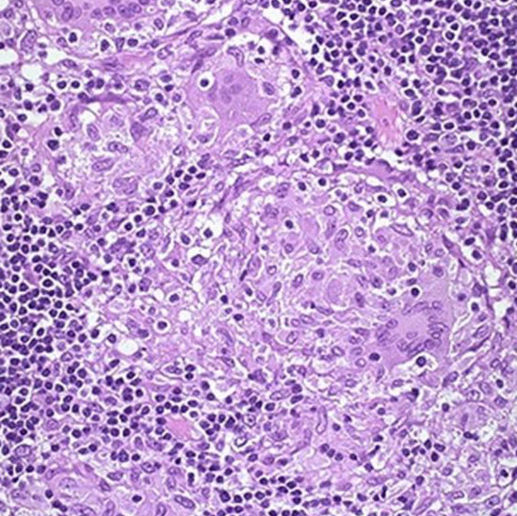
On esophageal manometry, spastic contractions in the esophageal body with a distal contractile integral (DCI) >8000 mmHg*s*cm are diagnostic of:
True statement regarding upper GI bleeds:
Patient presented with diarrhoea, poor appetite and malabsorption. His duodenal biopsy was taken which showed crypt hyperplasia, villi atrophy and infiltration of CD8+ T cells in the epithelium. What is the likely diagnosis of the patient?
All of the following are true about ulcerative colitis except:
Which is the most common site of gastrinoma in MEN 1 syndrome?
What is the differentiating feature between irritable bowel syndrome and inflammatory bowel disease?
Which of the following is false about obstructive jaundice?
Child Pugh score puts patients into three categories of Score A (<7), Score B (7-9) and Score C (10-15). The following is a type of which scale?
Most common type of gastric cancer is:
Which is not a component of Ranson's criteria for acute pancreatitis?
Explanation: ***Type III achalasia*** - This diagnosis is characterized by the presence of **spastic contractions** in the esophageal body, specifically with a **distal contractile integral (DCI) greater than 8000 mmHg*s*cm**, alongside the classic features of achalasia (impaired LES relaxation and absent peristalsis) [1]. - The elevated DCI reflects the **premature and simultaneous contractions** that are hallmark of this subtype, distinguishing it from other motility disorders [1]. *Jackhammer esophagus* - While it also involves very strong esophageal contractions (**high DCI**), jackhammer esophagus (also known as hypercontractile esophagus) does **not present with impaired LES relaxation or absent peristalsis** as seen in achalasia. - The defining feature of jackhammer esophagus is **multiple rapid swallows** (MRS) that induce simultaneous contractions, often with very high vigor. *Type II achalasia* - This type of achalasia is defined by **pan-esophageal pressurization** in more than 20% of swallows, along with impaired LES relaxation and absent peristalsis. - Unlike Type III, it does **not show the spastic hypercontractile activity** in the esophageal body revealed by a very high DCI. *Type I achalasia* - This is the classic form of achalasia characterized by **absent esophageal peristalsis** and **impaired lower esophageal sphincter (LES) relaxation**, without significant esophageal pressurization or spastic contractions [1]. - It represents the most common subtype and lacks the **high DCI spastic activity** seen in Type III achalasia.
Explanation: ***The most common cause of upper GI bleeds is peptic ulcer disease, not variceal bleeding.*** [1] * **Peptic ulcer disease (PUD)**, particularly **duodenal and gastric ulcers**, accounts for the majority of upper GI bleeding cases. * While **variceal bleeding** is severe and life-threatening, it is a less frequent cause overall compared to PUD. *Endoscopic banding is the first-line treatment for all types of upper GI bleeding* * **Endoscopic banding** is primarily indicated and highly effective for **esophageal variceal bleeding**, not for all types of upper GI bleeds. * For non-variceal bleeding, such as **peptic ulcers**, treatments like **epinephrine injection**, **heater probe**, or **clips** are more commonly utilized [1]. *Upper GI bleeding is defined as bleeding originating proximal to the ampulla of Vater, not the ligament of Treitz* * **Upper GI bleeding** is classically defined as bleeding occurring **proximal to the ligament of Treitz**, which marks the anatomical division between the duodenum and the jejunum. * The **ampulla of Vater** is located in the second part of the duodenum, and bleeding upstream of this point is still considered upper GI bleed. *Rockall score is primarily used for immediate treatment decisions rather than risk stratification* * The **Rockall score** is a validated tool specifically designed for **risk stratification** in upper GI bleeding, predicting rebleeding and mortality [1]. * While it informs overall management, immediate treatment decisions are often guided by the patient's **hemodynamic stability** and endoscopic findings, rather than solely by the score.
Explanation: ***Celiac disease*** - The combination of **diarrhoea**, **malabsorption**, **villi atrophy**, **crypt hyperplasia**, and **CD8+ T-cell infiltration** in the duodenal epithelium is pathognomonic for celiac disease [1]. - This condition is triggered by **gluten ingestion**, leading to an immune-mediated enteropathy [1], [3]. *Whipple disease* - Characterized by **malabsorption**, fever, arthralgia, and neurological symptoms [2]. - Histologically, it shows **foamy macrophages** containing PAS-positive material (Tropheryma whipplei) in the lamina propria, not primarily CD8+ T-cell infiltration [2]. *Environmental enteropathy* - Also known as tropical enteropathy, it causes **villi atrophy** and malabsorption, particularly in individuals living in areas with poor sanitation. - However, the prominent feature is often a diffuse inflammatory infiltrate, and specific **CD8+ T-cell infiltration** in the epithelium is not as specific as in celiac disease. *Pancreatitis* - Presents with **abdominal pain**, nausea, and vomiting, and can lead to malabsorption due to pancreatic enzyme insufficiency. - Histology of the duodenum would typically be normal, as the pathology primarily involves the **pancreas**, not the duodenal mucosa itself.
Explanation: ***Steroid dependent cases need surgery*** - While **steroid dependency** in ulcerative colitis (UC) indicates a need for alternative or escalate medications, it does not automatically necessitate surgery [1]. - Many steroid-dependent patients can be managed effectively with **immunomodulators** or **biologic therapies**, avoiding surgery. *Surgery is required in a subset of severe cases.* - **Severe ulcerative colitis** that is refractory to medical therapy, or complicated by toxic megacolon, perforation, or severe bleeding, often requires surgical intervention [1]. - This statement is true, as surgery can be curative for UC by removing the affected colon [1]. *Extra-intestinal problems of UC are managed medically* - **Extra-intestinal manifestations** of ulcerative colitis, such as arthritis, skin lesions (erythema nodosum), and eye inflammation (uveitis), are typically managed with medications specific to those conditions, often in conjunction with UC treatment [1], [2]. - This statement is true, as these manifestations rarely require surgical intervention themselves. *The highest risk of UC requiring surgery in 1st year* - The risk of surgery in ulcerative colitis is indeed highest in the **first year after diagnosis**, particularly for patients presenting with severe disease. - This initial period often determines the disease course and responsiveness to medical treatment.
Explanation: ***Duodenum*** - In **MEN 1 syndrome**, gastrinomas (gastrin-secreting tumors) are most commonly found in the **duodenum**, often multiple and small. - This location accounts for a significant majority of gastrinomas, particularly in patients with **Zollinger-Ellison syndrome (ZES)** associated with MEN 1. *Stomach* - While gastrinomas can occasionally be found in the stomach, this is a **much less common site** compared to the duodenum, especially in the context of MEN 1 syndrome. - Gastric gastrinomas are typically associated with conditions like **atrophic gastritis** and **pernicious anemia**, leading to G-cell hyperplasia and often hypergastrinemia, but tend to be less aggressive. *Ileum* - The **ileum** is an **uncommon site** for gastrinomas; these types of neuroendocrine tumors (NETs) are rarely found there. - NETs in the ileum are more typically associated with the secretion of other hormones, such as **serotonin**, leading to carcinoid syndrome, rather than gastrin. *Jejunum* - Gastrinomas in the **jejunum** are also **rare**, similar to the ileum. - While neuroendocrine tumors can arise throughout the small bowel, the jejunum is not a typical or primary location for gastrin-producing tumors within the context of **MEN 1**.
Explanation: ***Stool calprotectin*** - **Stool calprotectin** is a reliable biomarker used to differentiate between **Inflammatory Bowel Disease (IBD)** and **Irritable Bowel Syndrome (IBS)**. It's a protein released by neutrophils during intestinal inflammation. - Elevated levels of **calprotectin** strongly suggest **mucosal inflammation** characteristic of IBD (Crohn's disease or ulcerative colitis), while normal levels are typical in IBS, which lacks inflammation [1]. *pain in abdomen* - **Abdominal pain** is a common symptom in both IBS and IBD. In IBS, it's often linked to altered bowel habits and is a key diagnostic criterion [1]. - In IBD, abdominal pain is typically due to inflammation, strictures, or abscesses, but its presence alone does not differentiate the conditions . *Diarrhoea* - **Diarrhea** is a prominent symptom in both IBS and IBD. In IBS, it can be a predominant feature (IBS-D), often associated with urgency [1]. - In IBD, diarrhea is usually due to inflammation disrupting normal absorption and secretion, and it may contain blood or mucus . *Mucus in stools* - The presence of **mucus in stools** can occur in both IBS and IBD. In IBS, it's often present without blood and is generally considered part of altered bowel function [1]. - In IBD, mucus in stools, particularly when accompanied by blood, strongly suggests active intestinal inflammation and mucosal damage .
Explanation: ***Unconjugated bilirubin elevation*** - In **obstructive jaundice**, the primary issue is the obstruction of bile flow, preventing conjugated bilirubin (which is water-soluble) from entering the GI tract [1]. - This leads to a buildup of **conjugated bilirubin** in the bloodstream, not unconjugated bilirubin, making this statement false [1]. *Pruritus* - **Pruritus**, or itching, is a common symptom of obstructive jaundice due to the accumulation of **bile salts** in the skin. - These bile salts irritate nerve endings, leading to intense itching. *Icterus* - **Icterus**, or jaundice, is the yellow discoloration of the skin and sclera caused by the accumulation of **bilirubin** (primarily conjugated bilirubin in this case) in the tissues [2]. - This is a hallmark sign of both obstructive and non-obstructive jaundice [2]. *Pale stools* - **Pale stools** (acholic stools) are characteristic of obstructive jaundice because **bilirubin** which gives stool its normal brown color, is unable to reach the intestines [1], [2]. - Undigested fats may also contribute to the pale, sometimes greasy appearance of the stool.
Explanation: ***Ordinal*** - An **ordinal scale** ranks data with a meaningful order, like the Child-Pugh score categories (A, B, C), but the difference between ranks isn't necessarily equal or precisely quantifiable. - While categories reflect increasing severity, the "distance" between A and B may not be the same as between B and C in a strictly numerical sense. *Nominal* - A **nominal scale** categorizes data without any order or ranking, such as blood types (A, B, AB, O) or gender. - The Child-Pugh score categories have an inherent order of severity (A < B < C), making it more than just nominal. *Quantitative* - **Quantitative scales** involve numerical data that can be measured and calculated. - While the Child-Pugh score is derived from quantitative variables, the final categorical output (A, B, C) doesn't allow for arithmetic operations between the categories themselves. *Continuous* - A **continuous scale** can take any value within a given range, like height or weight, allowing for infinite precision. - The Child-Pugh score categories (A, B, C) are discrete and specific ranges, not allowing for infinitely precise intermediate values.
Explanation: ***Adenocarcinoma*** - **Gastric adenocarcinoma** accounts for over 90% of all gastric cancers, making it overwhelmingly the most common type. - It arises from the glandular cells of the stomach lining. *Lymphoma* - **Gastric lymphoma** is a less common type of gastric malignancy, often originating from mucosa-associated lymphoid tissue (MALT). - While it can occur in the stomach, it represents a small percentage compared to adenocarcinoma. *GIST* - **Gastrointestinal stromal tumors (GISTs)** are mesenchymal tumors that arise from the interstitial cells of Cajal in the GI tract, including the stomach. - They are rare compared to adenocarcinoma. *Carcinoid* - **Gastric carcinoids**, or neuroendocrine tumors, originate from specialized hormone-producing cells in the stomach lining. - They are generally slow-growing and represent a very small fraction of all gastric neoplasms.
Explanation: ***Serum lipase*** - **Serum lipase** is not a component of Ranson's criteria. While it is a crucial diagnostic marker for acute pancreatitis, Ranson's criteria focus on other clinical and laboratory values for predicting severity. - The criteria were developed before widespread availability and use of lipase as a primary diagnostic marker for pancreatitis. *Age* - **Age** is a component of Ranson's criteria, specifically "Age > 55 years" for admission and initial assessment [1]. - Older age is associated with increased severity and mortality in acute pancreatitis due to decreased physiologic reserve [1]. *Base deficit* - **Base deficit** is a component of Ranson's criteria, specifically "Base deficit > 4 mEq/L" after 48 hours. - A significant base deficit indicates **metabolic acidosis**, which is a marker of severe systemic inflammation and organ dysfunction in acute pancreatitis. *Blood glucose* - **Blood glucose** is a component of Ranson's criteria, specifically "Blood glucose > 200 mg/dL (11.1 mmol/L)" for admission and initial assessment. - Elevated blood glucose can reflect the severity of pancreatic inflammation and insult to the **islet cells**, or systemic stress response.
Esophageal Disorders
Practice Questions
Peptic Ulcer Disease
Practice Questions
Inflammatory Bowel Disease
Practice Questions
Irritable Bowel Syndrome
Practice Questions
Malabsorption Syndromes
Practice Questions
Pancreatitis (Acute and Chronic)
Practice Questions
Gastrointestinal Bleeding
Practice Questions
Liver Diseases and Cirrhosis
Practice Questions
Viral Hepatitis
Practice Questions
Biliary Tract Disorders
Practice Questions
Gastrointestinal Motility Disorders
Practice Questions
Gastrointestinal Malignancies
Practice Questions
Get full access to all questions, explanations, and performance tracking.
Start For Free