Sweating does not occur in which of the following conditions?
Which of the following organs is most sensitive to hypothermia?
Hyperbaric oxygen is indicated in which of the following conditions?
Which of the following is not typically seen in heat stroke?
Severe hypothermia is characterized by all the following EXCEPT:
Which of the following is NOT a feature of heat stroke?
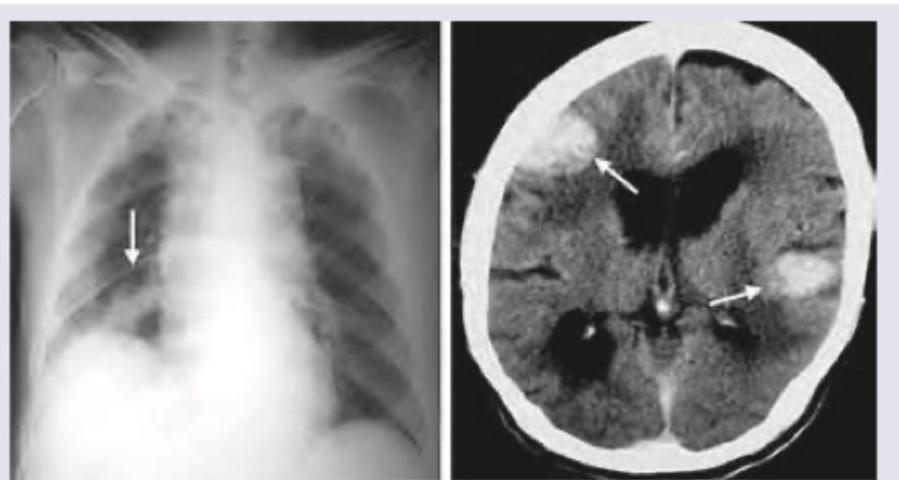
A 65-year-old uranium miner presents with muscle cramps and early morning headache. CXR and NCCT scan done shows:

Which of the following is not a feature of heat stress?
Incorrect statement regarding the management of frostbite:
A soldier from Siachen came in emergency. How will you rule out hypothermia?
Explanation: The core physiological distinction between heat-related illnesses lies in the status of the body’s thermoregulatory mechanisms [2]. **Heat stroke** is a life-threatening medical emergency characterized by a failure of the hypothalamic thermoregulatory center [1]. When the core body temperature rises above **40°C (104°F)**, the body's cooling mechanisms fail completely [1]. This leads to **anhidrosis** (absence of sweating), resulting in hot, dry skin. The clinical triad for heat stroke includes hyperpyrexia, anhidrosis, and altered mental status (confusion, seizures, or coma) [1]. **Why the other options are incorrect:** * **Heat exhaustion:** This is a pre-cursor to heat stroke where thermoregulation is still functional [1]. The patient experiences **profuse sweating**, dehydration, and hypotension, but the mental status remains normal [1]. * **Heat fatigue:** This is a mild, early response to heat stress characterized by lethargy and weakness. Sweating remains intact as the body attempts to dissipate heat [2]. * **Heat rash (Miliaria rubra):** This occurs due to the obstruction of sweat ducts. While localized areas of the skin may not release sweat effectively, the body’s systemic ability to sweat is not lost. **High-Yield Clinical Pearls for NEET-PG:** * **Classic Heat Stroke:** Occurs during heatwaves; typically affects elderly or sedentary individuals [1]. * **Exertional Heat Stroke:** Affects young athletes or military recruits; sweating may occasionally persist initially, but the hallmark is CNS dysfunction [1]. * **Management:** The gold standard treatment is **rapid cooling** (Ice water immersion or evaporative cooling) and aggressive fluid resuscitation [1]. * **Complication:** Rhabdomyolysis and Acute Kidney Injury (AKI) are common in exertional heat stroke.
Explanation: The **Heart** is the organ most sensitive to hypothermia because cold temperatures directly disrupt the cardiac conduction system and myocardial stability [1]. As core temperature drops, the heart undergoes a predictable sequence of dysfunction: initial tachycardia followed by progressive bradycardia, decreased cardiac output, and extreme irritability [1]. **Why the Heart is the Correct Answer:** The myocardium's electrical stability is highly temperature-dependent. At temperatures below **32°C (89.6°F)**, the heart becomes highly prone to arrhythmias [1]. The most characteristic ECG finding is the **Osborn wave (J-wave)**. As cooling continues (below 28°C), the risk of spontaneous **Ventricular Fibrillation (VF)** increases significantly [1]. In clinical practice, a hypothermic heart is often described as "irritable," where even minor physical handling (like rough moving or catheterization) can precipitate fatal arrhythmias. **Analysis of Incorrect Options:** * **Brain:** While the brain is sensitive to hypoxia, hypothermia actually has a **neuroprotective** effect by decreasing the cerebral metabolic rate of oxygen (CMRO2). This is why patients can sometimes survive prolonged submersion in cold water. * **Liver & Kidney:** These organs experience decreased perfusion and metabolic slowing (leading to "cold diuresis" in kidneys), but they do not fail as acutely or catastrophically as the heart does under cold stress [2]. **High-Yield Clinical Pearls for NEET-PG:** * **Osborn Wave (J-wave):** A positive deflection at the junction of the QRS complex and ST segment; pathognomonic for hypothermia. * **"Not dead until warm and dead":** Resuscitation should continue until the core temperature is raised to 32–35°C. * **Drug Metabolism:** In severe hypothermia, the heart is unresponsive to ACLS drugs (like Atriopine or Epinephrine) and defibrillation until rewarming occurs.
Explanation: Explanation: **Hyperbaric Oxygen Therapy (HBOT)** involves breathing 100% oxygen at pressures greater than 1 atmosphere absolute (ATA). [1] **Why Carbon Monoxide (CO) Poisoning is the Correct Answer:** CO has an affinity for hemoglobin that is 200–250 times greater than oxygen, forming **carboxyhemoglobin (COHb)** and shifting the oxygen-dissociation curve to the left (preventing oxygen release to tissues). [2] HBOT is the treatment of choice because it: 1. **Reduces Half-life:** It reduces the half-life of COHb from ~300 minutes (room air) to ~20–30 minutes. 2. **Dissolves Oxygen:** It increases the amount of dissolved oxygen in the plasma, maintaining tissue oxygenation despite compromised hemoglobin. [1] 3. **Prevents Sequelae:** It helps prevent delayed neuropsychiatric sequelae. **Analysis of Incorrect Options:** * **ARDS:** The primary treatment is mechanical ventilation with low tidal volumes and PEEP. High-pressure oxygen can actually worsen lung injury via pulmonary oxygen toxicity (Lorrain Smith effect). [1] * **Anaerobic Infection:** While HBOT is used for specific necrotizing soft tissue infections (e.g., Gas Gangrene/Clostridial myonecrosis), it is **not** a routine treatment for general anaerobic infections, which are managed with surgical debridement and antibiotics (Metronidazole/Clindamycin). * **Septicemia:** The mainstay of treatment is the "Sepsis Six" bundle (fluids, antibiotics, etc.). HBOT has no established role in treating systemic sepsis. **NEET-PG High-Yield Pearls:** * **Indications for HBOT:** Decompression sickness (Bends), Air/Gas embolism, CO poisoning, Gas gangrene, and refractory Osteomyelitis. [3] * **Absolute Contraindication:** Untreated Pneumothorax. * **Most Common Side Effect:** Middle ear barotrauma (Eustachian tube dysfunction). * **CO Poisoning Presentation:** "Cherry-red" skin (rarely seen in life), headache, and metabolic acidosis with a normal $PaO_2$. [4]
Explanation: **Explanation:** Heat stroke is a medical emergency characterized by a core body temperature >40°C (104°F) and central nervous system dysfunction [1]. It results in a systemic inflammatory response leading to multi-organ dysfunction syndrome (MODS). **Why Pancreatitis is the Correct Answer:** While heat stroke affects almost every organ system, **Pancreatitis** is not a typical or classic feature. The primary pathologies involve direct thermal injury to tissues and microvascular thrombosis. While rare case reports exist, it is not considered a standard diagnostic or clinical hallmark of the condition, unlike the other options provided. Note: Pancreatitis is more classically associated with complications of hypothermia [4]. **Analysis of Incorrect Options:** * **Rhabdomyolysis (A):** Extremely common, especially in *Exertional Heat Stroke*. Excessive heat causes direct muscle cell membrane destruction, leading to the release of myoglobin, which often results in Acute Kidney Injury (AKI). * **Hypovolaemia (C):** Most patients present with significant volume depletion due to profuse sweating (in early stages) and insensible fluid loss [2]. This leads to hemoconcentration and contributes to circulatory collapse. * **Seizures (D):** CNS dysfunction is a mandatory diagnostic criterion for heat stroke [1]. This can manifest as delirium, coma, or seizures due to cerebral edema and metabolic derangements. **NEET-PG High-Yield Pearls:** 1. **Diagnostic Triad:** Hyperpyrexia (>40°C), CNS dysfunction, and a history of exposure to high ambient heat or strenuous exercise [1]. 2. **Classic vs. Exertional:** Classic heat stroke (non-exertional) often affects the elderly and presents with **anhidrosis** (dry skin), whereas exertional heat stroke affects athletes/laborers and often presents with **diaphoresis** [1][3]. 3. **Treatment Gold Standard:** Rapid cooling is the priority. **Evaporative cooling** or **Ice-water immersion** (most effective for exertional) should be initiated immediately [1]. 4. **Liver Injury:** The liver is highly sensitive to heat; a rise in transaminases (AST/ALT) is a common finding.
Explanation: Hypothermia is defined as a core body temperature below 35°C (95°F). It is clinically staged into mild, moderate, and severe. In **severe hypothermia** (core temperature <28°C or 82.4°F), the body’s compensatory mechanisms fail, leading to a global depression of metabolic and physiological functions [3]. **Why Tachycardia is the Correct Answer:** Tachycardia is a physiological response seen in **mild hypothermia** as the body attempts to maintain cardiac output and generate heat through shivering [3]. However, as the temperature drops into the severe range, the heart rate slows down due to decreased spontaneous depolarization of pacemaker cells. Therefore, **bradycardia** (not tachycardia) is a hallmark of severe hypothermia [1]. **Analysis of Other Options:** * **J waves (Osborn waves):** These are pathognomonic ECG findings in hypothermia, appearing as a positive deflection at the junction of the QRS complex and ST segment [2]. They become more prominent as the temperature drops. * **Hypotension:** In severe hypothermia, there is a decrease in cardiac output and a loss of vascular tone, leading to a significant drop in blood pressure [1]. * **Dysrhythmias:** The hypothermic myocardium is extremely irritable. Severe cases often present with atrial fibrillation with a slow ventricular response, followed by ventricular fibrillation or asystole as the temperature continues to fall [1]. **High-Yield Clinical Pearls for NEET-PG:** * **Stages of Hypothermia:** Mild (32–35°C), Moderate (28–32°C), Severe (<28°C). * **ECG Changes:** Prolonged PR, QRS, and QTc intervals; J waves; and various arrhythmias [2]. * **Management Rule:** "No one is dead until they are warm and dead." Resuscitation should continue until the core temperature reaches 30–32°C. * **Cold Diuresis:** Hypothermia causes peripheral vasoconstriction, leading to increased central blood volume and inhibition of ADH, resulting in significant diuresis.
Explanation: **Explanation:** Heat stroke is a life-threatening medical emergency characterized by a failure of the body’s thermoregulatory mechanisms [1]. The diagnosis is clinically defined by a triad of **hyperpyrexia** (core temperature >40°C or 104°F), **Central Nervous System (CNS) dysfunction**, and often (but not always) **anhidrosis** [1]. **Why "Prickly Heat" is the correct answer:** Prickly heat (Miliaria rubra) is a mild, superficial inflammatory disorder caused by the blockage of sweat ducts. While it indicates exposure to a hot and humid environment, it is a minor heat-related illness and **not a feature of heat stroke** itself. In fact, the cessation of sweating (anhidrosis) seen in heat stroke is the physiological opposite of the active but blocked sweating seen in prickly heat. **Analysis of Incorrect Options:** * **Anhidrosis (A):** The absence of sweating is a classic sign, especially in "Classic" (non-exertional) heat stroke, as the sweat glands fail due to extreme thermal injury [1]. * **CNS Dysfunction (C):** This is the hallmark that differentiates heat stroke from heat exhaustion [1]. Symptoms include confusion, seizures, delirium, or coma. * **Hyperpyrexia (D):** A rectal (core) temperature exceeding 40°C is a mandatory diagnostic criterion for heat stroke [1]. **High-Yield Clinical Pearls for NEET-PG:** * **Management:** The gold standard treatment is **rapid cooling**, specifically **evaporative cooling** or **ice-water immersion**. * **Complications:** Watch for Rhabdomyolysis, Acute Renal Failure, and Disseminated Intravascular Coagulation (DIC). * **Drug-induced:** Anticholinergics and antipsychotics increase the risk of heat stroke by inhibiting sweating. * **Distinction:** Unlike heat exhaustion, heat stroke involves multi-organ dysfunction and requires immediate aggressive intervention [1].
Explanation: ***SCLC, brain metastasis*** - The chest X-ray shows a **hilar mass** (arrow), which is characteristic of **small cell lung cancer (SCLC)**, common in **uranium miners** due to **radon exposure**. - The NCCT scan reveals multiple **intracranial masses** (arrows) with surrounding **edema**, highly suggestive of **brain metastasis**, a frequent complication of SCLC, and explaining the **early morning headache** and potentially the **muscle cramps** (due to SIADH, a paraneoplastic syndrome common with SCLC). *NSCLC, brain metastasis* - While **Non-small cell lung cancer (NSCLC)** can also metastasize to the brain, the typical presentation is often different, and SCLC is more aggressively metastatic, especially to the brain, and strongly associated with the patient's occupational history as a **uranium miner**. - NSCLC often presents with **peripheral lung masses**, whereas the image shows a central hilar mass more indicative of SCLC. *Pleural and intracranial calcification* - The imaging does not clearly show **pleural calcification**; instead, a distinct hilar mass is present on the CXR. - The intracranial lesions are enhancing masses with edema, not calcifications, which would appear as much brighter, dense areas on CT. *Glioblastoma multiforme, extracranial spread* - **Glioblastoma multiforme** is a primary brain tumor and rarely spreads outside the central nervous system, making **extracranial spread** highly improbable. - The presence of a **primary lung lesion** makes brain metastasis from a systemic cancer much more likely than a primary brain tumor with rare extracranial involvement.
Explanation: ***Numbness*** - **Numbness** is a neurological symptom associated with nerve damage or dysfunction, not typically with the systemic physiological responses to excessive heat. [2] - While extreme heatstroke can lead to altered mental status, sensory deficits like **numbness** are not direct or common manifestations of heat stress itself. *Hyperpyrexia* - **Hyperpyrexia**, or extremely high body temperature, is a hallmark feature of severe heat stress, particularly **heatstroke**, indicating a failure of thermoregulation. [1] - High fever can lead to protein denaturation and cell death, contributing to systemic organ damage. *Syncope* - **Syncope**, or fainting, often occurs in heat stress due to **vasodilation** and **volume depletion**, leading to a temporary reduction in cerebral blood flow. [3] - This is a common symptom of **heat exhaustion** as the body tries to shunt blood to the periphery for cooling. [3] *Cramps* - **Cramps** are characteristic symptoms of **heat cramps**, an early form of heat illness, caused by electrolyte imbalances (especially sodium) due to excessive sweating. - These painful muscle spasms usually affect large muscle groups used during exertion in hot environments.
Explanation: ***Antibiotics and analgesics not used*** - This statement is incorrect as **antibiotics are used** in the management of frostbite for prophylaxis against infection, especially in severe cases or open wounds. - **Analgesics are also crucial** to manage the significant pain associated with frostbite and the rewarming process [1]. *Amputation in severe cases* - **Amputation** is a necessary intervention for severe, irreversible tissue damage and necrosis caused by frostbite, typically reserved as a last resort [1]. - This decision is usually made after sufficient time has passed to demarcate viable from non-viable tissue, often several weeks post-injury [1]. *Rewarming is done* - **Rapid rewarming** of the affected area in a warm water bath (37-39°C) is the most critical initial treatment for frostbite to minimize tissue damage. - This process is painful and should be done only when there is no risk of refreezing. *The area is dried and cleaned* - After rewarming, the affected area should be **gently dried** to prevent further skin breakdown and the development of maceration. - **Cleaning the wound** helps prevent infection and maintains a sterile environment for healing.
Explanation: ***Measure temperature via rectal route*** - A **rectal temperature** is the most reliable and accurate core body temperature measurement, crucial for diagnosing and monitoring **hypothermia** [1]. - It is less affected by external environmental factors compared to other sites, making it ideal in emergency situations like those involving a soldier from **Siachen**. *Measure temperature via nasal route* - The nasal route is **not a standard or reliable method** for measuring core body temperature, and its accuracy in diagnosing hypothermia is questionable. - This method is more prone to environmental influence and provides readings that **do not reflect the core temperature** accurately. *Measure temperature via oral route* - **Oral temperature measurements** are often inaccurate in hypothermic patients due to factors like mouth breathing, the presence of cold fluids, or the patient's inability to cooperate. - In a severe cold environment like Siachen, the oral cavity can be significantly cooled, leading to **falsely low readings** that do not reflect core body temperature. *Measure temperature via tympanic route* - Tympanic (ear) temperature measurements can be unreliable in hypothermia due to issues with **probe placement**, ear canal cerumen, and the influence of ambient air temperature on the sensor. - While it attempts to measure core temperature, its accuracy is **inferior to rectal temperature**, especially in severely hypothermic individuals.
Explanation: ***Is associated with fever*** - Heat stroke specifically refers to a severe condition characterized by a **core body temperature usually exceeding 40.0°C (104.0°F)**, which is considered a fever [1]. - This elevated temperature is due to a failure of the body's thermoregulatory mechanisms, leading to widespread cellular damage [1]. *Is associated with hypovolemia* - **Hypovolemia** (decreased blood volume) can occur in all heat-related illnesses, including heat cramps and heat exhaustion, due to significant fluid loss through sweating [2]. - While present in heat stroke, it is not the sole defining feature that differentiates it from less severe heat illnesses. *Is associated with dehydration* - **Dehydration** (insufficient body water) is a common element across the spectrum of heat illnesses, from heat cramps to heat exhaustion and heat stroke, resulting from excessive sweating [3]. - Therefore, it is not a distinguishing characteristic unique to heat stroke. *Results in a hemorrhagic stroke* - Heat stroke causes neurological dysfunction due to direct thermal damage to the brain and other organs, but it generally leads to a **hyperthermia-induced encephalopathy**, not specifically a hemorrhagic stroke [3]. - A hemorrhagic stroke is a specific type of stroke caused by bleeding in the brain, which is not the primary or defining neurological outcome of heat stroke [3].
Explanation: ***Lead*** - **Blue lines on the gums (Burton's lines)** are a classic symptom of chronic lead poisoning, caused by a reaction between circulating lead and sulfur ions released by oral bacteria [2]. - **Tremors** and other neurological symptoms like *wrist drop* or *foot drop* are common manifestations of lead's neurotoxic effects [1]. *Mercury* - While **tremors** are a prominent symptom of mercury poisoning, especially *finger tremors* and *erectile dysfunction*, **blue lines on the gums** are not characteristic [3]. - Mercury poisoning is often associated with **gingivitis**, **stomatitis**, and *Erythrism* (mad hatter disease), which involves psychological changes like irritability and shyness [3]. *Arsenic poisoning* - **Arsenic poisoning** can cause **neuropathy**, but **tremors** and **blue lines on the gums** are not typical features. - It classically presents with **rain drop skin pigmentation**, **hyperkeratosis**, and **Mees' lines** (transverse white bands on nails). *Carbon monoxide* - **Carbon monoxide poisoning** primarily affects the cardiovascular and central nervous systems, leading to symptoms like **headache**, **nausea**, and cherry-red skin coloration. - **Blue lines on the gums** and **tremors** are not associated with carbon monoxide toxicity.
Explanation: ***Digoxin*** - **Digoxin** is a cardiac glycoside used for heart conditions like **atrial fibrillation** and **heart failure**. It has no role in the treatment of high altitude sickness. - Its primary actions are to increase **myocardial contractility** and decrease heart rate, which are not beneficial in addressing the hypobaric hypoxia of high altitude. *Rapid descent* - **Rapid descent** is the most effective and often immediate treatment for severe forms of high altitude sickness, such as **High Altitude Cerebral Edema (HACE)** or **High Altitude Pulmonary Edema (HAPE)** [2]. - It involves moving the affected individual to a significantly lower altitude to alleviate the effects of **hypoxia** [2]. *Acetazolamide* - **Acetazolamide** is a **carbonic anhydrase inhibitor** commonly used for the prevention and treatment of high altitude sickness [2]. - It works by inducing a **metabolic acidosis**, which stimulates **respiration** and increases **oxygenation**. *Oxygen* - Administering **supplemental oxygen** is a crucial treatment for high altitude sickness, especially in more severe cases [2]. - It directly counteracts the **hypoxia** experienced at high altitudes, improving symptoms and preventing progression [1], [2].
Explanation: ***Hypothermia occurs*** - **Heat stroke** is characterized by a dangerous elevation of body temperature (**hyperthermia**), not a decrease, making hypothermia an incorrect statement about its presentation. - The core body temperature in heat stroke is typically **above 104°F (40°C)**, indicating severe overheating [1]. *Mental confusion occurs* - **Neurological dysfunction**, including disorientation, confusion, seizures, or coma, is a hallmark sign and a primary diagnostic criterion for heat stroke [1]. - This symptom reflects the impact of extreme heat on the central nervous system. *Sweating is absent* - In **classic (non-exertional) heat stroke**, the skin is often hot and dry because the thermoregulatory mechanism (sweating) has failed [1]. - However, in **exertional heat stroke**, sweating may still be present due to high metabolic activity, but it's ineffective at cooling the body [1], [2]. *Body temperature >104°F* - A **core body temperature equal to or exceeding 104°F (40°C)** is a critical diagnostic criterion for heat stroke [1]. - This excessively high temperature signifies the body's inability to regulate its heat.
Explanation: ***Increased hematocrit*** - **Dehydration** is a hallmark of heatstroke due to excessive sweating, leading to a reduction in plasma volume [1]. - Reduced plasma volume results in a **relative increase** in the concentration of red blood cells, thus increasing the hematocrit [1]. *Hyperglycemia* - While heat stress can sometimes cause transient hyperglycemia, it is not a primary or consistent finding characteristic of heatstroke. - Heatstroke more commonly presents with **hypoglycemia** due to increased metabolic demand and depleted glycogen stores, especially in severe cases. *Low creatine kinase* - **Rhabdomyolysis**, or muscle breakdown, is a common complication of heatstroke due to prolonged high body temperature. - This muscle damage would lead to a **significantly elevated creatine kinase (CK)** level, not a low one. *Hyperkalemia* - Although electrolyte imbalances are common in heatstroke, **hyperkalemia** is not a universal or initial finding [2]. - The effects of **rhabdomyolysis** in severe heatstroke can lead to the release of intracellular potassium, potentially causing hyperkalemia, but initial presentations might show normal or even hypokalemic states depending on fluid shifts and renal function [2].
Explanation: ***Coal Worker's Pneumoconiosis*** - Chronic cough and shortness of breath in a patient with a 20-year history of working in coal mines are **classic symptoms** and exposure for **Coal Worker's Pneumoconiosis (CWP)** [1]. - CWP results from the **inhalation of coal dust**, leading to inflammation and fibrosis in the lungs [1]. *Hypersensitivity Pneumonitis* - This condition is caused by an **allergic reaction** to inhaled organic dusts or chemicals, often leading to acute or subacute symptoms rather than chronic occupational exposure to specific inorganic dusts. - While it can cause chronic cough and shortness of breath, the specific **occupational history** (coal mining) points away from common triggers of hypersensitivity pneumonitis. *Silicosis* - **Silicosis** is caused by the inhalation of **crystalline silica dust**, commonly seen in occupations like quarrying, sandblasting, and mining certain types of rock [1]. - While mining is a risk factor, the specific history of **coal mining** makes CWP a more direct and likely diagnosis given the question's details. *Asbestosis* - **Asbestosis** results from the inhalation of **asbestos fibers**, typically associated with occupations such as construction, shipbuilding, or insulation [2]. - Although it causes chronic respiratory symptoms, the patient's specific history of **coal mining** does not directly implicate asbestos exposure [2].
Explanation: ***Providing 100% oxygen*** - **100% oxygen therapy** is the immediate and most crucial first-aid measure for carbon monoxide poisoning to rapidly displace carbon monoxide from **hemoglobin** [1]. - This increases the elimination half-life of carbon monoxide from hours to minutes, restoring **oxygen-carrying capacity** to the blood and preventing further tissue hypoxia [1]. *Administering activated charcoal* - **Activated charcoal** is useful for adsorbing ingested toxins in the gastrointestinal tract, but carbon monoxide is a gas inhaled, not ingested. - It would have no effect on **inhaled carbon monoxide** that has already entered the bloodstream. *Inducing vomiting* - Inducing vomiting is a method for removing **ingested poisons** from the stomach and is not effective for inhaled toxins like carbon monoxide. - Furthermore, if the patient is unconscious, inducing vomiting carries a high risk of **aspiration**, which can lead to life-threatening complications like aspiration pneumonia [2]. *Performing CPR* - **Cardiopulmonary resuscitation (CPR)** is performed when a person's breathing or heart stops, or if they are unresponsive and not breathing normally. - While a severely poisoned patient may eventually require CPR due to **cardiac arrest**, the immediate first-aid step is to address the underlying poisoning with oxygen if they are still breathing [1].
Explanation: ***Air pollution*** - Exposure to **fine particulate matter (PM2.5)** and **gaseous pollutants** like ozone, sulfur dioxide, and nitrogen dioxide can trigger airway inflammation and bronchoconstriction. [1] - These irritants worsen **pre-existing chronic bronchitis**, leading to increased mucus production, airway obstruction, and exacerbation of symptoms. *Cold weather* - While **cold air** can cause bronchoconstriction and worsen respiratory symptoms in some COPD patients, it is generally considered a less significant primary trigger for acute exacerbations compared to air pollution. - Its effects are often more pronounced in patients with **asthma** or those highly sensitive to temperature changes. *High altitude* - **Lower oxygen levels** at high altitudes can lead to hypoxemia, which can be problematic for COPD patients, but it is not a direct trigger for exacerbations in the same way environmental irritants are. - The effects are primarily due to the **physiological stress** of reduced partial pressure of oxygen, rather than an irritant effect. *Hot and humid weather* - **High humidity** can make breathing more difficult for some COPD patients due to the increased effort required to move air, but it usually does not directly trigger an acute inflammatory exacerbation. - **Heat stroke** and **dehydration** are more common concerns in hot weather, potentially indirectly worsening a patient's overall condition.
Explanation: ***42 degrees Celsius*** - Rewarming for frostbite should be performed rapidly in a **warm water bath** at a temperature between **40-42 degrees Celsius** (104-108 degrees Fahrenheit) [1]. - This temperature range is optimal for **rapid thawing** while minimizing cellular damage [1]. *37 degrees Celsius* - This temperature, 37°C (98.6°F), is considered **normal body temperature** and is too low for effective rapid rewarming of frostbitten tissue. - Slower rewarming increases the risk of **further tissue injury** due to prolonged ice crystal formation and ischemia [1]. *44 degrees Celsius* - While close to the recommended range, 44°C is at the **upper end** and can pose a risk of **thermal injury** or burns to the already compromised tissue. - The goal is rapid rewarming without causing additional damage to the affected area. *46 degrees Celsius* - This temperature is **too high** for therapeutic rewarming of frostbitten tissue. - Using water this hot significantly increases the risk of **thermal burns** and further damage to the delicate, injured cells.
Explanation: At a high altitude of 3000 m, a person complains of breathlessness. Which of the following is NOT typically used for the management of altitude sickness? ***Intravenous digoxin*** - **Digoxin** is a cardiac glycoside used primarily for **heart failure** and certain **arrhythmias**, not for the direct management of altitude sickness. - Its use in altitude sickness could be harmful, especially if there are no underlying cardiac conditions warranting its use, and it does not address the primary physiological problem of **hypoxia**. *Oxygen supplementation* - Administering **supplemental oxygen** directly combats the **hypoxia** experienced at high altitudes by increasing the partial pressure of inspired oxygen [1]. - This is a cornerstone therapy for all forms of **altitude sickness**, from mild acute mountain sickness to severe high-altitude cerebral or pulmonary edema [2]. *Immediate descent* - **Descent** to a lower altitude is the most effective and definitive treatment for all forms of **altitude sickness**, particularly severe cases, as it reverses the underlying cause of **hypoxia** [2]. - Even a short descent can lead to significant symptomatic improvement by increasing atmospheric pressure and thus the partial pressure of oxygen. *Acetazolamide* - **Acetazolamide** is a **carbonic anhydrase inhibitor** that acidifies the blood, stimulating the respiratory drive and increasing ventilation, which aids acclimatization. - It is used both for **prevention** and **treatment** of acute mountain sickness (AMS) and can help reduce cerebral edema [2]. *Rest and hydration* - **Rest** allows the body to acclimate and conserves oxygen, while **adequate hydration** is crucial to prevent dehydration, which can worsen altitude sickness symptoms. - These are fundamental supportive measures important for recovery from mild altitude sickness. *Simulated descent with portable hyperbaric chambers* - **Portable hyperbaric chambers** (e.g., Gamow bags) effectively simulate a descent to a lower altitude by increasing ambient pressure around the patient [2]. - This treatment rapidly improves **hypoxia** and is life-saving in remote locations where immediate physical descent is not possible [2].
Explanation: ***42 degrees*** - **Rapid rewarming** at a controlled temperature of **40-42 degrees Celsius** (104-108 degrees Fahrenheit) is recommended for frostbite to minimize tissue damage while avoiding further injury from excessive heat. - This temperature range helps to quickly melt intracellular ice crystals and restore circulation without causing **thermal burns**. [1] *37 degrees* - While **body temperature**, 37 degrees Celsius is generally considered too low for effective rewarming of frostbite and may prolong the rewarming process, increasing the risk of **reperfusion injury**. - Slower rewarming can lead to more extensive tissue necrosis due to prolonged ischemia and subsequent inflammatory responses. *44 degrees* - A temperature of 44 degrees Celsius is **too high** for frostbite rewarming and carries a significant risk of causing **thermal injury** or burns to the already compromised tissue. - Overly aggressive rewarming can lead to **pain**, blistering, and further damage, complicating the recovery process. *46 degrees* - Similar to 44 degrees, 46 degrees Celsius is an **unsafe temperature** for rewarming frostbite and would likely result in severe **thermal burns** to the affected area. - The goal is to rewarm, not overheat, the tissue, as the extreme cold has already made the skin highly susceptible to heat damage.
Explanation: ***Heat cramps*** - **Heat cramps** are painful, involuntary muscle spasms that occur during or after strenuous activity in a hot environment, especially when there is excessive sweating and **inadequate salt replacement**. - The consumption of **large amounts of water** without replacing electrolytes further dilutes the remaining electrolytes, exacerbating the problem. *Heat hyperpyrexia* - **Heat hyperpyrexia** is characterized by a very high core body temperature (typically >106°F or 41.1°C) without central nervous system dysfunction [1]. - While it involves extreme heat exposure, the primary problem described (muscle cramps due to fluid and **electrolyte imbalance**) is not hyperpyrexia itself but a milder heat illness. *Heat stroke* - **Heat stroke** is a severe, life-threatening condition involving a dangerously elevated body temperature (>104°F or 40°C) along with **central nervous system dysfunction** (e.g., altered mental status, seizures) [1], [2]. - Although strenuous activity and heat exposure contribute, the predominant symptoms described are muscle cramps, not the systemic collapse characteristic of heat stroke. *Heat encephalopathy* - **Heat encephalopathy** refers to the neurological manifestations of severe heat illness, particularly **heat stroke**, involving altered mental status, confusion, and possibly seizures. - While heat cramps are a form of heat illness, they primarily involve muscle symptoms and do not typically include direct brain dysfunction as the primary feature.
Explanation: ***Heat cramps*** - **Heat cramps** are painful, involuntary muscle spasms that occur during or after strenuous activity in hot environments, often due to **electrolyte imbalances** from excessive sweating. - They are typically the **mildest form** of heat-related illness and do not involve significant changes in core body temperature or mental status. *Heat collapse* - **Heat collapse**, or **heat syncope**, is a sudden, brief loss of consciousness (fainting) due to pooling of blood in the lower extremities, typically occurring after standing for long periods in a hot environment [2]. - It does not primarily involve **muscle cramping** as the main symptom. *Sunstroke* - **Sunstroke** is a layman's term often used interchangeably with heatstroke, which is a **severe, life-threatening condition** characterized by a greatly elevated core body temperature (>40°C or 104°F) and central nervous system dysfunction [1]. - While prolonged sun exposure can lead to sunstroke, it is a much more serious condition than simple **muscle cramps**. *Heat exhaustion* - **Heat exhaustion** is a moderate form of heat-related illness characterized by symptoms like **profuse sweating**, **fatigue**, **nausea**, and **dizziness**, with a body temperature typically between 38°C and 40°C [1]. - While muscle cramps can be a symptom, it is a broader syndrome with more systemic involvement compared to isolated **painful muscle cramps**.
Explanation: ***Intravenous digoxin*** - Digoxin is a **cardiac glycoside** used to increase the force of myocardial contraction and slow conduction through the AV node, primarily in heart failure or atrial arrhythmias. - It is **contraindicated** in acute high-altitude illness as it does not address the underlying **hypoxia** or **pulmonary hypertension** and can exacerbate high-altitude pulmonary edema (HAPE) by increasing myocardial oxygen demand or causing arrhythmias in a hypoxic state. *Oxygen supplementation* - **Oxygen supplementation** directly addresses the primary physiological insult at high altitudes, which is **hypoxia**, thereby reducing breathlessness and preventing further worsening of high-altitude illnesses [1], [2]. - It rapidly improves oxygen saturation and can significantly alleviate symptoms of **acute mountain sickness (AMS)**, **high-altitude cerebral edema (HACE)**, and **high-altitude pulmonary edema (HAPE)** [2]. *Acetazolamide* - **Acetazolamide** is a **carbonic anhydrase inhibitor** that acidifies the blood, stimulating ventilation and improving acclimatization to high altitudes. - It is effective in preventing and treating **acute mountain sickness (AMS)** by increasing respiratory drive and improving arterial oxygenation [2]. *Immediate descent* - **Immediate descent** is the most definitive treatment for severe forms of high-altitude illness, such as **high-altitude cerebral edema (HACE)** and **high-altitude pulmonary edema (HAPE)** [2], [3]. - Descending to a lower altitude rapidly reduces the effects of **hypoxia**, often leading to a prompt improvement in symptoms [2].
Explanation: The primary treatment for HAPE is immediate descent to a lower altitude [1]. - **Immediate descent** is crucial as it reverses the hypoxic vasoconstriction and reduces pulmonary artery pressure, which are central to HAPE pathophysiology [1], [2]. - This intervention directly addresses the underlying cause and significantly improves outcomes, making it the most important clinical principle. *Elevated ESR is the most specific diagnostic marker for HAPE* - **Elevated ESR** (Erythrocyte Sedimentation Rate) is a non-specific inflammatory marker and is not used as a diagnostic marker for HAPE. - Diagnosis of HAPE relies primarily on clinical symptoms, signs, and imaging findings. *HAPE is more common at altitudes above 2500 meters but can occur at lower altitudes.* - While it is true that HAPE most commonly occurs at altitudes above 2500 meters [2], this statement describes an epidemiological fact rather than the most important **clinical principle** for management. - The most crucial clinical principle focuses on the immediate action required for patient safety, which is descent [1]. *HAPE only occurs at altitudes above 4000 meters* - HAPE can occur at **altitudes much lower than 4000 meters**, typically starting around 2500 meters, especially in susceptible individuals or with rapid ascent [2]. - This statement is factually incorrect and misrepresents the altitude range for HAPE development.
Heat-Related Illnesses
Practice Questions
Cold-Related Injuries
Practice Questions
High-Altitude Medicine
Practice Questions
Diving and Hyperbaric Medicine
Practice Questions
Radiation Exposure and Safety
Practice Questions
Air Pollution and Respiratory Health
Practice Questions
Water Contamination and Health Effects
Practice Questions
Climate Change and Disease Patterns
Practice Questions
Travel Medicine
Practice Questions
Environmental Allergens
Practice Questions
Disaster Medicine
Practice Questions
Occupational Environmental Hazards
Practice Questions
Get full access to all questions, explanations, and performance tracking.
Start For Free