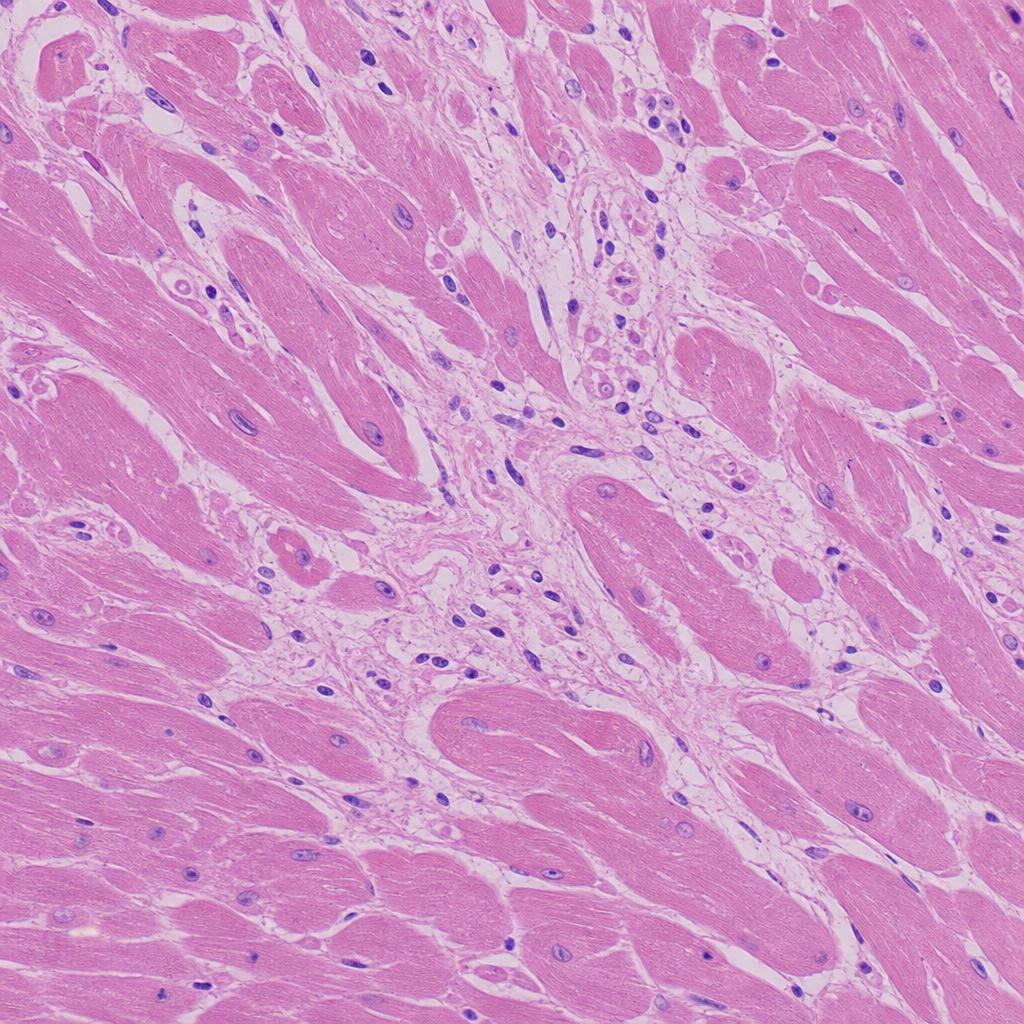
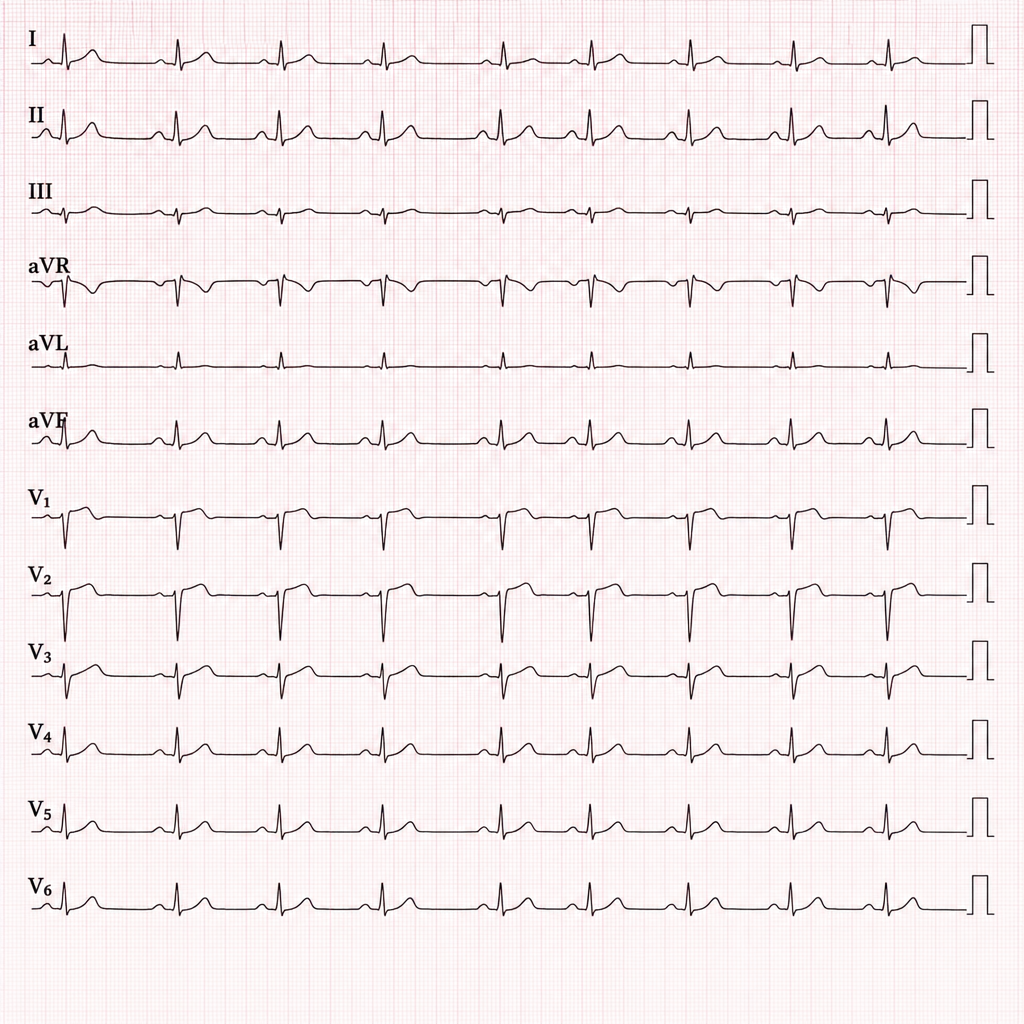
Cardiomyopathy may be seen in all of the following conditions except.
A 16-day-old baby girl is brought to the emergency department appearing ill. On examination, she has pallor and dyspnea with a respiratory rate of 85 per minute. Her heart rate is 200 bpm, heart sounds are distant, and a gallop is heard. Chest X-ray shows cardiomegaly. Echocardiogram reveals dilated ventricles and dilation of the left atrium. ECG shows ventricular depolarization complexes with low voltage. What is the most likely underlying diagnosis?
Which of the following murmur increases on standing?
Which of the following conditions should not be considered if JVP rises on deep inspiration?
Which of the following is NOT a feature of hypertrophic cardiomyopathy on ECHO?
Which of the following findings is seen in pericardial tamponade?
Which murmur increases on standing?
Which condition is suggested by the 'spade-shaped left ventricle' on ECHO?
A man who is chronic alcoholic will develop which type of cardiomyopathy?
Epsilon waves are most specific for
Explanation: Detailed explanation of cardiomyopathy associations: ***Alkaptonuria*** - Alkaptonuria primarily affects **metabolization of tyrosine** and does not typically lead to cardiomyopathy. - The main clinical manifestation is **ochronosis**, causing dark urine and cartilage damage, without significant cardiac involvement. *Type II glycogen storage* - This condition, also known as **Pompe disease**, can lead to cardiomyopathy due to excessive glycogen accumulation in cardiac tissue. - Patients may exhibit **hypertrophic cardiomyopathy** as a common feature in infancy or early childhood. *Friedreich's ataxia* - This hereditary degenerative disease often leads to cardiac complications such as **hypertrophic cardiomyopathy** and conduction abnormalities [3]. - A classic presentation includes **ataxia** and **loss of deep tendon reflexes**, alongside possible cardiac involvement [2]. *Duchenne muscular dystrophy* - Duchenne muscular dystrophy is characterized by **progressive muscle weakness** and is frequently associated with **dilated cardiomyopathy** due to myocardial degeneration [1] [4]. - Affected individuals often show signs of cardiac dysfunction alongside muscle atrophy and weakness [1].
Explanation: ***Congestive Heart Failure secondary to congenital heart disease*** - This is the **most appropriate answer** given the options, as it describes the clinical syndrome present in this neonate. - The findings of **dilated ventricles**, **dilated left atrium**, **low voltage ECG**, **distant heart sounds**, **gallop rhythm**, and **cardiomegaly** indicate severe cardiac dysfunction with heart failure. - While CHF is technically a presentation rather than an underlying structural diagnosis, the echo findings of **chamber dilation** (rather than hypoplasia or hypertrophy) distinguish this from the other structural heart diseases listed. - Clinical context: In neonates with dilated chambers and low voltage, consider **dilated cardiomyopathy** (from myocarditis, metabolic disease, or anomalous coronary origins), but among these options, CHF secondary to CHD is the encompassing diagnosis. *Hypoplastic Left Heart Syndrome* - HLHS involves **underdeveloped (hypoplastic)** left-sided structures, **not dilated ones** as seen in this case. - Echocardiogram would show **small/hypoplastic left ventricle** and **left atrium**, completely opposite to the dilated chambers described here. *Critical Aortic Stenosis* - Would typically show **left ventricular hypertrophy** (concentric or eccentric) rather than ventricular dilation with low voltage. - Presents with reduced cardiac output but **LV would be hypertrophied**, not dilated with low voltage as seen here. *Total Anomalous Pulmonary Venous Return* - Typically causes **right heart enlargement** and **pulmonary venous congestion** more prominently than left heart changes. - Would show **right atrial and right ventricular dilation**, not the prominent left-sided chamber dilation described in this case.
Explanation: ***HOCM*** - The murmur of **hypertrophic obstructive cardiomyopathy (HOCM)** increases in intensity with standing due to a decrease in **preload** and **afterload**, which reduces left ventricular cavity size and exacerbates the outflow tract obstruction. - Standing causes **decreased venous return** (preload), leading to a smaller left ventricular volume and increased dynamic obstruction from the hypertrophied septum. *MR* - The murmur of **mitral regurgitation (MR)** typically decreases or remains unchanged with standing. Standing reduces **preload** and **afterload**, which can lessen the regurgitant flow. - It usually presents as a **holosystolic murmur** loudest at the apex, radiating to the axilla. *VSD* - A **ventricular septal defect (VSD)** murmur characteristically decreases in intensity with standing. Standing reduces **systemic vascular resistance**, which can slightly decrease left-to-right shunting. - VSD produces a **holosystolic murmur** loudest at the lower left sternal border. *MS* - **Mitral stenosis (MS)** produces a diastolic murmur that generally decreases or remains stable with standing, as standing reduces **preload**, which can lessen the transmitral flow. - It is typically a **low-pitched diastolic rumble** best heard at the apex and often associated with an opening snap.
Explanation: The phenomenon of JVP rising on deep inspiration is known as **Kussmaul's sign**, which is indicative of impaired right ventricular filling and is not typically associated with **atrial fibrillation**. In **complete heart block**, there is dissociation between atrial and ventricular contractions. This can lead to **cannon 'a' waves** in the JVP, which are large prominent 'a' waves caused by right atrial contraction against a closed tricuspid valve [1]. **Constrictive pericarditis** is characterized by a rigid pericardium that restricts diastolic filling of the right ventricle. This condition is a classic cause of **Kussmaul's sign**, where the JVP rises paradoxically during inspiration due to increased venous return that cannot be accommodated by the constricted ventricle. **Restrictive cardiomyopathy** involves impaired diastolic filling of the ventricles due to myocardial stiffness. It can also cause a paradoxical rise in JVP during inspiration (**Kussmaul's sign**) because the stiffened right ventricle cannot adequately accommodate the inspiratory increase in venous return.
Explanation: ***Dilated LV*** - **Hypertrophic cardiomyopathy** (HCM) is characterized by a **thickened left ventricular wall** with a **nondilated left ventricle**. [1] - **Left ventricular dilation** is a characteristic feature of **dilated cardiomyopathy**, not HCM. [1] *Thickened septum* - This is a hallmark feature of **hypertrophic cardiomyopathy**, often with **asymmetrical septal hypertrophy**. - The abnormal thickening of the **interventricular septum** can lead to **left ventricular outflow tract obstruction**. *Spade-shaped LV* - A **spade-shaped** or **apical hypertrophic** left ventricle is a recognized variant of **hypertrophic cardiomyopathy**, particularly in **Japanese populations**. - This morphology involves prominent hypertrophy of the **apical segments** of the left ventricle. *Obstructed outflow* - **Left ventricular outflow tract obstruction** is a common and clinically significant feature of **hypertrophic cardiomyopathy**. - This obstruction is caused by the **thickened septum** bulging into the outflow tract and **systolic anterior motion (SAM)** of the **mitral valve**. [2]
Explanation: ***Pulsus paradoxus*** - This is an **abnormally large decrease** in systolic blood pressure (>10 mmHg) and pulse wave amplitude during inspiration. - It occurs due to compromised ventricular filling caused by **increased pericardial pressure** in tamponade [1]. *Beck's triad* - Beck's triad (hypotension, jugular venous distention, and muffled heart sounds) are **signs/symptoms** of pericardial tamponade, not a finding in the same way pulsus paradoxus is [1]. - This clinical triad points towards the diagnosis but does not describe a physiological finding as specifically as pulsus paradoxus. *Kussmaul sign* - The Kussmaul sign is a paradoxical **increase** in jugular venous pressure (JVP) during inspiration. - While it indicates impaired right ventricular filling, it is classically seen in **constrictive pericarditis** and severe right heart failure, not typically in pericardial tamponade [2]. *All of the options* - This option is incorrect because Kussmaul sign is typically associated with **constrictive pericarditis** rather than pericardial tamponade [2]. - While Beck's triad is characteristic of tamponade, pulsus paradoxus is a specific hemodynamic finding seen in this condition [1].
Explanation: ***HOCM*** - Standing decreases **venous return** and **left ventricular volume**, which reduces the size of the LV outflow tract and thus exacerbates the obstruction in **hypertrophic obstructive cardiomyopathy (HOCM)**, making the murmur louder [1]. - This maneuver is a key diagnostic feature as reduced preload intensifies the dynamic obstruction. *MR* - **Mitral regurgitation (MR)** is typically a volume overload lesion, and standing (which reduces preload) generally causes the murmur to **decrease** in intensity due to less blood volume ejected back into the atrium [3]. - The murmur of MR is usually a holosystolic murmur radiating to the axilla [3]. *MS* - **Mitral stenosis (MS)** is a fixed obstruction to left ventricular filling. Changes in preload (like standing) do not significantly alter the gradient across the mitral valve or the intensity of the murmur [2]. - Its characteristic murmur is a **mid-diastolic rumble** with an opening snap [1]. *VSD* - A **ventricular septal defect (VSD)** murmur is caused by blood flowing from the high-pressure left ventricle to the low-pressure right ventricle. Standing, by reducing systemic vascular resistance, would typically cause the murmur to **decrease** in intensity as less blood shunts left-to-right. - The murmur is usually a **holosystolic murmur** best heard at the lower left sternal border.
Explanation: ***Hypertrophic cardiomyopathy*** - A **spade-shaped left ventricle** is a classic echocardiographic finding in **hypertrophic cardiomyopathy (HCM)**, specifically apical HCM [3]. - This shape results from focal **hypertrophy of the left ventricular apex**, leading to a distinctive narrowing towards the apex [3]. *Aortic regurgitation* - Causes **left ventricular volume overload** and often leads to **left ventricular dilation**, not typically a spade shape [1]. - **Diastolic retrograde flow** across the aortic valve is the characteristic echocardiographic finding. *Pulmonary embolism* - Primarily affects the **right side of the heart**, leading to **right ventricular dilation** and **dysfunction** [1]. - Does not directly cause a **spade-shaped left ventricle**. *Dilated cardiomyopathy* - Characterized by **enlargement and thinning of all four heart chambers**, particularly the left ventricle [2]. - The left ventricle typically appears globally dilated and spherical, not spade-shaped [2].
Explanation: ***Dilated cardiomyopathy*** - Chronic alcohol abuse is a major cause of **dilated cardiomyopathy**, where the heart's pumping chambers (ventricles) become enlarged and weakened, leading to reduced cardiac output [1]. - This condition often called **alcoholic cardiomyopathy**, is characterized by **ventricular dilation** and **systolic dysfunction**. *Hypertrophic cardiomyopathy* - This condition involves thickening of the heart muscle, often genetic, and is not directly caused by **chronic alcoholism**. - While alcohol can worsen pre-existing heart conditions, it does not typically lead to primary **hypertrophic cardiomyopathy**. *Myocarditis* - **Myocarditis** is an inflammation of the heart muscle, usually caused by viral infections or autoimmune processes. - Although heavy alcohol use can weaken the immune system, it is not a direct cause of viral or primary inflammatory myocarditis. *Pericarditis* - **Pericarditis** is the inflammation of the pericardium, the sac surrounding the heart, most commonly due to viral infections or autoimmune conditions. - While alcohol abuse can have various systemic effects, it is not a recognized direct cause of **pericarditis**.
Explanation: ***Arrhythmogenic RV Cardiomyopathy*** - Epsilon waves are small, positive deflections seen at the end of the **QRS complex**, best observed in precordial leads (V1-V3), and are a characteristic ECG finding in **Arrhythmogenic Right Ventricular Cardiomyopathy (ARVC)**. - They represent delayed and fragmented electrical activity due to fibrofatty replacement of the right ventricular myocardium in ARVC. *Hypokalemia* - **Hypokalemia** typically manifests on ECG with **U waves**, which are positive deflections following the T wave, not epsilon waves. - Other ECG changes in hypokalemia include flattened T waves and ST-segment depression. *Hypothermia* - **Hypothermia** is associated with the presence of **Osborn waves** (J waves), which are positive deflections at the junction of the QRS complex and the ST segment. - These waves are distinct from epsilon waves and represent slowed repolarization. *PSVT* - **Paroxysmal Supraventricular Tachycardia (PSVT)** is a type of arrhythmia characterized by a narrow QRS complex tachycardia with a regular rhythm. - It does not involve epsilon waves; its ECG features are related to abnormal conduction pathways in the atria or AV node.
Get full access to all questions, explanations, and performance tracking.
Start For Free