On request of a police officer, a medical examination of an arrested person's body can be done by a registered medical practitioner, as per the following provision in the Code of Criminal Procedure -
Which test is most sensitive for detecting semen in forensic investigations?
Doctor or nurse disclosing the identity of a rape victim is punishable under the following section of IPC?
For DNA extraction from blood samples, the preferred anticoagulant is:
Which of the following is the least suitable source for DNA extraction?
Which test produces characteristic crystals for the detection of semen?
Incest is defined as sexual intercourse between which individuals?
A witness, who after taking oath, willfully makes a statement which he knows or believes to be false is guilty of offence under section:
IPC 201 deals with which of the following?
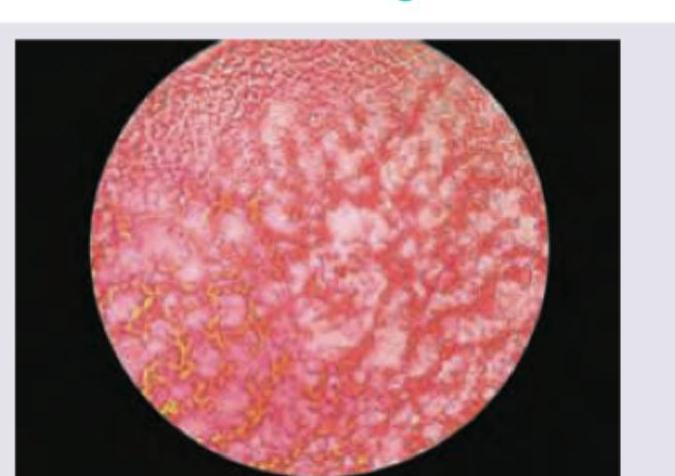
Which of the following tests for identifying blood stains is shown in the image below?
Explanation: ***Section 53*** - **Section 53** of the Criminal Procedure Code (CrPC) specifically empowers a registered medical practitioner to examine an **arrested person** at the request of a **police officer of or above the rank of sub-inspector**. - This section deals with the examination of a person who is arrested on a charge of committing an offense, where there are reasonable grounds for believing that such an examination will afford evidence as to the commission of the offense. - The examination may include blood, urine, and other bodily samples for DNA profiling and other tests. *Section 57* - **Section 57** of the CrPC deals with the time limit for which an arrested person can be detained without a magistrate's order, which is typically **24 hours** (excluding travel time). - It does not pertain to the medical examination of an arrested person. *Section 54* - **Section 54** of the CrPC grants the arrested person the right to be medically examined by a registered medical practitioner at their own request, usually to establish that no injuries were inflicted during custody. - This is distinct from Section 53, which deals with examination requested by police to gather evidence related to the crime. *Section 56* - **Section 56** of the CrPC states that a police officer making an arrest without a warrant shall, without unnecessary delay, take the arrested person before a **Magistrate** or to the officer in charge of a police station. - This section focuses on the procedural aspect of presenting an arrested person and not on medical examinations.
Explanation: ***Acid phosphatase test*** - This test is highly sensitive for detecting **prostatic acid phosphatase (PAP)**, a key enzyme found in high concentrations in semen. - A positive result, indicated by a **rapid color change**, suggests the presence of seminal fluid, even in small quantities. *Luminol test* - The luminol test is used to detect **bloodstains** at a crime scene, causing them to luminescence, but it is not specific for semen. - While it can react to other substances and potentially give **false positives** for semen, its primary use is for blood detection. *Barberio test* - The Barberio test is a **confirmatory microcrystal test** for spermine, a component of semen. - It involves the formation of specific crystals; however, it is less sensitive for initial screening than the acid phosphatase test and requires the presence of spermine. *Florence test* - The Florence test is a **confirmatory microcrystal test** for choline, another component of semen. - Similar to the Barberio test, it is a corroborative test that requires the formation of specific crystals and is not used for initial, highly sensitive screening.
Explanation: ***Section 228A IPC*** - This section of the Indian Penal Code specifically deals with the **disclosure of the identity of a victim of rape and certain sexual offenses** (Sections 376, 376A, 376AB, 376B, 376C, 376D, 376DA, 376DB, 376E). - Making public the name or any matter that can reveal the identity of a rape victim by **any person, including doctors and nurses**, is a punishable offense. - **Punishment**: Imprisonment up to **2 years** and fine. - **Exception**: Disclosure is permitted only to authorized persons like police officers for investigation purposes. - **Important**: This is now covered under **Section 72 of Bharatiya Nyaya Sanhita (BNS) 2023**, which replaced the IPC. *Section 224A* - This is **not a valid or recognized provision** within the Indian Penal Code. - It does not relate to offenses concerning privacy or the identity of sexual assault victims. *Section 226A* - This is **not a valid or recognized provision** within the Indian Penal Code. - It does not pertain to the confidentiality of victims of sexual offenses. *Section 222A* - This is **not a valid or recognized provision** within the Indian Penal Code. - There is no such specific section addressing disclosure of victim identity in the IPC.
Explanation: ***EDTA*** - **EDTA** (ethylenediaminetetraacetic acid) acts as an anticoagulant by **chelating calcium ions**, which are essential for the coagulation cascade, making it ideal for DNA extraction. - Using an EDTA collection tube ensures that the blood sample remains in its liquid state, preventing clot formation which can trap DNA and make isolation difficult. *Plain bulb* - A plain bulb refers to a tube without any anticoagulant, allowing the blood to **clot naturally**. - While serum can be obtained from such a tube, the DNA would be entrapped within the clot, making its extraction **less efficient and potentially damaging**. *Formalin* - **Formalin** (a solution of formaldehyde) is a fixative used to preserve tissue morphology by **cross-linking proteins**. - While useful for histopathology, it **damages DNA** through chemical modifications and fragmentation, making it unsuitable for DNA isolation or genetic analysis. *None of the options* - This option is incorrect because **EDTA is a widely recognized and appropriate** anticoagulant for preserving DNA samples from blood for molecular studies.
Explanation: ***CSF*** - **Cerebrospinal fluid (CSF)** contains a relatively **low number of cells**, making it a poor source for DNA extraction compared to other bodily fluids due to the scarcity of nuclear DNA. - While DNA can be extracted from CSF for specific diagnostic purposes (e.g., detection of pathogens), it is generally **not the preferred source** for DNA profiling or genetic studies due to the limited yield and potential for degradation. *Hair roots* - **Hair roots** (specifically the follicular tag) contain a significant number of **nucleated cells**, making them an excellent source for DNA extraction. - The DNA extracted from hair roots is often robust and sufficient for **forensic analysis** and genetic testing. *Semen* - **Semen** contains a high concentration of **sperm cells**, which are rich in nuclear DNA, making it a very good source for DNA extraction. - It is frequently used in **forensic investigations** and paternity testing due to its high DNA content. *Buccal mucosa* - **Buccal cells** scraped from the inside of the cheek provide a non-invasive and **abundant source of nucleated cells** for DNA extraction. - This method is widely used for genetic testing, **ancestry tracing**, and clinical diagnostics because of its ease of collection and high DNA yield.
Explanation: ***Barberio's test*** - This test is specifically used for the **microscopic detection of seminal fluid** by producing **characteristic spermine picrate crystals**. - It involves the addition of a **saturated picric acid solution** to a semen stain extract, leading to the formation of distinct **yellow, needle-like crystals** that are diagnostic. - It is a **confirmatory microscopic crystal test** that provides visual evidence of semen presence. *Acid phosphatase test* - This is a **presumptive test for semen** that relies on the detection of high levels of acid phosphatase, an enzyme found in seminal fluid. - While it indicates the *possible* presence of semen, it is **not confirmatory** as acid phosphatase can be found in other bodily fluids and vegetable matter. - Does **not produce crystals** for identification. *Florence test* - The Florence test is a **presumptive crystal test** that detects choline in semen, forming dark brown, rhombic crystals of choline periodide. - However, it is **not specific for semen** because choline can be found in other biological materials and vaginal secretions. - Less reliable than Barberio's test for semen confirmation. *PSA test* - The **prostate-specific antigen (PSA) test** is a highly specific **immunological confirmatory test** for human semen. - It detects the glycoprotein PSA (P30) produced by the prostate gland. - However, it does **not produce crystals** and uses different methodology (immunochromatography/ELISA).
Explanation: ***Closely related individuals*** - **Incest** refers to sexual intercourse between individuals who are considered too **closely related** by lineage or kinship to marry each other legally. - The definition of "closely related" varies across cultures and legal systems but generally includes **immediate family members** such as parents, children, and siblings. *Individuals other than spouse* - This definition describes **adultery** or **extramarital affairs**, which are distinct from incest. - While both involve sexual acts outside of legally or socially accepted norms, they differ significantly in the relationship between the involved parties. *Humans and animals* - This describes **bestiality** or **zoophilia**, which is a form of sexual activity involving humans and animals. - This is a separate and distinct concept from incest, which specifically concerns sexual relations between humans within a prohibited degree of kinship. *Unrelated individuals of same gender* - This describes **homosexual** sexual acts between adults, which are not inherently illegal or considered incestuous. - Incest is defined specifically by the **familial relationship** between the individuals, not their gender or lack of marital ties.
Explanation: ***193 IPC*** - **Section 193 of the Indian Penal Code (IPC)** is the substantive offense provision that prescribes **punishment for giving false evidence** in a judicial proceeding. - Making a false statement under oath, knowing it to be false, makes a person **guilty under Section 193 IPC**, which provides for imprisonment up to 7 years and fine. - This is the operative section under which prosecution is initiated for perjury. *191 IPC* - **Section 191 IPC** defines what constitutes "giving false evidence" - it describes the act but does not prescribe punishment. - While the question describes an act that fits Section 191's definition, the person is charged and found guilty under **Section 193**, which is the punishment provision. - Section 191 is a definitional section, not the offense section itself. *192 IPC* - **Section 192 IPC** deals with **fabricating false evidence**, which involves creating or manufacturing evidence (making false entries in documents, causing circumstances to exist, etc.). - This focuses on the act of *fabricating* rather than directly *giving* a false statement under oath in proceedings. *190 IPC* - **Section 190 IPC** deals with **threat of injury** to induce a person to refrain from applying for protection to a public servant. - This section is entirely unrelated to giving false evidence or making false statements under oath.
Explanation: ***Embalming a body before an autopsy*** - **IPC (Indian Penal Code) 201** addresses the destruction of evidence or giving false information to screen an offender, specifically focusing on actions that impede justice in criminal investigations. - While not explicitly listing "embalming a body," judicial interpretations and legal precedents recognize that **embalming a body before an autopsy**, when an autopsy is required, would fall under **destruction of evidence** by significantly altering or obliterating crucial forensic clues. *Providing false information to the police* - This act is covered under different sections of the IPC, such as **IPC 182 (False information with intent to cause public servant to use his lawful power to the injury of another person)**, not solely IPC 201. - IPC 201 specifically pertains to actions taken to **screen an offender from legal punishment** by destroying evidence or giving false information, implying a more direct link to a committed offense. *Causing grievous hurt to another person* - This is addressed by **IPC 320 to 326 (Of Hurt)**, which deals with various types of grievous hurt and their punishments. - IPC 201 is related to acts that obstruct justice after a crime, rather than the commission of the crime itself. *Kidnapping a person* - This offense is covered under **IPC 359 to 369 (Of Kidnapping and Abduction)**, detailing different forms of kidnapping and their respective punishments. - Similar to grievous hurt, kidnapping is an original offense, whereas IPC 201 deals with actions taken post-offense to cover up criminal activity.
Explanation: ***Hemin crystal test*** - The image displays characteristic **rhombic crystals** (often seen as reddish brown or yellowish brown, due to their origin from denatured hemoglobin) which are formed during the **Teichmann test** or hemin crystal test. - This test is a confirmatory test for the presence of blood, detecting the presence of **hemin**, a derivative of heme. *Hemochromogen crystal test* - This test, also known as the **Takayama test**, produces **pink, feathery crystals of hemochromogen** (pyridine ferroprotoporphyrin), which are distinct from the rhombic crystals shown. - It is also a confirmatory test for blood, but the crystal morphology is different. *Leucomalachite green test* - The leucomalachite green test is a **presumptive test** for blood that relies on the peroxidase activity of hemoglobin. - A **green color change** indicates a positive result, and it does not involve the formation of crystals visible under a microscope. *Luminol test* - The luminol test is a highly sensitive **presumptive test** used to detect minute traces of blood, even if it has been cleaned. - It produces a characteristic **chemiluminescence (blue glow)** in the dark and does not involve crystal formation.
Get full access to all questions, explanations, and performance tracking.
Start For Free