Further investigation is essential in a newborn with which of the following conditions?
White lathery froth is seen in deaths due to:
Killing of a 6 months old child by parents is known as -
Disputed maternity can be solved by using the following tests, EXCEPT:
Certain obligations on the part of a doctor who undertakes a postmortem examination are the following, EXCEPT:
Which of the following is a characteristic feature of Battered Baby Syndrome (Non-Accidental Injury)?
Best criterion for determining live birth in suspected infanticide cases?
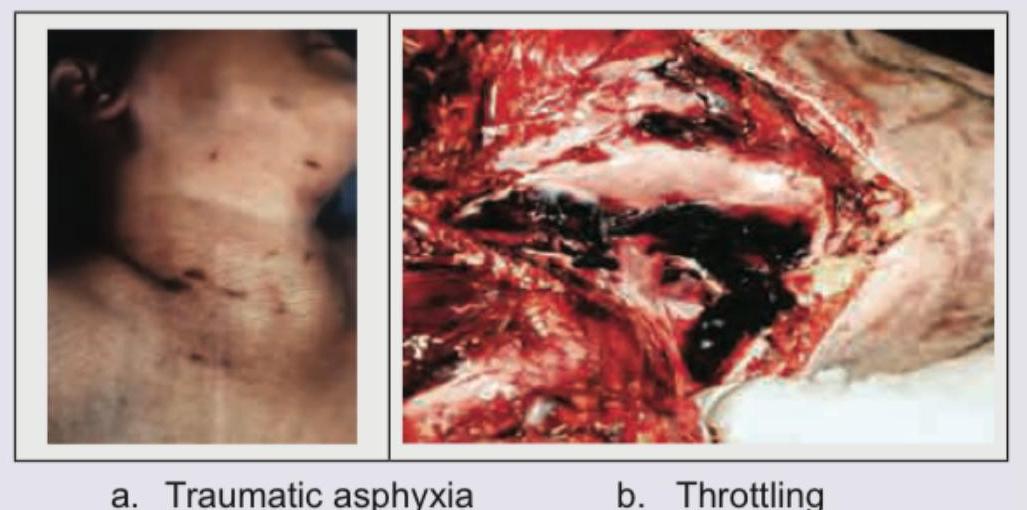
A female was found dead in her bedroom. The room was not locked from inside. Her blood alcohol value was found to be 350 mg/dL. The picture taken at the post mortem is shown below. The diagnosis is? (AIIMS Nov 2018, AIIMS Nov 2017)
A loop of thin string is thrown around the neck of the victim in what type of strangulation?
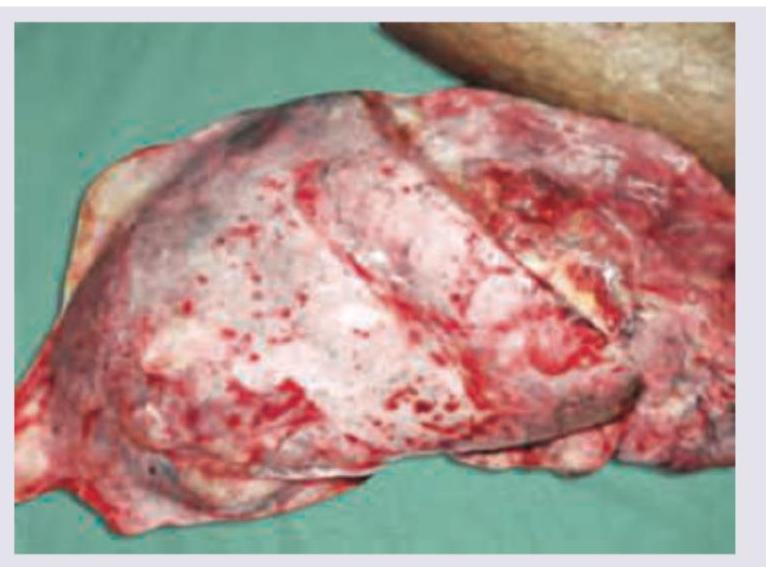
The following postmortem lung specimen shows:
Explanation: ***Lens opacity*** - A **lens opacity** in a newborn suggests congenital **cataracts**, which can lead to permanent vision impairment if not identified and treated early. - **Investigation is essential** to identify underlying causes such as **TORCH infections** (Toxoplasmosis, Rubella, CMV, HSV), **metabolic disorders** (galactosemia, Lowe syndrome), **genetic syndromes**, or **chromosomal abnormalities**. - Early detection and management are crucial to prevent **amblyopia** (lazy eye) and optimize visual development during the **critical period** of visual maturation. - Investigations include: TORCH titers, urine for reducing substances, metabolic screening, and genetic evaluation. *Erythema toxicum* - This is a common, **benign newborn rash** characterized by blotchy red macules and papules with central vesicles or pustules. - It typically resolves spontaneously within days to a few weeks and requires **no specific investigation or treatment**. *Vaginal bleed* - A small amount of **vaginal bleeding** in female newborns is usually due to the temporary withdrawal of maternal hormones (e.g., estrogen) after birth. - This is a **physiologic response** and generally self-resolves, requiring no further investigation unless excessive or prolonged. *Subconjunctival hemorrhage* - This occurs due to the rupture of tiny blood vessels in the eye during the birthing process, often associated with **vaginal delivery**. - It is a **benign condition** that resolves on its own within a couple of weeks and does not affect vision.
Explanation: ***Drowning*** - The characteristic **white lathery froth** (called **foam cone** or **mushroom froth**) appears at the mouth and nostrils due to the mixing of water, mucus, and air in the airways, often churned during respiratory efforts. - This froth is a strong indicator of **drowning**, although not always definitive of its cause. *Hanging* - Deaths due to hanging typically result from **asphyxia** due to airway obstruction or cerebral ischemia due to carotid artery compression, and do not usually involve froth formation. - While sometimes there may be some oral secretions, it is not the classic lathery, persistent foam seen in drowning. *Organophosphate poisoning* - Organophosphate poisoning causes **cholinergic crisis**, leading to excessive secretions like salivation, lacrimation, and bronchorrhea. - The secretions are usually watery to frothy, but not typically the voluminous, stable, white lathery froth seen in drowning. *Mineral acid poisoning* - Ingestion of mineral acids causes severe **corrosion** and **necrosis** of the gastrointestinal tract and airways, leading to difficulty breathing and potential laryngeal edema. - Froth is not a characteristic finding; instead, there may be **burns** around the mouth and pharynx, and signs of internal visceral damage.
Explanation: ***Infanticide*** - This term specifically refers to the killing of an **infant** (child under 1 year of age), typically by a parent. - In **forensic medicine**, infanticide is legally defined as the intentional killing of a child within **12 months of birth**. - Often committed by the mother during the first year of life, sometimes in the context of **puerperal psychosis** or postpartum mental health issues. - Under **Indian Penal Code Section 315**, specific provisions exist for infanticide, with different penalties compared to murder. *Neonatal homicide* - Refers to the killing of a **neonate** (newborn within the first **28 days** of life). - A 6-month-old child is well beyond the neonatal period, making this term inappropriate. - Also called **neonaticide** in forensic literature. *Genocide* - Refers to the systematic and intentional destruction of a **racial, ethnic, national, or religious group**. - Involves **mass killing** of people, not an individual act. - Completely different from the killing of a single child by parents. *Abortion* - Medical or surgical termination of **pregnancy before viability** (typically before 20-24 weeks of gestation). - Involves termination of a **fetus in utero**, not a child who has already been born. - A 6-month-old child is a live-born infant, making this term completely inapplicable.
Explanation: ***Precipitin test*** - The **precipitin test** is used to determine the origin of a **blood sample**, specifically whether it is **human or animal blood**, by detecting species-specific proteins. It is not used for assessing maternity. - This test is primarily employed in **forensic serology** to differentiate between blood from different animal species, making it irrelevant for paternity or maternity disputes. *Blood grouping* - **Blood grouping** (e.g., ABO and Rh systems) can be used to **exclude paternity or maternity** by comparing the blood types of the child, mother, and alleged father. - If the child's blood type is incompatible with the alleged parents based on Mendelian inheritance, one or both can be excluded. *HLA typing* - **HLA typing** (Human Leukocyte Antigen) is a more powerful genetic marker system than ABO/Rh for determining paternity or maternity. - It involves analyzing highly polymorphic genes on chromosome 6 that encode cell surface proteins, providing a more definitive means of **inclusion or exclusion**. *DNA fingerprinting* - **DNA fingerprinting** (also known as **DNA profiling**) is the **most accurate and widely accepted method** for resolving paternity and maternity disputes. - It analyzes highly variable regions of DNA unique to each individual, providing a statistically strong basis for **inclusion or exclusion** by comparing genetic profiles.
Explanation: ***He must keep the police informed about the findings*** - This is **NOT a formal obligation** of the doctor conducting a postmortem examination. - The doctor's primary duty is to conduct a thorough, objective examination and prepare a **formal postmortem report** that is submitted to the authority who requisitioned the examination (magistrate/police as per CrPC Section 174). - While findings may eventually reach the police through the official report, there is **no obligation to informally update or keep police informed** during the examination process. - The doctor's role is that of an **independent expert witness** to the court, not an investigative assistant to the police. - Maintaining independence and objectivity requires the doctor to document findings formally rather than providing ongoing informal updates to investigating officers. *Routinely record all positive findings and important negative ones* - This IS a **fundamental obligation** for any doctor performing a postmortem examination. - Both positive findings (pathological changes, injuries) and significant negative findings (absence of expected pathology) must be documented to provide a comprehensive and accurate record. - This meticulous documentation ensures the **integrity, reliability, and legal validity** of the postmortem examination and its conclusions. *The examination should be meticulous and complete* - This IS a **professional, ethical, and legal obligation** for any doctor undertaking a postmortem examination. - A systematic and thorough examination of all body systems is essential to accurately determine the cause of death and identify all relevant findings. - Incomplete examinations can lead to **missed diagnoses and miscarriage of justice** in medico-legal cases. *He must preserve viscera and send for toxicology examination in case of poisoning* - This IS a **crucial obligation** when poisoning is suspected or cannot be ruled out based on the postmortem findings. - Relevant viscera (liver, kidney, stomach contents) and bodily fluids (blood, urine) must be preserved in appropriate containers for subsequent toxicological analysis. - This step is **essential to confirm or exclude toxicological involvement** in the death and is a standard protocol in medico-legal postmortem examinations as per established guidelines.
Explanation: ***Bruises of varying ages*** - The presence of bruises at **different stages of healing** is a hallmark indicator of **non-accidental trauma** or Battered Baby Syndrome, as it suggests repeated injuries occurring over time rather than a single incident. - **Forensic significance**: Fresh bruises (red/purple) alongside older bruises (yellow/green/brown) indicate multiple episodes of trauma, which is inconsistent with the caregiver's explanation of a single accidental event. - Other classic features include fractures (especially metaphyseal/corner fractures, rib fractures), subdural hematomas, retinal hemorrhages, and injuries in protected body areas. *Stab injury* - While a stab injury represents severe trauma requiring forensic investigation, it is **not characteristic** of the typical presentation pattern of Battered Baby Syndrome. - Stab wounds indicate a specific violent act rather than the pattern of **repeated blunt force trauma** that defines the syndrome. - Battered Baby Syndrome classically involves injuries from shaking, hitting, or blunt trauma rather than penetrating injuries. *Firearm injury* - A firearm injury is a distinct acute traumatic event that does not represent the **chronic, repetitive abuse pattern** seen in Battered Baby Syndrome. - Such injuries are typically isolated incidents rather than part of ongoing physical abuse with varied injury ages. - The syndrome is characterized by multiple injuries at different healing stages from repeated episodes, not single penetrating trauma. *None of the options* - This option is incorrect because "bruises of varying ages" is a **well-established forensic indicator** for diagnosing Battered Baby Syndrome in medical literature and practice. - The presence of injuries at multiple stages of healing is one of the most important diagnostic features that raises suspicion for non-accidental injury in pediatric forensic medicine.
Explanation: ***Hydrostatic test (lung float test)*** - The **hydrostatic test**, also known as the **lung float test**, is considered the most reliable criterion in forensic pathology for determining if an infant was born alive. - A positive result (lungs float in water) indicates that the infant took at least one breath, suggesting **live birth**, as fetal lungs are solid and sink. *Presence of milk or food in stomach* - While the presence of milk or food indicates a period of survival after birth, it doesn't definitively prove **live birth** over stillbirth if the infant was fed immediately after a perimortem event. - It also doesn't provide information about **respiration**, which is a key indicator of live birth. *Evidence of external injuries* - **External injuries** may indicate foul play or neglect, but they do not confirm that the infant was born alive. - An infant could be **stillborn** and then subjected to injuries, or injuries could occur post-mortem. *Examination of umbilical cord changes* - **Umbilical cord changes**, such as desiccation or mummification, indicate the passage of time after birth but do not differentiate between **live birth** and **stillbirth**. - These changes can occur even if the infant was stillborn, especially if there was an attempt to cut and tie the cord.
Explanation: ***Throttling*** - The autopsy image shows extensive **internal hemorrhage** and disruption of neck structures, consistent with significant compressive force applied to the neck by hands, as seen in **throttling**. - **Throttling** (manual strangulation) causes deep internal injuries including fractured **hyoid bone**, damaged **thyroid cartilage**, and **strap muscle hemorrhage**, even when external marks may be minimal or absent. - The high blood alcohol level (350 mg/dL - severe intoxication) would have impaired her ability to resist, and the unlocked room suggests **homicidal** intent rather than suicide. - Key autopsy findings: **deep neck muscle hemorrhage**, **laryngeal fractures**, and **torn blood vessels** without a ligature pattern. *Traumatic asphyxia* - Traumatic asphyxia results from severe **chest/thoracic compression** leading to acute venous congestion in the head and neck region. - Classical signs include **petechial hemorrhages** on face and conjunctivae, **cyanosis** above compression level, and relatively **intact neck structures** on autopsy. - The severe internal neck damage shown in the autopsy image is **not characteristic** of traumatic asphyxia, which primarily affects superficial vessels due to back-pressure, not deep structural injury. *Café coronary* - **Café coronary** is sudden death from **food bolus aspiration** causing airway obstruction, commonly occurring in intoxicated individuals who cannot protect their airway. - Autopsy findings would show an **obstructing food bolus in the larynx/trachea** without the extensive neck trauma and hemorrhage depicted in the image. - No manual strangulation injuries would be present. *Bansdola* - **Bansdola** is a traditional method of strangulation using a **bamboo stick or rod** twisted across the neck with a rope, used historically as torture or execution. - It causes a characteristic **linear ligature mark** with underlying soft tissue injury in a horizontal pattern across the neck. - The autopsy findings in the image show **diffuse manual strangulation injury** rather than the specific linear pattern of ligature strangulation seen in Bansdola.
Explanation: ***Garrotting*** - This involves strangulation where a **thin ligature** (string, wire, or cord) is **thrown around the neck from behind** and tightened by twisting or pulling. - Characterized by a **horizontal ligature mark** around the neck at the level of the thyroid cartilage. - The thin ligature causes **prominent, well-defined ligature marks** and can cause severe damage to underlying neck structures. - Historically used as a method of execution and assassination. *Throttling* - **Manual strangulation** using hands, where the neck is compressed by fingers, thumbs, or palms. - Leaves **fingernail marks, bruises, and abrasions** on the neck rather than a continuous ligature mark. - May show **fingerprint-pattern bruising** and is typically associated with homicidal violence. *Mugging* - In forensic contexts, this refers to an **arm choke** or **headlock strangulation** where the forearm or elbow is placed around the victim's neck. - Also called **brachial strangulation** or **chokehold**. - Distinguished from garrotting by the use of the **arm as the constricting force** rather than a ligature. *Hanging* - Suspension of the body by a ligature around the neck where **body weight provides the constricting force**. - Ligature mark is typically **oblique and higher on the neck**, ascending toward the point of suspension. - Usually shows a **knot mark** and is most commonly suicidal in nature.
Explanation: ***Champignon de mousse (Correct Answer)*** - This term, meaning "**mushroom of foam**," describes the **frothy, pinkish fluid** often seen in the airways and on the surface of the lungs in cases of **pulmonary edema**, particularly those caused by **drowning** or acute heart failure. - The specimen exhibits the characteristic appearance of a **pale lung surface** with scattered **hemorrhagic spots** and sections showing **pinkish froth**, consistent with this classic forensic pathology finding. - This is a **pathognomonic postmortem finding** in drowning victims and represents acute pulmonary edema with air-mixed fluid in the airways. *Emphysema aquosum (Incorrect)* - This term is **not a recognized medical diagnosis** or description for a lung condition. - While it attempts to combine "emphysema" and "aquosum" (watery), it does not accurately describe a known pathological state or the specimen shown. *Edema aquosum (Incorrect)* - This term refers to **generalized edema** or **water retention** throughout the body (anasarca), not specifically a lung finding. - While pulmonary edema is a type of edema, "edema aquosum" does not precisely describe the **specific postmortem appearance** with characteristic foam formation depicted in the specimen. *Paltauf hemorrhage (Incorrect)* - **Paltauf hemorrhages** are characteristic findings in **drowning victims**, presenting as **subpleural ecchymotic hemorrhages** (small hemorrhagic spots beneath the pleural surface). - While hemorrhages may be present in drowning cases, the **most prominent and pathognomonic feature** shown here is the **frothy appearance** (champignon de mousse) associated with acute pulmonary edema, which is the primary diagnostic finding being illustrated.
Get full access to all questions, explanations, and performance tracking.
Start For Free