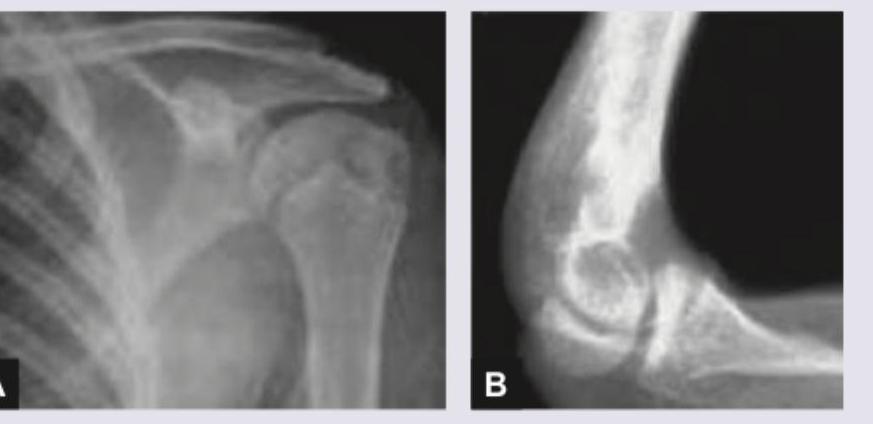
Comment on age of the male patient:

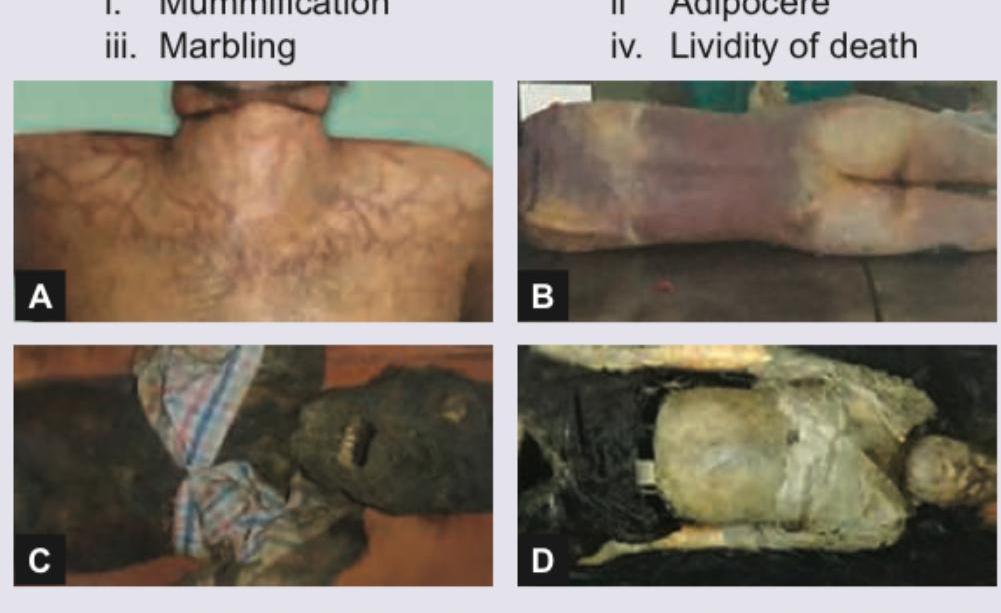
Identify the correct pair: i. Mummification ii. Adipocere iii. Marbling iv. Livor mortis
From medicolegal point of view which one of the following is NOT a sign of previous child birth?
In a medicolegal examination, an 18-year-old male claims he is 16 years old. Which joint X-ray should be done to estimate his age?
A child was born 8 months after the father's death. The grandparents filed a case claiming that the baby is not their son's, but DNA testing confirmed paternity. What is the child called?
A skull was recovered from a forest. According to inquest papers, a girl had gone missing 15 days back. The skull was sent to the forensic research lab. Which of the following would identify it as a female skull? 1. Large frontal and parietal eminence 2. Heavy cheek bones 3. Smooth glabella 4. Square orbits 5. Narrow mastoid
The most reliable criterion in Gustafson's criteria is:
The local district magistrate's court has asked your opinion regarding a paternity dispute. The alleged father is B+ and the mother is AB+. Which of the following groups would not be possible in their offspring?
Tattoo is not visible on autopsy. But the presence of tattoo was informed by relative. What is the next site to check?
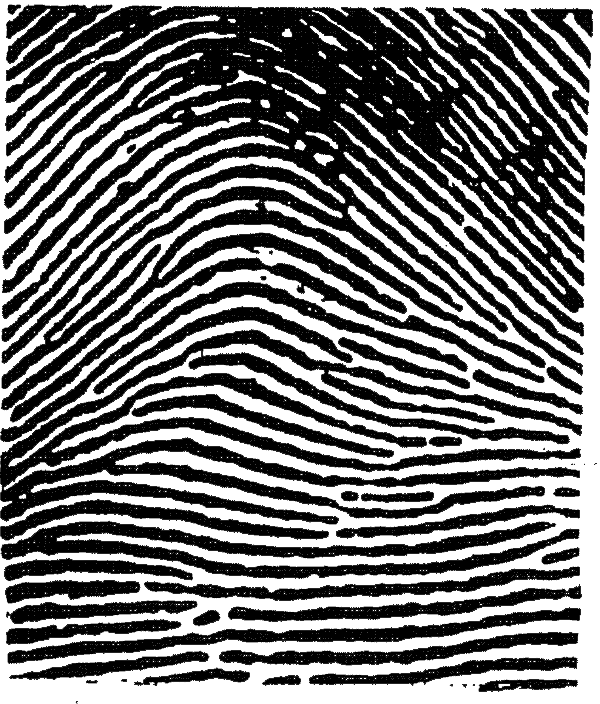
The pattern of fingerprint demonstrated here is
Explanation: ***12-14 years*** - The radiographs show **open growth plates** (epiphyseal lines) in both the shoulder (A) and elbow (B), indicating the individual is still growing. - The presence of well-developed secondary ossification centers and significant but not fully fused physes is consistent with a male in the **mid-pubertal** range, typically observed between 12-14 years. *5-7 years* - At this age, many **secondary ossification centers** would just be appearing or still quite small, and the growth plates would be much wider and less defined than seen in the images. - The degree of skeletal maturation evident in the shoulder and elbow in the images surpasses that of a 5-7 year old. *17-19 years* - By this age, most **growth plates** in males, especially in key joints like the shoulder and elbow, would be largely **fused** or in the final stages of fusion. - The distinct open physes seen in both images rule out this age range, as significant growth is still occurring. *>25 years* - In an individual over 25 years, **all growth plates** would be completely **fused**, and there would be no visible epiphyseal lines. - The presence of clear, open growth plates in the images definitively excludes an adult age.
Explanation: ***i-D, ii-C, iii-B, iv-A*** - Image **D** clearly shows a body exhibiting **mummification**, characterized by a dried, leathery appearance due to dehydration in dry conditions. - Image **C** depicts **adipocere**, where fatty tissues are converted into a grayish-white, greasy, or waxy substance, which can preserve body contours. - Image **B** illustrates **marbling**, which is a pattern of greenish-black discoloration along superficial veins due to the breakdown of blood by putrefactive bacteria. - Image **A** displays **lividity of death (livor mortis)**, characterized by purplish discoloration of the skin in dependent areas due to the gravitational pooling of blood after circulation ceases.
Explanation: ***Conical cervix with round external os*** - A **conical cervix with a round external os** is characteristic of a **nulliparous woman** (never given birth). - After childbirth, the cervix typically becomes **transversely slit-like** due to the dilation during labor. *Introitus is gaping and there is presence of carunculae myrtiformis* - A **gaping introitus** is a common finding after childbirth due to the stretching and relaxation of the **vaginal outlet**. - **Carunculae myrtiformes** are remnants of the hymen that are usually fragmented during vaginal delivery. *Abdomen is lax and loose with striae and linea nigra* - **Lax and loose abdominal skin**, along with the presence of **striae gravidarum** (stretch marks) and a prominent **linea nigra** (hyperpigmented line), are classic signs of a previous pregnancy and childbirth. - These changes result from the significant stretching of the abdominal wall during uterine enlargement. *Perineum is lax and there is evidence of scarring* - A **lax perineum** indicates loss of tone in the pelvic floor muscles, which commonly occurs after vaginal delivery. - **Perineal scarring** can be a result of episiotomy or perineal tears sustained during childbirth.
Explanation: ***Knee and wrist*** - **Bone age determination** using hand/wrist and knee radiographs is a standard method for estimating skeletal maturity across a wide age range, including late adolescence. - The **epiphyseal fusion** in these joints provides reliable indicators for age estimation up to and slightly beyond 18 years, particularly the **distal radius, ulna, and knee epiphyses**. *Head & shoulder* - While glenohumeral fusion occurs later, **skull sutures** are not reliable for precise age estimation in this age group, and shoulder fusion may not be as precise as wrist/knee for this specific age. - The **skull and shoulder** are generally not the primary sites chosen for age estimation in late adolescence due to less distinct and less consistent markers compared to other joints. *Elbow and ankle* - Although the elbow and ankle joints undergo fusion, the **wrist and knee provide a more comprehensive and widely validated set of ossification centers** for age estimation in the 16-18 year old range. - While useful, these sites may not offer the same level of detailed assessment for skeletal maturity as the combination of **wrist and knee**. *Elbow & hip* - **Hip fusion** (e.g., ilium, ischium, pubis) happens relatively early, making it less useful for distinguishing between 16 and 18 years old. - The **elbow alone** may not provide sufficient distinct markers for accurate age estimation in this specific late adolescent age group, unlike the wrist, which has multiple carpal and epiphyseal centers.
Explanation: ***Posthumous child*** - A **posthumous child** is one born after the death of its father. - In most legal systems, such a child is considered an heir and has rights equivalent to those born before the father's death, especially after paternity is confirmed. *Suppositious child* - A **suppositious child** is one who is falsely substituted for another, typically with the intent to defraud or claim an inheritance under false pretenses. - This term does not apply here as paternity was confirmed by DNA testing, indicating the child is genuinely linked to the deceased father. *Fabricated child* - The term **fabricated child** implies the child does not exist or was created through fraudulent means, often in the context of false claims or elaborate schemes. - In this scenario, the child is real and paternity has been verified, making "fabricated" an inaccurate description. *Illegitimate child* - An **illegitimate child** is historically defined as one born outside of marriage between its biological parents. - While the father died before the child's birth, the question does not provide information about the parents' marital status, and the term primarily refers to marital legality rather than the circumstances of the father's death.
Explanation: ***1,3 and 5*** - **Large frontal and parietal eminences** are characteristic features of a **female skull**, indicating a more rounded appearance. - A **smooth glabella** (the area between the eyebrows) is typical for females, as males tend to have a more prominent brow ridge. A **narrow mastoid** process is also characteristic in females. *2,3 and 4* - **Heavy cheekbones** and **square orbits** are features more commonly associated with a **male skull**. - While a **smooth glabella** is a female characteristic, its combination with male features makes this option incorrect. *1 and 4 only* - **Large frontal eminences** are indicative of a female skull, but **square orbits** are a feature of a **male skull**. - This combination presents conflicting information regarding gender identification. *3,4 and 5* - A **smooth glabella** and **narrow mastoid** are features of a **female skull**. - However, **square orbits** are typically found in **male skulls**, rendering this option incorrect.
Explanation: ***Transparency of root*** - This criterion, specifically **dentinal translucency**, is considered the most reliable age indicator in **Gustafson's criteria** due to its continuous and predictable increase with age. - The **translucency** results from the deposition of **secondary dentin** and obliteration of dentinal tubules, progressing from the apex towards the crown. *Attrition* - **Attrition** refers to the wear of tooth surfaces, which is highly variable and depends on diet, habits, and dental health, making it an unreliable age indicator. - While it generally increases with age, its rate is subject to many confounding factors. *Root resorption* - **Root resorption** is the progressive loss of tooth structure from the root and can be caused by various factors like trauma, infection, or orthodontic treatment, not solely age. - It is an unpredictable process and not a consistent age-related change. *Periodontosis* - **Periodontosis**, or **periodontal disease**, is inflammation and infection of the supporting structures around the teeth, influenced by oral hygiene and genetics. - While its prevalence may increase with age, it's not a direct and reliable physiological age marker for individuals.
Explanation: ***O*** - For a child to have blood type O, they must inherit an **'O' allele from both parents**. - Since the mother has blood type AB, she possesses only **'A' and 'B' alleles** and cannot pass on an 'O' allele. *A* - The alleged father (B+) can have genotypes BO or BB for the A/B alleles. The mother (AB+) has genotype AB. - If the father is BO and the mother is AB, there is a possibility of an **A allele** from the mother and an **O allele** from the father combining to produce an A blood type child. *B* - The father is B+ and can pass on a **B allele**. The mother is AB+ and can also pass on a **B allele**. - Therefore, a child with blood type B is a possible outcome. *AB* - The father (B+) can pass on a **B allele**. The mother (AB+) can pass on an **A allele**. - The combination of an A allele from the mother and a B allele from the father would result in an **AB blood type** child, making this a possible outcome.
Explanation: ***Regional lymph node*** - **Tattoo ink particles**, particularly nanoparticles, can migrate from the skin via lymphatic drainage and accumulate in the regional lymph nodes. - This accumulation can make the lymph nodes appear **pigmented** even if the tattoo on the skin is no longer visible due to decomposition or other factors. *Skin* - The question states the tattoo is **not visible on the skin**, implying a thorough external examination has already been performed or that the skin itself has deteriorated. - Further examination of the skin for a visible tattoo would be redundant based on the given premise. *Liver* - While the liver plays a role in detoxification, it is **not the primary site for tattoo ink deposition** after lymphatic drainage. - Ink particles are generally too large to readily pass through the lymphatic system and then diffuse into the systemic circulation to accumulate in significant amounts in the liver. *Vessel* - Tattoo ink is primarily deposited in the **dermis** and subsequently transported via the lymphatic system, not directly into blood vessels. - While some ink particles might theoretically enter the systemic circulation, they are not expected to accumulate in a way that makes blood vessels a reliable site for identification.
Explanation: ***Arch*** - An **arch pattern** is characterized by ridges that enter from one side of the finger, rise in the center to form an arch, and then exit on the **opposite side** without recurving. - Arches **do not have deltas or cores**, which is the defining characteristic seen in the provided fingerprint image. - This is the **simplest and least common** fingerprint pattern, accounting for approximately 5% of all fingerprints. *Loop* - A **loop pattern** features ridges that enter from one side, form a curve or recurve, and then exit on the **same side**. - Loops contain **one delta and one core**, which are absent in the given pattern. - Loops are the most common pattern (60-65% of fingerprints). *Whorl* - A **whorl pattern** is characterized by ridges that make at least one complete circuit, forming a **spiral, oval, or circular shape**. - Whorls typically have **two or more deltas**, which is not consistent with the simple arch pattern shown. - Whorls account for approximately 30-35% of fingerprints. *Composite* - **Composite patterns** combine features of different primary patterns within a single fingerprint, such as a central pocket loop, double loop, or accidental whorl. - The given fingerprint displays a clear, simple **arch structure** with no deltas or cores, not a combination of multiple patterns.
Personal Identification Methods
Practice Questions
Anthropometry
Practice Questions
Dactylography (Fingerprinting)
Practice Questions
Dental Identification
Practice Questions
DNA Profiling
Practice Questions
Facial Reconstruction
Practice Questions
Superimposition Techniques
Practice Questions
Hair and Fiber Analysis
Practice Questions
Handwriting Analysis
Practice Questions
Identification of Remains
Practice Questions
Mass Disaster Victim Identification
Practice Questions
Age, Sex and Race Determination
Practice Questions
Get full access to all questions, explanations, and performance tracking.
Start For Free