The fingerprinting method was first used in which country?
What is the appropriate site for X-ray determination of bone age in a 21-year-old female?
Regarding rugoscopy, all are true except?
Which of the following diseases causes modification of fingerprints?
The increase in the perikymata (lines of Retzius) on the enamel of a tooth can be useful in determining age. What is this method called?
Species identifications are done by which test?
Davidson body is used to determine what about a person?
What is the definition of suspended animation?
What is the maximum age of this person?
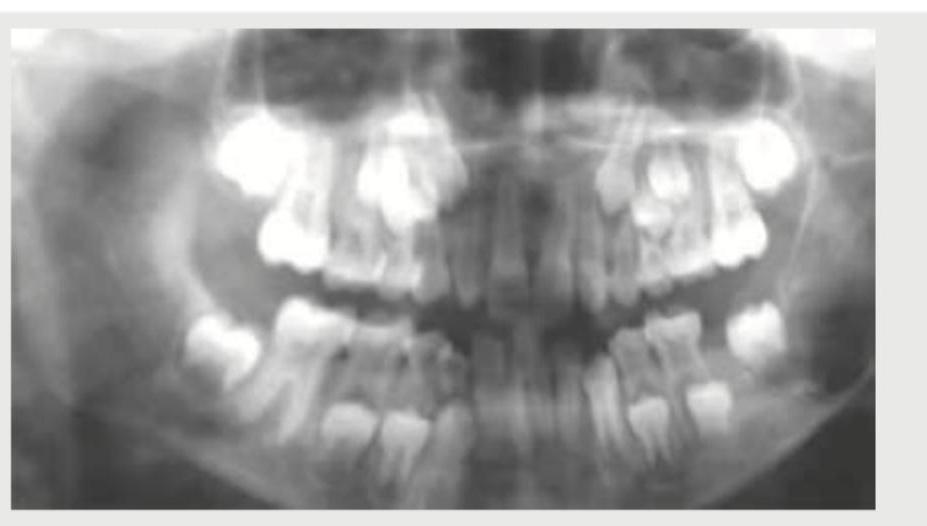
A child allegedly aged 9 years is brought for medical examination. What is the expected total number of teeth present at this age?
Explanation: **Explanation:** The correct answer is **India**. While the ancient Chinese used thumbprints on clay seals and documents, the **scientific and systematic application of fingerprinting for identification** (Dactylography) was pioneered in India during the British Raj. 1. **Why India is correct:** In 1858, **Sir William Herschel**, a British administrator in Jungipoor, Bengal, first used handprints on contracts to prevent impersonation. Later, in 1897, the world’s first **Fingerprint Bureau** was established in **Calcutta**. Two Indian police officers, **Azizul Haque and Hem Chandra Bose**, were instrumental in developing the mathematical formula for the fingerprint classification system, which was later credited to their supervisor, Sir Edward Henry (the Henry Classification System). 2. **Why other options are incorrect:** * **China:** Although the Chinese used fingerprints as "signatures" on documents centuries ago, they did not develop a systematic method for criminal identification or forensic classification. * **Japan:** While early researchers like Henry Faulds conducted studies on fingerprints while working in Japan in the 1870s, the administrative and forensic implementation of the system began in India. **Clinical Pearls & High-Yield Facts for NEET-PG:** * **Dactylography (Galton-Henry System):** The study of fingerprints. It is considered the most infallible method of identification (100% absolute). * **Galton’s Details:** Refers to the ridge characteristics (minutiae) used for comparison. * **Development in Utero:** Fingerprints are formed at the **12th to 16th week** of intrauterine life and remain unchanged until death (and even after, until the skin decomposes). * **Adermatoglyphia:** A rare genetic condition where individuals are born without fingerprints (also known as "Immigration Delay Disease"). * **Bertillonage:** An older identification system based on physical measurements (Anthropometry), which was replaced by fingerprinting due to the latter's superior accuracy.
Explanation: **Explanation:** Age estimation in forensic medicine relies on the chronological sequence of epiphyseal fusion. The core principle is that different joints fuse at specific ages; once a joint is fused, it can no longer be used to determine age beyond that point. **Why Option D is Correct:** By age 21, most long bone epiphyses (like the wrist, elbow, and knee) have already fused. To estimate age in early adulthood (18–25 years), we must look at "late-fusing" centers. * **Ischial Tuberosity:** Typically fuses between **18–20 years**. * **Clavicle (Medial End):** This is the last epiphysis in the body to fuse. It begins to ossify around age 18–19 and fuses completely between **21–25 years**. Therefore, it is the gold standard for age determination in the 21-year-old age group. **Why Other Options are Incorrect:** * **Option A (Elbow & Shoulder):** Elbow centers fuse early (by age 14–16). The shoulder (humeral head) fuses by age 18–19. * **Option B (Wrist):** The distal radius and ulna fuse by age 18–19. The wrist is the preferred site for children and adolescents, but not for adults over 20. * **Option C (Hip & Knee):** The centers around the knee (distal femur/proximal tibia) fuse by age 18–19. **High-Yield NEET-PG Pearls:** * **First bone to ossify:** Clavicle (5th–6th week of intrauterine life). * **Last bone to fuse:** Medial end of the Clavicle (21–25 years). * **Rule of Two:** For the elbow, most centers fuse by age 14 in females and 16 in males (a 2-year difference is common between genders). * **X-ray of choice for age <18:** Hand and wrist (Non-dominant). * **X-ray of choice for age 18–25:** Medial end of clavicle and Iliac crest/Ischial tuberosity.
Explanation: **Explanation:** **Rugoscopy (Palatoscopy)** is the study of palatal rugae (irregular mucosal ridges on the anterior part of the hard palate) to establish identity. It is highly useful in forensic identification, especially in cases where fingerprints cannot be obtained (e.g., severe burns or decomposition), as the palate is protected by the cheeks, lips, and teeth. **Why Option C is the Correct Answer (The False Statement):** The classification of palatal rugae based on length is as follows: * **Primary Rugae:** These are the most significant for identification and measure **more than 5 mm** in length. * **Secondary Rugae:** These measure between **3 to 5 mm**. * **Fragmentary Rugae:** These are small, measuring between **2 to 3 mm**. Therefore, stating that primary rugae are less than 3 mm is factually incorrect. **Analysis of Other Options:** * **Option A:** True. Palatal rugae are unique to every individual (even monozygotic twins) and are used for identification. * **Option B:** True. Rugae patterns are stable and do not change significantly in shape or position during adult life, though they may be affected by extreme orthodontic tooth movement or trauma. * **Option D:** True. As per Lysell’s classification, secondary rugae are defined by a length of 3-5 mm. **High-Yield Clinical Pearls for NEET-PG:** * **Stability:** Rugae are formed by the 12th to 14th week of intrauterine life. * **Cheiloscopy:** The study of lip prints (Quetelet’s classification). * **Dactyloscopy:** The study of fingerprints (Galton system). * **Forensic Importance:** Rugoscopy is particularly valuable in edentulous patients and burn victims because the palatal rugae are heat-resistant and well-protected.
Explanation: **Explanation:** **1. Why Leprosy is Correct:** Fingerprints (Dactylography) are permanent and unique because they are formed by the dermal papillae. For a fingerprint to be modified or destroyed, the damage must extend deep into the **dermis**. * **Leprosy (Hansen’s Disease)**, specifically the lepromatous and borderline types, causes trophic changes, skin ulcerations, and nerve damage (peripheral neuropathy). This leads to the destruction of the dermal ridges due to chronic inflammation, secondary infections, and resorption of phalanges (acro-osteolysis), resulting in the permanent loss or alteration of fingerprint patterns. **2. Analysis of Incorrect Options:** * **HIV:** While HIV weakens the immune system, it does not inherently alter the anatomical structure of the dermal ridges. Skin conditions associated with HIV (like Kaposi sarcoma) are localized and do not cause a generalized modification of fingerprints. * **Hypertension:** This is a systemic vascular disease. It has no effect on the cutaneous ridge patterns of the fingers. * **Acromegaly:** Excessive Growth Hormone leads to the enlargement of hands and thickening of soft tissues (spade-like hands). While the fingers become larger, the **pattern** of the ridges remains the same; they are merely stretched or spaced further apart. **3. High-Yield Clinical Pearls for NEET-PG:** * **Permanent Impairment:** Other conditions that can modify/destroy fingerprints include **Radiation dermatitis, Scleroderma, Eczema, and Celiac disease** (due to epidermal atrophy). * **Adermatoglyphia:** A rare genetic condition known as "Immigration Delay Disease" where individuals are born without fingerprints. * **Galton’s System:** Fingerprints are the most reliable method of identification because they are unique (even in monozygotic twins) and immutable from the 4th month of intrauterine life until the skin decomposes after death. * **Legal Note:** Under the Identification of Prisoners Act, refusal to allow fingerprints to be taken is an offense.
Explanation: **Explanation:** The correct answer is **Boyde method**. This method utilizes the incremental growth lines of the enamel, known as **perikymata** or **striae of Retzius**, to estimate age. These lines represent the rhythmic deposition of enamel matrix by ameloblasts. In forensic odontology, counting these microscopic daily growth increments (cross-striations) allows for a highly accurate estimation of age, especially in children and juveniles, as it acts as a "biological clock." **Analysis of Options:** * **A. Gustafson method:** This is a classic method for adult age estimation based on six dental parameters: attrition, periodontosis, secondary dentin, cementum apposition, root resorption, and root transparency. * **B. Miles method:** This method estimates age by assessing the **wear (attrition) patterns** on the occlusal surfaces of molar teeth, typically compared against a baseline population. * **D. Stack method:** This involves estimating age by measuring the **weight and height of the dental crown** or the mineralized tissue during the developmental stages of the fetus and infant. **High-Yield Clinical Pearls for NEET-PG:** * **Root Transparency:** This is considered the most reliable single parameter in Gustafson’s criteria for aging adults. * **Neonatal Line:** A prominent Stria of Retzius formed at birth due to physiological stress; its presence confirms that the infant lived after birth (live birth). * **Schour and Massler:** Known for the "Dental Chart" method used to estimate age based on the stages of tooth eruption and development.
Explanation: **Explanation:** The **Precipitin test** is the gold standard for determining the **species of origin** (e.g., human vs. animal) in forensic investigations. It is an antigen-antibody reaction where a sample (antigen) is reacted against specific "antihuman" serum (antibody). If the sample is human, a visible precipitate forms at the junction. Modern variations include the *Coombs test* and *Gel diffusion*. **Analysis of Incorrect Options:** * **Benzidine test:** This is a **presumptive (screening) test** used to detect the presence of blood. It relies on the peroxidase-like activity of hemoglobin but cannot differentiate between species or even between blood and certain plant peroxidases. * **Spectroscopy:** This is a **confirmatory test** for blood. It identifies specific absorption bands of hemoglobin derivatives (like hemochromogen) to confirm that a stain is indeed blood, but it does not identify the species. * **Neutron Activation Analysis (NAA):** This is a highly sensitive nuclear process used for **trace element analysis**. In forensics, it is primarily used for hair analysis (detecting arsenic or other metals) and comparing gunpowder residues. **High-Yield Clinical Pearls for NEET-PG:** * **Sequence of Blood Exam:** 1. Is it blood? (Benzidine/Kastle-Meyer) → 2. Is it human? (**Precipitin**) → 3. Whose blood is it? (DNA profiling/Blood grouping). * **Teichmann and Takayama tests:** These are microchemical confirmatory tests that produce characteristic crystals (Haemin and Haemochromogen, respectively) to confirm the presence of blood. * **Species Identification:** If the bloodstain is very old or dried, the **Anti-human globulin (Coombs) consumption test** is preferred.
Explanation: ### Explanation **Correct Answer: B. Sex** **Medical Concept:** The **Davidson body** is a nuclear appendage found in **polymorphonuclear leukocytes (neutrophils)**. It appears as a small, drumstick-shaped mass (about 1.5 μm in diameter) attached to one of the lobes of the nucleus by a narrow stalk. It represents the inactivated X-chromosome (heterochromatin) in females, making it the hematological equivalent of the **Barr body** found in epithelial cells. To determine sex, a peripheral blood smear is examined; the presence of Davidson bodies in approximately **6 or more out of 500 neutrophils** is diagnostic of the female sex. They are absent in males (XY). **Why other options are incorrect:** * **Age:** Age is typically determined using skeletal remains (ossification centers, epiphyseal fusion) or dental eruption patterns (Gustafson’s method). * **Race:** Racial identification (ancestry) is primarily determined through anthroposcopic features of the skull (nasal index, orbital shape) or the femur. * **All of the above:** Since Davidson bodies are specific biological markers for the X-chromosome, they are exclusive to sex determination. **High-Yield Clinical Pearls for NEET-PG:** * **Barr Bodies:** Found in the nuclei of squamous epithelial cells (e.g., buccal smear). The number of Barr bodies is always **(n-1)**, where 'n' is the number of X chromosomes. * **Fluorescent (F) Bodies:** Used for male sex determination; these represent the **Y-chromosome** and are visualized using quinacrine mustard staining under UV light. * **Amniotic Fluid:** Sex can be determined prenatally by looking for Barr bodies in cells obtained via amniocentesis. * **Rule of Thumb:** Davidson bodies = Neutrophils (Blood); Barr bodies = Buccal mucosa (Epithelium).
Explanation: **Explanation:** **Suspended Animation**, also known as **Apparent Death**, is a clinical state where the vital functions of the body (respiration and circulation) are reduced to such a low level that they cannot be detected by routine clinical examination. Despite the appearance of death, the individual is still alive, and the condition is potentially reversible with timely resuscitation. * **Why Option A is correct:** It accurately describes the physiological state where life functions are "suspended" or "interrupted" rather than ceased. The metabolic rate is at its minimum, making the person appear dead to the naked eye. * **Why Option B is incorrect:** This describes **Somatic or Molecular Death**, where cellular changes are permanent and irreversible. Suspended animation is, by definition, a temporary and reversible state. * **Why Option C is incorrect:** Brain death involves the irreversible cessation of all functions of the entire brain, including the brainstem. In suspended animation, the brain remains viable. **High-Yield Clinical Pearls for NEET-PG:** * **Common Causes:** Newborns (Asphyxia neonatorum), drowning, electrocution, hypothermia, drug overdose (barbiturates/opiates), heatstroke, and profound shock. * **Medico-legal Importance:** It is crucial to confirm death using an ECG or ultrasound in suspicious cases to avoid premature embalming or autopsy. * **Duration:** It can last from a few seconds to several minutes; however, in cases of profound hypothermia, it may last much longer. * **Key Rule:** "No one is dead until they are warm and dead" (specifically referring to hypothermia-induced suspended animation).
Explanation: ***Less than 12 years*** - **Mixed dentition** (presence of both deciduous and permanent teeth) is characteristic of children under 12 years of age. - All **permanent teeth** (except third molars) typically erupt by age 12-13, so the presence of deciduous teeth indicates the person is younger than this threshold. *5 years* - At 5 years, most children still have predominantly **deciduous dentition** with only the **first permanent molars** beginning to erupt. - The **mixed dentition pattern** shown would be too advanced for a typical 5-year-old child. *6 years* - While **first permanent molars** and **central incisors** begin erupting around age 6, the extensive mixed dentition pattern suggests an older age. - The degree of **permanent tooth eruption** visible exceeds what is typical for a 6-year-old. *18 years* - By 18 years, all **permanent teeth** (including third molars) would have erupted, resulting in complete **adult dentition**. - No **deciduous teeth** would remain at this age, contradicting the mixed dentition pattern observed.
Explanation: **Explanation:** The age of 9 years is a period of **mixed dentition**, where deciduous (milk) teeth are being shed and replaced by permanent teeth. To determine the total number of teeth at this age, we apply the standard eruption timelines used in Forensic Odontology. **Why 24 is the correct answer:** By age 9, a child typically has: 1. **12 Permanent Teeth:** These include the four 1st Molars (erupt at 6 years), four Central Incisors (7-8 years), and four Lateral Incisors (8-9 years). 2. **12 Deciduous Teeth:** The child still retains their deciduous Canines, 1st Molars, and 2nd Molars (4 per quadrant). * **Total:** 12 (Permanent) + 12 (Deciduous) = **24 teeth.** **Analysis of Incorrect Options:** * **A (20):** This represents a complete set of deciduous teeth (usually present by age 2.5–3 years) or the number of teeth present just before the 1st permanent molar erupts at age 6. * **C (28):** This is the number of teeth present after the eruption of the 2nd permanent molars (usually by age 12–14 years), excluding the wisdom teeth. * **D (32):** This represents the full adult permanent dentition, including the 3rd molars (wisdom teeth), which typically erupt between 17–25 years. **High-Yield Clinical Pearls for NEET-PG:** * **6-6-6 Rule:** The 1st permanent molar (the "6-year molar") is the first permanent tooth to erupt and is the most reliable indicator of the transition to permanent dentition. * **Sequence of Eruption (Permanent):** M1 -> I1 -> I2 -> P1 -> P2 -> C -> M2 -> M3 (Note: Mandibular teeth usually erupt before Maxillary teeth). * **Gustafson’s Method:** Used for age estimation in adults based on physiological changes in teeth (Salami: Sclerosis, Attrition, Location of gingiva, Cementum apposition, Dentin resorption, Transparency of root).
Personal Identification Methods
Practice Questions
Anthropometry
Practice Questions
Dactylography (Fingerprinting)
Practice Questions
Dental Identification
Practice Questions
DNA Profiling
Practice Questions
Facial Reconstruction
Practice Questions
Superimposition Techniques
Practice Questions
Hair and Fiber Analysis
Practice Questions
Handwriting Analysis
Practice Questions
Identification of Remains
Practice Questions
Mass Disaster Victim Identification
Practice Questions
Age, Sex and Race Determination
Practice Questions
Get full access to all questions, explanations, and performance tracking.
Start For Free