What is the cephalic index of Mongolians?
Primary and secondary markings on a metal bullet recovered from a gunshot wound can be used for what purpose?
What does affiliation refer to in a legal context?
What is taxidermy?
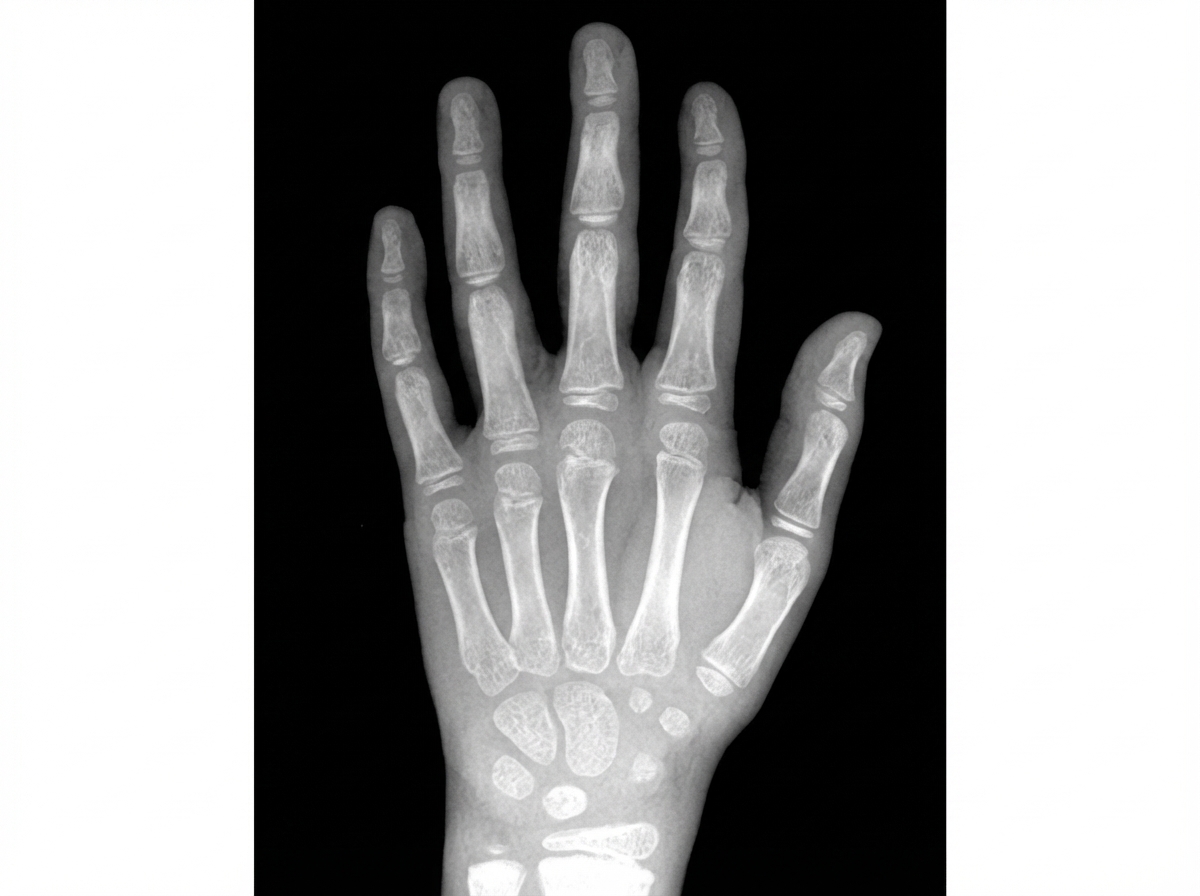
A child presents with 20 permanent teeth and 8 temporary teeth. At what age is this typically observed?
In humans, the cortex of a hair is usually:
What is the most reliable method of identification?
What is the typical number of permanent teeth in a child at 8 years of age?
Which of the following features points towards a female skull when differentiating from a male skull?
According to the Federation Dental International (FDI) notation, what is the designation for the lower left canine?
Explanation: **Explanation:** The **Cephalic Index (CI)** is an anthropometric tool used in forensic medicine to determine the racial origin of skeletal remains. It is calculated as: *(Maximum Breadth of Skull / Maximum Length of Skull) × 100*. **Why Option D is Correct:** Mongolians (and Asians) typically possess a **Brachycephalic** (short-headed) skull. This is characterized by a broad skull relative to its length, resulting in a Cephalic Index of **>80**. This high index reflects a rounder head shape common in this ethnic group. **Analysis of Incorrect Options:** * **Option A (<70):** This is not a standard classification for major racial groups. A CI below 70 is often termed "Hyperdolichocephalic." * **Option B (70–75):** This represents **Dolichocephalic** (long-headed) skulls. This is characteristic of **Aryans, Africans (Negroids), and Aborigines**. * **Option C (75–80):** This represents **Mesaticephalic** (medium-headed) skulls. This is characteristic of **Europeans (Caucasoids) and Chinese**. **High-Yield NEET-PG Pearls:** 1. **Index Values to Remember:** * **Dolichocephalic (<75):** Pure Africans, Aryans, Aborigines. * **Mesaticephalic (75–80):** Europeans, Chinese. * **Brachycephalic (>80):** Mongolians, Andamanese. 2. **Vertical Index:** Used to differentiate between races based on the height of the skull relative to its length. 3. **Mixed Populations:** In India, the population is predominantly Mesaticephalic due to ethnic mixing, though variations exist regionally. 4. **Clinical Correlation:** The Cephalic Index is also used in pediatrics to monitor craniosynostosis and positional plagiocephaly.
Explanation: ### Explanation **1. Why the Correct Answer is Right:** The identification of a firearm depends on the principle of **ballistic fingerprinting**. When a bullet travels through the rifled barrel of a firearm, the unique, microscopic irregularities on the inner surface of the barrel (lands and grooves) leave distinct marks on the bullet [1], [2]. * **Primary Markings:** These are the gross characteristics like the number, width, and direction of twist of the lands and grooves [2]. * **Secondary Markings (Striations):** These are unique, microscopic scratches caused by manufacturing imperfections or wear and tear within the barrel [1]. Because no two barrels—even from the same manufacturer—possess identical striations, these markings act as a "fingerprint" to link a specific bullet to a specific weapon [3]. **2. Why Incorrect Options are Wrong:** * **Range of Firing (B):** This is determined by examining the **entry wound** for features like tattooing, scorching, singeing, and the presence of soot (blackening), not by the markings on the bullet itself. * **Severity of Tissue Damage (C):** This depends on the bullet's velocity, mass, and kinetic energy ($KE = ½mv^2$), as well as the density and elasticity of the tissue involved. * **Time of Crime (D):** Forensic ballistics cannot determine the time of the crime. This is usually estimated through post-mortem changes (rigor mortis, livor mortis) or circumstantial evidence. **3. High-Yield Facts for NEET-PG:** * **Rifling:** The process of cutting spiral grooves into the barrel to impart spin and stability to the bullet [2]. * **Ricochet Bullet:** A bullet that strikes an intermediate surface and deflects before hitting the victim; it often shows characteristic flattening or "sandpaper" abrasions. * **Tandem Bullet (Piggyback):** When a second bullet is fired and pushes out a previous bullet lodged in the barrel. * **Souvenir Bullet:** A bullet lodged in the body for a long time, often encapsulated by fibrous tissue.
Explanation: **Explanation:** **Affiliation** is a legal term specifically used in the context of **Paternity Disputes**. An "Affiliation Case" is a legal proceeding initiated to establish the paternity of a child born out of wedlock, primarily to fix the responsibility for the child's maintenance and financial support on the biological father. In Forensic Medicine, these cases rely heavily on DNA profiling (the gold standard) and blood grouping to include or exclude a putative father. **Analysis of Options:** * **A. Paternity dispute (Correct):** As defined, affiliation is the legal process of "affiliating" or connecting a child to their biological father for legal and financial obligations. * **B. Divorce case:** These involve the legal dissolution of marriage. While child custody may be discussed, the term "affiliation" is not used to describe the divorce process itself. * **C. Rape:** This is a criminal offense involving non-consensual sexual intercourse. While DNA evidence is used here, the legal proceedings are criminal trials, not affiliation cases. * **D. Adultery:** This refers to voluntary sexual intercourse between a married person and someone who is not their spouse. While it may lead to a paternity dispute, the term affiliation specifically refers to the establishment of fatherhood. **High-Yield NEET-PG Pearls:** * **DNA Fingerprinting:** The most definitive method for resolving affiliation cases (99.9% accuracy). * **HLA Typing:** Previously used but now largely replaced by DNA profiling. * **Rule of Exclusion:** In blood grouping, a man can be *excluded* as the father if the child possesses an antigen that neither parent has, but he cannot be *proven* to be the father based on ABO grouping alone. * **Section 112 of the Indian Evidence Act:** Deals with the "Presumption of Legitimacy" for a child born during a valid marriage.
Explanation: **Explanation:** **Taxidermy** is the art and science of preserving an animal's body via its skin. The process involves removing the skin, treating it with preservative chemicals (like alum or arsenic), and then stretching it over an artificial frame or "dummy" to recreate a lifelike appearance for museum display or scientific study. In Forensic Medicine, this term is occasionally referenced in the context of preservation techniques and the historical use of certain poisons (like arsenic) as preservatives. **Analysis of Incorrect Options:** * **Option A:** Dissecting bodies in poisoning cases is a standard **Medico-legal Autopsy** procedure. Specific techniques, such as the *Rokitansky* or *Virchow* methods, are used, but they are not termed taxidermy. * **Option B:** The legal process of digging up a previously buried body for medico-legal examination is called **Exhumation**. In India, exhumation requires an order from a Magistrate (Executive Magistrate). * **Option C:** The study of how poisons affect the body is **Toxicology**. Specifically, the study of the movement and effect of drugs/poisons is *Pharmacokinetics* and *Pharmacodynamics*. **High-Yield Clinical Pearls for NEET-PG:** * **Arsenic Connection:** Historically, taxidermists used arsenic to preserve skins. Chronic arsenic poisoning (Arsenicosis) was an occupational hazard in this field. * **Embalming:** While taxidermy preserves animal skins, **Embalming** is the process used to preserve human cadavers for anatomical study or funeral rites, typically using a fluid containing Formaldehyde, Glycerin, and Alcohol. * **Mummification:** A natural or artificial process of preservation where the body dries out (desiccation), preventing putrefaction. It requires a dry, warm, and airy environment.
Explanation: **Explanation:** The estimation of age using dentition is a high-yield topic in Forensic Medicine. To solve this, one must track the "Mixed Dentition Period" (6–12 years), where deciduous teeth are progressively replaced by permanent ones. **Why 10 years is correct:** At age 10, a child typically has **20 permanent teeth** and **8 temporary (deciduous) teeth**. * **Permanent teeth present:** 8 Incisors, 8 Premolars (replacing deciduous molars), and 4 First Molars (erupted at 6 years). Total = 20. * **Temporary teeth remaining:** The 8 deciduous molars have usually been shed and replaced by premolars by this stage, but the **4 deciduous canines** are often still present, along with a transition of the second deciduous molars. Statistically, the formula for a 10-year-old aligns with 20 permanent and 8 temporary teeth. **Analysis of Incorrect Options:** * **9 years:** At this age, the first premolars are just beginning to erupt. The child usually has more temporary teeth (around 10–12) and fewer permanent teeth (around 12–14). * **11 years:** By age 11, the permanent canines and second premolars are erupting. The number of temporary teeth drops significantly (usually 2–4 remaining). * **12 years:** This is known as the "Second Molar age." By 12 years, all temporary teeth are shed (0 temporary teeth), and the 4 second permanent molars erupt, bringing the permanent count to 28. **Clinical Pearls for NEET-PG:** * **First permanent tooth to erupt:** Lower 1st Molar (6 years) – often called the "6-year molar." * **First temporary tooth to erupt:** Lower Central Incisor (6–8 months). * **Gustafson’s Method:** Used for age estimation in adults (above 21 years) based on six dental parameters (e.g., transparency of root, secondary dentin). * **Schour and Massler Chart:** The standard reference for dental development from birth to 25 years.
Explanation: In forensic medicine, differentiating between human and animal hair is a high-yield topic for NEET-PG. The correct answer is **C (4-10 times broader than the medulla)**. ### **Explanation of the Correct Answer** The structure of a hair shaft consists of three layers: the cuticle (outermost), the cortex (middle), and the medulla (innermost core). In **humans**, the **cortex** is the thickest component, providing structural strength and containing pigment granules. The **medulla** in humans is typically thin, fragmented, or even absent. The **Medullary Index (MI)** is the ratio of the diameter of the medulla to the diameter of the entire hair shaft. * **In humans:** The MI is less than **1/3** (0.33). This means the cortex is significantly thicker—specifically **4 to 10 times broader** than the medulla. * **In animals:** The MI is greater than **1/2** (0.50), meaning the medulla is very thick and the cortex is relatively thin. ### **Analysis of Incorrect Options** * **Option A & B:** These are incorrect because they underestimate the dominance of the cortex in human hair. If the cortex were only double or the same as the medulla, the Medullary Index would be 0.33 to 0.50, which is characteristic of certain non-human primates but not humans. * **Option D:** This describes **animal hair**. In most animals, the medulla is the prominent feature, leaving the cortex as a thin surrounding layer. ### **High-Yield Clinical Pearls for NEET-PG** * **Medullary Index:** Humans < 1/3; Animals > 1/2. * **Pigment Distribution:** In humans, pigments are concentrated toward the **periphery** (cuticle); in animals, they are concentrated toward the **center** (medulla). * **Cuticular Scales:** Humans have **imbricate** (flattened) scales; animals may have coronal (crown-like) or spinous (petal-like) scales. * **Precipitin Test:** Used to definitively confirm if a hair sample is of human origin.
Explanation: **Explanation:** **Identification** is the determination of the individuality of a person. The **Galton method** (Dactylography or Fingerprinting) is considered the most reliable method of identification because no two individuals, including monozygotic twins, have identical fingerprint patterns. These patterns are formed by the 4th month of intrauterine life and remain unchanged throughout an individual's life until decomposition sets in. * **Why Galton Method is Correct:** It is based on the principle that the arrangement of ridge patterns on the fingertips is unique and permanent. It has a mathematical certainty of 1 in 64 billion, making it superior to any other physical trait for legal identification. **Analysis of Incorrect Options:** * **Gustafson Method:** This is a method used for **age estimation** from teeth based on six parameters (attrition, periodontosis, secondary dentin, cementum apposition, root resorption, and transparency). It is not a primary method for general identification. * **Anthropometry (Bertillonage):** Developed by Alphonse Bertillon, this method relies on physical measurements of various body parts. It was replaced by fingerprinting because body measurements can change with age, disease, or injury, and are not unique enough to prevent errors (e.g., the famous Will West case). * **Scars:** While helpful in corroborative identification, scars can be surgically altered, may fade over time, or may not be unique enough to provide absolute proof of identity. **High-Yield Clinical Pearls for NEET-PG:** * **Poroscopy (Locard’s Method):** Study of sweat gland pores on the ridges; even a small fragment of a fingerprint can be identified using this. * **Quetelet’s Rule:** The basis of Anthropometry, stating that no two people have the exact same body measurements. * **Dactylography in Twins:** Monozygotic twins have identical DNA profiles but **different** fingerprints. * **Fingerprint Patterns:** Loops (60-70%) are the most common, followed by Whorls (25-35%), and Arches (5%).
Explanation: **Explanation:** The number of permanent teeth at age 8 is determined by the chronological sequence of dental eruption. By age 8, a child typically has **12 permanent teeth**: 4 first molars and 8 incisors. **Why 12 is correct:** The eruption of permanent teeth follows a specific timeline: * **6 years:** 4 First Molars (often called the "6-year molars"). * **7 years:** 4 Central Incisors (replacing deciduous central incisors). * **8 years:** 4 Lateral Incisors (replacing deciduous lateral incisors). Total = 4 (Molars) + 4 (Central Incisors) + 4 (Lateral Incisors) = **12 teeth.** **Analysis of Incorrect Options:** * **A (6):** This is too low; by age 6-7, a child already has at least 4-8 permanent teeth. * **B (8):** This would represent a child around age 7 who has erupted their first molars and central incisors but not yet the lateral incisors. * **D (16):** This number is typically reached around age 10-11, following the eruption of the first premolars (9-10 years) and second premolars (10-12 years). **High-Yield Clinical Pearls for NEET-PG:** * **First Permanent Tooth:** The First Molar (6 years). It erupts *behind* the deciduous molars, not replacing any milk teeth. * **First Succedaneous Tooth:** The Central Incisor (7 years), as it is the first permanent tooth to replace a shed deciduous tooth. * **Rule of Four:** A helpful mnemonic for primary teeth—at 6-7 months (lower central incisors), then add 4 months for each subsequent group. * **Mixed Dentition Period:** Occurs between ages 6 and 12. By age 12, all deciduous teeth are usually replaced, and the second molars erupt (total 24-28 teeth). * **Gustafson’s Method:** The most reliable method for age estimation using a single tooth in adults (evaluates attrition, periodontitis, secondary dentin, cementum apposition, root resorption, and transparency).
Explanation: **Explanation:** Sex determination from the skull is a high-yield topic in Forensic Medicine. The female skull generally retains **pedomorphic (infantile) characteristics**, appearing smoother and more rounded compared to the rugged, muscularly defined male skull. **Why the correct answer is right:** * **Prominent Frontal Eminence:** In females, the frontal and parietal eminences are more prominent, giving the forehead a vertical and smooth appearance. In males, the forehead is typically sloping, and the supraorbital ridges are more pronounced. **Analysis of incorrect options:** * **Mastoid Process (A):** In males, the mastoid process is larger, more robust, and blunt due to stronger neck muscle attachments (sternocleidomastoid). In females, it is small and relatively sharp. * **Orbit Shape (C):** Female orbits are typically **round, large, and have sharp supraorbital margins**. Male orbits are square/rectangular with rounded edges and blunt margins. * **Prominent Jaw (D):** Males have a heavier, larger mandible with a prominent chin (square-shaped) and an everted angle of the jaw. The female jaw is smaller, with a more rounded or pointed chin. **High-Yield Clinical Pearls for NEET-PG:** * **Accuracy:** The skull is the second most reliable bone for sexing (approx. 90% accuracy) after the pelvis (approx. 95%). * **Zygomatic Arch:** In males, it extends backwards beyond the external auditory meatus; in females, it stops short. * **Palate:** Males usually have a large, U-shaped palate; females have a smaller, horse-shoe-shaped palate. * **Foramen Magnum:** Typically larger and longer in males than in females.
Explanation: The **Federation Dentaire Internationale (FDI)** system is the most common method of dental notation used worldwide and is a high-yield topic in Forensic Odontology. It uses a **two-digit system** to identify each tooth. ### **Understanding the FDI System** 1. **First Digit (Quadrant):** The mouth is divided into four quadrants from the perspective of the patient: * **1:** Upper Right * **2:** Upper Left * **3: Lower Left** * **4:** Lower Right 2. **Second Digit (Tooth Position):** Teeth are numbered 1 to 8 starting from the midline (central incisor) moving backwards: * 1: Central Incisor | 2: Lateral Incisor | **3: Canine** | 4: 1st Premolar | 5: 2nd Premolar | 6: 1st Molar | 7: 2nd Molar | 8: 3rd Molar. **Correct Answer (B): 33** The first digit '3' represents the **Lower Left** quadrant. The second digit '3' represents the **Canine**. Thus, 33 is the lower left canine. ### **Analysis of Incorrect Options** * **A. 32:** Represents the Lower Left **Lateral Incisor**. * **C. 42:** Represents the Lower **Right** Lateral Incisor. * **D. 43:** Represents the Lower **Right** Canine. ### **Clinical Pearls for NEET-PG** * **Deciduous Teeth:** In the FDI system, primary teeth use quadrant numbers **5 to 8** (5: Upper Right, 6: Upper Left, 7: Lower Left, 8: Lower Right). * **Gustafson’s Method:** The most reliable method for age estimation from teeth in adults (uses parameters like attrition, secondary dentin, and cementum apposition). * **Keiser-Nielsen’s Criteria:** Used for dental identification by comparing post-mortem and ante-mortem records. * **Canines:** Often called the "cornerstones" of the dental arch; they are the most stable teeth for identification due to their long roots.
Personal Identification Methods
Practice Questions
Anthropometry
Practice Questions
Dactylography (Fingerprinting)
Practice Questions
Dental Identification
Practice Questions
DNA Profiling
Practice Questions
Facial Reconstruction
Practice Questions
Superimposition Techniques
Practice Questions
Hair and Fiber Analysis
Practice Questions
Handwriting Analysis
Practice Questions
Identification of Remains
Practice Questions
Mass Disaster Victim Identification
Practice Questions
Age, Sex and Race Determination
Practice Questions
Get full access to all questions, explanations, and performance tracking.
Start For Free