Which of the following statements regarding sex chromatin is false?
Ashley's rule is used for:
What is meant by a "suppositious" child?
At what age does an individual legally become a major?
Which of the following best describes the typical shape of a Caucasian skull?
Palatoprints for identification of the person are performed by taking prints from which area of the hard palate?
At what age do the basioccipital and basisphenoid bones fuse?
Which ossification center appearing in the fetus is considered an indicator of viability?
What is the best method to determine age up to 14 years?
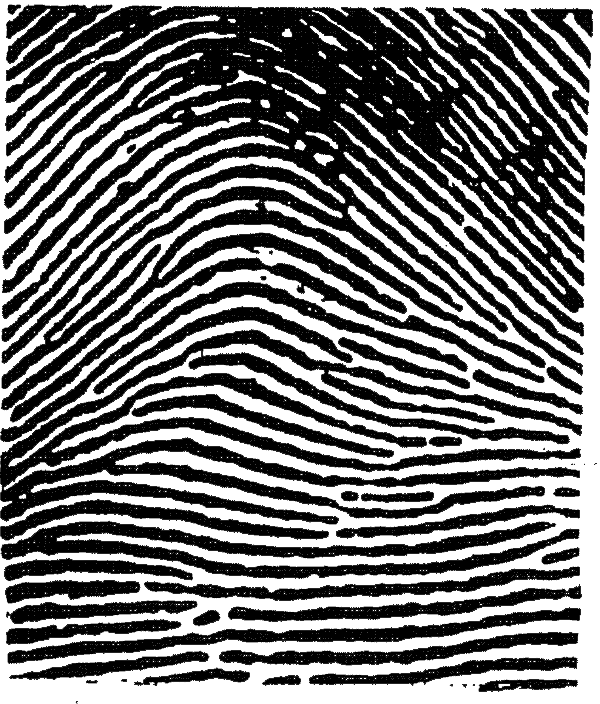
The fingerprint pattern may be permanently impaired in case of which condition?
Explanation: ### Explanation **1. Why Option A is the Correct (False) Statement:** The number of Barr bodies is determined by the formula: **Number of Barr bodies = (Total number of X chromosomes – 1)**. In an individual with a **47, XXY** genotype (Klinefelter Syndrome), there are two X chromosomes. Applying the formula: $2 - 1 = 1$. Therefore, a 47, XXY individual has **one** Barr body, not two. This makes Option A factually incorrect and thus the correct answer to the question. **2. Analysis of Other Options:** * **Option B (True):** A Barr body can be seen in a genetic male if they have an extra X chromosome (e.g., 47, XXY). Sex chromatin represents an inactivated X chromosome; any individual with more than one X chromosome will display it. * **Option C (True):** In polymorphonuclear leukocytes (neutrophils), the inactivated X chromosome appears as a small, pedunculated, drumstick-shaped appendage attached to the nucleus. This is specifically known as a **Davidson body**. * **Option D (True):** The **buccal smear** is the most common clinical method for sex chromatin analysis. Cells are scraped from the inner cheek, stained (e.g., with Orcein or Papanicolaou), and examined for Barr bodies located against the inner nuclear membrane. **3. Clinical Pearls & High-Yield Facts for NEET-PG:** * **Lyon’s Hypothesis:** States that one X chromosome in every somatic cell of a female is inactivated randomly during early embryonic development. * **Turner Syndrome (45, XO):** These individuals are phenotypic females but have **zero** Barr bodies (45, XO; $1-1=0$). * **Super Female (47, XXX):** These individuals have **two** Barr bodies ($3-1=2$). * **Fluorescent Body (F-Body):** While Barr bodies identify X chromosomes, the **Y-body** (seen in males) can be identified using Quinacrine mustard staining under fluorescent microscopy.
Explanation: **Explanation:** **Ashley’s Rule** is a metric method used for **sex determination** by measuring the dimensions of the **sternum**. According to this rule, if the combined length of the manubrium and the body of the sternum (excluding the xiphoid process) is **less than 149 mm**, the individual is likely **female**. If the length exceeds **149 mm**, the individual is likely **male**. This is based on the anatomical principle that male thoracic cages are generally larger and longer than female ones. **Analysis of Options:** * **Option A & D (Teeth):** Teeth are primarily used for age determination (Gustafson’s method, Boyde’s method) or sex determination via DNA analysis from pulp or Barr bodies. Ashley’s rule specifically applies to skeletal measurements. * **Option B (Age/Sternum):** While the sternum is used for age estimation, it is done by observing the **fusion of sternebrae** (e.g., the body fuses from below upwards between ages 14–25) or the fusion of the manubriosternal joint (usually after age 60), not by Ashley’s Rule. **High-Yield Facts for NEET-PG:** * **Hyrtl’s Law:** States that the manubrium of the female sternum is more than half the length of the body, whereas in males, the manubrium is less than half the length of the body. * **Sternum Accuracy:** The sternum is considered a reliable bone for sexing after the pelvis and skull. * **Index for Sexing:** The **Sternal Index** (Length of Manubrium / Length of Body × 100) is also used; it is higher in females than in males.
Explanation: ### Explanation **Correct Answer: C. Child raised by a woman who claims the child as her own** In Forensic Medicine, a **suppositious child** refers to a child who is substituted for another, or a child falsely presented by a woman as her own offspring to deceive others (often to secure inheritance or property rights). This is a case of **fictitious delivery**, where a woman simulates pregnancy and labor, then presents another person's child as her biological issue. #### Analysis of Options: * **Option A (Second born of a twin):** This is a biological occurrence and does not involve legal deception regarding parentage. * **Option B (Child born out of wedlock):** This is termed an **illegitimate child**. While it involves legal implications regarding maintenance, it does not involve the fraudulent substitution of the child. * **Option C (Correct):** This defines the legal and forensic term "suppositious." The motive is usually to prevent property from passing to other relatives. * **Option D (Heterozygous parents):** This is a genetic description related to Mendelian inheritance and has no bearing on the forensic definition of a suppositious child. #### High-Yield Clinical Pearls for NEET-PG: * **Suppositious vs. Spurious:** While often used interchangeably, a "suppositious" child specifically involves a woman pretending to have given birth. * **Medico-legal Importance:** To prove a child is suppositious, a medical examination of the alleged mother is conducted to look for **signs of recent delivery** (e.g., *linea albicans*, relaxed vaginal walls, or presence of lochia). * **DNA Profiling:** In modern forensics, DNA fingerprinting is the gold standard for resolving cases of disputed paternity or suppositious children. * **Superfecundation:** The fertilization of two ova within the same menstrual cycle by sperm from two different acts of coitus (can involve different fathers). * **Superfation:** The fertilization of a second ovum when a fetus is already present in the uterus (rare in humans).
Explanation: **Explanation:** In India, the legal age of majority is governed by the **Indian Majority Act, 1875**. According to Section 3 of this Act, every person domiciled in India is deemed to have attained majority upon completing **18 years** of age. This is a critical milestone in Forensic Medicine as it marks the transition where an individual acquires full legal capacity to enter into contracts, vote, and provide valid independent consent for medical or surgical procedures (except in emergencies). **Analysis of Options:** * **Option A (18 years):** This is the correct legal age for majority for both males and females. It is also the minimum legal age for marriage for females (though currently under legislative review) and the age of criminal responsibility where an individual is tried as an adult (subject to the Juvenile Justice Act provisions for heinous crimes). * **Option B (21 years):** This is the minimum legal age for marriage for males in India. Previously, if a guardian was appointed by a court, the age of majority was extended to 21, but this distinction was abolished by the 1999 amendment to the Majority Act. * **Option C (25 years):** This is the minimum age required to contest elections for the Lok Sabha or State Legislative Assemblies. * **Option D (35 years):** This is the minimum age required to hold the office of the President or Vice-President of India. **High-Yield Facts for NEET-PG:** * **Medical Consent:** A person aged 12 years or older can give consent for a physical examination (Section 89 & 90 IPC), but full legal consent for surgery/procedures typically requires majority (18 years). * **Kidnapping:** Defined under Section 361 IPC as taking a male under 16 years or a female under 18 years from lawful guardianship. * **Juvenile Justice:** A "child" is defined as a person who has not completed 18 years of age.
Explanation: **Explanation:** In forensic anthropology, the skull is a primary indicator for determining race. The classification is traditionally divided into three major groups: Caucasoid, Negroid, and Mongoloid. **Why the correct answer is right:** The **Caucasoid (Caucasian)** skull is characterized as **Round** or oval in shape. This is reflected in the **Cephalic Index**, which typically falls between **70 and 75** (Dolichocephalic to Mesaticephalic). Key features include a high, rounded forehead, a narrow (leptorrhine) nasal aperture, and minimal to no facial prognathism. **Analysis of Incorrect Options:** * **A. Elongated:** This is characteristic of the **Negroid** skull. These skulls are typically **Dolichocephalic** (long and narrow) with a prominent occiput and marked subnasal prognathism. * **B. Square:** This shape is classically associated with the **Mongoloid** skull. They often appear more "square" or "boxy" due to prominent, laterally projecting zygomatic bones (high cheekbones) and a flat facial profile. * **C. Narrow:** While Caucasian skulls have narrow noses, the overall cranial vault is not described as "narrow" compared to the elongated Negroid skull. **High-Yield NEET-PG Pearls:** 1. **Cephalic Index Formula:** (Maximum Breadth / Maximum Length) × 100. 2. **Nasal Index:** Caucasians have the lowest nasal index (<48, Leptorrhine), while Negroids have the highest (>53, Platyrrhine). 3. **Orbits:** Caucasians have triangular/sloping orbits; Mongoloids have rounded orbits; Negroids have square/rectangular orbits. 4. **Palate:** Caucasians have a narrow, triangular (parabolic) palate; Mongoloids have a horseshoe-shaped palate.
Explanation: **Explanation:** **Palatoprinting**, also known as **Palatoscopy** or **Rugoscopy**, is the study of the patterns of the **palatal rugae** for individual identification. Palatal rugae are the irregular, asymmetric anatomical mucosal ridges located on the **anterior third** of the hard palate, specifically behind the incisive papilla. 1. **Why Anterior is Correct:** The palatal rugae are anatomically confined to the **anterior** portion of the hard palate. These ridges are unique to every individual (even monozygotic twins) and remain stable throughout life. They are protected by the lips, cheeks, tongue, and teeth, making them highly resistant to decomposition and thermal trauma (burns), which is why they are a reliable tool in forensic odontology. 2. **Why Other Options are Incorrect:** * **Middle and Posterior:** The middle and posterior parts of the hard palate are relatively smooth and lack the distinct ridge patterns (rugae) required for identification. * **Lateral:** While rugae extend laterally from the median raphe, they are fundamentally an anterior structure. Prints are categorized based on their longitudinal position on the palate. **High-Yield Forensic Pearls for NEET-PG:** * **Classification:** The most common system used for rugae is the **Lysell classification** or the **Thomas and Kotze classification**. * **Stability:** Rugae patterns change in size (due to growth) but their **shape and relative position** remain unchanged from the 3rd month of intrauterine life until death. * **Comparison:** Like dactylography (fingerprints) and cheiloscopy (lip prints), palatoscopy is considered a reliable method of secondary identification when primary methods (like dental records or DNA) are unavailable.
Explanation: **Explanation:** The fusion of the **basioccipital and basisphenoid** bones (forming the **spheno-occipital synchondrosis** or basilar suture) is a critical skeletal marker in forensic age estimation. 1. **Why Option A is Correct:** In the human skull, the cartilaginous joint between the basioccipital and basisphenoid begins to ossify in late adolescence. While fusion can start as early as 18 years, complete bony union is traditionally and reliably established between **21 and 25 years** of age. In forensic medicine, the closure of this suture is a primary indicator that an individual has reached adulthood (attained majority). 2. **Analysis of Incorrect Options:** * **Option B (35-45 years) & D (30-40 years):** These ranges are too late. By this age, most cranial sutures (like the sagittal or coronal) are undergoing closure, but the basilar suture has already been fused for over a decade. * **Option C (25-30 years):** While some anatomical variation exists, 25 is generally considered the upper limit for complete fusion in healthy individuals. 3. **High-Yield Clinical Pearls for NEET-PG:** * **The "Rule of 21":** The spheno-occipital synchondrosis is often cited as the most reliable skeletal indicator for the age of 21. * **Sequence:** It is one of the last primary synchondroses of the skull base to close. * **Radiological Significance:** On a lateral X-ray or CT, the disappearance of the radiolucent line between these bones confirms the individual is likely over 20-21 years old. * **Comparison:** Do not confuse this with the **Xiphisternum**, which fuses with the body of the sternum around **40 years**.
Explanation: **Explanation:** The appearance of specific ossification centers is a crucial medicolegal marker for determining gestational age and fetal viability. In forensic practice, **viability** refers to the ability of a fetus to survive outside the womb, typically occurring after 210 days (7 months) of gestation. **Why the Lower End of Femur is Correct:** The ossification center for the **lower end of the femur (distal femoral epiphysis)** typically appears at **36 to 40 weeks** (9 months) of intrauterine life. Its presence is the most reliable indicator that the fetus has reached full term and is legally considered viable. In a newborn autopsy, this is often demonstrated via a "wedge incision" at the knee joint. **Analysis of Incorrect Options:** * **A. Calcaneum:** This is the first tarsal bone to ossify, appearing at **5 to 6 months** (20–24 weeks) of intrauterine life. While it indicates a mid-term fetus, it does not confirm full-term viability. * **B. Manubrium sterni:** The ossification center for the manubrium appears around the **5th to 6th month** of intrauterine life, similar to the calcaneum, making it an unreliable marker for late-term viability. **High-Yield Clinical Pearls for NEET-PG:** * **Talus:** Appears at 7 months (28 weeks). * **Cuboid:** Appears at birth (or just before, at 40 weeks). * **Upper end of Tibia:** Appears at birth (40 weeks). * **Rule of thumb:** If the lower end of the femur (0.5 cm diameter) and the cuboid are present, the infant is considered full-term. * **Medical Significance:** These centers are vital in cases of infanticide to determine if the child was born alive and reached a viable age.
Explanation: **Explanation:** **Why Dentition is the Correct Answer:** Dentition is considered the most reliable and accurate method for age estimation in children up to **14 years**. This is because the sequence and timing of tooth eruption (both deciduous and permanent) follow a highly predictable chronological pattern that is less influenced by nutritional or environmental factors compared to bone growth. By age 12–14, the second permanent molars have typically erupted, marking a clear milestone for this age group. **Analysis of Incorrect Options:** * **Ossification Centers (Option A):** While useful, ossification centers are more valuable for age estimation in the **fetus, neonate, and during puberty/adolescence** (for epiphyseal fusion). In the mid-childhood range, dental age provides a narrower margin of error than skeletal age. * **Anthropometry (Option C):** This involves physical measurements like height and weight. These are highly variable and heavily influenced by genetics, nutrition, and systemic illness, making them unreliable for precise medico-legal age determination. * **Head Circumference (Option D):** This is primarily used in clinical pediatrics to monitor brain growth and detect conditions like microcephaly or hydrocephalus in **infants (0–2 years)**. It has negligible value for age estimation in older children. **High-Yield Clinical Pearls for NEET-PG:** * **Gustafson’s Method:** Used for age estimation in adults (above 21 years) based on six dental changes (Sclerosis is the most reliable). * **Mixed Dentition Period:** Occurs between **6 to 12 years**. * **First tooth to erupt:** Lower central incisor (6–8 months). * **First permanent tooth to erupt:** First Molar (6 years), also known as the "6-year molar." * **Rule of Four:** A helpful mnemonic for deciduous teeth eruption (Central incisor at 7 months, Lateral at 9, First Molar at 12, Canine at 18, Second Molar at 24).
Explanation: **Explanation:** The permanence of fingerprint patterns depends on the integrity of the **dermal papillae** (the layer between the dermis and epidermis). If a disease or injury penetrates deep enough to destroy these papillae, the fingerprint pattern is permanently altered or lost. **Why Leprosy is the Correct Answer:** Leprosy, particularly in the lepromatous or borderline spectrum, causes chronic trophic changes and nerve damage. The disease leads to **ulceration, resorption of phalanges, and deep dermal infiltration**. This destruction involves the basal layer of the epidermis and the underlying dermal papillae, leading to a permanent loss or impairment of the ridge pattern. **Analysis of Incorrect Options:** * **Eczema (A):** This is primarily an inflammatory condition of the epidermis. While it can cause temporary scaling, crusting, or thickening (lichenification) that obscures the prints, the dermal papillae remain intact. The pattern returns to normal once the inflammation subsides. * **Scalds (B):** Scalds are moist heat injuries (e.g., boiling water). Most scalds result in first or second-degree burns. Unless the burn is a deep third-degree injury involving the full thickness of the dermis, the ridges typically regenerate perfectly. * **Scabies (C):** This is a superficial parasitic infestation limited to the stratum corneum of the epidermis. It does not cause deep tissue destruction; therefore, the fingerprint pattern remains unchanged after treatment. **High-Yield Clinical Pearls for NEET-PG:** * **Galton’s System:** Fingerprinting is also known as Dactylography or Dermatoglyphics. * **Permanence:** Fingerprints appear at the **4th month of intrauterine life** and remain unchanged until the body decomposes after death. * **Other conditions causing permanent loss:** Deep scars, electric burns, radiation dermatitis, and certain genetic conditions like **Adermatoglyphia** (Immigration Delay Disease). * **Temporary impairment:** Can be seen in occupations like bricklaying (due to friction) or diseases like dermatitis and psoriasis.
Personal Identification Methods
Practice Questions
Anthropometry
Practice Questions
Dactylography (Fingerprinting)
Practice Questions
Dental Identification
Practice Questions
DNA Profiling
Practice Questions
Facial Reconstruction
Practice Questions
Superimposition Techniques
Practice Questions
Hair and Fiber Analysis
Practice Questions
Handwriting Analysis
Practice Questions
Identification of Remains
Practice Questions
Mass Disaster Victim Identification
Practice Questions
Age, Sex and Race Determination
Practice Questions
Get full access to all questions, explanations, and performance tracking.
Start For Free