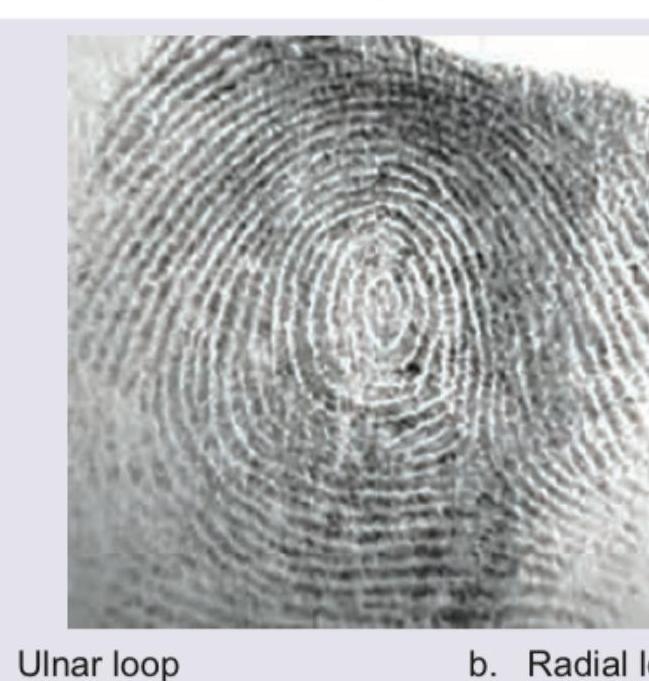
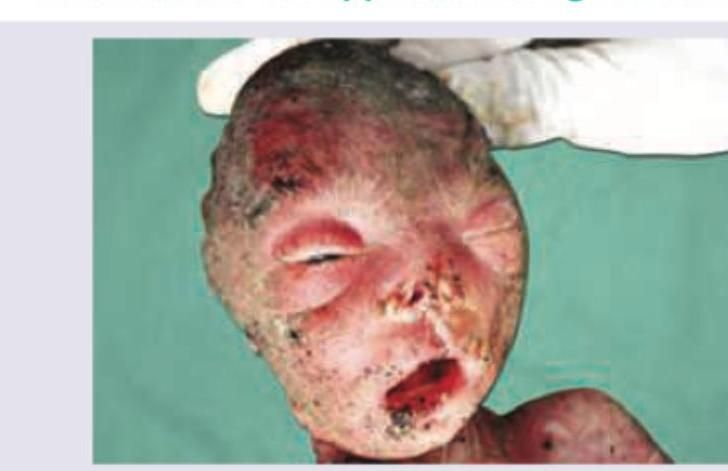
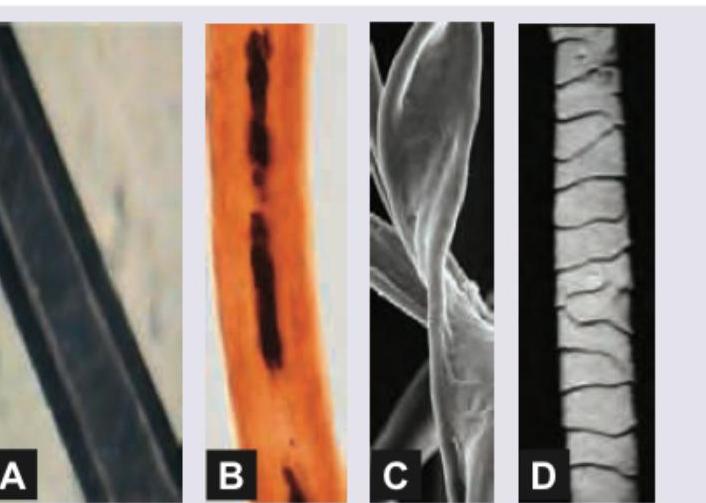
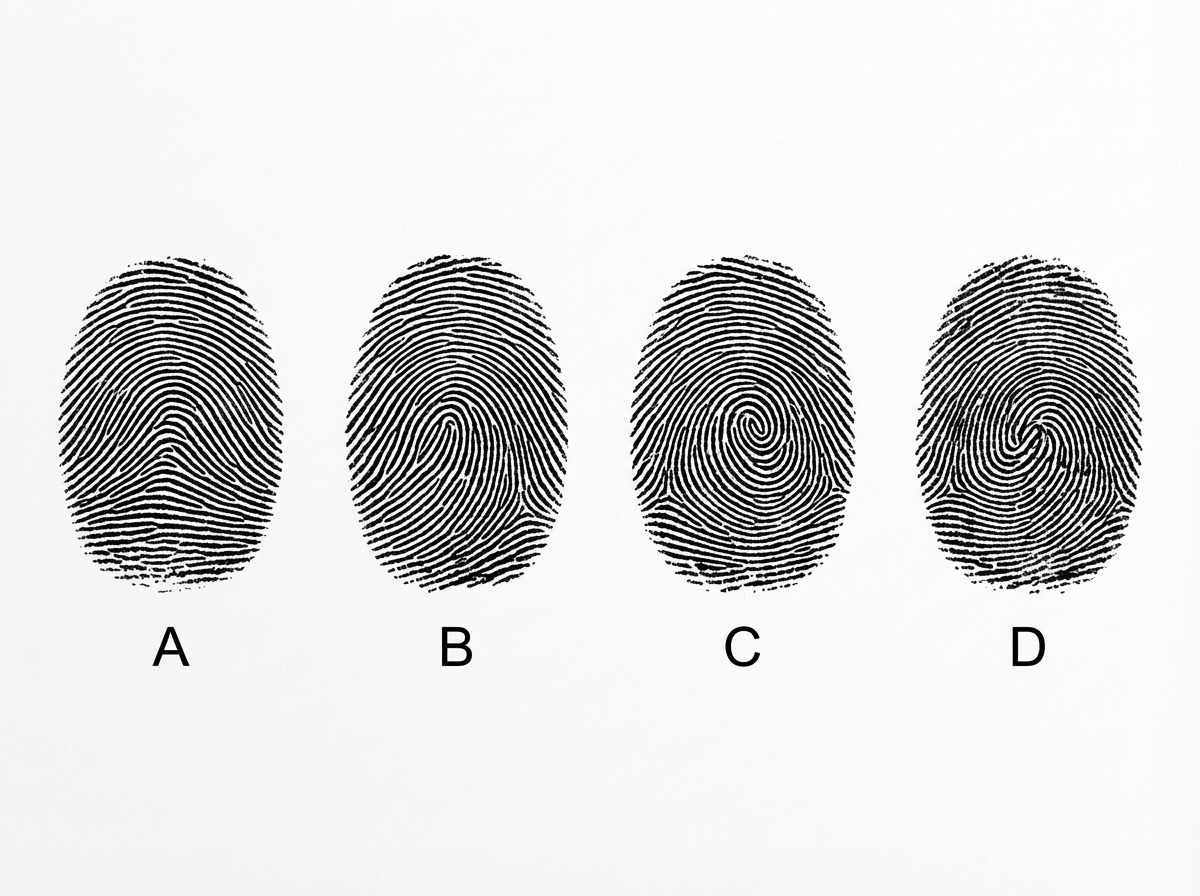
The fingerprint pattern may be impaired permanently in cases of?
The age of a 16-year-old female is best determined by a radiograph of which skeletal element?
Individuals who are secretors are characterized by which of the following?
Latent fingerprints can be made visible by which of the following methods?
Gustafson's method used for age estimation of teeth includes all of the following except?
Which of the following is NOT a sign of somatic death?
What is the age of majority for a person under legal guardianship?
A postmortem finding is observed in a person who died 4 hours ago due to chronic anemia and renal failure. What is this finding called?

Exchange of trace evidence occurs when a person comes into contact with another person. This principle is called:
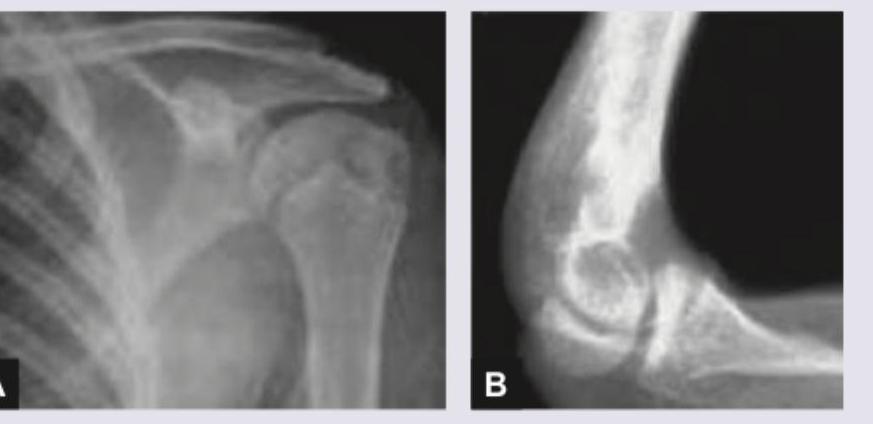
A person involved in a murder is brought to you for determination of age, as the defence attorney wants them to be treated as a minor. The results of X-rays show the following: 1) All the epiphyses of the elbow have fused. 2) All the epiphyses of the shoulder joint have fused. 3) The epiphyses of the inner end of the clavicles have fused. 4) The ramus of pubis and ischium have fused. What is the approximate age of this person, assuming it is a male?
Explanation: **Explanation:** The core concept in fingerprint identification (Dactylography) is that the ridge patterns are permanent and remain unchanged throughout life unless the **dermis (true skin)** is deeply damaged. **Why Leprosy is the Correct Answer:** In **Leprosy (Hansen’s Disease)**, particularly in the lepromatous or borderline spectrums, the disease causes trophic changes, ulcerations, and deep nerve involvement. Chronic infection leads to the destruction of the dermal papillae and the underlying sweat glands. Once the dermal layer is destroyed or replaced by extensive scarring and atrophy, the fingerprint pattern is **permanently lost or impaired**. **Analysis of Incorrect Options:** * **Eczema (A) and Scabies (C):** These are primarily inflammatory or parasitic conditions affecting the epidermis. While they may cause temporary blurring or scaling of the ridges, the underlying dermal pattern remains intact. Once the skin heals, the original fingerprint pattern reappears. * **Scalds (B):** Scalds are burns caused by moist heat (e.g., steam or hot liquids). They typically result in superficial (first or second-degree) burns. Unless the scald is severe enough to cause deep third-degree tissue destruction (which is rare for simple scalds compared to flame burns), the ridges regenerate as the epidermis heals. **High-Yield Clinical Pearls for NEET-PG:** * **Galton’s Details:** The ridge characteristics (bifurcations, lakes, islands) used for identification. * **Permanence:** Fingerprints appear at the **4th month of intrauterine life** and remain unchanged until the skin decomposes after death. * **Adermatoglyphia:** A rare genetic condition where a person is born without fingerprints. * **Other causes of permanent impairment:** Deep trauma, electric burns, radiation, and certain chemotherapy drugs (e.g., Capecitabine) can cause "Hand-Foot Syndrome," leading to the loss of ridges.
Explanation: ### Explanation **1. Why Option A is Correct:** In forensic age estimation, the assessment of epiphyseal union is the most reliable method for individuals between 14 and 22 years. For a 16-year-old female, the **lower end of the radius and ulna** is the most diagnostic site. In females, the epiphyses of the distal radius and ulna typically fuse with their respective shafts between **16 and 17 years** (roughly one year earlier than in males). Since this fusion occurs precisely around the age in question, a radiograph of the wrist is the gold standard for confirmation. **2. Why the Other Options are Incorrect:** * **Option B (Upper end of Humerus):** The upper end of the humerus fuses later, typically between **18 and 20 years**. It is more useful for determining late adolescence or early adulthood. * **Option C (Upper end of Radius and Ulna):** The elbow joint (including the head of the radius and the olecranon) fuses much earlier, usually by **14 to 15 years**. By age 16, these would already be completely fused, making them less useful for specific age differentiation. * **Option D (Xiphisternum):** The xiphisternum fuses with the body of the sternum much later in life, typically around **40 years** of age. **3. High-Yield Clinical Pearls for NEET-PG:** * **Rule of Thumb:** Epiphyseal union occurs **1–2 years earlier in females** than in males due to estrogenic influence. * **Sequence of Fusion (Elbow to Wrist):** Remember that for the upper limb, the sequence of fusion generally follows the mnemonic "the elbow closes before the wrist." * **Key Ages for Fusion (Females):** * Elbow: 13–15 years * Hip: 14–16 years * **Wrist: 16–17 years** * Shoulder: 17–18 years * **Medial Clavicle:** The last epiphysis to fuse in the body (21–22 years), making it the best indicator for determining if an individual is over 21.
Explanation: ### Explanation **Concept of Secretors** In Forensic Medicine, a **secretor** is an individual who expresses their ABO blood group antigens in water-soluble forms in various body fluids, such as saliva, semen, sweat, vaginal secretions, and gastric juice. This trait is governed by the **Se gene** (located on chromosome 19). Approximately **80% of the population** are secretors (SeSe or Sese), while 20% are non-secretors (sese). **Why Option C is Correct:** The presence of A, B, or H antigens in fluids like saliva and sweat allows forensic experts to determine a person's blood group even if a blood sample is unavailable. This is crucial in cases of sexual assault (semen analysis) or identifying a suspect from a discarded cigarette butt or bite mark. **Analysis of Incorrect Options:** * **Option A:** Enzymes are secreted into the bloodstream or gut for metabolic processes, but this is a universal physiological function and not the defining characteristic of the "secretor status" related to blood grouping. * **Option B:** While IgA is secreted into the intestine (mucosal immunity), this is unrelated to the genetic Se gene that determines blood group antigen secretion. * **Option C:** Hormonal secretion (like cortisol) is part of the endocrine response to stress and is independent of the ABO antigen secretion system. **High-Yield Clinical Pearls for NEET-PG:** * **Lewis Antigen System:** Secretor status is closely linked to the Lewis blood group. Most secretors are **Le(a-b+)**. * **Forensic Significance:** The **Absorption-Elution test** or **Absorption-Inhibition test** is used to detect these antigens in dried stains. * **H-Antigen:** Even 'O' group secretors will secrete the **H-substance** in their saliva. * **Non-secretors:** They do not have the Se gene and will not show ABO antigens in their body fluids, regardless of their blood type.
Explanation: **Explanation:** Fingerprints are classified into three types: **Visible** (patent), **Plastic** (impressions in soft substances), and **Latent** (invisible). Latent prints are formed by the deposit of oils and perspiration from the skin and require specific enhancement techniques to be visualized. * **Ultraviolet (UV) Spectrum Lighting:** This is a non-destructive optical method. Many components of sweat and biological oils naturally fluoresce under UV light. Additionally, forensic experts often use fluorescent powders or dyes that glow under UV light to enhance contrast. * **Application of Powder:** This is the most common physical method for non-porous surfaces. Fine powders (like charcoal, graphite, or aluminum) adhere to the moisture and oily components of the latent print, making it visible to the naked eye. * **Cyanoacrylate (Superglue) Fuming:** This is a chemical method used for non-porous surfaces (like plastic or glass). When heated, cyanoacrylate vapors polymerize upon contact with the fingerprint residues, creating a stable, white permanent deposit. Since all three methods—optical (UV), physical (Powder), and chemical (Fuming)—are standard forensic procedures for visualizing latent prints, **Option D** is the correct answer. **High-Yield Facts for NEET-PG:** * **Dactylography (Galton System):** The study of fingerprints. The chance of two people having the same fingerprint is 1 in 64 billion. * **Poroscopy (Locard’s Method):** The study of the pores of sweat glands on the ridges; it is useful when only a fragment of a print is available. * **Ninhydrin Test:** The gold standard chemical method for developing latent prints on **porous surfaces** (like paper), reacting with amino acids to produce a purple color (Ruhemann's purple). * **Permanent Impairment:** Fingerprints can be permanently altered only if the **dermal papillae** (stratum mucosum) are destroyed.
Explanation: **Explanation:** **Gustafson’s Method** is a forensic technique used for age estimation based on the morphological changes in **permanent teeth**. It is not applicable to **primary (deciduous) dentition**, which makes Option A the correct answer. The method relies on the cumulative physiological and pathological changes that occur in teeth as an individual ages. Gustafson identified six specific parameters, often remembered by the mnemonic **"T-A-R-P-E-S"**: 1. **T - Transparency of the root:** (Option C) The most reliable criteria; dentinal tubules fill with minerals over time. 2. **A - Attrition:** (Option D) Wear and tear of the occlusal surface due to mastication. 3. **R - Root Resorption:** (Option B) Loss of root structure due to pressure or aging. 4. **P - Periodontosis:** Regression of the gingival attachment (gum line). 5. **E - Secondary Dentin deposition:** Reduction in the size of the pulp cavity. 6. **S - Cementum apposition:** Thickening of the cementum at the root apex. **Why the other options are incorrect:** Options B, C, and D are three of the six core criteria used in Gustafson’s formula. Each parameter is assigned a score from 0 to 3, and the total score is plugged into a regression formula ($y = 11.43 + 4.56x$) to estimate the age. **High-Yield Clinical Pearls for NEET-PG:** * **Most reliable parameter:** Root transparency (least affected by environmental factors). * **Least reliable parameter:** Root resorption. * **Boyde’s Method:** Uses incremental lines of Retzius (neonatal line) for age estimation in children. * **Miles Method:** Estimates age based on molar wear patterns. * **Stack’s Method:** Uses the weight and height of the dental crown for age estimation in fetuses and infants.
Explanation: **Explanation:** Death is medically divided into two stages: **Somatic (Systemic) Death** and **Molecular (Cellular) Death**. **Why "Non-responding muscles" is the correct answer:** Somatic death refers to the irreversible cessation of the functions of the "Tripod of Life" (Brain, Heart, and Lungs). At this stage, while the person is clinically dead as an individual, the individual cells and tissues (like muscles and nerves) remain alive for a short period (usually 1–2 hours). This is known as the **molecular interval**. During this time, muscles can still respond to electrical or chemical stimuli (e.g., supra-vital reactions). Therefore, non-responsiveness of muscles is a sign of **Molecular Death**, not Somatic Death. **Analysis of Incorrect Options:** * **Cessation of Respiration & Heartbeat (Options A & B):** These represent the failure of the respiratory and circulatory systems, two pillars of Bichat’s Tripod. Their permanent stoppage is the hallmark of somatic death. * **No response to external stimuli (Option C):** This indicates the permanent loss of consciousness and brainstem reflexes (the third pillar of the Tripod), confirming somatic death. **High-Yield Clinical Pearls for NEET-PG:** * **Bichat’s Tripod of Life:** Comprises the Circulatory, Respiratory, and Nervous systems. * **Molecular Death:** Occurs 1–2 hours after somatic death. The last organ to die is said to be the **prostate/uterus**, while the **nervous system** dies first (within 5 minutes). * **Supra-vital Reaction:** The ability of muscles to contract via electrical stimulation after somatic death is used to estimate the time since death. * **Suspended Animation:** A condition where vital signs are so at a low level they are undetectable; it mimics somatic death (e.g., drowning, electrocution, hypothermia).
Explanation: **Explanation:** The age of majority is the threshold at which a person is legally recognized as an adult, capable of entering into contracts and managing their own affairs. In India, this is governed by the **Indian Majority Act, 1875**. 1. **Why 21 years is correct:** Under Section 3 of the Indian Majority Act, while the standard age of majority is 18 years, there is a specific legal exception. If a minor has a **guardian appointed by a Court of Justice** (under the Guardians and Wards Act, 1890) or if their property is under the superintendence of a **Court of Wards**, the age of majority is extended to **21 years**. This is a protective legal measure to ensure the welfare of the individual and their estate. 2. **Why other options are incorrect:** * **19, 20, and 22 years:** These ages have no specific legal standing regarding the definition of "majority" under Indian law. While 18 is the standard age for most citizens, 21 is the only legal extension applicable to those under court-appointed guardianship. **High-Yield Clinical Pearls for NEET-PG:** * **Standard Age of Majority:** 18 years (for most civil purposes). * **Medical Consent:** A person aged **12 years or above** can give valid consent for a physical examination (Sections 89 & 90 IPC), but for surgery or invasive procedures, the legal age for independent consent is generally **18 years**. * **Criminal Responsibility (Doli Incapax):** Nothing is an offense done by a child under **7 years** (Sec 82 IPC). Partial responsibility exists between **7–12 years** depending on maturity (Sec 83 IPC). * **Marriageable Age:** Currently 18 for females and 21 for males (though legislative amendments are frequently proposed).
Explanation: ***Tache noire*** - **Tache noire** is a **postmortem ocular finding** characterized by dark horizontal bands on the **exposed sclera** that appear **3-6 hours after death** when eyelids remain partially open. - Results from **drying and oxidation** of the exposed scleral surface, making it the most likely finding in this case occurring 4 hours postmortem. *Bitot's spots* - These are **antemortem findings** associated with **Vitamin A deficiency**, appearing as white foamy patches on the conjunctiva in living patients. - They are **not postmortem changes** and would not develop after death from chronic anemia and renal failure. *Kevorkian sign* - Refers to **retinal vessel segmentation** visible on fundoscopy, representing the **earliest postmortem ocular change** occurring within **1-2 hours** of death. - While it could be present, **tache noire** is more characteristic of the **4-hour timeframe** mentioned in the question. *Postmortem pterygium* - This is **not a recognized postmortem finding** but rather refers to a **triangular growth** of conjunctival tissue over the cornea seen in living patients. - It develops over **months to years** due to chronic UV exposure and is unrelated to postmortem changes.
Explanation: ### Explanation **Correct Answer: A. Locard’s Principle** Locard’s Exchange Principle is the fundamental cornerstone of forensic science. It states that **"every contact leaves a trace."** When a perpetrator comes into contact with a victim or a crime scene, there is a mutual exchange of physical or biological material (e.g., hair, fibers, soil, DNA, or blood). This principle forms the basis for linking a suspect to a crime scene through trace evidence. **Why the other options are incorrect:** * **B. Quetelet’s Rule:** This refers to the **Body Mass Index (BMI)**. Adolphe Quetelet, a Belgian statistician, developed the formula (Weight in kg / Height in m²) to define the "average man." It is used in clinical medicine to assess nutritional status, not in forensic trace evidence. * **C. Petty’s Principle:** This is a distractor. There is no established "Petty’s Principle" in forensic identification. It may be confused with Sir William Petty (a pioneer in statistics) or simply serves as a plausible-sounding incorrect option. **High-Yield Clinical Pearls for NEET-PG:** * **Edmond Locard:** Known as the "Sherlock Holmes of France." * **Poroscopy:** Locard also pioneered the study of sweat pores on finger ridges for identification when only partial prints are available. * **Bertillonage:** An older system of identification based on physical measurements (anthropometry), now largely replaced by dactylography (fingerprinting). * **Galton’s Details:** Refers to the specific ridge characteristics (minutiae) used in fingerprint identification.
Explanation: ### Explanation The determination of age in forensic medicine relies heavily on the chronological order of epiphyseal fusion. To solve this question, we must identify the bone with the **latest** fusion time among the findings provided. **1. Why Option D is Correct:** The key finding is the **fusion of the inner (medial) end of the clavicle**. * **Elbow:** Fuses completely by 14–16 years. * **Ischiopubic ramus:** Fuses by 7–9 years. * **Shoulder (Humerus head):** Fuses by 18–20 years. * **Medial end of Clavicle:** This is the **last epiphysis in the body to fuse**. It typically begins to fuse at 18–20 years and completes fusion by **21–22 years** (sometimes up to 25). Since the X-ray shows this epiphysis has already fused, the individual must be at least **21 years or older**. **2. Why Other Options are Incorrect:** * **Option A (15-17 years):** At this age, the shoulder and medial clavicle would remain unfused. * **Option B (18-19 years):** While the elbow is fused, the shoulder might be in the process of fusing, and the medial clavicle would definitely show an open growth plate. * **Option C (20 years):** The medial clavicle fusion is usually not complete until after the 21st year. **3. High-Yield Clinical Pearls for NEET-PG:** * **Rule of Elbow Fusion:** Remember the mnemonic **CRITEL** (Capitellum, Radius, Internal epicondyle, Trochlea, External epicondyle, Lateral epicondyle) for appearance, but for fusion, all elbow centers are usually united by **16 years**. * **Medial Clavicle:** It is the most reliable skeletal indicator for determining if an individual has reached the **legal age of 21**. * **Tri-radiate Cartilage (Acetabulum):** Fuses at **14–16 years**; often asked in relation to puberty. * **X-ray Sequence:** In age estimation, always look for the "latest" fusing bone mentioned to set the minimum age.
Personal Identification Methods
Practice Questions
Anthropometry
Practice Questions
Dactylography (Fingerprinting)
Practice Questions
Dental Identification
Practice Questions
DNA Profiling
Practice Questions
Facial Reconstruction
Practice Questions
Superimposition Techniques
Practice Questions
Hair and Fiber Analysis
Practice Questions
Handwriting Analysis
Practice Questions
Identification of Remains
Practice Questions
Mass Disaster Victim Identification
Practice Questions
Age, Sex and Race Determination
Practice Questions
Get full access to all questions, explanations, and performance tracking.
Start For Free