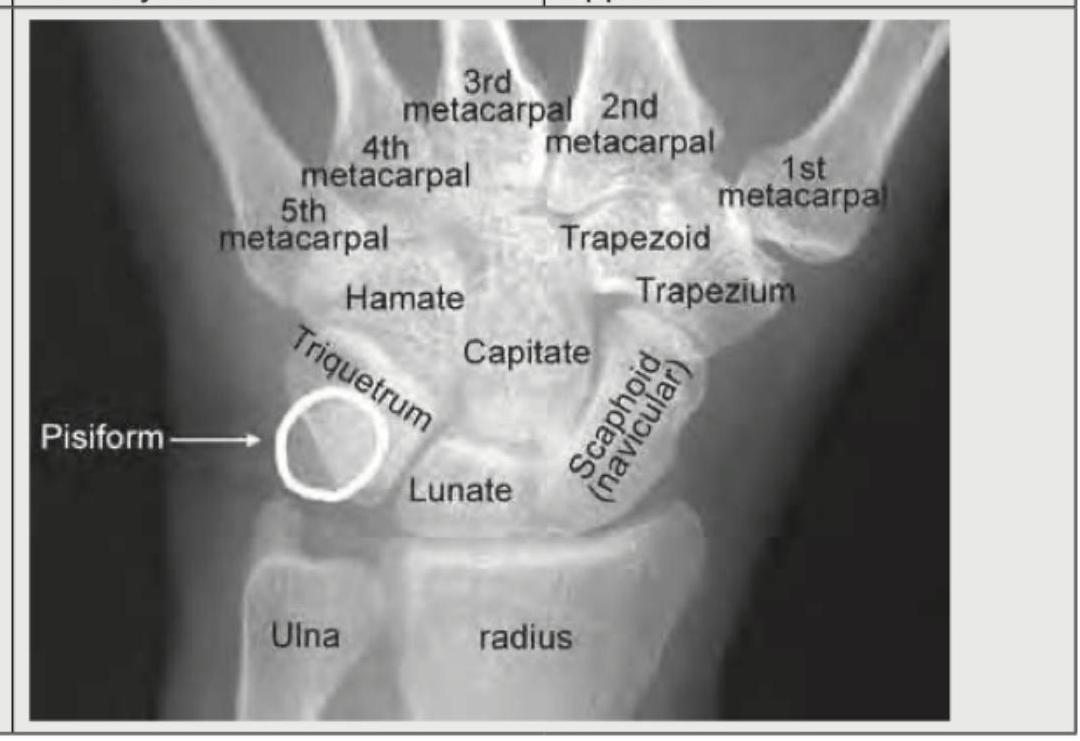
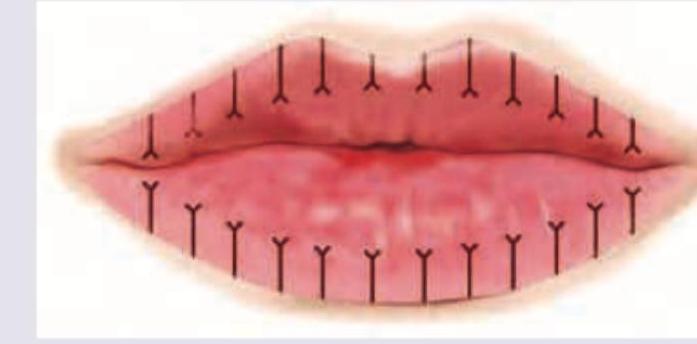
The cephalic index is primarily used for determining which of the following?
Edmund Locard is known for which of the following?
A female pretends to have a child when she does not. This is:
Which statement about neonatal line is false?
Which of the following is true about suspended animation?
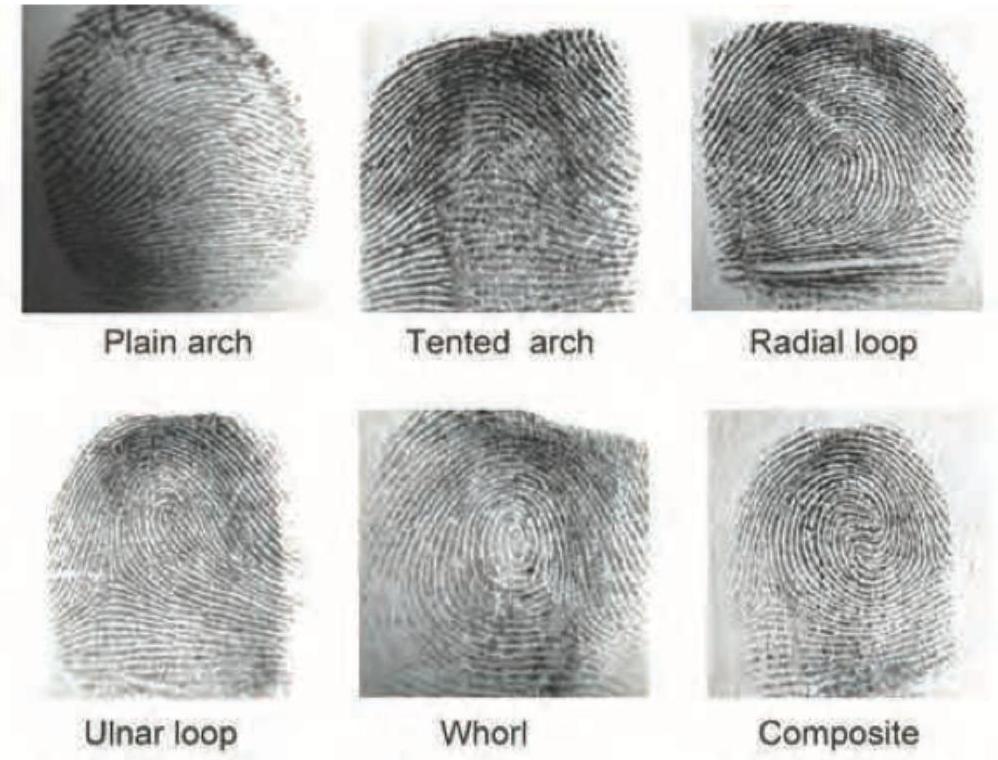
Which of the following is NOT seen in fingerprints?
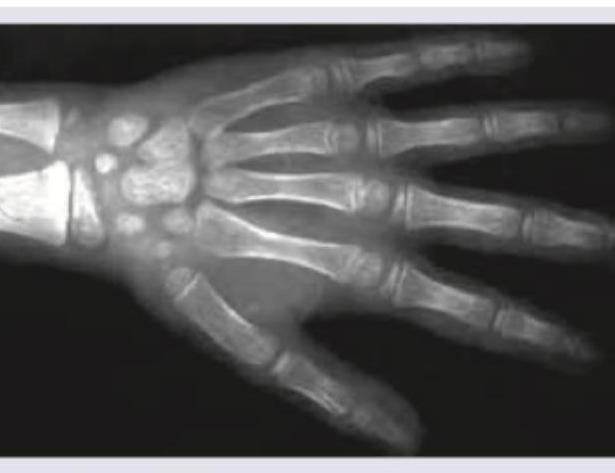
What is the estimated age of this individual?

What does the notation FG, FFG, FFFG indicate?
Which of the following methods is not used to demonstrate old or faint tattoos?
Which of the following methods is used for torture in China?
Explanation: **Explanation:** The **Cephalic Index (CI)** is a standard anthropometric measurement used in forensic medicine and anthropology to categorize human skulls based on their shape, which is a primary indicator of **Race**. **1. Why Race is Correct:** The Cephalic Index is calculated using the formula: **(Maximum Breadth of Skull / Maximum Length of Skull) × 100**. Based on this index, human populations are classified into three main groups: * **Dolichocephalic (Long-headed, CI <75):** Characteristic of Aryans, Africans, and Pure Dravidians. * **Mesaticephalic (Medium-headed, CI 75–80):** Characteristic of Europeans and Chinese. * **Brachycephalic (Short/Broad-headed, CI >80):** Characteristic of Mongolians. **2. Why other options are incorrect:** * **Age:** Age is determined using dental eruption patterns, ossification centers (epiphysis fusion), and cranial suture closure (e.g., sagittal, coronal). * **Sex:** Sexual dimorphism is best determined using the pelvis (most accurate) and the skull (supraorbital ridges, mastoid process), but not by the cephalic index alone. * **Caste:** While some historical anthropometric studies attempted to link physical traits to caste, it is not a scientifically validated forensic method for identification. **High-Yield Clinical Pearls for NEET-PG:** * **Vertical Index:** Used to determine the height of the skull relative to its length. * **Nasal Index:** Another high-yield parameter for race (Leptorrhine/Narrow for Caucasians; Platyrrhine/Broad for Africans). * **Mixed Races:** In modern forensic practice, the Cephalic Index is less reliable due to interbreeding, but it remains a "must-know" classic for exams. * **Hrdlicka’s Classification:** This is the formal name for the classification of skulls based on the Cephalic Index.
Explanation: **Explanation:** **Correct Answer: D. Theory of exchange** Edmund Locard (1877–1966), often referred to as the "Sherlock Holmes of France," formulated the **Locard’s Exchange Principle**. This is the fundamental cornerstone of forensic science, which states: *"Whenever two objects come into contact with each other, there is always a mutual transfer of material across the contact boundary."* In a criminal context, this means a perpetrator will bring something into the crime scene and leave with something from it (e.g., hair, fibers, DNA, or soil), providing trace evidence that links a suspect to a location. **Analysis of Incorrect Options:** * **A. System of personal identification using body measurement:** This refers to **Anthropometry** (or the Bertillon system), developed by **Alphonse Bertillon**. It was the primary method of identification before fingerprints. * **B. Fingerprint study:** While many contributed, **Sir Francis Galton** (classification) and **Sir Edward Henry** (Henry Classification System) are the primary names associated with dactylography. * **C. Formula for estimation of stature:** Stature estimation from long bones is associated with various formulae, most notably **Trotter and Gleser’s formula** or **Pan’s formula** (specific to the Indian population). **High-Yield Clinical Pearls for NEET-PG:** * **Father of Forensic Science:** Edmond Locard (also established the first police laboratory). * **Father of Modern Toxicology:** Mathieu Orfila. * **Quetelet’s Rule:** Related to the biological stability of anthropometric measurements. * **Poroscopy:** Locard also pioneered the study of sweat pores on fingerprint ridges for identification.
Explanation: **Explanation:** In Forensic Medicine, legal terminology regarding parentage and birth is high-yield for competitive exams. **1. Why "Suppositious Child" is correct:** A **suppositious child** refers to a situation where a woman pretends to have given birth to a child when she has not, or substitutes another person's child as her own. This is usually done with the fraudulent intent of securing an inheritance, property rights, or maintaining status within a family. It is a form of "civil fraud" rather than a biological phenomenon. **2. Analysis of Incorrect Options:** * **Cheating (Option A):** While the act involves deception, "Cheating" is a broad legal term under the IPC. In the specific context of forensic identification and disputed paternity, "Suppositious child" is the precise technical term used. * **Posthumous child (Option B):** This refers to a child born **after the death of the father**. It is a biological reality and does not involve fraud. * **Superstitious child (Option D):** This is a distractor term with no medical or legal significance in forensic literature. **Clinical Pearls & High-Yield Facts for NEET-PG:** * **Fictitious Birth:** Another term for the act of pretending to be pregnant and "delivering" a suppositious child. * **Superfecundation:** Fertilization of two ova within the same menstrual cycle by separate acts of coitus (can involve two different fathers). * **Superfœtation:** Fertilization of a second ovum when a fetus is already present in the uterus (rare in humans). * **Precipitate Labour:** A labor lasting less than 3 hours; often a defense in cases of infanticide or unintentional birth in unusual places. * **DNA Profiling:** This is the gold standard for resolving cases involving suppositious children or disputed paternity.
Explanation: ### Explanation The **neonatal line** is a distinct microscopic incremental line found in the enamel and dentin of all deciduous teeth and the first permanent molars. It represents the physiological stress and metabolic changes (nutritional interruption) experienced by the infant during the transition from intrauterine to extrauterine life. **Why Option C is the Correct (False) Statement:** The neonatal line is a **microscopic feature**, not a macroscopic one. It cannot be seen "grossly" (with the naked eye) at 4 weeks or any other time. It requires ground sections of the tooth and microscopic examination (usually polarized light or scanning electron microscopy) to be visualized. **Analysis of Other Options:** * **Option A:** It is a vital reaction. Since it forms due to the trauma of birth and subsequent survival, its presence is definitive **medico-legal evidence that the infant was born live** and survived long enough for the line to mineralize. * **Option B:** Perikymata are surface manifestations of the Striae of Retzius. By counting these lines distal to the neonatal line, forensic odontologists can estimate the **postnatal age** of an infant with high accuracy. * **Option D:** The line begins to form **immediately at birth** due to the abrupt change in environment and nutrition, though it takes a few days to become histologically distinct. **High-Yield Clinical Pearls for NEET-PG:** * **Teeth involved:** All deciduous (milk) teeth and the **permanent first molar** (as its calcification begins at birth). * **Medico-legal significance:** Used to differentiate between stillbirth and live birth. * **Width:** The width of the line can sometimes indicate the severity of birth trauma or the duration of postnatal metabolic stress. * **Other Incremental Lines:** Do not confuse the neonatal line with **Striae of Retzius** (regular incremental growth lines in enamel).
Explanation: **Explanation:** **Suspended Animation** (also known as Apparent Death) is a state where the vital functions of the body (respiration, circulation, and brain activity) are depressed to such a low level that they cannot be detected by routine clinical examination. **Why Option B is correct:** Suspended animation can be **voluntary**, often practiced by advanced practitioners of Yoga or meditation (e.g., *Samadhi*), who can consciously reduce their metabolic rate and heart rate. It can also be **involuntary**, occurring in conditions like profound hypothermia, drowning in cold water, electrocution, barbiturate poisoning, or in neonates (asphyxia neonatorum). **Why other options are incorrect:** * **Option A:** It is a **rare** phenomenon, not common. It is a transient state that requires immediate resuscitation to prevent progression to permanent death. * **Option C:** It is the opposite of molecular death. Suspended animation is a state of **Somatic Death** (systemic death) where the person appears dead but the tissues are still alive. **Molecular death** (cellular death) occurs 2–3 hours after somatic death, representing the irreversible death of individual cells and tissues. **High-Yield Clinical Pearls for NEET-PG:** * **Duration:** Suspended animation can last from a few seconds to several minutes (or longer in cases of hypothermia). * **Medico-legal Significance:** It is crucial to distinguish this state from actual death to avoid premature embalming or autopsy. * **The "Flat EEG" Rule:** In cases of suspended animation due to drug overdose or hypothermia, a flat EEG does not necessarily signify brain death, as the condition may be reversible. * **Magnus Test:** A classic test where a finger is constricted with a ligature; if the area distal to the ligature turns cyanotic/red, it indicates circulation is present (positive in suspended animation, negative in death).
Explanation: **Explanation:** In Forensic Medicine, the study of fingerprints (Dactylography or Galton’s details) is based on the classification of ridge patterns on the fingertips. According to the **Galton-Henry system**, there are four primary types of fingerprint patterns: **Loops, Whorls, Arches, and Composites.** 1. **Why "Circles" is the correct answer:** While fingerprint patterns often appear circular (especially in whorls), "Circles" is **not** a recognized technical term in the standard classification system. In forensic exams, examiners often use "Circles" or "Spirals" as distractors to confuse students with the "Whorl" pattern. 2. **Analysis of Incorrect Options:** * **Loops (Option A):** The most common pattern (approx. 60–70%). Ridges enter from one side, curve back, and exit on the same side. * **Whorls (Option C):** The second most common pattern (approx. 25–35%). Ridges are arranged in concentric circles or spirals. * **Arches (Option D):** The rarest pattern (approx. 5%). Ridges enter from one side and exit on the opposite side without turning back. **High-Yield Clinical Pearls for NEET-PG:** * **Dactylography (Fingerprints):** It is the most reliable method of identification (absolute identification) because no two individuals, including monozygotic twins, have the same fingerprints. * **Permanence:** Fingerprints form during the **3rd to 4th month of intrauterine life** and remain unchanged until death (and even after, until the skin putrefies). * **Poroscopy (Locard’s Method):** The study of the number, size, and distribution of sweat pores on the ridges; useful when only fragmentary prints are available. * **Adermatoglyphia:** A rare genetic condition where individuals are born without fingerprints (often called "immigration delay disease").
Explanation: ***8 years*** - This age corresponds to the **mixed dentition stage** where **first permanent molars** and **central incisors** are erupted, with **lateral incisors** beginning to erupt. - **Deciduous canines** and **primary molars** are typically still retained at this age, following **Schour and Massler** developmental milestones. *6 years* - At 6 years, only the **first permanent molars** ("6-year molars") and possibly **central incisors** would be erupting. - The **mixed dentition** pattern would be less developed compared to what's observed in this case. *10 years* - By 10 years, **lateral incisors** would be fully erupted and **canines** and **premolars** would be actively erupting. - The **deciduous teeth** would show more advanced **exfoliation** patterns than seen here. *17 years* - At 17 years, all **permanent teeth** except **third molars** would be present and fully erupted. - This represents **permanent dentition** stage, not the **mixed dentition** pattern observed in this individual.
Explanation: ### Explanation **Correct Answer: B. Black powder size** In forensic ballistics, **Black Powder** (a mixture of potassium nitrate, charcoal, and sulfur) is classified based on the size of its granules. The notation **"F" (Fine)** indicates the grain size. * The more "F's" in the notation, the **smaller/finer** the granules. * **FG:** Coarse grains (used in large-bore cannons or shotguns). * **FFG:** Medium grains (used in muzzleloaders and large pistols). * **FFFG:** Fine grains (used in smaller caliber pistols and revolvers). * **FFFFG:** Extra-fine grains (primarily used for priming pans in flintlock firearms). Smaller granules (FFFG) have a larger surface area relative to their volume, causing them to burn faster and generate pressure more rapidly than coarser grains (FG). **Why Incorrect Options are Wrong:** * **A. Cartridge:** Cartridges are typically classified by caliber (diameter of the bore), manufacturer, or rim type (e.g., rimmed, rimless), not by "F" notations. * **C. Base of gun:** The base or butt of a gun does not use this nomenclature; markings here usually indicate the serial number or manufacturer's proof marks. * **D. Wadding of cartridge:** Wadding refers to the paper, plastic, or felt discs used to separate powder from the shot. These are classified by material and gauge, not by "F" ratings. **High-Yield Facts for NEET-PG:** * **Composition of Black Powder:** 75% Potassium Nitrate ($KNO_3$), 15% Charcoal, 10% Sulfur. * **Smokeless Powder:** Modern alternative; consists of Nitrocellulose (Single-base) or Nitrocellulose + Nitroglycerin (Double-base). It is more powerful and leaves less residue than black powder. * **Tattooing/Stippling:** Caused by unburnt or semi-burnt gunpowder grains embedding in the skin; its presence helps in determining the **range of fire** (intermediate range).
Explanation: ### Explanation In forensic practice, identifying old, faded, or intentionally removed tattoos is crucial for establishing the identity of a deceased individual. **Why Laser is the Correct Answer:** Laser technology (such as Q-switched lasers) is a **therapeutic tool used for the removal** of tattoos, not for their visualization. Lasers work by breaking down ink particles into smaller fragments that are then scavenged by macrophages. Therefore, using a laser would further destroy the pigment rather than demonstrate it. **Analysis of Other Options:** * **Magnifying Lens:** This is the simplest physical method used to enhance the visualization of faint outlines or residual pigment in the skin that may not be clearly visible to the naked eye. * **UV Rays (Wood’s Lamp):** Certain tattoo pigments or the scarring patterns left behind by old tattoos may fluoresce under ultraviolet light, making them visible even if they appear faded under normal light. * **Infrared Photography:** This is a highly effective forensic technique. Infrared light penetrates deeper into the skin and is absorbed by the carbon-based pigments of the tattoo while being reflected by the surrounding skin, providing a high-contrast image of even deeply buried or faded ink. **High-Yield Clinical Pearls for NEET-PG:** * **Tattoo Pigments:** The most common pigment used is **Carbon (India ink)**. Other colors include Cinnabar (Red), Cobalt (Blue), and Chrome salts (Green). * **Microscopic Examination:** If a tattoo is completely invisible, a biopsy of the regional lymph nodes (e.g., axillary nodes for an arm tattoo) may reveal pigment deposits, as ink particles migrate through the lymphatics. * **Vreeland’s Test:** A chemical method where the skin is treated with hydrogen peroxide to help visualize faint tattoos. * **Legal Significance:** Tattoos are considered a **class characteristic** (not individualistic like fingerprints) but are vital for presumptive identification.
Explanation: The correct answer is **C. Thighs tied with bamboo**. ### **Explanation** This question refers to a specific historical and regional method of torture known as **"Bamboo Torture"** or the **"Chinese Thigh Torture."** In this method, the victim's thighs are tightly bound together with bamboo sticks or slats. As the bindings are tightened, it leads to severe compression of the soft tissues, muscles, and nerves. Medically, this can result in **Crush Syndrome**, characterized by rhabdomyolysis (muscle breakdown), release of myoglobin into the bloodstream, and subsequent acute renal failure. ### **Analysis of Incorrect Options** * **A. Beating on soles:** Known as **Falanga (or Bastinado)**. This is a common method of torture globally (often associated with Middle Eastern or Mediterranean regions) where the soles of the feet are beaten, causing blunt force trauma, hematomas, and potential permanent gait impairment. * **B. Beating on abdomen:** While a form of blunt force trauma, it is not a regionally specific named torture method like the bamboo technique. It carries a high risk of internal organ rupture (spleen/liver). * **C. Suspension by wrist:** Known as **"Strappado"** or **"Palestinian Hanging."** This involves tying the hands behind the back and suspending the body, leading to shoulder dislocation and brachial plexus injuries. ### **High-Yield Clinical Pearls for NEET-PG** * **Torture and Human Rights:** Forensic experts must be familiar with the **Istanbul Protocol**, which provides international guidelines for the documentation of torture and its consequences. * **Common Torture Sequelae:** * **Falanga:** Look for "closed compartment syndrome" of the feet. * **Telephon:** Slapping both ears simultaneously, leading to tympanic membrane rupture. * **Dry Submarine:** Suffocation using a plastic bag. * **Wet Submarine:** Forced immersion of the head in contaminated water (near-drowning).
Personal Identification Methods
Practice Questions
Anthropometry
Practice Questions
Dactylography (Fingerprinting)
Practice Questions
Dental Identification
Practice Questions
DNA Profiling
Practice Questions
Facial Reconstruction
Practice Questions
Superimposition Techniques
Practice Questions
Hair and Fiber Analysis
Practice Questions
Handwriting Analysis
Practice Questions
Identification of Remains
Practice Questions
Mass Disaster Victim Identification
Practice Questions
Age, Sex and Race Determination
Practice Questions
Get full access to all questions, explanations, and performance tracking.
Start For Free