Which poison shows cherry red discoloration of blood but normal PaO2 on blood gas analysis?
Which of the following laboratory findings is most consistent with a diagnosis of carbon monoxide poisoning?
Which type of poison is known to cause the most severe damage to body tissues upon contact or ingestion?
What is the mechanism of cyanide poisoning?
Which of the following substances is a toxin but has also been historically used as a therapeutic emetic in poisoning management?
A patient with suspected poisoning has brownish oral mucosa and tongue, and greenish-brown urine, which is suggestive of poisoning with
A patient presents with constricted pupils, respiratory depression, and cyanosis. What is the likely poison?
Which of the following statements regarding upper gastrointestinal involvement in corrosive poisoning is true?
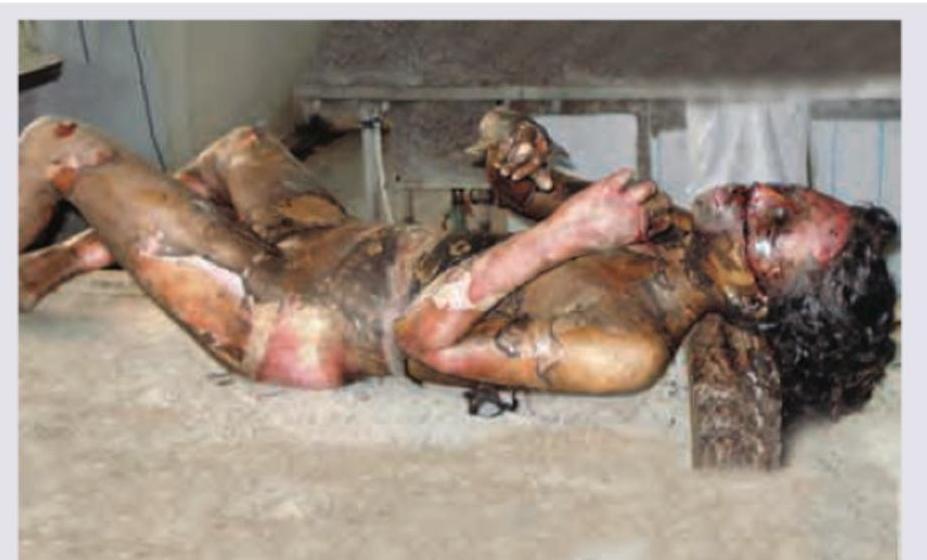
All are true about the condition shown below except:
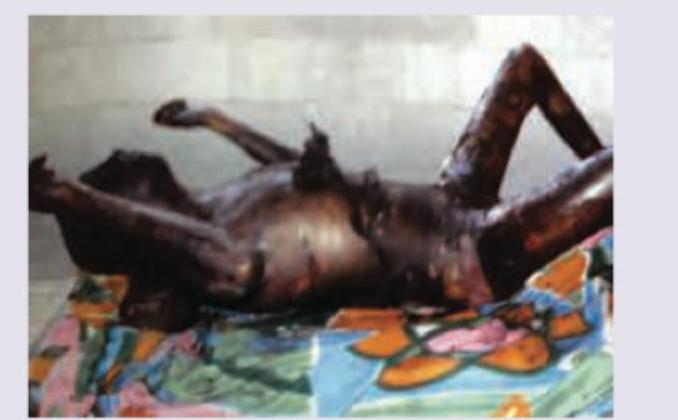
What is the phenomenon shown in the image?
Explanation: ***Carbon monoxide*** - **Carbon monoxide (CO)** binds to **hemoglobin** with a much higher affinity than oxygen, forming **carboxyhemoglobin**. This complex is bright red, causing the characteristic **cherry-red discoloration of blood** and skin. - Despite the impaired oxygen delivery, the partial pressure of dissolved oxygen in the blood (**PaO2**) remains normal because CO poisoning affects oxygen binding to hemoglobin rather than the amount of oxygen dissolved in plasma. *Cyanide* - **Cyanide** inhibits **cytochrome c oxidase**, impairing cellular oxygen utilization and leading to **lactic acidosis** and cellular hypoxia. - While it can cause cellular hypoxia, it does not typically produce cherry-red discoloration and usually results in an **arteriovenous oxygen difference** that is small as tissues cannot extract oxygen from the blood effectively. *Hydrogen sulfide* - **Hydrogen sulfide (H2S)** also inhibits **cytochrome c oxidase**, leading to cellular hypoxia similar to cyanide. - Although it can cause a "rotten egg" smell and rapid collapse, it does not typically produce the characteristic **cherry-red discoloration** of blood. *Nitrites* - **Nitrites** (and other oxidizing agents) cause **methemoglobinemia**, where the iron in hemoglobin is oxidized from the ferrous (Fe2+) to the ferric (Fe3+) state, which cannot bind oxygen. - This condition causes the blood to appear **chocolate brown** or **bluish-gray**, not cherry-red, and can lead to a **functional anemia** despite normal PaO2.
Explanation: ***Normal PaO2 with decreased oxygen saturation*** - Carbon monoxide (CO) binds to hemoglobin with an affinity 200-250 times greater than oxygen, forming **carboxyhemoglobin (COHb)** [2]. This reduces the **oxygen-carrying capacity** of the blood and shifts the oxygen dissociation curve to the left, but it does **not affect the partial pressure of oxygen (PaO2)** dissolved in the plasma [1]. - The pulse oximeter, which typically measures oxygen saturation, will show a falsely high reading because it cannot differentiate between oxyhemoglobin and carboxyhemoglobin, but actual **oxygen saturation is decreased**. *Increased PaCO2 and decreased pH* - This pattern suggests **respiratory acidosis**, which is not a direct or primary finding of carbon monoxide poisoning. - While severe CO poisoning can lead to lactic acidosis, an increase in PaCO2 points to impaired ventilation, not specifically CO toxicity [3]. *Decreased PaO2 with normal oxygen saturation* - A decreased PaO2 with normal oxygen saturation is a contradictory finding and not physiologically consistent, as oxygen saturation is directly dependent on PaO2. - This pattern would indicate a measurement error or a highly unusual physiological state, neither of which is characteristic of CO poisoning. *Decreased PaCO2 with normal PaO2* - This suggests **respiratory alkalosis**, often due to hyperventilation. - While patients with CO poisoning may hyperventilate due to hypoxia, this ABG pattern is not the defining laboratory finding for CO poisoning, and **PaO2 would remain normal** until very late stages.
Explanation: ***Corrosive poison*** - **Corrosive poisons** cause severe damage by acting directly on tissues, leading to **chemical burns**, protein denaturation, and cell death. - They produce immediate and visible destruction upon contact, such as perforation of the esophagus or stomach, which is typically more severe than irritation. *Irritant poison* - **Irritant poisons** cause inflammation and redness but generally do not lead to the same extent of tissue destruction as corrosives. - While they can cause discomfort and damage, their effects are usually concentrated on the superficial layers of tissue. *Alcohol* - **Alcohol (ethanol)** primarily acts as a central nervous system depressant and can cause organ damage over time with chronic use, but its immediate tissue-damaging effects are not as severe as corrosives. - Acute alcohol intoxication primarily affects neurological and systemic functions, not direct tissue corrosion. *Opioid* - **Opioids** primarily exert their toxic effects by binding to opioid receptors in the brain, causing respiratory depression, sedation, and a decreased level of consciousness. - They do not cause direct, severe tissue damage upon contact or ingestion in the way corrosive substances do.
Explanation: ***Inhibition of cytochrome oxidase*** - Cyanide rapidly binds to the **ferric iron (Fe3+)** in the **heme a3 component of cytochrome c oxidase** (Complex IV) in the mitochondrial electron transport chain. - This binding completely inhibits the enzyme's ability to transfer electrons to oxygen, thereby **halting cellular respiration** and ATP production. *Inhibition of complex I* - **Rotenone** and **barbiturates** are known inhibitors of **Complex I** (NADH dehydrogenase), not cyanide. - While inhibition of Complex I also disrupts the electron transport chain, it is not the primary mechanism of cyanide toxicity. *Inhibition of cytochrome C* - **Cytochrome C** is an electron carrier between Complex III and Complex IV, but it is not the direct target of cyanide. - Cytochrome C itself is not inhibited; rather, its function is compromised because **cytochrome c oxidase (Complex IV)**, which accepts electrons from it, is inhibited by cyanide. *Inhibition of carbonic anhydrase* - **Carbonic anhydrase**, an enzyme involved in CO2 transport and pH regulation, is inhibited by drugs like **acetazolamide**. - Its inhibition does not directly affect the mitochondrial electron transport chain or cause the rapid cellular hypoxia seen in cyanide poisoning.
Explanation: ***Copper sulphate*** - **Copper sulphate** is a **potent toxin** that causes gastrointestinal irritation, hemolysis, hepatotoxicity, and acute renal failure upon ingestion. - It was **historically used as an emetic** to induce vomiting in certain poisoning cases for gastric decontamination, though this practice has been largely abandoned due to its own significant toxicity and the availability of safer alternatives. - This represents its dual nature: a poison itself, yet paradoxically used in poisoning management (not as an antidote, but as a gastric evacuant). *Thallium* - **Thallium** is a highly toxic heavy metal causing severe multi-organ failure, alopecia, peripheral neuropathy, and potentially fatal systemic toxicity. - It has **no therapeutic use** in poisoning management and is purely a toxicological concern. *Arsenic oxide* - **Arsenic oxide** (arsenic trioxide) is a well-known carcinogen and potent cellular poison that disrupts oxidative phosphorylation. - While it has modern therapeutic use in acute promyelocytic leukemia, it has **never been used in poisoning management** as an emetic or therapeutic agent. *Mercuric chloride* - **Mercuric chloride** is highly corrosive and causes severe gastrointestinal burns, acute tubular necrosis, and systemic mercury toxicity. - It is a **potent toxin with no therapeutic application** in poisoning management.
Explanation: ***Phenol (Carbolic acid)*** - **Phenol poisoning** typically causes **brownish or white discoloration** of the oral mucosa and tongue due to its corrosive and protein coagulation properties. - **Greenish-brown or olive-green urine** is a characteristic feature due to oxidation of phenol metabolites (hydroquinone and pyrocatechol). - These two features together are highly suggestive of phenol poisoning. - Other features may include chemical burns at contact sites, CNS depression, and metabolic acidosis in severe cases. *Opioids* - **Opioid poisoning** presents with the classic triad of **miosis (constricted pupils)**, **respiratory depression**, and **CNS depression**. - It does not cause brownish discoloration of the oral mucosa or greenish-brown urine. *Sulfuric acid (H2SO4)* - **Sulfuric acid** is a strong corrosive acid that causes severe **chemical burns** with black or dark brown eschar formation. - While it causes severe oral burns, it does not produce the characteristic greenish-brown urine seen with phenol poisoning. - The oral burns are typically more severe and necrotic compared to phenol. *Cannabis (Marijuana)* - **Cannabis intoxication** presents with **conjunctival injection (red eyes)**, **tachycardia**, altered perception, and mood changes. - It does not cause brownish oral mucosa, greenish-brown urine, or significant mucosal corrosion.
Explanation: ***Opium*** - **Opioid toxicity** classically presents with the triad of **miosis** (constricted pupils), **respiratory depression**, and **CNS depression**, which aligns with the patient's symptoms. - **Cyanosis** is a direct consequence of severe respiratory depression leading to hypoxemia. *Anticholinergic* - Anticholinergic toxidrome typically presents with **dilated pupils (mydriasis)**, **dry skin and mucous membranes**, and **tachycardia**, which are opposite to the patient's presentation. - Respiratory depression is not a primary feature of anticholinergic poisoning; rather, patients may exhibit agitation or delirium. *Cyanide Poisoning* - Cyanide poisoning primarily affects cellular respiration, leading to a rapid onset of symptoms like **headache**, **confusion**, **tachycardia**, and **metabolic acidosis**. - While it can cause respiratory distress, **pupils are typically normal or dilated**, and the characteristic smell of bitter almonds may be present. *Arsenic Poisoning* - Acute arsenic poisoning manifests with severe **gastrointestinal symptoms** (nausea, vomiting, diarrhea), **cardiovascular collapse**, and **neurological symptoms** like altered mental status. - It does not typically cause constricted pupils or primary respiratory depression as seen in this case.
Explanation: ***With alkali, involvement of the esophagus is more than the stomach.*** - **Alkali ingestion** causes **liquefactive necrosis**, which breaks down tissue structure and allows deeper penetration into esophageal mucosa. - The **esophagus** is the primary site of injury due to prolonged contact time as alkalis tend to adhere to mucosal surfaces and cause more extensive damage. *With acids, involvement of the stomach is more than the esophagus.* - **Acids** primarily affect the **esophagus** due to rapid transit through the GI tract, not the stomach. - The contact time with **gastric mucosa** is often brief unless there is significant pylorospasm, making esophageal involvement predominant. *With alkali, there is more superficial injury than with acids.* - **Alkalis** cause **liquefactive necrosis** leading to deeper tissue penetration compared to acids. - **Acids** cause **coagulative necrosis** with protective eschar formation, making alkali injuries deeper and more extensive. *With acids, there is deeper tissue penetration than with alkalis.* - **Acids** cause **coagulative necrosis** with protective eschar formation that limits deeper tissue penetration. - **Alkalis** cause **liquefactive necrosis** allowing deeper and more widespread tissue damage than acids.
Explanation: ***Can be ante-mortem*** - This is the **INCORRECT** statement. The features shown (pugilistic attitude, heat rupture, and skin slippage) are **post-mortem artifacts** that develop due to the physical effects of heat on a dead body. - While thermal burns themselves can occur ante-mortem (when a person is burned alive), the specific constellation of findings shown - including pugilistic attitude, heat rupture, and skin slippage - are **characteristic post-mortem changes** that occur regardless of whether burning happened before or after death. - Importantly, **these features do NOT reliably distinguish ante-mortem from post-mortem burns**. They are thermal effects on tissues, not vital reactions. - The statement "can be ante-mortem" is misleading because it suggests these post-mortem artifacts indicate ante-mortem injury, which is forensically incorrect. *Coagulation of muscle proteins* - **TRUE statement.** Heat causes denaturation and coagulation of muscle proteins (primarily myosin and actin). - This protein coagulation leads to muscle shortening and contraction, resulting in the characteristic **pugilistic attitude** (boxer's pose). - The muscles contract due to heat-induced shortening, pulling limbs into flexion. *Heat rupture seen* - **TRUE statement.** Heat rupture refers to longitudinal splitting of the skin and deeper tissues. - Occurs due to internal steam pressure and expansion of gases and body fluids when exposed to intense heat. - Results in deep fissures or cracks in the skin, commonly seen in severely burned bodies. - This is a post-mortem artifact of thermal exposure. *Skin slippage* - **TRUE statement.** Skin slippage (heat-induced epidermal separation) occurs when the epidermis separates from the dermis due to heat effects. - Also called "heat vesication" when fluid accumulates between layers. - Results in the outer layers of skin peeling away in sheets. - This is distinct from putrefactive skin slippage and occurs due to thermal damage to the dermal-epidermal junction.
Explanation: ***Pugilistic attitude*** - The image shows a body in a **"pugilistic attitude"** or **"boxer's pose"**, characterized by **flexion of the elbows, knees, and hips**, with clenched fists resembling a boxer's fighting stance. - This posture is due to **heat-induced coagulation and shortening of muscles** during exposure to high temperatures, such as in fires. - It occurs because **flexor muscles are stronger than extensor muscles**, and when heated, they contract more forcefully, pulling limbs into this characteristic flexed position. - This is a **postmortem phenomenon** that occurs regardless of whether the person was alive or dead when exposed to fire. *Seen in antemortem burns* - While the person may have sustained antemortem burns, the **pugilistic attitude itself is a postmortem change** that develops due to heat stiffening of muscles after death. - Antemortem burns show **vital reactions** such as blistering with protein-rich fluid, surrounding inflammation, soot in airways, and elevated carboxyhemoglobin levels - features not indicated by this posture alone. *Seen in postmortem burns* - While this statement is true (pugilistic attitude does occur in postmortem burns), the question asks for the specific **name of the phenomenon** shown in the image. - The posture results from **muscle protein denaturation and dehydration** when the body is exposed to temperatures above 65-70°C, causing muscle contraction and shortening. *All are correct* - This option is incorrect because "Seen in antemortem burns" is not an accurate description of the pugilistic attitude, which is specifically a **postmortem heat-related change**.
Get full access to all questions, explanations, and performance tracking.
Start For Free