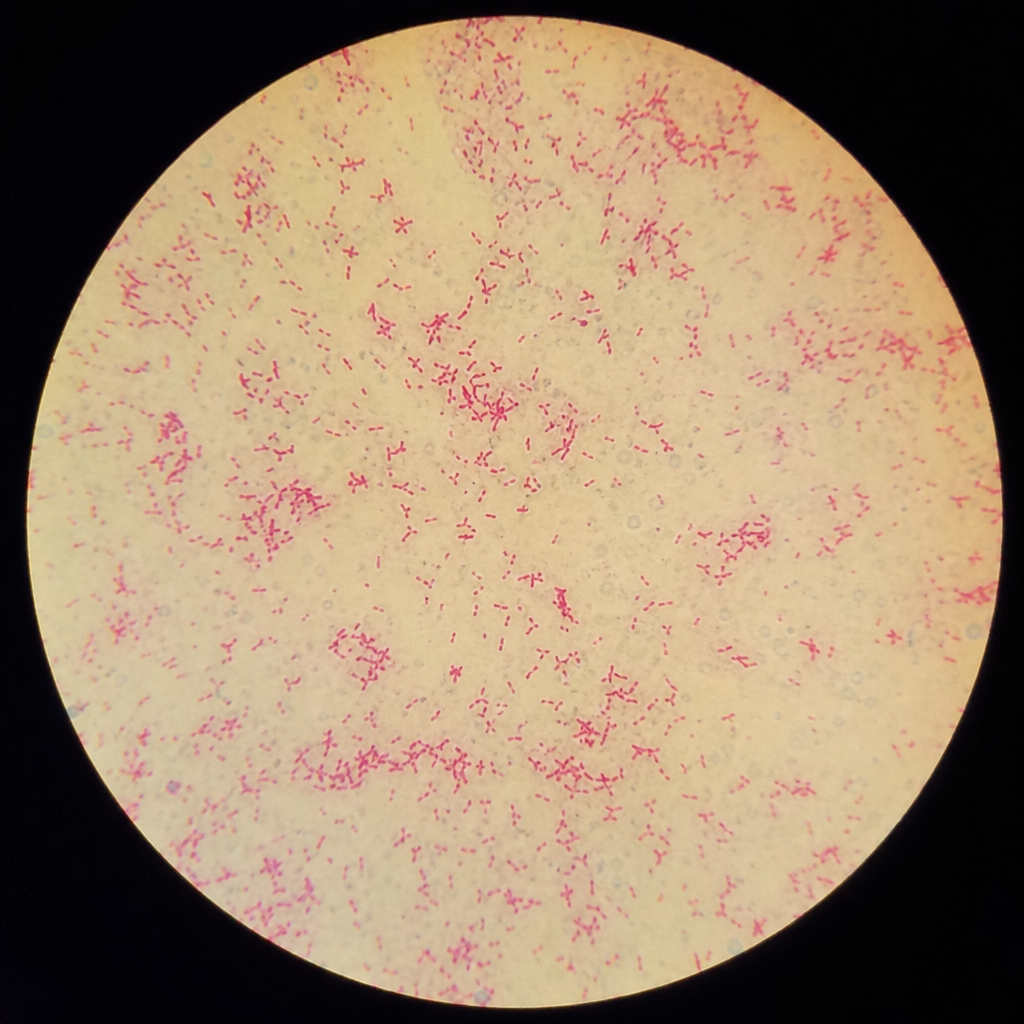
Which of the following tests cannot be used to detect blood stains?
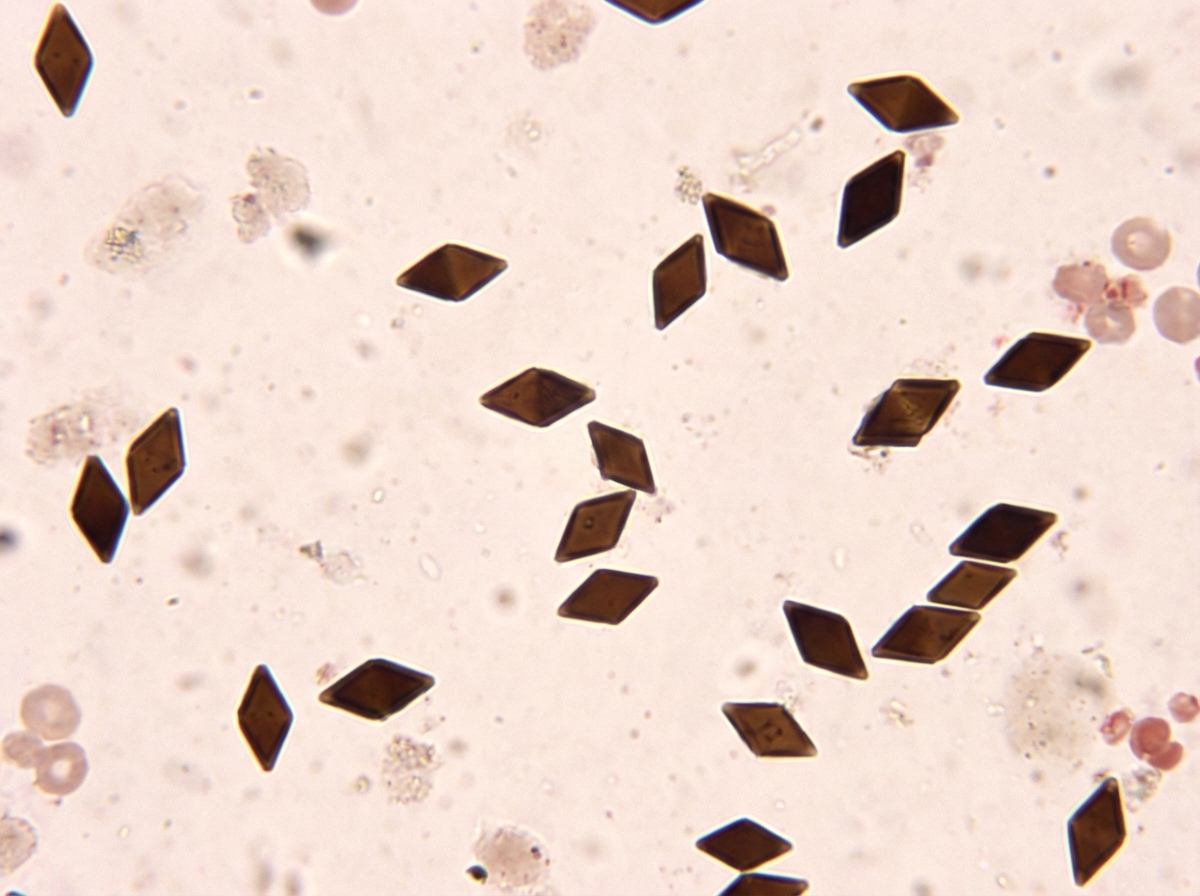
Which of the following tests for identifying blood stains is shown in the image below?
During identification of severely decomposed remains, which of the following methods provides the most reliable means of positive identification?
Confirmatory test of blood stain:
DNA fingerprinting was first used by Alec Jeffreys in a criminal case for detecting:
Seminal stain can be detected by?
Which of the following tests is not used for detection of seminal stain?
Lattes' crust test of blood stain is used to detect -
DNA fingerprinting can be done with all, except:
For DNA test, liquid blood is preserved in:
Explanation: ***Barberio's test*** - Barberio's test is used for the **detection of semen stains**, not blood stains - It is a Florence test that detects choline in seminal fluid by forming characteristic brown rhomboid or needle-shaped crystals of choline periodide - This test is specific for forensic identification of seminal stains in sexual assault cases *Incorrect - Spectroscopy* - Spectroscopy is widely used for blood detection by analyzing the absorption spectrum of hemoglobin and its derivatives - Different hemoglobin forms (oxyhemoglobin, reduced hemoglobin, methemoglobin) show characteristic absorption bands *Incorrect - Teichman's test* - Teichman's test is a confirmatory microcrystalline test for blood stains - Forms brownish rhomboid hemin crystals (hematin chloride) when blood is treated with glacial acetic acid and sodium chloride - Highly specific for blood detection in forensic medicine *Incorrect - Takayama's test* - Takayama's test is another confirmatory microcrystalline test for blood - Forms pink feathery hemochromogen crystals when blood is treated with pyridine and glucose in alkaline medium - More sensitive than Teichman's test and works well with old blood stains
Explanation: ***Hemin crystal test*** - The image displays characteristic **rhombic crystals** (often seen as reddish brown or yellowish brown, due to their origin from denatured hemoglobin) which are formed during the **Teichmann test** or hemin crystal test. - This test is a confirmatory test for the presence of blood, detecting the presence of **hemin**, a derivative of heme. *Hemochromogen crystal test* - This test, also known as the **Takayama test**, produces **pink, feathery crystals of hemochromogen** (pyridine ferroprotoporphyrin), which are distinct from the rhombic crystals shown. - It is also a confirmatory test for blood, but the crystal morphology is different. *Leucomalachite green test* - The leucomalachite green test is a **presumptive test** for blood that relies on the peroxidase activity of hemoglobin. - A **green color change** indicates a positive result, and it does not involve the formation of crystals visible under a microscope. *Luminol test* - The luminol test is a highly sensitive **presumptive test** used to detect minute traces of blood, even if it has been cleaned. - It produces a characteristic **chemiluminescence (blue glow)** in the dark and does not involve crystal formation.
Explanation: ***DNA analysis*** - **DNA analysis** remains viable even in significantly degraded samples due to the stability and uniqueness of the genetic code, making it the most reliable method for positive identification of severely decomposed remains. - It provides a definitive match that is **scientifically verifiable** and rarely subject to error when compared to ante-mortem samples or close relatives. *Birthmarks* - **Birthmarks** are soft tissue characteristics that often degrade or become indistinguishable in severely decomposed remains. - Their presence and appearance can change over time or be obscured by **decomposition processes**, making them unreliable for identification in such cases. *Facial features* - **Facial features** rapidly deteriorate and distort after death, especially in severely decomposed remains, making visual recognition impossible. - The soft tissues of the face are among the first to undergo **autolysis** and putrefaction. *Personal effects* - While **personal effects** (like jewelry or clothing) can provide circumstantial evidence, they do not offer positive identification of the individual's remains. - These items can be easily lost, misplaced, or exchanged, and they do not directly identify the **biological individual**.
Explanation: ***Spectroscopic test*** - The **spectroscopic test** is considered a **confirmatory test** for bloodstains due to its ability to identify the characteristic **absorption spectrum of hemoglobin**. - It specifically detects the presence of **hemoglobin derivatives**, unequivocally confirming the presence of blood. *Kastle-Meyer test* - This is a **presumptive test** for blood, relying on the **peroxidase activity** of hemoglobin. - While sensitive, it can yield **false positives** due to other peroxidase-like substances (e.g., plant material, rust). *Benzidine test* - The **benzidine test** is also a **presumptive test** for blood based on peroxidase activity. - It is **highly sensitive** but has been largely replaced by other tests due to the **carcinogenic nature** of benzidine. *Orthotoluidine test* - Similar to the Kastle-Meyer and benzidine tests, the **orthotoluidine test** is a **presumptive test** that detects the peroxidase activity of hemoglobin. - It can also produce **false positive results** from various oxidizing agents or plant peroxidases.
Explanation: ***Rape*** - **Alec Jeffreys** first applied DNA fingerprinting in 1986 to solve the **Narborough murders case** in Leicestershire, UK. - The technique was used to analyze **semen samples** from two rape-murder victims (1983 and 1986), linking them to a single perpetrator. - The **DNA evidence from semen** (sexual assault evidence) was the key forensic material that demonstrated the power of DNA fingerprinting in criminal investigation. - This led to the conviction of **Colin Pitchfork** in 1988, marking the first use of DNA profiling to solve a criminal case. *Immigration purpose* - While DNA fingerprinting is used for immigration cases to confirm family relationships, this was **not its initial application** by Jeffreys. - Its use in immigration came later, after its breakthrough in criminal forensics. *Disputed paternity* - Paternity testing is a common application of DNA fingerprinting, but it was **not the first criminal case** where Jeffreys demonstrated its utility. - The technique's power in establishing biological relationships was recognized after its initial use in criminal investigations. *Murder* - While the Narborough case did involve murders, the question focuses on what was **detected through DNA evidence**. - The DNA profiling was performed on **semen samples** (rape evidence), not on evidence directly proving murder. - The forensic breakthrough was in linking the sexual assault evidence to the perpetrator, which then solved the murder cases.
Explanation: ***Barberio's test*** - **Barberio's test** is historically mentioned in some forensic medicine texts for **preliminary screening of seminal stains**, though it is **not the standard or most reliable test**. - More commonly, **Florence test** (iodine test for choline crystals) and **acid phosphatase test** are the preferred methods for seminal stain detection. - Modern forensic practice uses **PSA (Prostate-Specific Antigen)** testing as the confirmatory test. *Phenolphthalein test* - The **phenolphthalein test**, also known as the **Kastle-Meyer test**, is a **presumptive test for blood**, not semen. - It detects the **peroxidase-like activity of hemoglobin**, causing a pink color change in the presence of blood. *Reine's test* - **Reine's test** is not a recognized or standard forensic test for the detection of seminal stains. - There are no established protocols in standard forensic literature describing this test. *Paraffin test* - The **paraffin test** (dermal nitrate test) was historically used to detect **gunshot residues** on a suspect's hand. - It is **not used for seminal stain detection** and is now considered obsolete due to poor specificity and high false-positive rates.
Explanation: ***Phadebas Test*** - The Phadebas test is primarily used for the detection and quantification of **alpha-amylase**, an enzyme found in high concentrations in saliva. - While amylase can be present in other bodily fluids, including semen, the Phadebas test is not a specific or primary method for detecting seminal stains due to its low specificity for semen compared to other methods. *Acid Phosphatase test* - The **acid phosphatase (AP) test** is a widely used presumptive test for seminal fluid due to the high concentration of **prostatic acid phosphatase** in semen. - A positive result, usually indicated by a color change, suggests the probable presence of semen, although false positives can occur. *Florence test* - The Florence test is a **confirmatory test** for the presence of **choline** in semen, which reacts with potassium iodide to form characteristic dark brown, rhombic crystals. - While historically significant, it is a less sensitive and specific test compared to modern methods. *Barbeiros test* - The Barbeiros test (or Barberio's test) is another **confirmatory chemical test** for the presence of **spermine** in semen. - Spermine reacts with picric acid to form characteristic needle-like crystals, further indicating the presence of seminal fluid.
Explanation: ***Detection species*** - **Lattes crust test** is a method used in forensic serology to determine the **species origin of a blood stain**. - It involves overlaying a crust of dried blood with **anti-sera** from different animal species to observe for agglutination, indicating a reaction and thus the species. *Nature of stain* - The **nature of the stain** typically refers to whether it is blood, semen, saliva, etc., which is usually determined through preliminary presumptive tests like the **Kastle-Meyer test** for blood. - The **Lattes crust test** specifically aims to identify the species from which the blood originated, not its general nature. *Blood group* - **Blood grouping tests** are designed to determine the ABO, Rh, or other blood types within a single species, typically humans. - While important in forensic investigations, these tests are distinct from the **Lattes crust test**, which focuses on **species identification**. *None of the options* - This option is incorrect because the **Lattes crust test** is indeed used for the **detection of species**, making option B the correct answer. - The test has a specific purpose in forensic analysis related to species identification.
Explanation: ***RBC*** - **Mature red blood cells** lack a nucleus and therefore do not contain **DNA**. - DNA fingerprinting relies on analyzing an individual's unique DNA sequence, which is not present in RBCs. *Saliva* - Saliva contains **epithelial cells** from the mouth, which have intact nuclei and thus sufficient DNA for analysis [2]. - It is a common and non-invasive source of DNA for forensic and genetic testing [2]. *WBC* - **White blood cells** (leukocytes) are nucleated cells that contain a full complement of DNA [2]. - They are an excellent source of DNA for genetic analysis, including DNA fingerprinting. *Spermatozoa* - **Sperm cells** are haploid and contain a nucleus with DNA, making them suitable for DNA fingerprinting [1]. - They are frequently used in forensic cases, particularly in sexual assault investigations [1].
Explanation: ***EDTA*** - Ethylenediaminetetraacetic acid (EDTA) is the preferred anticoagulant for DNA extraction because it **chelates metal ions** (like magnesium), which are cofactors for **DNases** (enzymes that degrade DNA). - By inhibiting DNases, EDTA effectively **preserves DNA integrity** in blood samples for genetic testing. *Sodium fluoride* - **Sodium fluoride** is primarily used as an antiglycolytic agent to preserve glucose in blood samples. - It does not specifically function to preserve DNA or inhibit DNA degradation significantly. *Potassium oxalate* - **Potassium oxalate** acts as an anticoagulant by precipitating calcium, but it is not optimal for long-term DNA preservation. - Its anticoagulant properties are less suitable for molecular testing compared to EDTA, and it doesn't protect DNA as effectively. *Sodium citrate* - **Sodium citrate** is an anticoagulant primarily used for coagulation studies (e.g., PT, PTT) by chelating calcium. - While it prevents clotting, it is **less effective than EDTA** in protecting DNA from degradation by DNases, making it a poorer choice for DNA banking.
DNA Structure and Function
Practice Questions
DNA Extraction Methods
Practice Questions
PCR Technology
Practice Questions
Short Tandem Repeat Analysis
Practice Questions
Y-STR and Mitochondrial DNA
Practice Questions
DNA Databases
Practice Questions
Population Genetics in Forensics
Practice Questions
Statistical Interpretation
Practice Questions
Body Fluid Identification
Practice Questions
Bloodstain Pattern Analysis
Practice Questions
Emerging DNA Technologies
Practice Questions
Quality Assurance in DNA Testing
Practice Questions
Get full access to all questions, explanations, and performance tracking.
Start For Free