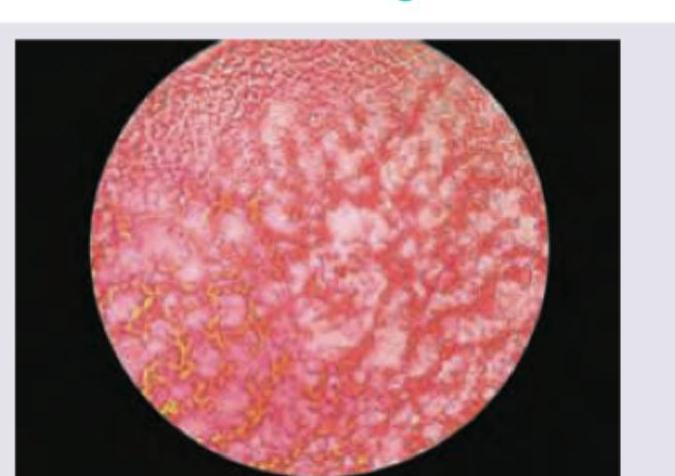
Which of the following is used to differentiate race in seminal stains?
In genetic profiling of seminal enzyme markers, what is the typical detection time for Phosphoglucomutase (PGM)?
For DNA profiling, blood samples are typically stored in which anticoagulant?
Which forensic sample is best for DNA analysis?
What is the best technique to isolate DNA from enamel and dentin?
ABO antigens are not found in which of the following body fluids?
What test is used to determine if blood is of human origin?
Who founded DNA fingerprinting?
Dried semen stains on clothes are identified by which of the following methods?
Cerebrospinal fluid (CSF) is best stored at which temperature?
Explanation: **Explanation:** **Peptidase A (Pep A)** is a polymorphic enzyme found in human semen and vaginal secretions. In forensic serology, it is a crucial biochemical marker used to differentiate racial origin because it exhibits distinct genetic variants (phenotypes) that occur with significantly different frequencies across populations. Specifically, the **Pep A 2-1** and **Pep A 2** phenotypes are found almost exclusively in individuals of African descent (Black population) and are rare in Caucasians or Asians. This makes it a high-yield marker for narrowing down the race of a suspect from a seminal stain. **Analysis of Incorrect Options:** * **Serum Alkaline Phosphatase (SAP):** While Acid Phosphatase is a primary screening test for semen, alkaline phosphatase is not a specific marker for seminal stains or racial differentiation. * **MHS 5:** This is a monoclonal antibody that detects a specific seminal vesicle antigen (seminal vesicle-specific antigen). It is used as a highly specific confirmatory test to **identify the presence of semen**, but it does not differentiate race. * **Choline:** This is a breakdown product of lecithin found in semen. Its presence is detected by the **Florence Test** (forming dark brown rhombic crystals). It confirms the presence of semen but is not race-specific. **High-Yield Clinical Pearls for NEET-PG:** * **Best confirmatory test for semen:** Detection of Spermatozoa (Microscopy) or PSA (p30). * **Most specific chemical test for semen:** Acid Phosphatase (Brentamine fast blue test). * **Florence Test:** Detects Choline (Non-specific, can give false positives). * **Barberio’s Test:** Detects Spermine (forms yellow needle-shaped crystals of spermine picrate).
Explanation: ### Explanation **Correct Option: A (6 hours)** In forensic serology, **Phosphoglucomutase (PGM)** is a polymorphic enzyme found in various body fluids, including semen and vaginal secretions. It is highly sensitive to environmental degradation and vaginal enzymes. In the post-coital vaginal environment, PGM activity diminishes rapidly. Research and forensic standards indicate that PGM can typically be detected for only up to **6 hours** after intercourse. Beyond this window, the enzyme usually denatures or its concentration falls below the threshold for reliable electrophoretic typing. **Analysis of Incorrect Options:** * **B (12 hours):** While some acid phosphatase (AP) activity may persist up to 12–24 hours, PGM is much more labile and rarely remains detectable or typable at this stage. * **C & D (18–24 hours):** These timeframes are more characteristic of **Spermatozoa** (which can be found in the vagina for 2–3 days) or **Prostate-Specific Antigen (PSA/p30)**, which remains detectable for up to 24–48 hours. PGM would be completely degraded by this time. **High-Yield Pearls for NEET-PG:** * **Stability Hierarchy:** Spermatozoa (Longest) > PSA/p30 (up to 48h) > Acid Phosphatase (up to 24h) > **PGM (Shortest, ~6h)**. * **PGM Polymorphism:** PGM is useful because it has three common phenotypes (PGM 1, PGM 2-1, and PGM 2), allowing for the exclusion of suspects. * **Macerated Foetus:** PGM typing can also be performed on the tissues of a macerated foetus to determine paternity, as it is relatively stable in internal organs compared to external exposure. * **Florence Test:** Detects Choline (Dark brown rhombic crystals). * **Barberio’s Test:** Detects Spermine (Yellow needle-shaped crystals).
Explanation: **Explanation:** **1. Why EDTA is the Correct Answer:** Ethylenediaminetetraacetic acid (EDTA) is the anticoagulant of choice for DNA profiling because it is a potent **chelating agent**. It binds to divalent metal ions, specifically **Magnesium ($Mg^{2+}$)**. Since **DNase enzymes** (which degrade DNA) require $Mg^{2+}$ as a necessary cofactor to function, EDTA effectively inactivates these enzymes. This preserves the structural integrity and high molecular weight of the DNA strands, which is critical for techniques like RFLP and PCR-based profiling. **2. Analysis of Incorrect Options:** * **Sodium fluoride:** This is a glycolytic inhibitor used primarily for **blood glucose estimation**. It inhibits the enzyme enolase but does not provide the specific DNA protection required for profiling. * **Sodium fluoride + Oxalates (Grey top):** This combination is used for blood sugar and alcohol (ethanol) estimation. Oxalates can interfere with PCR reactions, making them unsuitable for DNA analysis. * **Sodium chloride:** This is a salt (normal saline) and not an anticoagulant. While used in some DNA extraction protocols (salting out), it is not used for the primary storage of whole blood samples. **3. High-Yield Clinical Pearls for NEET-PG:** * **Color Code:** EDTA tubes have a **Lavender/Purple top**. * **Sample Type:** For DNA profiling, **whole blood** is required, not serum or plasma. * **Alternative Samples:** If blood is unavailable, the best source for DNA is the **dental pulp** (protected by enamel) or **compact bone** (femur). * **Storage:** If DNA analysis is delayed, samples should be refrigerated at **4°C** (short-term) or **-20°C to -80°C** (long-term). Never use Heparin for PCR as it acts as a potent PCR inhibitor.
Explanation: **Explanation:** **Why Blood in EDTA is the Correct Answer:** For DNA profiling, the primary goal is to obtain a high yield of intact, nucleated cells. **Blood** is the gold standard because it contains a high concentration of white blood cells (WBCs), which are rich in nuclear DNA. **EDTA (Ethylenediaminetetraacetic acid)** is the preferred anticoagulant because it preserves the morphology of the cells and, more importantly, inhibits **DNase enzymes** by chelating magnesium ions ($Mg^{2+}$). This prevents the degradation of DNA, ensuring a high-quality sample for Polymerase Chain Reaction (PCR) and Short Tandem Repeat (STR) analysis. **Analysis of Incorrect Options:** * **Hair:** While hair can be used, only the **hair bulb (root)** contains nuclear DNA. The hair shaft contains only mitochondrial DNA (mtDNA), which is less discriminatory than nuclear DNA. * **Vitreous Humor:** This is an acellular fluid. While excellent for biochemical analysis (e.g., potassium levels for estimating time since death), it contains negligible amounts of DNA. * **Femur Bone:** Bone is used primarily in advanced decomposition or skeletalized remains where soft tissues are unavailable. It requires complex extraction processes (demineralization) and often yields degraded DNA compared to fresh blood. **High-Yield Clinical Pearls for NEET-PG:** * **Preferred Anticoagulant:** Always EDTA (Purple/Lavender top) for DNA; Heparin should be avoided as it inhibits the PCR process. * **Storage:** For long-term DNA preservation, samples should be stored at **-20°C or -70°C**. * **Alternative in Living:** If a blood sample cannot be taken, a **buccal smear** (moistened swab of the inner cheek) is the next best non-invasive source of nucleated epithelial cells. * **Mitochondrial DNA:** Useful for maternal lineage identification as it is inherited only from the mother.
Explanation: **Explanation:** **1. Why Cryogenic Grinding is the Correct Answer:** Isolating DNA from teeth is challenging because the genetic material is encased in a highly mineralized, hard matrix (enamel and dentin). **Cryogenic grinding** (also known as freezer milling) is the gold standard because it involves cooling the tooth to liquid nitrogen temperatures (-196°C) before grinding it into a fine powder. * **Medical Concept:** The extreme cold makes the tooth brittle, allowing for a finer powder and increasing the surface area for extraction buffers. Crucially, the low temperature **prevents thermal degradation** of the DNA that would otherwise occur due to the heat generated by mechanical friction. This ensures the preservation of high-molecular-weight DNA, which is vital for forensic profiling. **2. Analysis of Incorrect Options:** * **B. Crushing:** Manual crushing at room temperature generates significant heat and often results in large, uneven fragments. This leads to poor DNA yield and potential degradation. * **C. Horizontal Section:** While sectioning can be used to access the pulp, it is an incomplete method for DNA *isolation* from the hard tissues (enamel/dentin) themselves. * **D. Conventional Endodontic Process:** This involves accessing the pulp chamber via drilling. While useful for extracting soft tissue DNA, it ignores the DNA trapped in the calcified matrix and risks contamination and heat damage. **3. High-Yield Clinical Pearls for NEET-PG:** * **Teeth as "Genetic Safes":** Teeth are the most chemically stable and resilient sources of DNA in decomposed, charred, or skeletonized remains. * **Preferred Source:** The **Pulp** contains the highest concentration of DNA, but in ancient or degraded remains, **Dentin and Cementum** are more reliable sources. * **Mitochondrial DNA (mtDNA):** Often used when nuclear DNA is too degraded, as it is present in higher copy numbers within the tooth structure.
Explanation: **Explanation:** The presence of ABO blood group antigens in body fluids depends on the **Secretor Status** of an individual. Approximately 80% of the population are "Secretors" (governed by the *Se* gene), meaning they secrete water-soluble forms of A, B, and H antigens into their body secretions. **Why CSF is the Correct Answer:** ABO antigens are primarily found in fluids produced by exocrine glands or present in the vascular compartment. The **Cerebrospinal Fluid (CSF)** is a highly filtered ultrafiltrate of plasma, and the blood-brain barrier/blood-CSF barrier prevents the passage of these large glycoprotein antigens. Therefore, ABO antigens are **not** found in the CSF, regardless of secretor status. **Analysis of Incorrect Options:** * **Semen:** This contains the highest concentration of ABO substances in secretors, making it vital for forensic identification in sexual assault cases. * **Plasma:** Antigens are naturally present here as they are shed from the surface of red blood cells and vascular endothelium. * **Sweat:** ABO antigens are secreted by sweat glands in secretors, though in lower concentrations compared to saliva or semen. **High-Yield Pearls for NEET-PG:** 1. **Secretor Gene:** Located on **Chromosome 19**. 2. **Concentration Gradient:** The concentration of ABO substances is generally: **Semen > Saliva > Sweat > Urine.** 3. **Forensic Significance:** Absorption-elution and Absorption-inhibition tests are used to detect these antigens from dried stains (e.g., a cigarette butt or a semen stain). 4. **Non-secretors:** The remaining 20% of the population who do not secrete these antigens in fluids (genotype *sese*).
Explanation: ### Explanation In forensic serology, the examination of a suspected bloodstain follows a stepwise protocol: **Preliminary (Screening) → Confirmatory → Species Identification.** **1. Why the Precipitin Test is Correct:** The **Precipitin test** is the standard method for **species identification** (determining if blood is human or animal). It is based on the antigen-antibody reaction. When human blood (containing human serum proteins/antigens) reacts with "antihuman serum" (containing antibodies produced in an animal), a visible precipitate forms at the junction. Modern variations include the *Crossover Electrophoresis* and *Ouchterlony Double Diffusion* tests. **2. Analysis of Incorrect Options:** * **Benzidine Test (Option B):** This is a **Preliminary/Screening test**. It is highly sensitive but not specific; it merely suggests the presence of blood (peroxidase activity) but cannot distinguish between species or even confirm it is blood (false positives with potatoes/horseradish). Due to its carcinogenic nature, it is largely replaced by the Phenolphthalein (Kastle-Meyer) test. * **Teichmann’s Test (Option D):** This is a **Confirmatory test** for the presence of blood. It involves heating blood with glacial acetic acid and salt to produce characteristic brown, rhombic **haemin crystals**. * **Takayama Test (Option A):** Also a **Confirmatory test**, considered more reliable than Teichmann’s. It uses a reagent containing glucose and pyridine to produce pink, feathery **haemochromogen crystals**. **3. NEET-PG High-Yield Pearls:** * **Screening (Catalytic) Tests:** Benzidine (Blue), Phenolphthalein (Pink), Luminol (Chemiluminescence). * **Confirmatory (Crystal) Tests:** Takayama (Haemochromogen) and Teichmann (Haemin). * **Species Origin:** Precipitin test. * **Individualization:** DNA Profiling (the gold standard for linking blood to a specific person). * **Acid Phosphatase:** The screening test for semen; **p30 (PSA)** is the confirmatory marker.
Explanation: **Explanation:** **Correct Answer: C. Jeffrey** DNA fingerprinting (also known as DNA profiling) was developed by **Sir Alec Jeffreys** in 1984 at the University of Leicester. He discovered that certain regions of DNA contain sequences that are repeated side-by-side (Variable Number Tandem Repeats or VNTRs) and that the number of repeats varies between individuals. This unique genetic "barcode" allows for the definitive identification of individuals in forensic investigations and paternity disputes. **Analysis of Incorrect Options:** * **A. Watson:** James Watson, along with Francis Crick, is famous for discovering the **double-helix structure of DNA** in 1953, not for forensic profiling. * **B. Calton (Galton):** Sir Francis Galton was a pioneer in **dactylography (fingerprinting)**. He established the permanence and uniqueness of ridge patterns and developed the first classification system for traditional fingerprints. * **D. All of the above:** This is incorrect as the contributions of these scientists are distinct and belong to different eras of genetic and forensic science. **High-Yield Clinical Pearls for NEET-PG:** * **Father of DNA Fingerprinting (World):** Alec Jeffreys. * **Father of DNA Fingerprinting (India):** Dr. Lalji Singh. * **Specimen of Choice:** While DNA can be extracted from any nucleated cell (blood, semen, hair root), **EDTA blood** is the preferred sample for reference. * **Technique:** The original method used **RFLP** (Restriction Fragment Length Polymorphism), but modern forensics primarily uses **PCR-based STR** (Short Tandem Repeat) analysis. * **Legal Admissibility:** In India, DNA evidence is admissible under **Section 45 of the Indian Evidence Act** as expert opinion.
Explanation: **Explanation:** The identification of dried semen stains is a critical step in forensic investigations, particularly in cases of sexual assault. **Why UV Rays are the correct answer:** Semen contains high concentrations of **flavins, choline, and acid phosphatase**, which exhibit natural **fluorescence** when exposed to ultraviolet (UV) light. Under a Wood’s lamp (UV light source), dried semen stains on clothing or surfaces appear as bluish-white or yellowish-white fluorescent patches. This is a non-destructive, preliminary screening method used to locate stains that are otherwise invisible to the naked eye. **Analysis of Incorrect Options:** * **A. Spectrometry:** While mass spectrometry can be used for the definitive chemical analysis of biological fluids, it is not a primary screening method for locating dried stains on clothing. * **C. Infrared rays:** IR rays are generally used for detecting bloodstains on dark fabrics (as blood absorbs IR) or for analyzing gunshot residue, but they are not the standard for semen fluorescence. * **D. LASER:** While high-intensity light sources (Alternative Light Sources or ALS) can be used, UV light is the specific, classic diagnostic modality taught and tested for the initial screening of semen. **High-Yield Clinical Pearls for NEET-PG:** * **Confirmatory Test:** The presence of **Spermatozoa** (microscopic exam) is the only 100% confirmatory test for semen. * **Best Chemical Test:** **Acid Phosphatase test** (Brentamine fast blue test) is the most common presumptive chemical test. * **Specific Marker:** **p30 (Prostate-Specific Antigen)** is used to identify semen even in vasectomized (aspermic) individuals. * **Florence Test:** Detects **Choline** (crystals are dark brown, rhombic/needle-shaped). * **Barberio’s Test:** Detects **Spermine** (crystals are yellow, needle-shaped).
Explanation: **Explanation:** The storage of Cerebrospinal Fluid (CSF) is highly dependent on the intended laboratory analysis. For routine biochemical and immunological investigations, **4°C (Refrigeration)** is the temperature of choice. **Why 4°C is correct:** Refrigeration at 4°C is ideal for preserving the chemical composition of CSF. It prevents the degradation of proteins and glucose by inhibiting bacterial growth and slowing down cellular metabolism. In forensic and clinical settings, if the sample cannot be analyzed within 1 hour, refrigeration ensures the stability of most analytes for up to 24–48 hours. **Analysis of Incorrect Options:** * **Room Temperature (25°C):** This is generally avoided for biochemical analysis because glucose levels drop rapidly due to glycolysis by cells or bacteria. However, it is the preferred temperature *only* if a microbiological culture for fastidious organisms (like *Neisseria meningitidis*) is required, as refrigeration can kill these bacteria. * **-20°C:** This temperature is used for long-term storage of certain proteins but is suboptimal for routine use as it can cause crystallization and denaturation of specific enzymes without providing the stability of ultra-low temperatures. * **-70°C (Deep Freezing):** This is reserved for long-term research storage, DNA/RNA studies, or specialized viral PCRs, but it is not the standard "best" temperature for routine diagnostic processing. **High-Yield Clinical Pearls for NEET-PG:** * **Order of Tubes:** In a "traumatic tap," the blood concentration decreases from Tube 1 to Tube 4. * **Glucose Levels:** Normal CSF glucose is approximately **2/3rd (60-70%)** of the simultaneous plasma glucose. * **Xanthochromia:** A yellowish discoloration of CSF (due to bilirubin) indicating subarachnoid hemorrhage; it is best detected after centrifuging the sample. * **Cytology:** For cell counts, CSF should be analyzed within **30-60 minutes**, as cells (especially neutrophils) lyse rapidly.
DNA Structure and Function
Practice Questions
DNA Extraction Methods
Practice Questions
PCR Technology
Practice Questions
Short Tandem Repeat Analysis
Practice Questions
Y-STR and Mitochondrial DNA
Practice Questions
DNA Databases
Practice Questions
Population Genetics in Forensics
Practice Questions
Statistical Interpretation
Practice Questions
Body Fluid Identification
Practice Questions
Bloodstain Pattern Analysis
Practice Questions
Emerging DNA Technologies
Practice Questions
Quality Assurance in DNA Testing
Practice Questions
Get full access to all questions, explanations, and performance tracking.
Start For Free