Which test is most sensitive for detecting semen in forensic investigations?
What test is used to detect the presence of semen in the vaginal secretions of a rape victim?
Disputed maternity can be solved by using the following tests, EXCEPT:
Enzyme that can be traced in semen sample of 8-10 weeks is:
Which of the following methods is used for demonstrating old washed bloodstains?
Best site for DNA extraction from a 2-month-old decomposed body?
A 50 kg patient has 40 % burn of the body surface area. Calculate the ringer lactate solution to be given for first 8 hours of fluid:
In adults, circulatory collapse occurs after what percent of burns of total body surface area?
To calculate the initial fluid requirement in a burn patient, the best approach is:
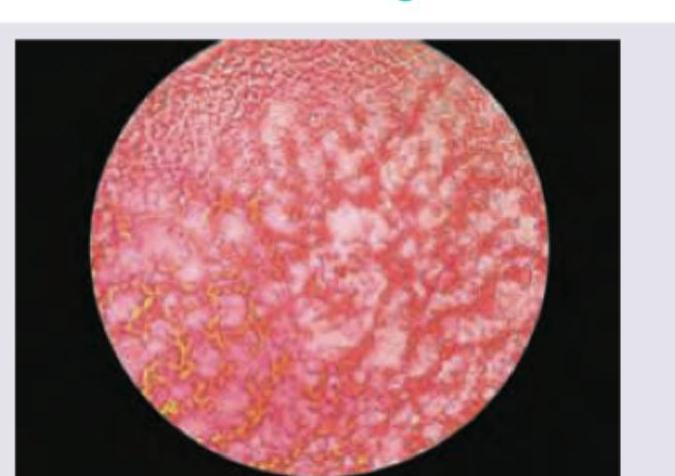
Which of the following tests for identifying blood stains is shown in the image below?
Explanation: ***Acid phosphatase test*** - This test is highly sensitive for detecting **prostatic acid phosphatase (PAP)**, a key enzyme found in high concentrations in semen. - A positive result, indicated by a **rapid color change**, suggests the presence of seminal fluid, even in small quantities. *Luminol test* - The luminol test is used to detect **bloodstains** at a crime scene, causing them to luminescence, but it is not specific for semen. - While it can react to other substances and potentially give **false positives** for semen, its primary use is for blood detection. *Barberio test* - The Barberio test is a **confirmatory microcrystal test** for spermine, a component of semen. - It involves the formation of specific crystals; however, it is less sensitive for initial screening than the acid phosphatase test and requires the presence of spermine. *Florence test* - The Florence test is a **confirmatory microcrystal test** for choline, another component of semen. - Similar to the Barberio test, it is a corroborative test that requires the formation of specific crystals and is not used for initial, highly sensitive screening.
Explanation: ***Acid phosphatase test*** - The **acid phosphatase test** is used to detect the presence of **spermatozoa** in vaginal secretions by identifying the prostatic enzyme **acid phosphatase**, which is a component of semen. - A positive result indicates recent sexual intercourse and is crucial in **forensic investigations** of sexual assault. *Methylene blue staining* - **Methylene blue staining** is commonly used to visualize cells and bacteria in various samples, particularly for identifying **bacterial vaginosis** via clue cells. - It is not specifically used for the detection of semen or spermatozoa in sexual assault cases. *Lugol's iodine test* - **Lugol's iodine** is primarily used to detect **glycogen** in cervical cells during a Schiller test, which helps identify abnormal or cancerous cells. - It is not a standard test for detecting the presence of semen in sexual assault investigations. *Benzidine test* - The **benzidine test** was historically used as a preliminary test for the presence of **blood** by detecting hemoglobin. - However, due to its **carcinogenic properties**, it has largely been replaced by safer and more specific tests for blood detection.
Explanation: ***Precipitin test*** - The **precipitin test** is used to determine the origin of a **blood sample**, specifically whether it is **human or animal blood**, by detecting species-specific proteins. It is not used for assessing maternity. - This test is primarily employed in **forensic serology** to differentiate between blood from different animal species, making it irrelevant for paternity or maternity disputes. *Blood grouping* - **Blood grouping** (e.g., ABO and Rh systems) can be used to **exclude paternity or maternity** by comparing the blood types of the child, mother, and alleged father. - If the child's blood type is incompatible with the alleged parents based on Mendelian inheritance, one or both can be excluded. *HLA typing* - **HLA typing** (Human Leukocyte Antigen) is a more powerful genetic marker system than ABO/Rh for determining paternity or maternity. - It involves analyzing highly polymorphic genes on chromosome 6 that encode cell surface proteins, providing a more definitive means of **inclusion or exclusion**. *DNA fingerprinting* - **DNA fingerprinting** (also known as **DNA profiling**) is the **most accurate and widely accepted method** for resolving paternity and maternity disputes. - It analyzes highly variable regions of DNA unique to each individual, providing a statistically strong basis for **inclusion or exclusion** by comparing genetic profiles.
Explanation: ***Acid phosphatase test*** - The **acid phosphatase (AP) test** is a crucial forensic test for identifying seminal fluid, even in aged or degraded samples. - While detectable for months, it remains a reliable indicator in semen samples for at least **8-10 weeks** due to its relative stability. *CPK enzyme* - **Creatine phosphokinase (CPK)** is primarily associated with muscle and brain tissue damage, not a specific marker for semen. - It is not routinely traced in semen samples for forensic analysis due to its low specificity. *LDH* - **Lactate dehydrogenase (LDH)** is an enzyme found in various tissues throughout the body, reflecting general cellular damage or metabolism. - It lacks the specificity to be a reliable forensic marker for the presence of semen. *ALP test* - **Alkaline phosphatase (ALP)** is commonly used in clinical settings to assess liver and bone health. - It is not a principal enzyme marker used for the forensic identification of seminal fluid due to its widespread distribution in the body.
Explanation: **Luminol spray** - **Luminol** reacts with the iron in **hemoglobin** to produce a blue-white luminescence, making it highly effective for detecting even heavily diluted or rinsed-away bloodstains. - It is particularly useful for demonstrating **old, washed-up bloodstains** at crime scenes where visual identification might be difficult. *Infrared photography* - While useful for detecting certain hidden details or substances, **infrared photography** is not the primary method for revealing old or washed-up bloodstains. - **Bloodstains** can absorb infrared light to varying degrees, but the chemical reaction of luminol is specifically designed for trace blood detection. *Magnifying lens* - A **magnifying lens** merely enhances the visibility of existing stains or patterns and cannot detect traces of blood invisible to the naked eye, particularly old or diluted ones. - It is a tool for closer inspection, not for chemical detection of hidden substances. *Ultraviolet light* - **Ultraviolet (UV) light** can be used to detect certain biological fluids such as semen or saliva, which **fluoresce** under UV. - However, fresh or old bloodstains typically *absorb* UV light rather than fluoresce, making it less effective for detecting them, especially if they are washed up.
Explanation: ***Teeth*** - Teeth, particularly the **pulp and dentin**, provide a highly protected environment for DNA, making them ideal for DNA extraction from **decomposed remains** due to their robust structure. - The hard enamel casing shields the internal DNA from environmental degradation and microbial contamination, allowing for excellent preservation over extended periods. - **Dental pulp** is consistently reliable and easily accessible, making teeth the **preferred first choice** in forensic DNA extraction from decomposed bodies. *Bone* - **Bone**, particularly the **petrous portion of the temporal bone** and long bones, is also an **excellent source** of DNA in decomposed remains and is widely used in forensic practice. - However, DNA extraction from bone requires more extensive processing (demineralization, grinding) compared to teeth, making it a **second-line choice** when teeth are available. - The petrous temporal bone is notably resistant to degradation, but teeth remain more practically accessible. *Muscle* - **Muscle tissue** contains significant DNA when fresh, but is highly susceptible to **autolysis and bacterial degradation** in a decomposed body. - As decomposition progresses over 2 months, muscle tissue breaks down rapidly, reducing both the quantity and quality of recoverable DNA significantly. *Hair* - **Hair shafts** primarily contain mitochondrial DNA (mtDNA) with minimal nuclear DNA, which limits their use for individual identification. - Hair roots (if present) contain nuclear DNA, but in decomposed remains, hair is often shed or degraded, making it an unreliable source compared to teeth.
Explanation: ***4 Litres*** - The **Parkland formula** for fluid resuscitation in burn patients is **4 mL x body weight (kg) x % total body surface area (TBSA) burned**. - For this patient: 4 mL x 50 kg x 40% = 8000 mL or **8 Litres** of Ringer's Lactate in the first 24 hours. Half of this volume ([8 Litres / 2] = **4 Litres**) is given in the first 8 hours. *8 Litres* - This amount represents the **total fluid requirement** for the entire first 24 hours, not just the first 8 hours. - Only **half of the total calculated fluid** is administered in the initial 8-hour period. *2 Litres* - This volume is generally **too low** for a patient with 40% TBSA burns, which is considered a significant burn. - Insufficient fluid resuscitation can lead to **burn shock** and organ hypoperfusion. *1 Litre* - This amount is **grossly inadequate** for a patient with 40% TBSA burns. - Administering such a small volume would likely result in **severe hypovolemic shock** and clinical deterioration.
Explanation: ***Correct Option: 15%*** - In adults, **circulatory collapse** and **burn shock** are typically anticipated with burns affecting **15% or more** of the total body surface area (TBSA). - This threshold signifies significant fluid loss into extravascular spaces, necessitating aggressive intravenous fluid resuscitation to prevent hypovolemic shock. - Standard burn protocols recommend IV fluid resuscitation for adults with **>15-20% TBSA burns**. *Incorrect Option: 10%* - The **10% TBSA threshold** is primarily used for **pediatric patients**, not adults. - In children, circulatory collapse can occur at lower TBSA percentages due to smaller total blood volume and higher body surface area to weight ratio. - While a 10% burn in an adult requires careful monitoring and wound care, it typically does not lead to circulatory collapse in otherwise healthy adults. *Incorrect Option: 5%* - A burn of 5% TBSA is generally **not sufficient** to cause systemic circulatory collapse in an adult. - While requiring wound care and causing local fluid shifts, it typically does not prompt aggressive intravenous resuscitation for shock prevention unless other comorbidities are present. *Incorrect Option: 1%* - A 1% TBSA burn is a **minor burn** and extremely unlikely to lead to circulatory collapse in an adult. - This extent of burn usually involves only local pain and inflammation, with minimal systemic effects.
Explanation: ***Estimate body surface area (burn)*** - The primary determinant for initial fluid resuscitation in burn patients is the **total body surface area (TBSA)** affected by the burn. Formulas like the **Parkland formula** use TBSA to calculate initial fluid requirements. - Accurate estimation of TBSA is crucial for preventing both under-resuscitation (leading to shock) and over-resuscitation (leading to complications like compartment syndrome or ARDS). *CVP* - **Central venous pressure (CVP)** is generally not a reliable indicator for guiding fluid resuscitation in burn patients due to its poor correlation with cardiac output and tissue perfusion in this specific patient population. - Changes in CVP can be influenced by many factors, including intrathoracic pressure and right ventricular function, making it an insensitive marker for systemic fluid status in significant burns. *Urine output* - While **urine output** is an essential parameter for monitoring the adequacy of fluid resuscitation in burn patients *after* initial fluid administration, it is not used to *investigate* or *calculate* the initial fluid requirement. - It serves as a real-time indicator of organ perfusion and helps in titrating fluid rates but does not determine the initial bolus or 24-hour fluid volume. *Blood volume measurement* - **Direct measurement of blood volume** is a complex and often invasive procedure that is not practical or readily available for emergency assessment and initial fluid calculation in burn patients. - It is not a standard method for calculating initial fluid requirements in acute burn care.
Explanation: ***Hemin crystal test*** - The image displays characteristic **rhombic crystals** (often seen as reddish brown or yellowish brown, due to their origin from denatured hemoglobin) which are formed during the **Teichmann test** or hemin crystal test. - This test is a confirmatory test for the presence of blood, detecting the presence of **hemin**, a derivative of heme. *Hemochromogen crystal test* - This test, also known as the **Takayama test**, produces **pink, feathery crystals of hemochromogen** (pyridine ferroprotoporphyrin), which are distinct from the rhombic crystals shown. - It is also a confirmatory test for blood, but the crystal morphology is different. *Leucomalachite green test* - The leucomalachite green test is a **presumptive test** for blood that relies on the peroxidase activity of hemoglobin. - A **green color change** indicates a positive result, and it does not involve the formation of crystals visible under a microscope. *Luminol test* - The luminol test is a highly sensitive **presumptive test** used to detect minute traces of blood, even if it has been cleaned. - It produces a characteristic **chemiluminescence (blue glow)** in the dark and does not involve crystal formation.
Get full access to all questions, explanations, and performance tracking.
Start For Free