Which of the following is a feature of manual strangulation?
Which postmortem finding is suggestive of hanging?
A 42-year-old man is found hanging from a ceiling beam with a rope around his neck. At autopsy, which of the following findings would be most consistent with suicidal hanging rather than homicidal strangulation?
Which of the following is NOT a feature of manual strangulation?
What is the term for the death of a person due to compression of the neck by another person?
In cases of strangulation, the marks on the neck are typically described as?
Fracture of hyoid bone is indicative of:
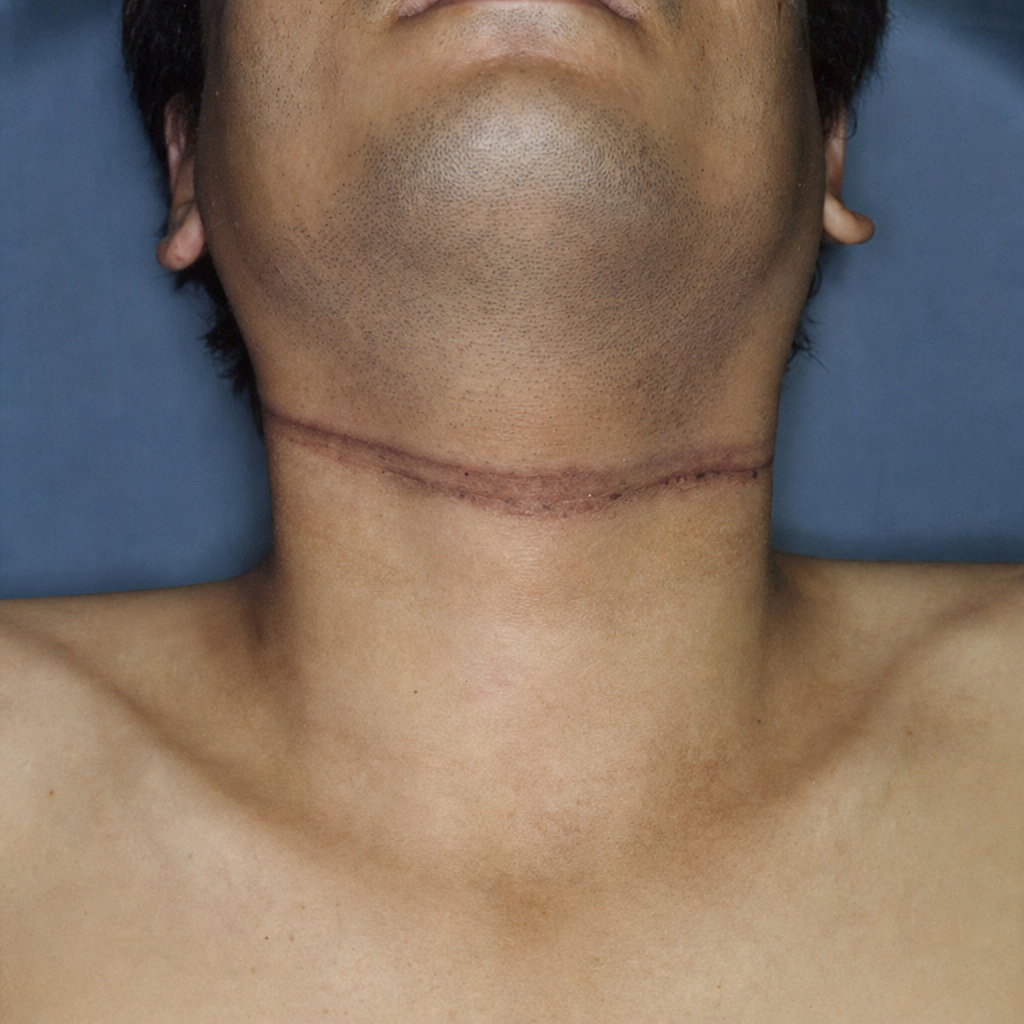
Identify the pattern of abrasion shown in the image below.
In a case of hanging, neck ligature marks are an example of:
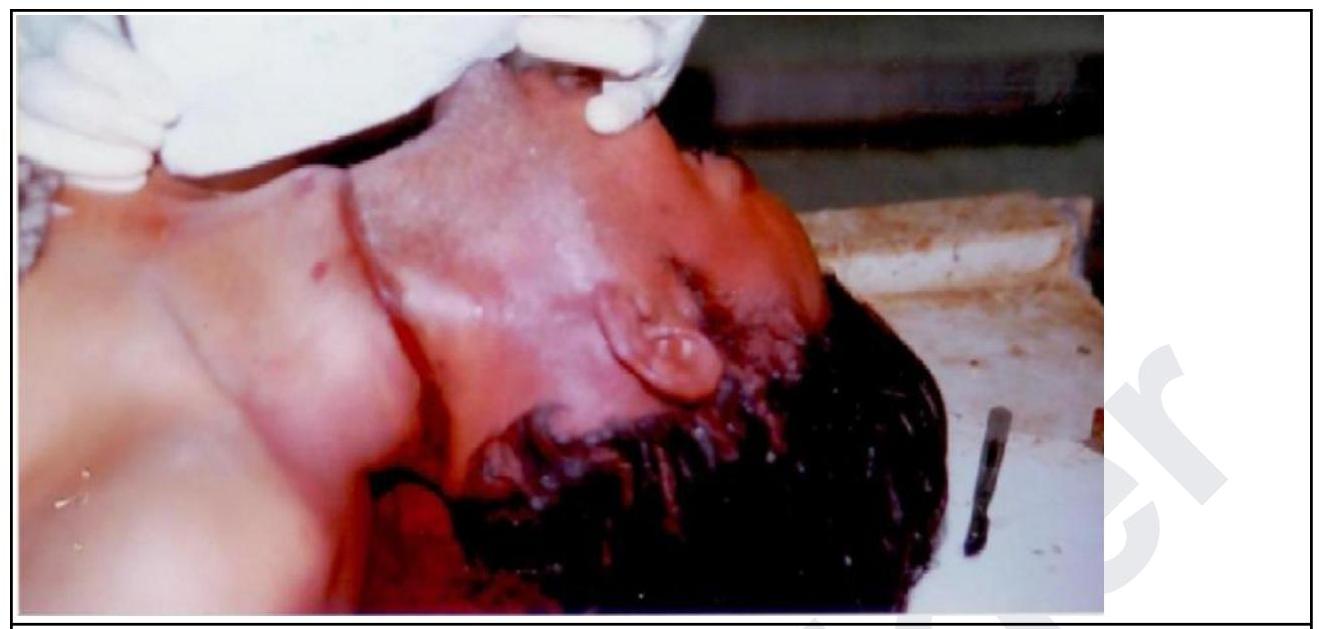
A female was found dead in her bedroom. The room was not locked from inside. Her blood alcohol value was found to be 350 mg/dL. The picture taken at the post mortem is shown below. The diagnosis is? (AIIMS Nov 2018, AIIMS Nov 2017)

Explanation: ***Hyoid bone fracture*** - **Hyoid bone fractures** are a characteristic feature of manual strangulation, occurring in 30-50% of cases - More commonly seen in adults over 40 years when the hyoid bone is ossified - Indicates significant focal force applied to the anterior neck, making it a valuable forensic finding - While not present in all cases, when found it is highly suggestive of manual strangulation *Petechial hemorrhages* - **Petechial hemorrhages** are actually very common in manual strangulation (70-90% of cases) - Result from venous obstruction with continued arterial flow, causing capillary rupture - Seen in conjunctivae, face, and internal organs (lungs, heart) - While they can occur in other forms of asphyxia, in the context of neck findings they are highly significant - The question asks for "a feature" and hyoid fracture is chosen as it's more specific when present *Frothy discharge* - **Frothy discharge** from nose and mouth is typically associated with drowning or pulmonary edema - Results from fluid mixing with air in the airways - Not a characteristic finding in manual strangulation *Cyanosis* - **Cyanosis** is a non-specific sign that can occur in any form of asphyxia - Results from hypoxia and increased deoxygenated hemoglobin - May be present in strangulation but doesn't help identify the mechanism of death
Explanation: ***Ligature mark above thyroid*** - A ligature mark located **above the thyroid cartilage** is a classic and highly indicative sign of hanging. This position is characteristic because the knot of the ligature is typically placed higher, compressing vital structures in the neck. - The ligature mark in hanging is often **oblique**, running upwards towards the suspension point, in contrast to the horizontal mark seen in manual strangulation. *Fracture of the cervical vertebra* - While cervical vertebral fracture can occur in hanging, especially in a **drop hanging** (longer drop distance leading to greater force), it is not universally present in all cases, especially in short-drop or partial hangings. - The absence of a cervical fracture does not rule out hanging, as the primary cause of death is often **cerebral hypoxia** due to carotid artery compression or venous obstruction. *Fracture of the hyoid bone in strangulation* - **Hyoid bone fractures** are more commonly associated with manual strangulation, where direct compression of the neck occurs, rather than with hanging. - In manual strangulation, the force is more concentrated and applied directly to the hyoid bone, leading to its fracture in a higher percentage of cases. *Presence of petechial hemorrhages in the eyes* - **Petechial hemorrhages** (small pinpoint hemorrhages) in the eyes (conjunctivae or sclerae) are suggestive of **venous congestion** due to obstruction of venous return from the head. - While they can be seen in hanging, they are more prominent and frequent in cases of **manual strangulation** or other forms of asphyxia where the venous outflow is completely occluded while arterial flow might persist, leading to increased pressure in capillaries.
Explanation: ***Inverted V-shaped mark*** - In **suicidal hanging**, the ligature is typically suspended from above, creating an **inverted V-shaped mark** on the neck where the knot is located. - This results from the **weight of the body pulling downwards**, causing the ligature to ascend towards the suspension point. - The mark is **oblique, incomplete posteriorly**, and directed upward toward the point of suspension. *Circular continuous mark* - A **circular continuous mark** is more characteristic of **manual strangulation** or a tightly applied ligature in homicidal strangulation where the force is applied horizontally around the entire neck. - This type of mark suggests a **uniform pressure** around the neck, often seen when the body is not suspended. *Horizontal ligature mark* - A **horizontal ligature mark** around the neck is more indicative of **homicidal strangulation** where the force is applied directly and continuously around the neck, or when the body remains horizontal during the act. - In hanging, the suspension point usually prevents a perfectly horizontal mark. *Multiple parallel marks* - **Multiple parallel marks** are generally indicative of **repeated application of force** or different ligature materials, which is more commonly seen in **homicidal strangulation** or a struggle. - In suicidal hanging, a single, clear ligature mark is typical.
Explanation: ***Skull fracture*** - **Skull fractures** are typically associated with **direct blunt force trauma** to the head, such as from falls, assaults, or vehicular accidents. - Manual strangulation primarily involves compression of the neck structures, leading to **asphyxia** rather than direct head injury. *Frothy discharge* - **Frothy discharge** from the mouth and nostrils is a common finding in asphyxia, including manual strangulation. - It results from **pulmonary edema** due to increased capillary permeability and hydrostatic pressure. *Cyanosis* - **Cyanosis**, a bluish discoloration of skin and mucous membranes, is a prominent feature of manual strangulation due to **hypoxia** and **venous congestion**. - It indicates insufficient oxygenation of the blood. *Hyoid bone fracture* - A **hyoid bone fracture** is a classic indicator of manual strangulation, especially in older individuals where the bone is more ossified and brittle. - It occurs due to the crushing force applied to the neck.
Explanation: ***Throttling*** - **Throttling** is the specific forensic medicine term for manual strangulation by another person, directly applying compressive force to the neck. - This method of asphyxia involves the use of **hands or fingers** to obstruct airflow and blood supply to the brain. - It is the **preferred medicolegal term** to denote homicidal manual compression of the neck. *Hanging* - **Hanging** involves suspension of the body with a ligature around the neck, causing compression by the body's own weight. - It is typically a form of **suicidal or accidental death**, rather than homicide through direct manual compression. *Manual strangulation* - **Manual strangulation** is synonymous with throttling and also refers to compression of the neck by hands or fingers of another person. - While medically accurate, **"throttling" is the more specific forensic term** preferred in medicolegal practice. - This option is incorrect because the question asks for "THE term," and throttling is the standard forensic terminology. *Strangulation* - **Strangulation** is a general term for compression of the neck by any means, either manual (throttling) or by a ligature. - This term is **too broad** as it does not specify the manual method or distinguish between ligature and manual compression.
Explanation: ***Horizontal marks*** - In cases of strangulation (both ligature and manual), the constricting force is applied directly around the neck in a **circumferential manner** - This results in marks that are **horizontal or nearly horizontal**, running around the neck at roughly the same level - The pattern reflects direct compression rather than suspension, distinguishing it from hanging *Vertical marks* - Vertical marks on the neck are not typical for strangulation - These would be more commonly associated with scratches, other forms of trauma, or defensive injuries - Strangulation specifically involves circumferential compression, not vertical force *Diagonal marks* - Diagonal or oblique marks are characteristic of **hanging**, not strangulation - In hanging, the ligature ascends from the point of constriction toward the suspension point, creating an oblique pattern - The ligature mark is typically incomplete posteriorly (at the knot site) and runs upward and backward *None of the options* - This is incorrect because there is a specific and well-established pattern of marks in strangulation - Horizontal marks are the hallmark finding in strangulation cases
Explanation: ***Manual strangulation*** - Fracture of the **hyoid bone** is **most indicative** of **manual strangulation** due to direct, localized anteroposterior compression of the neck by fingers and thumbs. - The **greater cornu of hyoid** is most commonly fractured when forceful thumb pressure is applied to the front of the neck during manual throttling. - Among all forms of neck compression, manual strangulation has the **highest incidence** of hyoid fracture (30-50% of cases), especially in victims over 40 years when the hyoid is calcified. - This is considered a **classical sign** in forensic pathology for manual strangulation. *Ligature strangulation* - Involves constriction of the neck by a **ligature** (e.g., rope, cord), which causes more **circumferential compression** rather than localized pressure. - Hyoid fracture occurs in only 10-15% of cases, as the force is distributed around the neck rather than concentrated on the hyoid. - **Ligature marks** are the more characteristic finding. *Hanging* - Involves suspension of the body by a ligature around the neck, typically with an **oblique ligature mark** going upward toward the point of suspension. - Hyoid fracture is relatively **rare in suicidal hanging** (10-20%), but can occur in **judicial hanging with drop** or in elderly individuals with calcified hyoid. - The mechanism is more cervical spine injury and vascular compression rather than direct hyoid trauma. *Bansdola* - **Bansdola** refers to a method involving twisting a stick through a ligature around the neck (garroting). - While it can cause neck injuries, the mechanism is more similar to ligature strangulation with circumferential compression. - **Hyoid fracture** is less characteristic compared to manual strangulation.
Explanation: ***Ligature mark*** - The image clearly displays a **linear impression** on the neck, consistent with a **ligature mark**, which is an abrasion caused by a constricting object. - This type of abrasion is often seen in cases of **strangulation or hanging**, where a cord or similar item tightens around the neck. *Pressure abrasion* - Pressure abrasions are typically caused by **blunt forceful contact** with a surface, resulting in a scraped or grazed appearance, which differs from the distinct linear mark shown. - They are usually broad and irregular, not forming a clear, thin line as seen in the image. *Graze abrasion* - Graze abrasions, also known as scrapes, involve the **superficial removal of the epidermis** due to friction against a rough surface. - They tend to be spread out and irregular, lacking the deep, circumscribed linear pattern characteristic of a ligature mark. *Imprint abrasion* - Imprint abrasions reflect the **exact pattern of the impacting object** (e.g., tire track, weapon pattern), which is not evident in the image. - While a ligature itself can leave an imprint, the term "imprint abrasion" is usually reserved for more complex patterns than a simple linear groove.
Explanation: ***Patterned abrasion*** - This is an injury where the **skin is scraped or rubbed off**, leaving a distinct mark that mirrors the object that caused it. - In cases of hanging, the ligature (rope, cord, etc.) creates a **patterned abrasion** on the neck due to friction and pressure. *Contusion (internal bleeding)* - A **contusion** involves bleeding under the skin, resulting in discoloration (a bruise), but it does not remove the skin's superficial layers. - While internal bleeding can occur in hanging, the visible ligature mark on the surface of the neck is primarily an abrasion, not just a contusion. *Irregular laceration* - A **laceration** is an open wound characterized by a **tear or rip in the skin**, typically with ragged or uneven edges, often caused by blunt trauma. - The ligature mark from hanging is usually a uniform, linear mark caused by consistent pressure and friction, not an irregular tear. *Subcutaneous bruise* - A **subcutaneous bruise** is essentially a contusion, indicating bleeding into the tissue beneath the skin. - While bleeding may accompany the ligature mark, the primary, visible surface injury from the ligature itself is an **abrasion** due to the scraping action.
Explanation: ***Throttling*** - The autopsy image shows extensive **internal hemorrhage** and disruption of neck structures, consistent with significant compressive force applied to the neck by hands, as seen in **throttling**. - **Throttling** (manual strangulation) causes deep internal injuries including fractured **hyoid bone**, damaged **thyroid cartilage**, and **strap muscle hemorrhage**, even when external marks may be minimal or absent. - The high blood alcohol level (350 mg/dL - severe intoxication) would have impaired her ability to resist, and the unlocked room suggests **homicidal** intent rather than suicide. - Key autopsy findings: **deep neck muscle hemorrhage**, **laryngeal fractures**, and **torn blood vessels** without a ligature pattern. *Traumatic asphyxia* - Traumatic asphyxia results from severe **chest/thoracic compression** leading to acute venous congestion in the head and neck region. - Classical signs include **petechial hemorrhages** on face and conjunctivae, **cyanosis** above compression level, and relatively **intact neck structures** on autopsy. - The severe internal neck damage shown in the autopsy image is **not characteristic** of traumatic asphyxia, which primarily affects superficial vessels due to back-pressure, not deep structural injury. *Café coronary* - **Café coronary** is sudden death from **food bolus aspiration** causing airway obstruction, commonly occurring in intoxicated individuals who cannot protect their airway. - Autopsy findings would show an **obstructing food bolus in the larynx/trachea** without the extensive neck trauma and hemorrhage depicted in the image. - No manual strangulation injuries would be present. *Bansdola* - **Bansdola** is a traditional method of strangulation using a **bamboo stick or rod** twisted across the neck with a rope, used historically as torture or execution. - It causes a characteristic **linear ligature mark** with underlying soft tissue injury in a horizontal pattern across the neck. - The autopsy findings in the image show **diffuse manual strangulation injury** rather than the specific linear pattern of ligature strangulation seen in Bansdola.
Get full access to all questions, explanations, and performance tracking.
Start For Free