A 32-year-old male is brought for autopsy after being found on a railway track, suspected of suicide. Examination reveals joule burns on the fingers and multiple lacerated wounds on the body, with edges that do not gape and are closely approximated, and no positive vital reaction zone is present. Based on the autopsy findings, what is the most likely manner of death in this case?
In which clinical scenario would you find a patient requiring the vital signs assessment technique shown in the image?

Which of these is the most life-threatening injury that can be identified by assessing the breathing component of the patient?
Tardieu spots are a feature of which of the following forms of death?
In hanging, which knot position most likely indicates homicide?
Cause of death for drowning in cold water:
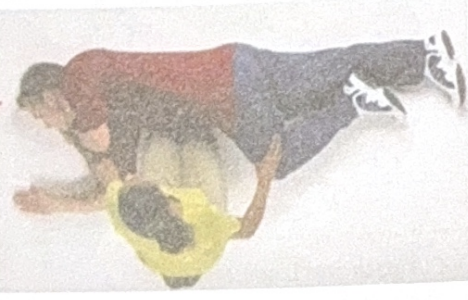
The friend and victim had alcohol and got into an argument over a common girlfriend, following which the friend kills the victim by sitting on his chest and covering his nose and mouth. This is an example of?
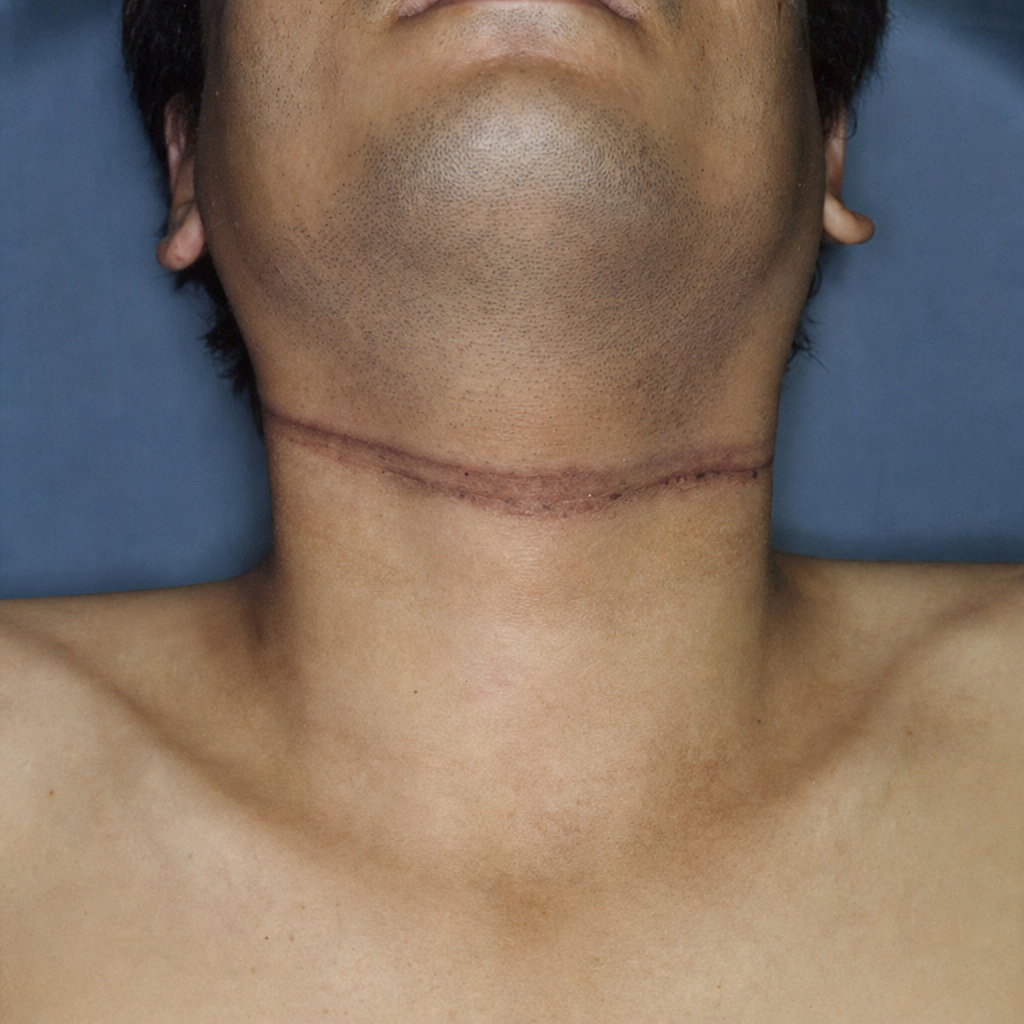
On postmortem examination, contusion of neck muscles is seen along with fracture of hyoid bone. The most probable cause of death is:
Which of the following statements about Platauf's hemorrhages is correct?
Gettler's test is for -
Explanation: ***Accidental*** - The presence of **joule burns** on the fingers indicates **electrocution** from contact with an electrified railway line, which is the **cause of death**. - **Multiple lacerated wounds** with non-gaping edges and **absence of vital reaction zone** confirm these injuries were sustained **post-mortem** after the train struck the already deceased body. - **Key forensic principle**: Joule burns alone **cannot determine intent** - they only indicate electrical contact occurred. Railway electrocutions are **frequently accidental**, especially when individuals cross tracks unaware of live rails or overhead wires. - Without additional evidence of suicidal intent (suicide note, witness statements, deliberate positioning, psychiatric history), the **autopsy findings alone** are most consistent with **accidental electrocution** followed by post-mortem train impact. - The question asks for determination based on "autopsy findings" - physical evidence alone typically suggests accidental manner in railway electrocutions unless other contextual evidence proves otherwise. *Suicidal* - While the scenario mentions the person was "suspected of suicide," **autopsy findings cannot definitively prove suicidal intent** without corroborating evidence. - Joule burns on fingers are seen in both accidental and suicidal electrocutions and cannot distinguish between the two. - Suicide determination requires additional evidence beyond the physical autopsy findings described (e.g., positioning suggesting deliberate contact, farewell notes, witness accounts of deliberate action). *Homicidal* - Homicide would require evidence of **coercion**, restraint marks, defensive injuries, or signs of struggle, none of which are described. - Electrical homicide is rare and would typically show evidence of the victim being forcibly held against an electrical source. - The finger location of joule burns suggests **voluntary hand contact**, not forcible application by another person. *Natural* - Natural death refers to death from disease or internal pathology without external intervention. - The presence of **joule burns** (electrocution injury) and **traumatic lacerated wounds** clearly indicates an **unnatural cause of death** involving external factors.
Explanation: ***Pulse present, breath absent*** - The image depicts a **mouth-to-mouth resuscitation** technique, specifically rescue breaths being administered by one person to another. - This technique is applied when a person has a **detectable pulse** but is **not breathing** or is only gasping, indicating respiratory arrest while the heart is still circulating blood. *Pulse absent, breath present* - This scenario would represent **cardiac arrest** where the heart has stopped, but the person is still attempting to breathe. This is a rare, transient state. - In such a case, the primary intervention would be **chest compressions**, not just rescue breathing, as circulation is the immediate priority. *Pulse and breath both not present* - This describes **cardiopulmonary arrest (CPA)**, where both the heart and lungs have ceased functioning. - The appropriate intervention is **cardiopulmonary resuscitation (CPR)**, which involves a combination of **chest compressions and rescue breaths (30:2 ratio)**, not just rescue breaths alone. *Pulse and breath present* - If both vital signs are present, the person is **conscious and breathing adequately**, or unconscious but breathing normally. - No advanced respiratory intervention like mouth-to-mouth resuscitation is needed; the priority would be maintaining their airway and monitoring their condition.
Explanation: ***Tension pneumothorax*** - A tension pneumothorax is a **life-threatening condition** identified during the breathing assessment, as it severely impairs ventilation and causes **hemodynamic instability** by compressing major vessels. - Key signs include absent breath sounds on the affected side, **tracheal deviation**, and **hypotension** due to mediastinal shift. *Blunt cardiac injury* - While serious, blunt cardiac injury is typically identified during the **circulation assessment**, with signs like arrhythmias, hypotension, or cardiac tamponade. - Its direct impact on breathing is less immediate compared to a tension pneumothorax. *Cervical spine injury* - A cervical spine injury can affect breathing if it involves the **phrenic nerve** (C3-C5), leading to respiratory paralysis, but this is assessed during the **disability component** or secondary survey for neurological deficits. - It does not directly cause an acute, life-threatening compromise of lung function discernible primarily through a breathing assessment like a tension pneumothorax. *Laryngotracheal injury* - A laryngotracheal injury primarily affects the **airway component** (A in ABCDE), leading to immediate obstruction or stridor. - While critical, it is distinct from problems with the lungs' ability to expand or perform gas exchange, which are assessed under breathing.
Explanation: ***Mechanical asphyxia*** - **Tardieu spots** are **petechial hemorrhages** that occur due to increased intravascular pressure and capillary rupture, a characteristic finding in deaths caused by **mechanical asphyxia** (e.g., strangulation, hanging, traumatic asphyxia). - These spots are most commonly found in the **skin of the face and conjunctivae**, and in the pleura, pericardium, and thymus in the case of intense venous congestion from severe compression. *Cyanide poisoning* - Cyanide poisoning typically presents with a **pinkish skin color** due to high oxygen saturation in venous blood. - The characteristic odor of **bitter almonds** may be detectable. *Cobra bite* - Cobra bites are characterized by **neurotoxic effects**, leading to paralysis, respiratory failure, and ptosis. - Local effects include swelling, pain, and tissue necrosis, but not typically widespread petechial hemorrhages. *Organophosphate poisoning* - Organophosphate poisoning causes a **cholinergic crisis** with symptoms like salivation, lacrimation, urination, defecation, gastrointestinal upset, and emesis (SLUDGE syndrome) due to acetylcholinesterase inhibition. - It does not typically cause Tardieu spots as a primary post-mortem finding.
Explanation: ***Occipital*** - A knot positioned over the **occipital region** (back of the head) is highly suggestive of **homicide**. This position often requires an external force to secure the ligature around the neck after the victim has been incapacitated, making self-suspension nearly impossible. - In suicidal hangings, the knot is typically placed on the side or under the chin to allow for suspension and facilitate constriction by increasing leverage on the carotid arteries and trachea. An occipital knot, however, **distributes pressure differently** and is ergonomically difficult for an individual to tie themselves into a fatal hanging position. *Left lateral* - A knot on the **left lateral side** of the neck is common in **suicidal hangings**. It allows for easy self-placement and leverage for the ligature to constrict vital structures. - While possible in homicide, it doesn't carry the strong suspicious implication that an occipital knot does, as it aligns with typical self-inflicted hanging mechanics. *Right lateral* - Similar to the left lateral position, a knot on the **right lateral side** is frequently observed in **suicidal hangings** due to its ease of self-manipulation and favorable leverage for effective strangulation. - It does not automatically rule out homicide but is not as indicative of external intervention as an occipital knot would be. *Submandibular* - A **submandibular** (under the chin) knot is also characteristic of **suicidal hangings**. This position effectively compresses both the carotid arteries and trachea, leading to rapid unconsciousness and death. - The ease of tying and the physiological effectiveness of this position make it a common choice for self-inflicted hangings, reducing the likelihood of homicide compared to an occipital knot.
Explanation: ***Inability to breathe (asphyxia)*** - Drowning fundamentally involves **inhalation of water** into the airway, which prevents gas exchange in the lungs, leading to **asphyxia**. - In cold water, the initial gasp reflex can lead to rapid aspiration of water, causing immediate **laryngospasm** and closure of the airway, resulting in inability to breathe. - Asphyxia remains the **most common mechanism** across all types of drowning, including cold water cases. *Loss of consciousness due to hypoxia* - While **hypoxia** certainly occurs in drowning due to lack of gas exchange, loss of consciousness is a *consequence* of prolonged asphyxia, not the primary cause of death. - The immediate cause of death is the inability to oxygenate the blood due to water filling the lungs or severe laryngospasm. *Cardiac arrest due to vagal inhibition* - **Vagal inhibition** (also called **hydrocution** or **immersion syndrome**) is an important mechanism specifically in **cold water drowning**. - Sudden immersion in cold water can trigger massive vagal stimulation leading to immediate cardiac arrest (often asystole) before significant water aspiration occurs. - However, this mechanism occurs in a **minority of cold water drowning cases**, while asphyxia remains the predominant cause of death overall. *Cardiac arrest due to ventricular fibrillation* - **Ventricular fibrillation** can be a terminal event in drowning, often secondary to severe hypoxia and hypothermia, but it is usually not the initial or primary cause of death. - The cessation of breathing and subsequent lack of oxygen directly lead to organ failure, including cardiac dysrhythmias, rather than ventricular fibrillation being the independent initial event.
Explanation: ***Smothering*** - This scenario describes **manual obstruction** of the mouth and nose, preventing air entry without external neck compression. - The act of sitting on the chest further restricts respiratory movements, contributing to **asphyxia**. *Gagging* - Gagging refers to the obstruction of the **oral cavity** due to material placed inside the mouth, typically to prevent speaking or crying out. - While it can contribute to asphyxia, the primary mechanism described here involves external covering of both nose and mouth. *Choking* - Choking involves the **internal obstruction** of the airway, usually by a foreign body lodged in the pharynx or larynx. - This scenario explicitly details external occlusion of the respiratory orifices, not internal blockage. *Throttling* - Throttling is a form of **manual strangulation** that involves direct compression of the neck by hands or forearm. - The description of covering the nose and mouth rather than compressing the neck rules out throttling.
Explanation: ***Throttling*** - **Manual strangulation** (throttling) causes direct compression of the neck with fingers and thumbs, leading to **bilateral contusion of neck muscles** and **fracture of the hyoid bone** due to sustained gripping force. - The combination of **deep muscle contusions** (especially in strap muscles, sternomastoid) with hyoid fracture is **highly characteristic** of manual strangulation, as the direct manual force applied causes crushing injury to both soft tissues and cartilaginous/bony structures. - Additional findings often include **fingernail marks/abrasions** on the neck, bruising corresponding to finger positions, and fractures of thyroid cartilage. - This pattern is **strongly suggestive of homicide** given the force and duration required. *Hanging* - In hanging, the force is applied through a **ligature** that creates a characteristic **oblique ligature mark** (typically rising toward the point of suspension). - While hyoid bone fractures **can occur** in hanging (especially in elderly individuals with ossified hyoid or in judicial hanging), they are **less common** (15-30% of cases) compared to manual strangulation (30-50% of cases). - **Deep bilateral neck muscle contusions are atypical** in hanging; when present, muscle injuries are usually **unilateral** and correspond to the side of the knot or are superficial. - The ligature mark and pattern of neck injuries distinguish hanging from manual strangulation. *Burking* - **Burking** involves compression of the chest and abdomen to prevent respiratory movements, combined with covering the mouth and nose. - This method causes **asphyxia** by impairing chest wall expansion and occluding airways, **without direct neck compression**. - Neck injuries like deep muscle contusions and hyoid fracture are **not characteristic** of burking; findings are primarily thoracic petechiae and signs of chest/abdominal compression. *Smothering* - **Smothering** involves blocking the nose and mouth (with hand, pillow, or other soft material) to prevent air entry. - This causes **suffocation without neck trauma**; typical findings include petechiae around eyes and face, oral/nasal bleeding. - **Absence of neck injuries** (no muscle contusions, no hyoid fracture) distinguishes smothering from strangulation methods.
Explanation: ***Subpleural hemorrhage*** - **Platauf's hemorrhages** are **defined as subpleural hemorrhages** found on the surface of the lungs, particularly in cases of **asphyxial death** related to drowning. - This is the **most accurate and specific statement** as it describes the **pathological nature** of Platauf's hemorrhages. - These hemorrhages result from the rupture of small capillaries due to sudden increase in intrathoracic pressure and aspiration of water during drowning. - They appear as **small petechial hemorrhages** on the **anterior, lateral, and inferior surfaces** of the lungs. *Mostly seen in middle lobe* - This is **incorrect**. Platauf's hemorrhages can occur in **any lobe** of the lungs, not specifically the middle lobe. - They are more commonly described as being present on the **anterior and lateral margins** and **inferior surfaces** of the lungs, regardless of lobe. *All are true* - This statement is **incorrect** because the statement about the middle lobe is false, making "All are true" false. *Sign of drowning* - While this statement has merit, it is **less specific** than "subpleural hemorrhage." - Platauf's hemorrhages are indeed **strongly associated with drowning** and are considered one of the **internal findings in drowning deaths**. - However, they are **not absolutely pathognomonic** - they can occasionally be seen in other forms of acute asphyxia or conditions involving severe acute pulmonary congestion. - The **defining characteristic** is that they are **subpleural hemorrhages**, which is a more precise pathological description than calling them simply a "sign of drowning." - Therefore, when asked "which statement is correct," the **most accurate and specific answer** is "Subpleural hemorrhage."
Explanation: ***Drowning*** - Gettler's test (also called the **diatom test**) is a **forensic test** used to diagnose drowning. - It involves detecting **diatoms** (microscopic algae present in water bodies) in body tissues and organs such as **bone marrow, liver, kidneys, and lungs**. - The presence of diatoms in **closed organs** (especially bone marrow) indicates that the person was **alive when they entered the water** and inhaled water containing diatoms, which then entered circulation. - This helps differentiate **true drowning** from a body dumped in water after death (postmortem submersion). *Carbon monoxide poisoning* - Carbon monoxide poisoning is diagnosed by measuring **carboxyhemoglobin (CO-Hb) levels** using spectroscopic analysis or blood gas analysis. - Classic finding is **cherry-red discoloration** of blood and tissues due to CO-Hb formation. - Gettler's test is **not used** for CO poisoning detection. *Cyanide poisoning* - Cyanide poisoning is diagnosed by **blood cyanide levels** or clinical findings like **bitter almond odor** of breath. - Gettler's test has **no role** in cyanide detection. *Alcohol poisoning* - Alcohol intoxication is diagnosed by measuring **blood alcohol concentration (BAC)** using gas chromatography or enzymatic methods. - Gettler's test is **not used** for alcohol detection.
Get full access to all questions, explanations, and performance tracking.
Start For Free