What is the amount of force required to compress and fracture the cricoid cartilage?
In case of death due to a fire in a closed room, the primary cause of death is usually attributed to which of the following?
A method of strangulation of the neck by the bend of the elbow is called what?
Which of the following is a characteristic postmortem finding of drowning?
What is a method of homicidal smothering and traumatic asphyxia?
When a person has suspended himself by applying a ligature around the neck such that the point of suspension (knot) is situated in the region of the occiput, such a hanging is called as:
What is the cause of death in hanging?
Which of the following is NOT seen in salt water drowning?
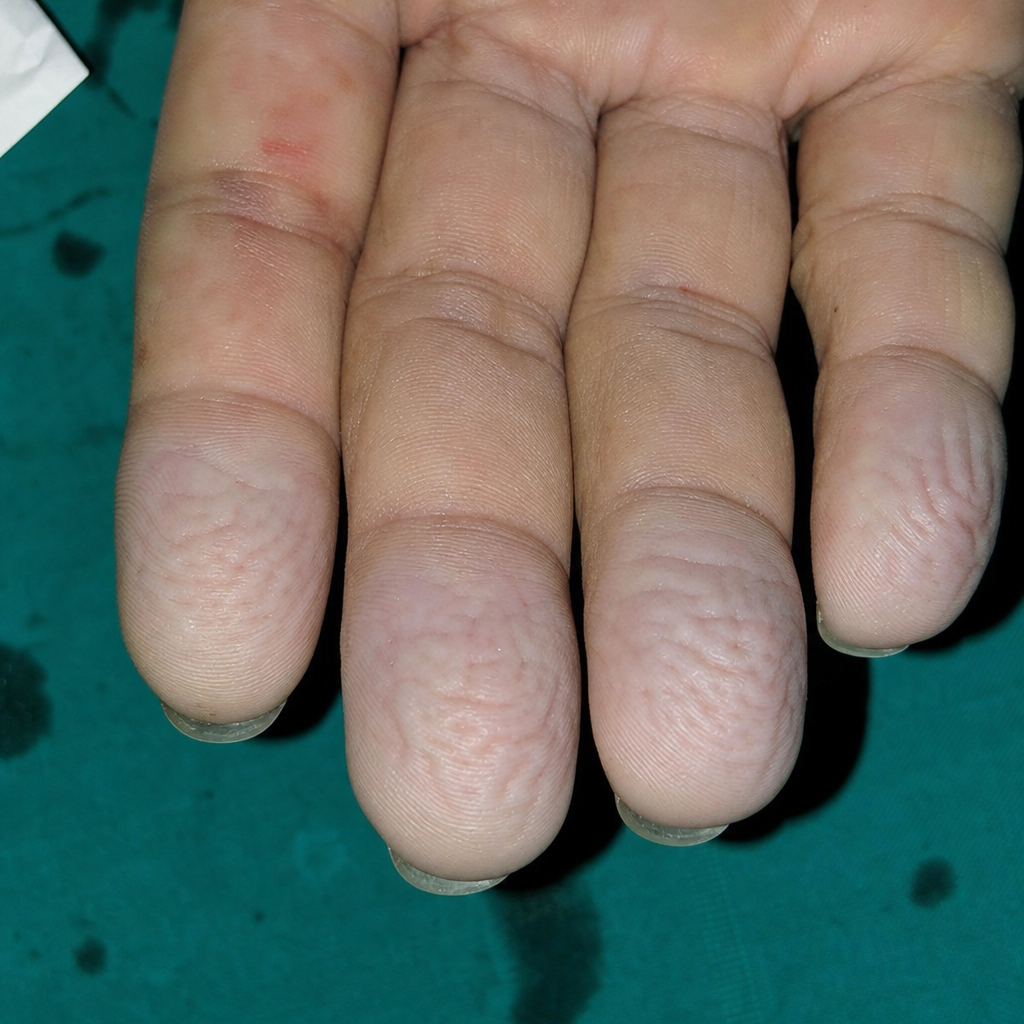
A middle-aged male body was found hanging from the ceiling. On external examination, engorgement of the penis and glove-and-stocking distribution of hypostasis were noted. Which of the following is true about the signs mentioned?
What is the most common cause of death in drowning?
Explanation: **Explanation:** In forensic pathology, understanding the specific amount of force required to occlude or fracture neck structures is crucial for determining the mechanism of death in hanging or strangulation. **1. Why 18.8 kg is correct:** The **cricoid cartilage** is the only complete cartilaginous ring in the larynx. Due to its structural integrity, it requires the highest amount of pressure among the laryngeal structures to sustain a fracture. Forensic studies (notably by Polson) have established that approximately **18.8 kg** of force is necessary to compress and fracture the cricoid. **2. Analysis of Incorrect Options:** * **9 kg (Option A):** This is the approximate force required to compress the **trachea**. * **14.3 kg (Option B):** This is the force required to fracture the **thyroid cartilage**. The thyroid cartilage is more susceptible to fracture than the cricoid because it is an open shield-like structure rather than a complete ring. * **30 kg (Option D):** This value is significantly higher than the force required for any single laryngeal structure fracture and is not a standard forensic benchmark for these specific cartilages. **3. High-Yield NEET-PG Clinical Pearls:** * **Jugular Veins:** Require only **2 kg** of force to occlude. * **Carotid Arteries:** Require **5 kg** of force to occlude. * **Vertebral Arteries:** Require **30 kg** of force to occlude (this is why death in partial hanging is common, as the carotids are blocked while vertebrals may remain patent). * **Fracture Patterns:** In hanging, the **hyoid bone** is more commonly fractured in older individuals due to calcification. In manual strangulation (throttling), laryngeal fractures (thyroid/cricoid) are more frequent than in hanging.
Explanation: **Explanation:** **Why Carbon Monoxide (CO) Poisoning is the Correct Answer:** In a closed-room fire, **incomplete combustion** of organic materials occurs due to limited oxygen supply. This leads to the production of Carbon Monoxide (CO). CO has an affinity for hemoglobin that is **200–250 times greater than oxygen**, forming **Carboxyhemoglobin (COHb)** [1]. This results in a leftward shift of the oxygen-dissociation curve, leading to tissue hypoxia and death [1]. It is considered the most common cause of immediate death in fire victims before they are actually consumed by flames. **Analysis of Incorrect Options:** * **A. Carbon dioxide poisoning:** While $CO_2$ levels rise in fires, it is a simple asphyxiant. It is far less toxic than CO and rarely the primary cause of death in these scenarios. * **C & D. Cardiac and Respiratory failure:** These are "modes of death" (the physiological end-state) rather than the "primary cause" or mechanism. While CO poisoning eventually leads to cardio-respiratory arrest, the specific toxicological cause is CO. **High-Yield Clinical Pearls for NEET-PG:** * **Cherry Red Discoloration:** A classic post-mortem finding in CO poisoning is the cherry-red color of the skin, mucous membranes, and blood [2]. * **Pugilistic Attitude:** In fire deaths, heat causes coagulation of muscle proteins and contraction, leading to a "boxer-like" pose. This is a post-mortem artifact, not a sign of struggle. * **Soot in Airways:** The presence of soot in the trachea and bronchi indicates the person was **alive** when the fire started (vital reaction). * **Rule of Threes:** CO poisoning often affects the **Globus Pallidus** (bilateral necrosis), which is a characteristic finding on imaging or autopsy.
Explanation: **Explanation:** **1. Why "Mugging" is Correct:** Mugging is a specific form of strangulation where the victim's neck is compressed within the **bend of the elbow** (antecubital fossa). The assailant typically approaches from behind and locks the neck between the forearm and the upper arm. This maneuver often results in **"Carotid Sleepers,"** where pressure on the carotid sinuses leads to rapid loss of consciousness due to cerebral ischemia rather than simple airway obstruction. **2. Analysis of Incorrect Options:** * **Garroting (B):** This involves the use of a ligature (like a wire, cord, or iron collar) to tighten around the neck from behind. It often involves a twisting mechanism using a lever. * **Bansdola (C):** A form of strangulation unique to the Indian subcontinent where the neck is compressed between two strong wooden sticks or bamboos (usually one in front and one behind), which are then tied together at both ends. * **Throttling (D):** Also known as manual strangulation, this is the compression of the neck using human hands or fingers. Characteristic findings include crescentic fingernail abrasions and bruising on the neck. **3. NEET-PG High-Yield Pearls:** * **Hyoid Bone Fracture:** Most common in **Throttling** (manual strangulation) due to direct inward pressure; rare in hanging. * **Fracture of Thyroid Cartilage:** More common in strangulation than in hanging. * **Fatal Period:** Death in strangulation is usually rapid (within 3–5 minutes). * **Post-mortem finding:** In mugging, there may be minimal external bruising because the soft tissues of the elbow bend cushion the impact, making internal dissection crucial for diagnosis.
Explanation: **Explanation:** **Paltauf’s haemorrhages** are a pathognomonic finding in cases of **drowning**. These are subpleural ecchymoses (petechiae) that appear as large, faint, reddish-blue patches on the surface of the lungs, most commonly on the lower lobes and interlobar fissures. They occur due to the rupture of alveolar walls and subpleural capillaries caused by the increased intrapulmonary pressure and violent respiratory efforts during the "struggle phase" of drowning. **Analysis of Incorrect Options:** * **A. Dribbling of saliva:** This is a classic sign of **Antemortem Hanging**. It occurs due to the stimulation of salivary glands by the pressure of the ligature. * **B. Cherry red discolouration:** This is characteristic of **Carbon Monoxide (CO) poisoning**, caused by the formation of carboxyhemoglobin. It can also be seen in cyanide poisoning and exposure to extreme cold. * **C. Pugilistic attitude:** This is a "fencing" posture seen in **bodies recovered from fire (burns)**. It is caused by the heat-induced coagulation and contraction of flexor muscles, not a vital reaction. **NEET-PG High-Yield Pearls for Drowning:** * **Froth:** Fine, white, leathery, tenacious, and persistent froth at the mouth/nose is a sure sign of antemortem drowning. * **Cadaveric Spasm:** If weeds, mud, or sand are found grasped in the hand, it is a diagnostic sign of antemortem drowning. * **Diatom Test:** Detection of diatoms in the bone marrow (femur/sternum) is the "gold standard" for diagnosing antemortem drowning in putrefied bodies. * **Emphysema Aquosum:** Lungs are heavy, bulky, and "doughy," meeting in the midline and indenting when pressed.
Explanation: **Explanation:** **Burking** is the correct answer as it specifically describes a combination of **homicidal smothering** and **traumatic asphyxia**. The term originates from the 19th-century serial killers Burke and Hare. In this method, the assailant sits on the victim's chest (causing traumatic asphyxia by restricting respiratory movement) while simultaneously closing the nose and mouth with the hands (causing smothering). This dual mechanism leads to rapid death with minimal external signs of violence, making it a classic forensic topic. **Analysis of Incorrect Options:** * **A. Choking:** This is a form of asphyxia caused by the internal obstruction of the air passages (usually at the level of the pharynx or larynx) by a foreign body. It is typically accidental. * **B. Gagging:** This involves pushing a cloth or object into the mouth to prevent vocalization. While it can lead to smothering if the tongue is pushed back or the nose is obstructed, it does not involve the traumatic asphyxia component (chest compression) seen in Burking. * **C. Overlying:** This is a form of accidental traumatic asphyxia, usually occurring when a heavy adult rolls over an infant in bed. It lacks the homicidal smothering element. **High-Yield Clinical Pearls for NEET-PG:** * **Burke’s Punch:** A forensic sign where the victim may show a bruise on the back due to being pressed against a hard surface during the act. * **Post-mortem findings:** In Burking, external signs are often remarkably absent (the "clean" kill), though internal signs of asphyxia (Petechial hemorrhages, visceral congestion) are present. * **Traumatic Asphyxia (Perthes Syndrome):** Characterized by the classic triad of facial congestion, subconjunctival hemorrhage, and petechiae on the upper chest/neck.
Explanation: **Explanation:** The classification of hanging is based on two primary factors: the position of the knot and the degree of suspension. **1. Why "Typical" is correct:** In forensic medicine, **Typical Hanging** is defined specifically by the position of the knot. It occurs when the ligature knot is placed centrally over the **occiput** (back of the head). This position allows for maximum upward and backward pull, leading to the efficient occlusion of airways and blood vessels. **2. Why other options are incorrect:** * **Atypical Hanging (B):** This refers to any hanging where the knot is at any position **other than the occiput**. Common sites include the side of the neck (mastoid area) or under the chin (submental). * **Partial Hanging (C):** This classification is based on the body's contact with the ground. In partial hanging, some part of the body (toes, knees, or buttocks) touches the floor. The weight of the head and torso provides the constricting force. * **Incomplete Hanging (D):** This is often used synonymously with partial hanging; it implies the body is not fully suspended in the air. **NEET-PG High-Yield Pearls:** * **Most common cause of death in hanging:** Asphyxia and Cerebral Ischemia (combined). * **Ligature Mark:** In hanging, the mark is usually **non-continuous, high up in the neck, and oblique** (rising towards the knot). * **Fracture:** The **Hyoid bone** fracture is more common in strangulation, whereas the **fracture of the cervical vertebrae (C2-C3)** is characteristic of judicial hanging (long drop). * **Saliva:** Dribbling of saliva from the angle of the mouth opposite to the knot is a **sure sign of ante-mortem hanging**.
Explanation: In hanging, death is rarely due to a single isolated factor; rather, it is the result of a combination of physiological mechanisms triggered by the pressure of the ligature on the neck structures. **Explanation of the Correct Answer:** The correct answer is **D (All of the above)** because the constriction of the neck leads to multiple simultaneous lethal processes: 1. **Venous Congestion:** Obstruction of the jugular veins (requiring only ~2 kg of pressure) prevents blood from leaving the brain, leading to increased intracranial pressure and loss of consciousness. 2. **Asphyxia:** Compression of the upper airways (trachea/larynx) and the base of the tongue against the posterior pharyngeal wall leads to mechanical respiratory failure. 3. **Cerebral Anemia:** Compression of the carotid arteries (~5 kg pressure) or vertebral arteries (~20 kg pressure) cuts off the oxygenated blood supply to the brain, causing rapid irreversible neuronal damage. **Why individual options are insufficient:** While A, B, and C are all primary mechanisms, selecting only one would be incomplete. In most cases of hanging, these factors act in concert. Additionally, **Reflex Vagal Inhibition** (cardiac arrest due to pressure on the carotid sinus) can also cause sudden death. **High-Yield Clinical Pearls for NEET-PG:** * **Most common cause of death:** Asphyxia and Cerebral Ischemia (combined). * **Fracture of Hyoid Bone:** More common in manual strangulation than hanging; in hanging, it typically occurs in victims >40 years due to calcification. * **Judicial Hanging:** The cause of death is **Cervical Fracture-Dislocation** (typically at C2-C3 or C3-C4 level), known as the Hangman’s Fracture. * **Ligature Mark:** In hanging, it is usually oblique, non-continuous, and situated above the thyroid cartilage.
Explanation: In drowning, the physiological changes depend on the tonicity of the water relative to the blood. **1. Why Hyperkalemia is the Correct Answer:** Hyperkalemia is a hallmark of **Fresh Water Drowning**, not salt water. In fresh water drowning, the water is hypotonic. It is rapidly absorbed into the circulation (hemodilution), causing massive hemolysis of red blood cells. This rupture of RBCs releases potassium into the plasma, leading to hyperkalemia, which often results in ventricular fibrillation and death within 4–5 minutes. **2. Explanation of Incorrect Options (Features of Salt Water Drowning):** * **Progressive Hypovolemia:** Salt water is hypertonic (3.5% salt). When inhaled, it draws fluid from the pulmonary capillaries into the alveoli via osmosis. This shift of fluid out of the vascular compartment leads to a decrease in total blood volume (hypovolemia) and hemoconcentration. * **Acute Pulmonary Edema:** The osmotic pull of salt water creates rapid-onset, protein-rich pulmonary edema. The lungs in salt water drowning are typically heavy, "soggy," and do not recoil (Edematous aquosus). * **Circulatory Collapse:** The combination of severe hypovolemia and increased blood viscosity puts immense strain on the heart, leading to cardiac failure and circulatory collapse, usually within 8–12 minutes. **High-Yield Clinical Pearls for NEET-PG:** * **Fresh Water:** Hypotonic → Hemodilution → Hemolysis → **Hyperkalemia** → Ventricular Fibrillation (Faster death). * **Salt Water:** Hypertonic → Hemoconcentration → **Hypovolemia** → Pulmonary Edema → Cardiac Failure (Slower death). * **Paltauf’s Hemorrhages:** Subpleural ecchymoses found in both types of drowning due to alveolar rupture. * **Gettler Test:** Historically used to compare chloride content in the heart chambers (now largely obsolete but still asked in exams).
Explanation: **Explanation:** The correct answer is **D. None of the above**. This question tests the ability to distinguish between specific diagnostic signs and non-specific findings in forensic pathology. **1. Why the correct answer is right:** The findings mentioned—**engorgement of the penis** (often accompanied by ejaculation) and **glove-and-stocking hypostasis**—are classic features of hanging, but they are **non-specific**. * **Glove-and-stocking hypostasis:** This occurs due to gravity when a body remains suspended vertically for a prolonged period. Blood pools in the distal extremities (hands and feet). * **Penile engorgement:** This is a purely passive phenomenon caused by gravity-induced congestion of the pelvic vessels and pressure on the spinal cord; it is *not* an indicator of sexual arousal or perversion. Because these signs can occur in *any* case of vertical suspension (whether suicidal hanging or post-mortem suspension), they do not confirm the manner of death or the specific diagnosis of "sexual asphyxia." **2. Why the incorrect options are wrong:** * **Option A:** Sexual asphyxia (autoerotic death) requires specific scene evidence (e.g., pornography, cross-dressing, or complex self-release mechanisms). Penile engorgement alone is a gravitational artifact, not a sign of paraphilia. * **Option B:** While these signs are seen in hanging, they are not *diagnostic* of death *due to* hanging. They only suggest the body was in a vertical position after death. * **Option C:** These signs do not differentiate between ante-mortem hanging and post-mortem suspension. **NEET-PG High-Yield Pearls:** * **Specific sign of Hanging:** The only sure sign of ante-mortem hanging is the presence of **intravital reactions** in the ligature mark (e.g., ecchymosis, vesicles). * **La Facie Sympathique:** A rare sign in hanging where one eye remains open and the pupil dilated due to cervical sympathetic chain compression. * **Simon’s Sign:** Hemorrhages in the anterior longitudinal ligament of the lumbar spine (seen in hanging). * **Glove-and-stocking distribution** is also seen in cases of prolonged immersion in water (immersion foot).
Explanation: **Explanation:** **1. Why Hypoxemia is the Correct Answer:** The fundamental pathophysiology of drowning, regardless of whether it is freshwater or saltwater, is the **interruption of gas exchange** due to the submersion of the airway in liquid. This leads to **Hypoxemia** (low arterial oxygen tension). Whether the mechanism is laryngospasm (Dry Drowning) or aspiration of fluid into the alveoli (Wet Drowning), the end result is a ventilation-perfusion mismatch, shunting, and surfactant washout. This profound lack of oxygen leads to irreversible cerebral hypoxia and cardiac arrest, making it the primary and most common cause of death. **2. Analysis of Incorrect Options:** * **Hypocapnia (A):** In drowning, the body typically experiences *Hypercapnia* (elevated $CO_2$) due to the inability to exhale $CO_2$, leading to respiratory acidosis. Hypocapnia (low $CO_2$) is not a feature of drowning. * **Hypothermia (C):** While hypothermia can occur in cold-water immersion and may contribute to death (or occasionally provide a protective effect for the brain), it is not the *most common* cause. Most drowning deaths occur before significant core temperature drops. * **Hypoglycemia (D):** Blood glucose levels have no direct role in the primary pathophysiology of drowning. **3. High-Yield Clinical Pearls for NEET-PG:** * **Freshwater Drowning:** Leads to hemodilution, hyperkalemia, and hemolysis (due to surfactant destruction). * **Saltwater Drowning:** Leads to hemoconcentration and pulmonary edema (due to the hypertonic nature of the water). * **Dry Drowning:** Occurs in 10-15% of cases where intense laryngospasm prevents water from entering the lungs; death is due to asphyxia. * **Post-mortem Sign:** **Paltauf’s Hemorrhages** (subpleural ecchymoses) are a classic finding in drowning victims. * **Diagnostic Gold Standard:** The presence of **Diatoms** in the bone marrow (femur/sternum) is the most reliable medico-legal evidence of ante-mortem drowning.
Pathophysiology of Asphyxia
Practice Questions
Hanging
Practice Questions
Strangulation
Practice Questions
Suffocation
Practice Questions
Traumatic Asphyxia
Practice Questions
Drowning
Practice Questions
Choking
Practice Questions
Chemical Asphyxiants
Practice Questions
Positional Asphyxia
Practice Questions
Autoerotic Asphyxia
Practice Questions
Pediatric Asphyxia
Practice Questions
Postmortem Findings in Asphyxia
Practice Questions
Get full access to all questions, explanations, and performance tracking.
Start For Free