What term describes death caused by exclusion of air from the lungs by means other than compression at the neck and drowning?
Ante-mortem blisters differ from post-mortem blisters by which of the following characteristics?
Which of the following is most suggestive of ante-mortem hanging?
In which type of hanging is the individual fully suspended and their feet are not touching the ground?
Blockage of the internal upper respiratory tract by some solid or semisolid material refers to which of the following?
What are diatoms?
Which of the following is not typically seen in drowning?
During the autopsy of suicidal hanging, which of the following findings is unlikely to be found?
Le-facies expression is due to what cause?
Petechial hemorrhages in drowning are typically seen in which location?
Explanation: **Explanation:** **1. Why Suffocation is Correct:** Suffocation is a broad category of asphyxial death caused by the deprivation of oxygen due to a lack of breathable air or the mechanical obstruction of air passages, **excluding** external pressure on the neck (hanging/strangulation) or fluid immersion (drowning). It occurs through mechanisms such as: * **Smothering:** Closing of external respiratory orifices (nose and mouth). * **Choking:** Internal obstruction of the airway (e.g., a foreign body). * **Environmental:** Depletion of oxygen in an enclosed space. * **Burking:** A combination of smothering and traumatic asphyxia. **2. Why Other Options are Incorrect:** * **Strangulation:** This specifically refers to asphyxia caused by **compression of the neck** by a ligature or manual force (throttling), which the question explicitly excludes. * **Traumatic Asphyxia:** This is a specific subtype caused by external **compression of the chest and abdomen** (e.g., a stampede or cave-in), preventing respiratory movements. While it is a form of suffocation, it is a specific mechanism rather than the general term for all non-neck/non-drowning asphyxia. * **Sexual Asphyxia (Auto-erotic):** This is a form of accidental hypoxia induced to enhance sexual arousal, usually involving hanging or chemical means. It is a circumstantial classification rather than a general definition. **3. NEET-PG High-Yield Pearls:** * **Burking:** Named after William Burke; involves sitting on the chest (traumatic asphyxia) while closing the nose and mouth (smothering). * **Cafe Coronary:** Sudden death while eating due to a large bolus of food choking the glottis; often mistaken for a myocardial infarction. * **Post-mortem finding:** Tardieu spots (petechial hemorrhages) are common in suffocation but are non-specific. * **Plastic Bag Suffocation:** A form of environmental suffocation where no struggle marks are typically found.
Explanation: ### Explanation The differentiation between ante-mortem and post-mortem blisters is a high-yield topic in forensic pathology, primarily used to determine if a victim was alive at the time of exposure to heat or irritants. **Why Option A is Correct:** Ante-mortem blisters are a result of a **vital reaction**. When a person is alive, the inflammatory response causes plasma to leak into the vesicle. Consequently, the blister fluid is rich in **albumin and chlorides**. In contrast, post-mortem blisters (putrefactive or heat-induced) are formed by the mechanical expansion of gases or steam and contain little to no protein or electrolytes. **Analysis of Incorrect Options:** * **Option B (Presence of gas):** This is a characteristic of **post-mortem (putrefactive) blisters**. As decomposition progresses, gases like hydrogen sulfide collect under the epidermis. * **Option C (Dry, hard surface):** In ante-mortem blisters, the base is typically **red, raw, and moist** due to active congestion. A dry, parchment-like floor is more characteristic of post-mortem changes where no vital circulation exists. * **Option D (Absence of hyperemia):** This is incorrect because **hyperemia (a red line of demarcation)** is the hallmark of an ante-mortem injury. Its absence strongly suggests the blister was formed after death. **NEET-PG High-Yield Pearls:** 1. **Vital Reaction:** The presence of a "Red Line of Demarcation" is the most reliable gross sign of an ante-mortem burn. 2. **Chemical Test:** To differentiate, heat the blister fluid in a test tube; ante-mortem fluid will coagulate (due to high protein/albumin), while post-mortem fluid will not. 3. **Microscopy:** Look for polymorphonuclear leucocytes (PMNs) in the base of the blister to confirm an ante-mortem origin.
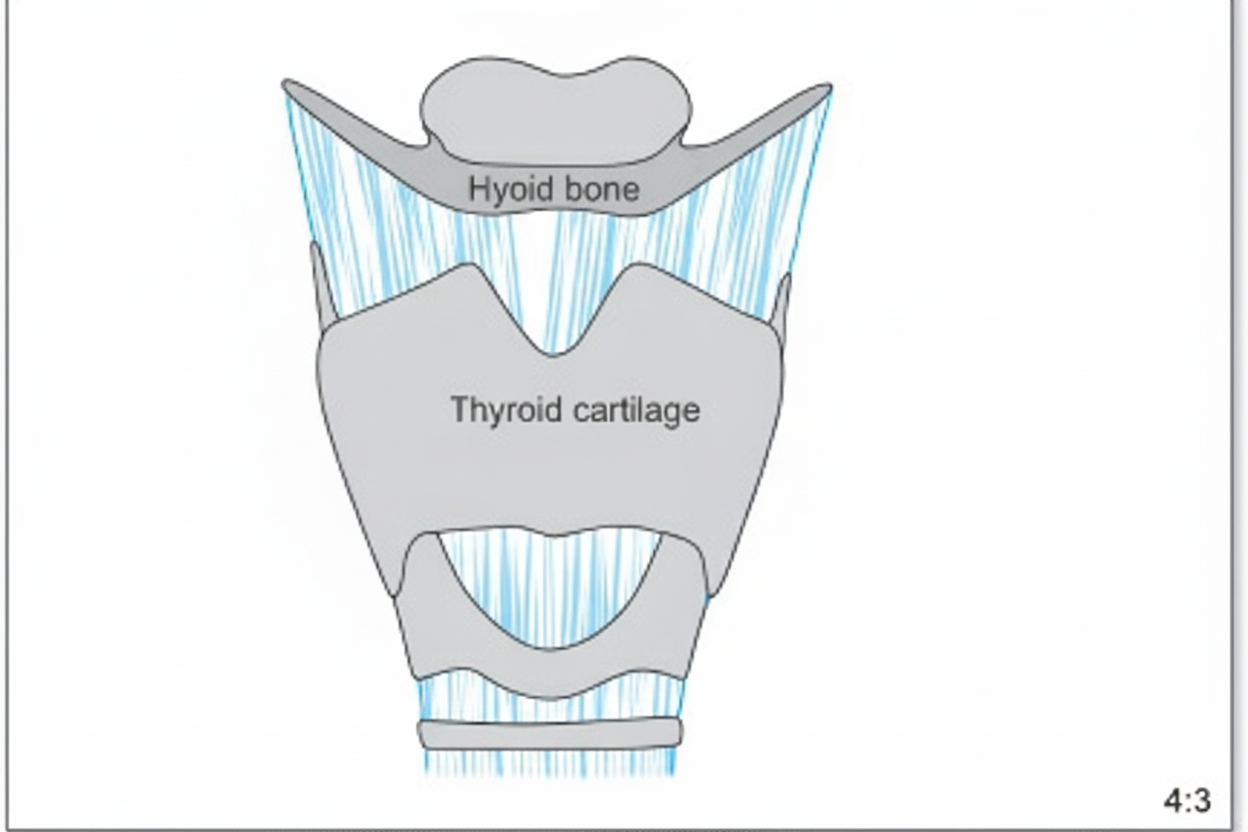
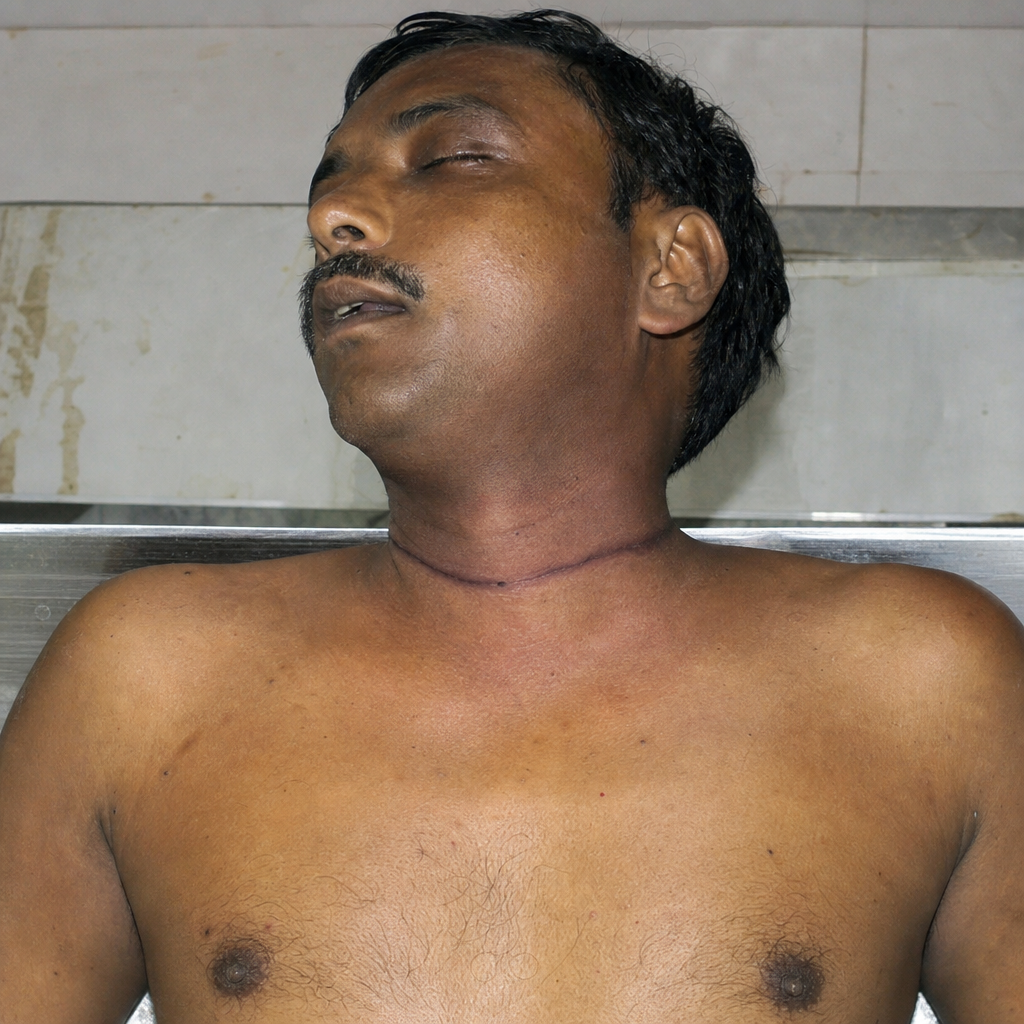
Explanation: **Explanation:** **Salivary dribbling** is the most reliable and pathognomonic sign of ante-mortem hanging. This occurs because hanging is a vital process; the pressure of the ligature material on the salivary glands (usually the submaxillary or parotid) stimulates secretion. Since the individual is suspended and unconscious, the saliva cannot be swallowed and runs down from the corner of the mouth, often drying and leaving a visible stain on the chest or clothes. This cannot occur post-mortem as secretion is an active physiological process. **Why other options are incorrect:** * **Ligature marks (C):** These are not definitive signs of ante-mortem hanging. A ligature mark can be produced post-mortem if a body is suspended shortly after death (e.g., to simulate suicide). * **Congestion of lungs (B) and Petechial hemorrhages (D):** These are general features of asphyxia. They are non-specific and can be found in various modes of death, including strangulation, smothering, or even certain natural deaths (e.g., heart failure). Petechial hemorrhages (Tardieu spots) are also common in decomposed bodies due to gravity. **High-Yield Clinical Pearls for NEET-PG:** * **Ligature Mark Position:** In hanging, the mark is typically high up in the neck (above the thyroid cartilage), oblique, and non-continuous (interrupted at the knot). * **Fracture:** The **Hyoid bone** fracture is rare in hanging (occurs in <15-20%, usually in the elderly), whereas it is much more common in manual strangulation. * **Fatal Period:** Death usually occurs within 3–5 minutes in complete hanging. * **Post-mortem Lividity:** In cases of prolonged suspension, "Glove and Stocking" distribution of hypostasis is seen in the extremities.
Explanation: **Explanation:** The classification of hanging is primarily based on the degree of suspension and the motive. 1. **Why "Complete Hanging" is correct:** In **Complete Hanging**, the body is fully suspended such that no part of the body touches the ground. The entire weight of the body acts as the constricting force around the neck. This is a crucial distinction because even a fraction of the body weight (as little as 2 kg for the jugular veins or 5 kg for the carotid arteries) is sufficient to cause death by obstructing cerebral blood flow. 2. **Why other options are incorrect:** * **Partial Hanging (A):** In this type, the body is only partially suspended. Parts of the body (feet, knees, or even the buttocks) remain in contact with the ground. It is important to note that death can still occur easily in partial hanging due to venous and arterial occlusion. * **Homicidal (C) and Suicidal (D) Hanging:** These terms refer to the **manner of death** (legal classification) rather than the physical degree of suspension. While most suicidal hangings are complete, they can be partial; conversely, homicidal hanging is extremely rare and usually involves a victim who is unconscious or physically incapacitated. **High-Yield Clinical Pearls for NEET-PG:** * **Ligature Mark:** In hanging, the mark is typically **non-continuous, oblique, and placed high in the neck** (above the thyroid cartilage), reaching a maximum height at the knot (suspension point). * **Fracture:** The **Hyoid bone** fracture is more common in victims above 40 years of age (due to calcification) and is usually an inward compression fracture. * **Cause of Death:** The most common cause of death in hanging is **Asphyxia** combined with **Cerebral Anoxia** (due to occlusion of neck vessels). * **Post-mortem Lividity:** In complete hanging, lividity is typically found in the lower limbs and hands (Glove and Stocking distribution) if the body remains suspended for several hours.
Explanation: **Explanation:** **Choking** is defined as a form of asphyxia caused by the mechanical obstruction of the **internal air passages** (larynx, trachea, or bronchi) by a solid or semisolid foreign body. Common materials include food boluses, coins, marbles, or dentures. In adults, this often occurs due to the "Cafe Coronary" syndrome, where a large piece of poorly chewed meat obstructs the airway, often mistaken for a heart attack. **Analysis of Incorrect Options:** * **Gagging (Option A):** This is a specific subtype of choking where the obstruction is limited to the **pharynx**. It typically involves a cloth or wad of paper pushed into the mouth, obstructing the posterior pharyngeal wall. * **Smothering (Option B):** This refers to the mechanical occlusion of the **external respiratory orifices** (mouth and nose) by hands, cloth, or plastic bags. It is an external obstruction, whereas choking is internal. * **Traumatic Asphyxia (Option D):** Also known as Perthes syndrome, this occurs due to **external compression of the chest and abdomen** by a heavy weight, preventing respiratory movements. It is characterized by a "masque ecchymotique" (intense cyanosis and petechiae on the face and neck). **High-Yield Pearls for NEET-PG:** * **Cafe Coronary:** Sudden death during a meal due to choking; often associated with alcohol consumption which suppresses the gag reflex. * **Heimlich Maneuver:** The emergency treatment of choice for a conscious choking victim. * **Post-mortem finding:** In choking, the foreign body must be demonstrated at autopsy. If the object is small, it may move deeper into the bronchi (usually the right main bronchus due to its vertical orientation).
Explanation: **Explanation:** **Diatoms** are microscopic, unicellular **algae** (Option A) characterized by a unique, indestructible cell wall made of silica (hydrated silicon dioxide), known as a frustule. In forensic medicine, they are the "gold standard" biological markers for diagnosing **drowning**. When a person drowns in a body of water containing diatoms, the water enters the lungs, and the diatoms pass through the alveolar-capillary membrane into the systemic circulation. Because of their acid-resistant silica shells, they can be recovered from closed organs like the **bone marrow** (most reliable), liver, or spleen during autopsy. **Why other options are incorrect:** * **B. Parasites:** Parasites are complex organisms (protozoa or helminths) that live on or in a host. They do not possess silica shells and are not used as indicators of drowning. * **C. Bacteria:** Bacteria are prokaryotic microorganisms. While they may be present in water, they lack the structural durability required to survive the acid digestion process used in forensic labs to extract diatoms. * **D. Fungi:** Fungi are eukaryotic organisms (yeasts/molds) that play no role in the "Diatom Test" for drowning. **Clinical Pearls for NEET-PG:** * **Diatom Test:** Positive only in **antemortem drowning**. If a dead body is thrown into water (postmortem submersion), diatoms cannot reach the systemic circulation/bone marrow because the heart is not pumping. * **Acid Digestion Method:** Strong nitric acid is used to destroy soft tissue, leaving the silica shells of diatoms intact for microscopic examination. * **Bone Marrow:** The most significant site for sampling because it is protected from external contamination. * **Limitation:** A "false positive" can occur if the person lived in a highly polluted area or consumed diatoms in food/water during their lifetime.
Explanation: **Explanation:** In cases of drowning, the pupils are typically found in a state of **mydriasis (dilation)** rather than miosis. This occurs due to profound cerebral hypoxia and the sympathetic surge associated with the "struggle phase" of drowning. Post-mortem, the pupils may also appear dilated as a result of muscular relaxation. Therefore, **Miosis (Option A)** is the correct answer as it is not a feature of drowning. **Analysis of Incorrect Options:** * **Wet heavy lungs (Option B):** This is a hallmark of "Wet Drowning." In freshwater drowning, hemodilution and hypervolemia occur, while in saltwater drowning, pulmonary edema occurs. Both lead to increased lung weight (often >1000g) and a "doughy" consistency (Edema aquosum). * **Water and weeds (Option C):** The presence of water, silt, or aquatic weeds in the distal air passages and the stomach is a strong sign of **antemortem drowning**, indicating that the individual was alive and actively swallowing/aspirating while submerged. * **Froth from mouth (Option D):** Fine, white, leathery, and persistent froth (lather) at the mouth and nostrils is a classic sign. It is formed by the churning of water, air, and mucus in the air passages during terminal gasping. **High-Yield NEET-PG Pearls:** * **Paltauf’s Hemorrhages:** Subpleural ecchymoses (larger than Tardieu spots) found in drowning due to alveolar rupture. * **Emphysema Aquosum:** Over-distended lungs that meet in the midline and do not collapse when the chest is opened. * **Gettler Test:** Compares chloride content in the right and left heart chambers (now largely obsolete but historically significant). * **Diatom Test:** The most reliable laboratory evidence of antemortem drowning; diatoms must be found in closed organs like the bone marrow or brain to be diagnostic.
Explanation: **Explanation:** In cases of **suicidal hanging**, the mechanism of death is usually the compression of neck structures by the body's own weight, rather than a violent drop. **Why Option D is the correct answer:** Ecchymosis (bruising) and bleeding in the floor or edges of the ligature mark are **unlikely** in hanging. This is because the pressure of the ligature is so intense and continuous that it compresses the local capillaries and prevents blood from entering the area. The skin becomes dry, pale, and parchment-like (leathery). In contrast, these findings are more characteristic of **strangulation**, where the application of force is often irregular, violent, or involves a struggle. **Analysis of Incorrect Options:** * **A. Presence of two ligature marks:** This can occur if the ligature was wound around the neck twice before being tied, which is a known variation in suicidal hanging. * **B. Disruption of vertebral column:** While rare in typical suicidal hanging, it can occur in "Judicial Hanging" or cases with a long drop where the force is sufficient to cause cervical fractures (e.g., Hangman’s fracture). * **C. Gap in the skin mark:** This is a **classic feature** of hanging. The ligature mark is non-continuous because the material rises toward the knot (suspension point), leaving a gap where the rope loses contact with the skin. **High-Yield Clinical Pearls for NEET-PG:** * **Ligature Mark:** In hanging, it is typically **oblique, non-continuous, and situated above the thyroid cartilage**. In strangulation, it is **transverse, continuous, and below the thyroid**. * **Saliva Dribbling:** The most reliable **antemortem sign** of hanging. * **Fractures:** The **Hyoid bone** fracture (inward compression) is more common in manual strangulation, whereas **Thyroid cartilage** fractures are more common in hanging in older individuals.
Explanation: **Explanation:** **Le-facies Sympathica** (also known as the "facies sympathetica") is a classic finding in cases of **Hanging**. It refers to a specific facial expression characterized by one eye being open with a dilated pupil and the other eye being closed with a constricted pupil. **Why Hanging is correct:** This phenomenon occurs due to the **unilateral compression or irritation of the cervical sympathetic chain** by the ligature material. When the sympathetic nerves on one side are stimulated, it leads to ipsilateral mydriasis (dilated pupil), widening of the palpebral fissure (staring eye), and occasionally localized sweating. This asymmetrical facial appearance is pathognomonic of hanging where the knot or pressure is unevenly distributed. **Why other options are incorrect:** * **Strangulation & Throttling:** These typically present with features of intense venous congestion, such as a "cyanosed and bloated" face, petechial hemorrhages (Tardieu spots), and a protruding tongue. The pressure is usually circumferential and low in the neck, making isolated sympathetic chain irritation less likely to produce this specific asymmetrical sign. * **Cafe Coronary:** This is sudden death due to upper airway obstruction by a large bolus of food. The mechanism is a vagal inhibitory reflex or asphyxia, not sympathetic nerve irritation. **High-Yield Clinical Pearls for NEET-PG:** * **La Face Grippee:** Another term used in forensic medicine to describe the anxious, pinched, or "gripped" facial expression seen in some hanging victims. * **Saliva Trickle:** A sure sign of **antemortem hanging** (dribbling of saliva from the angle of the mouth opposite the knot). * **Ligature Mark in Hanging:** Usually oblique, non-continuous, and situated above the thyroid cartilage (high in the neck). * **Ligature Mark in Strangulation:** Usually horizontal, continuous, and situated below the thyroid cartilage.
Explanation: **Explanation:** In cases of drowning, petechial hemorrhages (Tardieu spots) are most commonly observed in the **subpleural tissues of the lung**. **Why Option A is Correct:** Petechial hemorrhages in drowning occur due to a combination of increased endo-capillary pressure and hypoxia. During the struggle for breath, the victim makes forceful respiratory efforts against a closed or fluid-filled airway. This creates significant negative intrathoracic pressure, leading to the rupture of delicate subpleural capillaries. These are typically found on the surfaces of the lungs, especially in the interlobar fissures. **Why Other Options are Incorrect:** * **B, C, and D:** While the trachea, bronchioles, and alveoli are involved in the drowning process (often filled with fine, leathery froth or inhaled water), they are not the primary sites for the formation of distinct petechial hemorrhages. The mechanical stress required to rupture capillaries and produce visible "spots" is most effectively exerted on the visceral pleura rather than the internal mucosal linings of the respiratory tree. **High-Yield NEET-PG Pearls:** * **Tardieu Spots:** Classically associated with mechanical asphyxia (like hanging or strangulation), but when seen in drowning, they are fewer in number and specifically subpleural. * **Paltauf’s Hemorrhages:** These are larger, subpleural ecchymoses (larger than petechiae) found in drowning victims, caused by the rupture of alveolar walls. * **Emphysema Aquosum:** The characteristic finding where lungs are heavy, bulky, and "doughy," meeting in the midline and indenting when pressed. * **Dry Drowning:** Occurs due to laryngeal spasm where no water enters the lungs (approx. 10-15% of cases).
Pathophysiology of Asphyxia
Practice Questions
Hanging
Practice Questions
Strangulation
Practice Questions
Suffocation
Practice Questions
Traumatic Asphyxia
Practice Questions
Drowning
Practice Questions
Choking
Practice Questions
Chemical Asphyxiants
Practice Questions
Positional Asphyxia
Practice Questions
Autoerotic Asphyxia
Practice Questions
Pediatric Asphyxia
Practice Questions
Postmortem Findings in Asphyxia
Practice Questions
Get full access to all questions, explanations, and performance tracking.
Start For Free