Paltauf’s hemorrhage may be seen in which of the following conditions?
A hyoid bone fracture is most commonly seen in which type of fatal neck trauma?
In typical hanging, the knot is usually located at which site?
Pressure upon the chest leading to mechanical fixation of the chest and thereby preventing respiratory movements is seen in which condition?
What is the cause of death in cases of 'diving reflex' induced by cold water immersion?
The Spanish windlass method of execution is also known as?
Repeated advertisement in a newspaper by a medical practitioner is an example of:
What is the definition of 'Cafe coronary'?
When the point of suspension is placed centrally over the occiput, the hanging is called:
What does the term "dry submarine" refer to in the context of custodial injuries?
Explanation: **Explanation:** **Paltauf’s hemorrhages** are a classic autopsy finding diagnostic of **Drowning**. These are sub-pleural ecchymoses (petechiae or larger spots) that appear as pale, bluish-red, or yellowish-grey patches on the surface of the lungs, most commonly seen on the anterior margins and the base. **Why Drowning is Correct:** During the process of drowning, the victim undergoes forceful respiratory efforts against water-clogged air passages. This leads to the over-distension of alveoli and the subsequent rupture of alveolar walls and sub-pleural capillaries. The resulting hemorrhages are larger and more diffuse than the typical "Tardieu spots" seen in other forms of asphyxia. **Why Other Options are Incorrect:** * **Hanging:** While petechial hemorrhages (Tardieu spots) can occur due to increased venous pressure, they are typically found in the conjunctiva or epicardium, not as the specific sub-pleural patches characteristic of Paltauf’s. * **Snake bite:** Deaths here are usually due to neurotoxicity or hemotoxicity (coagulopathy). While systemic bleeding can occur, it does not present as localized sub-pleural Paltauf’s spots. * **Rape:** This is a legal category of assault. While physical trauma or asphyxia (manual strangulation) may occur during the act, Paltauf’s spots are not a feature of sexual assault itself. **High-Yield Clinical Pearls for NEET-PG:** * **Emphysema Aquosum:** The term for the heavy, bulky, and edematous lungs seen in drowning that "pit on pressure" and meet in the midline. * **Diatom Test:** The most reliable laboratory gold standard for diagnosing ante-mortem drowning (especially in putrefied bodies). * **Dry Drowning:** Death occurs due to laryngeal spasm without significant water entering the lungs. * **Difference:** Paltauf’s spots are larger and paler than **Tardieu spots** (which are small, dark, and common in mechanical asphyxia like hanging or throttling).
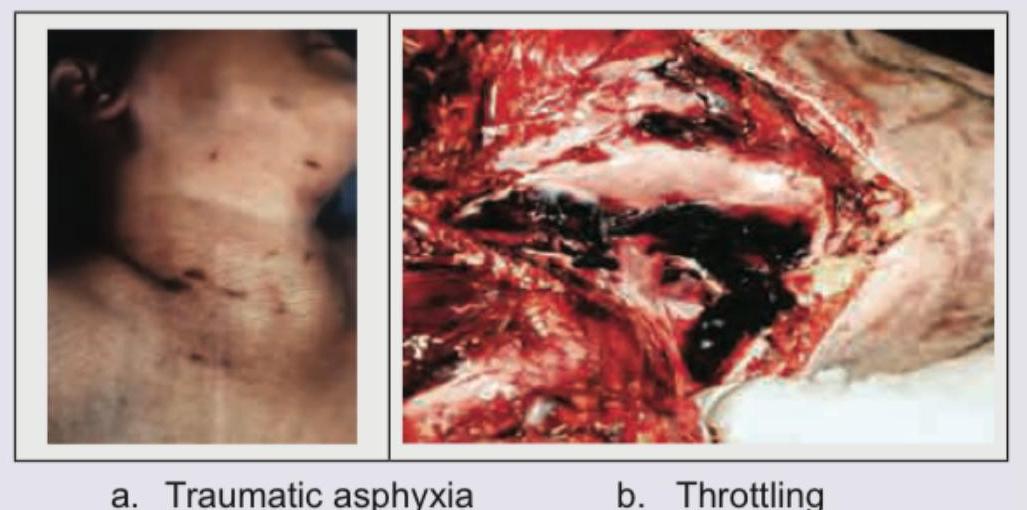
Explanation: **Explanation:** The **hyoid bone** is a U-shaped bone located in the neck that serves as an anchor for the tongue. Its fracture is a hallmark sign of manual pressure applied to the neck. **1. Why Throttling is Correct:** Throttling (manual strangulation) involves the use of hands to compress the neck. This direct, localized, and forceful inward pressure—often applied by the thumb on one side and fingers on the other—specifically targets the greater cornua of the hyoid bone. In individuals over 40 years of age, the hyoid bone becomes ossified and brittle, making it highly susceptible to **inward compression fractures**. **2. Why Other Options are Incorrect:** * **Hanging:** Hyoid fractures are relatively rare in hanging (approx. 15-20%). When they occur, they are usually **abduction (outward) fractures** due to the upward pull of the ligature. * **Strangulation (Ligature):** In ligature strangulation, the pressure is distributed evenly around the neck by a cord. The thyroid cartilage is more commonly fractured than the hyoid bone in these cases. * **Choking:** This is a form of asphyxia caused by an internal obstruction of the airway (e.g., a food bolus) and does not involve external neck trauma. **High-Yield Clinical Pearls for NEET-PG:** * **Fracture Type:** Throttling causes **inward compression** fractures; Hanging causes **abduction** (outward) fractures. * **Age Factor:** Hyoid fracture is rare in young individuals because the bone is cartilaginous and flexible; it is most common in the elderly due to **ankylosis/ossification** of the hyoid-cornua joint. * **Most Common Site:** The junction of the inner two-thirds and outer one-third of the greater cornua. * **Differential:** Post-mortem artifacts (e.g., during autopsy) can mimic fractures; look for **extravasation of blood** at the fracture site to confirm it occurred antemortem.
Explanation: **Explanation:** In Forensic Medicine, hanging is classified based on the position of the knot. **Typical Hanging** is defined specifically as a suspension where the knot is placed in the midline, over the **occiput**. This position is "typical" because it ensures the most symmetrical constriction of the neck vessels and maximum upward pull, leading to rapid unconsciousness. * **Occiput (Correct):** In typical hanging, the knot is at the occiput. This creates a symmetrical inverted ‘V’ shape of the ligature mark, with the lowest point at the thyroid cartilage. * **Mastoid tip / Ear lobe (Incorrect):** If the knot is placed at the mastoid process, behind the ear, or at the angle of the jaw, it is classified as **Atypical Hanging**. This is actually the most common type seen in suicidal cases. * **Mandible (Incorrect):** A knot below the mandible (submental) is also a form of atypical hanging. **High-Yield Clinical Pearls for NEET-PG:** 1. **Definition of Typical Hanging:** Knot at the occiput + body completely suspended (no part touching the ground). 2. **Cause of Death:** The most common cause of death in hanging is **Asphyxia combined with Cerebral Ischemia** (due to compression of jugular veins and carotid arteries). 3. **Ligature Mark:** In hanging, the mark is usually non-continuous, oblique, and situated above the thyroid cartilage (high in the neck). 4. **Fracture:** The **Hyoid bone** fracture is more common in victims above 40 years of age due to calcification, but it is less frequent in hanging than in strangulation.
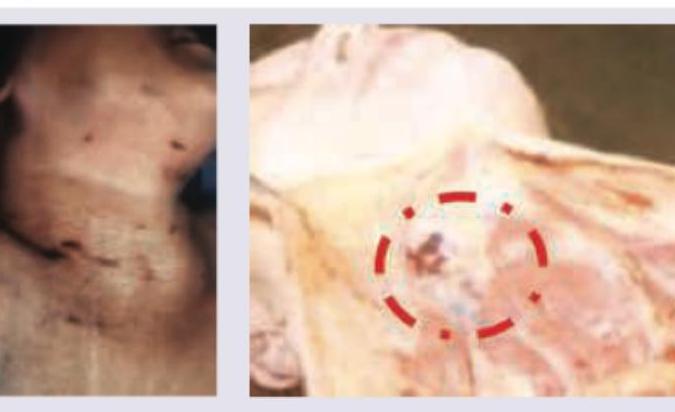
Explanation: **Explanation:** **Traumatic Asphyxia** (also known as Perthe’s syndrome or Masque ecchymotique) occurs when a heavy weight or powerful force compresses the chest or upper abdomen. This leads to the **mechanical fixation of the chest wall**, preventing the expansion of the lungs and diaphragm. Consequently, respiratory movements are arrested despite an open airway. The sudden compression also causes a retrograde surge of blood from the right atrium into the veins of the head and neck (which lack valves), leading to the classic triad of **facial congestion, cyanosis, and subconjunctival hemorrhages.** **Why other options are incorrect:** * **Gagging:** Involves obstruction of the pharynx by a foreign object (like a cloth), preventing air from reaching the larynx. * **Choking:** Refers to the internal obstruction of the air passages (larynx, trachea, or bronchi) by a foreign body. * **Smothering:** A form of environmental asphyxia caused by the external closure of the mouth and nostrils (e.g., by a pillow or hand). **High-Yield Clinical Pearls for NEET-PG:** * **Common Scenarios:** Stampedes (crowd crush), collapse of buildings/mines, or being pinned under a vehicle jack. * **Key Sign:** "Masque ecchymotique"—a deep purple/blue discoloration of the face and neck with a sharp line of demarcation at the level of compression. * **Burking:** A combination of **smothering** (closing mouth/nose) and **traumatic asphyxia** (kneeling on the chest), historically used by Burke and Hare.
Explanation: ### Explanation **Correct Answer: A. Vagal Inhibition** The **Diving Reflex** (or Immersion Syndrome) is a form of sudden death occurring immediately upon immersion in cold water. When cold water strikes the sensitive areas of the nasopharynx and the larynx, it triggers a powerful parasympathetic response mediated by the **Vagus nerve (Cranial Nerve X)**. This leads to profound bradycardia, cardiac arrhythmias, or immediate cardiac arrest. Unlike typical drowning, death occurs almost instantaneously before any water is aspirated into the lungs. **Why other options are incorrect:** * **B. Asphyxia:** While "drowning" is a form of asphyxia, the diving reflex is a **neurogenic** cause of death. In these cases, the heart stops before the respiratory system fails due to lack of oxygen. * **C. Loss of consciousness:** While a person may lose consciousness as the heart stops, it is a *consequence* of the cardiac arrest, not the primary cause of death. **High-Yield Clinical Pearls for NEET-PG:** * **Dry Drowning vs. Immersion Syndrome:** In Immersion Syndrome (Diving Reflex), death is due to vagal inhibition. In "Dry Drowning," death is due to **laryngeal spasm** preventing water from entering the lungs, leading to asphyxia. * **Predisposing Factors:** Sudden immersion in water below 15°C, intoxication (alcohol), or a full stomach increases the risk of vagal inhibition. * **Autopsy Findings:** In cases of vagal inhibition, the lungs appear normal (no froth, no edema), and there are no typical signs of drowning (like Paltauf’s spots or Diatoms), as the victim dies before they can struggle or inhale water. * **Triggers:** Other causes of vagal inhibition in Forensic Medicine include pressure on the carotid sinus (hanging/strangulation), sudden blow to the epigastrium, or instrumental interference (e.g., cervical dilatation).
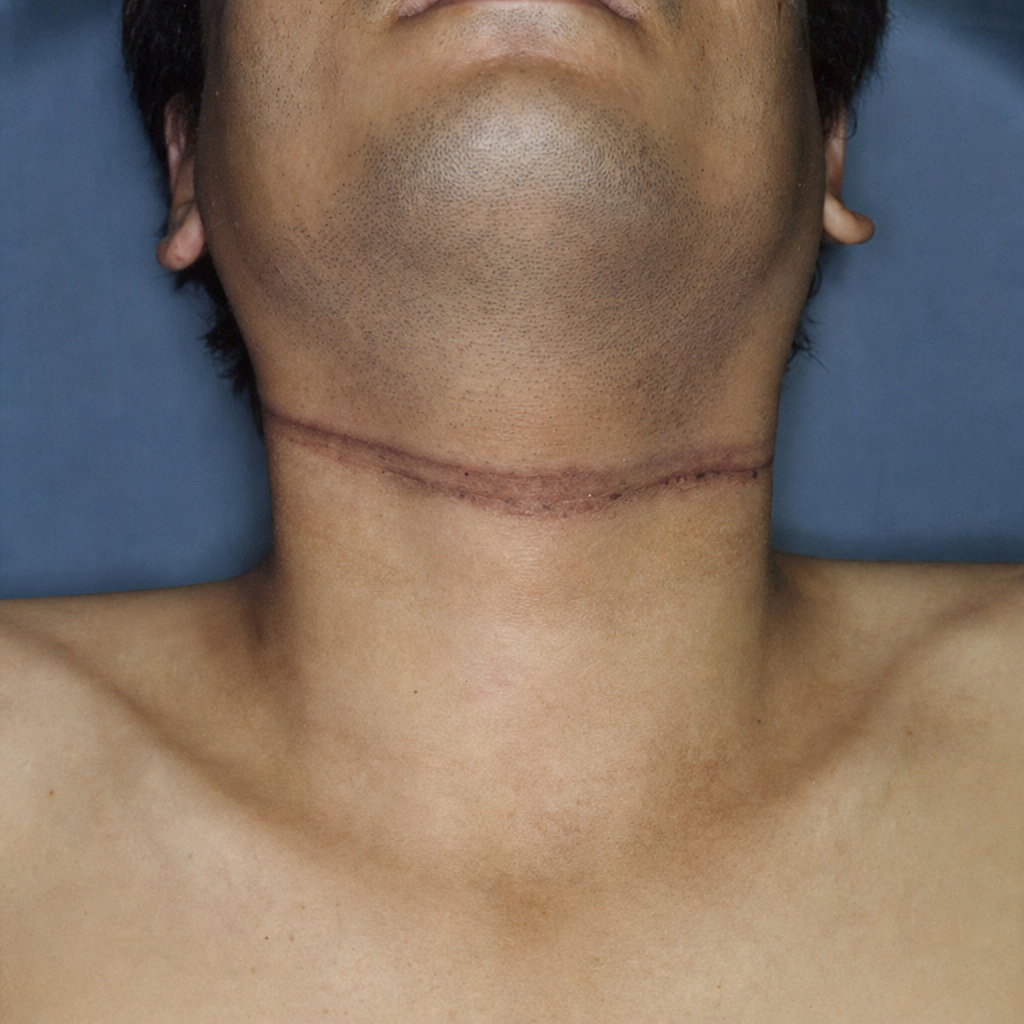
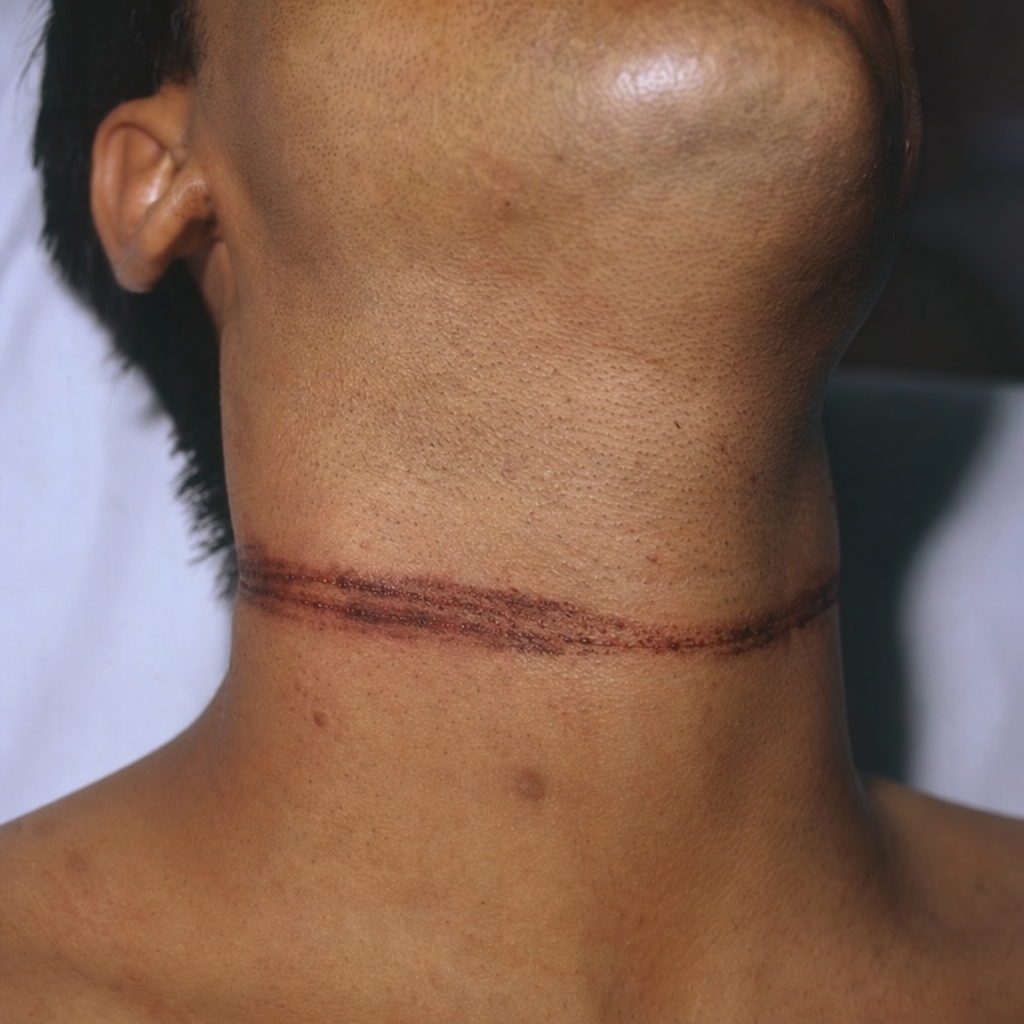
Explanation: **Explanation:** **Garroting** is a form of strangulation where a ligature (such as a wire, cord, or iron collar) is tightened around the neck. The **Spanish windlass method** is a specific variation of garroting where a stick or rod is inserted into the loop of the ligature and twisted. This mechanical leverage allows for rapid, forceful tightening, leading to immediate compression of the neck structures, primarily the carotid arteries and the airway. Historically used as a method of capital punishment, it results in death via cerebral ischemia and asphyxia. **Analysis of Incorrect Options:** * **A. Mugging:** This is a form of strangulation where the victim’s neck is compressed in the crook of the assailant's elbow or forearm (stranglehold). It does not involve a ligature or the windlass mechanism. * **C. Bandsola:** This is a specific type of ligature strangulation practiced in some parts of India, where a wooden stick is used to tighten a ligature, but it is distinct from the classical Spanish windlass execution device. * **D. Choking:** This refers to the obstruction of the air passage from *within* (internal) by a foreign body, bolus of food, or vomitus, rather than external neck compression. **High-Yield Clinical Pearls for NEET-PG:** * **Post-mortem findings:** In garroting, the ligature mark is typically **transverse, continuous, and situated below the thyroid cartilage**, unlike hanging where it is oblique and non-continuous. * **Fractures:** Fractures of the hyoid bone and thyroid cartilage are more common in manual strangulation and garroting than in hanging. * **Burking:** A combination of traumatic asphyxia (chest compression) and smothering (closing nose/mouth), famously used by serial killers Burke and Hare.
Explanation: **Explanation:** **Infamous Conduct (Professional Misconduct)** is defined as any behavior by a medical practitioner that would be reasonably regarded as disgraceful or dishonorable by their professional brethren of good repute and competency. According to the **National Medical Commission (NMC)**—formerly MCI—regulations, self-advertisement is strictly prohibited. Repeatedly advertising in newspapers to solicit patients is considered a violation of medical ethics and falls under the category of "Infamous Conduct." This can lead to disciplinary action, including the removal of the doctor's name from the Medical Register (Professional Death Sentence). **Analysis of Incorrect Options:** * **Ethical Negligence:** This is not a standard legal or forensic term. While advertising is unethical, the specific legal classification for such a breach of the code of conduct is "Infamous Conduct." * **Criminal Negligence:** This occurs when a doctor exhibits a gross lack of competence or reckless disregard for the patient's life (e.g., performing surgery under the influence of alcohol). It involves Section 304A of the IPC. * **Privileged Communication:** This refers to a doctor’s moral and social duty to release confidential patient information to a third party or authority to protect the interest of the community (e.g., reporting a communicable disease or a crime). **High-Yield Clinical Pearls for NEET-PG:** * **The 7 A’s of Infamous Conduct:** **A**dvertising, **A**dultery (with a patient), **A**bortion (illegal), **A**ssociation (with unqualified persons), **A**ddiction, **A**ssisting in a crime, and **A**ttesting (false certificates). * **Professional Death Sentence:** This refers to the permanent erasure of a doctor's name from the medical register by the State Medical Council. * **Dichotomy:** Another term for "fee-splitting," which is also a form of Infamous Conduct.
Explanation: **Explanation:** **Cafe Coronary** is a form of accidental choking where a large, poorly chewed bolus of food (often meat) becomes impacted in the **larynx or pharynx**, causing sudden airway obstruction and death. **Why Option D is Correct:** 1. **Mechanism:** The bolus causes acute upper airway obstruction. Death occurs so rapidly that it mimics a sudden myocardial infarction (hence the name "coronary"), but the underlying cause is **asphyxia**. 2. **Predisposing Factors:** It is classically associated with **alcoholics** because alcohol suppresses the gag reflex and impairs the coordination of swallowing. Other risk factors include poor dentition (inability to chew), neurological disorders, and psychiatric patients on antipsychotics. **Analysis of Incorrect Options:** * **Option A:** While the victim collapses suddenly like a heart attack, there is no actual myocardial ischemia or infarction involved. * **Option B:** While true, it is incomplete because the clinical association with alcoholism is a defining characteristic often tested in exams. * **Option C:** While true, it is incomplete without defining the mechanical cause (asphyxia by food). **High-Yield NEET-PG Pearls:** * **The "Silent" Killer:** Unlike typical choking, the victim often cannot cough or speak (aphonia) and may simply collapse. * **Diagnosis:** At autopsy, the diagnosis is confirmed by finding a large food bolus obstructing the glottis. The heart and coronaries are usually normal. * **Manner of Death:** Always **Accidental**. * **Emergency Management:** The **Heimlich Maneuver** (subdiaphragmatic abdominal thrusts) is the immediate treatment of choice to dislodge the foreign body.
Explanation: In forensic medicine, hanging is classified based on the position of the knot (point of suspension) and the degree of suspension. ### **Explanation of the Correct Answer** **A. Typical Hanging:** This occurs when the point of suspension (the knot) is placed centrally over the **occiput** (back of the head). In this position, the ligature forms a symmetrical "V" shape, which effectively compresses the jugular veins and carotid arteries, leading to rapid unconsciousness. It is the most efficient position for obstructing the airway and blood vessels. ### **Explanation of Incorrect Options** * **B. Atypical Hanging:** This refers to any hanging where the knot is at **any position other than the occiput**. Common sites include the mastoid process (side of the head), the chin, or the angle of the jaw. * **C. Parietal Hanging:** This is a specific type of *atypical hanging* where the knot is located over the parietal bone (side of the head). * **D. Complete Hanging:** This classification is based on the body's contact with the ground, not the knot position. In complete hanging, the **entire body is suspended** off the ground, and the full weight of the body acts as the constricting force. ### **High-Yield NEET-PG Pearls** * **Most common cause of death in hanging:** Asphyxia and Venous congestion (combined), though Cerebral Anemia (due to arterial compression) is the most rapid. * **Ligature Mark:** In hanging, the mark is typically **non-continuous, high up in the neck, and oblique** (rising towards the knot). This contrasts with strangulation, where the mark is usually transverse and continuous. * **Fracture of Hyoid Bone:** More common in victims above 40 years of age (due to calcification) and more frequent in manual strangulation than in hanging. * **Post-mortem finding:** **Saliva trickling** from the angle of the mouth opposite the knot is considered a sure sign of antemortem hanging.
Explanation: **Explanation:** **Dry Submarine** is a form of torture and custodial abuse characterized by **suffocation** rather than immersion. In this method, a plastic bag or an impermeable material is tied tightly over the victim's head, cutting off the oxygen supply and forcing them to re-breathe carbon dioxide. 1. **Why Option B is Correct:** The term "dry" distinguishes it from "wet submarine" (where the head is dunked in water). It induces a terrifying sense of impending asphyxiation and panic without leaving obvious external marks of violence, making it a preferred method for "clean" torture. The physiological mechanism is **asphyxia** due to the depletion of oxygen and accumulation of $CO_2$. 2. **Analysis of Incorrect Options:** * **Option A (Beating on the soles):** This is known as **Falanga** (or Bastinado). It causes severe pain and soft tissue damage but is not related to respiratory distress. * **Option C (Immersion in water):** This is known as **Wet Submarine** (or "Tehuacanazo"). It involves near-drowning, often using contaminated or soapy water to irritate the lungs and mucosa. * **Option D (Suspending by ankles):** This is known as **Reverse Hanging** or can be part of "Murga" positioning. It leads to orthostatic stress and cerebral congestion but is not "submarine." **High-Yield NEET-PG Pearls:** * **Telephono:** Slapping both ears simultaneously, which can rupture the tympanic membranes. * **Palestinian Hanging:** Suspending a person by the arms tied behind their back (causes shoulder dislocation and asphyxia). * **Stokely/Strappado:** Another term for suspension torture. * **Istanbul Protocol:** The international guideline for the documentation of torture and its consequences.
Pathophysiology of Asphyxia
Practice Questions
Hanging
Practice Questions
Strangulation
Practice Questions
Suffocation
Practice Questions
Traumatic Asphyxia
Practice Questions
Drowning
Practice Questions
Choking
Practice Questions
Chemical Asphyxiants
Practice Questions
Positional Asphyxia
Practice Questions
Autoerotic Asphyxia
Practice Questions
Pediatric Asphyxia
Practice Questions
Postmortem Findings in Asphyxia
Practice Questions
Get full access to all questions, explanations, and performance tracking.
Start For Free