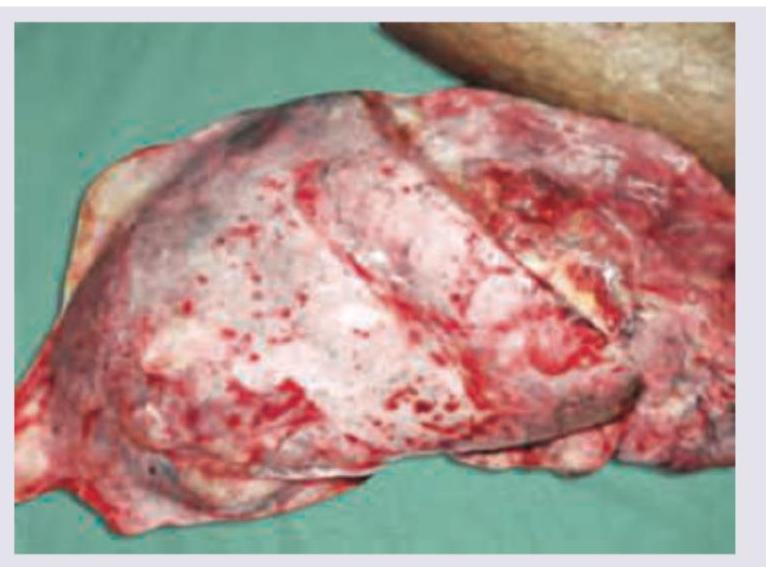
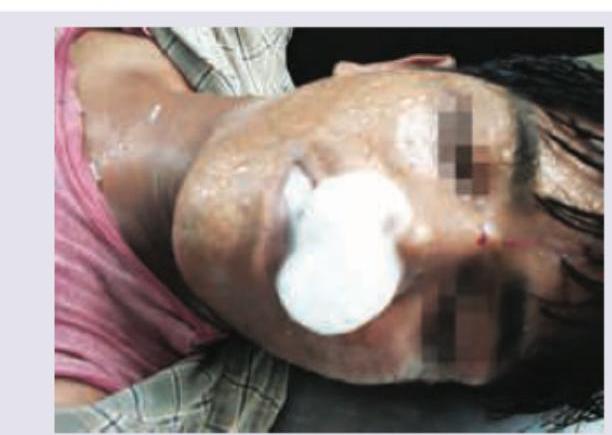
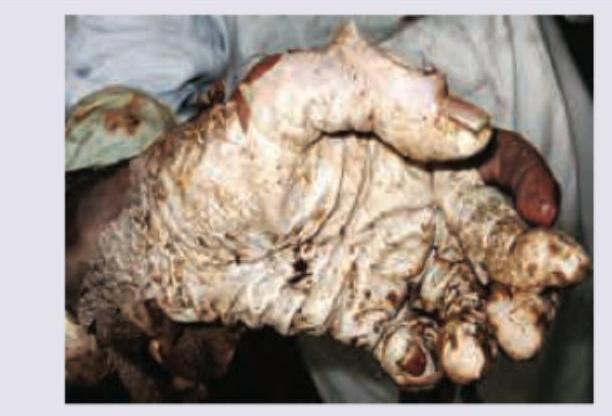
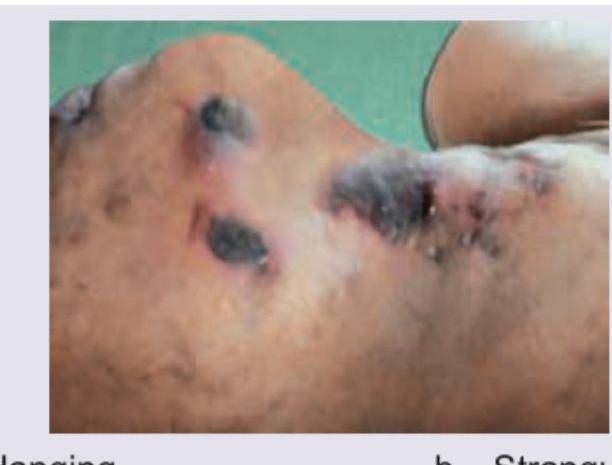
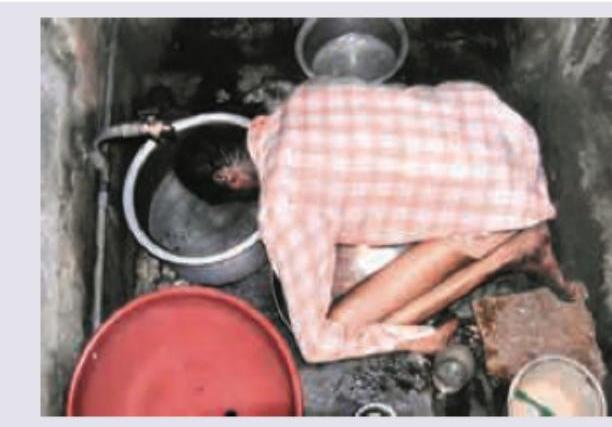
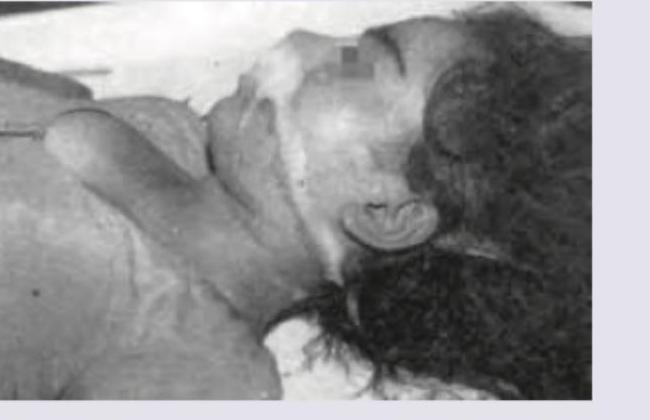
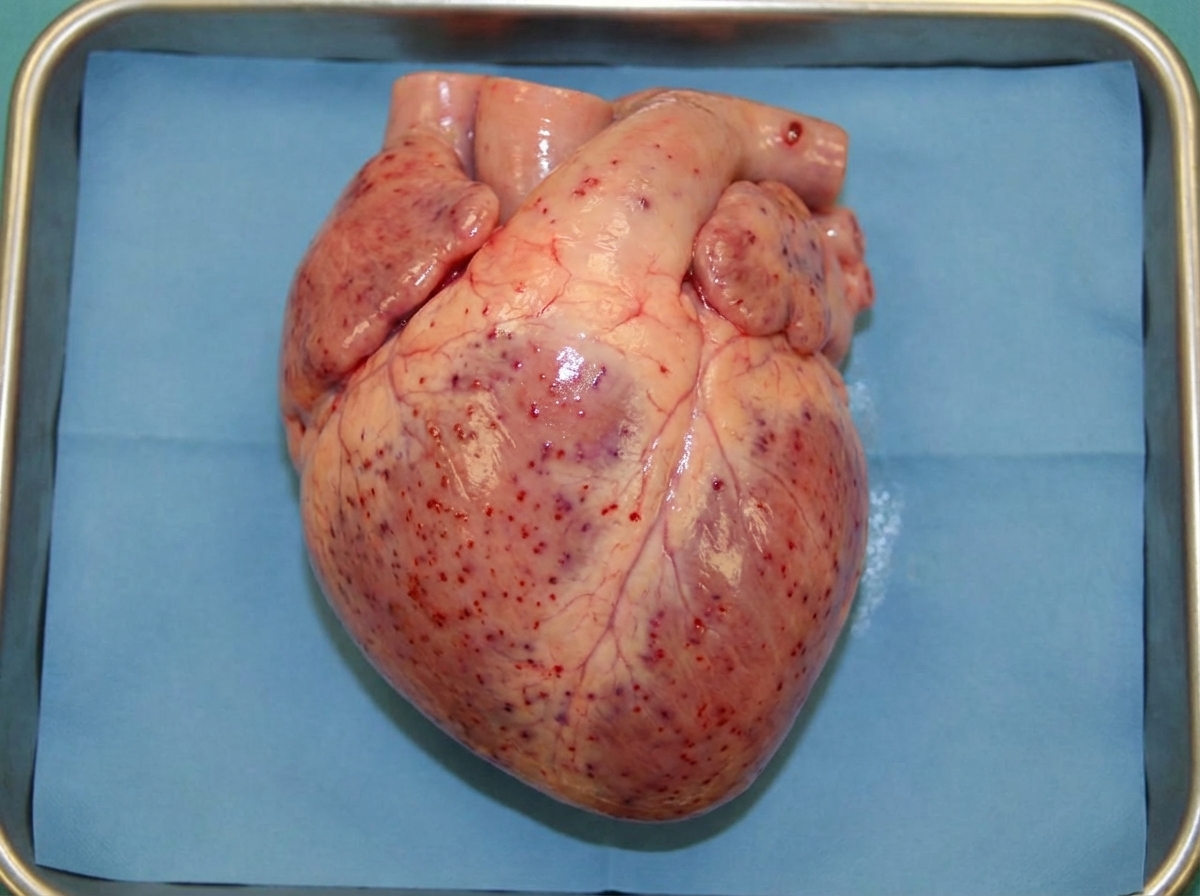
Suspended animation is seen in all EXCEPT:
Gettler's test is positive in which of the following conditions?
Which of the following is more likely to occur in salt water drowning compared to fresh water drowning?
Amussat's sign is a finding in which of the following?
Which feature is indicative of anti-mortem drowning?
Which of the following is NOT a feature that differentiates suicidal drowning from homicidal drowning?
During an autopsy, a person is suspected to have died from hydrocution. Which of the following is a potential cause of death in such cases?
Which type of strangulation involves pressure upon the neck by an arm held around the neck?
What is the most common consistent feature found in a child who died from drowning?
What is lynching?
Explanation: **Explanation:** **Suspended Animation** (also known as Apparent Death) is a clinical state where the vital functions (respiration and circulation) are at such a low level that they cannot be detected by routine clinical examination. If timely resuscitation is provided, the individual can be revived. **Why Throttling is the Correct Answer:** Throttling (manual strangulation) involves forceful compression of the neck using hands or fingers. This leads to rapid occlusion of the airway and jugular veins, often accompanied by fracture of the hyoid bone or thyroid cartilage. The mechanical trauma and sustained pressure are so severe that they lead to irreversible death rather than a reversible state of metabolic depression. Therefore, suspended animation is not a feature of throttling. **Analysis of Incorrect Options:** * **Drowning:** Submersion in cold water can trigger the "diving reflex," significantly slowing metabolism and preserving brain function despite the absence of detectable breathing, allowing for successful resuscitation even after prolonged periods. * **Electrocution:** A high-voltage shock can cause temporary paralysis of the respiratory center or ventricular fibrillation, mimicking death, yet the patient may be revived with immediate CPR or defibrillation. * **Hypothermia:** Extreme cold reduces the body's oxygen demand and metabolic rate. The clinical adage "no one is dead until they are warm and dead" refers to this state of suspended animation. **High-Yield Clinical Pearls for NEET-PG:** * **Common causes of Suspended Animation:** Drowning, Electrocution, Hypothermia, Newborns (Asphyxia neonatorum), Drug overdose (Barbiturates/Opiates), Cholera, and Sunstroke. * **Duration:** It can last from a few seconds to several minutes (or longer in hypothermia). * **Legal Significance:** It is crucial to confirm death using an ECG or flat EEG to avoid premature embalming or autopsy.
Explanation: **Explanation:** **Gettler’s Test** is a biochemical test used in the diagnosis of **drowning**. It is based on the principle of hemodilution or hemoconcentration that occurs when a person inhales water into the lungs before death. * **Mechanism:** When a person drowns in **saltwater**, the hypertonic water causes water to move from the blood into the lungs, increasing the chloride concentration in the left heart chambers. Conversely, in **freshwater** drowning, the hypotonic water enters the bloodstream, diluting the chloride levels in the left heart. A significant difference (usually >25 mg/100ml) in chloride content between the blood of the right and left ventricles indicates a positive Gettler’s test, confirming the person was alive when they entered the water. **Analysis of Incorrect Options:** * **A. Hanging & C. Strangulation:** These are forms of mechanical asphyxia. While they involve airway obstruction, they do not involve the inhalation of a medium that alters blood chemistry; diagnosis relies on physical findings like the ligature mark and internal neck tissue injury. * **D. Firearm Injury:** This causes death via hemorrhage or vital organ destruction. Diagnosis is based on entry/exit wounds, track of the bullet, and gunpowder residue. **High-Yield Facts for NEET-PG:** * **Current Status:** Gettler’s test is now largely considered **obsolete** or unreliable due to putrefactive changes; the **Diatom Test** is currently the "gold standard" for drowning. * **Chloride levels:** In Freshwater drowning, chloride is lower in the left heart. In Saltwater drowning, chloride is higher in the left heart. * **Other Drowning Signs:** Look for **Paltauf’s hemorrhages** (subpleural ecchymosis) and **Edema aquosum** (heavy, sodden lungs).
Explanation: In drowning, the primary difference between salt water and fresh water lies in the **osmolarity** of the medium relative to the blood. ### **Why "Faster Death" is Correct** Salt water (hypertonic) has a higher salt concentration than blood. When inhaled, it draws fluid from the pulmonary capillaries into the alveoli via osmosis, leading to **marked pulmonary edema**. This results in a rapid decrease in blood volume (**hypovolemia**) and a significant increase in blood viscosity. Death occurs quickly (usually within 8–12 minutes) due to **circulatory shock and cardiac failure**. In contrast, fresh water drowning typically takes slightly longer (4–5 minutes) but involves different mechanisms like ventricular fibrillation. ### **Why Other Options are Incorrect** * **A & D (Volume Overload / Hypervolemia):** These occur in **fresh water drowning**. Fresh water is hypotonic; it is rapidly absorbed from the lungs into the circulation, increasing blood volume by up to 50% within minutes. * **C (Hemolytic Anemia):** This is a feature of **fresh water drowning**. The massive influx of hypotonic water into the bloodstream causes red blood cells to swell and burst (hemolysis), leading to hyperkalemia. ### **High-Yield Clinical Pearls for NEET-PG** * **Fresh Water:** Hypotonic → Hypervolemia → Hemolysis → Hyperkalemia → **Ventricular Fibrillation** (Main cause of death). * **Salt Water:** Hypertonic → Hypovolemia → Hemoconcentration → **Pulmonary Edema/Shock** (Main cause of death). * **Paltauf’s Hemorrhages:** Subpleural ecchymoses found in both types of drowning due to alveolar rupture. * **Chloride Test (Gettler Test):** Historically used to compare chloride levels in the left and right heart chambers to differentiate the type of drowning (now largely obsolete but still asked).
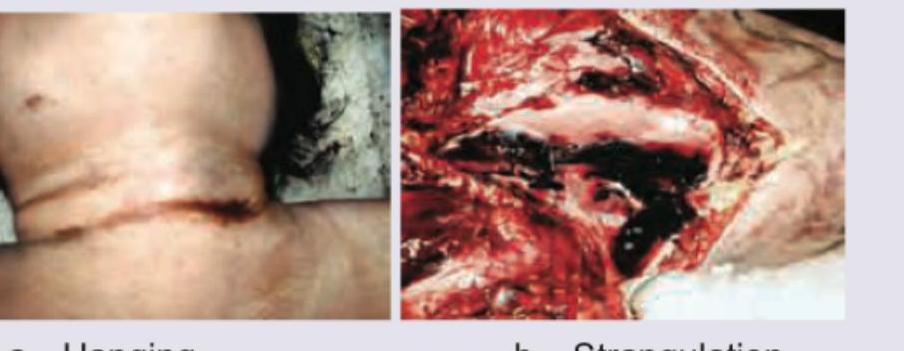
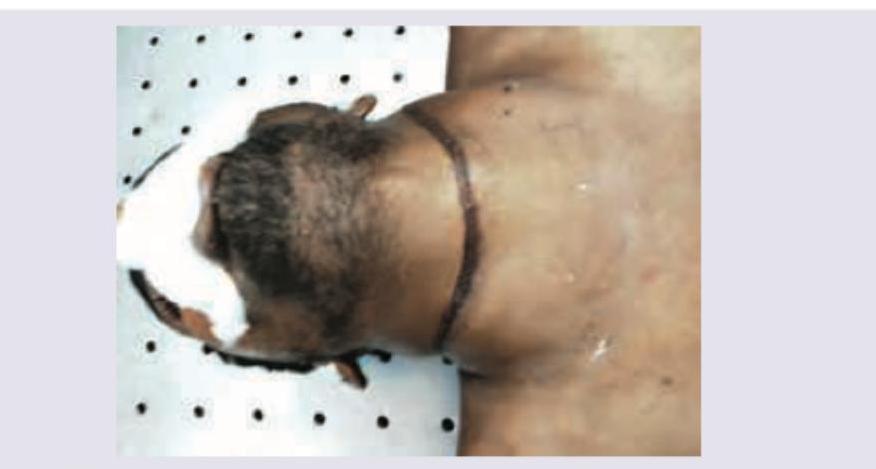
Explanation: **Explanation:** **Amussat’s Sign** refers to a transverse tear or laceration of the **intima (inner lining) of the common carotid artery**, typically found just below the bifurcation. **Why Hanging is the Correct Answer:** In cases of hanging, the sudden suspension of the body causes a violent longitudinal stretching of the carotid arteries. Because the inner layer (tunica intima) is less elastic than the outer muscular layers, it ruptures under the tension. This finding is highly characteristic of **hanging** (especially typical/drop hanging) and is rarely seen in other forms of neck compression where the force is primarily circumferential rather than longitudinal. **Why Other Options are Incorrect:** * **Strangulation:** While strangulation involves neck compression, the force is usually horizontal (ligature) or manual. It lacks the significant vertical traction/gravitational drop required to stretch the carotid artery to the point of intimal tearing. * **Drowning:** This is a form of asphyxia due to submersion in liquid. There is no mechanical trauma or traction applied to the neck structures, making Amussat’s sign irrelevant. **High-Yield Clinical Pearls for NEET-PG:** * **Simon’s Sign:** Deep tissue hemorrhages in the anterior longitudinal ligament of the lumbar spine (also due to vertical traction in hanging). * **Martin’s Sign:** Hemorrhage in the adventitia (outer layer) of the carotid artery. * **Brouardel’s Surface:** Ecchymosis of the neck muscles found in hanging. * **Fracture of Hyoid Bone:** More common in manual strangulation (inward compression) than in hanging (where it occurs in only ~15-20% of cases, usually in older victims with ossified bones).
Explanation: ### Explanation **Correct Answer: D. Grass and weeds grasped in the hand** The presence of grass, weeds, or mud firmly grasped in the hands is a **sure sign of ante-mortem drowning**. This occurs due to **Cadaveric Spasm** (instantaneous rigor). When a person is drowning and conscious, they struggle to save themselves by clutching at any object available in the water. If death occurs during this intense physical struggle, the state of contraction is preserved immediately after death. Since vital reaction (conscious effort) is required to grasp objects, this cannot occur if a dead body is thrown into the water. **Analysis of Incorrect Options:** * **A. Cutis Anserina (Gooseflesh):** This is the contraction of *arrector pili* muscles. While common in drowning due to cold water, it is a **non-specific sign**. It can occur post-mortem due to rigor mortis affecting the hair follicles and is also seen in deaths from exposure to cold. * **B. Rigor Mortis:** This is a general sign of death occurring in all bodies regardless of the cause. In drowning, it may appear early due to exhaustion during the struggle, but it does not prove the person was alive when they entered the water. * **C. Washerwoman’s Feet:** This refers to the bleaching and wrinkling of the skin due to prolonged immersion (maceration). It is a **sign of immersion**, not drowning. It can occur in both ante-mortem and post-mortem immersion. **NEET-PG High-Yield Pearls:** * **Specific Signs of Ante-mortem Drowning:** Fine, frothy, tenacious lather at the mouth/nose and the presence of diatoms in bone marrow (e.g., femur). * **Gettler Test:** Historically used to compare chloride content in the heart chambers; however, it is no longer considered reliable. * **Paltauf’s Hemorrhages:** Sub-pleural ecchymoses found in the lungs of drowning victims due to the rupture of alveolar walls. * **Dry Drowning:** Death occurs due to laryngeal spasm without significant water entering the lungs (approx. 10-15% of cases).
Explanation: ### Explanation In forensic pathology, differentiating between suicidal, homicidal, and accidental drowning is one of the most challenging tasks because the primary cause of death (asphyxia due to submersion) remains the same regardless of the manner. **Why "None of the above" is correct:** The question asks for a feature that does **NOT** differentiate the two. In forensic practice, **none** of the listed features (A, B, or C) can definitively distinguish suicide from homicide on their own. While certain findings are *suggestive*, they are not pathognomonic (conclusive). For example, a body may show no signs of struggle (Option A) in a suicide, but the same occurs in a homicide if the victim was incapacitated by drugs, alcohol, or sudden shock (vagal inhibition). **Analysis of Options:** * **Absence of signs of struggle (A):** While common in suicide, a victim of homicide may not struggle if they are unconscious or overpowered quickly. Conversely, a suicidal person might thrash instinctively due to the "fight or flight" response once in the water. * **Absence of external marks of violence (B):** A lack of injuries doesn't rule out homicide (e.g., pushing someone off a bridge). Similarly, a suicidal jumper may sustain significant "marks of violence" (fractures/bruises) upon hitting the water surface or underwater objects. * **Clothes are untorn (C):** While torn clothes suggest a struggle (homicide), untorn clothes do not prove suicide. A murderer might push a victim without engaging in a physical scuffle that tears clothing. **High-Yield Clinical Pearls for NEET-PG:** * **Cadaveric Spasm:** If a victim is found clutching weeds, mud, or gravel from the water bed, it is a sure sign that they were **alive** when they entered the water (indicates drowning, but not necessarily the manner). * **Diatom Test:** The presence of diatoms in bone marrow (femur/sternum) is the "gold standard" for confirming **antemortem drowning**, as it implies an active circulation carried the diatoms to the bones. * **Gettler Test:** Compares chloride content in the right and left chambers of the heart (now largely considered obsolete but historically significant). * **Suicidal Drowning:** Often characterized by the victim leaving a suicide note, choosing a secluded spot, or "weighting" their body with stones in pockets.
Explanation: ### Explanation **Hydrocution** (also known as Immersion Syndrome) is a specific type of drowning that occurs due to sudden entry into cold water. **1. Why Option B is Correct:** The underlying mechanism is a **vagal-mediated cardiac arrest**. When a person suddenly plunges into cold water, the impact of the water on the nasal mucosa, pharynx, and larynx triggers an exaggerated **parasympathetic (vagal) reflex**. This leads to immediate bradycardia followed by cardiac arrest. Death occurs almost instantaneously, which is why these victims are often found with a calm facial expression and no signs of struggling or typical drowning features (like froth or weeds in the hands). **2. Why Other Options are Incorrect:** * **Option A:** High voltage electrical current refers to **electrocution**, not hydrocution. While both can cause cardiac arrest, the etiology in hydrocution is thermal/sensory shock rather than electrical energy. * **Option C:** Hemodilution and arrhythmia are characteristic of **Fresh Water Drowning**. In fresh water drowning, large volumes of water enter the circulation (hypervolemia), leading to hemodilution, hemolysis, and hyperkalemia, which eventually causes ventricular fibrillation. Hydrocution, by contrast, is a form of "dry drowning" where little to no water enters the lungs. **3. High-Yield Clinical Pearls for NEET-PG:** * **Dry Drowning:** Hydrocution is a classic example where death occurs without significant water inhalation. * **Predisposing Factors:** Consumption of alcohol, a heavy meal, or pre-existing cardiac conditions increases the risk of the vagal reflex. * **Post-mortem Findings:** Autopsy findings are often non-specific. There is an absence of the "classic signs of drowning" (e.g., Paltauf’s spots, Emphysema aquosum, or Diatoms in bone marrow) because death occurs before water can be aspirated. * **Manner of Death:** Usually accidental.
Explanation: **Explanation:** **Mugging** is a form of manual strangulation where the neck is compressed within the crook of the elbow or by an arm held firmly around the neck. This typically occurs from behind, where the assailant uses their forearm and upper arm to exert pressure, often leading to rapid unconsciousness due to carotid sinus stimulation or occlusion of the carotid arteries. **Analysis of Incorrect Options:** * **Garrotting (A):** This involves the use of a ligature (like a wire, cord, or iron collar) that is tightened around the neck, often from behind. It frequently involves a twisting mechanism using a lever or stick. * **Bansdola (C):** A form of strangulation unique to the Indian subcontinent where the neck is compressed between two strong wooden sticks or bamboos (one in front and one behind), which are then tied together at both ends. * **Palmar Strangulation (D):** This is a subtype of manual strangulation (throttling) where the pressure is applied using the palms of the hands to compress the larynx and trachea. **High-Yield Clinical Pearls for NEET-PG:** * **Choke Hold vs. Sleeper Hold:** In "Mugging," a *Choke Hold* compresses the airway (trachea), while a *Sleeper Hold* (lateral vascular neck restraint) targets the carotid arteries, causing quicker loss of consciousness. * **Fracture of Hyoid Bone:** More common in manual strangulation (throttling) than in ligature strangulation or hanging. * **Vagal Inhibition:** Sudden death in strangulation can occur due to pressure on the carotid sinus, leading to reflex cardiac arrest. * **Post-mortem findings:** Look for "Tardieu spots" (petechial hemorrhages) on the visceral pleura and pericardium, though these are non-specific for asphyxia.
Explanation: **Explanation:** The correct answer is **Petechial hemorrhages**. In the context of pediatric drowning, petechial hemorrhages (Tardieu spots) are frequently observed on the pleura and epicardium. While traditionally associated with mechanical asphyxia, in drowning, they result from the acute rise in intrathoracic pressure and capillary rupture during the struggle to breathe. In children, the delicate nature of their capillary beds makes this a highly consistent finding compared to adults. **Analysis of Options:** * **Water in lung alveoli:** While intuitive, this is not always present. In "Dry Drowning" (approx. 10-15% of cases), intense laryngospasm prevents water from entering the lungs. Furthermore, water can be absorbed into the circulation or leak out post-mortem, making it an inconsistent finding. * **Washer woman skin:** This refers to the wrinkling of skin on hands and feet due to prolonged immersion. It is a sign of **immersion**, not a sign of death by drowning. It can occur in any body placed in water post-mortem. * **Cyanosis:** While present in most asphyxial deaths, it is a non-specific finding and can be seen in various modes of death (cardiac failure, respiratory distress), making it less "consistent" as a diagnostic feature for drowning specifically. **NEET-PG High-Yield Pearls:** * **Froth:** Fine, white, leathery, tenacious froth at the mouth and nose is the most characteristic sign of drowning. * **Diatoms:** Detection of diatoms in bone marrow (femur/sternum) is the most reliable **confirmatory** (medico-legal) evidence that the person was alive when they entered the water. * **Paltauf’s Hemorrhages:** These are sub-pleural hemorrhages (larger than petechiae) caused by the rupture of alveolar walls, commonly seen in drowning. * **Dry Drowning:** Death occurs due to asphyxia from glottic spasm without significant water inhalation.
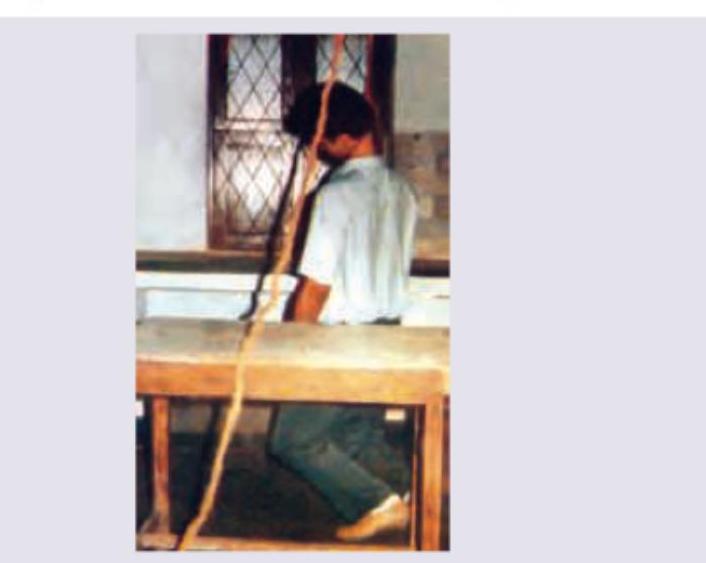
Explanation: **Explanation:** **Lynching** is a form of extrajudicial punishment, typically involving **homicidal hanging**, carried out by a mob. It is characterized by the public execution of an individual without legal trial, intended to intimidate or control a specific group. **Why Option D is Correct:** * **Historical Context (Options A & B):** Historically, lynching was a prevalent form of racial violence. It was notoriously practiced by white supremacist groups against Black people (Negros) in the United States (particularly the South) and was also documented in various forms across South America. * **Mechanism (Option C):** The classic method of lynching involves hanging the victim publicly, often from a tree or a high structure, to ensure maximum visibility and public terror. **Clinical and Forensic Pearls for NEET-PG:** 1. **Nature of Death:** Lynching is always **homicidal** in nature. This distinguishes it from most other hangings encountered in forensic practice, which are predominantly suicidal. 2. **Judicial vs. Lynching:** Unlike judicial hanging (which uses a long drop to cause cervical fracture/distraction), lynching often involves a short drop or simple suspension, leading to death via **asphyxia** or **cerebral ischemia**. 3. **Signs of Struggle:** In lynching cases, the forensic pathologist often finds "signs of struggle," multiple blunt force injuries, or defense wounds, as the victim is forcibly overpowered by a mob. 4. **Public Spectacle:** The defining feature of lynching in forensic literature is its **public nature**, used as a tool for social coercion. **High-Yield Note:** In the context of NEET-PG, remember that while "Hanging" is usually suicidal, "Lynching" and "Bansdola" are specific homicidal variants mentioned in Indian forensic textbooks.
Pathophysiology of Asphyxia
Practice Questions
Hanging
Practice Questions
Strangulation
Practice Questions
Suffocation
Practice Questions
Traumatic Asphyxia
Practice Questions
Drowning
Practice Questions
Choking
Practice Questions
Chemical Asphyxiants
Practice Questions
Positional Asphyxia
Practice Questions
Autoerotic Asphyxia
Practice Questions
Pediatric Asphyxia
Practice Questions
Postmortem Findings in Asphyxia
Practice Questions
Get full access to all questions, explanations, and performance tracking.
Start For Free