Adduction fracture of the hyoid bone may be seen in which of the following?
Gettler's test is done in which of the following conditions?
Which type of drowning is most commonly associated with hyperkalemia, cardiac arrhythmia, and ventricular fibrillation leading to death?
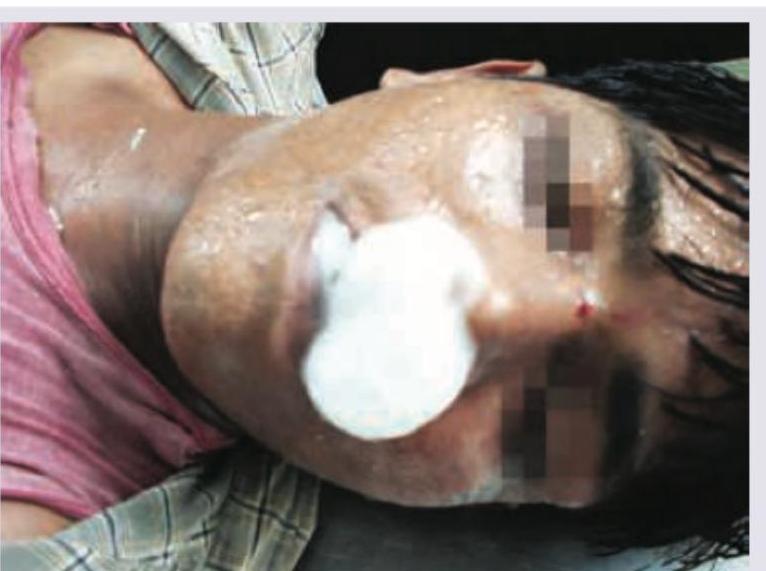
This type of asphyxia is termed as:

Which of the following is NOT true regarding fresh water drowning?
What postmortem finding is typically seen in smothering?
Accidental choking of the respiratory passage by a bolus of food is known as?
What is the term used to describe the observed phenomenon?

In cases of death due to asphyxia, which anatomical region should be dissected last during autopsy?
The enquiry into the circumstances of death is called?
Explanation: ### Explanation **Correct Answer: A. Manual strangulation** The hyoid bone is a U-shaped structure located in the neck. In **manual strangulation (throttling)**, the assailant uses their hands to apply direct, inward, and lateral pressure on the neck. This compressive force pushes the greater cornua of the hyoid bone inward, leading to an **adduction fracture** (inward displacement of the fractured fragments). This is a classic forensic finding in throttling, especially in victims over 40 years of age where the hyoid has ossified and become brittle. **Analysis of Incorrect Options:** * **B. Ligature strangulation:** Here, the pressure is applied via a constricting band. The force is usually circular and uniform, which more commonly results in fractures of the thyroid cartilage rather than the hyoid. If the hyoid does fracture, it is less likely to be a specific adduction type. * **C. Hanging:** In hanging, the force is traction-based (distraction). This causes the greater cornua to be pulled outward, leading to an **abduction fracture** (outward displacement). Hyoid fractures are also less common in hanging (15-20%) compared to manual strangulation. * **D. Bansdola:** This is a form of strangulation where a strong stick or bamboo is placed across the neck and pressed down. It typically causes extensive crushing injury to the larynx and trachea rather than isolated adduction of the hyoid. **High-Yield Clinical Pearls for NEET-PG:** * **Fracture Type:** Manual strangulation = **Adduction** (Inward); Hanging = **Abduction** (Outward). * **Age Factor:** Hyoid fractures are rare in young individuals because the bone is cartilaginous and flexible; they are most common after the fusion of the greater cornua with the body (usually >40 years). * **Direct vs. Indirect:** Manual strangulation causes **direct** fractures, while hanging causes **indirect** fractures due to the pull of the thyrohyoid ligament.
Explanation: **Explanation:** **Gettler’s Test** is a biochemical test used in the medicolegal investigation of **Drowning**. It is based on the principle of hemodilution or hemoconcentration that occurs when a person inhales water before death. * **Mechanism:** When a person drowns in **freshwater**, the water enters the lungs and is rapidly absorbed into the pulmonary circulation, leading to hemodilution and a decrease in chloride concentration in the left chambers of the heart. Conversely, in **saltwater** drowning, the hypertonic water draws fluid out of the blood, leading to hemoconcentration and an increase in chloride levels in the left heart. * **The Test:** It compares the chloride content of blood in the **right atrium** versus the **left atrium**. A significant difference (usually >25 mg/100ml) suggests drowning. **Why other options are incorrect:** * **Traumatic Asphyxia:** This occurs due to sudden compression of the chest/abdomen (e.g., stampedes). Diagnosis is clinical (Tardieu spots, cyanosis, facial edema) and does not involve chloride shifts. * **Strangulation:** This is a mechanical asphyxia caused by constriction of the neck. Diagnosis relies on external ligature marks and internal neck dissection findings. * **Sexual Asphyxia:** A form of auto-erotic hypoxia. Diagnosis is based on the scene of death (pornography, bondage, mirrors) rather than biochemical blood tests. **High-Yield Clinical Pearls for NEET-PG:** * **Current Status:** Gettler’s test is now considered **obsolete** and unreliable due to post-mortem changes and putrefaction. * **Diatom Test:** Currently the most reliable "gold standard" for drowning (detecting silica-walled algae in bone marrow). * **Other Drowning Signs:** Froth at the mouth/nose (fine, leathery, tenacious), **Paltauf’s hemorrhages** (subpleural ecchymosis), and **Cadaveric spasm** (holding weeds/sand).
Explanation: **Explanation:** The correct answer is **Freshwater drowning**. The underlying mechanism is based on the principles of osmosis and the **"Haldane-Waite"** concept of hemodilution. **1. Why Freshwater Drowning is Correct:** Freshwater is **hypotonic** compared to blood. When inhaled into the lungs, it rapidly crosses the alveolar-capillary membrane into the circulation. This causes: * **Hypervolemia:** A massive increase in blood volume (up to 50% in minutes). * **Hemolysis:** Red blood cells burst due to the hypotonic environment, releasing intracellular potassium into the plasma (**Hyperkalemia**). * **Electrolyte Imbalance:** The combination of hemodilution (hyponatremia) and hyperkalemia irritates the myocardium, leading to **ventricular fibrillation** and cardiac arrest, usually within 4–5 minutes. **2. Why Other Options are Incorrect:** * **Seawater drowning:** Seawater is **hypertonic**. It draws fluid *out* of the blood into the lungs, causing massive pulmonary edema and hemoconcentration. Death usually occurs later (8–12 minutes) due to **asphyxia or cardiac standstill**, not ventricular fibrillation. * **Dry drowning:** Death occurs due to intense **laryngospasm** triggered by water hitting the larynx. No water enters the lungs; death is due to pure asphyxia. * **Secondary drowning:** Also known as "Near-drowning syndrome," death occurs hours to days after initial rescue due to pulmonary edema, metabolic acidosis, or ARDS. **High-Yield Clinical Pearls for NEET-PG:** * **Gettler Test:** Historically used to compare chloride content in the right and left heart chambers (now considered unreliable). * **Diatom Test:** The most reliable legal evidence of ante-mortem drowning (detection of silica-walled algae in bone marrow). * **Paltauf’s Hemorrhages:** Subpleural ecchymoses found in drowning victims due to alveolar rupture.
Explanation: ***Mugging*** - This shows **arm-lock strangulation** from behind where the forearm applies pressure to the **anterior neck**, compressing the airway and blood vessels. - Forensic hallmarks include **horizontal abrasions** on the neck from forearm pressure and potential **fingernail marks** from the victim's attempts to remove the arm. *Smothering* - Involves **occlusion of external air passages** by covering the mouth and nose with hands, pillow, or plastic bag. - Leaves **no specific neck injuries** but may show **petechial hemorrhages** around the eyes and **pressure marks** on the face. *Garroting* - Uses a **ligature** (rope, wire, cloth) applied around the neck, typically from behind, creating a **tourniquet effect**. - Produces a **horizontal furrow** around the neck with **rope burns** or **ligature marks** that are deeper than manual strangulation. *Choking* - Involves **internal airway obstruction** by foreign objects (food, small items) blocking the trachea or larynx. - Shows **no external neck trauma** but may reveal the obstructing object during **autopsy examination** of the airway.
Explanation: **Explanation:** In fresh water drowning, the inhaled water is **hypotonic** compared to the blood. According to the laws of osmosis, water rapidly moves from the alveoli into the pulmonary capillaries. This leads to **Hypervolemia** (increased blood volume), not hypovolemia. **Why Option B is the Correct Answer (The "False" Statement):** Fresh water is rapidly absorbed into the circulation, increasing the plasma volume by up to 50% within minutes. This results in **hemodilution** and hypervolemia. Therefore, the statement "Hypovolemia" is incorrect. **Analysis of Other Options:** * **D. Hemolysis:** The massive influx of hypotonic water into the bloodstream causes red blood cells to swell and burst (hemolysis). * **A. Hyperkalemia:** Hemolysis releases large amounts of potassium from the RBCs into the plasma. Additionally, myocardial hypoxia further elevates potassium levels. * **C. Ventricular Fibrillation:** The combination of hypervolemia (dilutional hyponatremia), hyperkalemia, and profound hypoxia irritates the myocardium, typically leading to death via ventricular fibrillation within 4–5 minutes. **NEET-PG High-Yield Pearls:** 1. **Fresh Water Drowning:** Hypotonic → Hypervolemia → Hemolysis → Hyperkalemia → Ventricular Fibrillation (Fast death). 2. **Salt Water Drowning:** Hypertonic → **Hypovolemia** (fluid moves from blood to lungs) → Hemoconcentration → Pulmonary Edema → Cardiac Standstill (Slower death). 3. **Dry Drowning:** Death occurs due to intense **laryngospasm** preventing water from entering the lungs; lungs are typically dry at autopsy. 4. **Paltauf’s Hemorrhages:** Subpleural ecchymoses found in drowning victims due to alveolar rupture.
Explanation: **Explanation:** **Smothering** is a form of asphyxia caused by the mechanical occlusion of the external respiratory orifices (nose and mouth) by a hand, cloth, or any other object. **Why Option A is Correct:** In cases of homicidal smothering, the perpetrator often uses forceful pressure with the palm or fingers over the victim's mouth. This pressure forces the soft tissues of the lips and cheeks against the underlying teeth. Consequently, **abrasions and contusions on the inner side of the lips and mouth** are the most characteristic internal findings. These are often accompanied by external "fingertip" bruises or nail marks around the nose and mouth. **Why Other Options are Incorrect:** * **Option B (Hyoid bone fracture):** This is typically seen in **throttling** (manual strangulation) or occasionally in hanging (in older individuals). The hyoid bone is rarely involved in smothering as there is no pressure applied to the neck. * **Option C (Thyroid cartilage fracture):** This is a hallmark of **strangulation** (manual or ligature) due to direct compression of the larynx. * **Option D (Curved marks on the neck):** These represent **crescentic fingernail abrasions**, which are characteristic of **throttling** (manual strangulation), where the assailant grips the victim's neck. **High-Yield Clinical Pearls for NEET-PG:** * **Burking:** A combination of smothering and traumatic asphyxia (kneeling on the chest), historically used by Burke and Hare. * **Plastic Bag Suffocation:** A form of smothering where no external marks of struggle are typically found. * **Post-mortem findings:** In many cases of smothering (especially accidental or in infants), there may be **no external signs** at all, making it a difficult diagnosis at autopsy. * **General Asphyxial Signs:** Look for Tardieu spots (petechial hemorrhages), cyanosis, and visceral congestion.
Explanation: **Explanation:** **Correct Answer: C. Cafe coronary** A **Cafe coronary** refers to sudden death due to the accidental obstruction of the upper airway (larynx or pharynx) by a large, poorly chewed bolus of food. The term is used because the victim often collapses suddenly while eating, mimicking a myocardial infarction (heart attack). * **Mechanism:** It involves a combination of mechanical obstruction and a **vagal-mediated cardiac arrest** triggered by the bolus stimulating the laryngeal nerves. * **Risk Factors:** Common in individuals with poor dentition, alcohol intoxication (which suppresses the gag reflex), or neurological disorders. **Analysis of Incorrect Options:** * **A. Gagging:** This involves pushing a cloth or object into the mouth to silence a victim. Death occurs due to the tongue being pushed back or the gag becoming soaked in saliva/blood, obstructing the airway. * **B. Overlying:** A form of accidental traumatic asphyxia where a heavy adult (often intoxicated) rolls over a small infant while sleeping, compressing the infant's chest and airway. * **C. Burking:** A method of homicidal asphyxia (named after William Burke) involving a combination of **smothering** (closing the nose/mouth) and **traumatic asphyxia** (kneeling on the chest). **High-Yield Pearls for NEET-PG:** * **Heimlich Maneuver:** The immediate emergency treatment for a cafe coronary to dislodge the foreign body. * **Post-mortem finding:** A large bolus of food (often meat) is found impacted at the glottis. * **Differential Diagnosis:** Must be distinguished from "Choking," which is the general term for any foreign body in the air passage. Cafe coronary is specifically the *sudden death* syndrome associated with it.
Explanation: ***Tache noire*** - A **post-mortem desiccation artifact** that appears as dark, brownish discoloration on the **sclera or cornea** when eyes remain partially open after death. - Results from **dehydration and exposure** of ocular tissues to air, not related to the cause of death but indicates time since death. *Tardieu spots* - **Petechial hemorrhages** found in organs like lungs, heart, and brain during cases of **asphyxia**. - These are actual **hemorrhagic lesions** caused by increased venous pressure, unlike the desiccation artifact described. *Paultauf's hemorrhage* - **Subpleural hemorrhages** specifically associated with **drowning cases** due to rupture of alveolar capillaries. - Represents actual **tissue bleeding** rather than post-mortem desiccation changes. *Congestion* - **Vascular engorgement** with blood, typically appearing as **reddish discoloration** of tissues. - Involves **blood accumulation** in vessels, not the **dark, dry appearance** characteristic of desiccation artifacts.
Explanation: **Explanation:** In forensic autopsies, particularly in suspected asphyxial deaths (like hanging, strangulation, or throttling), the **Neck (Option A)** must always be dissected **last**. **Why is the Neck dissected last?** The primary reason is to ensure a **bloodless field** for examination. If the neck is opened first, blood from the head and thoracic vessels will pool in the neck tissues, creating "artificial" bruising or artifacts that can be mistaken for antemortem injuries (e.g., extravasation). By dissecting the thorax, abdomen, and skull first, the major vessels (superior vena cava, jugular veins) are drained of blood. This allows the pathologist to clearly distinguish true antemortem hemorrhages caused by pressure on the neck from post-mortem artifacts. **Analysis of Incorrect Options:** * **Thorax (B) and Abdomen (C):** These are typically opened first to drain the venous system and inspect for visceral signs of asphyxia (e.g., Tardieu spots). * **Skull (D):** The cranial cavity is opened early to drain the cerebral sinuses, further reducing venous pressure in the neck region. **High-Yield Clinical Pearls for NEET-PG:** * **Prinsloo and Gordon Artifact:** These are post-mortem hemorrhages in the anterior neck tissues (near the thyroid cartilage) caused by rough handling during autopsy; dissecting the neck last helps minimize such diagnostic errors. * **Tardieu Spots:** Subpleural and subpericardial petechial hemorrhages, classically seen in asphyxial deaths (though not pathognomonic). * **Hyoid Bone Fracture:** Most common in **throttling** (manual strangulation) and least common in hanging. * **Vagal Inhibition:** A cause of sudden death in neck pressure due to stimulation of the carotid sinus baroreceptors.
Explanation: **Explanation:** **1. Why "Inquest" is Correct:** An **Inquest** is defined as a legal inquiry or investigation into the cause and circumstances of a sudden, suspicious, unnatural, or unexplained death. In India, there are two primary types of inquests: * **Police Inquest (Section 174 CrPC):** Conducted by a police officer (not below the rank of Head Constable). This is the most common form of inquest. * **Magistrate Inquest (Section 176 CrPC):** Conducted by an Executive Magistrate (e.g., District Magistrate or Tahsildar). This is mandatory in specific cases such as custodial deaths, dowry deaths (within 7 years of marriage), or death in police firing. **2. Why Other Options are Incorrect:** * **Homicide Enquiry:** This is a specific criminal investigation conducted by the police once "foul play" or murder is established. It is a subset of a criminal investigation, not the general term for the legal inquiry into the cause of death. * **Open Verdict:** This is a term used in the Coroner’s system (e.g., UK) when the evidence is insufficient to confirm a specific cause or manner of death (e.g., cannot distinguish between suicide and accident). * **Adjourned Verdict:** This refers to a situation where a legal proceeding or verdict is postponed to a later date, usually to gather more evidence. **3. High-Yield NEET-PG Pearls:** * **Section 174 CrPC:** Deals with Police Inquest. * **Section 176 CrPC:** Deals with Magistrate Inquest. * **Coroner’s Inquest:** Abolished in India (previously existed in Mumbai and Kolkata). * **Medical Examiner System:** The most superior system of inquest (followed in parts of the USA), where a doctor conducts the investigation. It is not practiced in India. * **Exhumation:** In India, it can only be ordered by a Magistrate (Executive). There is no time limit for exhumation in India.
Pathophysiology of Asphyxia
Practice Questions
Hanging
Practice Questions
Strangulation
Practice Questions
Suffocation
Practice Questions
Traumatic Asphyxia
Practice Questions
Drowning
Practice Questions
Choking
Practice Questions
Chemical Asphyxiants
Practice Questions
Positional Asphyxia
Practice Questions
Autoerotic Asphyxia
Practice Questions
Pediatric Asphyxia
Practice Questions
Postmortem Findings in Asphyxia
Practice Questions
Get full access to all questions, explanations, and performance tracking.
Start For Free