A lady comes to OPD after fall from scooty. Her vitals are stable. She is having continuous, clear watery discharge from nose after 2 days. This is most likely a feature of?
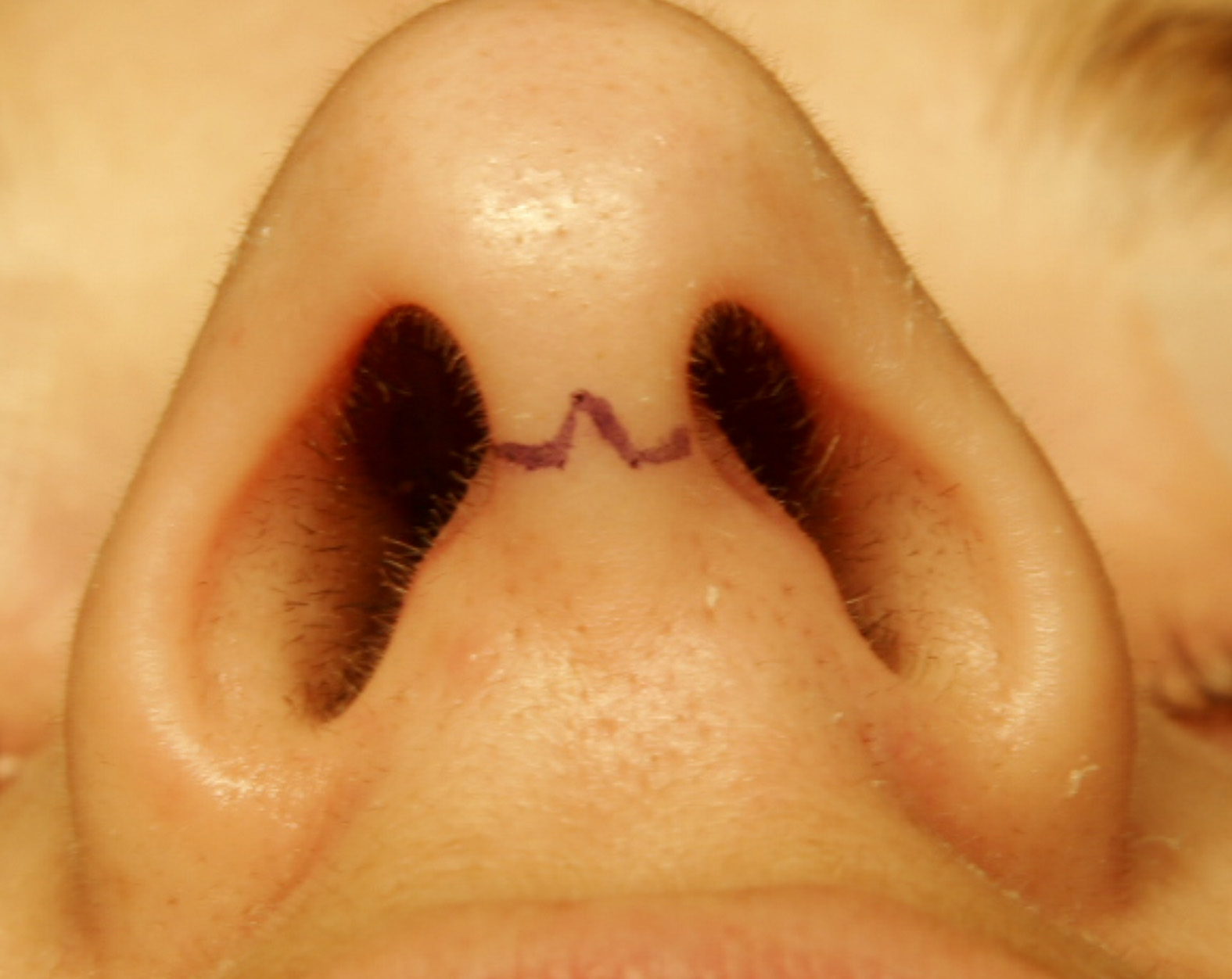
A nasal surgery was carried out with the incision shown in the image. What was the procedure likely carried out?
Which of the following is not a complication of maxillary sinus lavage and insufflation?
During functional endoscopic sinus surgery the position of the patient is
Where is a nasal antrostomy typically created following a Caldwell-Luc procedure?
FESS means:
All of the following are treatments for multiple bilateral ethmoidal polyps except which of the following?
What is the treatment of choice for ethmoidal polyps?
A child has ptosis and poor levator function. What surgery will you do?
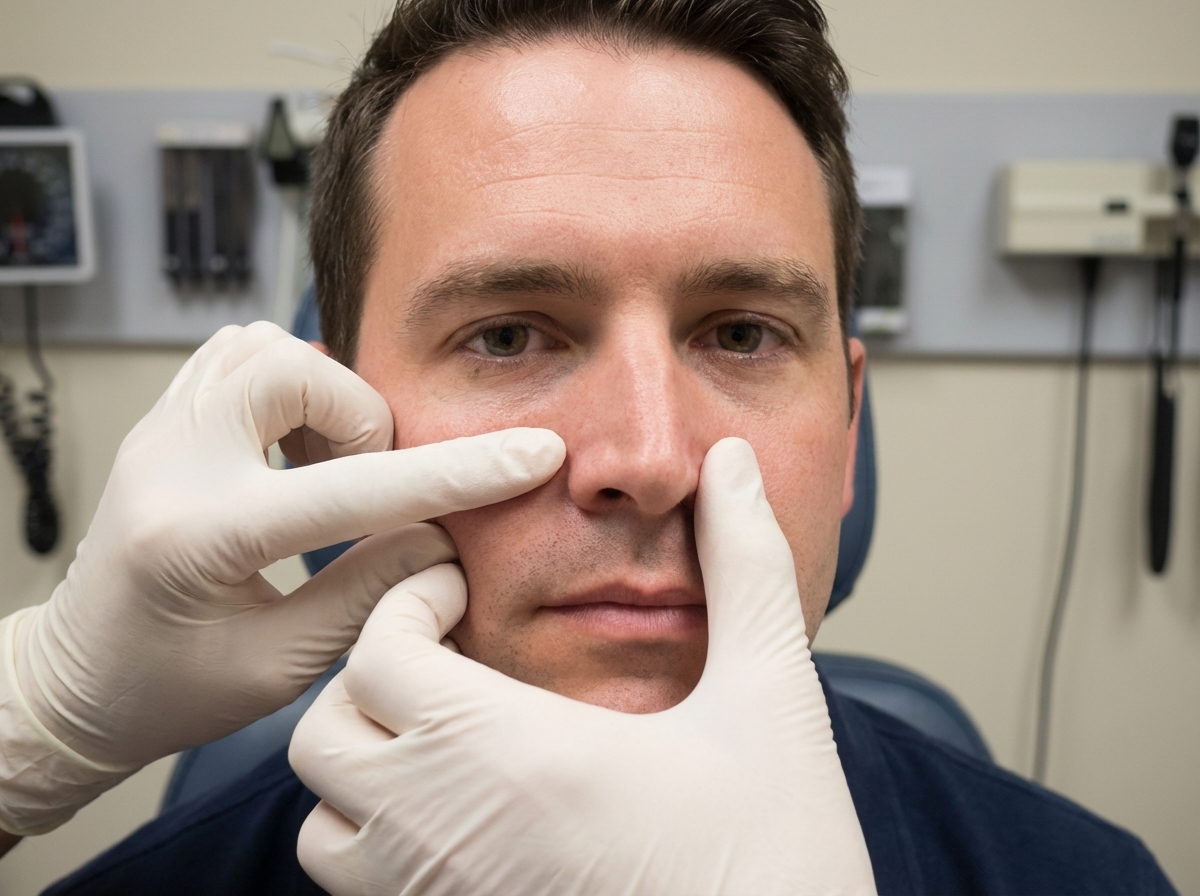
The following test is done for the evaluation of:
Explanation: ***CSF rhinorrhoea*** - **Clear watery discharge** appearing **two days after head trauma** (fall from scooty) is highly suggestive of **cerebrospinal fluid (CSF) rhinorrhoea**. - This occurs due to a breach in the **skull base**, allowing CSF to leak from the subarachnoid space into the nasal cavity. *Acute respiratory infection* - An acute respiratory infection typically presents with symptoms like **fever, cough**, and **nasal discharge** that is often thicker and discolored, not clear and watery. - The onset of discharge two days after trauma without other signs of infection also makes this less likely. *Rhinitis* - Rhinitis involves inflammation of the nasal mucosa, leading to watery discharge, sneezing, and congestion. - However, the traumatic etiology and the specific timing of the discharge make **CSF leak** a more pertinent diagnosis than simple rhinitis. *Middle cranial fossa fracture* - While a **middle cranial fossa fracture** can cause CSF leakage, the discharge from the nose (rhinorrhoea) typically originates from an **anterior cranial fossa fracture**. - A middle cranial fossa fracture is more commonly associated with **otorrhoea** (CSF leakage from the ear) if the temporal bone is involved.
Explanation: ***Open rhinoplasty*** - The image displays a **transcolumellar incision** (typically inverted V or W-shaped), which is the hallmark approach for **open rhinoplasty**. - This incision allows for direct visualization of the underlying nasal cartilages and bones, enabling precise reshaping of the nose. *Submucosal resection (SMR)* - SMR is a procedure to correct a **deviated nasal septum** by removing cartilage or bone from beneath the mucoperichondrial flaps. - It involves an **intranasal incision**, usually along the septal mucosa, not an external transcolumellar incision. *FESS (Functional Endoscopic Sinus Surgery)* - FESS is a minimally invasive procedure used to treat **chronic sinusitis** and other sinus conditions. - It is performed entirely **endoscopically through the nostrils**, with no external incisions on the nasal columella. *Caldwell-Luc's procedure* - This procedure accesses the **maxillary sinus** through an incision in the upper gum beneath the lip. - It is used for drainage of the maxillary sinus or removal of foreign bodies/tumors, and does not involve an external nasal incision.
Explanation: ***Facial nerve injury*** - The **facial nerve (CN VII)** passes through the parotid gland and temporal bone, far from the maxillary sinus. - There is no anatomical proximity or procedural mechanism during maxillary sinus lavage and insufflation that would put the facial nerve at risk of injury. *Air embolism* - **Insufflation of air** into the maxillary sinus, especially under pressure, can lead to air entering the bloodstream if a blood vessel is inadvertently punctured. - This can result in a serious and potentially fatal **air embolism**, particularly if the air reaches the cerebral circulation. *Orbital injury* - The **medial wall of the maxillary sinus** is in close proximity to the orbit, separated by thin bone. - During lavage, excessive force or incorrect angulation of instruments can perforate this thin bone, leading to **orbital complications** such as periorbital hematoma or injury to orbital contents. *Epistaxis* - During the procedure, the **mucosa of the nasal cavity** or the sinus itself can be traumatized by the instruments used for lavage. - This local trauma to the rich blood supply of these areas can easily cause **nasal bleeding (epistaxis)**.
Explanation: ***Reverse Trendelenburg*** - This position helps to reduce **venous congestion** in the surgical field, which is crucial for maintaining clear visibility during **functional endoscopic sinus surgery (FESS)**. - It minimizes **bleeding** by allowing gravity to drain blood away from the head and neck, improving surgical precision and safety. *Trendelenburg* - This position involves tilting the patient with the head lower than the feet, which would increase **venous pressure** in the head and neck. - Increased venous congestion would lead to significant **bleeding**, severely impairing visibility during FESS. *Lateral* - The lateral position is generally used for procedures involving the **side of the body**, such as kidney surgery or lung procedures. - It does not provide the optimal ergonomic access or venous drainage benefits required for **endoscopic sinus surgery**. *Lithotomy* - The lithotomy position is characterized by the patient lying on their back with hips and knees flexed and supported, primarily used for **pelvic or perineal procedures**. - This position is entirely inappropriate for **head and neck surgery** as it does not allow proper access to the sinus area.
Explanation: ***Beneath the inferior turbinate*** - The **Caldwell-Luc procedure** addresses chronic inflammatory disease of the **maxillary sinus**, and the creation of a nasal antrostomy beneath the inferior turbinate is a crucial step for **drainage and ventilation**. - This access point allows permanent communication between the maxillary sinus and the nasal cavity, facilitating healing and preventing recurrence of disease. *Above the inferior turbinate* - Creating an opening above the inferior turbinate would likely involve the **middle meatus** or other structures, which is not the standard location for a drainage antrostomy in a Caldwell-Luc procedure. - This area is usually reserved for procedures involving the **ethmoid or frontal sinuses**, not the maxillary sinus in this specific context. *Beneath the superior turbinate* - The superior turbinate is located much higher in the nasal cavity, and an opening beneath it would drain into the superior meatus. - This area is associated with the **sphenoid sinus** and posterior ethmoid cells, not the primary drainage of the maxillary sinus. *Above the superior turbinate* - There is no anatomical space or structure typically addressed directly above the superior turbinate for maxillary sinus drainage. - This would be an anatomically incorrect and surgically inaccessible approach for creating a permanent drainage pathway from the maxillary sinus.
Explanation: ***Functional endoscopic sinus surgery*** - **FESS** is a minimally invasive surgical technique used to treat **chronic sinusitis** and other sinus conditions. - The goal of FESS is to restore normal sinus function and ventilation by removing obstructions and diseased tissue. *Flexible endoscopic sinus surgery* - This term is incorrect; while FESS uses endoscopes, they are generally rigid, not flexible, for better visualization and instrumentation. - **Flexible endoscopes** are more commonly used for procedures like bronchoscopy or colonoscopy. *Fibroscopic endoscopic sinus surgery* - The term **fibroscopic** is typically associated with scopes employing fiber optics but is not the correct full form of the acronym FESS. - This option incorrectly modifies the standard medical terminology for this procedure. *Frontal endoscopic sinus surgery* - While FESS can be performed on the **frontal sinuses**, this option is too specific and does not represent the complete and correct expansion of the acronym. - FESS encompasses procedures on all paranasal sinuses, not just the frontal sinus.
Explanation: ***Caldwell Luc Surgery*** - This procedure accesses the **maxillary sinus** through an incision in the gingivobuccal sulcus, primarily used for maxillary sinus pathology. - It is **not the primary treatment** for ethmoidal polyps, which are located in the ethmoid sinuses. *Intranasal ethmoidectomy* - This is a common and effective surgical approach to remove ethmoidal polyps, involving access through the **nostrils**. - It allows for direct visualization and removal of polyps within the ethmoid labyrinth. *Extranasal ethmoidectomy* - This surgical approach involves an external incision (e.g., Lynch-Howarth incision) to access the ethmoid sinuses. - It is typically reserved for **extensive or complicated ethmoid disease** or in cases where intranasal approaches are insufficient. *Functional endoscopic sinus surgery* - This is the **gold standard** for treating chronic rhinosinusitis with polyps, including ethmoidal polyps. - It uses an endoscope to visualize and remove polyps while preserving healthy mucosa and restoring normal sinus drainage and ventilation.
Explanation: ***Functional Endoscopic sinus surgery with polypectomy*** - This is the **gold standard treatment** for ethmoidal polyps, as it allows for **direct visualization** and complete removal of polyps while preserving healthy mucosa. - It also enables restoration of normal sinus ventilation and drainage, which helps prevent recurrence. *Intranasal ethmoidectomy* - This is an **older technique** that is performed blindly and carries a higher risk of complications, such as **orbital or intracranial injury**, compared to endoscopic approaches. - It often results in incomplete polyp removal, leading to a higher rate of recurrence. *Transantral ethmoidectomy* - This approach, also known as the **Caldwell-Luc procedure**, is primarily used for diseases of the **maxillary sinus** and is not the preferred method for isolated ethmoidal polyps. - It is a more invasive external approach with risks including facial swelling, pain, and damage to dental nerves. *Extranasal ethmoidectomy* - This is a more invasive **external approach** involving an incision on the face and is generally reserved for extensive or complicated cases, such as **tumors or severe trauma**, not for routine polyp removal. - It carries risks of visible scarring and longer recovery times, making it less favorable than endoscopic techniques.
Explanation: ***Frontalis suspension surgery*** - This procedure is indicated for **severe ptosis** with **poor levator function** (typically <4-5 mm), as the levator muscle is too weak to provide adequate lift. - The surgery uses the **frontalis muscle** (forehead muscle) to elevate the eyelid, connecting the tarsus to the frontalis muscle, allowing the patient to open their eye by raising their eyebrows. *Levator muscle resection* - **Levator muscle resection** is performed when there is **fair to good levator function** (typically >5-6 mm), but not for poor function. - The surgery aims to shorten and strengthen the existing levator muscle to improve eyelid lift. *Mullerectomy* - A **mullerectomy** is suitable for **mild ptosis** (1-2 mm) with **good levator function** while utilizing the Müller's muscle. - It is performed when the ptosis is responsive to **phenylephrine drops**, which stimulate Müller's muscle. *Fasanella Servat surgery* - **Fasanella Servat surgery** is indicated for **mild ptosis** and relies on the resection of the **tarsus** and conjunctiva, along with Müller's muscle. - This procedure is generally not performed in children due to potential long-term effects on the tarsal plate and lash line.
Explanation: ***Cheek tenderness in maxillary sinusitis*** - The image shows a person palpating the area over the **maxillary sinus** with their fingers. This examination technique is used to elicit tenderness, a common sign of **maxillary sinusitis**. - **Tenderness on palpation** over the maxillary sinus is a key clinical finding indicating inflammation or infection within the sinus cavity. *Abnormality of nasal valve* - Evaluation of the nasal valve typically involves external observation, internal examination with a speculum, or specialized maneuvers like the **Cottle test**, which involves pulling the cheek laterally to open the valve; it does not involve pressing on the cheek as depicted. - The nasal valve is an internal structure, and its palpation for abnormality would not be performed by pressing on the outer cheekbone as shown. *Severity of proptosis* - Proptosis (exophthalmos) refers to the **abnormal protrusion of the eyeball**. It is typically measured using an **exophthalmometer**. - The action shown in the image, pressing on the cheek, is not a method used to assess or quantify the severity of proptosis. *Skin pinch for dehydration* - The **skin pinch test** (turgor test) for dehydration is usually performed by pinching the skin on the back of the hand, lower arm, or abdomen, not the cheek. - Delayed return of the pinched skin to its normal state, known as **poor skin turgor**, indicates dehydration. The image does not show this technique.
Get full access to all questions, explanations, and performance tracking.
Start For Free