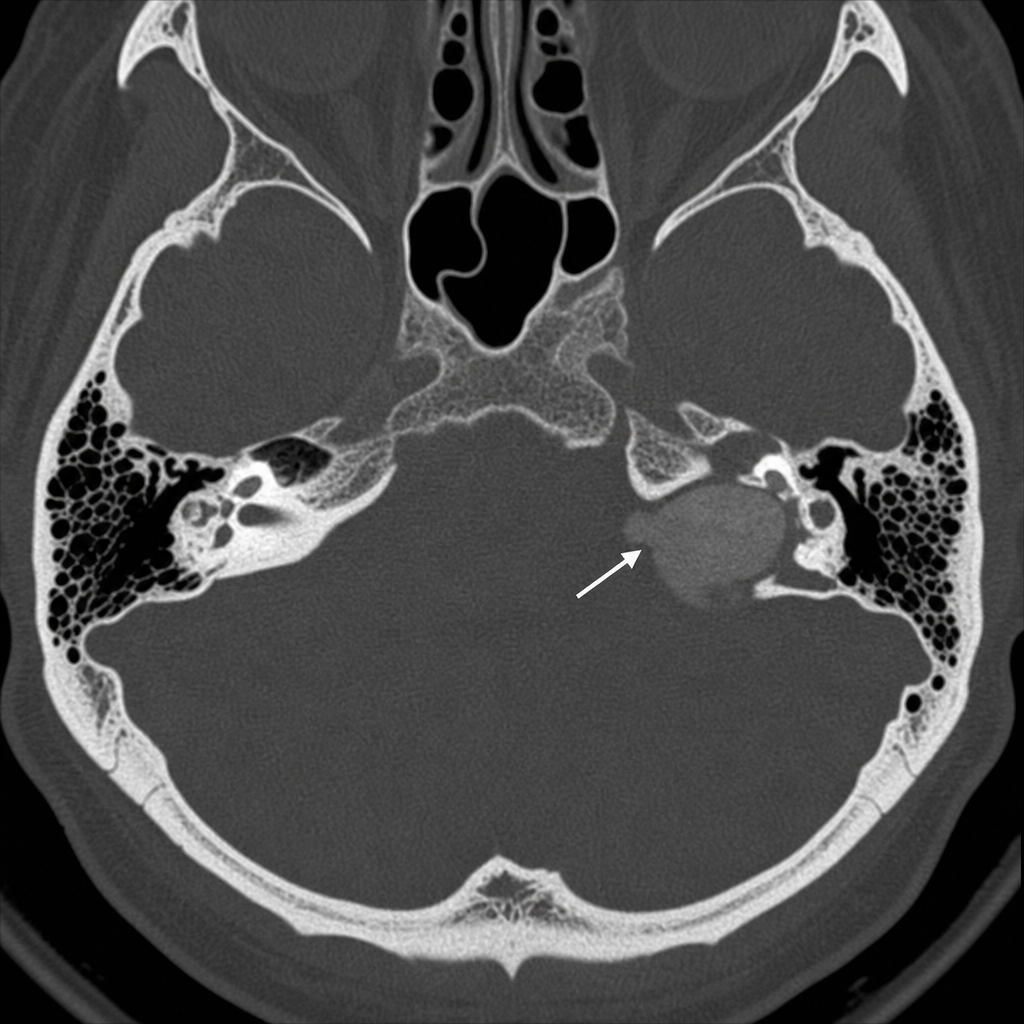
Tests of SNHL are characterized by all EXCEPT
Which of the following would be the most appropriate treatment for rehabilitation of a patient, who has bilateral profound deafness following surgery for bilateral acoustic schwannoma?
Most common cause of syndromic deafness is:
Which is the investigation of choice in assessing hearing loss in neonates -
A child presents with recurrent ear infections and conductive hearing loss. What is the most likely diagnosis?
A first-grade teacher is concerned about a 6-year-old girl in her class who has not spoken a single word since school started. The little girl participates appropriately in the class activities and uses gestures, drawings, nods, and shakes her head to communicate. The parents report that the little girl talks only at home and only in the presence of her closest relatives. Which of the following is the most appropriate diagnosis?
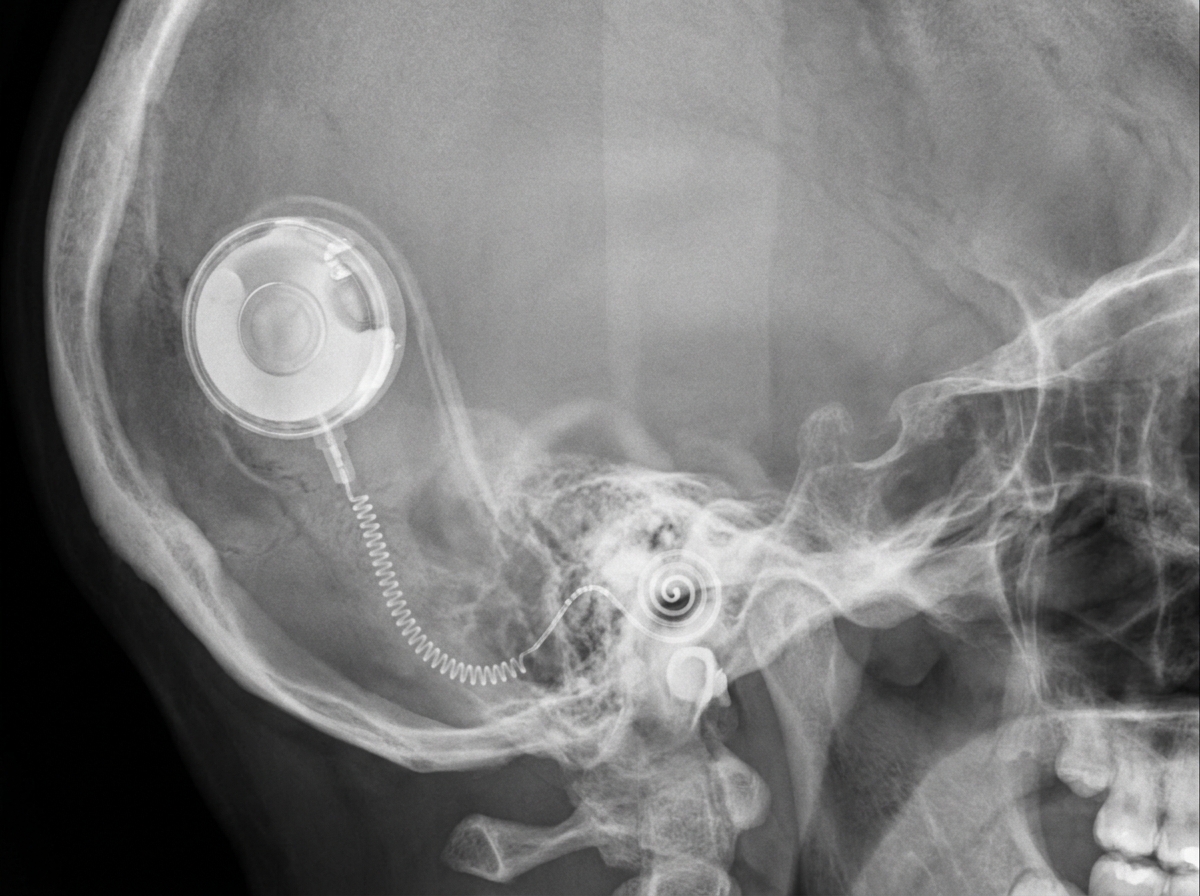
Identify the device shown in the image below:
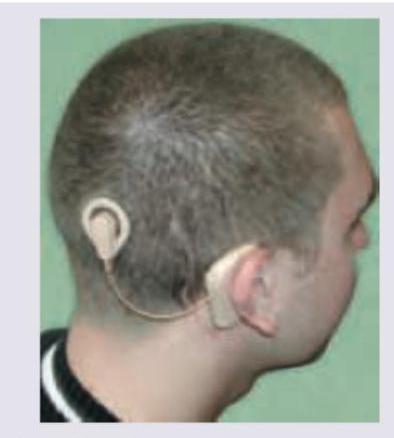
Which device is depicted below?
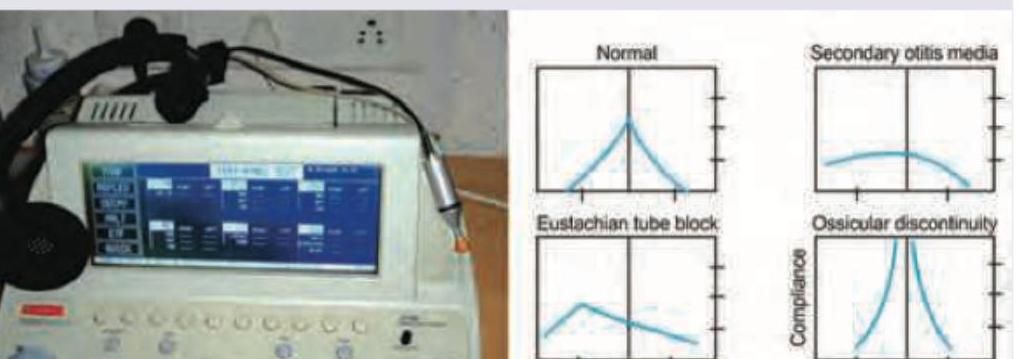
The following test is useful for diagnosis of all except:
A female patient presents with hearing loss. Rinne test results show Rinne negative at 256 Hz and 512 Hz, while Rinne positive at 1024 Hz. Based on these findings, what is the expected air conduction and bone conduction gap?
Explanation: ***Speech discrimination is good*** - In **sensorineural hearing loss (SNHL)**, damage to the cochlea or auditory nerve specifically impairs the processing of complex sound signals. - This typically leads to **poor speech discrimination**, particularly in noisy environments, making it difficult to understand spoken words even when the volume is adequate. - **This is NOT characteristic of SNHL**, making it the correct answer to this EXCEPT question. ***Positive Rinne test*** - A **positive Rinne test** (air conduction > bone conduction) **is characteristic of SNHL**. - In SNHL, both air and bone conduction are reduced equally, but air conduction remains better than bone conduction, maintaining the positive Rinne pattern. - There is **no air-bone gap** in SNHL (unlike conductive hearing loss where Rinne becomes negative). ***Weber lateralised to better ear*** - In **unilateral SNHL**, the **Weber test lateralizes to the better-hearing ear** because the healthy cochlea perceives the sound vibration more strongly. - The damaged ear is less able to detect the bone-conducted sound, causing the perception that the sound is louder in the unaffected ear. - **This is characteristic of SNHL**. ***More often involving high frequencies*** - **SNHL often affects high frequencies first** due to specific vulnerabilities of the **basal turn of the cochlea** to age-related degeneration, noise exposure, and ototoxic drugs. - This pattern of hearing loss is common in **presbycusis** and noise-induced hearing loss. - **This is characteristic of SNHL**.
Explanation: ***Brainstem implant*** - A **brainstem implant** is the most appropriate treatment when the auditory nerve has been damaged or destroyed, as can occur during bilateral acoustic schwannoma surgery. - This device bypasses the cochlea and auditory nerve by directly stimulating the **cochlear nucleus** in the brainstem, allowing sound perception. *Bilateral cochlear implant* - A **cochlear implant** requires an intact auditory nerve to transmit signals from the cochlea to the brain. - In this scenario, bilateral profound deafness post-surgery for acoustic schwannoma often implies damage to both **auditory nerves**, rendering cochlear implants ineffective. *Unilateral cochlear implant* - Similar to a bilateral cochlear implant, a **unilateral cochlear implant** relies on the functionality of at least one auditory nerve. - Since the patient has **bilateral profound deafness** following bilateral surgery, the auditory nerves are likely compromised on both sides, making even a unilateral implant unsuitable. *Bilateral high powered digital hearing aid* - Hearing aids amplify sound and rely on the presence of residual hair cell function in the **cochlea** and an intact auditory pathway. - Profound deafness indicates severe damage to the inner ear or auditory nerve, which hearing aids cannot overcome as they only provide *amplification*, not direct neural stimulation.
Explanation: **Waardenburg syndrome** - This is the **most common cause of syndromic deafness**, characterized by hearing loss combined with pigmentary anomalies. - Key features include congenital sensorineural hearing loss, heterochromia iridum (different colored eyes), a white forelock, and premature graying of hair. *Pendred syndrome* - This syndrome is the **second most common cause of syndromic deafness** and is associated with goiter (enlarged thyroid gland). - It results from mutations in the **SLC26A4 gene** and is characterized by sensorineural hearing loss and inner ear malformations (Mondini dysplasia). *Usher syndrome* - This is the **most common cause of combined deafness and blindness**, affecting both hearing and vision. - It involves sensorineural hearing loss and progressive **retinitis pigmentosa**, leading to night blindness and eventual vision loss. *All of the options* - While all listed syndromes cause syndromic deafness, Waardenburg syndrome is specifically identified as the **most common single cause**. - Therefore, choosing "all of the options" would be incorrect as it doesn't pinpoint the *most common* cause.
Explanation: ***Brainstem Evoked Response Audiometry (BERA)*** - **BERA** is the gold standard for assessing hearing loss in neonates because it measures the **brain's electrical activity** in response to sounds, making it objective and reliable in infants who cannot cooperate with behavioral tests. - It is crucial for **early detection** of hearing impairment, allowing for timely intervention to support language and developmental milestones. *Behavioral audiometry* - This method relies on the child's **behavioral responses** to sound, such as head turns or startling, which is not reliable or consistent for neonates. - It is typically used for older infants or children who can actively participate and respond to stimuli. *Impedance audiometry* - Measures the **middle ear function** (e.g., tympanometry, acoustic reflex), which can detect issues like fluid in the middle ear but does not directly assess the baby's ability to hear. - While useful for diagnosing **middle ear pathologies**, it is not a direct measure of hearing threshold. *Free field audiometry* - This technique involves presenting sounds through loudspeakers and observing the child's reaction in a **sound-attenuated room**. - Similar to other behavioral tests, its reliability is limited in neonates due to their inability to provide consistent and voluntary responses to sound.
Explanation: ***Correct: Glue ear*** - **Glue ear** (otitis media with effusion - OME) is the **most common cause of conductive hearing loss in children** - Frequently develops after **recurrent episodes of acute otitis media**, with persistent middle ear effusion - The thick, glue-like fluid behind the tympanic membrane impairs ossicular movement, causing **conductive hearing loss** - Classic presentation: child with history of recurrent ear infections who develops persistent hearing impairment between acute episodes - Diagnosis confirmed by **tympanometry** showing flat type B curve and **otoscopy** revealing retracted tympanic membrane with fluid level or air bubbles *Incorrect: Chronic otitis media* - Implies **persistent tympanic membrane perforation** with chronic discharge (>6-12 weeks) - More severe, established pathology with potential complications like cholesteatoma - While it causes conductive hearing loss, it's **less common** than OME in typical pediatric presentations - Would expect to see persistent otorrhea and visible perforation on examination *Incorrect: Acute otitis media* - Characterized by **sudden onset** with acute symptoms: otalgia, fever, irritability, bulging red tympanic membrane - While recurrent episodes are common in children, the question describes ongoing conductive hearing loss, suggesting **persistent effusion** rather than isolated acute episodes - Each acute episode resolves, but may be followed by OME *Incorrect: Otitis externa* - **External ear canal** infection ("swimmer's ear"), not a middle ear problem - Presents with ear pain worsened by **tragal pressure** or pinna manipulation, canal edema, and discharge - Does **not cause conductive hearing loss** unless severe canal occlusion occurs - Not associated with recurrent middle ear infections
Explanation: ***Selective mutism*** - This condition is characterized by a **consistent failure to speak in specific social situations** (e.g., school) despite speaking in other situations (e.g., at home with close family). - The child's **appropriate participation in class activities** and use of alternative communication methods (gestures, drawings) are typical features. *Autism* - Children with autism spectrum disorder often exhibit **deficits in social-emotional reciprocity** and may have **restricted, repetitive patterns of behavior or interests**. - While they may have communication challenges, the selective nature of the mutism and otherwise appropriate social engagement in the classroom argue against autism. *Expressive language disorder* - This disorder involves difficulty **producing spoken language**, regardless of the setting. - The fact that the child speaks normally at home suggests her expressive language abilities are intact, making this diagnosis unlikely. *School phobia* - School phobia, now often referred to as **school refusal**, is characterized by symptoms of anxiety or panic when attending or anticipating school. - While the child might be anxious, her ability to participate in class activities and communicate nonverbally suggests the primary issue is not an avoidance of school itself but a selective inability to speak.
Explanation: ***Cochlear implant*** - The image displays the external components of a **cochlear implant**: a **speech processor** worn behind the ear connected to an external transmitter that sends signals to an implanted receiver. - This device is designed to provide a sense of sound to individuals with **severe-to-profound hearing loss** by directly stimulating the auditory nerve. *Transcranial magnetic stimulation* - This therapy involves a **coil placed on the scalp** that delivers magnetic pulses to stimulate nerve cells in the brain, typically for depression or migraines. - It does not involve ear-worn components or internal surgical implants of the type seen in the image. *Vagus nerve stimulation* - This involves a device surgically implanted under the skin in the chest, with wires connected to the **vagus nerve** in the neck. - It is used to treat epilepsy and depression and does not have external components positioned around the ear or on the head as depicted. *Deep brain stimulation* - This neurosurgical procedure involves implanting electrodes into specific areas of the brain, connected to a pulse generator (similar to a pacemaker) implanted in the chest. - It is primarily used for movement disorders like Parkinson's disease and does not feature external ear-worn components visible in the image.
Explanation: ***Cochlear implant*** - A cochlear implant is an **electronic medical device that replaces the function of a damaged inner ear (cochlea)** and provides sound signals directly to the brain - On imaging (X-ray, CT, or skull radiograph), it appears as a **characteristic circular receiver-stimulator device** under the skin behind the ear with an **electrode array extending into the cochlea** - The **internal receiver has a distinctive appearance** with visible magnets and electrode contacts, making it easily identifiable on radiographic images - Used for patients with **severe to profound sensorineural hearing loss** who do not benefit from conventional hearing aids *Auditory brainstem implant (ABI)* - An ABI **bypasses both the cochlea and auditory nerve**, directly stimulating the **cochlear nucleus in the brainstem** - On imaging, the electrode array would be located at the **cerebellopontine angle** near the brainstem, not in the cochlea - Reserved for patients with **absent or non-functional auditory nerves** (e.g., bilateral vestibular schwannomas, neurofibromatosis type 2) *Bone anchored hearing aid (BAHA)* - A BAHA consists of a **titanium implant osseointegrated into the skull bone** behind the ear with an external sound processor - On X-ray, only the **small titanium fixture/abutment** would be visible in the mastoid bone, without any cochlear or intracranial components - Works by **bone conduction**, transmitting sound vibrations directly to the inner ear, bypassing the outer and middle ear - Used for **conductive hearing loss, mixed hearing loss, or single-sided deafness** *Hearing aid* - A conventional hearing aid is a **completely external electronic device** that amplifies sound - It would **not be visible on X-ray or CT imaging** as it contains no implanted components - Simply amplifies sound for individuals with mild to moderate hearing loss
Explanation: ***Postmeningitis deafness*** - The image illustrates a **tympanometer**, which primarily assesses the function of the **middle ear** and **eardrum mobility** within the context of air pressure changes. - **Postmeningitis deafness** typically results from **sensorineural hearing loss** due to damage to the **cochlea** or **auditory nerve**, which is a condition of the inner ear and cannot be directly diagnosed by tympanometry. *Ossicular discontinuity* - This condition involves a break or separation in the **ossicular chain**, leading to excessive mobility of the tympanic membrane. - Tympanometry in **ossicular discontinuity** typically shows a **Type Ad tympanogram**, characterized by abnormally high compliance due to the lack of resistance from the damaged ossicles. *Otosclerosis* - **Otosclerosis** involves abnormal bone growth around the **stapes** footplate, leading to its fixation and reduced mobility. - Tympanometry in otosclerosis typically yields a **Type As tympanogram**, indicating abnormally low compliance or a shallow peak. *Serous otitis media* - Also known as **otitis media with effusion**, this condition involves the accumulation of fluid in the middle ear without signs of acute infection. - Tympanometry in **serous otitis media** typically presents with a **Type B tympanogram**, characterized by a flat curve due to reduced or absent eardrum mobility caused by the fluid.
Explanation: ***15-30 dB*** - The pattern of **Rinne negative at 256 Hz and 512 Hz** combined with **Rinne positive at 1024 Hz** is characteristic of a **mild to moderate conductive hearing loss** with an air-bone gap in the **15-30 dB range**. - In this range, the conductive component is sufficient to cause Rinne negativity at lower frequencies where bone conduction is more efficient, but at higher frequencies (1024 Hz), the gap narrows and air conduction becomes relatively better, resulting in a positive Rinne test. - This frequency-dependent pattern indicates the air-bone gap is **closing at higher frequencies**, typical of mild conductive losses. *30-45 dB* - An air-bone gap of **30-45 dB** represents a **moderate conductive hearing loss** where Rinne test would remain **negative across all frequencies** including 1024 Hz. - At this magnitude of conductive loss, bone conduction would still significantly exceed air conduction even at higher frequencies. - The transition to Rinne positive at 1024 Hz would NOT occur with this degree of hearing loss. *45-60 dB* - This represents a **moderate-severe conductive hearing loss** with a substantial air-bone gap. - Rinne test would be **strongly negative across all tested frequencies** without exception. - The large gap would prevent any frequency from showing air conduction superiority. *>60 dB* - This indicates a **severe to profound conductive hearing loss** with a very large air-bone gap. - Rinne test would be **markedly negative at all frequencies**, with bone conduction dramatically exceeding air conduction. - Air conduction may be barely perceptible or absent at this level of loss.
Get full access to all questions, explanations, and performance tracking.
Start For Free