
Physiology of Smell and Taste — MCQs

Sensory fibers from the taste buds in the back of the tongue and soft palate travel along:
Which tongue papillae do not have taste buds?
The roof of the olfactory region is formed by?
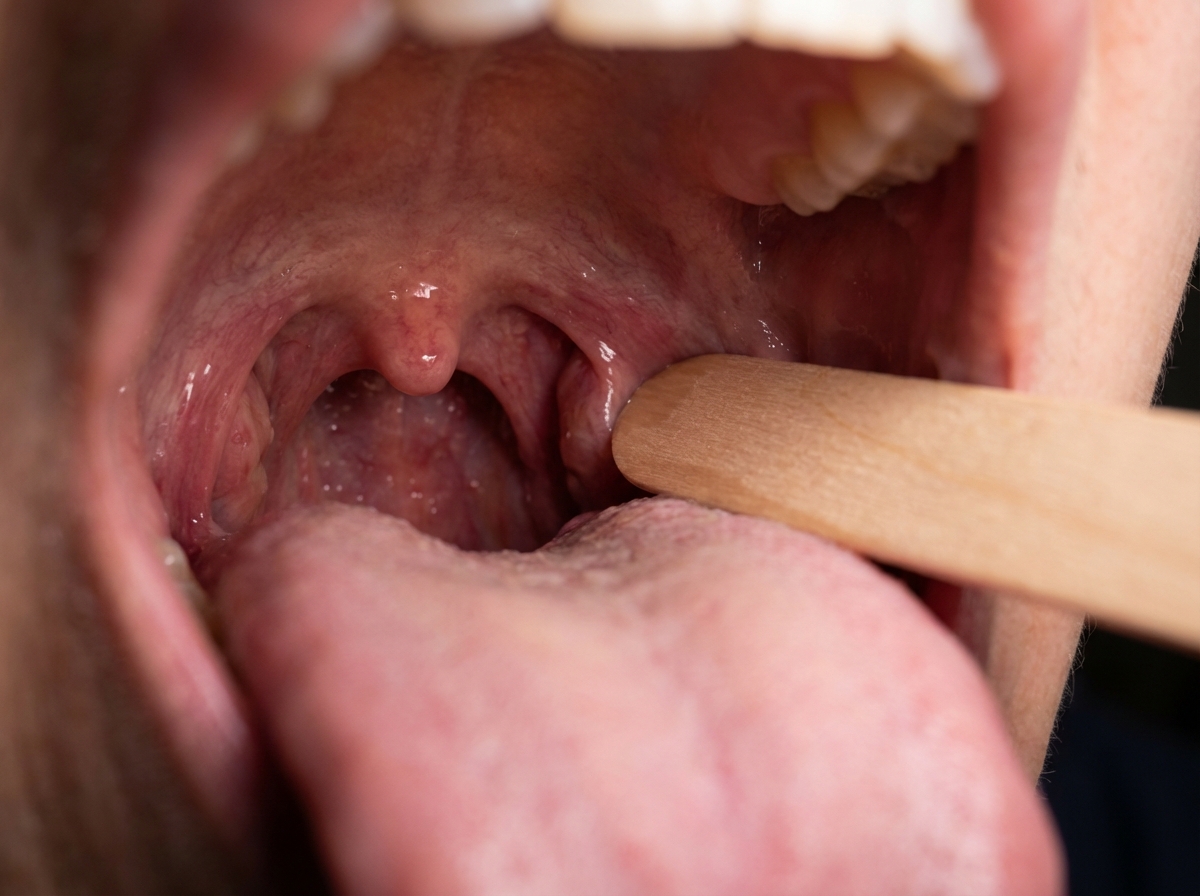
A patient was admitted with skull base trauma. The doctor was testing the marked structure in the pharyngeal region. Which of the following nerves was being tested?
Match the following: A) Glossopharyngeal nerve B) Spinal accessory nerve C) Facial nerve D) Mandibular nerve 1) Shrugging of shoulder 2) Touch sensation from the posterior one-third of the tongue 3) Chewing 4) Taste from the anterior two-thirds of the tongue
Among the following trigeminal nerve divisions, which one is involved in orbital apex syndrome?
Impulses generated in the taste buds of the tongue reach the cerebral cortex via the
An absent gag reflex can result from injury to which of the following nerves?
A 52-year-old woman presents with bilateral hearing loss noticed over the past 3 years. She denies tinnitus or vertigo. Otoscopic examination is normal bilaterally with intact, healthy tympanic membranes. Tympanometry shows bilateral type As (shallow) curves. The audiogram is shown in Image 1. She is medically fit for surgery but strongly wishes to avoid an operation at this time. Which of the following is the most appropriate next step in management?
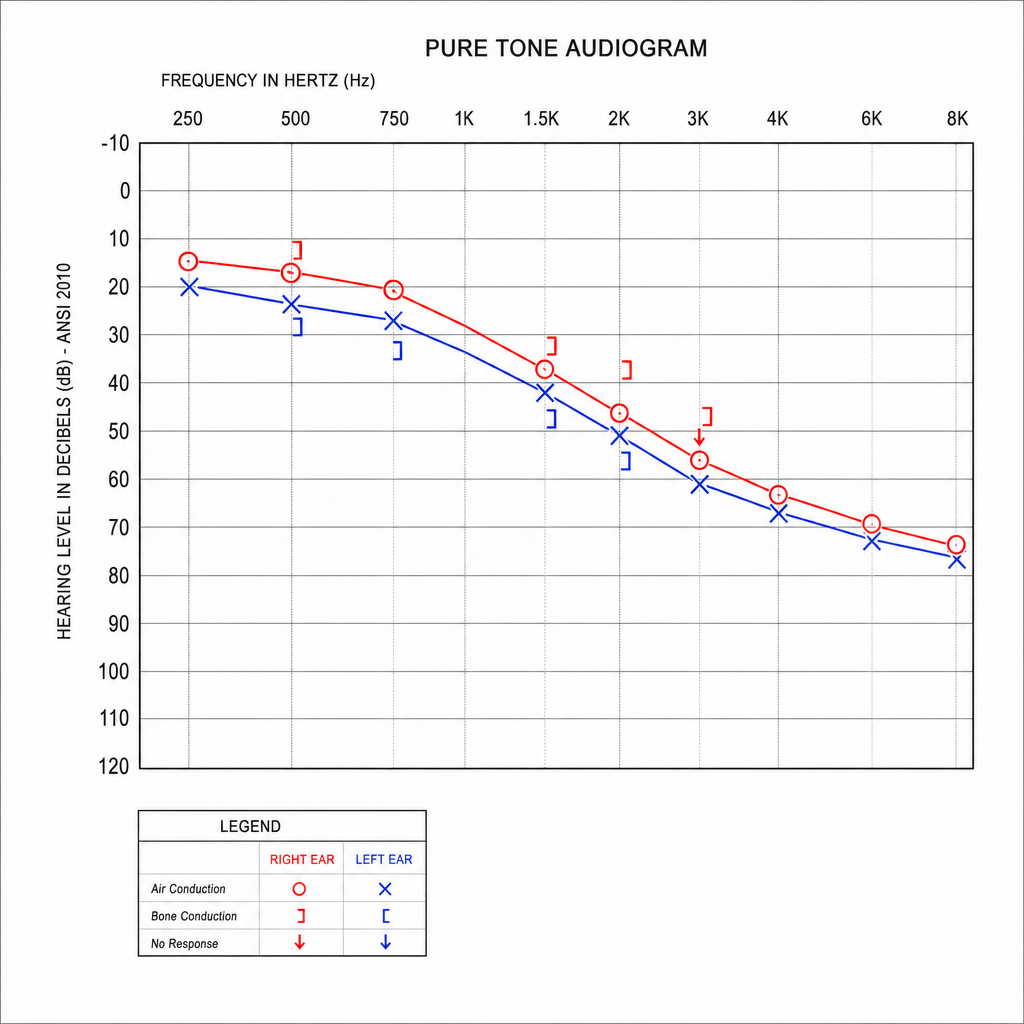
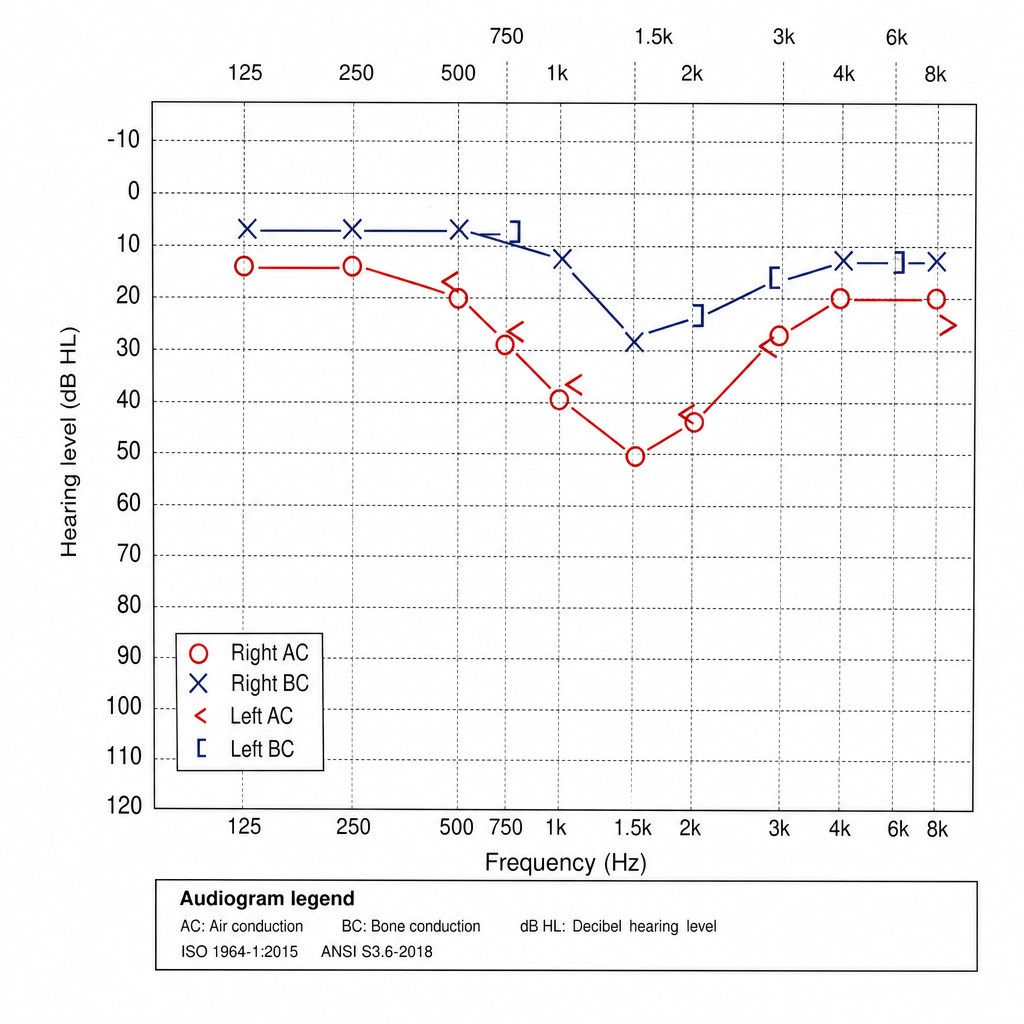
A 32-year-old woman presents with progressive bilateral hearing loss over 3 years, worse during pregnancy. She reports a family history of hearing impairment. Otoscopy reveals normal tympanic membranes bilaterally. Tympanometry shows As (shallow) curves. Her audiogram is shown (Image 1). Which of the following best explains the bone conduction dip seen on this audiogram?
Want unlimited practice?
Get full access to all questions, explanations, and performance tracking.
Scan to download app