Masculine voice in females is treated by which of the following procedures?
What is the most common cause of chronic laryngeal stenosis?
Which of the following conditions does NOT present with pain similar to trigeminal neuralgia?
In laryngeal cancer, if the anterior commissure is involved, what is the best management?
What is the sensory nerve supply of the larynx below the level of the vocal cord?
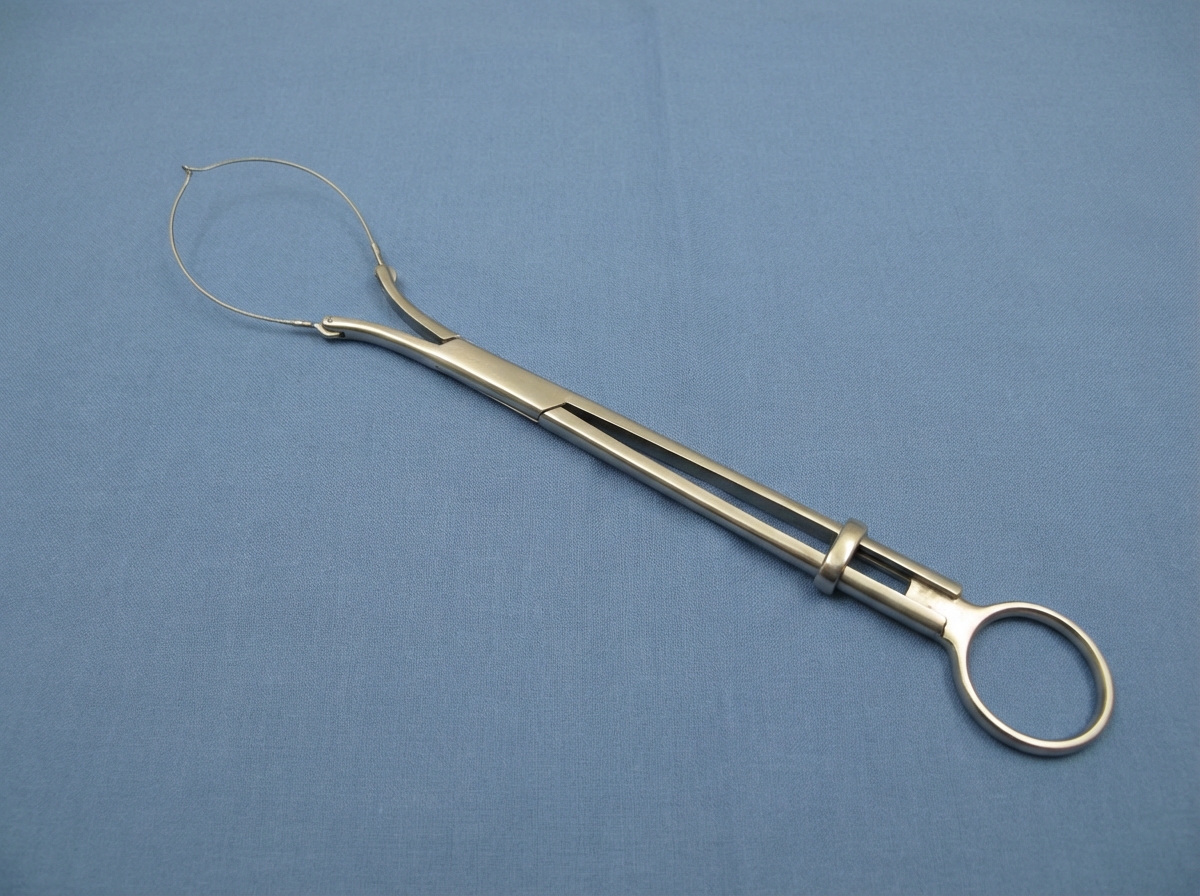
Identify the instrument used in ENT surgery.
All of the following laryngeal muscles are adductors of vocal cords except?
Singer's nodule is due to:
Cricothyrotomy is converted to tracheostomy at an early stage to:
The recurrent laryngeal nerve supplies all laryngeal muscles except which one?
Explanation: **Explanation:** The correct answer is **Thyroplasty type 3**. This procedure is used to lower the pitch of the voice, making it an ideal treatment for **androphonia** (masculine voice in females). ### 1. Why Thyroplasty Type 3 is Correct The pitch of the voice is determined by the tension, length, and mass of the vocal folds. To lower the pitch, one must **decrease the tension** of the vocal folds. In Type 3 Thyroplasty (Relaxation Thyroplasty), a vertical strip of the thyroid cartilage is excised, or the anterior commissure is pushed backward. This shortens the anteroposterior dimension of the larynx, thereby relaxing the vocal cords and lowering the fundamental frequency. ### 2. Analysis of Incorrect Options * **Thyroplasty Type 1 (Medialization):** Used for **Unilateral Vocal Cord Palsy**. It pushes the paralyzed cord toward the midline to improve voice quality and prevent aspiration. * **Thyroplasty Type 2 (Lateralization):** Used for **Adductor Spasmodic Dysphonia**. It moves the vocal cords apart to reduce the "strangled" voice quality. * **Thyroplasty Type 4 (Tensioning/Cricothyroid Approximation):** Used for **Puberphonia** (high-pitched voice in males). It increases the tension of the vocal folds to raise the pitch. ### 3. Clinical Pearls for NEET-PG * **Isshiki Classification:** This is the standard classification for framework surgery of the larynx. * **Puberphonia:** First-line treatment is **Voice Therapy** (Gutzmann’s pressure test). Surgery (Type 4) is reserved for refractory cases. * **Androphonia:** Often results from hormonal imbalances or virilizing tumors; Type 3 Thyroplasty is the surgical gold standard. * **Memory Aid:** * Type **1** = **1** cord paralyzed (Medialize). * Type **3** = **3** (E is the 3rd vowel) -> **Lower** pitch. * Type **4** = **4** (High) -> **Higher** pitch.
Explanation: **Explanation:** **1. Why Trauma is the Correct Answer:** Chronic laryngeal stenosis refers to a permanent narrowing of the laryngeal airway. **Trauma** is the most common etiology worldwide. This is further categorized into: * **Iatrogenic Trauma (Most Common):** Prolonged endotracheal intubation is the leading cause. Pressure from the cuff leads to mucosal ischemia, ulceration, and subsequent fibrosis (subglottic stenosis). * **External Trauma:** Blunt or penetrating injuries to the neck (e.g., RTA, "clothesline" injuries) can fracture laryngeal cartilages, leading to malunion and stenosis. * **Surgical Trauma:** Complications from previous laryngeal surgeries or tracheostomy (especially if performed too high at the level of the first tracheal ring). **2. Analysis of Incorrect Options:** * **B. Tuberculosis:** While TB can cause laryngeal scarring, it is a rare cause of chronic stenosis in the modern era. It typically presents with "painless hoarseness" and posterior glottic involvement. * **C. Systemic Lupus Erythematosus (SLE):** Autoimmune conditions like SLE or Wegener’s Granulomatosis (Granulomatosis with Polyangiitis) can cause subglottic stenosis, but they are significantly less common than traumatic causes. * **D. Tumor:** Laryngeal malignancies (like Squamous Cell Carcinoma) cause acute or progressive airway obstruction, but "stenosis" as a clinical entity usually refers to the cicatricial (scar-based) narrowing following an insult, rather than a space-occupying mass. **3. NEET-PG High-Yield Pearls:** * **Cotton-Myer Classification** is used to grade the severity of subglottic stenosis based on the percentage of lumen reduction. * The **subglottis** is the most common site of stenosis because it is the narrowest part of the airway and the cricoid is the only complete cartilaginous ring. * **Management:** Small webs are treated with CO2 laser; severe stenosis requires Laryngotracheal Reconstruction (LTR) or Cricotracheal Resection (CTR).
Explanation: **Explanation:** The question focuses on conditions that mimic the paroxysmal, lancinating facial pain characteristic of **Trigeminal Neuralgia (Tic Douloureux)**. **1. Why Reader’s Syndrome is the correct answer:** **Raeder’s Syndrome** (Paratrigeminal Syndrome) typically presents with a combination of **unilateral oculosympathetic paresis (Horner’s Syndrome)** and trigeminal nerve involvement (usually in the ophthalmic division). While it involves facial pain, the pain is generally described as a **deep, dull, or throbbing ache** rather than the sharp, electric-shock-like, episodic pain typical of trigeminal neuralgia. Furthermore, the presence of ptosis and miosis (Horner's) distinguishes it clinically from classic neuralgia. **2. Analysis of Incorrect Options:** * **Trotter’s Syndrome (Sinus of Morgagni Syndrome):** This is a classic triad associated with Nasopharyngeal Carcinoma. It involves: 1. Ipsilateral deafness (Eustachian tube blockage). 2. Ipsilateral palatal paralysis (CN X). 3. **Trigeminal neuralgia-like pain** (due to involvement of the mandibular nerve/CN V3 at the foramen ovale). Because it causes similar pain, it is a common differential. * **Post-herpetic Neuralgia (PHN):** Following a Herpes Zoster infection (Shingles) involving the Gasserian ganglion, patients can experience chronic, severe, stabbing, or burning pain in the trigeminal distribution that closely mimics the intensity and quality of trigeminal neuralgia. **Clinical Pearls for NEET-PG:** * **Trotter’s Triad:** Conductive hearing loss + Palatal palsy + Temporofacial neuralgia (V3). * **Raeder’s Syndrome:** Think "Horner’s + Trigeminal pain." It is often associated with lesions in the middle cranial fossa or internal carotid artery. * **Trigeminal Neuralgia:** Most commonly caused by vascular compression (Superior Cerebellar Artery) of the nerve root entry zone. The drug of choice is **Carbamazepine**.
Explanation: **Explanation:** The **Anterior Commissure (AC)** is a critical anatomical landmark in the larynx where the vocal cords meet anteriorly. It is characterized by the absence of a perichondrium, meaning the vocal ligament attaches directly to the thyroid cartilage (Broyles' ligament). **Why Radiotherapy is the Correct Answer:** In early-stage laryngeal cancers (T1/T2) involving the anterior commissure, **Radiotherapy (RT)** is traditionally favored. The primary reason is that the AC is a "difficult site" for conservative surgery. Because the tumor is in close proximity to the cartilage, achieving clear surgical margins without sacrificing significant portions of the larynx is challenging. RT provides excellent local control rates while preserving the voice quality, which is often superior to the results of open partial laryngectomy or laser excision in this specific subsite. **Analysis of Incorrect Options:** * **Surgery:** While Transoral Laser Microsurgery (TLM) is an option for early glottic cancer, AC involvement is a relative contraindication for many surgeons because the lack of a perichondrium allows early microscopic invasion of the thyroid cartilage, increasing the risk of local recurrence if margins are inadequate. * **Chemotherapy:** Chemotherapy is not used as a primary or definitive treatment for early-stage laryngeal cancer. it is reserved for advanced stages (T3/T4) as part of "Organ Preservation" protocols or as palliative care. **High-Yield Clinical Pearls for NEET-PG:** * **Broyles' Ligament:** The structure that attaches the vocal folds to the thyroid cartilage; it acts as a pathway for early cartilage invasion. * **T-staging:** Involvement of the anterior commissure does not automatically upgrade the T-stage, but it signifies a higher risk of recurrence. * **Voice Quality:** RT is the gold standard for T1a glottic lesions when the patient’s profession demands an excellent post-treatment voice.
Explanation: ### Explanation The sensory innervation of the larynx is divided into two distinct zones by the **vocal folds (vocal cords)**. This division is a high-yield concept for NEET-PG, as it dictates both physiological reflexes and clinical presentations of nerve injuries. **1. Why the Correct Answer is Right:** * **Recurrent Laryngeal Nerve (RLN):** This nerve provides **sensory** innervation to the laryngeal mucosa **below the level of the vocal cords** (subglottis) down to the trachea. Additionally, it provides **motor** supply to all intrinsic muscles of the larynx except the cricothyroid. **2. Analysis of Incorrect Options:** * **Internal branch of Superior Laryngeal Nerve (SLN):** This nerve pierces the thyrohyoid membrane to provide **sensory** innervation to the larynx **above the level of the vocal cords** (supraglottis). It is responsible for the afferent limb of the cough reflex. * **External branch of Superior Laryngeal Nerve:** This is primarily a **motor** nerve that supplies the **cricothyroid muscle** (the "tensor of the vocal cords"). It has no significant sensory distribution to the laryngeal mucosa. * **Inferior pharyngeal nerve:** This is not a standard anatomical term for laryngeal innervation; the pharyngeal plexus (CN IX, X, and sympathetic fibers) supplies the pharynx, not the internal laryngeal mucosa. **3. NEET-PG High-Yield Clinical Pearls:** * **The Landmark:** The vocal cords act as the "watershed" line. Above = Internal SLN; Below = RLN. * **Foreign Body Aspiration:** If a foreign body passes the vocal cords, the sensory stimulus is carried by the RLN. * **Nerve Injury:** Injury to the **Internal SLN** leads to anesthesia of the supraglottis, significantly increasing the risk of **silent aspiration**. * **Galen’s Anastomosis:** This is a sensory communication between the Internal SLN and the RLN within the larynx.
Explanation: ***Eve's Tonsillar snare*** - A specialized **wire loop instrument** designed specifically for **tonsillectomy procedures**, featuring a adjustable wire snare that can be tightened around the tonsillar tissue. - Has a distinctive **long handle** with a **trigger mechanism** that allows controlled tightening of the wire loop to safely remove tonsils by cutting through tissue while minimizing bleeding. *Luc Nasal forceps* - Primarily used for **nasal procedures** and **septoplasty**, not for tonsillar surgery, with curved tips designed for grasping nasal structures. - Features **delicate, curved jaws** specifically designed for **intranasal work** rather than the robust cutting mechanism needed for tonsillectomy. *Denis Browne Tonsil Holding forceps* - Used to **grasp and stabilize** the tonsil during surgery but **cannot perform the actual removal** - it's an accessory instrument rather than the primary cutting tool. - Functions as a **tissue holder** to provide traction and visualization during tonsillectomy, but requires additional instruments like the tonsillar snare for actual excision. *St Clair Thompson curette* - A **scraping instrument** with a sharp, spoon-shaped end used for **adenoidectomy** and removal of adenoid tissue from the nasopharynx. - Designed for **curettage procedures** in the **posterior nasal space**, not suitable for the precise cutting and removal required in tonsillectomy.
Explanation: **Explanation:** The intrinsic muscles of the larynx are classified based on their action on the vocal cords (glottis). To answer this question, one must identify the **sole abductor** of the vocal cords. **1. Why Posterior Cricoarytenoid is the Correct Answer:** The **Posterior Cricoarytenoid (PCA)** is the only muscle responsible for **abduction** (opening) of the vocal cords. It originates from the posterior surface of the cricoid lamina and inserts into the muscular process of the arytenoid cartilage. When it contracts, it rotates the arytenoids laterally, widening the rima glottidis. Because it is the only muscle that opens the airway, it is famously known as the **"Safety Muscle of the Larynx."** **2. Why the Other Options are Incorrect:** * **Lateral Cricoarytenoid (LCA):** This is the primary **adductor**. It rotates the arytenoids medially to close the anterior part of the glottis. * **Thyroarytenoid:** This muscle shortens and relaxes the vocal cords while also acting as an **adductor**. Its medial fibers are known as the *Vocalis* muscle. * **Oblique Arytenoid:** Along with the transverse arytenoid (together called the Interarytenoids), these muscles pull the arytenoids together, effectively **adducting** the posterior portion of the glottis. **Clinical Pearls for NEET-PG:** * **Nerve Supply:** All intrinsic muscles of the larynx are supplied by the **Recurrent Laryngeal Nerve (RLN)**, *except* for the Cricothyroid, which is supplied by the External Laryngeal Nerve. * **Cricothyroid Action:** It is the primary **tensor** of the vocal cords (the "Singer’s Muscle"). * **Bilateral RLN Palsy:** This results in the vocal cords remaining in a paramedian position because the PCA (abductor) is paralyzed, leading to acute respiratory distress/stridor.
Explanation: **Explanation:** **Singer’s Nodules** (also known as Vocal Nodules or Screamer’s Nodules) are benign, callous-like growths on the vocal cords. **Why "Voice Abuse" is the correct answer:** The primary etiology is **chronic vocal abuse or misuse** (phonotrauma). Repeated forceful contact between the vocal cords causes mechanical stress, leading to localized edema and submucosal hemorrhage. Over time, this progresses to hyalinization and fibrosis, forming small, symmetric nodules. They characteristically occur at the **junction of the anterior 1/3rd and posterior 2/3rd of the vocal cords**, which is the point of maximum vibration and impact. **Why other options are incorrect:** * **A, B, and C (Bacteria, Virus, Fungus):** Singer’s nodules are a mechanical/traumatic condition, not an infectious one. While infections like viral laryngitis can cause acute hoarseness, they do not result in the localized fibrotic nodules seen in voice abuse. Fungal infections (e.g., Candidiasis) are typically seen in immunocompromised patients or those using steroid inhalers, presenting as white plaques rather than nodules. **Clinical Pearls for NEET-PG:** * **Appearance:** Usually **bilateral and symmetrical**. * **Common in:** Teachers, singers, and school-going children (Screamer’s nodules). * **Clinical Feature:** The earliest sign is "vocal fatigue," followed by persistent hoarseness. * **Management:** * **First-line:** Conservative management with **Voice Therapy** (speech therapy) and vocal rest. * **Surgical:** Microlaryngeal surgery (MLS) is reserved only for large, recalcitrant, or long-standing fibrous nodules.
Explanation: **Explanation:** **1. Why Option A is Correct:** Cricothyrotomy involves an incision through the cricothyroid membrane. The cricoid cartilage is the only complete cartilaginous ring in the airway and serves as the primary support for the subglottic region. Prolonged placement of a tube in this narrow space causes mechanical irritation and pressure necrosis of the cricoid cartilage, leading to **perichondritis**. This inflammatory process eventually results in **subglottic stenosis**, a difficult-to-treat narrowing of the airway. Therefore, a cricothyrotomy is considered an emergency "bridge" and must be converted to a formal tracheostomy (usually between the 2nd and 4th tracheal rings) within 24–72 hours to protect the cricoid integrity. **2. Why Other Options are Incorrect:** * **B & D (Avoid hypoxia/Facilitate oxygenation):** These are the primary goals of performing the cricothyrotomy *initially* during an "Emergency Airway" or "Cannot Intubate, Cannot Ventilate" (CICV) scenario. Converting it to a tracheostomy does not inherently improve oxygenation; it simply changes the site of the airway access. * **C (Prevent damage to epiglottis and vocal cords):** The cricothyroid membrane is located inferior to the vocal cords and epiglottis. While a poorly performed procedure could potentially injure the cords, the primary long-term complication specific to the *site* of cricothyrotomy is subglottic (cricoid) damage, not supraglottic damage. **High-Yield Clinical Pearls for NEET-PG:** * **Site of Cricothyrotomy:** Between the thyroid cartilage and cricoid cartilage. * **Site of Tracheostomy:** Ideally between the 2nd and 3rd or 3rd and 4th tracheal rings. * **Most common complication of Cricothyrotomy:** Subglottic stenosis. * **Indication:** Emergency airway when orotracheal/nasotracheal intubation fails. It is faster and easier than a tracheostomy in acute settings. * **Contraindication:** Children under 8–12 years (due to the small size of the cricoid and higher risk of stenosis; needle cricothyrotomy is preferred).
Explanation: **Explanation:** The nerve supply of the larynx is a high-yield topic for NEET-PG. The intrinsic muscles of the larynx are derived from the 4th and 6th branchial arches, which determines their innervation. **1. Why Cricothyroid is the Correct Answer:** The **Cricothyroid** muscle is the only intrinsic muscle of the larynx derived from the **4th branchial arch**. Consequently, it is supplied by the **External Laryngeal Nerve** (a branch of the Superior Laryngeal Nerve). All other intrinsic muscles are derived from the 6th branchial arch and are supplied by the **Recurrent Laryngeal Nerve (RLN)**. **2. Analysis of Incorrect Options:** * **Lateral cricoarytenoid:** This is the primary adductor of the vocal cords. It is supplied by the RLN. * **Posterior cricoarytenoid:** Known as the "safety muscle of the larynx," it is the only abductor of the vocal cords. It is supplied by the RLN. * **Transverse arytenoids:** This is the only unpaired muscle of the larynx. It acts to adduct the posterior part of the glottis and is supplied by the RLN. **Clinical Pearls for NEET-PG:** * **The "Safety Muscle":** The Posterior Cricoarytenoid is the only muscle that opens (abducts) the vocal cords. Bilateral RLN palsy leads to respiratory distress because this muscle fails to function. * **The "Tensor":** The Cricothyroid muscle tenses the vocal cords. Injury to the External Laryngeal Nerve (often during thyroidectomy) results in a loss of high-pitched voice and easy vocal fatigue. * **Sensory Supply:** Above the vocal cords, sensation is carried by the **Internal Laryngeal Nerve**; below the vocal cords, it is carried by the **Recurrent Laryngeal Nerve**.
Embryology of the Ear, Nose, and Throat
Practice Questions
Anatomy of the Ear
Practice Questions
Anatomy of the Nose and Paranasal Sinuses
Practice Questions
Anatomy of the Oral Cavity and Pharynx
Practice Questions
Anatomy of the Larynx
Practice Questions
Physiology of Hearing
Practice Questions
Physiology of Balance
Practice Questions
Physiology of Smell and Taste
Practice Questions
Physiology of Speech and Swallowing
Practice Questions
Clinical Examination in ENT
Practice Questions
Diagnostic Investigations in ENT
Practice Questions
Surgical Principles in Otolaryngology
Practice Questions
Get full access to all questions, explanations, and performance tracking.
Start For Free