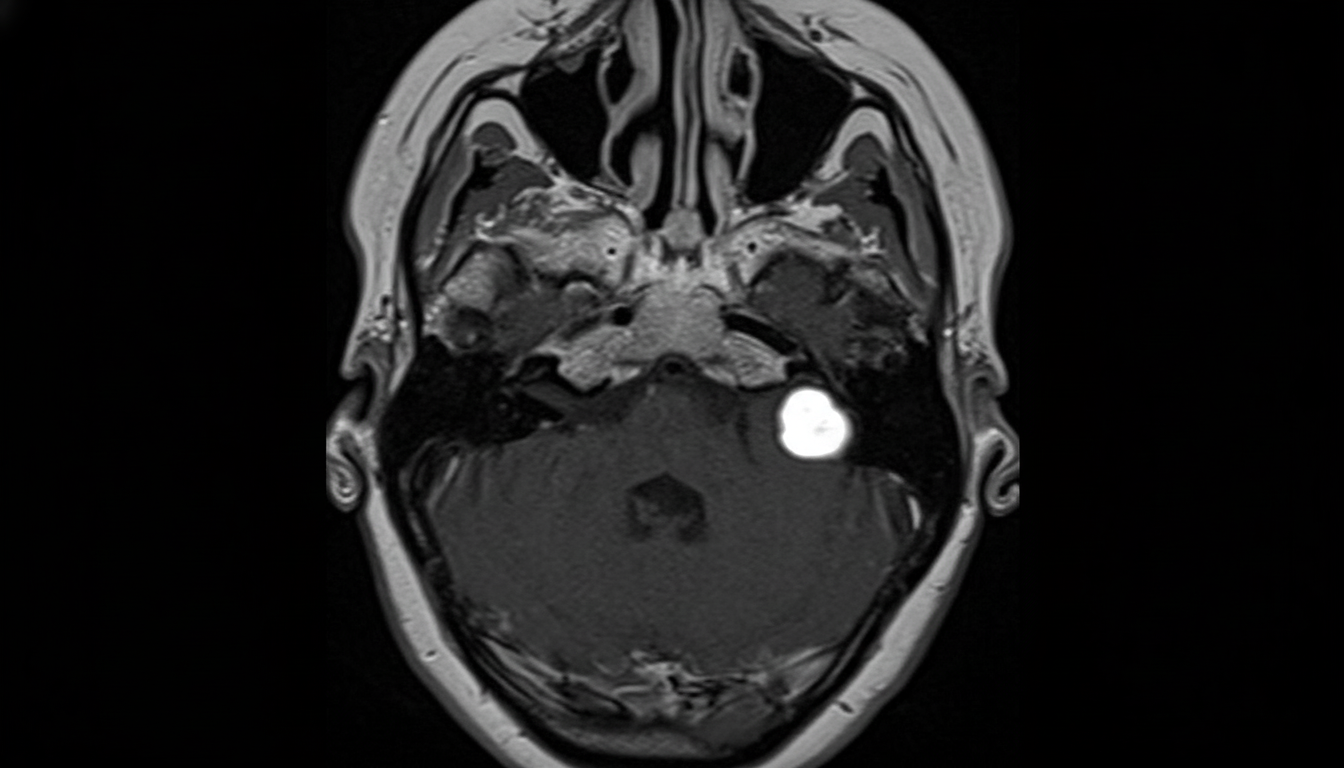
Which is a causative organism for malignant otitis externa?
Which of the following is not a pneumatic bone?
Meniere's disease is characterised by all of the following except:
Which of the following is involved in Gradenigo's syndrome?
Which of the following statements about the tympanic membrane is FALSE?
A positive Rinne test indicates which of the following?
Which of the following is false about acoustic neuroma?
What is the most common fungus causing otomycosis?
Which of the following muscles causes the opening of the Eustachian tube?
A patient hears better in noisy surroundings. This phenomenon is known as:
Explanation: **Explanation:** **Malignant Otitis Externa (MOE)**, also known as Necrotizing Otitis Externa, is a severe, life-threatening infection of the external auditory canal that spreads to the skull base (osteomyelitis). 1. **Why Bacteria is Correct:** The primary causative agent is **Bacteria**, specifically ***Pseudomonas aeruginosa*** (found in >95% of cases). It is an opportunistic pathogen that invades the subepithelial tissues, especially in immunocompromised individuals or elderly diabetics. The bacteria produce exotoxins and enzymes (like collagenase) that cause tissue necrosis and facilitate bony destruction of the temporal bone. 2. **Why Other Options are Incorrect:** * **Virus:** Viral infections (like HSV or VZV) typically cause conditions like Ramsay Hunt Syndrome, not invasive necrotizing osteomyelitis. * **Fungi:** While *Aspergillus niger* or *Candida* can cause Otomycosis (superficial infection), fungal malignant otitis externa is extremely rare and usually only seen in profoundly end-stage immunocompromised states (e.g., advanced AIDS). * **Protozoa:** Protozoa do not cause ear canal infections. **High-Yield Clinical Pearls for NEET-PG:** * **Risk Factors:** Elderly diabetics (most common) and HIV-positive patients. * **Pathognomonic Sign:** Presence of **granulation tissue** at the junction of the cartilaginous and bony part of the external auditory canal (isthmus). * **Clinical Presentation:** Severe, deep-seated otalgia (out of proportion to clinical findings) and persistent otorrhea. * **Cranial Nerve Involvement:** The **Facial nerve (CN VII)** is the most common nerve involved as the infection exits the stylomastoid foramen. * **Investigation of Choice:** **CT scan** to assess bony erosion; **Technetium-99m scan** for initial diagnosis (detects osteoblastic activity); **Gallium-67 scan** to monitor treatment response (shows resolution of infection). * **Treatment:** Long-term intravenous anti-pseudomonal antibiotics (e.g., Ciprofloxacin, Ceftazidime).
Explanation: **Explanation:** Pneumatic bones are characterized by the presence of air-filled cavities (sinuses or air cells) lined by mucous membrane. These structures serve to reduce the weight of the skull, provide resonance to the voice, and act as thermal insulators for vital structures. **Why Malleus is the correct answer:** The **Malleus**, along with the Incus and Stapes, is an auditory ossicle. Unlike the surrounding temporal bone, ossicles are **compact bones** and do not contain air-filled cavities within their structure. While they reside *within* the air-filled middle ear cavity, the bones themselves are solid. **Analysis of incorrect options:** * **Ethmoid & Sphenoid:** These are classic examples of paranasal sinuses. The ethmoid contains numerous small air cells (anterior, middle, and posterior), while the sphenoid bone houses the large sphenoid sinus. * **Mastoid:** This is part of the temporal bone. It undergoes "pneumatization" during early childhood, resulting in a system of interconnected mastoid air cells that communicate with the middle ear via the aditus ad antrum. **Clinical Pearls for NEET-PG:** * **Pneumatization:** The mastoid antrum is the first air cell to develop and is present at birth. Full pneumatization of the mastoid process continues until age 6–12. * **Classification of Mastoid:** Based on pneumatization, mastoids are classified as **Sclerotic** (no cells), **Diploic** (marrow spaces), or **Pneumatic** (well-developed air cells). * **High-Yield Fact:** The **Maxilla** is the first paranasal sinus to develop (rudimentary at birth), while the **Frontal** sinus is the last to appear radiographically (around age 6-7).
Explanation: **Explanation:** Meniere’s Disease (Endolymphatic Hydrops) is an inner ear disorder characterized by an abnormal accumulation of endolymph within the membranous labyrinth. The classic clinical presentation consists of a **triad** (or tetrad) of symptoms, which helps differentiate it from other causes of vertigo. **Why Diplopia is the Correct Answer:** **Diplopia (double vision)** is a visual symptom typically associated with cranial nerve palsies (III, IV, or VI) or brainstem pathology. Meniere’s disease is a peripheral vestibular disorder; it does not involve the extraocular muscles or their nerve supply. Therefore, diplopia is **not** a feature of Meniere’s. **Analysis of Other Options:** * **Vertigo:** Patients experience episodic, spontaneous, and disabling true rotatory vertigo, usually lasting 20 minutes to several hours, often accompanied by nausea and vomiting. * **Tinnitus:** This is typically low-pitched (roaring or sea-shell like) and often fluctuates in intensity, worsening during acute attacks. * **Fullness of Pressure:** Aural fullness is a common premonitory symptom caused by the increased pressure of the endolymph (hydrops) within the inner ear. **High-Yield Clinical Pearls for NEET-PG:** * **Hearing Loss:** Characteristically **Sensineural Hearing Loss (SNHL)** that is fluctuating and initially affects **low frequencies** (rising configuration on audiometry). * **Lermoyez Phenomenon:** A rare variant where hearing improves during a vertigo attack. * **Tullio Phenomenon:** Vertigo induced by loud sounds (occasionally seen in Meniere’s). * **Glycerol Test:** Used for diagnosis; glycerol acts as an osmotic diuretic to temporarily reduce endolymphatic pressure, leading to improved hearing. * **Management:** Low salt diet, diuretics (Acetazolamide), and Vestibular sedatives (Betahistine). Surgical options include Endolymphatic Sac decompression.
Explanation: **Explanation:** **Gradenigo’s Syndrome** (also known as apical petrositis) is a classic complication of otitis media involving the spread of infection to the petrous apex of the temporal bone. It is characterized by a clinical triad: 1. **Otorrhea** (Persistent ear discharge) 2. **Retro-orbital pain** (due to irritation of the **Trigeminal nerve/CN V**) 3. **Abducens nerve palsy** (Diplopia due to involvement of **CN VI** in Dorello’s canal) **Why Transverse Sinus is the correct answer:** In the context of NEET-PG questions regarding the venous complications of petrositis and Gradenigo’s syndrome, the infection often spreads via the venous system. The **Transverse sinus** (specifically its transition into the sigmoid sinus) is the most closely associated dural venous sinus involved in the spread of middle ear infections and petrous apicitis. Thrombophlebitis of the transverse sinus is a recognized sequela of the same suppurative process that causes Gradenigo’s syndrome. **Analysis of Incorrect Options:** * **Superior Sagittal Sinus:** This sinus runs along the falx cerebri; it is typically involved in trauma or infections of the scalp/frontal sinus, not otogenic petrositis. * **Cavernous Sinus:** While the petrous apex is near the cavernous sinus, primary cavernous sinus thrombosis usually presents with chemosis, proptosis, and multiple cranial nerve palsies (III, IV, V, VI), which is distinct from the localized triad of Gradenigo’s. * **Sigmoid Sinus:** While the sigmoid sinus is frequently involved in mastoiditis, the **Transverse sinus** is the classic association cited in standard ENT literature regarding the venous extension of this specific syndrome. **High-Yield Clinical Pearls:** * **Dorello’s Canal:** The anatomical site where the Abducens nerve (CN VI) is compressed under the petrosphenoid ligament. * **Investigation of Choice:** Contrast-enhanced MRI (shows enhancement of the petrous apex) or HRCT of the temporal bone. * **Treatment:** Aggressive intravenous antibiotics and, if necessary, surgical drainage (Petrous apicectomy).
Explanation: ### Explanation **1. Why Option C is the Correct (False) Statement:** A normal tympanic membrane (TM) consists of three distinct layers: an outer epithelial layer (ectoderm), a middle fibrous layer (mesoderm), and an inner mucosal layer (endoderm). When a perforation heals spontaneously, the **middle fibrous layer (lamina propria) fails to regenerate** properly. Consequently, a healed TM (often called a "monomeric" membrane) consists of only **two layers**: the outer epithelial and inner mucosal layers. This makes the healed area thinner, more translucent, and prone to retraction. **2. Analysis of Other Options:** * **Option A (True):** The cone of light is a triangular reflection of the otoscope light seen in the **antero-inferior quadrant**. It radiates from the umbo towards the periphery. * **Option B (True):** The TM is divided into two parts: the **Pars Flaccida** (Shrapnell’s membrane), which is the small, superior, lax portion above the lateral process of the malleus, and the **Pars Tensa**, which forms the majority of the membrane. * **Option D (True):** The **umbo** is the most central, depressed part of the TM where the tip of the handle of the malleus is firmly attached. It is the point of maximum concavity. ### High-Yield Clinical Pearls for NEET-PG: * **Annulus Tympanicus:** The fibrous rim that anchors the pars tensa into the tympanic sulcus. It is **absent** in the Notch of Rivinus (superiorly), which is why the pars flaccida is "flaccid." * **Blood Supply:** The outer surface is supplied by the deep auricular branch of the maxillary artery; the inner surface by the anterior tympanic and stylomastoid arteries. * **Nerve Supply:** A common "catch" in exams—the inner surface is supplied by the **Glossopharyngeal nerve (CN IX)** via the tympanic plexus (Jacobson’s nerve). The outer surface is supplied by CN V3 and CN X.
Explanation: **Explanation:** The **Rinne test** is a tuning fork test (typically using 512 Hz) used to compare air conduction (AC) with bone conduction (BC) in the same ear. 1. **Why Option A is correct:** In a normal ear, the middle ear apparatus amplifies sound, making air conduction more efficient than bone conduction. A **Positive Rinne** occurs when the patient hears the sound longer or louder via air conduction (**AC > BC**). This is the finding in **normal hearing** and **sensorineural hearing loss (SNHL)** (though in SNHL, both AC and BC are reduced, the ratio remains AC > BC). 2. **Why other options are incorrect:** * **Option B (BC > AC):** This is a **Negative Rinne** test. It indicates a **conductive hearing loss (CHL)** of at least 15–20 dB, where the sound bypasses the defective middle ear mechanism via bone conduction. * **Option C (AC = BC):** This is often referred to as a "Rinne neutral" and is clinically interpreted as a transition toward a negative Rinne, typically seen in very mild conductive hearing loss. **High-Yield Clinical Pearls for NEET-PG:** * **False Negative Rinne:** Occurs in **severe unilateral SNHL**. The patient perceives the sound in the "dead" ear during the BC phase because the sound travels through the skull to the opposite functional cochlea. * **Weber Test:** Always interpret Rinne with the Weber test. In SNHL, Weber lateralizes to the **better** ear; in CHL, it lateralizes to the **poorer** ear. * **Frequency:** The **512 Hz** tuning fork is preferred because it has a good decay time and is less likely to trigger vibrotactile sensations compared to 256 Hz.
Explanation: **Explanation:** Acoustic Neuroma (Vestibular Schwannoma) is a **benign, slow-growing tumor** arising from the Schwann cells of the vestibular portion of the 8th cranial nerve. **1. Why Option D is the Correct Answer (False Statement):** Acoustic neuroma is histologically **benign**. It does not metastasize. While it can be life-threatening due to local compression of vital structures in the posterior fossa (brainstem, cerebellum), it is not a malignant (cancerous) lesion. **2. Analysis of Other Options:** * **Option A (Encapsulated):** This is **true**. These tumors are well-circumscribed, encapsulated lesions that typically push the nerve fibers aside rather than infiltrating them. * **Option B (Most common CP angle tumor):** This is **true**. Acoustic neuromas account for approximately **80-85%** of all tumors found in the cerebellopontine (CP) angle. * **Option C (Inferior vs. Superior nerve):** This is **true**. Most studies and surgical findings indicate that the tumor most commonly originates from the **inferior vestibular nerve**, followed by the superior vestibular nerve. **Clinical Pearls for NEET-PG:** * **Origin:** Specifically the **Obersteiner-Redlich zone** (the transition zone between central and peripheral myelin). * **Early Symptom:** Progressive unilateral sensorineural hearing loss (SNHL) and tinnitus. * **Gold Standard Investigation:** Gadolinium-enhanced **MRI** of the Internal Auditory Canal (IAC). * **Histology:** Shows **Antoni A** (dense cells, Verocay bodies) and **Antoni B** (loose stroma) patterns. * **Bilateral Tumors:** Pathognomonic for **Neurofibromatosis Type 2 (NF2)**. * **Hitselberger’s Sign:** Hypesthesia of the posterior meatal wall due to compression of facial nerve sensory fibers.
Explanation: **Explanation:** **Otomycosis** is a fungal infection of the external auditory canal, often triggered by hot and humid climates, prolonged use of topical antibiotics, or immunocompromised states. **Why Candida is the correct answer:** While *Aspergillus niger* is frequently cited in many textbooks as a primary cause of otomycosis, recent epidemiological trends and clinical studies (often reflected in NEET-PG patterns) highlight **Candida albicans** as the most common fungal isolate in several series, particularly in patients with chronic suppurative otitis media (CSOM) or those using steroid ear drops. It typically presents with white, curd-like debris (resembling "wet cotton wool"). **Analysis of Incorrect Options:** * **A. Histoplasma:** This is a systemic fungal infection (Histoplasmosis) primarily affecting the lungs. It does not typically cause localized external ear infections. * **C. Mucor:** *Mucormycosis* is an aggressive, angioinvasive fungal infection. In ENT, it usually presents as Rhino-oculo-cerebral mucormycosis in diabetic or severely immunocompromised patients, rather than simple otomycosis. * **D. Penicillin:** This is an antibiotic derived from the fungus *Penicillium*, not a causative agent of otomycosis. **NEET-PG Clinical Pearls:** * **Aspergillus niger:** Characterized by black, "sooty" spores (resembling newspaper print). * **Aspergillus fumigatus:** Typically presents with pale blue or green appearances. * **Symptoms:** Intense itching (pruritus), ear pain (otalgia), and a "fullness" sensation. * **Treatment:** The mainstay is thorough **aural toilet** (cleaning) followed by topical antifungals like Clotrimazole or Nystatin. Avoid topical antibiotics/steroids during treatment.
Explanation: ### Explanation The Eustachian tube (ET) is a dynamic structure that connects the middle ear to the nasopharynx. Its primary functions are pressure equalization, protection, and drainage. At rest, the tube is closed; it opens during swallowing, yawning, or sneezing. **1. Why Tensor Veli Palatini (TVP) is the Correct Answer:** The **Tensor Veli Palatini** is the primary muscle responsible for the active opening of the Eustachian tube. It originates partly from the scaphoid fossa and the lateral cartilaginous wall of the ET. When it contracts, it pulls the lateral wall of the tube laterally and inferiorly, thereby dilating the lumen. * **Nerve Supply:** Mandibular nerve (V3)—this is a high-yield exception, as most other palatal muscles are supplied by the Pharyngeal plexus. **2. Why the Other Options are Incorrect:** * **Salpingopharyngeus (Option A):** While it attaches to the lower part of the ET cartilage, its primary action is to elevate the pharynx and larynx during swallowing. It plays a negligible role in opening the tube. * **Levator Veli Palatini (Option B):** This muscle lies medial to the tube. Its contraction primarily elevates the soft palate. While it may provide a "sliding" support to the tube's floor, it is not the primary dilator. * **Tensor Tympani:** (Often confused with TVP) This muscle is located in the middle ear and attaches to the malleus to dampen loud sounds; it does not open the ET. **3. Clinical Pearls for NEET-PG:** * **The "Safety Muscle":** TVP is often called the "dilator tubae." * **Ostmann’s Fat Pad:** Located lateral to the ET, it helps keep the tube closed; its loss (e.g., in rapid weight loss) leads to a **Patulous Eustachian Tube**. * **Cleft Palate:** Children with cleft palate often suffer from Otitis Media with Effusion (OME) because the TVP lacks a stable midline anchorage, leading to ET dysfunction. * **Innervation Rule:** All muscles of the palate are supplied by the Cranial accessory nerve via the Pharyngeal plexus **EXCEPT** the Tensor Veli Palatini (V3).
Explanation: ### Explanation The phenomenon described is **Paracusis Willisii**. It is a classic clinical feature where a patient with **conductive hearing loss (CHL)**, most notably **Otosclerosis**, perceives that they hear speech better in noisy environments. **1. Why Paracusis is the Correct Answer:** In a noisy room, people naturally increase the volume of their voices to be heard over the background noise (the Lombard effect). A patient with conductive hearing loss has a "masking" effect provided by their pathology; the conductive block filters out the low-frequency background noise, while the loud speech of the companion reaches the patient's intact cochlea clearly. Thus, they perceive speech better than they would in a quiet room. **2. Analysis of Incorrect Options:** * **B. Diplacusis:** This refers to "double hearing," where a single sound is perceived differently by the two ears (in terms of pitch or timing). It is often seen in Ménière’s disease due to inner ear distortion. * **C. Hyperacusis:** An abnormal sensitivity or intolerance to ordinary environmental sounds. It is commonly associated with Bell’s palsy (due to stapedius muscle paralysis) or sensory processing issues. * **D. Presbycusis:** Age-related sensorineural hearing loss (SNHL). These patients typically hear *worse* in noisy surroundings because they lose the ability to discriminate speech from background noise. **3. High-Yield Clinical Pearls for NEET-PG:** * **Otosclerosis Triad:** Conductive hearing loss, Tinnitus, and Paracusis Willisii. * **Schwartze Sign:** A flamingo-pink flush seen on the promontory through the TM, indicating active otosclerosis. * **Gelle’s Test:** Used to differentiate ossicular fixation (negative result) from a mobile chain. * **Carhart’s Notch:** A characteristic dip in the bone conduction threshold at **2000 Hz** seen in Otosclerosis.
Vestibular System Anatomy and Physiology
Practice Questions
Vestibular Testing
Practice Questions
Benign Paroxysmal Positional Vertigo
Practice Questions
Ménière's Disease
Practice Questions
Vestibular Neuritis
Practice Questions
Labyrinthitis
Practice Questions
Acoustic Neuroma
Practice Questions
Other Cerebellopontine Angle Tumors
Practice Questions
Facial Nerve Disorders
Practice Questions
Skull Base Surgery
Practice Questions
Cochlear Implantation
Practice Questions
Vestibular Schwannoma Management
Practice Questions
Get full access to all questions, explanations, and performance tracking.
Start For Free