Ceruminous glands are modified-
Infection within the right cavernous sinus results in the following signs except?
What is the mechanical advantage provided by the lever action of the malleus?
What is the function of the cochlear aqueduct?
Frey syndrome is characterized by which of the following?
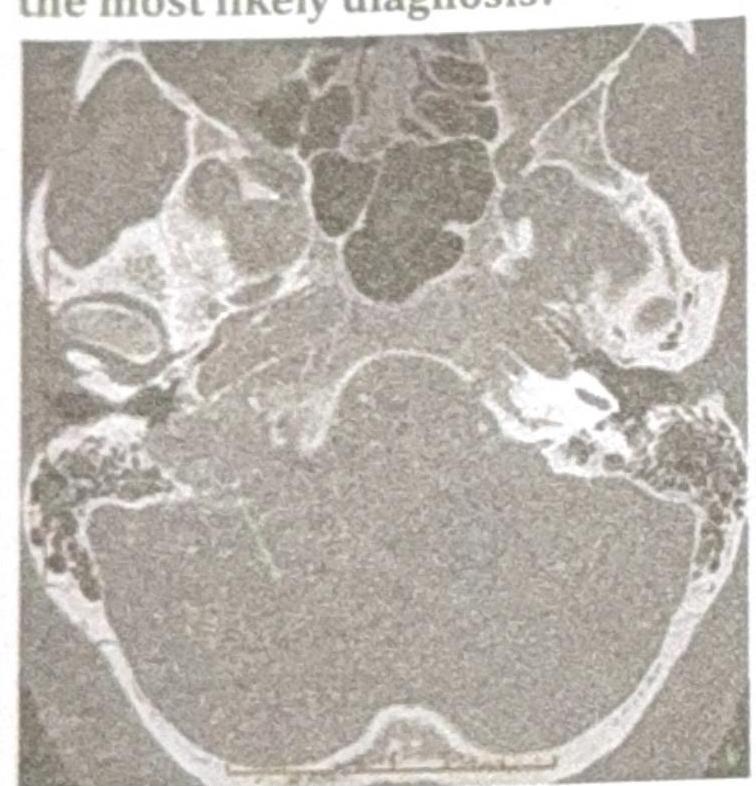
Sclerosing otitis media is diagnosed by?
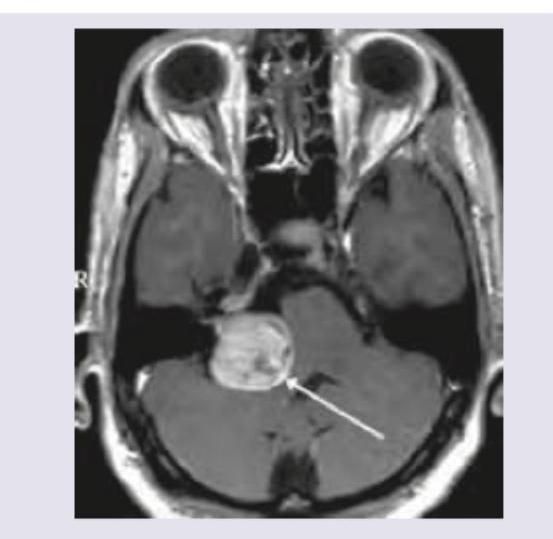
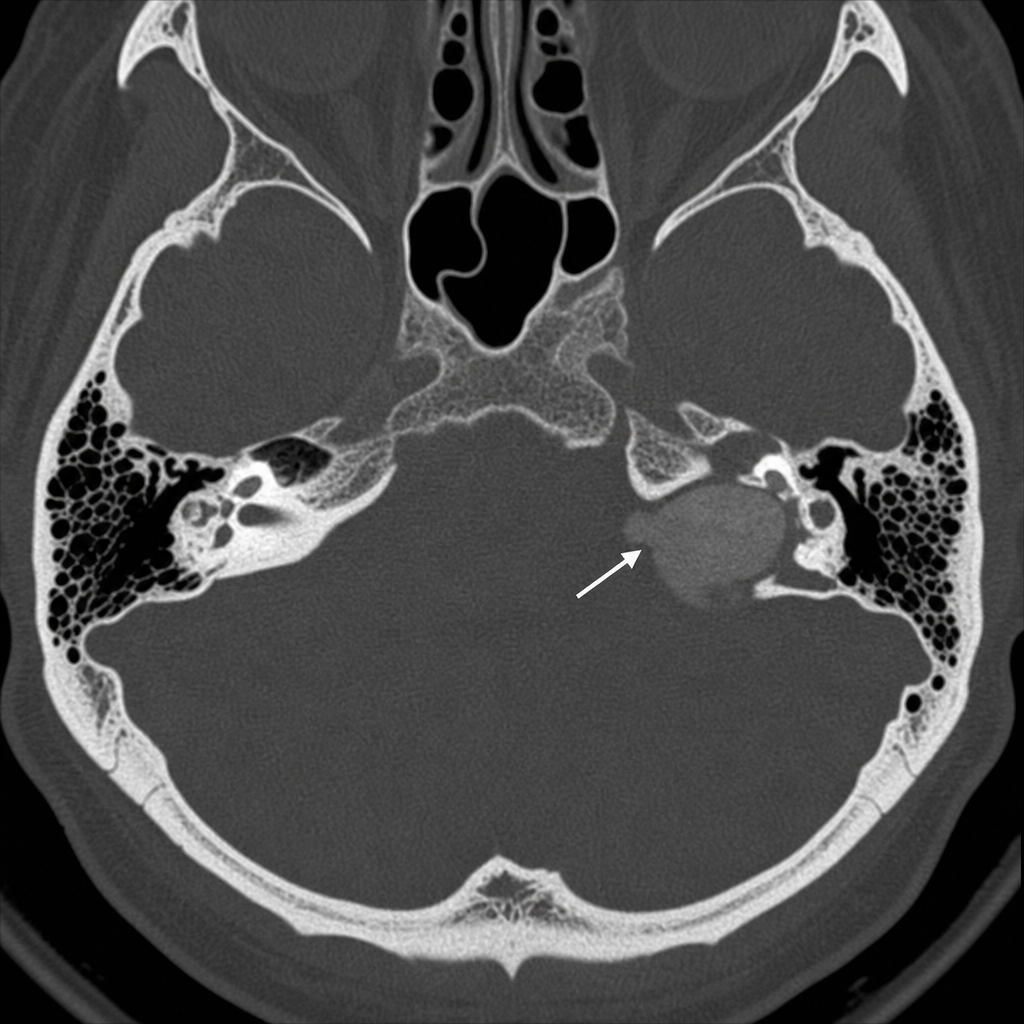
What is the treatment of choice for acoustic neuroma?
Dehiscence of the anterior wall of the external auditory canal causes infection to the parotid gland. What is this condition known as?
What is the primary treatment for adenoid hypertrophy?
Static equilibrium is due to which structure?
Explanation: **Explanation:** The external auditory canal (EAC) consists of a cartilaginous outer third and a bony inner two-thirds. The skin of the **cartilaginous portion** contains specialized structures: hair follicles, sebaceous glands, and ceruminous glands. **1. Why Apocrine Glands is Correct:** Ceruminous glands are **modified apocrine sweat glands**. They are located in the subcutaneous layer of the outer cartilaginous EAC. These glands produce a milky secretion that, when mixed with the fatty secretions of sebaceous glands and desquamated epithelial cells, forms **cerumen (earwax)**. Cerumen serves a protective role by lubricating the canal and maintaining an acidic pH (approx. 6.1) to inhibit bacterial and fungal growth. **2. Why Other Options are Incorrect:** * **Eccrine glands:** These are the common sweat glands found over most of the body surface (e.g., palms, forehead) involved in thermoregulation. They are not found in the EAC. * **Sebaceous glands:** While sebaceous glands *are* present in the EAC and contribute the lipid component to earwax, the ceruminous glands themselves are specifically modified apocrine glands, not sebaceous. **Clinical Pearls for NEET-PG:** * **Location:** Ceruminous glands are found **only** in the outer 1/3 (cartilaginous part) of the EAC. Therefore, wax is never formed in the bony part unless pushed there by Q-tips. * **Ceruminoma:** A rare tumor arising from these glands. While often benign (pleomorphic adenoma), they can be malignant (adenoid cystic carcinoma). * **Protective Function:** Cerumen contains **Lysozyme and Immunoglobulins**, providing an immunological barrier against infection.
Explanation: ### Explanation The cavernous sinus is a critical venous channel containing several neurovascular structures. Understanding its anatomy is essential for solving clinical scenarios involving cavernous sinus thrombosis (CST). **1. Why "Constricted pupils" is the correct (Except) answer:** Pupillary constriction is mediated by **parasympathetic fibers** traveling with the Oculomotor nerve (CN III). In cavernous sinus lesions, CN III is typically compressed or damaged, leading to a loss of parasympathetic input. This results in a **dilated (mydriatic) and fixed pupil**, not a constricted one. Additionally, sympathetic fibers (which dilate the pupil) wrap around the internal carotid artery within the sinus; their involvement can lead to Horner’s syndrome (miosis), but the hallmark of a complete cavernous sinus syndrome is a **mid-dilated, non-reactive pupil** due to the combined loss of sympathetic and parasympathetic tones. **2. Analysis of Incorrect Options:** * **Engorgement of retinal veins:** The cavernous sinus receives venous drainage from the superior and inferior ophthalmic veins. Obstruction (thrombosis) leads to venous stasis, resulting in retinal vein engorgement, papilledema, and chemosis. * **Ptosis:** This occurs due to paralysis of the **Levator palpebrae superioris** muscle (supplied by CN III) and potentially the superior tarsal muscle (sympathetic supply). * **Ophthalmoplegia:** The sinus contains **CN III, IV, and VI**. Damage to these nerves leads to paralysis of the extraocular muscles, resulting in total ophthalmoplegia (inability to move the eye). **3. NEET-PG High-Yield Pearls:** * **Structures passing THROUGH the sinus:** Internal Carotid Artery (ICA) and Abducens nerve (CN VI). CN VI is usually the **first** nerve affected. * **Structures in the LATERAL WALL:** CN III, CN IV, Ophthalmic (V1), and Maxillary (V2) nerves. * **Danger Triangle of the Face:** Infections from the upper lip/nose can spread to the cavernous sinus via the **facial vein and superior ophthalmic vein** (which lack valves). * **Clinical Triad of CST:** Chemosis, proptosis, and ophthalmoplegia.
Explanation: The middle ear acts as an **impedance matching transformer**, ensuring that sound energy is efficiently transferred from the air to the fluid-filled cochlea. Without this mechanism, approximately 99.9% of sound energy would be reflected. ### 1. The Lever Action Mechanism (The Correct Answer) The **Lever Ratio** is one of the three primary components of the impedance matching mechanism. It is derived from the difference in length between the **handle of the malleus** (longer) and the **long process of the incus** (shorter). * The malleus handle is approximately **1.3 times longer** than the long process of the incus. * This creates a mechanical advantage of **1.3:1**, effectively increasing the force of the vibrations at the stapes footplate. ### 2. Analysis of Incorrect Options * **A (2:1):** This overestimates the length difference. While the total transformer ratio is high, the specific lever component is much smaller. * **C (1.8:1):** This is often confused with the curved membrane effect (the "buckling effect" of the tympanic membrane), which provides a mechanical advantage of approximately **2:1**. * **D (1:1):** This would imply no mechanical advantage, which would result in significant hearing loss (approx. 30 dB). ### 3. High-Yield Clinical Pearls for NEET-PG * **Areal Ratio (Hydraulic Action):** This is the most significant contributor to impedance matching. The effective area of the TM (55 $mm^2$) vs. the Stapes footplate (3.2 $mm^2$) gives a ratio of **17:1**. * **Total Transformer Ratio:** Calculated by multiplying the Areal Ratio (17) by the Lever Ratio (1.3), resulting in a total advantage of approximately **22:1**. * **Decibel Gain:** The middle ear provides a total gain of about **25–30 dB**. * **Clinical Correlation:** In cases of ossicular discontinuity (e.g., necrosis of the long process of the incus), this lever action is lost, leading to conductive hearing loss.
Explanation: **Explanation:** The **cochlear aqueduct** is a narrow bony channel that houses the **perilymphatic duct**. Its primary physiological function is to provide a communication pathway between the **scala tympani** of the internal ear and the **subarachnoid space** of the posterior cranial fossa. **Why Option C is Correct:** The cochlear aqueduct allows for the free exchange of fluid and pressure between the **perilymph** (internal ear) and the **cerebrospinal fluid (CSF)** (subarachnoid space). Because of this connection, perilymph is chemically similar to CSF (high $Na^+$, low $K^+$). **Analysis of Incorrect Options:** * **Option A:** The cochlear aqueduct contains perilymph, not endolymph. Endolymph is contained within the membranous labyrinth (e.g., scala media). * **Option B:** The cochlea and vestibule are connected via the **ductus reuniens**, which specifically connects the saccule to the cochlear duct. * **Option D:** The **scala media** is the endolymph-filled middle compartment of the cochlea. The cochlear aqueduct originates from the scala tympani (a perilymphatic space). **High-Yield Clinical Pearls for NEET-PG:** * **Pressure Regulation:** The aqueduct helps equilibrate pressure between the CSF and the inner ear. Sudden changes in CSF pressure (e.g., during a lumbar puncture) can theoretically be transmitted to the inner ear. * **Route of Infection:** It can serve as a potential route for the spread of infection from the meninges to the labyrinth, leading to **labyrinthitis** following meningitis. * **Endolymphatic Duct vs. Cochlear Aqueduct:** Do not confuse the two. The *Endolymphatic duct* connects the saccule/utricle to the endolymphatic sac (located between layers of dura), whereas the *Cochlear aqueduct* connects perilymph to the subarachnoid space.
Explanation: **Explanation:** **Frey Syndrome (Auriculotemporal Syndrome)** is a common complication following parotid surgery (parotidectomy) or trauma to the parotid region. **Why Gustatory Sweating is Correct:** The underlying mechanism is **aberrant regeneration** of nerve fibers. During parotid surgery, the **parasympathetic** fibers of the **auriculotemporal nerve** (which normally supply the parotid gland for salivation) are severed. During healing, these fibers misdirect and regrow to innervate the overlying **sympathetic** sweat glands and subcutaneous blood vessels. Consequently, a stimulus for salivation (seeing or eating food) results in localized sweating and flushing of the skin over the parotid area—a phenomenon known as **gustatory sweating**. **Analysis of Incorrect Options:** * **A. Crocodile Tears (Bogorad’s Syndrome):** This is also due to aberrant nerve regeneration, but it involves the **facial nerve**. Parasympathetic fibers intended for the submandibular/sublingual glands misdirect to the **lacrimal gland**, causing tearing while eating. * **B. Merciful Anosmia:** This refers to the loss of smell seen in **Ozaena (Atrophic Rhinitis)**. It is "merciful" because the patient cannot smell the foul odor (putrefaction) emanating from their own nose, though others can. **High-Yield Clinical Pearls for NEET-PG:** * **Diagnostic Test:** The **Minor’s Starch-Iodine Test** is the gold standard. Iodine is applied to the skin, followed by starch; sweating turns the area blue-black. * **Prevention:** Interposing a barrier (e.g., SMAS flap or acellular dermal matrix) during surgery. * **Treatment:** Topical anticholinergics or **Botulinum toxin (Botox)** injections are the preferred medical management.
Explanation: **Explanation:** **Sclerosing Otitis Media** (also known as Tympanosclerosis) is a condition characterized by the hyalinization and subsequent calcification of the subepithelial connective tissue of the tympanic membrane and middle ear mucosa. It often occurs as a sequel to chronic otitis media or recurrent episodes of secretory otitis media. **Why Otoscopy is the Correct Answer:** The diagnosis of sclerosing otitis media is primarily **clinical**. On otoscopic examination, the hallmark finding is the presence of **chalky white patches** or plaques on the tympanic membrane (myringosclerosis) or the middle ear mucosa. These patches have a characteristic "horseshoe" or "semilunar" appearance. Because these changes are visible to the naked eye, otoscopy is the definitive diagnostic tool. **Analysis of Incorrect Options:** * **Impedance Audiometry:** While it may show a "Type As" (admittance stiffened) curve due to increased stiffness of the drum, it is not diagnostic of the pathology itself; it only measures the physiological consequence. * **Pure Tone Audiometry (PTA):** This assesses the degree of conductive hearing loss. While it helps quantify the functional impact, it cannot differentiate sclerosing otitis media from other causes of ossicular fixation or middle ear effusion. * **X-ray:** Conventional radiography (like Schuller’s view) is outdated and lacks the resolution to identify thin calcific plaques on the tympanic membrane. **High-Yield Clinical Pearls for NEET-PG:** * **Pathology:** It involves the deposition of calcium and phosphate crystals in the fibrous layer of the TM. * **Chalky White Appearance:** This is the most common descriptor used in exam stems. * **Clinical Significance:** Most cases are asymptomatic. However, if the plaques involve the ossicular chain (especially the stapes), it leads to significant **conductive hearing loss**. * **Management:** Usually no treatment is required unless hearing is affected, in which case a hearing aid or reconstructive surgery (stapedectomy/tympanoplasty) is considered.
Explanation: **Explanation:** **Acoustic Neuroma (Vestibular Schwannoma)** is a benign, slow-growing tumor arising from the Schwann cells of the vestibular nerve (CN VIII), most commonly at the Internal Auditory Canal (IAC) or Cerebellopontine (CP) angle. **Why Surgery is the Correct Answer:** Surgery remains the **definitive treatment of choice** for most symptomatic acoustic neuromas. The primary goal is total tumor removal while preserving facial nerve function and, if possible, hearing. Common surgical approaches include the **Translabyrinthine** (best for large tumors with no useful hearing), **Retrosigmoid/Suboccipital** (hearing preservation possible), and **Middle Cranial Fossa** (for small intracanalicular tumors with preserved hearing). **Why Other Options are Incorrect:** * **A. Steroids:** These are used for inflammatory conditions or sudden sensorineural hearing loss but have no role in treating a neoplastic growth like a schwannoma. * **B. Radiotherapy:** While Stereotactic Radiosurgery (Gamma Knife) is an alternative for elderly patients, small residual tumors, or those medically unfit for surgery, it is generally considered a second-line or alternative option rather than the primary "treatment of choice." * **C. Anti-neoplastic drugs:** Acoustic neuromas are benign and do not respond to conventional chemotherapy. (Note: Bevacizumab is sometimes used in NF-2 patients, but it is not the standard of care). **High-Yield Clinical Pearls for NEET-PG:** * **Earliest Symptom:** Progressive unilateral sensorineural hearing loss (SNHL) and tinnitus. * **Earliest Sign:** Loss of corneal reflex (due to CN V involvement). * **Gold Standard Investigation:** Gadolinium-enhanced MRI. * **Bilateral Acoustic Neuromas:** Pathognomonic for **Neurofibromatosis Type 2 (NF-2)**. * **Audiometry Finding:** Retrocochlear pathology (Roll-over phenomenon and absent stapedial reflex).
Explanation: ### Explanation The correct answer is **A. Fissure of Santorini.** The external auditory canal (EAC) consists of an outer cartilaginous part (1/3rd) and an inner bony part (2/3rd). The cartilaginous portion is not a continuous sheet; it contains two or more vertical deficiencies in its anterior wall known as the **Fissures of Santorini**. These fissures are filled with connective tissue and serve as a potential pathway for the spread of infection or tumors between the EAC and the **parotid gland** or the infratemporal fossa. This is the anatomical basis for why a furuncle in the ear can cause pain during jaw movement or lead to parotid abscesses. #### Analysis of Incorrect Options: * **B. Notch of Rivinus:** This is a deficiency in the superior part of the bony tympanic annulus (the sulcus tympanicus). It is the site where the pars flaccida (Shrapnell’s membrane) of the tympanic membrane attaches. It is not located in the anterior wall of the EAC. * **C. Petrous fissure (Petrotympanic fissure):** Also known as the Glaserian fissure, it houses the chorda tympani nerve and the anterior tympanic artery. It opens into the temporomandibular joint (TMJ) rather than providing a direct path to the parotid gland. * **D. Retropharyngeal fissure:** This is not a standard anatomical term related to the EAC. The retropharyngeal space is a potential space behind the pharynx, unrelated to the anterior wall of the ear canal. #### High-Yield Clinical Pearls for NEET-PG: * **Foramen of Huschke:** This is a deficiency in the **anteroinferior** part of the **bony** EAC (seen in children up to 5 years, sometimes persisting in adults). It also allows communication between the EAC and the parotid gland/TMJ. * **Clinical Correlation:** Malignant Otitis Externa (MOE) often exploits the Fissures of Santorini and the Foramen of Huschke to spread to the skull base. * **Cartilaginous vs. Bony EAC:** Remember that the cartilaginous part contains hair follicles and ceruminous glands (site of furuncles), while the bony part does not.
Explanation: **Explanation:** Adenoid hypertrophy refers to the pathological enlargement of the pharyngeal tonsils, commonly leading to nasal obstruction, mouth breathing, and Eustachian tube dysfunction. **Why Nasal Decongestants are the Correct Answer:** In the initial management of symptomatic adenoid hypertrophy, the primary goal is to reduce mucosal edema and improve the nasal airway. **Nasal decongestants** (often used alongside nasal steroid sprays like Mometasone) act as the first-line medical therapy to shrink the lymphoid tissue and surrounding mucosa, thereby relieving obstructive symptoms. If medical management fails or if there are complications like OSA or recurrent otitis media, surgical intervention (Adenoidectomy) is considered. **Analysis of Incorrect Options:** * **B. Antibiotics:** While antibiotics are used to treat acute adenoiditis (infection), they are not the primary treatment for hypertrophy (enlargement) unless a chronic bacterial reservoir is suspected as the cause of the swelling. * **C. Beta-blockers:** These have no role in the management of lymphoid tissue or nasal obstruction. They are primarily used for cardiovascular conditions or infantile hemangiomas. * **D. None of the above:** Incorrect, as nasal decongestants/steroids are the standard pharmacological starting point. **NEET-PG High-Yield Pearls:** * **Clinical Presentation:** Look for the "Adenoid Facies" (dull expression, open mouth, crowded teeth, and high-arched palate). * **Gold Standard Investigation:** Diagnostic nasal endoscopy. However, for exams, a **Lateral view X-ray of the nasopharynx** (soft tissue neck) showing narrowing of the nasopharyngeal air space is a classic diagnostic pointer. * **Associated Condition:** Adenoid hypertrophy is the most common cause of **Otitis Media with Effusion (Glue Ear)** in children due to mechanical obstruction of the Eustachian tube.
Explanation: **Explanation:** The vestibular system is divided into two functional units responsible for maintaining balance: the **vestibule** (comprising the Utricle and Saccule) and the **Semicircular Canals**. **1. Why Macula is Correct:** The **Macula** is the sensory epithelium found within the Utricle and Saccule. It contains hair cells embedded in a gelatinous membrane weighted by calcium carbonate crystals called **otoconia**. Because of the weight of these otoconia, the macula is sensitive to gravity and linear acceleration. It is responsible for **Static Equilibrium** (sensing the head's position relative to gravity when stationary) and **Linear Acceleration** (e.g., riding in an elevator or a car). **2. Why other options are incorrect:** * **Cupula:** This is a gelatinous structure overlying the hair cells in the crista ampullaris. It has the same specific gravity as endolymph and does not contain otoconia, making it insensitive to static gravity. * **End organ of Corti:** This is the sensory organ for **hearing**, located within the cochlea. It has no role in equilibrium. * **Cristae ampullae:** Located in the ampulla of the semicircular canals, these are responsible for **Kinetic (Dynamic) Equilibrium**. They detect **angular acceleration** (rotational movements of the head). **High-Yield NEET-PG Pearls:** * **Utricle:** Detects horizontal linear acceleration. * **Saccule:** Detects vertical linear acceleration (gravity). * **BPPV (Benign Paroxysmal Positional Vertigo):** Caused when otoconia from the macula (usually the utricle) displace into the semicircular canals (most commonly the posterior canal). * **Scarpa’s Ganglion:** The vestibular ganglion where first-order neurons of the vestibular nerve are located.
Vestibular System Anatomy and Physiology
Practice Questions
Vestibular Testing
Practice Questions
Benign Paroxysmal Positional Vertigo
Practice Questions
Ménière's Disease
Practice Questions
Vestibular Neuritis
Practice Questions
Labyrinthitis
Practice Questions
Acoustic Neuroma
Practice Questions
Other Cerebellopontine Angle Tumors
Practice Questions
Facial Nerve Disorders
Practice Questions
Skull Base Surgery
Practice Questions
Cochlear Implantation
Practice Questions
Vestibular Schwannoma Management
Practice Questions
Get full access to all questions, explanations, and performance tracking.
Start For Free