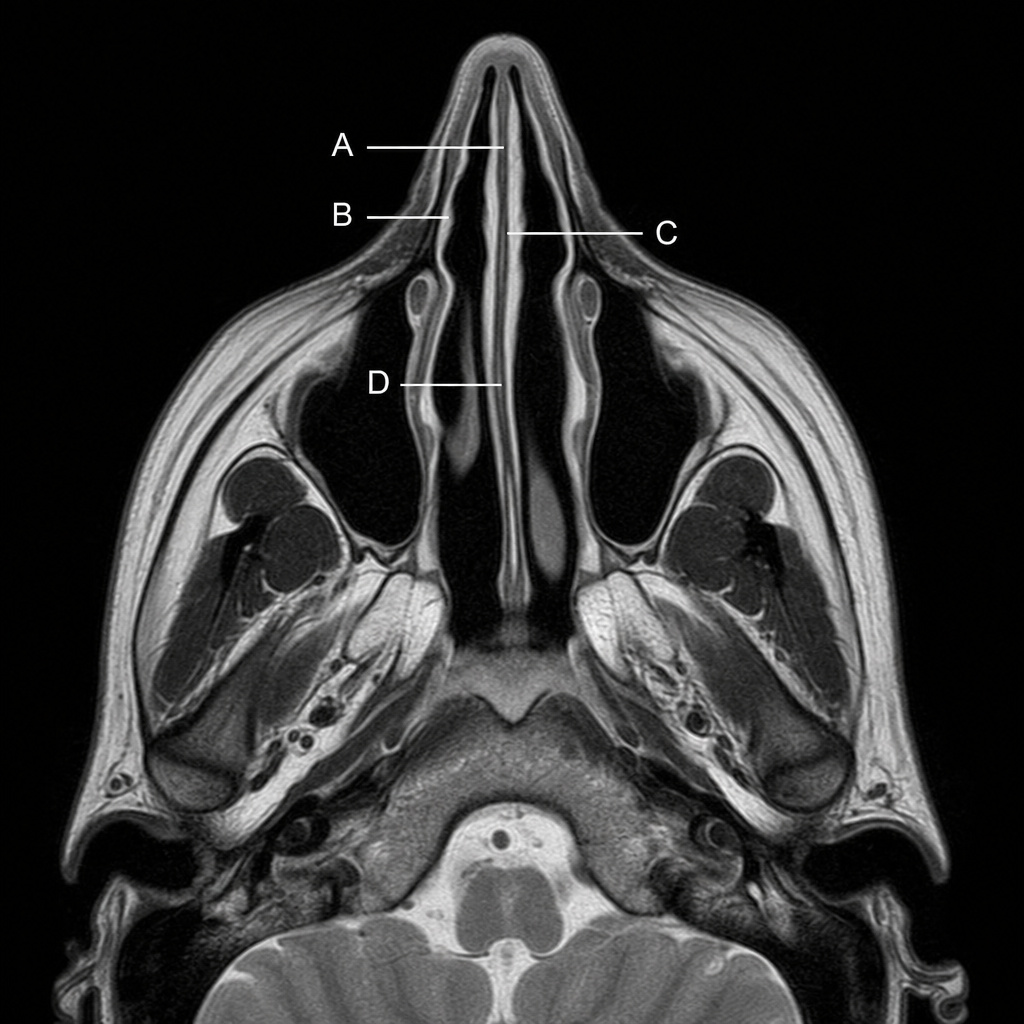
All are early complications of tracheostomy except:
One of the most important complication of tracheostomy is:
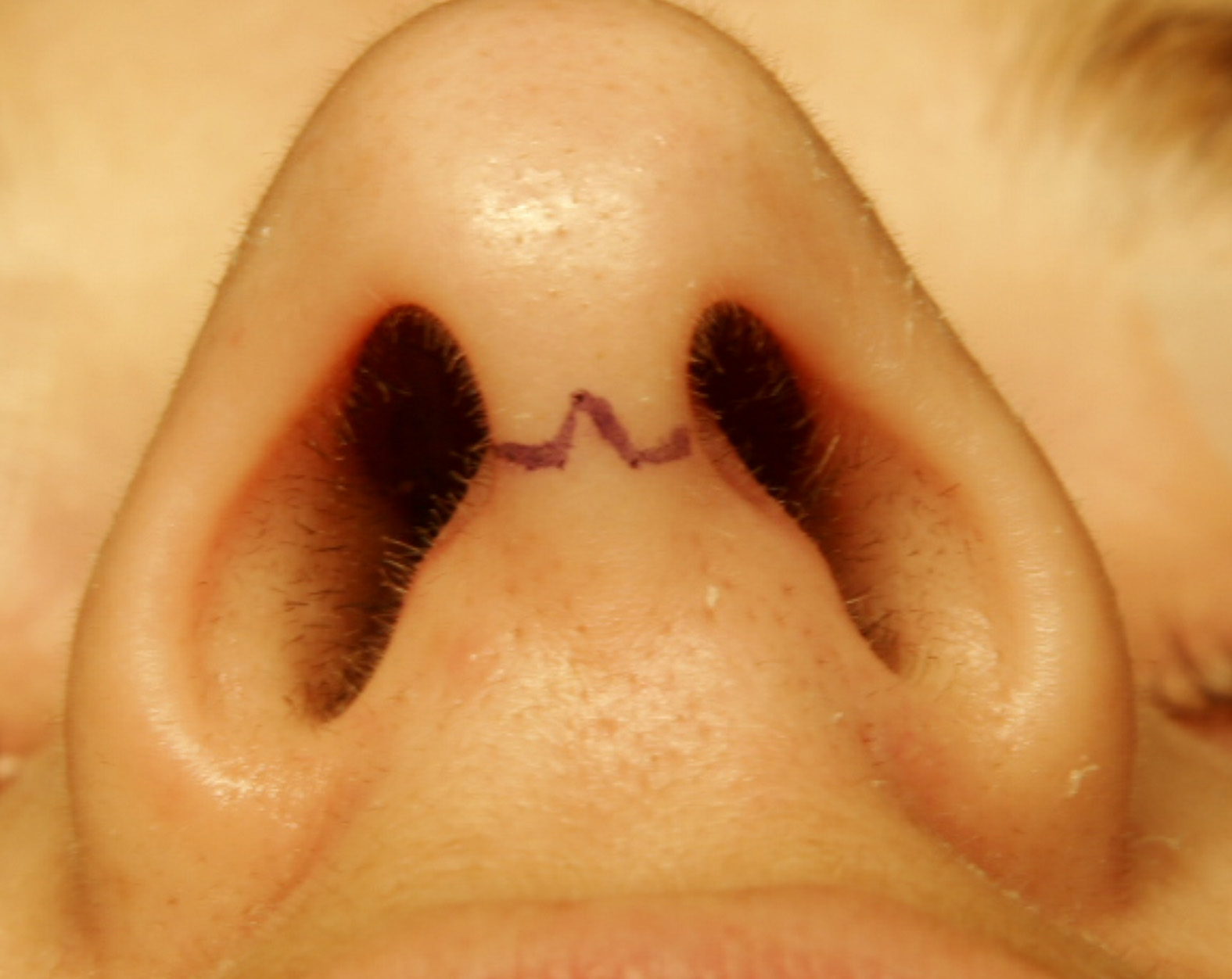
A nasal surgery was carried out with the incision shown in the image. What was the procedure likely carried out?
Which of the following is the most appropriate term for a graft when the donor and recipient are identical twins?
In which of the following situations is breast conservation surgery not indicated?
What is the eponymous term for a full-thickness skin graft?
Which flap is commonly used in breast reconstruction?
Where is a nasal antrostomy typically created following a Caldwell-Luc procedure?
Which of the following arteries is a branch of the facial artery?
In which condition is Young's operation performed?
Explanation: ***Tracheal stenosis*** - **Tracheal stenosis** is typically considered a **late complication** of tracheostomy, developing weeks to months after the procedure due to scar tissue formation. - It arises from chronic irritation or pressure from the tracheostomy tube, leading to narrowing of the trachea. *Hemorrhage* - **Hemorrhage** can occur intraoperatively or in the immediate postoperative period due to injury to blood vessels. - It is considered an **early complication** of tracheostomy. *Pneumothorax* - **Pneumothorax** can be an early technical complication resulting from accidental pleural injury during the tracheostomy procedure. - This typically manifests shortly after the surgery. *Injury to esophagus* - **Esophageal injury** is a rare but serious **early complication** that can occur during tracheostomy, often due to misplacement of surgical instruments. - It can lead to tracheoesophageal fistula formation if not promptly identified and managed.
Explanation: ***Displacement of tube*** - **Accidental decannulation** or displacement of the tracheostomy tube is considered one of the most serious and common complications, particularly in the immediate post-operative period. - This can lead to **loss of airway**, requiring immediate intervention to prevent severe hypoxia and potential brain injury or death. *Hemorrhage* - While hemorrhage can occur during or after tracheostomy, it is often a concern during the procedure or in the immediate postoperative period and is usually managed effectively. - Significant, life-threatening hemorrhage such as **tracheo-innominate fistula** is a rare but severe complication. *Surgical emphysema* - Surgical emphysema (subcutaneous emphysema) is a relatively common but usually benign complication that occurs when air leaks from the trachea into the subcutaneous tissues. - It typically resolves spontaneously and rarely poses a direct threat to the airway unless severe and rapidly progressive. *Recurrent laryngeal nerve palsy* - **Recurrent laryngeal nerve injury** is a rare complication of tracheostomy, as the nerve is usually well clear of the incision site in the neck. - While it can cause hoarseness or vocal cord paralysis, it typically does not present an immediate life-threatening situation or emergency comparable to airway compromise.
Explanation: ***Open rhinoplasty*** - The image displays a **transcolumellar incision** (typically inverted V or W-shaped), which is the hallmark approach for **open rhinoplasty**. - This incision allows for direct visualization of the underlying nasal cartilages and bones, enabling precise reshaping of the nose. *Submucosal resection (SMR)* - SMR is a procedure to correct a **deviated nasal septum** by removing cartilage or bone from beneath the mucoperichondrial flaps. - It involves an **intranasal incision**, usually along the septal mucosa, not an external transcolumellar incision. *FESS (Functional Endoscopic Sinus Surgery)* - FESS is a minimally invasive procedure used to treat **chronic sinusitis** and other sinus conditions. - It is performed entirely **endoscopically through the nostrils**, with no external incisions on the nasal columella. *Caldwell-Luc's procedure* - This procedure accesses the **maxillary sinus** through an incision in the upper gum beneath the lip. - It is used for drainage of the maxillary sinus or removal of foreign bodies/tumors, and does not involve an external nasal incision.
Explanation: ***Isograft*** - An **isograft** refers to a transplant where the donor and recipient are **genetically identical**, such as in the case of **identical twins**. - Due to their identical genetic makeup, there is typically **no immune rejection** of the graft, as the recipient's immune system recognizes the donor's tissues as "self." *Xenograft* - A **xenograft** involves grafting tissue from a donor of **one species to a recipient of another species**, such as porcine heart valves transplanted into humans. - These grafts often face significant **immune rejection** due to the large genetic differences between species. *Allograft* - An **allograft** is a transplant between **two genetically non-identical individuals of the same species**, such as an organ transplant between unrelated humans. - These grafts require **immunosuppressive therapy** to prevent rejection, as the recipient's immune system will recognize the donor's tissue as foreign. *Autograft* - An **autograft** involves transplanting tissue from **one part of an individual's body to another part of the same individual's body**, such as a skin graft from the thigh to the arm. - Since the tissue comes from the same individual, there is **no risk of immune rejection**.
Explanation: ***All of the options*** - All listed scenarios—**large pendular breast**, **SLE**, and **diffuse microcalcification**—represent situations where breast conservation surgery is generally contraindicated or challenging. - Their presence often necessitates alternative treatment approaches, such as mastectomy, to achieve optimal oncologic and cosmetic outcomes. *Large pendular breast* - While not an absolute contraindication, a **very large or pendulous breast** can make it difficult to achieve a satisfactory cosmetic outcome after breast conservation surgery. - The disproportionate breast size post-lumpectomy may lead to significant **asymmetry**, requiring further reconstructive procedures. *SLE* - Patients with **Systemic Lupus Erythematosus (SLE)** are at an increased risk of complications from radiation therapy, a mandatory component of breast conservation surgery. - They tend to experience more severe and prolonged **acute and chronic skin reactions** to radiation, which can significantly impair healing and quality of life. *Diffuse microcalcification* - **Diffuse microcalcification** within the breast can indicate widespread in situ carcinoma (e.g., DCIS) or an invasive carcinoma with extensive intraductal component. - In such cases, achieving **clear surgical margins** with breast conservation surgery can be challenging and often leads to multiple re-excisions or an increased risk of local recurrence.
Explanation: ***Wolfe's graft*** - A **Wolfe's graft** is the eponymous term for a **full-thickness skin graft**, which includes the epidermis and entire dermis. - This type of graft provides superior cosmetic results and contracts less than split-thickness grafts, making it ideal for facial reconstruction. *Thiersch graft* - A **Thiersch graft** refers to a **split-thickness skin graft**, which only includes the epidermis and a portion of the dermis. - These grafts are easier to harvest and take better in less vascularized beds but are prone to greater contraction and can have a less aesthetic outcome. *Fernandez graft* - **Fernandez graft** is not a recognized eponymous term for a type of skin graft in common medical literature. - This term does not correspond to a standard full-thickness or split-thickness skin grafting technique. *Reverdin graft* - A **Reverdin graft** refers to very small, partial-thickness pieces of skin, essentially tiny bits of epithelium transplanted to promote epithelialization. - This is a **split-thickness** technique, not a full-thickness graft, and is used primarily for small granulating wounds.
Explanation: ***DIEP based on deep inferior epigastric perforator vessels*** - The **DIEP flap** is currently the **most preferred autologous flap** for breast reconstruction and is increasingly commonly used in modern practice. - It uses tissue from the lower abdomen, providing excellent volume and a natural-feeling breast mound, while being nourished by **deep inferior epigastric perforator vessels**. - Key advantage: **Muscle-sparing technique** that preserves the rectus abdominis muscle, minimizing abdominal wall morbidity compared to older techniques like TRAM. - Considered the **gold standard** for abdominal-based breast reconstruction. *Gluteal flap based on superior gluteal artery* - While gluteal flaps (like the **SGAP** based on the **superior gluteal artery**) are used for breast reconstruction, they are typically considered a secondary option when abdominal tissue is unavailable or unsuitable. - Harvesting can be more challenging and may result in a less ideal breast shape compared to abdominal flaps. - Less commonly used compared to abdominal-based flaps. *Latissimus dorsi flap based on thoracodorsal artery* - The **latissimus dorsi flap** is a reliable and commonly used option, particularly for smaller breasts or partial reconstruction. - However, it often requires an implant to achieve sufficient volume (not purely autologous reconstruction). - It involves transferring muscle from the back, which can lead to back weakness or contour deformities. - While frequently used, it is not the preferred choice when autologous tissue from the abdomen is available. *TRAM based on transverse rectus abdominis muscle* - The **TRAM flap** was historically a very common choice for breast reconstruction but involves taking a significant portion of the rectus abdominis muscle. - This leads to higher rates of abdominal wall weakness, hernias, or bulges compared to muscle-sparing techniques. - It is currently **less commonly used** than the DIEP flap due to its higher donor site morbidity and has been largely superseded by the DIEP technique.
Explanation: ***Beneath the inferior turbinate*** - The **Caldwell-Luc procedure** addresses chronic inflammatory disease of the **maxillary sinus**, and the creation of a nasal antrostomy beneath the inferior turbinate is a crucial step for **drainage and ventilation**. - This access point allows permanent communication between the maxillary sinus and the nasal cavity, facilitating healing and preventing recurrence of disease. *Above the inferior turbinate* - Creating an opening above the inferior turbinate would likely involve the **middle meatus** or other structures, which is not the standard location for a drainage antrostomy in a Caldwell-Luc procedure. - This area is usually reserved for procedures involving the **ethmoid or frontal sinuses**, not the maxillary sinus in this specific context. *Beneath the superior turbinate* - The superior turbinate is located much higher in the nasal cavity, and an opening beneath it would drain into the superior meatus. - This area is associated with the **sphenoid sinus** and posterior ethmoid cells, not the primary drainage of the maxillary sinus. *Above the superior turbinate* - There is no anatomical space or structure typically addressed directly above the superior turbinate for maxillary sinus drainage. - This would be an anatomically incorrect and surgically inaccessible approach for creating a permanent drainage pathway from the maxillary sinus.
Explanation: ***Inferior labial, superior labial, lateral nasal, angular*** - The **facial artery** is a major branch of the **external carotid artery** that supplies the face. - Its key branches include the **inferior labial**, **superior labial**, **lateral nasal**, and **angular arteries**, which contribute to the blood supply of the lips, nose, and medial canthus of the eye. *Ascending palatine, superficial temporal, submental, inferior labial* - The **superficial temporal artery** is a terminal branch of the **external carotid artery**, not the facial artery. - While the **ascending palatine** and **submental arteries** are branches of the facial artery, including the superficial temporal artery makes this option incorrect. *Infraorbital, dorsal nasal, deep facial, mental* - The **infraorbital artery** and **mental artery** are branches of the **maxillary artery**, which is another branch of the external carotid artery, not the facial artery. - The **dorsal nasal artery** is typically a terminal branch of the **ophthalmic artery**, which arises from the internal carotid artery. *Superior thyroid, lingual, facial, maxillary* - These are all **major branches of the external carotid artery** itself, not branches of the facial artery. - The question specifically asks for branches *of* the facial artery.
Explanation: ***Atrophic rhinitis*** - **Young's operation** is a surgical procedure specifically designed to treat severe cases of **atrophic rhinitis**, aiming to narrow the nasal cavity and promote mucosal regeneration. - Involves **closing the nostrils temporarily** for several months to allow healing and reduce crusting and foul odor associated with the condition. *Allergic rhinitis* - This condition is managed primarily with **antihistamines**, **nasal corticosteroids**, and allergen avoidance, not surgical methods like Young's operation. - It is an **inflammatory response** to allergens, causing sneezing, itching, and rhinorrhea, which is distinct from the mucosal atrophy seen in atrophic rhinitis. *Vasomotor rhinitis* - Vasomotor rhinitis is characterized by **non-allergic triggers** like temperature changes or irritants, leading to nasal congestion and rhinorrhea. - Treatment typically involves **topical nasal sprays** (e.g., ipratropium bromide) or lifestyle modifications, not **Young's operation**. *Lupus vulgaris* - Lupus vulgaris is a form of **cutaneous tuberculosis** affecting the skin, primarily treated with **anti-tubercular drugs**, not a nasal surgical procedure. - It presents as chronic, progressive skin lesions and is unrelated to nasal cavity disorders.
Get full access to all questions, explanations, and performance tracking.
Start For Free