Wound contraction can be most effectively minimized by:
Which histological pattern is seen in all of these: Kimmelstiel-Wilson lesion, amyloidosis, and radiation injury?
At what time is significant fibrous scar formation complete in myocardial infarction?
When osseous defects amenable to reconstruction are present, technique of choice is?
Which anatomical structure is most commonly the target of incisions during major gynecological surgical procedures?
What is the ideal angle for Z-plasty?
Gold standard procedure to reduce recurrence of pterygium after surgical excision is
Most common complication of mastectomy is:
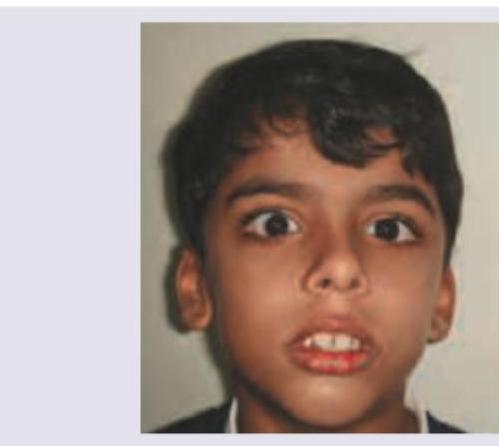
The facial features shown in the image are characteristic of:
A 35-year-old woman underwent rhinoplasty 6 months ago and now presents with nasal valve collapse and breathing difficulty. Examination shows pinched nasal tip and alar retraction. Preoperative photos show she had thin skin and weak lower lateral cartilages. Evaluate the most likely cause and best preventive strategy.
Explanation: ***Full thickness grafting*** - **Full-thickness skin grafts** include the epidermis and full dermis, which contains **fewer myofibroblasts** than split-thickness grafts, thus minimizing contraction. - The greater amount of dermal tissue acts as a **mechanical barrier** to prevent excessive wound contraction, providing a more stable and aesthetically pleasing result. *Allowing secondary granulation* - Healing by **secondary intention** involves substantial granulation tissue formation, which is rich in **myofibroblasts** and leads to significant wound contraction. - This method of healing is often used for infected or contaminated wounds but results in the **most contraction**. *Split skin graft* - **Split-thickness skin grafts** contain only a portion of the dermis, making them prone to **moderate to significant wound contraction**. - While better than secondary intention, the thin dermal layer provides less resistance to the contractile forces of the **myofibroblasts**. *Dressing with placenta* - **Placental tissue dressings** can promote wound healing by providing growth factors and a scaffold for regeneration. - However, they do not inherently prevent or minimize **wound contraction** in the same way that a full-thickness graft mechanically does, as they do not replace the entire dermal layer.
Explanation: ***Nodularity*** - **Kimmelstiel-Wilson lesions** are characterized by **nodular glomerulosclerosis**, a hallmark of diabetic nephropathy [1]. - **Amyloidosis** often presents with **nodular deposits** of amyloid protein in various organs, including the kidneys [2]. - **Radiation injury** can lead to **nodular aggregates** of cells and extracellular matrix, especially within the context of fibrosis and tissue remodeling. *Fibrosis* - While **fibrosis** is a common feature in all these conditions, it represents a more generalized tissue response rather than a specific microscopic pattern seen across all three in the same way **nodularity** does. - **Kimmelstiel-Wilson lesions** involve nodular sclerosis [1], and **amyloidosis** features amyloid deposition [2], both leading to fibrosis, but the primary pattern is nodular. *Inflammation* - **Inflammation** is an initiating or accompanying process in many diseases but is not the defining histological pattern shared by all three conditions. - While **radiation injury** can cause inflammation, and both **Kimmelstiel-Wilson lesions** and **amyloidosis** might have inflammatory components, it is not their distinctive universal morphological feature. *Necrosis* - **Necrosis** (cell death) can occur in severe forms of these conditions, particularly with extensive **radiation injury** or advanced **amyloidosis**, but it is not a universally present or defining histological pattern for all three. - **Kimmelstiel-Wilson lesions** are fundamentally about matrix expansion and nodule formation, not primarily necrosis [1]. **References:** [1] Kumar V, Abbas AK, et al.. Robbins and Cotran Pathologic Basis of Disease. 9th ed. The Endocrine System, pp. 1121-1122. [2] Kumar V, Abbas AK, et al.. Robbins and Cotran Pathologic Basis of Disease. 9th ed. Diseases of the Immune System, pp. 264-266.
Explanation: ***6 weeks*** - By **6 weeks**, the necrotic myocardium has been completely removed and replaced by dense fibrous scar tissue [1], which is structurally strong but non-contractile. - This phase marks the completion of the healing process, with the scar being fully formed and mature. *6 months* - While the scar tissue continues to remodel and strengthen over time, **significant fibrous scar formation** is already complete by 6 weeks [1]. - By 6 months, the scar is fully mature and stabilized, but the initial robust scar formation phase has long passed. *6 days* - At **6 days**, the myocardial infarction is primarily characterized by the initial stages of **granulation tissue formation** [2] and the ongoing removal of necrotic debris. - Significant **fibrous scar formation** has not yet occurred, as the tissue is still highly cellular and vascular. *30 days* - By **30 days (4 weeks)**, a well-developed **collagenous scar** is present, but it is still undergoing remodeling and strengthening. - While a scar is present, it is not yet as dense or as mature as the scar seen at 6 weeks, which is considered the time of significant fibrous scar formation [1]. **References:** [1] Kumar V, Abbas AK, et al.. Robbins and Cotran Pathologic Basis of Disease. 9th ed. The Heart, pp. 552-554. [2] Kumar V, Abbas AK, et al.. Robbins and Cotran Pathologic Basis of Disease. 9th ed. The Heart, p. 552.
Explanation: ***Papilla preservation flap*** - This technique is specifically designed to **preserve the interdental papilla**, which is critical for covering and protecting regenerative materials placed in osseous defects. - By maintaining the integrity of the papilla, it facilitates primary wound closure over the defect, enhancing the predictability of **guided tissue regeneration (GTR)** and bone grafting procedures. *Sulcular flap* - A sulcular flap involves an incision within the sulcus, which typically provides limited access and does not allow for adequate coverage of large **osseous defects**. - It does not offer the tissue volume needed for the stable primary closure essential for regenerative procedures. *Modified Widman flap* - While providing excellent access for debridement in periodontal pockets, the modified Widman flap's incisions often **transect the interdental papilla**, making primary closure over a regenerative defect less ideal. - Its primary goal is root debridement and pocket reduction, not necessarily **papilla preservation** for regenerative purposes. *Apically displaced flap* - An apically displaced flap is designed to **increase the zone of attached gingiva** or reduce pocket depths, by positioning the flap apically to its original position. - This flap design is not suitable for covering osseous defects amenable to reconstruction because it often exposes more root surface and does not provide the necessary coronal coverage for regenerative materials.
Explanation: ***Uterus*** - The **uterus** is the primary anatomical target for many major gynecological procedures, such as **hysterectomy** (removal of the uterus) and **myomectomy** (removal of fibroids from the uterus). - These are among the most commonly performed major gynecological surgeries, making the uterus the most frequent target for incisions in gynecological practice. - In obstetric procedures, the uterus is also incised during **cesarean sections**, highlighting its central role in both obstetric and gynecologic surgery. *Ovary* - While ovaries are involved in gynecological surgery (e.g., **oophorectomy**, cystectomy), they are not as frequently the *primary* target for incisions as the uterus in the context of major procedures. - Ovarian surgeries are often performed for **cysts**, **tumors**, or in conjunction with hysterectomy, but are less common than uterine procedures. - Many ovarian procedures can be managed laparoscopically without major incisions. *Cervix* - The **cervix** is incised in procedures like **trachelectomy** for cervical cancer or during specific cervical cerclage procedures, but these are less frequent compared to surgeries involving the uterine body itself. - Many cervical procedures are considered minor (e.g., LEEP, cone biopsy) or are part of a larger uterine surgery. *Fallopian tube* - The **fallopian tubes** are primarily targeted for procedures like **salpingectomy** (removal of the tube, often for ectopic pregnancy or sterilization) or salpingostomy. - While significant, these procedures are generally less common than those involving the uterus and overall less frequently associated with major incisions compared to uterine procedures.
Explanation: ***60°*** - An angle of **60°** is considered ideal for Z-plasty because it provides the best balance between **lengthening the scar** and maintaining **tissue viability**. - This angle typically results in a **75% gain in length** along the central limb of the Z-plasty, while ensuring the flaps have a broad enough base for adequate blood supply. *90°* - While a **90°** angle would provide the most lengthening (around 100%), it creates very **thin, narrow flap tips** that are highly susceptible to **ischemia and necrosis** due to compromised blood supply. - This angle is generally avoided in Z-plasty due to the high risk of **flap complications**. *45°* - A **45°** angle results in less lengthening (approximately 50% gain) compared to a 60° angle, which may not be sufficient for significant release of scar contractures. - While it offers excellent flap viability due to wider bases, the **suboptimal lengthening** makes it less efficient for many Z-plasty applications. *75°* - An angle of **75°** would yield greater lengthening than 60°, but it also compromises flap viability making the flap susceptible to **necrosis**. - The benefits of increased length are often outweighed by the increased **risk of complications** when using this angle.
Explanation: ***Conjunctival autograft*** - **Conjunctival autografting** involves transplanting a piece of healthy conjunctiva from the superior bulbar conjunctiva to the bare scleral bed after pterygium excision, acting as a barrier to fibrovascular proliferation. - This technique has consistently shown the **lowest recurrence rates** in comparative studies, making it the **gold standard** for preventing pterygium recurrence due to its high success rate and safety profile. *Thiotepa* - **Thiotepa** is an **antimetabolite** that inhibits DNA synthesis and cell proliferation, used topically post-excision to reduce recurrence by suppressing fibroblast activity. - While it can lower recurrence rates compared to simple excision, its efficacy is generally **less than conjunctival autografting**, and it carries risks of corneal toxicity and limbal stem cell deficiency. *Amniotic membrane grafting* - **Amniotic membrane grafting** involves placing processed amniotic membrane over the scleral bed, which has anti-inflammatory, anti-scarring, and pro-epithelialization properties. - It is an effective option, especially for **large pterygia** or for patients at high risk of recurrence, but its recurrence rates are generally **not as low as those achieved with conjunctival autografting**, and the graft can sometimes detach. *B- radiation* - **Beta-radiation** (strontium-90) is a form of adjuvant therapy applied to the scleral bed immediately after pterygium excision to inhibit fibroblast proliferation and reduce recurrence. - It is effective but associated with potential complications such as **scleral melt**, corneal scarring, and cataract formation, making it a less preferred option than conjunctival autografting, especially in primary cases.
Explanation: ***Seroma*** - **Seroma** formation is the most common complication after mastectomy, involving the accumulation of serous fluid in the surgical dead space. - This complication can lead to discomfort, delayed wound healing, and an increased risk of infection. *Hemorrhage* - While a serious complication, **hemorrhage** is less common than seroma formation. - Significant hemorrhage usually occurs intraoperatively or in the immediate postoperative period and is typically managed promptly. *Lymphedema* - **Lymphedema** is a chronic condition characterized by swelling of the arm due to impaired lymphatic drainage, often developing months to years after surgery. - Although highly significant and debilitating, its incidence is lower than acute complications like seroma. *Infection* - Surgical site **infection** is a potential complication but is generally less frequent than seroma due to careful aseptic techniques and prophylactic antibiotics. - Infections can range from superficial wound infections to more serious cellulitis.
Explanation: ***Adenoid facies*** - The image displays characteristic features of adenoid facies, including a **long, open-mouthed face**, a **pinched nose**, and possibly a **high-arched palate** due to chronic mouth breathing from enlarged adenoids. - This chronic condition often leads to a dull expression, sometimes with **strabismus** (crossed eyes) as seen in the image, and a forward head posture. *Frog face deformity* - This deformity is characterized by **ocular hypertelorism** (widely spaced eyes), a **flat nasal bridge**, and a **short nose**, often associated with conditions like Apert syndrome. - While there is some facial dysmorphology, the specific combination of features does not align with a typical frog face. *Ashen grey facies* - This refers to a **pale, grayish complexion**, often indicative of severe cardiovascular compromise like **circulatory collapse** or **shock**. - The child in the image has a normal skin tone for their ethnicity and does not show signs of acute circulatory distress. *Thyrotoxicosis* - **Thyrotoxicosis** (hyperthyroidism) in children can cause symptoms like **exophthalmos** (bulging eyes), **tachycardia**, weight loss, and an enlarged thyroid gland. - While the child's eyes appear wide-set and sometimes strabismic, these are more consistent with the long-term effects of chronic mouth breathing on facial development rather than acute thyroid dysfunction.
Explanation: ***Excessive cartilage resection; should have preserved structural support and used spreader grafts*** - The patient presents with **nasal valve collapse**, **pinched tip**, and **alar retraction**, which are classic signs of iatrogenic deformity caused by aggressive removal of the **lower lateral cartilages**. - In patients with **thin skin** and **weak cartilages**, maintaining structural integrity is crucial; **spreader grafts** are indicated to support the internal nasal valve and prevent postoperative narrowing. *Infection causing cartilage dissolution; prophylactic antibiotics would have prevented this* - While **nasal infections** can cause structural damage, they typically present with acute **erythema, pain, and purulent drainage** in the immediate postoperative period rather than gradual collapse after 6 months. - Prophylactic antibiotics are standard in rhinoplasty, but they do not compensate for the **mechanical failure** of the nasal framework caused by over-resection. *Keloid formation; preoperative steroid injection indicated* - **Keloids** are abnormal fibrous growths that result in excess tissue mass, not the **pinched appearance** or structural collapse observed in this patient. - Nasal tip surgery in patients with **thin skin** usually carries a higher risk of showing underlying **cartilage irregularities** rather than keloid-related breathing difficulties. *Normal healing process; no preventive strategy needed* - A **pinched nasal tip** and **breathing difficulty** resulting from nasal valve collapse are pathological outcomes and should never be considered part of the **normal healing process**. - Successful rhinoplasty requires a balance between aesthetic refinement and the preservation of the **nasal airway**; preventive structural strategies are standard of care in high-risk patients.
Get full access to all questions, explanations, and performance tracking.
Start For Free