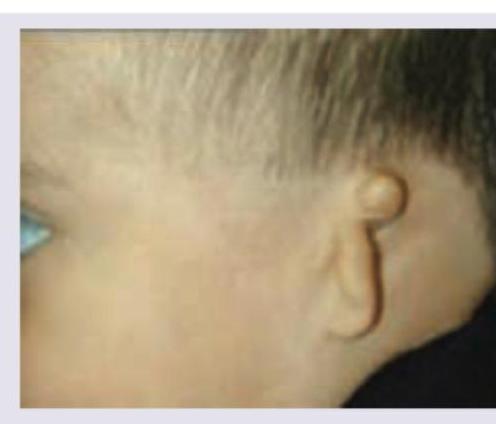
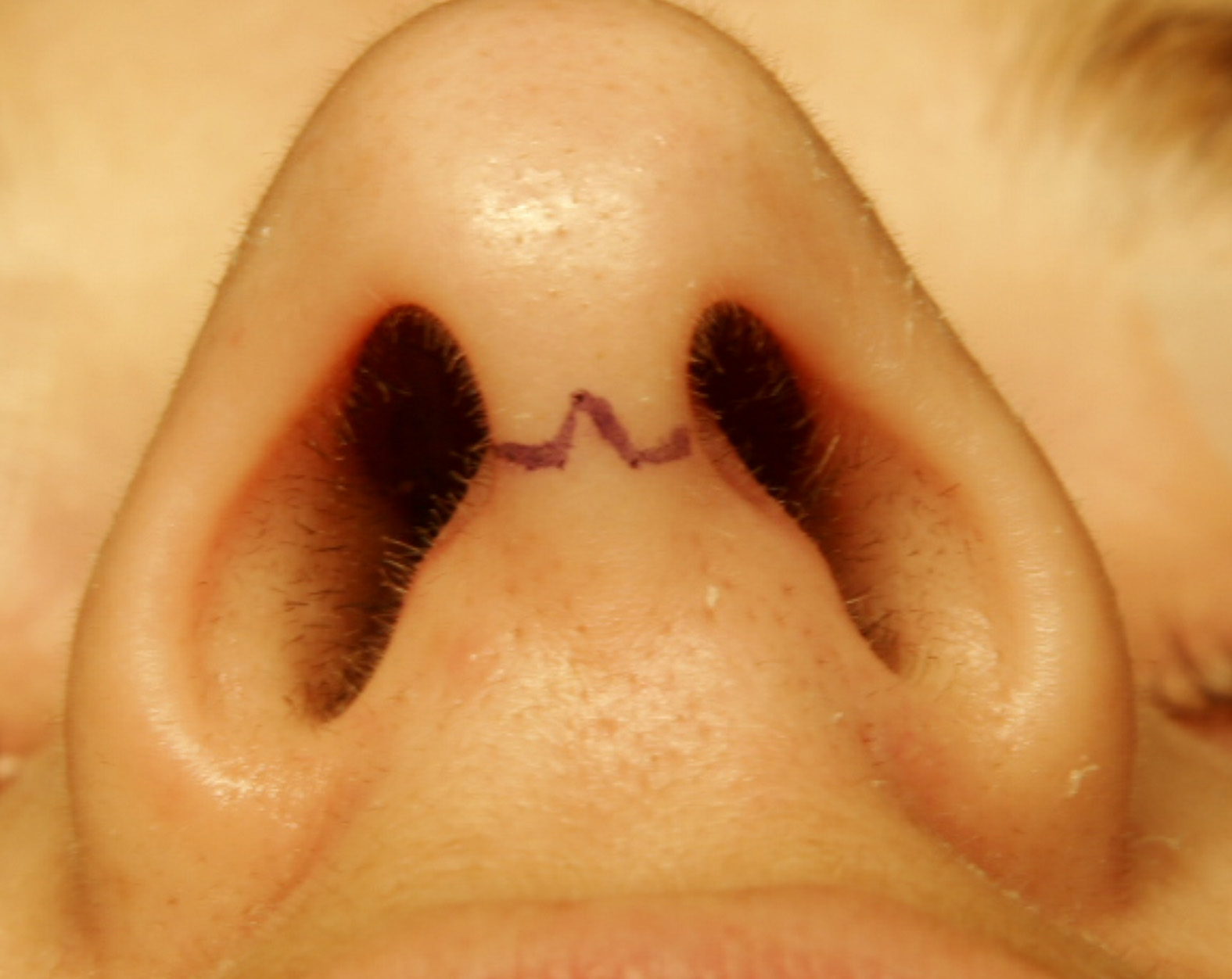
A 35-year-old woman underwent rhinoplasty 6 months ago and now presents with nasal valve collapse and breathing difficulty. Examination shows pinched nasal tip and alar retraction. Preoperative photos show she had thin skin and weak lower lateral cartilages. Evaluate the most likely cause and best preventive strategy.
A 40-year-old man with total nasal reconstruction using paramedian forehead flap develops partial flap necrosis at the tip on post-op day 5. Doppler shows absent flow in distal 1 cm. Previous history reveals he is a heavy smoker (20 cigarettes/day). What would be the best surgical strategy if this procedure were to be revised?
A 28-year-old woman undergoes open rhinoplasty. On table, after osteotomies, significant asymmetry is noted with deviation of nasal bones to the right. Analysis reveals the right osteotomy is more lateral than the left. What is the best explanation for the persistent deviation?
A 55-year-old man with Bell's palsy for 3 weeks shows no signs of recovery. EMG shows 90% degeneration. Surgical decompression is considered. Which segment of the facial nerve shows maximum compression requiring decompression?
A 32-year-old woman presents 6 months after rhinoplasty with a saddle nose deformity. Biopsy shows granulomatous inflammation. What is the most appropriate immediate management?
A 45-year-old man underwent excision of a basal cell carcinoma from the nasal tip measuring 2x2 cm. The surgeon plans reconstruction with a bilobed flap. What is the ideal angle between the two lobes for optimal cosmetic outcome?
What is the mechanism behind the delay procedure in flap surgery that improves flap survival?
Why is the nasolabial flap preferred for reconstruction of lateral nasal wall defects?
What is the classification system most commonly used for facial nerve injury?
Which artery is the primary blood supply to the paramedian forehead flap used in nasal reconstruction?
Explanation: ***Excessive cartilage resection; should have preserved structural support and used spreader grafts*** - The patient presents with **nasal valve collapse**, **pinched tip**, and **alar retraction**, which are classic signs of iatrogenic deformity caused by aggressive removal of the **lower lateral cartilages**. - In patients with **thin skin** and **weak cartilages**, maintaining structural integrity is crucial; **spreader grafts** are indicated to support the internal nasal valve and prevent postoperative narrowing. *Infection causing cartilage dissolution; prophylactic antibiotics would have prevented this* - While **nasal infections** can cause structural damage, they typically present with acute **erythema, pain, and purulent drainage** in the immediate postoperative period rather than gradual collapse after 6 months. - Prophylactic antibiotics are standard in rhinoplasty, but they do not compensate for the **mechanical failure** of the nasal framework caused by over-resection. *Keloid formation; preoperative steroid injection indicated* - **Keloids** are abnormal fibrous growths that result in excess tissue mass, not the **pinched appearance** or structural collapse observed in this patient. - Nasal tip surgery in patients with **thin skin** usually carries a higher risk of showing underlying **cartilage irregularities** rather than keloid-related breathing difficulties. *Normal healing process; no preventive strategy needed* - A **pinched nasal tip** and **breathing difficulty** resulting from nasal valve collapse are pathological outcomes and should never be considered part of the **normal healing process**. - Successful rhinoplasty requires a balance between aesthetic refinement and the preservation of the **nasal airway**; preventive structural strategies are standard of care in high-risk patients.
Explanation: ***Perform two-stage delay procedure before flap transfer and continue smoking cessation*** - A **two-stage delay procedure** induces a **vascular delay phenomenon**, which enhances the flap's blood supply by stimulating **neovascularization** and compensatory metabolic changes before the final transfer. - In a **heavy smoker**, the microvasculature is compromised due to nicotine-induced vasoconstriction; therefore, **smoking cessation** combined with a delay provides the safest physiologic environment for flap survival. *Use a wider pedicle with earlier division at 2 weeks* - Increasing the **pedicle width** does not necessarily improve the perfusion to the distal flap tip if the underlying problem is **smoking-related microvascular disease**. - **Early division** at 2 weeks is contraindicated in high-risk patients as it may lead to total flap loss before sufficient **neovascularization** from the recipient site has occurred. *Convert to free radial forearm flap with microsurgical anastomosis* - While **free flaps** provide healthy tissue, they are technically more complex and still carry a high risk of **microvascular thrombosis** in active heavy smokers. - The **paramedian forehead flap** remains the **gold standard** for total nasal reconstruction due to its color and texture match; optimization is preferred over changing the entire technique. *Use bilateral nasolabial flaps instead of forehead flap* - **Bilateral nasolabial flaps** are typically insufficient for a **total nasal reconstruction**, as they lack the surface area and structural integrity required for large defects. - This approach avoids the forehead donor site but does not address the systemic **vascular compromise** caused by the patient's smoking history.
Explanation: ***Asymmetric osteotomy created unequal bone segments*** - Placing the **right lateral osteotomy** more laterally than the left results in a wider right **nasal bone segment**, preventing the pyramid from shifting into a midline position. - This geometric imbalance causes the **nasal dorsum** to remain deviated toward the side with the larger bone segment, necessitating **revision osteotomy** for symmetry. *Postoperative edema causing temporary deviation* - While **edema** can mask underlying symmetry, it does not explain significant intraoperative deviation immediately following **osteotomies**. - Intraoperative asymmetry is typically **structural** rather than a result of soft tissue swelling occurring at that moment. *Incomplete mobilization of nasal bones due to retained periosteum* - **Periosteal attachments** can resist movement, but the scenario specifically identifies a **technical error** in the placement of the osteotomy lines. - Even if mobilized, the **unequal width** of the segments would still cause a structural deviation rather than simple stiffness. *Septal deviation pulling the dorsum to right* - A **deviated septum** can certainly cause nasal deviation, but the analysis in this case specifically links the issue to the **asymmetric osteotomy** placement. - The **"open-roof"** or lateral bone segments effectively determine the dorsal position; fixing the septum won't correct the asymmetry of **unequal nasal bones**.
Explanation: ***Labyrinthine segment*** - The **labyrinthine segment** is the narrowest part of the fallopian canal (diameter approximately **0.68 mm**), making it most vulnerable to **edema** and entrapment. - In **Bell’s palsy**, surgical decompression is specifically targeted here because it is the primary site of **vascular compromise** and ischemia. *Tympanic segment* - This segment lies in the **middle ear** and is generally wider than the labyrinthine segment, making significant compression less frequent. - While it can be affected by **chronic otitis media** or trauma, it is not the primary site of entrapment in idiopathic facial nerve palsy. *Geniculate ganglion* - The geniculate ganglion is the site of **sensory neuronal cell bodies** and marks the turn between the labyrinthine and tympanic segments. - Although it can be involved in viral reactivation (e.g., **Ramsay Hunt syndrome**), it is not considered the primary architectural "bottleneck" requiring decompression. *Mastoid segment* - The **mastoid (vertical) segment** is the longest portion of the facial nerve but occupies a relatively large canal space. - While decompression may extend here in cases of **temporal bone fractures**, it is not the site of maximum compression in Bell's palsy.
Explanation: ***Start oral corticosteroids and investigate for systemic disease*** - Detailed biopsy findings of **granulomatous inflammation** following surgery strongly suggest an underlying systemic condition like **Granulomatosis with Polyangiitis (GPA)** or **Sarcoidosis** rather than a mere surgical complication. - Immediate management must prioritize **medical stabilization** with steroids and screening (e.g., **c-ANCA**, ESR, chest X-ray) because surgery in an active inflammatory state will lead to poor healing and further collapse. *Immediate revision rhinoplasty with cartilage graft* - Surgical intervention is contraindicated during the **active phase** of granulomatous disease as the graft is likely to be resorbed or infected. - Reconstructive surgery should only be considered after the patient has been in **clinical remission** for at least 6 to 12 months. *Perform immediate debridement of necrotic tissue* - While debridement is used for acute infections, it does not address the **autoimmune etiology** and may trigger a pathergy-like response or worsen the **structural collapse**. - The primary goal in granulomatous disease is to suppress the **immune-mediated destruction** rather than mechanical removal of tissue. *Prescribe topical antibiotics and observe* - Topical antibiotics are insufficient because the underlying pathology is **systemic inflammation** and vasculitis, not a superficial bacterial infection. - Observation alone allows for the progression of the disease, which could lead to irreversible **septal perforation** or involve other organs like the kidneys or lungs.
Explanation: ***45 degrees each, total 90 degrees*** - The **Zitelli modification** of the bilobed flap utilizes an angle of **45 degrees** between each lobe (totaling 90 degrees) to minimize **standing cone deformities** (dog-ears). - This narrow angle reduces **pincushioning** and tension, making it the gold standard for reconstructing defects on the **nasal tip** and **ala**. *70 degrees each, total 140 degrees* - A total angle of **140 degrees** is excessively wide and significantly increases the risk of **distorting adjacent structures** like the nasal ala or tip. - Larger angles create more **rotational tension**, which leads to suboptimal cosmetic outcomes and difficult primary closure of the final defect. *50 degrees each, total 100 degrees* - While **100 degrees** total is occasionally acceptable in lax skin, it deviates from the classic **45-degree rule** established for optimal outcomes in the modified design. - Slight increases in the angle beyond 45 degrees increase the likelihood of **tissue protrusion** at the pivot point of the flap. *60 degrees each, total 120 degrees* - Traditional designs like the **Esser flap** used larger angles, but they often resulted in significant **surgical dog-ears** and required more extensive revision. - A total angle of **120 degrees** is no longer the preferred standard because it places too much **lateral tension** on the donor site closure.
Explanation: ***Increases random blood supply through neovascularization*** - The **delay procedure** induces a state of **sub-lethal ischemia**, which triggers the release of angiogenic factors and the dilation of **choke vessels**. - This process enhances **neovascularization** and reorients blood flow along the long axis of the flap, significantly improving **flap survival**. *Promotes immediate epithelialization* - Epithelialization is a component of surface **wound healing**, but it does not address the underlying **vascular supply** required for flap viability. - The delay phenomenon focuses on **hemodynamic changes** and vascular architecture rather than the immediate restoration of the skin barrier. *Reduces metabolic demands of the tissue* - While some metabolic adaptation may occur, the primary mechanism of the delay procedure is to **increase oxygen delivery** rather than lowering consumption. - Improving **perfusion** through vascular remodeling is the critical factor that prevents **tissue necrosis** during the final transfer. *Eliminates the need for microsurgical technique* - The delay procedure is a strategy utilized primarily for **random pattern** or pedicled flaps and does not replace the requirement for **microsurgery** in free flaps. - Microsurgical techniques involve direct **anastomosis** of vessels, whereas the delay procedure relies on the gradual enhancement of existing **collateral circulation**.
Explanation: ***It has axial blood supply from facial artery*** - The nasolabial flap is an **axial pattern flap** primarily supplied by the **angular artery**, which is a terminal branch of the **facial artery**. - This robust blood supply allows for reliable healing and the ability to design longer flaps to reach **lateral nasal wall** and **ala** defects. *It matches skin color and texture perfectly* - While it provides a **good aesthetic match** due to its proximity, the primary reason it is preferred surgically is its vascular reliability. - Differences in **sebaceous gland density** between the cheek and nose mean the match is excellent but rarely "perfect." *It is a random pattern flap with good reach* - This is incorrect because the nasolabial flap is categorized as an **axial flap**, not a **random pattern flap**. - **Random flaps** rely on the subdermal plexus, whereas axial flaps like this one have a named vessel providing superior perfusion. *It provides cartilage support* - The nasolabial flap is a **pedicled skin/subcutaneous flap** and does not inherently contain **cartilage**. - For full-thickness defects requiring structural support, a separate **cartilage graft** must be placed beneath the flap.
Explanation: ***House-Brackmann grading system*** - The **House-Brackmann scale** is the gold standard for clinically assessing the degree of **facial nerve paralysis**, ranging from Grade I (normal) to Grade VI (total paralysis). - It provides a standardized method for evaluating **facial symmetry** at rest and during voluntary movement to monitor recovery or surgical outcomes. *Seddon classification* - This is a general classification system for **peripheral nerve injuries** based on the severity of damage to the nerve components: **neuropraxia**, **axonotmesis**, and **neurotmesis**. - It describes the pathology of the nerve fiber itself rather than providing a clinical grade for **facial expression** specifically. *Sunderland classification* - An expansion of Seddon’s work, this system divides nerve injuries into **five degrees** based on the involvement of the endoneurium, perineurium, and epineurium. - While applicable to the facial nerve's histological damage, it is not the most common **clinical grading** tool used by practitioners to describe functional deficits. *Glasgow Coma Scale* - This scale is used to assess a patient's **level of consciousness** following traumatic brain injury based on eye, verbal, and motor responses. - It has no clinical application in the specific assessment of **facial nerve motor function** or cranial nerve VII palsy.
Explanation: ***Supratrochlear artery*** - The **supratrochlear artery** is the primary blood supply for the **paramedian forehead flap**, originating as a terminal branch of the **ophthalmic artery**. - This artery consistently emerges from the **supraorbital rim** approximately **1.7–2.2 cm lateral** to the midline, allowing for a robust **axial-pattern flap**. *Superficial temporal artery* - This artery supplies the lateral aspect of the scalp and forehead but is not the pedicle for a **paramedian** flap. - It is commonly used for **temporoparietal fascia flaps** rather than central nasal reconstruction. *Supraorbital artery* - The **supraorbital artery** is located more laterally than the supratrochlear and is not the primary axial supply for the **paramedian** design. - While it provides collateral circulation to the forehead, it lacks the specific **medial positioning** required for the gold-standard nasal flap. *Angular artery* - The **angular artery** is the terminal branch of the **facial artery** and supplies the lateral nasal wall and medial canthus. - It is used in **nasolabial flaps** [1] for smaller nasal defects, but it does not supply the tissues of the forehead.
Explanation: **Explanation:** **Ashley’s flap** is a specialized **palatal rotation flap** used primarily in the surgical management of **choanal atresia**. 1. **Why the correct answer is right:** The flap is designed by elevating the mucoperiosteum of the hard palate. It is rotated posteriorly to cover the raw area created after the excision of the atretic plate (the bony or membranous obstruction in the posterior nasal aperture). By providing epithelial coverage to the newly created opening, it prevents postoperative scarring and restenosis, which are common complications in choanal atresia repair. 2. **Why the incorrect options are wrong:** * **Buccal pedicle/free flaps:** These involve the inner cheek mucosa. While buccal flaps (like the Su-Tanz flap) are used for oral defects or cleft palate repairs, they are not the "Ashley flap" used for choanal atresia. * **Palatal free flap:** A free flap requires microvascular anastomosis. Ashley’s flap is a pedicled rotation flap, meaning it remains attached to its blood supply (the greater palatine artery) during transposition. **High-Yield Clinical Pearls for NEET-PG:** * **Choanal Atresia:** Most common congenital anomaly of the nose. 50% are associated with **CHARGE syndrome** (Coloboma, Heart defects, Atresia choanae, Retarded growth, Genitourinary anomalies, Ear anomalies). * **Diagnosis:** Failure to pass a 6F or 8F catheter through the nose into the nasopharynx. **CT scan** is the gold standard investigation. * **Surgical Approaches:** Transnasal (common in neonates) and Transpalatal (where Ashley’s flap is utilized). * **Other Palatal Flaps:** The **Island flap** (based on the greater palatine artery) is another high-yield term often confused with Ashley's; both utilize the palate's robust blood supply.
Explanation: **Explanation:** The management of facial fractures is broadly categorized into **Closed Reduction** (non-surgical manipulation without direct visualization of the bone) and **Open Reduction with Internal Fixation (ORIF)** (surgical exposure of the fracture site). **Why Maxillo-mandibular fixation (MMF) is correct:** MMF (also known as intermaxillary fixation) involves stabilizing the fracture by wiring the upper and lower teeth together using arch bars or eyelet wires. This technique relies on the patient’s own occlusion to align the bone fragments. Because the fracture site is not surgically opened and no hardware is placed directly onto the bone, it is considered a **purely closed reduction** technique. **Why the other options are incorrect:** * **A & B (Miniplates and Dynamic Compression Plating):** These are forms of **Rigid Internal Fixation**. They require a surgical incision to expose the bone and the application of screws and plates directly across the fracture line. * **D (Wire Osteosynthesis):** While an older technique, it involves drilling holes into the bone ends and "sewing" them together with stainless steel wire. This requires surgical exposure (Open Reduction). **Clinical Pearls for NEET-PG:** * **Gold Standard:** ORIF with miniplates is currently the gold standard for most displaced facial fractures as it allows for early mobilization. * **MMF Duration:** When used as primary treatment, MMF is typically maintained for 4–6 weeks. * **Gunning Splints:** Used for MMF in **edentulous** (toothless) patients. * **Indications for Closed Reduction:** Minimally displaced fractures, fractures in children (to avoid damaging permanent tooth buds), or when the patient is medically unfit for surgery.
Explanation: **Explanation:** The **Tripod Fracture**, also known as a **Zygomaticomaxillary Complex (ZMC) Fracture**, is the most common clinical presentation of a fractured malar bone. It is called a "tripod" fracture because it involves the disruption of the three primary attachments of the zygoma to the rest of the facial skeleton: 1. **Zygomaticofrontal suture** (superiorly) 2. **Zygomaticomaxillary suture** (medially/inferiorly) 3. **Zygomaticotemporal suture** (laterally at the zygomatic arch) *Note: Modern anatomy often includes the fourth point of attachment, the zygomaticosphenoid suture, leading many to prefer the term "tetrapod fracture."* **Analysis of Options:** * **B. Maxillary fracture:** These are typically classified under **Le Fort classifications** (I, II, and III). While a ZMC fracture involves the maxillary sinus wall, it is distinct from isolated maxillary fractures. * **C. Mandibular fracture:** These are classified by anatomical location (symphysis, parasymphysis, body, angle, ramus, condyle). * **D. Temporal fracture:** These usually refer to fractures of the petrous or squamous part of the temporal bone, often associated with CSF otorrhea or facial nerve palsy. **High-Yield Clinical Pearls for NEET-PG:** * **Clinical Features:** Flattening of the malar prominence (cheek), trismus (due to impingement on the coronoid process), and infraorbital nerve anesthesia. * **Step-off deformity:** Often palpable at the infraorbital rim. * **Radiology:** The **Water’s View** (occipitomental) is the best conventional X-ray to visualize ZMC fractures. * **Complication:** Diplopia may occur due to entrapment of the inferior rectus muscle if the orbital floor is involved.
Explanation: A **Tripod fracture**, also known as a **Zygomaticomaxillary Complex (ZMC) fracture**, is one of the most common facial fractures encountered in clinical practice. It is called a "tripod" fracture because it involves the disruption of the three primary attachments of the zygoma to the rest of the facial skeleton. ### Why Zygomatic fracture is correct: The term refers to the separation of the zygomatic bone at its three major suture lines: 1. **Zygomaticofrontal suture** (superiorly) 2. **Zygomaticotemporal suture** (laterally at the zygomatic arch) 3. **Zygomaticomaxillary suture** (inferiorly, involving the infraorbital rim and the anterior/lateral walls of the maxillary sinus) *Note: Modern anatomy often refers to this as a "quadripod" fracture as it also involves the sphenozygomatic suture.* ### Why other options are incorrect: * **Maxillary fracture:** These are typically classified under the **Le Fort classification** (I, II, and III). While a ZMC fracture involves the maxilla, a pure maxillary fracture does not follow the tripod pattern. * **Mandibular fracture:** These are classified by anatomical location (symphysis, body, angle, ramus, condyle) and do not involve the zygomatic complex. * **Temporal fracture:** These involve the petrous or squamous portions of the temporal bone and are usually associated with base of skull trauma and hearing loss, not malar flattening. ### High-Yield Clinical Pearls for NEET-PG: * **Clinical Presentation:** Flattening of the cheek (malar prominence), infraorbital nerve anesthesia (numbness of the upper lip/cheek), and trismus (due to impingement on the coronoid process of the mandible). * **Radiology:** The **Water’s View** (occipitomental) is the best conventional X-ray to visualize ZMC fractures. Look for the "hanging drop" sign if the orbital floor is involved. * **Complication:** Diplopia may occur due to entrapment of the inferior rectus muscle or orbital fat.
Facial Analysis
Practice Questions
Facial Trauma
Practice Questions
Nasal Reconstruction
Practice Questions
Rhinoplasty
Practice Questions
Otoplasty
Practice Questions
Blepharoplasty
Practice Questions
Facial Reanimation
Practice Questions
Management of Facial Paralysis
Practice Questions
Facial Scar Revision
Practice Questions
Cleft Lip and Palate Repair
Practice Questions
Cosmetic Facial Surgery
Practice Questions
Facial Skin Cancer Reconstruction
Practice Questions
Get full access to all questions, explanations, and performance tracking.
Start For Free