Not true about parapharyngeal abscess?
What is the best imaging modality for detecting early osteomyelitis?
What is the most appropriate antibiotic choice for a 4-year-old unvaccinated child with epiglottitis?
A 25-year-old woman presents with severe throat pain, difficulty swallowing, and trismus. CT neck shows a peritonsillar fluid collection and inflammation. What is the next best step?
A 2 year child presented with low grade fever and stridor. What is the likely diagnosis?
Which of the following statements about acute retropharyngeal abscess is true?
A patient presented with 2 days history of fever. On examination there was a swelling in the neck and one side tonsil was pushed to midline. What is the most likely diagnosis:-
A 15 years old Male presented with history of fever since 2 days, unable to swallow the food with muffled voice. On examination it is noted right tonsil is shifted to midline. What is the diagnosis:
Trismus in parapharyngeal abscess is caused by spasm of which of the following muscles?
Early tonsillectomy is not done in?
Explanation: ***Horner's syndrome*** - While parapharyngeal abscess is close to the **sympathetic chain**, Horner's syndrome (ptosis, miosis, anhydrosis) is a **rare complication**, not a common or typical presentation, making this statement the most likely to be false regarding usual clinical features. - The inflammatory process usually affects the adjacent structures, such as pterygoid muscles, pharyngeal muscles, and carotid sheath, rather than directly compressing the **sympathetic fibers** in the majority of cases. *Torticollis* - **Torticollis**, or neck stiffness and deviation, is a common symptom due to irritation and spasm of the neck muscles adjacent to the inflamed parapharyngeal space. - The inflammatory process can cause pain and muscle guarding, leading to the characteristic head tilt. *Drooling of saliva* - **Drooling of saliva** occurs due to odynophagia (painful swallowing) and dysphagia (difficulty swallowing) making patients reluctant to swallow, allowing saliva to accumulate and spill from the mouth. - The inflammation and swelling in the parapharyngeal space can obstruct the pharynx, making swallowing difficult and painful. *Trismus* - **Trismus**, or difficulty opening the mouth, is a characteristic feature of parapharyngeal abscess due to inflammation and spasm of the **medial pterygoid muscle**, which is located near the parapharyngeal space. - The abscess can directly irritate or compress the **masticatory muscles**, limiting jaw movement.
Explanation: ***MRI*** - **Magnetic Resonance Imaging (MRI)** is considered the **gold standard** for detecting early osteomyelitis due to its excellent soft tissue contrast and ability to visualize **bone marrow edema**, which is an early sign of infection. - It can identify changes within **3-5 days** of infection onset, much earlier than other modalities. *CT scan* - While useful for showing **bone destruction**, cortical integrity, and sequestra, **CT scans** are less sensitive than MRI for detecting early marrow edema. - Its ability to diagnose osteomyelitis is usually delayed until significant **bony changes** have occurred, typically around 1-2 weeks. *X-ray* - **Plain radiographs** are often the initial imaging study but are **insensitive** for early osteomyelitis, showing changes only after 10-14 days or more. - Early findings on X-rays can be subtle, such as **periosteal elevation** or **soft tissue swelling**, but frank bone destruction is a late finding. *Bone scintigraphy* - **Bone scintigraphy** (e.g., technetium-99m) is sensitive for detecting increased bone turnover associated with infection but lacks **specificity**, as it can be positive in other conditions like trauma or tumors. - While it can detect changes earlier than X-rays, typically within 2-3 days, it cannot clearly differentiate infection from other processes, and its spatial resolution is poor compared to MRI.
Explanation: ***Ceftriaxone or cefotaxime*** - **Third-generation cephalosporins** are the **first-line antibiotics** for epiglottitis in children - Provide excellent coverage against ***Haemophilus influenzae* type b (Hib)**, the most common causative organism in unvaccinated children - Effective against **both beta-lactamase producing and non-producing strains**, addressing the widespread ampicillin resistance (20-40%) - **Ceftriaxone** (50-100 mg/kg/day) or **cefotaxime** (150-200 mg/kg/day divided) are standard of care - Treatment duration is typically **7-10 days** *Immediate airway assessment and management* - While this is the **most critical priority** in epiglottitis management (life-threatening airway obstruction risk), the question specifically asks for **antibiotic choice** - Airway management is a procedural intervention, not antimicrobial therapy - In clinical practice, airway assessment comes first, but this doesn't answer the question asked *Administering a vaccine* - **Hib vaccine** is a **preventive measure**, not a treatment for active infection - Vaccination during acute epiglottitis has no therapeutic benefit - The vaccine prevents future disease but does not treat current infection *Doxycycline for 4 days* - **Not first-line therapy** for epiglottitis in any age group - **Contraindicated in children under 8 years** due to risk of permanent **tooth discoloration** and enamel hypoplasia - Poor coverage against *H. influenzae* type b - Tetracyclines are not recommended for typical bacterial causes of epiglottitis
Explanation: ***Needle aspiration and antibiotics*** - The presence of a **peritonsillar fluid collection** on CT neck, along with severe throat pain, **dysphagia**, and **trismus**, is indicative of a **peritonsillar abscess (PTA)**. - **Needle aspiration** provides immediate relief by draining the pus and allows for culture-guided antibiotic therapy, while broad-spectrum **antibiotics** address the bacterial infection. *Immediate tonsillectomy* - **Tonsillectomy** is generally reserved for recurrent peritonsillar abscesses or chronic tonsillitis, not as the primary immediate treatment for an acute PTA. - Doing so acutely carries a higher risk of complications due to the **inflammation** and potential compromise of the airway. *Oral corticosteroids* - While corticosteroids can reduce inflammation and pain, they do not resolve the underlying bacterial infection or drain the **pus collection**. - Using **corticosteroids alone** risks worsening the infection by masking symptoms without treating the cause. *Empirical antibiotics alone* - Although antibiotics are crucial for treating the bacterial infection, they may not be sufficient on their own to resolve a **frank abscess**, especially one causing significant symptoms. - **Drainage** is often necessary to achieve clinical improvement and prevent complications such as airway obstruction or spread of infection.
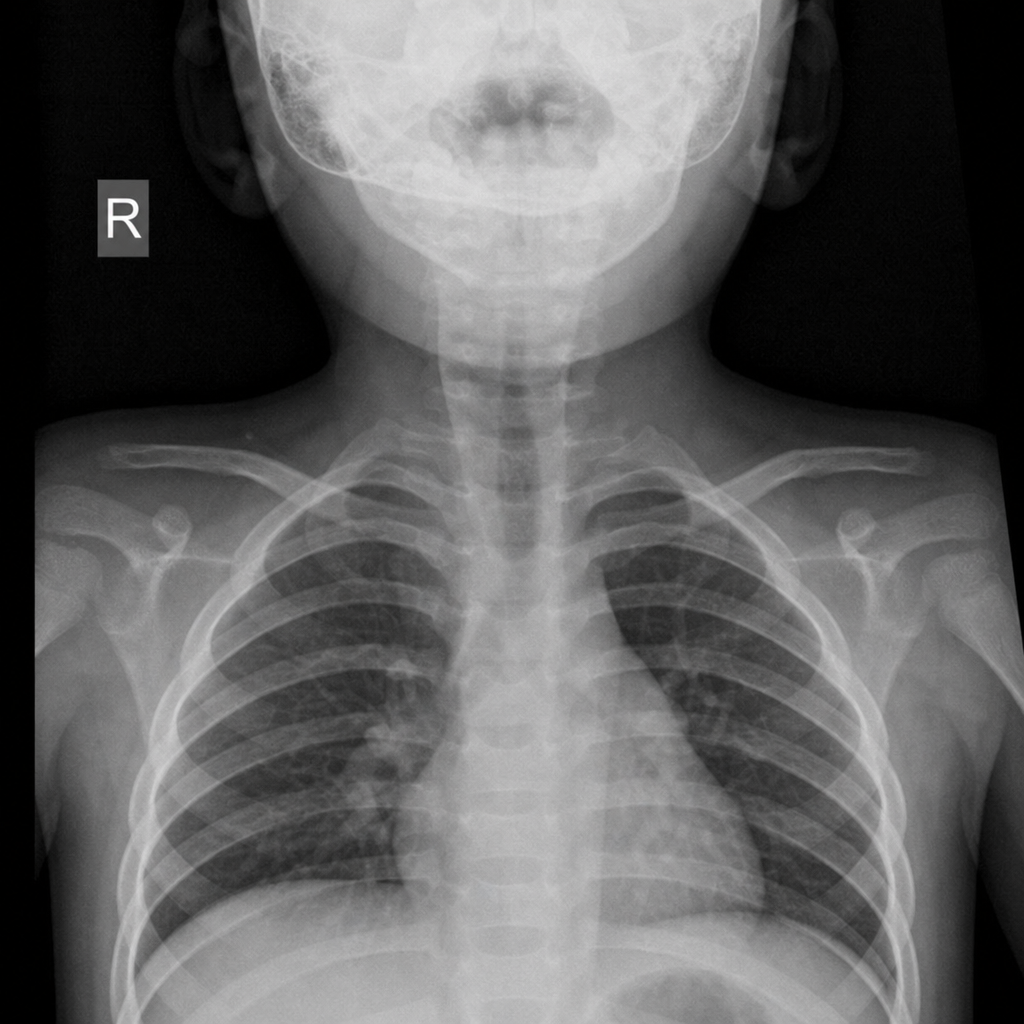
Explanation: ***Acute Laryngotracheobronchitis*** - The combination of **low-grade fever** and **stridor** in a 2-year-old child strongly suggests **croup**, which is medically known as acute laryngotracheobronchitis. - Croup is characterized by **inflammation** of the larynx, trachea, and bronchi, often presenting with a **barking cough** and inspiratory stridor. The X-ray image would show the characteristic **steeple sign**. *Acute Bacterial Tracheitis* - This is a more severe bacterial infection that can present with stridor but typically shows **higher fever**, **toxic appearance**, and rapid clinical deterioration. - Unlike croup, bacterial tracheitis patients appear **more ill** and may have **purulent secretions** requiring more aggressive management. *Acute Epiglottitis* - A serious condition characterized by **rapid onset of high fever**, **dysphagia**, drooling, and a **"tripod" position**, which are not indicated by the given symptoms. - The stridor in epiglottitis is typically quieter and may indicate more severe airway obstruction compared to the characteristic stridor of croup. *Foreign Body aspiration* - While foreign body aspiration can cause stridor, it is typically an **acute event** with a sudden onset of choking, coughing, and respiratory distress. - There is no mention of a choking episode or sudden onset, and a low-grade fever is less typical for an uncomplicated foreign body aspiration.
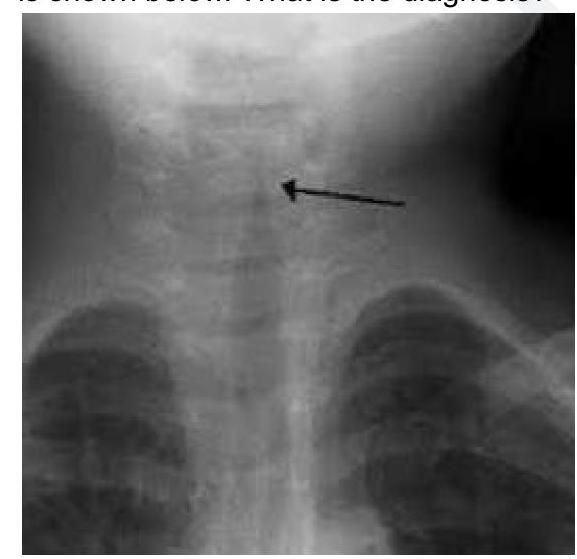
Explanation: ***Acute retropharyngeal abscess is often due to lymphadenitis.*** - The **retropharyngeal lymph nodes** (nodes of Rouviere) are prominent in children and drain the nasopharynx, oropharynx, and paranasal sinuses. Infection in these areas can lead to **suppurative lymphadenitis**, which can then progress to an abscess. - **Lymphadenitis** following an upper respiratory tract infection is the **most common etiology** in children, who represent the majority of cases. This is a characteristic pathophysiological mechanism specific to retropharyngeal abscesses. - While other causes exist (trauma, foreign bodies, odontogenic infections in adults), this statement best captures the typical presentation and etiology. *Acute retropharyngeal abscess is common in adults.* - **Retropharyngeal abscesses** are far more common in **children**, especially those under 6 years of age, due to the presence of prominent retropharyngeal lymph nodes that typically atrophy by age 5-6. - In adults, retropharyngeal abscesses are rarer and usually result from trauma, foreign bodies, or odontogenic infections rather than lymphadenitis. *Swelling typically occurs unilaterally.* - The **retropharyngeal space** is a **midline structure**, and infection typically causes **bilateral** or central swelling. - **Edema and inflammation** affect the entire space, leading to generalized posterior pharyngeal wall bulging rather than true unilateral presentation. - While some asymmetry may be visible, describing the swelling as "typically unilateral" is inaccurate. *Treatment often involves incision and drainage.* - While this statement is technically true for **mature abscesses**, it is **incomplete** as a characterizing statement about retropharyngeal abscesses. - Treatment depends on stage: **early phlegmon or cellulitis** may respond to **intravenous antibiotics alone**, while a **mature abscess** requires both **I&D and antibiotics**. - The statement lacks the important context that **antibiotics are the cornerstone** of treatment, with surgical drainage reserved for established abscesses. - This is a treatment modality rather than a defining characteristic of the condition, making it a less complete answer than the etiology-based statement.
Explanation: ***Quinsy (Peritonsillar abscess)*** - **Quinsy** is a **peritonsillar abscess** that presents with fever, severe throat pain, and the pathognomonic sign of **unilateral tonsil pushed toward the midline**. - The abscess forms in the **peritonsillar space** (between the tonsillar capsule and superior constrictor muscle), causing **medial displacement of the tonsil** and **bulging of the soft palate**. - Patients typically have **trismus, dysphagia, "hot potato voice"** and may have visible neck swelling. - This clinical presentation exactly matches the description: tonsil pushed to midline is the **classic finding for peritonsillar abscess**. *Parapharyngeal abscess* - A **parapharyngeal abscess** involves the deep parapharyngeal space lateral to the pharynx. - While it can cause neck swelling and fever, it typically causes **fullness and induration of the lateral pharyngeal wall** rather than prominent medial displacement of the tonsil itself. - The **tonsil is usually NOT pushed to the midline** in parapharyngeal abscess; instead, there is lateral pharyngeal wall bulging. - Often presents with more prominent external neck swelling below the angle of mandible. *Retropharyngeal abscess* - A **retropharyngeal abscess** occurs in the retropharyngeal space behind the posterior pharyngeal wall. - Presents with **posterior pharyngeal wall bulge**, neck stiffness, and dysphagia. - Does **NOT cause medial displacement of the tonsil** as the abscess is posterior, not lateral to the tonsil. *Tonsillitis* - **Acute tonsillitis** causes bilateral tonsillar inflammation with erythema and exudates. - While both tonsils may be enlarged, there is **no unilateral medial displacement** of one tonsil. - Less likely to cause significant neck swelling compared to deep space infections.
Explanation: ***Quincy (Peritonsillar abscess)*** - This patient's presentation with **fever**, **dysphagia**, **muffled voice** (hot potato voice), and **tonsil shifted to the midline** is classic for a **peritonsillar abscess (Quincy)**. - The affected tonsil is pushed **medially toward the midline** by the collection of pus between the tonsillar capsule and the superior constrictor muscle. - The uvula is typically deviated to the **contralateral side**, and patients often have **trismus** and difficulty opening the mouth. - This is the **most common deep neck space infection** and typically follows acute tonsillitis. *Parapharyngeal abscess* - A **parapharyngeal abscess** would present with **severe trismus**, **neck swelling**, **torticollis**, and **bulging of the lateral pharyngeal wall**. - While it can push the tonsil medially, it more characteristically causes **anterolateral displacement** of the entire pharyngeal wall rather than isolated tonsillar displacement. - Patients typically have more pronounced **systemic toxicity** and **neck involvement** than seen with peritonsillar abscess. *Acute tonsillitis* - **Acute tonsillitis** presents with **bilateral tonsillar enlargement**, exudates, and pharyngeal erythema. - It does not cause **displacement of the tonsil to the midline** or significant **muffled voice**. - While fever and dysphagia are present, the physical examination finding of tonsillar shift indicates a suppurative complication (abscess formation). *Acute retropharyngeal abscess* - An **acute retropharyngeal abscess** occurs in the retropharyngeal space behind the posterior pharyngeal wall. - It presents with **neck stiffness**, **stridor**, **drooling**, **bulging of the posterior pharyngeal wall**, and **reluctance to extend the neck**. - It would **not cause visible displacement of the tonsil to the midline** as the abscess is in a different anatomical space. - More common in **young children** (under 5 years) than adolescents.
Explanation: ***Medial pterygoid*** - The **medial pterygoid muscle** is intimately associated with the parapharyngeal space, and inflammation or infection in this area directly irritates it. - Spasm of the **medial pterygoid** leads to the characteristic limited jaw opening, or **trismus**, seen in parapharyngeal abscess. *Temporalis* - While the **temporalis muscle** is also a muscle of mastication, it is less directly affected by a parapharyngeal abscess than the medial pterygoid. - Its primary action is elevation and retraction of the mandible, and while its spasm can contribute to trismus, it's not the primary cause in this specific infection. *Masseter* - The **masseter muscle** primarily elevates the mandible, but it is located more superficially and laterally compared to the parapharyngeal space. - Abscess in the parapharyngeal space is less likely to directly irritate the masseter compared to deeper muscles. *Lateral pterygoid* - The **lateral pterygoid muscle** is primarily responsible for jaw protrusion and depression. - While it can contribute to trismus, its anatomical position makes it less prone to direct irritation and spasm from a parapharyngeal abscess compared to the medial pterygoid.
Explanation: ***Thyroid storm*** - **Thyroid storm** is a life-threatening medical emergency caused by exaggerated hyperthyroidism, requiring immediate medical stabilization to control hormone levels and systemic effects. - Early tonsillectomy is **contraindicated** in this scenario because it would add significant surgical stress and anesthetic risks to an already critically unstable patient. *Peritonsillar abscess* - A **quinsy tonsillectomy** (abscess tonsillectomy) is often performed acutely, especially if drainage is difficult or if it's the first episode, to resolve the abscess and remove the infected tissue. - This procedure can be done in the acute phase of a peritonsillar abscess to relieve symptoms and reduce the risk of recurrence. *Rheumatic fever* - Patients with recurrent **acute tonsillitis** who are at risk of developing **rheumatic fever** are strong candidates for tonsillectomy to prevent further streptococcal infections and subsequent autoimmune complications. - Tonsillectomy is considered a prophylactic intervention in cases of recurrent strep throat leading to rheumatic fever. *Suspected malignancy* - If tonsillar asymmetry or other signs raise suspicion of **tonsillar malignancy**, prompt tonsillectomy is often performed for **diagnostic biopsy** and initial tumor removal. - Early surgical intervention is crucial for diagnosing and staging potential tonsil cancer, which can guide subsequent treatment.
Get full access to all questions, explanations, and performance tracking.
Start For Free