An ICU patient is suffering from Rhinovirus infection. How do we treat the patient?
Which of the following is NOT an indication for immediate referral to an ENT specialist in a case of epistaxis?
All are major symptoms of sinusitis except?
A patient with a recent upper respiratory infection develops facial pain and tenderness over the maxillary sinuses. What is the most appropriate initial treatment?
Allergic salute is seen in -
Which of the following is not a feature of ethmoidal polyp?
Red flags in chronic rhinosinusitis include all EXCEPT:
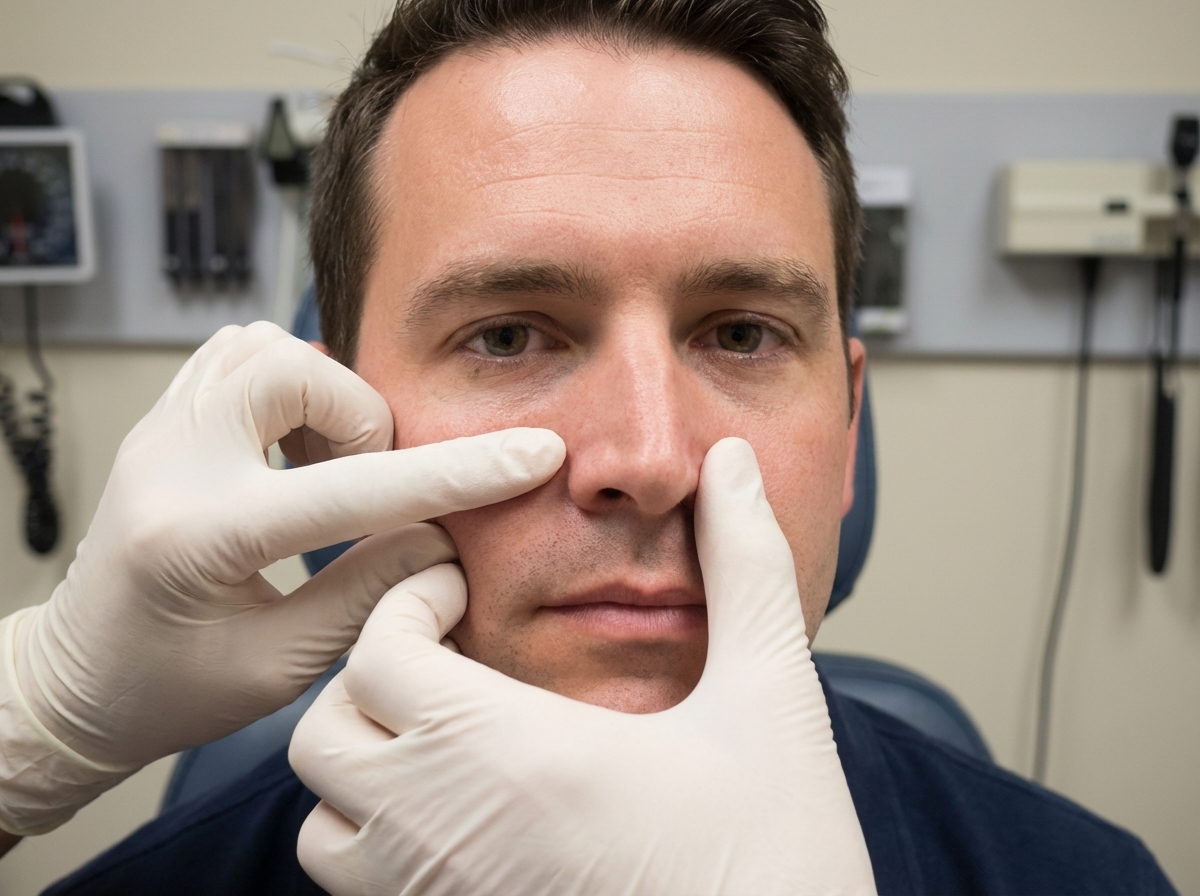
The following test is done for the evaluation of:
What is the first-line treatment for sinus bradycardia in the context of myocardial infarction?
Which of the following is NOT typically associated with acute bacterial sinusitis?
Explanation: ***Supportive care only*** - **Rhinovirus** is a common cause of the **common cold**, and there is no specific antiviral treatment available for it. [1] - Management focuses on alleviating symptoms such as fever, congestion, and cough to ensure patient comfort and prevent secondary complications, especially in an ICU setting. *Piperacillin + Tazobactam + Azithromycin* - This combination is a broad-spectrum antibiotic regimen (piperacillin/tazobactam is an extended-spectrum penicillin, and azithromycin is a macrolide) targeting bacterial infections. [2] - **Rhinovirus is a virus**, and antibiotics are ineffective against viral infections, making this an inappropriate treatment. *Clarithromycin* - **Clarithromycin** is a macrolide antibiotic primarily used to treat bacterial infections, such as respiratory tract infections caused by **atypical bacteria** or community-acquired pneumonia. [2] - It has no activity against **Rhinovirus**, a common cold virus. *Cephalosporin + Ganciclovir* - **Cephalosporins** are a class of beta-lactam antibiotics used for various bacterial infections. [2] - **Ganciclovir** is an antiviral agent specifically used to treat **cytomegalovirus (CMV)** infections, not Rhinovirus.
Explanation: ***Mild bleeding resolved with pressure*** - This scenario suggests a **self-limiting epistaxis** episode that responds to standard first-aid measures. - No indication for **ENT specialist intervention**, as the problem has already been successfully managed. *Uncontrolled bleeding* - **Persistent bleeding** despite initial management attempts (e.g., direct pressure, vasoconstrictive sprays) warrants immediate ENT referral. - This indicates a potentially **larger vessel involvement** or an underlying coagulopathy requiring specialized intervention. *Suspected nasal tumor* - **Recurrent or persistent epistaxis**, especially when unilateral or accompanied by other nasal symptoms (e.g., obstruction, pain, anosmia), raises suspicion for a **nasal or sinonasal malignancy**. - An ENT specialist is crucial for thorough evaluation, including **endoscopy and biopsy**, to rule out or diagnose a tumor. *Bleeding despite nasal packing* - If **bleeding persists** or recurs after appropriate nasal packing (anterior or posterior), it signifies a failure of initial specialized management. - This situation requires urgent **ENT assessment** to identify the source and consider more advanced interventions like **cautery or surgical ligation**.
Explanation: ***Halitosis*** - While **halitosis** (bad breath) can be a symptom associated with sinusitis due to post-nasal drip and bacterial overgrowth, it is generally considered a **minor symptom** or a secondary effect rather than one of the primary, defining features. - Major symptoms focus on those directly caused by inflammation and obstruction of the sinuses. *Nasal blockage* - **Nasal blockage** or congestion is a cardinal symptom of sinusitis, resulting from inflammation and swelling of the nasal and sinus mucosa. - It often leads to difficulty breathing through the nose and contributes to a feeling of fullness. *Facial congestion* - **Facial congestion** or pressure is a key symptom of sinusitis, caused by the buildup of fluid and inflammation within the sinus cavities. - This symptom can manifest as pain or pressure around the eyes, cheeks, and forehead. *Anosmia* - **Anosmia**, or the loss of smell, is a significant symptom of sinusitis, particularly chronic sinusitis. - It occurs due to the inflammation and obstruction of the nasal passages, preventing odorants from reaching the olfactory receptors.
Explanation: ***Amoxicillin-clavulanate*** - This antibiotic combination is the **first-line empirical treatment** for **acute bacterial rhinosinusitis**, especially if symptoms persist or worsen after 7-10 days, or are severe at presentation. - It provides broad-spectrum coverage against common bacterial pathogens, including gram-positive and gram-negative bacteria, and addresses **beta-lactamase producing strains**. *Corticosteroid* - While **intranasal corticosteroids** can be used as an adjunct to reduce inflammation in acute rhinosinusitis, they are **rarely sufficient as initial monotherapy** in cases highly suggestive of bacterial infection. - Oral corticosteroids are generally reserved for more severe or refractory cases due to systemic side effects. *Antihistamine* - Antihistamines are primarily used for **allergic rhinitis** to block histamine release and reduce symptoms like sneezing and rhinorrhea. - They are **ineffective against bacterial infections** and can paradoxically dry out mucous membranes, potentially hindering mucociliary clearance in sinusitis. *Topical decongestant* - Topical decongestants provide temporary relief by reducing **nasal congestion** but do not treat the underlying bacterial infection. - Prolonged use (more than 3-5 days) can lead to **rhinitis medicamentosa**, a rebound congestion.
Explanation: ***Allergic rhinitis*** - The **allergic salute** is a characteristic physical finding in allergic rhinitis [1], where individuals repeatedly push their nose upward with their hand to relieve nasal itching and clear obstruction. - This repetitive gesture can lead to a visible transverse crease on the dorsum of the nose, known as the **nasal crease**. *Nasal Myiasis* - **Nasal myiasis** is an infestation of the nasal cavity by fly larvae, causing symptoms like nasal discharge, epistaxis, and local pain. - It does not involve nasal itching that would provoke the "allergic salute" action. *Chronic sinusitis* - **Chronic sinusitis** is a prolonged inflammation of the sinuses, causing facial pain/pressure, nasal obstruction, and discharge. - While it can cause nasal obstruction, it typically doesn't present with the intense nasal itching that would lead to the "allergic salute." *Chronic conjunctivitis* - **Chronic conjunctivitis** is an inflammation of the conjunctiva, primarily affecting the eyes with symptoms like redness, itching, and discharge. - It does not directly affect the nasal passages or provoke nasal symptoms like itching that would result in an allergic salute.
Explanation: ***Commonly found as a single polyp*** - **Ethmoidal polyps** are typically **multiple** and bilateral, originating from the ethmoid sinuses. - They rarely present as a single, isolated polyp, which is more characteristic of antrochoanal polyps. - This is the key distinguishing feature that makes this statement INCORRECT. *Common in adults* - **Ethmoidal polyps** are indeed **more prevalent in adults** than in children. - Peak incidence occurs between 30-50 years of age. - Their incidence tends to increase with age, often associated with chronic rhinosinusitis. *Commonly bilateral* - **Ethmoidal polyps** almost invariably present as **bilateral polyps**, involving both sides of the nasal cavity. - This bilateral nature is a key differentiating feature from antrochoanal polyps, which are typically unilateral. - Bilateral presentation is one of the hallmark characteristics of ethmoidal polyps. *Associated with chronic rhinosinusitis* - **Ethmoidal polyps** are strongly associated with **chronic rhinosinusitis with nasal polyposis (CRSwNP)**. - They arise from chronic mucosal inflammation of the ethmoid sinuses. - Often associated with conditions like aspirin-exacerbated respiratory disease (AERD/Samter's triad) and non-allergic eosinophilic inflammation.
Explanation: ***Frontal headache*** - A frontal headache is a common symptom of chronic rhinosinusitis itself, often due to **sinus pressure** or inflammation. - While it can be bothersome, it is not considered a "red flag" indicating a **serious complication** or alternative diagnosis. *Bloody discharge* - **Bloody nasal discharge** or epistaxis, especially when unilateral or persistent, can be a red flag for more serious underlying conditions, such as **nasal malignancy**. - It warrants further investigation to rule out neoplasms or other vascular pathologies. *Orbital complications* - Orbital complications, such as **periorbital edema**, proptosis, vision changes, or ophthalmoplegia, indicate spreading infection beyond the sinuses. - These are red flags because they suggest **severe infection** that can lead to permanent vision loss or intracranial spread. *Unilateral symptoms* - **Unilateral nasal obstruction**, discharge, pain, or facial swelling are significant red flags that should prompt concern for **nasal polyps**, tumors, or fungal infections. - Unilateral symptoms suggest a localized process that is less likely to be typical chronic rhinosinusitis unless proven otherwise.
Explanation: ***Cheek tenderness in maxillary sinusitis*** - The image shows a person palpating the area over the **maxillary sinus** with their fingers. This examination technique is used to elicit tenderness, a common sign of **maxillary sinusitis**. - **Tenderness on palpation** over the maxillary sinus is a key clinical finding indicating inflammation or infection within the sinus cavity. *Abnormality of nasal valve* - Evaluation of the nasal valve typically involves external observation, internal examination with a speculum, or specialized maneuvers like the **Cottle test**, which involves pulling the cheek laterally to open the valve; it does not involve pressing on the cheek as depicted. - The nasal valve is an internal structure, and its palpation for abnormality would not be performed by pressing on the outer cheekbone as shown. *Severity of proptosis* - Proptosis (exophthalmos) refers to the **abnormal protrusion of the eyeball**. It is typically measured using an **exophthalmometer**. - The action shown in the image, pressing on the cheek, is not a method used to assess or quantify the severity of proptosis. *Skin pinch for dehydration* - The **skin pinch test** (turgor test) for dehydration is usually performed by pinching the skin on the back of the hand, lower arm, or abdomen, not the cheek. - Delayed return of the pinched skin to its normal state, known as **poor skin turgor**, indicates dehydration. The image does not show this technique.
Explanation: ***Atropine*** - **Atropine** is a parasympatholytic agent that blocks the action of acetylcholine at muscarinic receptors, leading to an **increased heart rate**. - It is the **first-line pharmacological treatment** for symptomatic *sinus bradycardia* in the context of an acute myocardial infarction because it can rapidly reverse vagal tone. *Digoxin* - **Digoxin** is a cardiac glycoside primarily used to treat **heart failure** and **atrial fibrillation** by increasing myocardial contractility and slowing AV nodal conduction. - It can actually **worsen bradycardia** due to its vagotonic effects and is contraindicated in acute bradycardia. *Calcium channel blocker* - **Calcium channel blockers** like verapamil or diltiazem slow AV nodal conduction and can **decrease heart rate and contractility**. [1] - They would be **contraindicated** in *sinus bradycardia* as they would further depress the heart rate and could worsen cardiac output. [1] *Propranolol* - **Propranolol** is a non-selective **beta-blocker** that decreases heart rate and myocardial contractility. [2] - It is used to treat conditions like **hypertension**, **angina**, and **tachyarrhythmias**, and would further **exacerbate bradycardia**. [2]
Explanation: ***Epistaxis*** - While possible due to **mucosal inflammation** or irritation from forceful blowing, **epistaxis (nosebleeds)** is not considered a typical or primary symptom of acute bacterial sinusitis. - The main symptoms revolve around pressure, discharge, and systemic signs of infection. *Purulent nasal discharge* - This is a hallmark symptom of acute bacterial sinusitis, indicating the presence of **bacterial infection** and inflammation in the sinuses. - The discharge is often thick, colored (yellow, green), and can be accompanied by a **foul odor**. *Facial pain* - **Facial pain** or pressure, especially around the cheeks, forehead, or eyes, is a characteristic symptom stemming from inflammation and fluid accumulation within the **sinus cavities**. - This pain often worsens when bending forward. *Fever* - **Fever** is a systemic sign of infection and is commonly present in acute bacterial sinusitis, especially in more severe cases. - It indicates the body's immune response to the bacterial invasion.
Get full access to all questions, explanations, and performance tracking.
Start For Free