To prevent acute rheumatic fever, acute pharyngitis due to group A streptococci should be treated with antibiotics before:
A 50-year-old smoker presents with hoarseness, dysphagia, and weight loss. Flexible laryngoscopy shows a mass on the vocal cords. What is the next best step?
A 2 year child presented with low grade fever and stridor. What is the likely diagnosis?
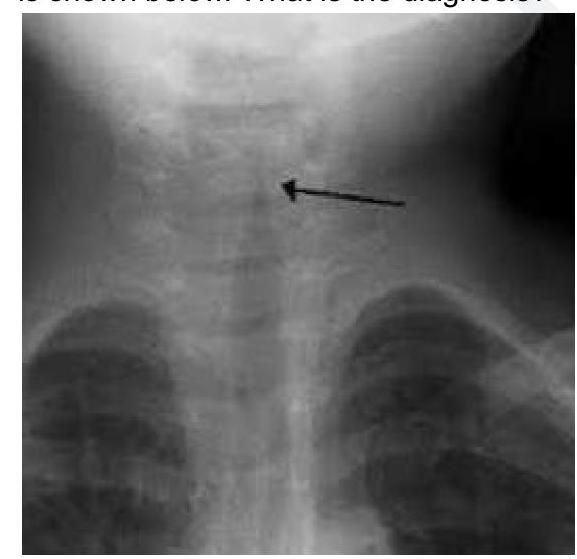
A child presents with high grade fever, inspiratory stridor and develops swallowing difficulty with drooling of saliva since last 4-6 hours. Which of the following treatment is recommended apart from general airway management?
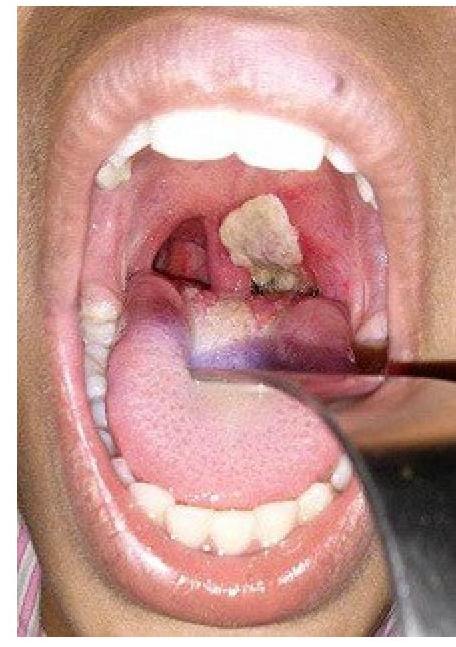
A patient presents with hoarseness of voice and a clinical condition as shown in the image. Identify the lesion:
Laryngitis sicca is associated with ?
Inspiratory stridor is due to lesions of:
Killian's Dehiscence is seen at the level of:
True about carcinoma of the larynx?
Which of the following is NOT used in the treatment of Juvenile Laryngeal Papillomatosis?
Explanation: ***9 days of illness*** - Treatment of **Group A Streptococcus (GAS)** pharyngitis with appropriate antibiotics within **9 days** of symptom onset effectively prevents subsequent acute rheumatic fever. - This timeframe is crucial because it allows for clearance of the bacteria before the immune response that triggers **rheumatic fever** becomes fully established. *10 days of illness* - This duration is **beyond** the optimal window for preventing acute rheumatic fever, as the immune response may already be sufficient to initiate the disease process. - While still beneficial for symptom resolution, antibiotic treatment initiated at this point is **less effective** in preventing the sequelae of rheumatic fever. *7 days of illness* - Administering antibiotics within **7 days** of illness is highly effective and falls within the appropriate treatment window for preventing acute rheumatic fever [2]. - However, **9 days provides a slightly longer, yet still effective, cutoff**, making prevention of rheumatic fever still possible within this slightly extended period. *8 days of illness* - Antibiotic treatment at **8 days of illness** is still considered within the therapeutic window for preventing acute rheumatic fever [2]. - The goal is to clear the infection and prevent the immune system from mounting the **autoimmune response** that leads to cardiac damage [1].
Explanation: ***Direct laryngoscopy with biopsy*** - A definitive diagnosis of a vocal cord mass requires **histological examination** to rule out malignancy, especially given the patient's risk factors (age, smoking) and symptoms (hoarseness, dysphagia, weight loss). - **Direct laryngoscopy** allows for a thorough, magnified view of the mass and precise biopsy collection, which is superior to flexible laryngoscopy alone for definitive diagnosis and staging. *MRI of neck* - While MRI can provide excellent soft tissue detail for **staging** a known malignancy, it cannot provide a **histological diagnosis**. - It would typically be performed after a biopsy confirms malignancy to assess the extent of the tumor and potential spread. *CT scan of neck* - A CT scan is useful for evaluating **bony involvement**, lymph node status, and tumor extension for **staging purposes**, but it is not a diagnostic tool for identifying the specific type of tissue or cell pathology. - Like MRI, a CT scan would generally follow a biopsy confirming malignancy. *Radiotherapy* - **Radiotherapy** is a treatment modality for laryngeal cancer, not a diagnostic step. - Initiating treatment without a definitive histological diagnosis of malignancy would be inappropriate and potentially harmful.
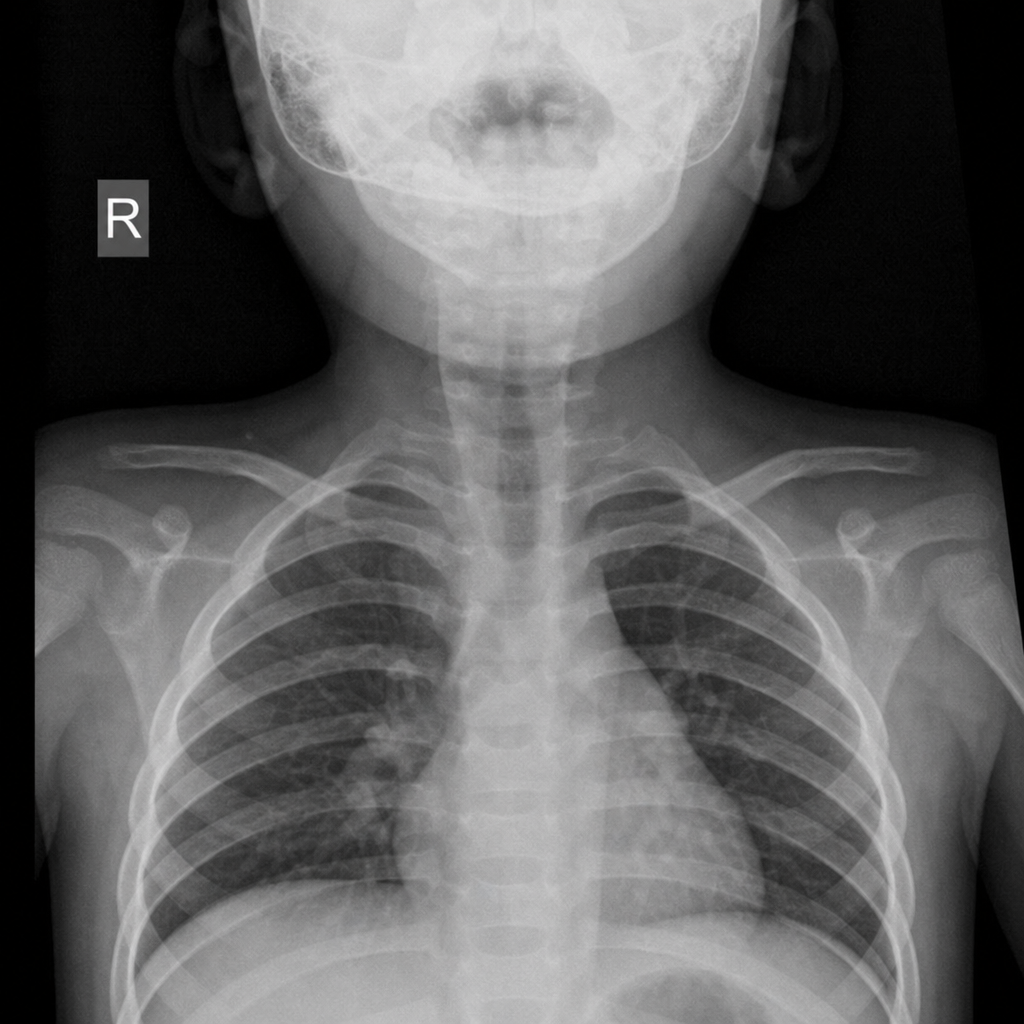
Explanation: ***Acute Laryngotracheobronchitis*** - The combination of **low-grade fever** and **stridor** in a 2-year-old child strongly suggests **croup**, which is medically known as acute laryngotracheobronchitis. - Croup is characterized by **inflammation** of the larynx, trachea, and bronchi, often presenting with a **barking cough** and inspiratory stridor. The X-ray image would show the characteristic **steeple sign**. *Acute Bacterial Tracheitis* - This is a more severe bacterial infection that can present with stridor but typically shows **higher fever**, **toxic appearance**, and rapid clinical deterioration. - Unlike croup, bacterial tracheitis patients appear **more ill** and may have **purulent secretions** requiring more aggressive management. *Acute Epiglottitis* - A serious condition characterized by **rapid onset of high fever**, **dysphagia**, drooling, and a **"tripod" position**, which are not indicated by the given symptoms. - The stridor in epiglottitis is typically quieter and may indicate more severe airway obstruction compared to the characteristic stridor of croup. *Foreign Body aspiration* - While foreign body aspiration can cause stridor, it is typically an **acute event** with a sudden onset of choking, coughing, and respiratory distress. - There is no mention of a choking episode or sudden onset, and a low-grade fever is less typical for an uncomplicated foreign body aspiration.
Explanation: ***IV ceftriaxone*** - The symptoms (high-grade fever, inspiratory stridor, swallowing difficulty with drooling, rapid onset) are highly suggestive of **acute epiglottitis**, a life-threatening emergency. - **Empiric intravenous antibiotics** like ceftriaxone are crucial for treating the bacterial infection (commonly *Haemophilus influenzae* type b or *Streptococcus pneumoniae*) causing epiglottitis. *Anti-diphtheria toxin* - This treatment is specific for **diphtheria**, which causes a pseudomembrane and can lead to airway obstruction, but the clinical picture here is more consistent with epiglottitis due to its rapid and severe presentation without mention of a pseudomembrane. - Diphtheria typically has a more gradual onset and is characterized by a **grayish pseudomembrane** in the throat, unmentioned in this case. *Corticosteroids* - While corticosteroids are used in other forms of upper airway obstruction (like **croup**), their role in acute epiglottitis is controversial and not a primary life-saving measure; antibiotics and airway management are paramount. - Their primary benefit lies in reducing inflammation, but they do not address the acute bacterial cause of epiglottitis directly and are secondary to antibiotics. *Nebulized racemic epinephrine* - This treatment is primarily used for **laryngotracheobronchitis (croup)**, which presents with a barking cough and stridor, but typically lacks the high fever and severe drooling seen in epiglottitis. - Nebulized racemic epinephrine helps to reduce subglottic edema in croup but would not be effective against the severe supraglottic swelling of epiglottitis, nor would it treat the underlying bacterial infection.
Explanation: ***Diphtheria*** - The image shows a **thick, grayish-white pseudomembrane** covering the tonsils and likely extending to other parts of the pharynx, which is a classic sign of diphtheria. - **Hoarseness** indicates laryngeal involvement, a severe complication of diphtheria due to pseudomembrane formation extending to the larynx, potentially causing airway obstruction. *Follicular tonsillitis* - This condition presents with **pus-filled follicles** or spots on the tonsils, which are typically yellow or white, rather than a confluent membrane. - While it causes throat pain and fever, it generally does not lead to the formation of a **firm, adherent pseudomembrane** or significant hoarseness from laryngeal obstruction as seen in diphtheria. *Aphthous ulcer* - An aphthous ulcer is a **small, painful, shallow sore** with a white or yellowish center and a red border, typically found on the non-keratinized oral mucosa. - It does not present as a widespread, thick membranous lesion covering the tonsils and causing hoarseness. *Membranous tonsillitis* - While "membranous tonsillitis" describes the presence of a membrane on the tonsils, this term is often used generally. However, the specific characteristics in the image (thick, grayish, adherent membrane with severe symptoms like hoarseness) are pathognomonic for **diphtheria**. - Other causes of membranous tonsillitis, such as infectious mononucleosis, typically present with a less adherent membrane and often lack the severe systemic toxicity and potential for rapid airway compromise seen in diphtheria.
Explanation: ***Klebsiella rhinoscleromatis*** - **Laryngitis sicca** is characterized by extreme dryness and crusting of the laryngeal mucosa, which is a known manifestation of complications due to **Rhinoscleroma**. - **Rhinoscleroma** is a chronic granulomatous disease caused by *Klebsiella rhinoscleromatis* (formerly *K. rhinoscleromatosis*), primarily affecting the upper respiratory tract including the larynx. *Rhinosporidium* - **Rhinosporidium seeberi** is an aquatic protistan parasite that causes **rhinosporidiosis**, characterized by friable, polypoidal lesions, often in the nose, but typically not laryngitis sicca. - The lesions caused by Rhinosporidium are usually vascular and bleeding, rather than dry and crusting. *M. leprae* - **Mycobacterium leprae** is the causative agent of **leprosy**, a chronic infectious disease primarily affecting the skin, peripheral nerves, upper respiratory tract mucosa, eyes, and testes. - While *M. leprae* can affect the larynx, it typically causes **granulomatous infiltration** and nodule formation leading to hoarseness and stridor, not specifically laryngitis sicca. *Klebsiella ozaenae* - *Klebsiella ozaenae* is associated with **ozena**, a form of chronic atrophic rhinitis characterized by a foul odor, crusting, and atrophy of nasal mucosa. - While it causes dryness and crusting, its primary manifestation is in the **nasal cavity**, and it is not directly linked to laryngitis sicca in the context tested here.
Explanation: ***Subglottis*** - **Inspiratory stridor** is classically associated with **subglottic lesions**, such as **croup (laryngotracheobronchitis)** and **subglottic stenosis**. - The **subglottis** is the **narrowest part of the pediatric airway**, making it particularly susceptible to significant obstruction from inflammation or narrowing. - During inspiration, the negative intrathoracic pressure causes **dynamic collapse** of the subglottic region when narrowed, producing characteristic **high-pitched inspiratory stridor**. - Common causes: **Croup**, subglottic stenosis, subglottic hemangioma. *Supraglottis* - Supraglottic lesions (epiglottis, aryepiglottic folds) can also cause **inspiratory stridor**, particularly in **acute epiglottitis**. - However, supraglottic pathology more commonly presents with **muffled voice** (hot potato voice), **dysphagia**, **drooling**, and **tripod positioning**. - The stridor from supraglottic lesions tends to be **lower-pitched** and is often accompanied by more prominent systemic symptoms. *Trachea* - Tracheal lesions typically produce **biphasic stridor** (both inspiratory and expiratory phases) due to fixed obstruction in the main conducting airway. - The trachea is a more rigid structure; obstruction produces a **harsh, lower-pitched** sound heard in both respiratory phases. - Examples: tracheal stenosis, tracheomalacia, tracheal tumors. *Bronchi* - Bronchial lesions cause **expiratory wheezing** rather than stridor, due to dynamic collapse of small airways during exhalation. - Bronchial obstruction affects the lower airways and presents as **polyphonic wheeze** rather than the monophonic sound of stridor.
Explanation: ***Inferior Constrictor*** - **Killian's dehiscence** is a triangular area of weakness in the posterior pharyngeal wall, located between the **thyropharyngeal** and **cricopharyngeal** parts of the inferior constrictor muscle. - This anatomical weakness is a common site for the formation of a **Zenker's diverticulum**. *Superior Constrictor* - The superior constrictor muscle is located higher up in the pharynx and is not associated with Killian's dehiscence. - Its weakness is related to **Passavant's ridge**, which is important for speech and swallowing, not Zenker's diverticulum. *Middle constrictor* - The middle constrictor muscle is positioned between the superior and inferior constrictors, and there is no specific dehiscence named after it associated with diverticula. - Its function primarily involves constricting the pharynx during swallowing. *Thyroepiglottic* - The thyroepiglottic is a muscle of the **larynx**, not the pharynx, and it is involved in vocal fold tension and airway protection. - It does not contribute to the structure of the pharyngeal wall or the formation of Killian's dehiscence.
Explanation: ### Explanation **Correct Option: A. Glottis is the most common site.** In the Indian subcontinent and globally, the **glottis (vocal cords)** is the most common site for laryngeal carcinoma (approx. 60-65%), followed by the supraglottis (30-35%) and the subglottis (1-5%). Glottic tumors often present early due to hoarseness of voice, which occurs even with tiny lesions. **Analysis of Incorrect Options:** * **B. It rarely presents with metastasis:** This is incorrect. While glottic cancers have a low rate of metastasis due to sparse lymphatic drainage, **supraglottic cancers** have a rich lymphatic network and frequently present with early cervical lymph node metastasis (often bilateral). * **C. Adenocarcinoma is the commonest type:** Incorrect. Over 95% of laryngeal cancers are **Squamous Cell Carcinomas (SCC)**. Adenocarcinoma is rare and usually arises from minor salivary glands. * **D. It responds to chemotherapy very well:** Incorrect. The primary treatment modalities for laryngeal cancer are **Surgery and Radiotherapy**. Chemotherapy is typically used as an adjuvant or for "organ preservation" protocols (e.g., Cisplatin) rather than being the definitive treatment of choice. **High-Yield Clinical Pearls for NEET-PG:** * **Best Prognosis:** Glottic cancer (due to early symptoms and poor lymphatics). * **Worst Prognosis:** Subglottic cancer (presents late and has a high risk of paratracheal node involvement). * **Most Common Site of Distant Metastasis:** Lungs. * **Staging:** T1a involves one vocal cord; T1b involves both cords. T3 implies vocal cord fixation. * **Risk Factors:** Smoking (strongest association) and Alcohol (synergistic effect).
Explanation: **Explanation:** Juvenile Laryngeal Papillomatosis (JLP), caused by **HPV types 6 and 11**, is characterized by recurrent benign epithelial tumors. The primary treatment is surgical debulking (CO2 laser or microdebrider), but adjuvant medical therapy is indicated when the disease is aggressive (requiring >4 surgeries per year). **Why Option B is Correct:** **Interferon beta (INF β)** is not a standard treatment for JLP. While Interferons have antiviral and antiproliferative properties, clinical evidence and established protocols specifically utilize **Interferon alpha (INF α)**. INF β does not have a proven role in the management of this condition. **Analysis of Incorrect Options:** * **Interferon alpha (INF α):** Historically the first-line adjuvant therapy. It slows the rate of recurrence by inducing antiviral states in cells, though it rarely provides a permanent cure and has significant side effects (flu-like symptoms, growth retardation). * **Cidofovir:** A potent antiviral (cytosine nucleotide analog) administered via **intralesional injection**. It is currently one of the most commonly used adjuvant agents for recalcitrant cases. * **Bevacizumab:** An anti-VEGF monoclonal antibody. It is a newer, highly effective treatment (administered systemically or intralesionally) that inhibits the angiogenesis required for papilloma growth. **High-Yield Clinical Pearls for NEET-PG:** * **Most common benign tumor** of the larynx in children. * **Triad of symptoms:** Hoarseness (most common), stridor, and respiratory distress. * **Diagnosis:** Direct laryngoscopy shows "cauliflower-like" masses. * **Gold Standard Adjuvant:** Cidofovir (Intralesional). * **Newer Trend:** Bevacizumab is increasingly preferred for severe cases. * **Note:** Tracheostomy should be avoided as it may lead to "stomal seeding" of the papilloma.
Get full access to all questions, explanations, and performance tracking.
Start For Free