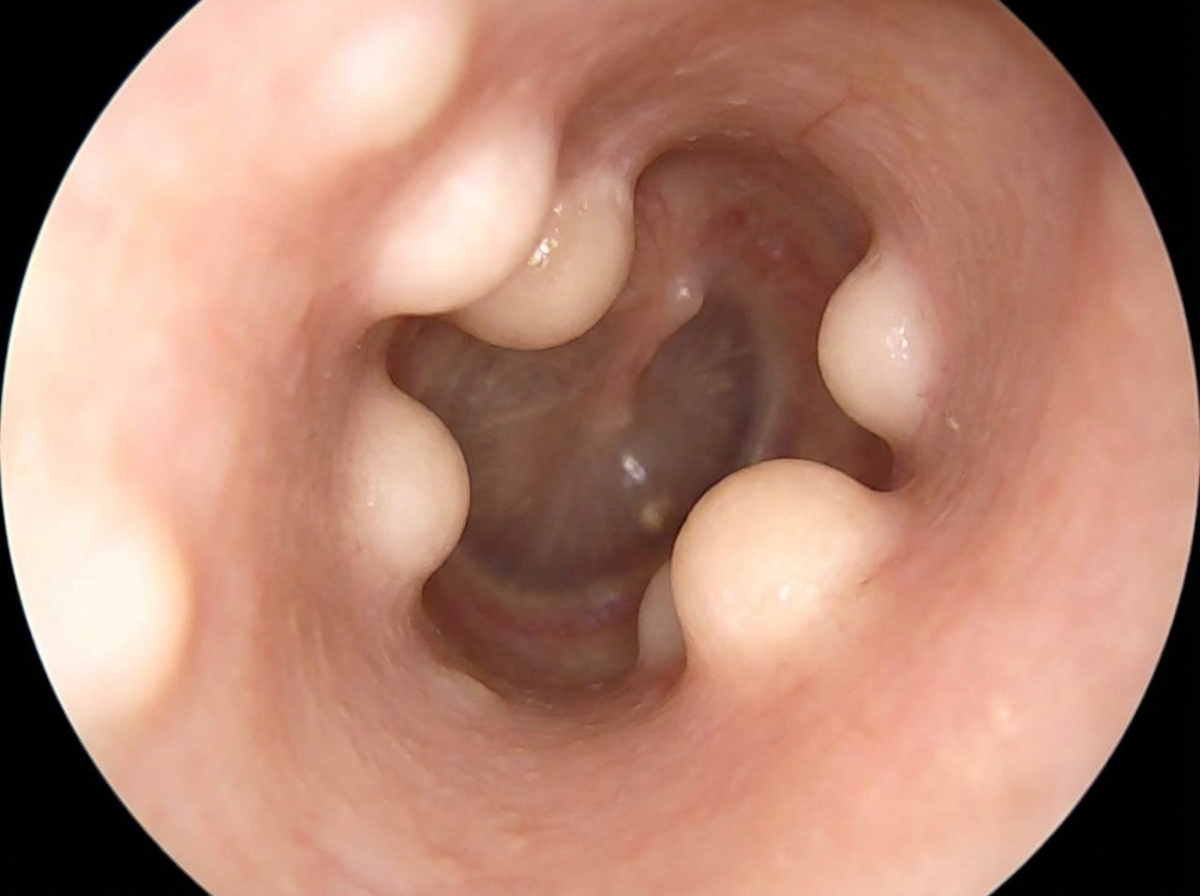
Use of Siegel's speculum during examination of the ear provides all except?
Which of the following conditions is most commonly associated with cholesteatoma formation?
A 32-year-old teacher presents complaining of hearing loss in her right ear. Physical examination reveals cerumen completely obstructing the ear canal. Which of the following methods is recommended for ear wax removal?
What is true in case of perforation of the pars flaccida?
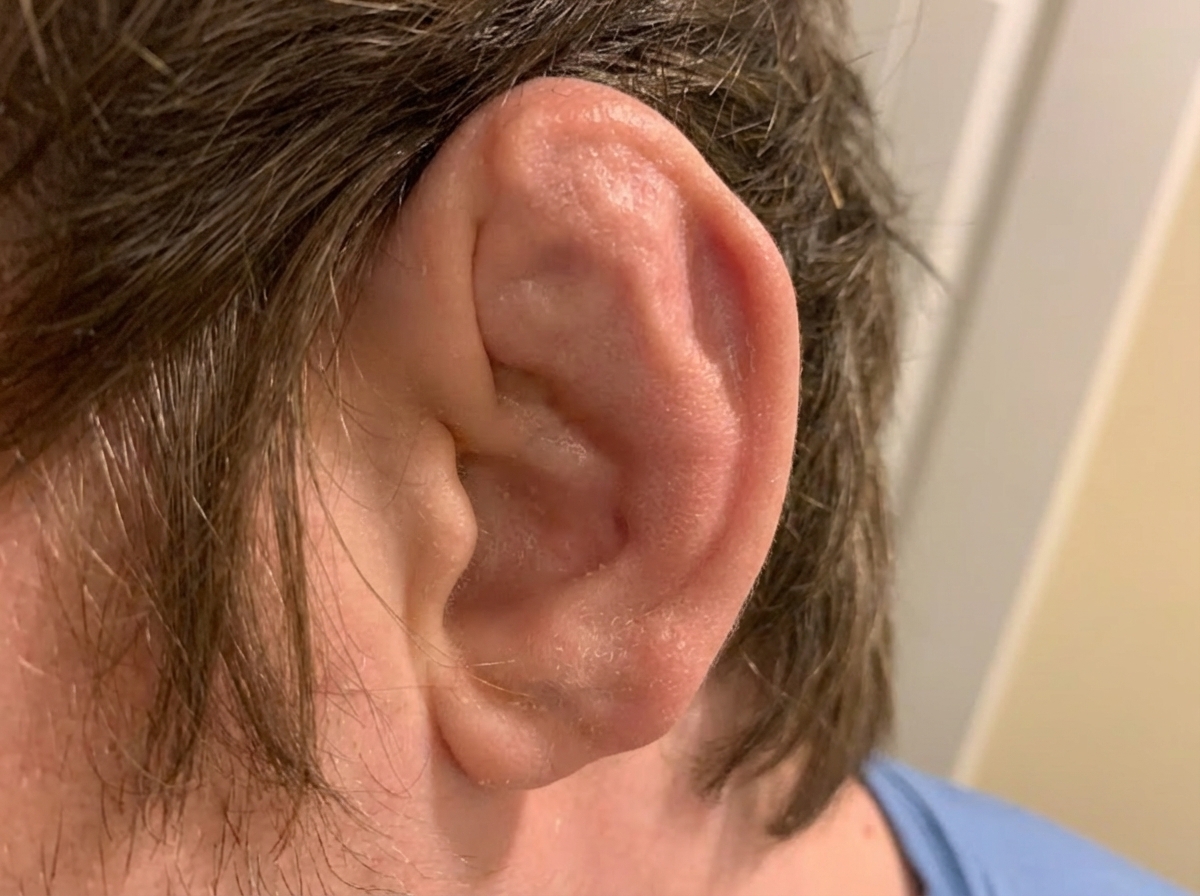
The given appearance of the pinna is suggestive of which of the following conditions?
All are true about Ramsay Hunt syndrome except?
Which among the following is the commonest complication of CSOM?
What is the true statement about Acute Suppurative Otitis Media (ASOM)?
A blue eardrum is typically seen in which of the following conditions?
What is the most common complication of acute otitis media in children?
Explanation: **Explanation:** Siegel’s speculum is a diagnostic and therapeutic instrument used in otology. It consists of a speculum attached to a bulb via a rubber tube, with a convex lens at the proximal end. **Why Option C is the correct answer:** Siegel’s speculum is **not** used for the removal of foreign bodies. Foreign body removal requires specialized instruments like crocodile forceps, ear hooks, or syringing. Siegel’s speculum creates a closed, airtight system to manipulate air pressure; introducing it into a canal containing a foreign body could inadvertently push the object deeper towards the tympanic membrane (TM). **Analysis of other options:** * **A. Magnification:** The speculum contains a convex lens that provides **2.5x magnification**, allowing for a detailed view of the TM and middle ear structures. * **B. Assessment of TM mobility:** By squeezing the bulb, the clinician creates positive and negative pressure in the external auditory canal. This is the gold standard clinical method to check for TM mobility (e.g., reduced in Otitis Media with Effusion or fixed in Tympanosclerosis). * **D. Applicator for powdered antibiotics:** It can be used to insufflate (blow) medicated powders into the ear canal or middle ear cleft (discontinued in some modern practices but historically a recognized use). **High-Yield Clinical Pearls for NEET-PG:** * **Fistula Test:** Siegel’s speculum is used to perform the Fistula test. Positive pressure induces vertigo and nystagmus if a labyrinthine fistula (usually in the horizontal semicircular canal) is present. * **Gelle’s Test:** Used to differentiate between ossicular fixation (Otosclerosis) and sensorineural hearing loss. * **Airtight Seal:** For the speculum to work effectively, it must be of an appropriate size to create an airtight seal in the cartilaginous ear canal.
Explanation: **Explanation:** **1. Why Attico-antral perforation is correct:** Chronic Suppurative Otitis Media (CSOM) is clinically divided into two types: Tubo-tympanic and Attico-antral. **Attico-antral disease** (also known as "unsafe" or "dangerous" type) involves the posterosuperior part of the middle ear cleft (attic, antrum, and mastoid). It is characterized by the presence of **cholesteatoma**—a keratinizing squamous epithelium in the middle ear. This type is associated with marginal or attic perforations, which allow the migration of squamous epithelium from the external auditory canal into the middle ear, leading to bone erosion and serious intracranial complications. **2. Why the other options are incorrect:** * **Central perforation & Tubo-tympanic disease:** These refer to the "safe" type of CSOM. The perforation is located in the pars tensa and does not reach the annulus. It is characterized by a permanent deficiency of the tympanic membrane without the presence of a bone-eroding cholesteatoma. * **Otosclerosis:** This is a primary metabolic bone disease of the otic capsule characterized by abnormal bone remodeling, typically leading to stapedial fixation and conductive hearing loss. It does not involve the tympanic membrane or cholesteatoma formation. **Clinical Pearls for NEET-PG:** * **Hallmark of Cholesteatoma:** Bone erosion (due to osteoclast activation and acid phosphatase). * **Classic Sign:** A "pearly white" mass seen behind the tympanic membrane or in the attic. * **Investigation of Choice:** HRCT of the Temporal Bone (to assess the extent of bone destruction). * **Management:** Always surgical (Mastoidectomy), as medical management cannot eliminate a cholesteatoma.
Explanation: ### Explanation **1. Why Option B is Correct:** Cerumen (ear wax) is a mixture of secretions from ceruminous and sebaceous glands combined with desquamated epithelium. When it is hard or impacted, manual removal can be painful or cause canal trauma. **3% Hydrogen Peroxide** acts as a **cerumenolytic agent**. It works by releasing oxygen (effervescence), which mechanically breaks up the wax and softens it, making it easier to remove via syringing or suction. This is the recommended first-line pharmacological approach for softening impacted wax. **2. Why the Other Options are Incorrect:** * **Option A (Jet Irrigation):** High-pressure water piks or jet irrigators are contraindicated for ear wax removal as the excessive pressure can lead to **tympanic membrane perforation** or ossicular damage. * **Option B (Irrigation in Perforation):** Irrigation is strictly **contraindicated** if a tympanic membrane perforation is suspected or present. It can introduce bacteria into the middle ear, leading to acute otitis media or caloric stimulation (vertigo). * **Option D (Aqueous Irrigation for a Bean):** Vegetable foreign bodies (like beans, peas, or seeds) are hygroscopic. Aqueous irrigation will cause them to **swell**, leading to increased pain, impaction, and difficulty in subsequent removal. These should be removed surgically or with a hook. **3. Clinical Pearls for NEET-PG:** * **Composition:** Cerumen has an acidic pH, which provides bacteriostatic properties. * **Syringing Technique:** The water should be at **body temperature (37°C)** to avoid the caloric effect (vertigo/nystagmus). The stream should be directed towards the **posterosuperior wall** of the canal, not directly at the drum. * **Contraindications to Syringing:** History of perforation, previous ear surgery (mastoidectomy), or presence of a vegetable foreign body. * **Keratosis Obturans:** A distinct condition characterized by a massive accumulation of desquamated keratin in the canal, often associated with bronchiectasis or sinusitis.
Explanation: **Explanation:** Chronic Suppurative Otitis Media (CSOM) is clinically divided into two types: Tubotympanic (Safe) and **Atticoantral (Unsafe)**. Perforation of the **Pars Flaccida** (Shrapnell’s membrane) is the hallmark of the Atticoantral type. **Why Option B is Correct:** Pars flaccida perforations are highly associated with **Cholesteatoma**. The most widely accepted theory (Wittmaack’s theory) suggests that negative middle ear pressure leads to the invagination of the pars flaccida, forming a **retraction pocket**. As keratin debris accumulates within this pocket, it expands to form a cholesteatoma. Because this process can erode bony structures (like the ossicles and otic capsule), it is termed "unsafe" or "dangerous" ear disease. **Why Other Options are Incorrect:** * **Option A:** It is not a "rare" cause; it is a major clinical subtype of CSOM. While tubotympanic disease is more common, atticoantral disease is a frequent presentation in ENT clinics. * **Option C:** Traumatic perforations (due to a slap, Q-tip injury, or barotrauma) almost exclusively involve the **Pars Tensa**, as it occupies the largest surface area of the tympanic membrane. Pars flaccida perforations are almost always pathological (inflammatory/obstructive) rather than traumatic. **High-Yield Clinical Pearls for NEET-PG:** * **Location:** Pars flaccida perforations are seen in the **Attic** region. * **Hearing Loss:** Usually **Conductive Hearing Loss**, but can be sensorineural if the cholesteatoma invades the inner ear (Labyrinthitis). * **Management:** Unlike "safe" CSOM, which may be managed medically, the treatment for "unsafe" CSOM is primarily **Surgical** (e.g., Canal Wall Down or Canal Wall Up Mastoidectomy) to ensure a safe, dry ear. * **Marginal Perforation:** Often involves the posterosuperior quadrant of the pars tensa and is also associated with cholesteatoma.
Explanation: ***Post-traumatic*** - The appearance shows **cauliflower ear**, a classic deformity resulting from **repeated trauma** causing hematoma formation between cartilage and perichondrium. - **Fibrosis** and **cartilage necrosis** develop when blood supply is compromised, leading to the characteristic **thickened, irregular contour**. *Pseudomonas infection* - **Perichondritis** from Pseudomonas typically presents with **acute pain**, **erythema**, and **swelling** of the pinna. - The cartilage remains **smooth** initially, with **purulent discharge** and systemic symptoms, unlike the chronic deformity seen here. *Aspergillus infection* - **Otomycosis** caused by Aspergillus primarily affects the **external auditory canal**, not the pinna structure. - Presents with **black or green discharge**, **itching**, and **hearing loss**, without pinna deformity. *Tuberculosis* - **TB of the pinna** is rare and presents as **chronic ulcerative lesions** or **lupus vulgaris** with reddish-brown plaques. - Causes **tissue destruction** and scarring but not the specific **cauliflower-like thickening** seen in trauma cases.
Explanation: **Explanation:** Ramsay Hunt Syndrome (Herpes Zoster Oticus) is caused by the reactivation of the **Varicella Zoster Virus (VZV)** in the geniculate ganglion. **Why Option C is the correct answer (False statement):** The prognosis for Ramsay Hunt Syndrome is generally **poorer** than Bell’s Palsy, with lower rates of complete nerve recovery. Management is primarily **medical**, involving high-dose corticosteroids and antiviral drugs (e.g., Acyclovir). **Surgical decompression** of the facial nerve is controversial and rarely performed; it does not guarantee an "excellent prognosis," especially since the pathology involves viral axonal destruction rather than simple mechanical compression. **Analysis of other options:** * **Option A:** It primarily involves the **VII cranial nerve** (Facial nerve), leading to lower motor neuron facial palsy. * **Option B:** The virus can spread via the vestibulocochlear nerve, leading to **VIII cranial nerve** symptoms such as sensorineural hearing loss, vertigo, and tinnitus. * **Option D:** The causative agent is the **Varicella Zoster Virus**, which remains latent in the sensory ganglia after a primary chickenpox infection. **High-Yield Clinical Pearls for NEET-PG:** * **Classic Triad:** Ipsilateral facial paralysis, otalgia (ear pain), and vesicles in the auricle/external auditory canal. * **Hitzenberger’s Sign:** Hypoesthesia in the meatus and concha. * **Diagnosis:** Usually clinical; Tzanck smear of vesicle fluid shows multinucleated giant cells. * **Treatment:** Best results if Acyclovir and Prednisolone are started within 72 hours of onset.
Explanation: **Explanation:** **Mastoiditis** is the correct answer because it is considered the most common complication of Chronic Suppurative Otitis Media (CSOM). In the context of middle ear infections, the mastoid air cell system is continuous with the middle ear cleft via the aditus ad antrum. When the inflammatory process of CSOM extends beyond the mucoperiosteum to involve the bony septa of the mastoid air cells, it results in mastoiditis. It is categorized as an **extracranial (intratemporal) complication.** **Analysis of Incorrect Options:** * **A. Subperiosteal abscess:** While common, this is usually a *sequela* of mastoiditis (e.g., von Bezold’s or Post-auricular abscess). Mastoiditis must occur first for the pus to breach the cortex and form an abscess. * **C. Brain abscess:** This is the most common **intracranial** complication of CSOM, but it is less frequent than extracranial complications like mastoiditis. * **D. Meningitis:** This is the most common intracranial complication in **Acute** Otitis Media (AOM), but in CSOM, brain abscess takes precedence. **Clinical Pearls for NEET-PG:** * **Most common complication overall:** Mastoiditis. * **Most common intracranial complication:** Brain abscess (specifically in the temporal lobe or cerebellum). * **Most common cause of facial nerve palsy in CSOM:** Cholesteatoma causing erosion of the fallopian canal. * **Griesinger’s Sign:** Edema over the mastoid due to thrombosis of the mastoid emissary vein (seen in Lateral Sinus Thrombosis). * **Bezold’s Abscess:** Pus escaping through the medial aspect of the mastoid tip into the sternocleidomastoid sheath.
Explanation: **Explanation:** **Acute Suppurative Otitis Media (ASOM)** is an acute pyogenic inflammation of the middle ear cleft, typically following an upper respiratory tract infection (URTI) via the Eustachian tube. **1. Why Option A is Correct:** The natural history of ASOM involves stages (Hyperemia, Exudation, Suppuration, Resolution, and Complication). With the advent of modern antibiotics and timely intervention, the vast majority of cases enter the **Stage of Resolution**, where the tympanic membrane heals, hearing returns to normal, and the infection clears without leaving any permanent damage or sequelae. **2. Why Other Options are Incorrect:** * **Option B:** ASOM typically follows **viral URTI** (like the common cold, influenza, or measles) or adenoiditis, not parotitis. Parotitis (mumps) is more commonly associated with sudden sensorineural hearing loss (SNHL), not suppurative middle ear infection. * **Option C:** Treatment is primarily **medical**, consisting of antibiotics (Amoxicillin is the drug of choice), nasal decongestants, and analgesics. Surgery is reserved for complications; even then, a **Myringotomy** is the procedure of choice for severe pain or bulging. Radical mastoidectomy is used for Chronic Suppurative Otitis Media (CSOM) with cholesteatoma. * **Option D:** The most common causative organism in ASOM is ***Streptococcus pneumoniae***, followed by *Haemophilus influenzae* and *Moraxella catarrhalis*. *Pseudomonas aeruginosa* is the hallmark of CSOM (Safe/Tubotympanic type). **High-Yield Clinical Pearls for NEET-PG:** * **Most common route of infection:** Eustachian tube. * **Earliest sign:** Cartwheel appearance of the tympanic membrane (vessels radiating from the handle of malleus). * **Pulsatile Otorrhea:** Known as the **"Lighthouse sign,"** seen in the Stage of Suppuration. * **Drug of Choice:** Amoxicillin (or Amoxicillin-Clavulanate).
Explanation: **Explanation:** The color of the tympanic membrane (TM) is a vital diagnostic clue in ENT. A **blue eardrum** (idiopathic hemotympanum) in **Secretory Otitis Media (SOM)** occurs due to the presence of sterile, brownish-yellow fluid in the middle ear. When this fluid is viewed through the translucent TM, the light reflection and the underlying vascular congestion create a characteristic bluish or slate-grey appearance. In chronic cases, the breakdown of hemoglobin into hemosiderin within the middle ear effusion further contributes to this "blue" discoloration. **Analysis of Options:** * **Tympanosclerosis:** Characterized by hyalinization and calcification of the TM, appearing as **chalky white patches** (horseshoe-shaped). * **Otosclerosis:** Usually presents with a normal TM. However, in active phases (Schwartze sign), a **flamingo pink** hue is seen due to increased vascularity over the promontory. * **Myringitis Bullosa:** Presents with **serosanguinous bullae** (blisters) on the TM surface, typically following a viral infection. **High-Yield Clinical Pearls for NEET-PG:** 1. **Golden Yellow/Amber TM:** Also seen in Secretory Otitis Media (early stages). 2. **Red/Bulging TM:** Classic sign of Acute Suppurative Otitis Media (ASOM) – "Cartwheel appearance." 3. **Brown/Black TM:** Suggests a fungal infection (Otomycosis) or a foreign body. 4. **Differential Diagnosis for Blue TM:** Apart from SOM, always consider a **High Jugular Bulb** or a **Glomus Tumor** (Rising sun appearance).
Explanation: **Explanation:** **1. Why Mastoiditis is the correct answer:** Acute Otitis Media (AOM) is an infection of the middle ear cleft, which includes the eustachian tube, middle ear, and mastoid air cell system. Because the mastoid antrum is in direct anatomical continuity with the middle ear via the *aditus ad antrum*, almost every case of AOM involves some degree of mastoid inflammation. When the infection fails to resolve, it leads to the destruction of the bony inter-cellular septa, resulting in **Acute Coalescent Mastoiditis**. Statistically, this remains the most common extracranial complication of AOM in the pediatric population. **2. Why the other options are incorrect:** * **A. Deafness:** While AOM causes a temporary *conductive hearing loss* due to fluid/pus in the middle ear, permanent deafness is considered a sequela rather than the most common acute complication. * **C. Cholesteatoma:** This is a feature of **Chronic** Suppurative Otitis Media (Squamosal type), not an acute complication of AOM. AOM does not typically lead to the formation of a keratinizing squamous epithelium sac. * **D. Facial nerve palsy:** This is a known complication due to dehiscence of the fallopian canal, but it is significantly rarer than mastoiditis. **3. High-Yield Clinical Pearls for NEET-PG:** * **Most common extracranial complication:** Mastoiditis. * **Most common intracranial complication:** Meningitis (followed by Brain Abscess). * **Clinical Sign:** "Ironing out" of the skin creases over the mastoid and sagging of the posterosuperior meatal wall. * **Investigation of Choice:** HRCT Temporal Bone (shows coalescence of air cells). * **Treatment:** Intravenous antibiotics; if a subperiosteal abscess forms, a **Schwartze operation** (Simple Mastoidectomy) is indicated.
Otitis Externa
Practice Questions
Acute Otitis Media
Practice Questions
Chronic Otitis Media
Practice Questions
Complications of Otitis Media
Practice Questions
Otosclerosis
Practice Questions
Presbycusis
Practice Questions
Sudden Sensorineural Hearing Loss
Practice Questions
Noise-Induced Hearing Loss
Practice Questions
Ménière's Disease
Practice Questions
Benign Paroxysmal Positional Vertigo
Practice Questions
Vestibular Neuritis
Practice Questions
Tumors of the Ear and Temporal Bone
Practice Questions
Get full access to all questions, explanations, and performance tracking.
Start For Free