What is the most common cause of ASOM?
Retraction of tympanic membrane touching the promontory. What is the classification according to Sade's grading system?
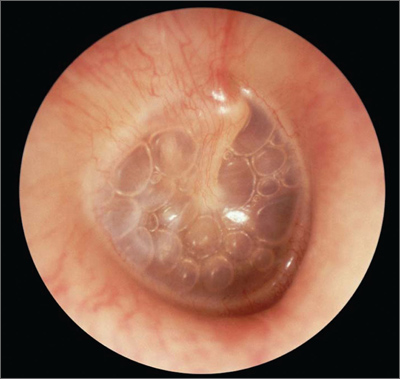
Bullous myringitis is caused by?
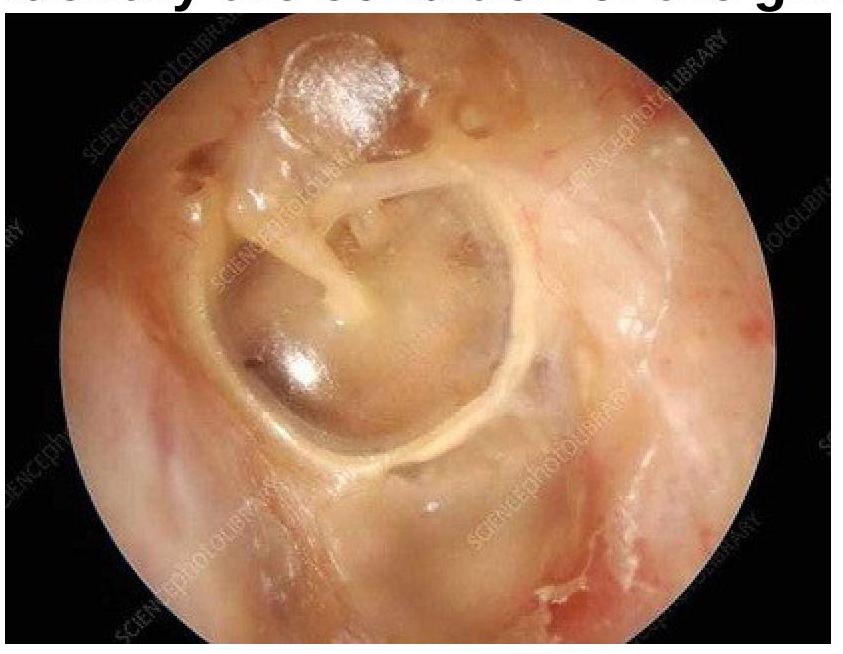
What are the potential causes of myringosclerosis?
What is the term for the condition where the tympanic membrane is retracted and touches the promontory?
Cone of light focuses on which quadrant of tympanic membrane?
What is the most common fungal cause of otomycosis?
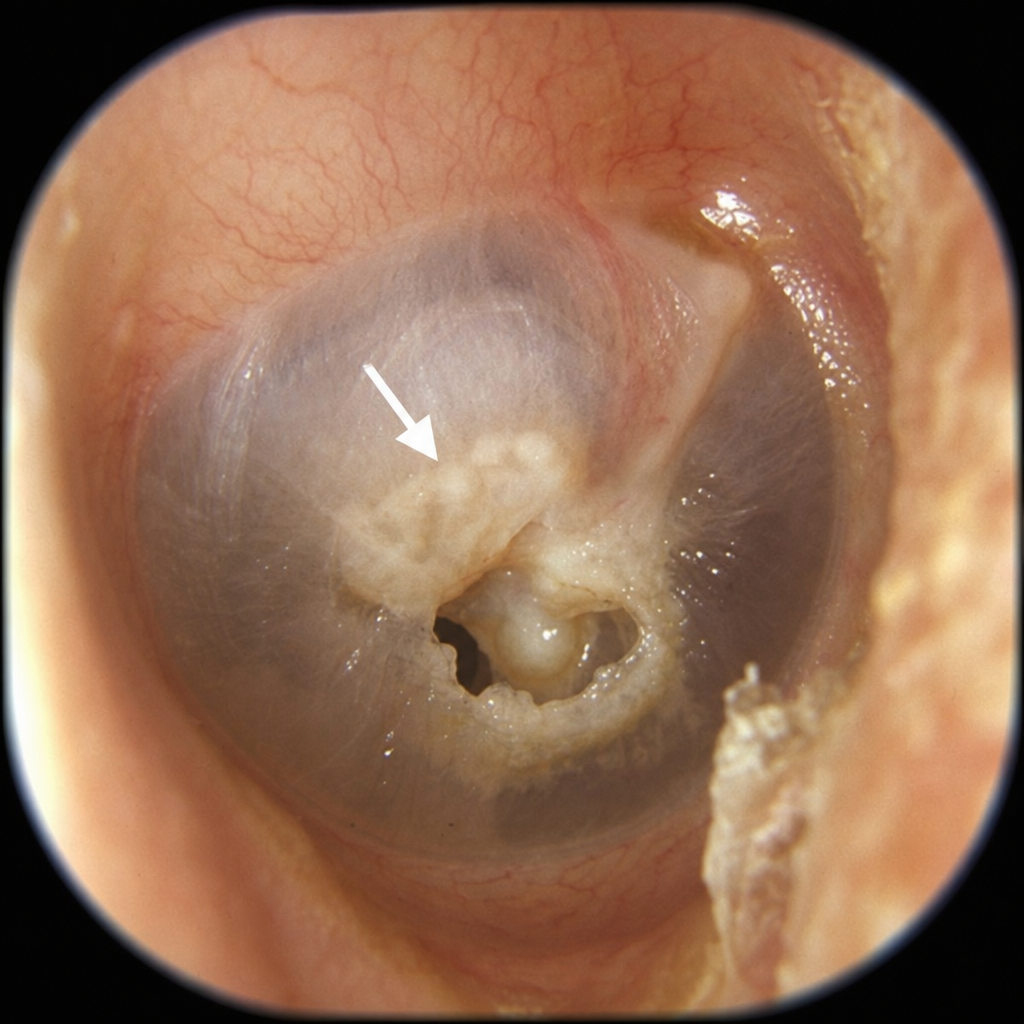
The treatment of choice for atticoantral variety of chronic suppurative otitis media is:
What is the surgical procedure for widening of the cartilaginous part of the external auditory canal?
Chondritis of the aural cartilage is most commonly due to which of the following?
Explanation: ***Pneumococci*** - **_Streptococcus pneumoniae_ (Pneumococci)** is the **most common bacterial cause** of Acute Suppurative Otitis Media (ASOM) in all age groups, particularly in young children. - It accounts for an estimated 25-50% of all ASOM cases, often leading to significant inflammation and **purulent discharge**. *Meningococci* - **_Neisseria meningitidis_ (Meningococci)** is rarely a cause of ASOM. - It is primarily known for causing **meningitis** and **sepsis**, not typically middle ear infections. *H. influenzae* - **_Haemophilus influenzae_ (non-typable)** is the **second most common cause** of ASOM, accounting for 20-40% of cases. - While significant, it is generally less prevalent than _Streptococcus pneumoniae_. *Moraxella catarrhalis* - **_Moraxella catarrhalis_** is another common causative agent of ASOM, responsible for 10-20% of cases. - It is frequently seen in conjunction with other pathogens but is not the most common on its own.
Explanation: ***Grade 3*** - **Grade 3** retraction involves the tympanic membrane making contact with the **promontory** of the middle ear. - This contact indicates significant retraction, often with loss of definition of the malleus handle. *Grade 1* - **Grade 1** retraction is characterized by mild retraction with an **intact cone of light** and good mobility. - The tympanic membrane does not touch any middle ear structures. *Grade 2* - **Grade 2** retraction shows the tympanic membrane touching the **incudostapedial joint** or posterior wall of the middle ear. - The handle of the malleus may appear significantly foreshortened. *Grade 4* - **Grade 4** retraction involves **adhesive otitis media**, where the tympanic membrane is severely retracted and fully adherent to the middle ear structures. - This often results in a nearly complete obliteration of the middle ear space.
Explanation: ***Mycoplasma pneumoniae*** - **Bullous myringitis** is characterized by the formation of **blisters** (bullae) on the **tympanic membrane**, which is a classic presentation associated with *Mycoplasma pneumoniae* infection. - While other bacteria can cause otitis media, *Mycoplasma pneumoniae* has a strong association with the development of **hemorrhagic bullae** on the eardrum. *Streptococcus pneumoniae* - This bacterium is the **most common cause** of **acute otitis media (AOM)**, but it typically presents with inflammation and bulging of the tympanic membrane **without** the characteristic bullae. - While it can cause severe ear infections, its typical presentation does not involve the **blister formation** seen in bullous myringitis. *Haemophilus influenzae* - This is another **common bacterial cause** of **acute otitis media**, especially in children, often leading to bulging and redness of the eardrum. - Similar to *Streptococcus pneumoniae*, it is not typically associated with the development of **bullae** on the tympanic membrane. *Candida* - **Candida** species are **fungi** and are a cause of **otitis externa** (ear canal infection) or, less commonly, **chronic otitis media**, particularly in immunocompromised individuals. - Fungal infections of the ear, including Candida, do **not** typically cause the characteristic **bullous myringitis** presentation.
Explanation: ***Chronic inflammation from recurrent infections*** - **Myringosclerosis** is often a consequence of **chronic inflammation** and repair processes in the tympanic membrane (eardrum), commonly triggered by **recurrent otitis media** (middle ear infections). - The inflammatory exudates and subsequent healing lead to the deposition of **calcium and phosphate crystals** within the fibrous layer of the tympanic membrane, causing it to become stiff and opaque. *Genetic predisposition* - While genetics can play a role in some ear conditions, **myringosclerosis** is primarily an **acquired condition** rather than one solely determined by genetic factors. - No specific strong genetic link has been identified as a primary cause compared to environmental triggers. *Otosclerosis* - **Otosclerosis** is a condition affecting the **ossicles** (typically the stapes) in the middle ear, leading to conductive hearing loss due to abnormal bone growth, not directly affecting the tympanic membrane. - Myringosclerosis involves the eardrum itself, characterized by **calcification of the tympanic membrane**, which is distinct from the pathology of otosclerosis. *None of the options* - This option is incorrect because **chronic inflammation from recurrent infections** is a well-established cause of myringosclerosis. - The presence of a correct answer negates this choice.
Explanation: ***Atelectasis of the tympanic membrane*** - **Atelectasis of the tympanic membrane** (TM) specifically refers to severe **retraction** where the TM collapses onto the **promontory** or other middle ear structures. - This condition indicates a significant **negative middle ear pressure**, often leading to **conductive hearing loss** and potential long-term complications if not addressed. *Mild tympanic membrane retraction* - **Mild retraction** involves the TM being drawn inward, but it does not typically make contact with the **promontory**. - This is often observed as a prominent **short process of the malleus** or a **sharper cone of light**. *Severe tympanic membrane retraction* - While **severe retraction** describes the degree of inward pulling, **atelectasis** is the more precise term when the TM actually touches the **promontory** or other middle ear structures. - The term **severe retraction** alone might not imply contact with the bony structures of the middle ear. *Adhesive otitis media (with middle ear adhesions)* - **Adhesive otitis media** involves the formation of **fibrous adhesions** within the middle ear space, often as a result of chronic inflammation, which can **fixate** the ossicles or TM. - While severe retraction can be a precursor, **adhesive otitis media** specifically refers to the presence of these **adhesions**, which are not explicitly stated in the question.
Explanation: ***Anteroinferior*** - The **cone of light** (or light reflex) is a characteristic triangular reflection of the otoscope's light, normally visible in the **anteroinferior quadrant** of a healthy tympanic membrane. - Its presence indicates a **healthy, intact eardrum** with normal tension and transparency; its absence or distortion can suggest pathology. *Posteroinferior* - While part of the tympanic membrane, the **posteroinferior quadrant** does not normally exhibit the focused cone of light. - This area is more often associated with the **round window niche** on its medial aspect in relation to the middle ear. *Anterosuperior* - The **anterosuperior quadrant** is located above the handle of the malleus and does not show the cone of light reflection. - This area contains the **anterior malleolar fold** and part of the **pars flaccida** (attic region). *Posterosuperior* - The **posterosuperior quadrant** is also not the usual site for the cone of light. - This area is relevant for the proximity to the **facial nerve** and structures like the **long process of the incus**.
Explanation: ***Aspergillus*** - **Aspergillus niger** and **Aspergillus flavus** are the most frequently isolated fungal species in cases of **otomycosis**. - These fungi thrive in warm, moist environments like the **external auditory canal** and produce spores that can cause infection. *Histoplasma* - **Histoplasma capsulatum** is associated with **histoplasmosis**, a systemic fungal infection that primarily affects the lungs. - It is not a common cause of otomycosis, as it typically causes **pulmonary and disseminated disease**, not external ear canal infections. *Rhinosporidium* - **Rhinosporidium seeberi** causes **rhinosporidiosis**, a chronic granulomatous disease that primarily affects the **mucous membranes of the nose and nasopharynx**. - While it can affect other mucous membranes, it is not a typical cause of **otomycosis**. *Actinomyces* - **Actinomyces** is a genus of **gram-positive bacteria**, not fungi, known for causing **actinomycosis**. - Actinomycosis is characterized by **abscess formation and fistulas** and does not typically present as otomycosis.
Explanation: **Correct: Mastoidectomy** - The **atticoantral** variety of chronic suppurative otitis media (CSOM) is typically associated with **cholesteatoma**, which necessitates surgical eradication to prevent complications such as intracranial infection, facial nerve palsy, and labyrinthine destruction. - **Mastoidectomy** is the treatment of choice to remove the cholesteatoma and achieve a safe, dry ear by clearing disease from the mastoid air cells and attic. *Incorrect: Medical management* - This approach is typically used for the **tubotympanic** (mucosal/safe) type of CSOM, which involves a central perforation without cholesteatoma. - It is **ineffective in the presence of cholesteatoma**, as antibiotics cannot penetrate the keratinized debris matrix and do not eradicate the underlying pathology. *Incorrect: Underlay myringoplasty* - This procedure repairs a **tympanic membrane perforation** but does not address the underlying cholesteatoma or disease within the mastoid and attic. - It is used for **safe, dry perforations**, usually associated with the tubotympanic type of CSOM after the ear has been rendered inactive. *Incorrect: Insertion of ventilation tube* - Ventilation tubes (grommets) are primarily used for **recurrent acute otitis media** or **otitis media with effusion (glue ear)** to equalize middle ear pressure and facilitate drainage. - They are **not indicated for CSOM**, especially the atticoantral type with cholesteatoma, as they do not resolve the chronic infection or remove the pathological tissue.
Explanation: ***Meatoplasty*** - **Meatoplasty** is a surgical procedure specifically designed to **widen the external auditory canal**, often performed to improve drainage or aid in fitting hearing aids. - This procedure usually involves modifying the **cartilaginous part** of the canal to prevent stenosis or collapse, which can cause conductive hearing loss. *Otoplasty* - **Otoplasty** is a cosmetic surgical procedure primarily focused on reshaping the **external ear (pinna)**, often to correct prominent ears or deformities. - It does not involve widening the external auditory canal. *Myringoplasty* - **Myringoplasty** is a surgical repair of a **perforated tympanic membrane (eardrum)**. - The goal is to close the hole in the eardrum to improve hearing and prevent recurrent infections, without altering the external auditory canal's width. *Tympanoplasty* - **Tympanoplasty** is a broader surgical term that involves the repair of the **tympanic membrane (eardrum)** and/or the **ossicular chain** within the middle ear. - While it addresses middle ear issues and hearing improvement, it typically does not involve widening the external auditory canal as its primary goal.
Explanation: **Pseudomonas** - **Pseudomonas aeruginosa** is the most common pathogen responsible for **chondritis** of the auricular cartilage, especially after trauma or surgery. - This bacterium thrives in moist environments and can lead to aggressive infections in cartilage, which has a limited blood supply. *Staphylococcus* - While **Staphylococcus aureus** can cause skin and soft tissue infections, it is less commonly the primary cause of isolated **auricular chondritis**. - Staphylococcal infections more often present as cellulitis or abscesses, and while they can secondarily involve cartilage, they are not the typical primary pathogen in chondritis. *Candida* - **Candida** species are opportunistic fungi that can cause infections, particularly in immunocompromised individuals or following prolonged antibiotic use. - However, **fungal chondritis** of the ear cartilage is rare and not the most common cause compared to bacterial pathogens. *Neither Staphylococcus nor Pseudomonas* - This option is incorrect because **Pseudomonas** is indeed the most common causative agent for **chondritis** of the aural cartilage. - Attributing chondritis to neither of these common pathogens would overlook the primary infectious agent.
Otitis Externa
Practice Questions
Acute Otitis Media
Practice Questions
Chronic Otitis Media
Practice Questions
Complications of Otitis Media
Practice Questions
Otosclerosis
Practice Questions
Presbycusis
Practice Questions
Sudden Sensorineural Hearing Loss
Practice Questions
Noise-Induced Hearing Loss
Practice Questions
Ménière's Disease
Practice Questions
Benign Paroxysmal Positional Vertigo
Practice Questions
Vestibular Neuritis
Practice Questions
Tumors of the Ear and Temporal Bone
Practice Questions
Get full access to all questions, explanations, and performance tracking.
Start For Free