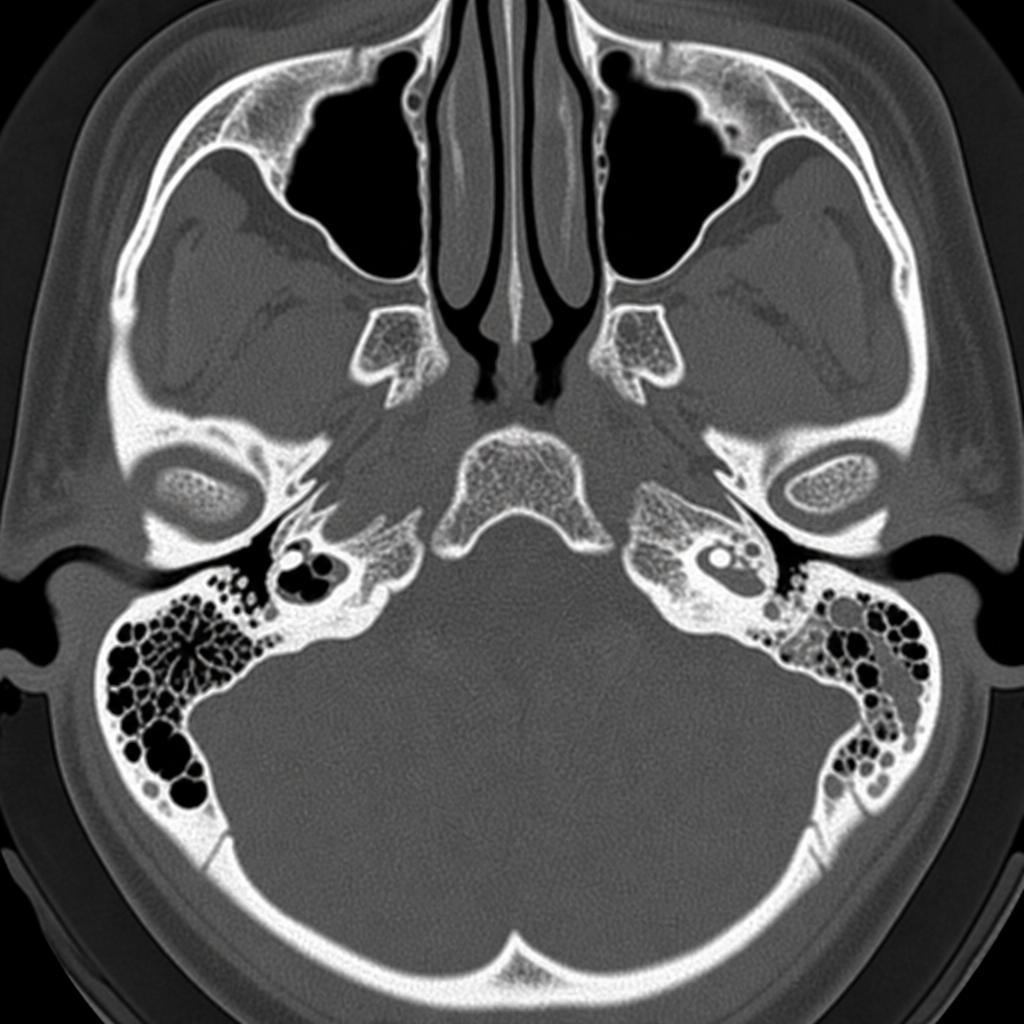
A grommet tube is used in which condition?
All of the following are included in Gradenigo's triad EXCEPT:
A man presented with pulsatile tinnitus and hearing loss. A vascular mass is seen behind the tympanic membrane. What is the most likely diagnosis?
Which organism causes malignant otitis externa?
A female diabetic patient presents with severe ear pain, granulation tissue in the external ear, and facial palsy. What is the most likely diagnosis?
Middle ear infections can spread to the brain via all of the following routes, except?
Upper limb non-suppurative otitis media in adults is due to:
Which of the following venous sinuses is more likely to be affected with thrombosis in chronic otitis media and mastoiditis?
Bleeding ear discharge is mostly due to which of the following?
What is another name for external otitis?
Explanation: **Explanation:** The correct answer is **All of the above** because Secretory, Mucoid, and Serous otitis media are all synonyms or clinical variants of **Otitis Media with Effusion (OME)**. **1. Understanding the Medical Concept:** Otitis Media with Effusion is characterized by the accumulation of non-purulent fluid in the middle ear cleft, usually due to Eustachian tube dysfunction. Depending on the duration and nature of the fluid, it is referred to by different names: * **Serous Otitis Media:** Early stage with thin, watery transudate. * **Secretory Otitis Media:** Active secretion by increased goblet cells and mucous glands. * **Mucoid Otitis Media:** Chronic stage where the fluid becomes thick, viscid, and "glue-like" (hence the term **Glue Ear**). A **Grommet (Ventilation Tube)** is indicated when medical management fails or if the effusion is chronic/recurrent. It serves two purposes: it bypasses the blocked Eustachian tube to ventilate the middle ear and allows for the continuous drainage/aspiration of fluid, regardless of whether it is serous or mucoid. **2. Why other options are "wrong" as standalone answers:** While a grommet is used in each individual condition (A, B, and C), selecting only one would be incomplete. Since all three terms describe the same underlying pathology requiring the same surgical intervention, "All of the above" is the most accurate choice. **3. NEET-PG High-Yield Clinical Pearls:** * **Most common site for Myringotomy/Grommet insertion:** Antero-inferior quadrant of the tympanic membrane (to avoid injury to the ossicles and chorda tympani). * **Most common cause of OME in children:** Adenoid hypertrophy. * **Unilateral OME in an adult:** Must rule out **Nasopharyngeal Carcinoma** (examine the Fossa of Rosenmüller). * **Grommet function:** It acts as an artificial Eustachian tube. Most grommets extrude spontaneously in 6–12 months.
Explanation: **Explanation:** **Gradenigo’s Triad** is a classic clinical presentation of **Petrositis** (inflammation of the petrous apex), usually occurring as a complication of acute or chronic otitis media. The triad is caused by the spread of infection to the petrous part of the temporal bone, affecting structures in **Dorello’s canal** and the **Meckel’s cave** area. **Why Palatal Palsy is the Correct Answer:** Palatal palsy involves the Vagus (X) and Glossopharyngeal (IX) nerves. These nerves exit the skull via the jugular foramen, which is anatomically distant from the petrous apex. Therefore, palatal palsy is not a component of Gradenigo’s triad. **Analysis of Incorrect Options (Components of the Triad):** 1. **Abducent Nerve (VI) Palsy:** The 6th cranial nerve passes through Dorello’s canal beneath the petrosphenoid ligament. Inflammation at the petrous apex causes compression, leading to lateral rectus palsy and **diplopia**. 2. **Retro-orbital Pain:** This is due to involvement of the **Trigeminal (V) nerve** (specifically the Gasserian ganglion) in Meckel’s cave. The pain is typically distributed along the ophthalmic division. 3. **Aural Discharge:** Persistent ear discharge (otorrhea) is the third component, signifying the underlying middle ear infection or mastoiditis that led to the petrositis. **High-Yield Clinical Pearls for NEET-PG:** * **Anatomy:** Dorello’s canal is the key anatomical site for VI nerve involvement in petrositis. * **Diagnosis:** Contrast-enhanced MRI is the gold standard to visualize petrous apex opacification. * **Treatment:** Aggressive IV antibiotics and surgical drainage (e.g., cortical mastoidectomy with petrous apicectomy). * **Differential:** Do not confuse this with **Vernet’s Syndrome** (Jugular Foramen Syndrome), which involves CN IX, X, and XI.
Explanation: ### Explanation The clinical presentation of **pulsatile tinnitus** associated with a **vascular mass** behind the tympanic membrane is a classic hallmark of a **Glomus tumor** (Paraganglioma). **1. Why Glomus Jugulare is Correct:** Glomus tumors are highly vascular, slow-growing benign neoplasms arising from paraganglionic tissue. * **Pulsatile Tinnitus:** This occurs because the tumor is extremely vascular and sits in close proximity to the ear's conductive mechanism; the patient literally hears their own heartbeat. * **Vascular Mass:** On otoscopy, this appears as a "Rising Sun" appearance (reddish-blue mass) behind the intact tympanic membrane. * **Brown’s Sign:** A classic clinical sign where the mass pulsates more vigorously when the ear canal pressure is increased with a pneumatic otoscope. **2. Why Other Options are Incorrect:** * **Carcinoma of the Mastoid:** Usually presents with foul-smelling bloody discharge, deep-seated pain, and cranial nerve palsies. It appears as a friable, irregular mass rather than a smooth vascular one. * **Acoustic Neuroma:** A tumor of the 8th cranial nerve. It presents with **non-pulsatile** tinnitus and sensorineural hearing loss. There are no findings behind the tympanic membrane. * **Angiofibroma:** While highly vascular, this is a nasopharyngeal tumor typically seen in adolescent males. It presents with epistaxis and nasal obstruction, not a middle ear mass. **3. NEET-PG High-Yield Pearls:** * **Phelps Sign:** Loss of bony plate between the jugular bulb and the floor of the middle ear (seen on CT). * **Aquino’s Sign:** Pulsations of the mass cease upon carotid artery compression. * **Treatment of Choice:** Surgical excision (e.g., via a skull base approach). Pre-operative embolization is often used to reduce vascularity. * **Investigation of Choice:** Contrast-enhanced MRI and CT (Salt and Pepper appearance on MRI).
Explanation: **Explanation:** **Malignant Otitis Externa (MOE)**, also known as Necrotizing Otitis Externa, is a life-threatening, invasive infection of the external auditory canal that spreads to the skull base (osteomyelitis). 1. **Why Pseudomonas aeruginosa is correct:** * **Pseudomonas aeruginosa** is the causative pathogen in over **95% of cases**. It is an opportunistic, gram-negative aerobe that produces exotoxins and enzymes (like collagenase and elastase) which facilitate neurovascular invasion and bone destruction. It typically affects elderly diabetic patients or the immunocompromised. 2. **Why the other options are incorrect:** * **Staphylococcus aureus:** While it is the most common cause of *localized* otitis externa (furunculosis), it is rarely the primary driver of the invasive necrotizing process seen in MOE. * **Candida albicans:** Fungal infections (Otomycosis) usually present with itching and debris (wet newspaper appearance) but do not typically cause skull base osteomyelitis unless the patient is severely neutropenic. * **E. coli:** This is a rare cause of ear infections and is not associated with the specific clinical syndrome of MOE. **High-Yield Clinical Pearls for NEET-PG:** * **Patient Profile:** Classically an elderly diabetic patient with excruciating ear pain (out of proportion to clinical findings). * **Pathognomonic Sign:** Presence of **granulation tissue** at the junction of the cartilaginous and bony part of the external auditory canal (isthmus). * **Diagnosis:** **Technetium-99m** scan is used for initial diagnosis (detects osteoblastic activity); **Gallium-67** scan is used to monitor treatment response (detects active infection). * **Complication:** Facial nerve palsy is the most common cranial nerve involvement (indicates spread to the stylomastoid foramen). * **Treatment:** Long-term IV antipseudomonal antibiotics (e.g., Ciprofloxacin, Ceftazidime).
Explanation: **Explanation:** The clinical presentation of **Malignant Otitis Externa (MOE)**, also known as Necrotizing Otitis Externa, is a classic high-yield topic for NEET-PG. **1. Why Malignant Otitis Externa is correct:** MOE is a life-threatening infection of the external auditory canal and skull base, typically caused by ***Pseudomonas aeruginosa***. It characteristically affects **elderly diabetic patients** or the immunocompromised. The hallmark features present in this case are: * **Severe, deep-seated otalgia:** Out of proportion to clinical findings. * **Granulation tissue:** Typically found at the junction of the cartilaginous and bony portion of the external auditory canal (the floor). * **Cranial Nerve Involvement:** As the infection spreads to the skull base (osteomyelitis), the **Facial nerve (CN VII)** is the most commonly affected nerve at the stylomastoid foramen, leading to palsy. **2. Why other options are incorrect:** * **Herpes Zoster Oticus (Ramsay Hunt Syndrome):** While it causes facial palsy and ear pain, it is characterized by **vesicular eruptions** on the concha and external canal, not granulation tissue. * **Otomycosis:** This is a fungal infection (usually *Aspergillus niger* or *Candida*) causing itching and discharge with a "wet newspaper" or "filamentous" appearance. It does not cause bone destruction or cranial nerve palsies. **3. Clinical Pearls for NEET-PG:** * **Pathogen:** *Pseudomonas aeruginosa* (95% of cases). * **Diagnosis:** **Technetium-99m scan** is best for initial diagnosis (detects osteoblastic activity); **Gallium-67 scan** is best for monitoring treatment response (detects active infection). * **Treatment:** Intensive medical therapy with IV antipseudomonal antibiotics (e.g., Ciprofloxacin, Ceftazidime) and strict glycemic control. Surgery is rarely indicated.
Explanation: Infections of the middle ear (Otitis Media) can lead to life-threatening intracranial complications (e.g., meningitis, brain abscess) by breaching the anatomical barriers. **Why Lymphatic Spread is the Correct Answer:** The middle ear and the intracranial cavity do not share a direct or continuous lymphatic drainage system. Lymphatic drainage from the middle ear primarily flows towards the parotid, retroauricular, and deep cervical nodes. Therefore, **lymphatic spread** is not a recognized route for the intracranial spread of ear infections. **Analysis of Other Options:** * **Direct Bony Invasion (Option A):** This is the most common route, especially in chronic suppurative otitis media (CSOM) with cholesteatoma. Bone is destroyed by osteoclastic activity or pressure necrosis, allowing infection to reach the dura of the middle or posterior cranial fossa. * **Oval / Round Window (Option B):** These are pre-formed pathways. Infection can spread from the middle ear into the inner ear (labyrinthitis) via these windows, and subsequently to the meninges through the internal auditory canal or the cochlear aqueduct. * **Hematogenous Spread (Option C):** Infection can spread via retrograde thrombophlebitis. Small emissary veins connect the middle ear mucosa to the dural venous sinuses (like the sigmoid sinus), allowing bacteria to bypass bony barriers. **High-Yield Clinical Pearls for NEET-PG:** * **Most common intracranial complication of ASOM:** Meningitis. * **Most common intracranial complication of CSOM:** Extradural abscess. * **Korner’s Septum:** A persistent petrosquamosal suture that can trap infection in the mastoid, potentially leading to intracranial spread. * **Citelli’s Angle:** The sinodural angle; it is a key surgical landmark during mastoidectomy to locate the dura and sigmoid sinus.
Explanation: **Explanation:** The correct answer is **Malignancy**. In adults, the presence of **unilateral** non-suppurative otitis media (also known as Otitis Media with Effusion or Serous Otitis Media) is considered a **"red flag"** sign. **1. Why Malignancy is the correct answer:** The underlying medical concept is the obstruction of the **Eustachian tube**. In adults, a tumor in the **Nasopharynx** (specifically Nasopharyngeal Carcinoma) can block the pharyngeal opening of the Eustachian tube. This leads to negative middle ear pressure, transudation of fluid, and subsequent conductive hearing loss. In any adult presenting with new-onset unilateral serous otitis media, **Nasopharyngoscopy** is mandatory to rule out a malignancy in the Fossa of Rosenmüller. **2. Why other options are incorrect:** * **Allergic Rhinitis & URTI:** While these are common causes of Eustachian tube dysfunction, they typically present with **bilateral** symptoms and are more frequently associated with pediatric populations or acute, self-limiting episodes in adults. * **Trauma:** Barotrauma can cause middle ear effusion, but it is usually associated with a clear history of pressure changes (e.g., diving or flying) and is not the primary suspicion for spontaneous non-suppurative otitis in an adult. **Clinical Pearls for NEET-PG:** * **Trotter’s Triad:** Diagnostic for Nasopharyngeal Carcinoma; includes (1) Conductive deafness (due to SOM), (2) Ipsilateral soft palate paralysis, and (3) Trigeminal neuralgia (V2 distribution). * **Grommet Insertion:** If medical management fails, a myringotomy with grommet insertion is the treatment of choice for the ear symptoms, but the primary malignancy must be addressed first. * **Rule of Thumb:** Unilateral SOM in a child = Adenoid hypertrophy; Unilateral SOM in an adult = Nasopharyngeal Carcinoma.
Explanation: **Explanation:** The **sigmoid sinus** is the most commonly affected venous sinus in Chronic Otitis Media (COM) and mastoiditis due to its close anatomical proximity. It lies in a deep groove on the inner aspect of the mastoid bone, separated from the mastoid air cells only by a thin plate of bone called the **Trautmann’s triangle**. In chronic infections (especially with cholesteatoma), this bone can erode, leading to perisinus abscess formation and subsequent **thrombophlebitis** (Greisinger’s sign). **Analysis of Options:** * **Sigmoid Sinus (Correct):** Its direct contact with the mastoid antrum and air cells makes it the primary site for lateral sinus thrombosis following middle ear infections. * **Cavernous Sinus:** Typically involved in infections of the "danger area" of the face, ethmoid/sphenoid sinusitis, or orbital cellulitis. It is not anatomically adjacent to the mastoid. * **Inter-Cavernous Sinus:** These connect the two cavernous sinuses and are involved secondary to cavernous sinus thrombosis. * **Superior Petrosal Sinus:** While it communicates with the sigmoid sinus, it is rarely the primary site of thrombosis in otogenic infections. **High-Yield Clinical Pearls for NEET-PG:** * **Griesinger’s Sign:** Edema over the mastoid process due to thrombosis of the mastoid emissary vein (pathognomonic for sigmoid sinus thrombosis). * **Delta Sign:** Seen on contrast-enhanced CT, showing a triangular area of enhancement around a non-enhancing clot in the sinus. * **Tobey-Ayer Test:** A clinical test during lumbar puncture where compression of the internal jugular vein on the affected side fails to raise CSF pressure. * **Treatment:** Intravenous antibiotics and cortical/radical mastoidectomy to remove the source of infection.
Explanation: ### Explanation **Correct Answer: A. Glomus Tumor** Glomus tumors (Paragangliomas) are highly vascular, benign but locally invasive tumors arising from the glomus bodies in the middle ear (Glomus Tympanicum) or the jugular bulb (Glomus Jugulare). Because these tumors are composed of a dense network of blood vessels, they are prone to spontaneous bleeding or bleeding upon minor trauma. **Painless, profuse, and recurrent bleeding** (otorrhagia) is a hallmark clinical feature when the tumor erodes through the tympanic membrane. **Why the other options are incorrect:** * **B. Otosclerosis:** This is a metabolic bone disease of the otic capsule characterized by stapes fixation. It presents with progressive conductive hearing loss and a normal-looking tympanic membrane (except for the occasional Flamingo flush/Schwartz sign). It does **not** cause ear discharge or bleeding. * **C. Otitis Media with Effusion (OME):** Also known as "Glue Ear," this condition involves non-purulent fluid in the middle ear. It typically presents with hearing loss and a dull, retracted tympanic membrane. There is no bleeding unless there is an associated acute infection or trauma. * **D. Acoustic Neuroma:** This is a benign tumor of the 8th cranial nerve (vestibular schwannoma). It is located in the internal auditory canal or cerebellopontine angle. Symptoms include unilateral sensorineural hearing loss and tinnitus; it does not involve the middle ear or external canal and thus cannot cause bleeding ear discharge. **High-Yield Clinical Pearls for NEET-PG:** * **Pulsatile Tinnitus:** The most common presenting symptom of Glomus tumors. * **Brown’s Sign:** Pulsation of the tympanic membrane that ceases when pressure in the external canal is raised above systolic pressure using a Siegel’s speculum (Pathognomonic for Glomus). * **Rising Sun Appearance:** A red/blue fleshy mass seen behind an intact tympanic membrane. * **Phelps Sign:** Loss of the bony septum between the jugular bulb and the carotid canal (seen on CT).
Explanation: **Explanation:** **Otitis Externa**, specifically acute diffuse otitis externa, is commonly referred to as **Swimmer’s Ear**. This condition is an inflammation of the external auditory canal skin, often triggered by prolonged exposure to moisture. Excessive water entry (from swimming or humidity) macerates the keratin layer of the canal skin and alters the protective acidic pH, creating an ideal environment for bacterial overgrowth—most commonly *Pseudomonas aeruginosa* and *Staphylococcus aureus*. **Analysis of Incorrect Options:** * **A. Glue Ear:** This refers to **Otitis Media with Effusion (OME)**. It is characterized by the presence of non-purulent fluid in the middle ear cleft, usually due to Eustachian tube dysfunction, and is a leading cause of hearing loss in children. * **B. Malignant Otitis Externa:** Also known as **Necrotizing Otitis Externa**, this is a severe, life-threatening extension of external otitis into the skull base (osteomyelitis). It typically affects elderly diabetics and is not a synonym for general external otitis. * **D. Acute Otitis Media (AOM):** This is an acute pyogenic infection of the **middle ear** cavity, usually following an upper respiratory tract infection, characterized by a bulging, congested tympanic membrane. **NEET-PG High-Yield Pearls:** * **Clinical Presentation:** Severe ear pain (otalgia), tenderness on moving the pinna or pressing the **tragus** (Tragus sign positive), and ear canal edema. * **Pathogen:** *Pseudomonas aeruginosa* is the most common causative organism. * **Otomycosis:** A fungal variant of external otitis (often *Aspergillus niger* or *Candida*) characterized by intense itching and a "wet newspaper" or "black headed" appearance on otoscopy.
Otitis Externa
Practice Questions
Acute Otitis Media
Practice Questions
Chronic Otitis Media
Practice Questions
Complications of Otitis Media
Practice Questions
Otosclerosis
Practice Questions
Presbycusis
Practice Questions
Sudden Sensorineural Hearing Loss
Practice Questions
Noise-Induced Hearing Loss
Practice Questions
Ménière's Disease
Practice Questions
Benign Paroxysmal Positional Vertigo
Practice Questions
Vestibular Neuritis
Practice Questions
Tumors of the Ear and Temporal Bone
Practice Questions
Get full access to all questions, explanations, and performance tracking.
Start For Free