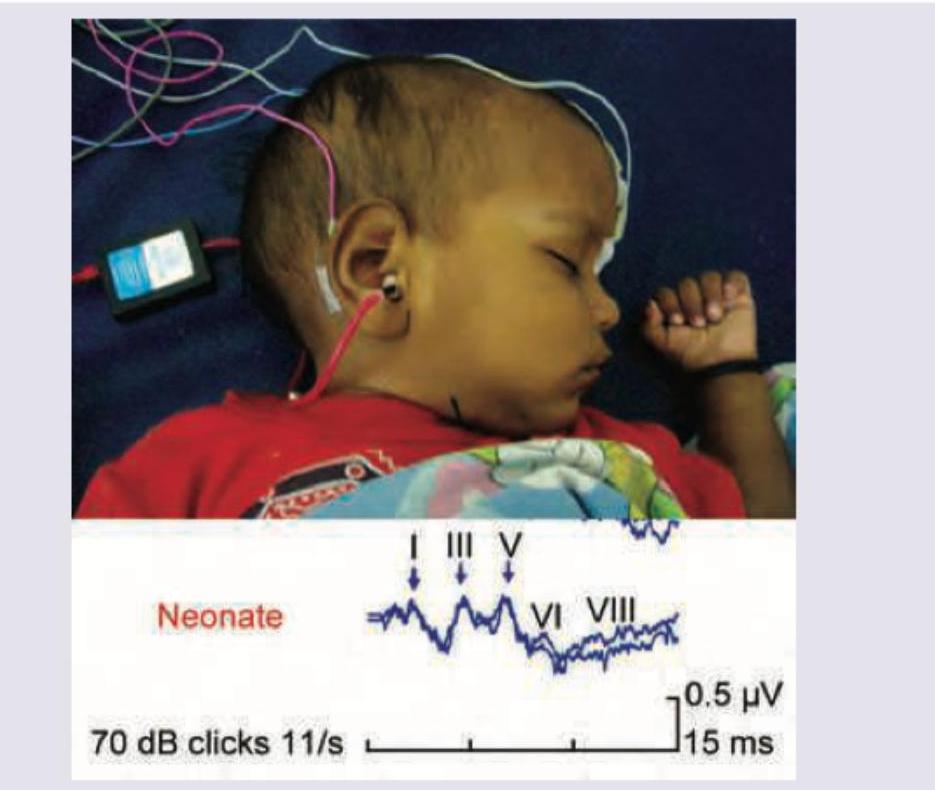
Which is the best screening test to evaluate hearing in a neonate?
Pendred syndrome is due to a defect in:
Which cells of the Organ of Corti are vulnerable to noise-induced damage?
At which sound level is pain experienced?
All of the following are subjective tests for audiometry except:
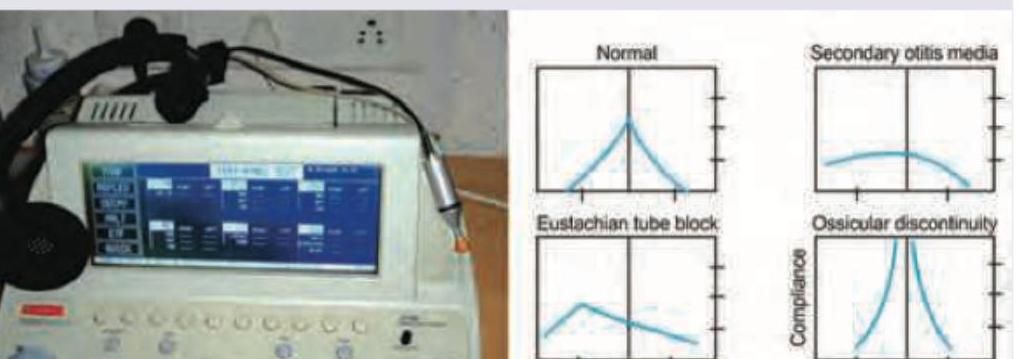
A tympanometry graph is shown below. An arrow indicates a shallow peak at pressure = 0 daPa. What is the most likely diagnosis based on the tympanometry result shown?
A patient presents to the OPD with hearing loss. On examination: - Rinne test - Positive in the left ear and negative in the right ear - Weber's test - lateralization towards the left - Bone conduction test - Reduced in the right ear and similar in the left ear. Interpret the findings.
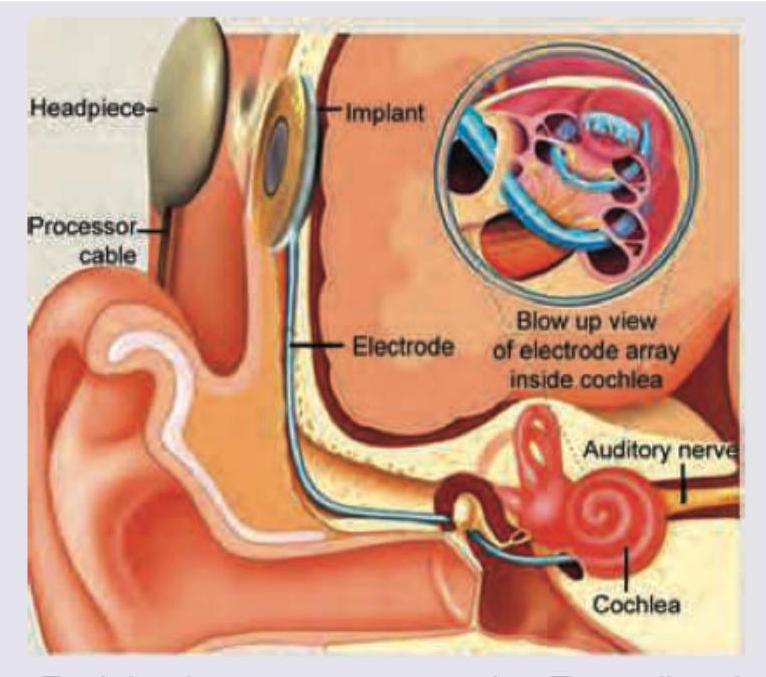
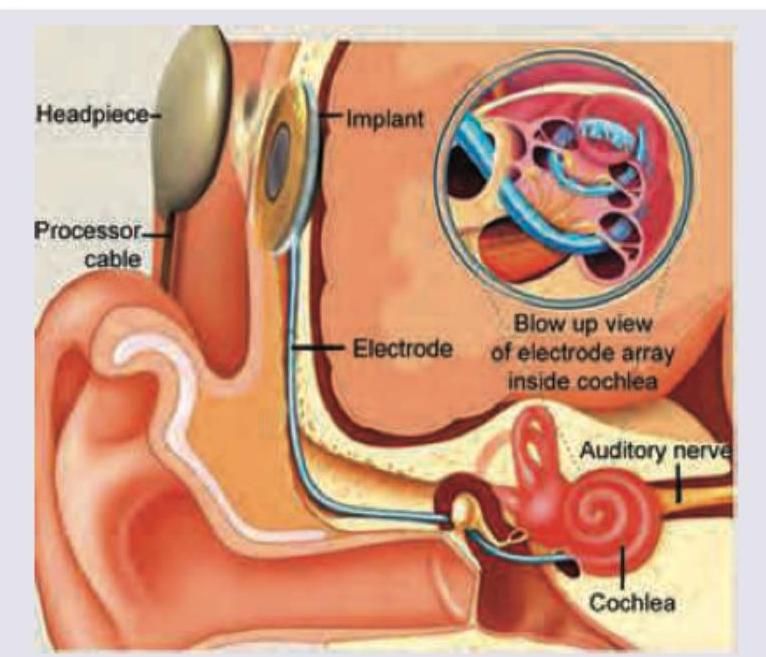
Choose the most appropriate candidates for cochlear implants: 1. Ototoxicity 2. Congenital hearing loss 3. Ossicular fixation 4. Otosclerosis
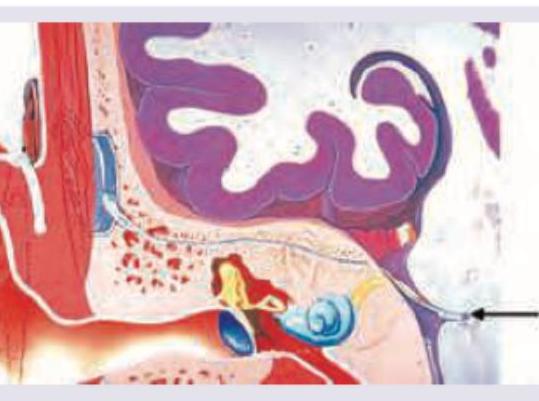
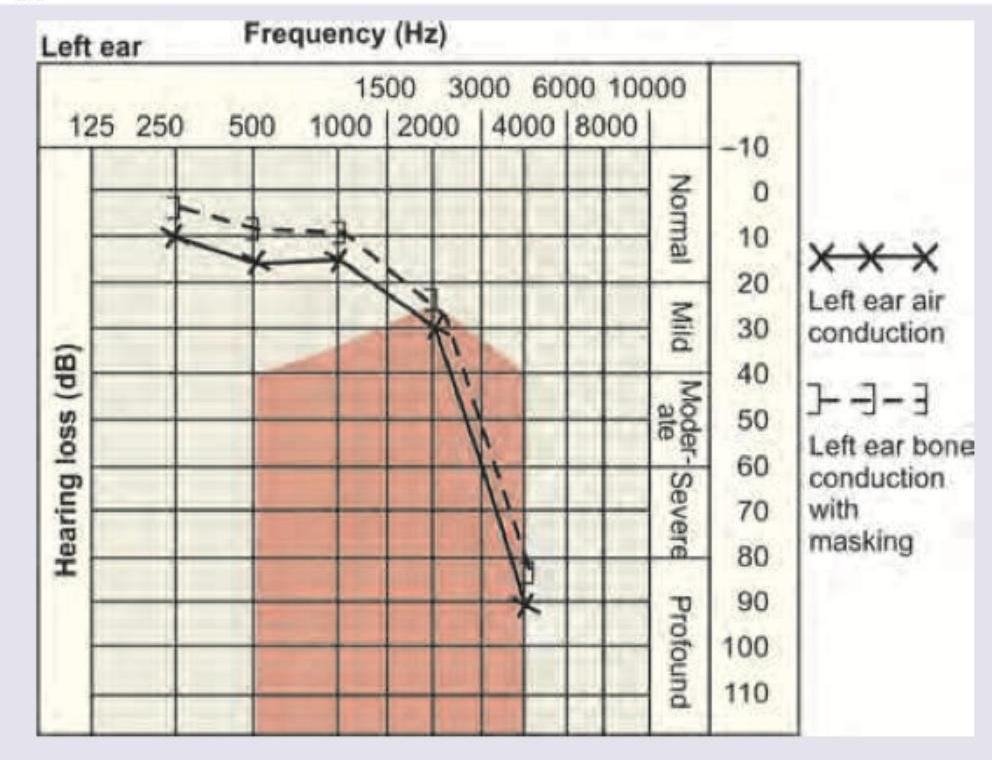
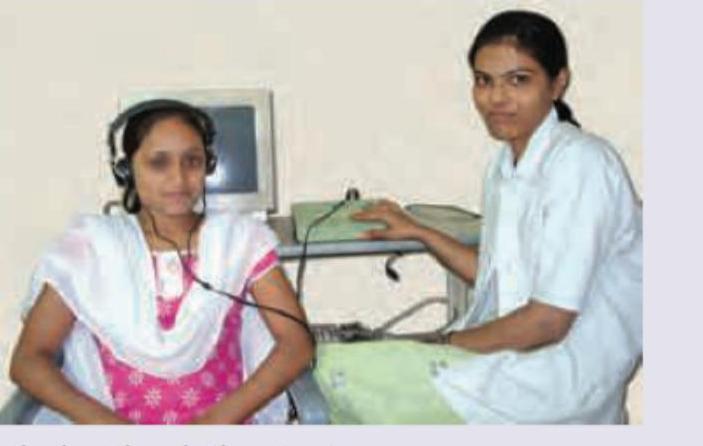
Which of the following is true about the image provided?
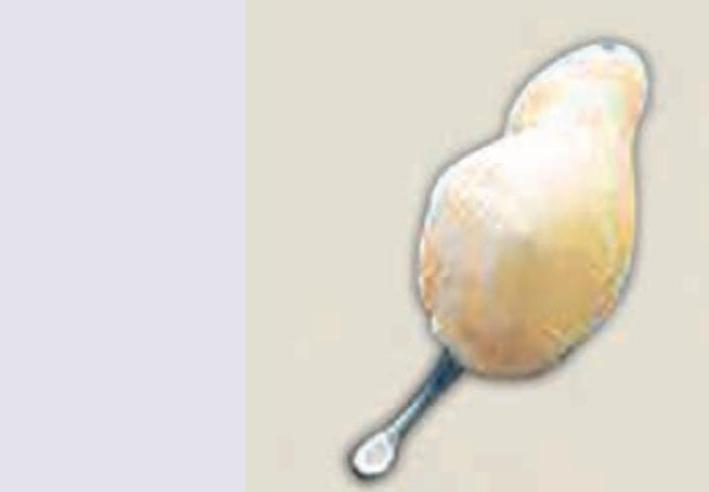
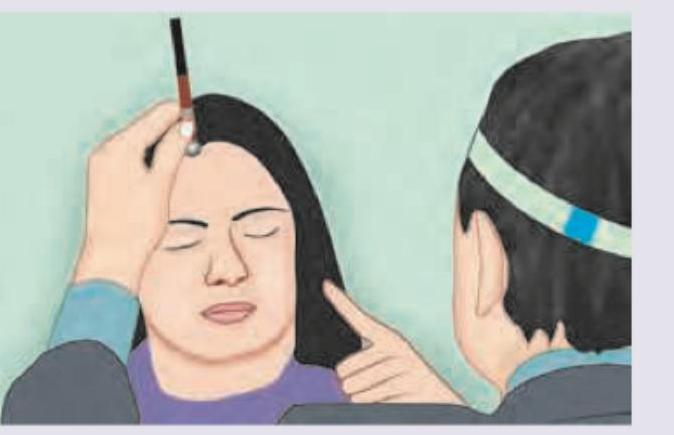
Which of the following best describes the principle of the test being performed?
Explanation: **Explanation:** The gold standard for universal newborn hearing screening (UNHS) is **Otoacoustic Emissions (OAE)**. **1. Why OAE is the correct answer:** OAEs are low-intensity sounds produced by the **outer hair cells (OHC)** of the cochlea. In a healthy ear, these sounds can be recorded in the external auditory canal. The test is ideal for screening because it is **non-invasive, objective, rapid (takes 1–2 minutes), and cost-effective**. It does not require the infant’s active participation or sedation. **2. Why other options are incorrect:** * **Pure Tone Audiometry (PTA):** This is a subjective test requiring the patient to respond to stimuli. It is impossible to perform on neonates; it is typically used for children >5 years. * **Stapedial Reflex:** While objective, it is not a screening tool for hearing. It assesses the integrity of the reflex arc (CN VII and VIII) and middle ear function, not the threshold of hearing. * **Brainstem Evoked Auditory Response (BERA/ABR):** While BERA is the **most definitive/confirmatory** test for hearing in infants, it is not the primary screening tool because it is time-consuming, expensive, and often requires the baby to be in deep sleep or sedated. **Clinical Pearls for NEET-PG:** * **Screening Protocol:** The recommended protocol is **OAE first**. If the neonate fails OAE, it is repeated after 4 weeks. If they fail again, **Automated BERA (AABR)** or BERA is performed for confirmation. * **High-Risk Infants:** For neonates in the NICU (at risk for auditory neuropathy), **AABR** is preferred over OAE because OAE cannot detect retro-cochlear pathologies. * **OAE Source:** Remember, OAE specifically tests the **Outer Hair Cells**. It will be absent if there is any middle ear effusion or significant conductive loss.
Explanation: **Explanation:** **Pendred syndrome** is an autosomal recessive disorder characterized by the triad of sensorineural hearing loss (SNHL), goiter, and a positive perchlorate discharge test. It is caused by a mutation in the **SLC26A4 gene**, which encodes the protein **Pendrin**. 1. **Why Option B is Correct:** The SLC26A4 gene is located on the **long arm (q) of Chromosome 7** (specifically 7q31). Pendrin acts as an ion exchanger for chloride, iodide, and bicarbonate. In the inner ear, its dysfunction leads to malformations like **Enlarged Vestibular Aqueduct (EVA)** or Mondini dysplasia, resulting in early-onset SNHL. In the thyroid, it impairs iodide organification, leading to a multinodular goiter. 2. **Why Other Options are Incorrect:** * **Chromosome 7p:** While this is the short arm of the same chromosome, it does not harbor the SLC26A4 gene. * **Chromosome 8p/8q:** Mutations on Chromosome 8 are associated with other conditions (e.g., FGFR1 mutations in Kallmann syndrome on 8p), but not with the classic presentation of Pendred syndrome. **High-Yield Clinical Pearls for NEET-PG:** * **Most Common Cause:** Pendred syndrome is the most common cause of **syndromic** genetic hearing loss. * **Radiology:** The most characteristic finding on CT/MRI is an **Enlarged Vestibular Aqueduct (EVA)**. * **Diagnostic Test:** The **Perchlorate Discharge Test** is used to identify the defect in iodide organification (though genetic testing is now the gold standard). * **Thyroid Status:** Patients are usually **euthyroid** or mildly hypothyroid; the goiter typically appears in late childhood or early puberty.
Explanation: **Explanation:** The **Outer Hair Cells (OHCs)** are the most vulnerable structures in the cochlea regarding noise-induced hearing loss (NIHL). This susceptibility is due to their unique physiological role and anatomical position. OHCs act as "cochlear amplifiers," physically elongating and contracting (electromotility) to enhance sound vibrations. This high metabolic activity makes them more prone to oxidative stress and mechanical fatigue. In NIHL, damage typically starts at the basal turn of the cochlea, manifesting clinically as a "4 kHz notch" (Carhart’s notch is for Otosclerosis; do not confuse the two). **Analysis of Options:** * **A. Inner Hair Cells (IHCs):** These are the actual sensory receptors that transmit signal to the auditory nerve. They are structurally more robust and better protected than OHCs. They are usually only damaged after significant OHC loss has already occurred. * **C. Deiter’s Cells:** These are supporting cells that provide a base for the OHCs. While they can be affected by extreme acoustic trauma, they are not the primary site of initial damage. * **D. Cells of Hensen:** These are supporting cells located lateral to the OHCs. They provide structural integrity to the organ of Corti but are not the primary targets of noise trauma. **High-Yield Pearls for NEET-PG:** * **Sequence of Damage:** OHCs are damaged first, followed by IHCs, and finally the supporting cells. * **Audiometric Finding:** Noise-induced hearing loss typically shows a pathognomonic dip at **4000 Hz** (Noise Notch). * **Mechanism:** Damage is mediated by **Reactive Oxygen Species (ROS)** and mechanical shearing of stereocilia. * **Safe Limit:** Prolonged exposure to sounds above **85 dB** is considered hazardous.
Explanation: ### Explanation The human ear has a wide dynamic range, but it also has a physiological limit for comfort. The correct answer is **100-120 dB**, which represents the **Threshold of Pain**. **1. Why 100-120 dB is correct:** Sound intensity is measured on a logarithmic scale. While normal conversation occurs at around 60 dB, sound levels reaching 100-120 dB (equivalent to a jet engine or a jackhammer) cause physical discomfort and pain. At this level, the mechanical energy of the sound waves begins to overstimulate the sensory hair cells and can cause tactile sensation or pain in the middle ear structures and the tympanic membrane. **2. Analysis of Incorrect Options:** * **80-85 dB:** This is the threshold for **noise-induced hearing loss (NIHL)** if exposure is prolonged (8 hours/day). It is loud but not painful. * **60-65 dB:** This represents the level of **normal conversational speech**. It is the comfortable range for human communication. * **20-25 dB:** This is the level of a **soft whisper** or a very quiet library environment. It is near the lower end of the audible spectrum. **Clinical Pearls for NEET-PG:** * **Threshold of Hearing:** 0 dB (the faintest sound a young, healthy ear can detect). * **Threshold of Discomfort:** Approximately 90-100 dB. * **Threshold of Pain:** 120-130 dB (often cited as 120 dB in standard ENT textbooks like Dhingra). * **Recruitment Phenomenon:** A hallmark of **cochlear hearing loss** (e.g., Meniere’s disease) where a patient perceives a rapid increase in loudness, reaching the threshold of pain much sooner than a normal ear. * **OSHA Standards:** Damage to hearing starts at chronic exposure to **85 dB**. For every 5 dB increase, the safe exposure time is halved.
Explanation: ### Explanation In audiology, tests are classified into two categories based on patient participation: **Subjective** (requires the patient's active response) and **Objective** (does not require patient cooperation). **Why Impedance Audiometry is the Correct Answer:** Impedance audiometry (Tympanometry and Acoustic Reflex testing) is an **objective test**. It measures the physical properties of the middle ear, such as the compliance of the tympanic membrane and the pressure within the middle ear space. The results are obtained automatically by a probe without the patient needing to signal whether they hear a sound, making it ideal for infants or uncooperative patients. **Analysis of Incorrect Options:** * **Tone Decay:** This is a **subjective** test used to detect retrocochlear lesions (like Vestibular Schwannoma). It requires the patient to signal how long they can perceive a continuous tone at a specific intensity. * **Speech Audiometry:** This is a **subjective** test that assesses a patient's ability to hear and understand spoken words (Speech Reception Threshold and Speech Discrimination Score). It relies entirely on the patient repeating words back to the examiner. * **Pure Tone Audiometry (PTA):** This is the gold standard **subjective** test for measuring hearing thresholds. The patient must manually signal (e.g., press a button or raise a hand) when they perceive a specific frequency. **Clinical Pearls for NEET-PG:** * **Objective Tests:** Impedance Audiometry, Otoacoustic Emissions (OAE), and Brainstem Evoked Response Audiometry (BERA/ABR). * **Subjective Tests:** PTA, Speech Audiometry, Tone Decay, and Tuning Fork Tests (Rinne’s, Weber’s). * **High-Yield Fact:** BERA is the most sensitive objective test for identifying the site of a lesion in the auditory nerve and brainstem. OAE specifically tests the function of the **Outer Hair Cells** of the cochlea.
Explanation: ***Type As*** - This tympanogram shows a peak pressure within the normal range (around 0 daPa) but with significantly reduced static compliance (a shallow or stiff peak), which is characteristic of a Type As curve. - This finding indicates a stiff middle ear system and is commonly associated with conditions like **otosclerosis**, **tympanosclerosis**, or **ossicular fixation**. *Type A* - A Type A tympanogram represents a **normal** middle ear system, characterized by a sharp peak at normal pressure (around 0 daPa) and normal static compliance (0.3-1.6 mmho). - The graph shown has abnormally **low compliance**, distinguishing it from a normal Type A curve. *Type B* - A Type B tympanogram is a **flat line** with no discernible peak, indicating very poor compliance of the tympanic membrane across all pressures. - This pattern is typically seen with **fluid in the middle ear** (otitis media with effusion) or a tympanic membrane perforation, which is inconsistent with the peaked curve shown. *Type Ad* - A Type Ad tympanogram shows a peak at normal pressure but with **abnormally high compliance** (a deep or hypermobile peak). - This suggests a flaccid tympanic membrane or a discontinuity in the ossicular chain (**ossicular disarticulation**), which is the opposite of the low compliance seen in the provided image.
Explanation: ***Sensorineural hearing loss in right ear***- The **Weber test** lateralizes toward the **left ear**, which acts as the better ear. In cases of **unilateral sensorineural hearing loss (SNHL)**, sound lateralizes to the *unaffected* ear.- The **Bone Conduction (BC)** hearing is explicitly reported as **reduced in the right ear**, which is the definitive finding for damage to the **cochlea** or **auditory nerve** (SNHL).*Sensorineural hearing loss in left ear*- If SNHL was present in the left ear, the **Weber test** would lateralize to the *right ear* (the better ear), contradicting the finding of lateralization to the left.- The Rinne test is **positive** in the left ear (AC > BC), and BC is similar to normal, confirming that the left ear is functioning normally or has only mild SNHL.*Conductive hearing loss in left ear*- A **positive Rinne test** in the left ear (AC > BC) essentially rules out significant **conductive hearing loss (CHL)** in that ear, as CHL results in a negative Rinne test (BC > AC).- While Weber lateralization to the left is consistent with CHL in the left ear, the simultaneous positive Rinne test and normal BC assessment contradict this diagnosis.*Conductive hearing loss in right ear.*- Although the **Rinne test is negative** in the right ear (BC > AC), suggesting CHL, the **Weber test lateralizes to the left**; Weber lateralizes to the *affected* ear only in CHL.- Furthermore, **Bone Conduction is reduced** in the right ear, which is inconsistent with simple CHL, where BC is expected to be normal (or elevated due to masking).
Explanation: ***1 and 2*** - **Ototoxicity** can cause severe to profound **sensorineural hearing loss**, which may warrant cochlear implant consideration if hearing aids provide insufficient benefit. - **Congenital hearing loss**, when severe to profound and sensorineural in nature, represents a classic indication for cochlear implantation, especially in children for speech and language development. *3 and 4* - **Ossicular fixation** primarily causes **conductive hearing loss** and is typically managed with **middle ear surgery** (ossiculoplasty), not cochlear implants. - **Otosclerosis** also causes **conductive hearing loss** affecting the stapes bone and is best treated with **stapedectomy**, not cochlear implantation. *2 and 3* - While **congenital hearing loss** can be appropriate for cochlear implants when severe to profound sensorineural, **ossicular fixation** is a **conductive pathology** treated surgically. - Combining a potential cochlear implant candidate with a condition requiring middle ear surgery creates an inappropriate pairing. *1 and 4* - **Ototoxicity** may lead to cochlear implant candidacy if it causes severe sensorineural loss, but **otosclerosis** is primarily a **conductive hearing loss** condition. - **Otosclerosis** responds well to **stapedectomy** with excellent hearing outcomes, making cochlear implantation unnecessary and inappropriate.
Explanation: ***It needs sound proof room*** - The image shows a subject undergoing an **audiometry test**, indicated by the headphones and the setup appearing to be for hearing evaluation. - **Audiometry** requires a **sound-attenuating (sound-proof) environment** to ensure accurate measurement of hearing thresholds, free from ambient noise interference. *Caloric stimulation test* - A **caloric stimulation test** evaluates the vestibular system and involves injecting warm or cold water/air into the ear canal, which is not depicted here. - The image clearly shows a setup for **hearing assessment**, not vestibular function testing. *It is an objective invasive test* - **Audiometry** (as depicted) is generally a **subjective test** because it relies on the patient's vocal response or behavioral feedback (e.g., raising a hand) to indicate perceived sounds. - While some audiological tests can be objective (e.g., **otoacoustic emissions**, **auditory brainstem response**), invasive tests involve penetrating the body, which is not the case for conventional audiometry. *Frequency detection of 12,000 to 20,000 Hz is done conventionally* - Conventional **pure-tone audiometry** typically tests frequencies between **250 Hz and 8000 Hz**, which are most crucial for speech understanding. - Testing frequencies up to **12,000-20,000 Hz** is considered **high-frequency audiometry** and is not part of the standard conventional battery of tests.
Explanation: ***Option D: Placing the device on the forehead and asking her to report in which ear she hears it better*** - This accurately describes the **Weber test**, where a vibrating tuning fork is placed on the forehead (or vertex) to assess **bone conduction** and lateralization of sound. - The patient is asked to identify which ear hears the sound better, which helps to differentiate between **conductive** and **sensorineural hearing loss**. - In conductive hearing loss, the sound lateralizes to the affected ear; in sensorineural hearing loss, it lateralizes to the better-hearing ear. *Option A: Placing the device on the forehead comparing the bone conduction of the patient with that of the examiner* - While the device is placed on the forehead (indicating a bone conduction test), comparing the bone conduction of the patient with the examiner is characteristic of the **Schwabach test**, not the Weber test. - The Schwabach test assesses the patient's bone conduction relative to a normal-hearing examiner. *Option B: Placing the device on the vertex of the skull and determining the effect of gently occluding the auditory canal on the threshold of low frequencies* - Placing the device on the vertex is an alternative placement for the Weber test, but the second part of the description—occluding the auditory canal to determine the effect on low frequencies—relates to the **occlusion effect**, not the primary principle of the Weber test. - The primary goal of the Weber test is to determine **lateralization** of sound, not to assess occlusion effects. *Option C: Placing the device on the mastoid process and comparing the air conduction in patient* - Placing the device on the mastoid process is part of the **Rinne test**, which compares **bone conduction** (mastoid) with **air conduction** (in front of the ear canal). - The image clearly shows the device on the forehead, indicating a Weber test, not a Rinne test.
Hearing Assessment Techniques
Practice Questions
Tympanometry and Acoustic Reflexes
Practice Questions
Otoacoustic Emissions
Practice Questions
Auditory Brainstem Response
Practice Questions
Hearing Aids
Practice Questions
Cochlear Implants
Practice Questions
Bone-Anchored Hearing Devices
Practice Questions
Speech and Language Development
Practice Questions
Articulation Disorders
Practice Questions
Stuttering
Practice Questions
Dysphonia
Practice Questions
Rehabilitation of Hearing-Impaired Children
Practice Questions
Get full access to all questions, explanations, and performance tracking.
Start For Free