Rinne's test is positive in which of the following conditions?
Conductive hearing loss is seen in all of the following conditions except?
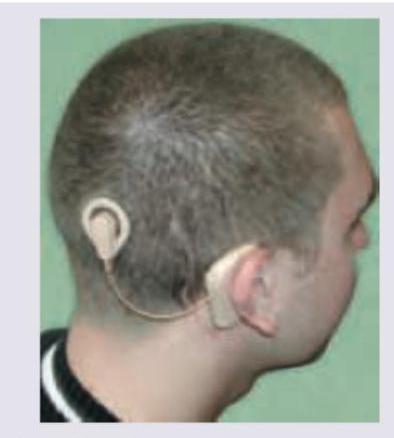
Cochlear implants convert what form of energy to which form of energy?
Regarding cochlear implants, which of the following statements is true?
All of the following are features of cochlear hearing loss except?
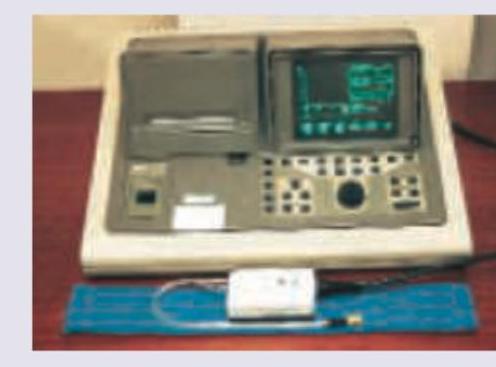
A 31-year-old female presents with bilateral hearing impairment for the past 5 years. Examination reveals normal tympanic membranes. An audiogram shows bilateral conductive deafness. Impedance audiometry shows a normal curve and absent acoustic reflexes. Which of the following is NOT part of the treatment for this condition?
An elderly man complains of ear pain. During evaluation, the physician asks if the patient has tinnitus. What is tinnitus?
Sensory neural deafness is associated with which of the following conditions?
Which one of the following tests is used to detect malingering?
Which test is used to detect damage to the cochlea?
Explanation: **Explanation:** The **Rinne’s test** is a tuning fork test (typically using 512 Hz) used to compare **Air Conduction (AC)** with **Bone Conduction (BC)**. 1. **Why the Correct Answer is Right:** In a **Normal individual**, AC is better than BC (AC > BC). This is because the middle ear apparatus (ossicles) acts as an impedance transformer, amplifying sound. When AC > BC, the test is termed **"Rinne Positive."** This result is also seen in patients with **Sensorineural Hearing Loss (SNHL)**, although the overall hearing threshold is reduced in both AC and BC. 2. **Why Incorrect Options are Wrong:** * **Chronic Suppurative Otitis Media (CSOM):** This causes **Conductive Hearing Loss (CHL)** due to tympanic membrane perforation or ossicular damage. In CHL, BC > AC, resulting in a **"Rinne Negative"** test. * **Wax in ear:** This is a mechanical obstruction in the external auditory canal, leading to CHL. Therefore, Rinne will be negative. * **Otomycosis:** Fungal debris in the canal causes a conductive block, leading to CHL and a negative Rinne test. **Clinical Pearls for NEET-PG:** * **False Negative Rinne:** Seen in **unilateral profound SNHL**. The patient appears to hear the bone conduction better because the sound travels through the skull to the *opposite* (better) ear. * **Sensitivity:** A 512 Hz tuning fork requires an air-bone gap of at least **15–20 dB** to turn a Rinne test negative. * **Weber Test:** Always interpret Rinne with Weber. In SNHL, Weber lateralizes to the **better** ear; in CHL, it lateralizes to the **worse** ear.
Explanation: **Explanation:** The core concept in this question is distinguishing between **Conductive Hearing Loss (CHL)**, which involves pathology in the external or middle ear, and **Sensorineural Hearing Loss (SNHL)**, which involves the inner ear (cochlea) or the auditory nerve. **Why Endolymphatic Hydrops is the correct answer:** Endolymphatic hydrops (the underlying pathology of **Meniere’s disease**) is a disorder of the inner ear characterized by increased pressure of the endolymph. Since it affects the cochlea, it results in **Sensorineural Hearing Loss**, typically starting with low-frequency fluctuations. Therefore, it does not cause conductive hearing loss. **Analysis of Incorrect Options:** * **Otosclerosis:** This involves the fixation of the stapes footplate in the oval window, preventing sound vibrations from entering the inner ear. It is a classic cause of progressive CHL. * **Otitis Media with Effusion (OME):** The presence of fluid in the middle ear space dampens the movement of the tympanic membrane and ossicles, leading to CHL. * **Suppurative Otitis Media (ASOM/CSOM):** Whether acute or chronic, the presence of pus, mucosal swelling, or tympanic membrane perforation disrupts the sound conduction mechanism, causing CHL. **High-Yield Clinical Pearls for NEET-PG:** * **Carhart’s Notch:** A characteristic dip in the bone conduction threshold at **2 kHz** seen in Otosclerosis (disappears after stapedectomy). * **Meniere’s Disease Triad:** Episodic vertigo, fluctuating SNHL, and tinnitus. * **Gelle’s Test:** Used to differentiate stapedial fixation (Otosclerosis) from other causes of CHL; it is "negative" in Otosclerosis. * **Tuning Fork Tests:** In CHL, Rinne is negative (BC > AC) and Weber lateralizes to the poorer ear. In SNHL, Rinne is positive (AC > BC) and Weber lateralizes to the better ear.
Explanation: **Explanation:** A **Cochlear Implant (CI)** is a sophisticated electronic device designed for patients with severe-to-profound sensorineural hearing loss who derive little benefit from hearing aids. Its primary function is to bypass the damaged or absent hair cells in the cochlea and provide direct stimulation to the auditory nerve. **Why Option C is correct:** The mechanism of a CI involves a microphone that picks up **sound energy** (acoustic waves) from the environment. This sound is processed by an external speech processor and transmitted to an internal electrode array implanted within the scala tympani. These electrodes convert the processed signals into **electrical impulses**, which directly stimulate the spiral ganglion cells of the auditory nerve. Thus, the device converts sound energy into electrical energy. **Analysis of Incorrect Options:** * **Option A & B:** These are incorrect because they involve **mechanical energy**. In a normal ear, the ossicles provide mechanical energy to move hair cells. However, in candidates for CI, the hair cells are usually non-functional; therefore, mechanical movement would not result in hearing. * **Option D:** This describes the function of a normal cochlea (transducing mechanical fluid waves into electrical signals) or a bone-anchored hearing aid (BAHA), but not a cochlear implant. **High-Yield Clinical Pearls for NEET-PG:** * **Components:** It consists of an external part (microphone, speech processor, transmitter) and an internal part (receiver-stimulator, electrode array). * **Site of Insertion:** The electrode array is most commonly inserted into the **Scala Tympani** via the round window or a cochleostomy. * **Prerequisite:** A functional **Auditory Nerve (CN VIII)** is mandatory for a CI to work. If the nerve is absent (e.g., Auditory Nerve Aplasia), an **Auditory Brainstem Implant (ABI)** is indicated instead. * **Ideal Candidate:** Post-lingual deaf adults or pre-lingual deaf children (ideally implanted before age 2 for best neuroplasticity results).
Explanation: ### Explanation **Correct Answer: A. Not contraindicated in cochlear malformation** Cochlear implants (CI) are designed to bypass damaged hair cells and directly stimulate the auditory nerve. While severe malformations like **Michel aplasia** (complete absence of the inner ear) or **Cochlear Nerve Aplasia** are absolute contraindications, most other cochlear malformations (e.g., **Mondini dysplasia**, enlarged vestibular aqueduct, or common cavity) are **not** contraindications. In these cases, specialized surgical techniques or different electrode arrays are used to achieve successful implantation. **Analysis of Incorrect Options:** * **B. Contraindicated in children younger than 5 years:** This is incorrect. Early implantation is crucial for language development. The FDA has approved CI for children as young as **9 months** (and even earlier in specific cases like post-meningitic ossification). * **C. Indicated in mild to moderate hearing loss:** Incorrect. CI is indicated for **severe to profound bilateral sensorineural hearing loss (SNHL)** that does not benefit sufficiently from conventional hearing aids. * **D. Implanted through the oval window:** Incorrect. The standard surgical approach involves a cortical mastoidectomy and posterior tympanotomy, with the electrode array inserted into the **Scala Tympani** via the **Round Window** or a separate **Cochleostomy** (placed anteroinferior to the round window). **High-Yield Clinical Pearls for NEET-PG:** * **Absolute Contraindications:** Michel aplasia, Cochlear nerve aplasia, and active middle ear infection. * **Components:** The **Internal** part (Receiver-stimulator) is placed in a bone well under the scalp; the **External** part (Microphone/Processor) is worn behind the ear. * **Post-op Complication:** Increased risk of meningitis (patients must be vaccinated against *S. pneumoniae*). * **Most common site of electrode placement:** Scala Tympani.
Explanation: **Explanation:** The distinction between **Cochlear** and **Retrocochlear** (neural) hearing loss is a high-yield topic in NEET-PG. 1. **Why Option B is the Correct Answer:** In cochlear hearing loss (e.g., Meniere’s disease), speech discrimination scores are usually **proportionate** to the degree of hearing loss. While discrimination may be reduced, it is **not "highly impaired"** or "out of proportion" to the pure tone loss. Highly impaired speech discrimination (e.g., a score of 20% despite only a 40dB loss) is a hallmark of **Retrocochlear lesions** like Acoustic Neuroma, due to the desynchronization of neural impulses. 2. **Analysis of Incorrect Options:** * **A. SISI test is positive:** The Short Increment Sensitivity Index (SISI) test detects the phenomenon of **Recruitment**. Patients with cochlear damage can detect small (1 dB) changes in intensity. A score of 70-100% (Positive) is characteristic of cochlear pathology. * **C. No tone decay:** Tone decay (auditory fatigue) is a feature of the nerve's inability to maintain a continuous firing rate. It is absent or minimal (<15 dB) in cochlear lesions but significant in retrocochlear lesions. * **D. Damage to hair cells:** By definition, cochlear hearing loss involves pathology of the Organ of Corti, specifically the **outer and inner hair cells**. **Clinical Pearls for NEET-PG:** * **Recruitment:** Pathognomonic for Cochlear lesions (absent in retrocochlear). * **Rollover Phenomenon:** If speech discrimination decreases as the volume increases, think Retrocochlear. * **ABLB Test:** Used to detect recruitment in unilateral cochlear hearing loss. * **OAEs (Otoacoustic Emissions):** Absent in cochlear loss (hair cell damage) but present in retrocochlear loss (normal cochlea).
Explanation: **Diagnosis: Otosclerosis** The clinical presentation of a young female with bilateral progressive conductive hearing loss, normal tympanic membranes, and absent acoustic reflexes (with a normal Type A tympanogram) is classic for **Otosclerosis**. This condition involves abnormal bone remodeling, leading to fixation of the stapes footplate. ### Why Gentamicin is the Correct Answer (NOT part of treatment) **Gentamicin** is an aminoglycoside antibiotic known for its **vestibulotoxicity**. In ENT, it is used for chemical labyrinthectomy in refractory cases of **Meniere’s disease** to ablate vestibular function. It has no role in treating otosclerosis and can potentially cause sensorineural hearing loss. ### Explanation of Other Options (Treatment Modalities) * **Hearing Aid:** This is the non-surgical management of choice for patients who are unfit for surgery or do not wish to undergo an operation. It effectively manages the conductive hearing loss. * **Stapedectomy/Stapedotomy:** This is the **definitive surgical treatment**. The fixed stapes is replaced with a prosthesis (e.g., Teflon piston) to restore the ossicular chain's mobility. * **Sodium Fluoride:** Used in the medical management of **active otosclerosis (Otospongiosis)**. It inhibits bone resorption and promotes the maturation of the spongy bone into dense bone, potentially slowing the progression of the disease. ### High-Yield Clinical Pearls for NEET-PG * **Schwartze Sign:** A reddish hue seen through the TM (due to increased vascularity of the promontory), indicating active otospongiosis. * **Carhart’s Notch:** A characteristic dip in the bone conduction threshold at **2000 Hz** on an audiogram. * **Gelle’s Test:** Negative in otosclerosis (indicates a fixed ossicular chain). * **Impedance Audiometry:** Typically shows a **Type As** (shallow) curve due to stiffness, though a normal Type A curve is frequently seen in early stages.
Explanation: **Explanation:** **Tinnitus** is defined as the perception of sound in the absence of an external acoustic stimulus. It is most commonly a **subjective sensation** (audible only to the patient) described as ringing, buzzing, or hissing. It arises from aberrant neural activity in the auditory pathway, often secondary to cochlear hair cell damage or sensorineural hearing loss. **Analysis of Options:** * **Option A (Correct):** Tinnitus is primarily a subjective phenomenon where the patient hears "phantom" noises in the ear or head. * **Option B:** While certain heavy metals (like lead or mercury) can be ototoxic, tinnitus is defined by the *symptom* itself, not by a specific etiology like metal ingestion. * **Option C:** An audible cardiac murmur or vascular sound heard by both the patient and the examiner is termed **Objective Tinnitus**. However, the general definition of tinnitus refers to the subjective sensation. * **Option D:** Dizziness induced by loud sounds is known as the **Tullio Phenomenon**, typically seen in Superior Semicircular Canal Dehiscence (SSCD). **High-Yield Clinical Pearls for NEET-PG:** * **Pulsatile Tinnitus:** Often indicates a vascular etiology (e.g., Glomus tumor, carotid aneurysm, or benign intracranial hypertension). * **Unilateral Tinnitus:** A "red flag" symptom that necessitates MRI to rule out **Vestibular Schwannoma** (Acoustic Neuroma). * **Drugs causing Tinnitus:** Salicylates (classic cause), Quinine, Loop diuretics (Furosemide), and Aminoglycosides. * **Management:** The mainstay of treatment for idiopathic tinnitus is **Tinnitus Retraining Therapy (TRT)** and masking devices.
Explanation: **Explanation:** **Alport Syndrome (Correct Answer):** Alport syndrome is a genetic disorder caused by mutations in the genes encoding **Type IV collagen** (specifically the α3, α4, and α5 chains). Type IV collagen is a structural component of basement membranes in the kidney (glomerulus), the eye, and the **cochlea** (stria vascularis and basilar membrane). The defect leads to progressive hereditary nephritis, ocular abnormalities (like anterior lenticonus), and **bilateral sensorineural hearing loss (SNHL)**. The hearing loss typically manifests in late childhood or adolescence and initially affects high frequencies. **Analysis of Incorrect Options:** * **Fanconi Syndrome:** This is a generalized proximal renal tubular dysfunction resulting in the loss of glucose, amino acids, and phosphates in the urine. It is not associated with deafness. (Note: Do not confuse this with Fanconi Anemia, which is associated with skeletal defects). * **Berger’s Disease (IgA Nephropathy):** This is the most common cause of primary glomerulonephritis worldwide, characterized by IgA deposits in the mesangium. It presents with hematuria but has no association with hearing loss. * **Albright Syndrome (McCune-Albright):** This triad consists of polyostotic fibrous dysplasia, café-au-lait spots, and precocious puberty. While fibrous dysplasia can involve the temporal bone and cause conductive hearing loss due to EAC stenosis, it is not classically associated with SNHL. **High-Yield Clinical Pearls for NEET-PG:** * **Inheritance:** Most commonly **X-linked dominant** (COL4A5 mutation). * **Classic Triad:** Hereditary nephritis (Alport's), SNHL, and Eye defects (Anterior Lenticonus). * **Electron Microscopy:** Shows a characteristic **"Basket-weave appearance"** of the glomerular basement membrane. * **Other Renal-ENT Syndromes:** Remember **Pendred Syndrome** (SNHL + Goiter) and **Waardenburg Syndrome** (SNHL + White forelock + Dystopia canthorum).
Explanation: ### Explanation **Correct Option: A. Stenger’s Test** Stenger’s test is the gold standard clinical test for detecting **unilateral functional hearing loss (malingering)**. It is based on the **Stenger Principle**, which states that if two tones of the same frequency are presented to both ears simultaneously, the brain only perceives the sound in the ear where the tone is louder (higher intensity). * **Procedure:** A tone is presented to the "good" ear at a level above its threshold and to the "bad" ear at a level below its alleged threshold but above its true threshold. * **Result:** A malingerer will hear the sound in their "bad" ear (because it is actually louder there) but will deny hearing anything at all to maintain the deception. A person with genuine hearing loss would still report hearing the sound in their "good" ear. **Incorrect Options:** * **B. Buinge’s Test:** This is not a standard audiological test. It is likely a distractor or a misspelling of Bing's test (which uses a tuning fork to test the occlusion effect). * **C. Weber’s Test:** A tuning fork test used to differentiate between conductive and sensorineural hearing loss by assessing bone conduction midline lateralization. * **D. Rinne’s Test:** A tuning fork test used to compare air conduction (AC) and bone conduction (BC) in an individual ear to identify conductive hearing loss. **High-Yield Clinical Pearls for NEET-PG:** * **Objective tests for malingering:** If a patient is uncooperative, objective tests like **OAE (Otoacoustic Emissions)**, **BERA (Brainstem Evoked Response Audiometry)**, and **Acoustic Reflex** testing are used. * **Lombard Test:** Another test for malingering based on the fact that a person increases their voice volume in the presence of background noise. * **Pure Tone Audiometry (PTA) clue:** In malingerers, there is often a lack of consistency in thresholds (test-retest reliability >10-15 dB).
Explanation: **Explanation:** The **ABC (Absolute Bone Conduction) test** is a specific clinical test used to assess the integrity of the cochlea (sensory function). It compares the bone conduction of the patient with that of the examiner (assuming the examiner has normal hearing). In this test, the external auditory meatus is occluded to eliminate the "masking effect" of ambient noise. * **Mechanism:** If the patient has **sensorineural hearing loss (SNHL)** due to cochlear damage, they will perceive the sound for a shorter duration than the examiner (ABC Reduced). In conductive hearing loss, the ABC remains normal. **Analysis of Incorrect Options:** * **A. Caloric test:** This is a test of the **vestibular system** (specifically the lateral semicircular canal), not hearing. It uses thermal stimulation to induce nystagmus. * **B. Weber test:** This is a tuning fork test used for **lateralization**. It helps differentiate between conductive and sensorineural loss but does not specifically measure the absolute threshold of cochlear function like the ABC test. * **C. Rinne’s test:** This compares **Air Conduction (AC) to Bone Conduction (BC)** in the same individual. It is primarily used to identify a "gap" indicating conductive hearing loss. **Clinical Pearls for NEET-PG:** * **Schwabach’s Test:** Similar to ABC but performed *without* occluding the external ear canal. * **Gelle’s Test:** Used to check the mobility of the ossicular chain (specifically the stapes footplate); it is negative in **Otosclerosis**. * **Bing Test:** Relies on the occlusion effect. If hearing improves with occlusion, it suggests normal hearing or SNHL; no change indicates conductive loss. * **Gold Standard:** While ABC is a bedside clinical test, **Pure Tone Audiometry (PTA)** is the definitive investigation for quantifying cochlear damage.
Hearing Assessment Techniques
Practice Questions
Tympanometry and Acoustic Reflexes
Practice Questions
Otoacoustic Emissions
Practice Questions
Auditory Brainstem Response
Practice Questions
Hearing Aids
Practice Questions
Cochlear Implants
Practice Questions
Bone-Anchored Hearing Devices
Practice Questions
Speech and Language Development
Practice Questions
Articulation Disorders
Practice Questions
Stuttering
Practice Questions
Dysphonia
Practice Questions
Rehabilitation of Hearing-Impaired Children
Practice Questions
Get full access to all questions, explanations, and performance tracking.
Start For Free