Which of the following are early mediators of allergic rhinitis?
Which of the following preformed toxins is involved in the mechanism of allergic rhinitis?
A 29-year-old non-smoker man presents with sneezing, post-nasal drip, eye-watering, and an itch of his posterior pharynx. These symptoms tend to be worse in the spring and summer and have been bothering him since mid-April. His past medical history is remarkable only for mild asthma induced by being outdoors. He takes no regular medications but does take diphenhydramine on occasion. What is the most appropriate diagnostic test at this time?
Which of the following is the preformed toxin involved in the mechanism of allergic rhinitis?
Paracusis willis is a feature of which condition?
What is the full form of ARIA?
A 29-year-old non-smoker man presents with sneezing, post-nasal drip, eye watering, and itching of his posterior pharynx. These symptoms tend to be worse in the spring and summer and have been bothering him for about 1 month. His past medical history is remarkable only for mild asthma induced by being outdoors. He takes no regular medications but does take diphenhydramine on occasion. What is the most appropriate diagnostic test at this time?
What are the early mediators of allergic rhinitis?
Which of the following is NOT a second-generation antihistamine used in allergic rhinitis?
What is the characteristic feature of Kartagener's syndrome?
Explanation: ### Explanation Allergic rhinitis is a Type I hypersensitivity reaction occurring in two distinct phases: the **Early Phase** (within minutes) and the **Late Phase** (4–8 hours later). **Why Option D is Correct:** The early phase is triggered when an allergen cross-links IgE antibodies on the surface of **mast cells**, leading to immediate degranulation. This releases **pre-formed mediators** and rapidly synthesized lipid mediators. * **Histamine** is the primary mediator. * **Platelet-activating factor (PAF), Bradykinin, and Prostaglandin D2** are also released during this immediate window, causing vasodilation, increased vascular permeability (edema), and stimulation of sensory nerves (itching/sneezing). **Why Other Options are Incorrect:** * **A. Leukotrienes:** While Cysteinyl Leukotrienes (CysLTs) are produced during the early phase, they are most characteristic of the transition to and maintenance of the **Late Phase** response, contributing significantly to prolonged nasal congestion. * **B & C. Interleukin-4 and Interleukin-5:** These are **cytokines** produced by Th2 lymphocytes. They are involved in the **Late Phase** response. IL-4 promotes IgE isotype switching, while IL-5 is the primary factor for **eosinophil** recruitment and activation. **NEET-PG High-Yield Pearls:** 1. **Early Phase (Minutes):** Mediated by Mast cells. Key symptoms: Sneezing, itching, rhinorrhea. Key mediator: Histamine. 2. **Late Phase (Hours):** Mediated by Eosinophils, Basophils, and Th2 cells. Key symptom: Nasal congestion. 3. **Gold Standard Diagnosis:** Skin Prick Test (detects specific IgE). 4. **Pharmacology Link:** Antihistamines work best on early-phase symptoms (itch/sneeze), while Intranasal Steroids are the most effective treatment for late-phase symptoms (congestion) because they inhibit cytokine release.
Explanation: Allergic rhinitis is a **Type I Hypersensitivity reaction** mediated by IgE antibodies. When an allergen cross-links IgE on the surface of mast cells, it triggers **degranulation**, releasing two types of chemical mediators: **Preformed mediators** (stored in granules) and **Newly synthesized mediators** (produced after activation). ### Why Histamine is Correct **Histamine** is the primary **preformed mediator** stored in the granules of mast cells and basophils. Upon degranulation, it is released immediately (within minutes), causing the "Early Phase" symptoms of allergic rhinitis: vasodilation, increased capillary permeability (edema/nasal block), and stimulation of sensory nerves (itching/sneezing). ### Why Other Options are Incorrect * **Leukotrienes (B):** These are **newly synthesized** mediators derived from arachidonic acid via the lipoxygenase pathway. While potent (causing mucus secretion and congestion), they are produced *after* mast cell activation and are not pre-stored. * **TXA2 (Thromboxane A2) (C):** This is a product of the cyclooxygenase pathway primarily involved in platelet aggregation and vasoconstriction; it plays a minimal role in the pathophysiology of allergic rhinitis. * **PGD2 (Prostaglandin D2) (D):** Like leukotrienes, PGD2 is a **newly synthesized** mediator produced via the cyclooxygenase pathway. It contributes to late-phase inflammation but is not preformed. ### NEET-PG High-Yield Pearls * **Early Phase Response:** Mediated by **Histamine** (Preformed). Occurs within minutes. * **Late Phase Response:** Mediated by **Leukotrienes, PGD2, and Cytokines**. Occurs 4–8 hours later; characterized by eosinophil infiltration. * **Drug of Choice:** Intranasal corticosteroids are the most effective maintenance therapy for allergic rhinitis. * **Gold Standard Test:** Skin Prick Test (SPT) is used to identify specific allergens.
Explanation: **Explanation:** The patient presents with classic symptoms of **Allergic Rhinitis (AR)**: paroxysmal sneezing, post-nasal drip, ocular symptoms (watering), and palatal itching. The seasonal pattern (spring/summer) and comorbid mild asthma strongly suggest **Seasonal Allergic Rhinitis**. **1. Why Option B is Correct:** In clinical practice, the diagnosis of Allergic Rhinitis is primarily **clinical**, based on a characteristic history and physical examination (e.g., pale/bluish nasal mucosa, turbinate hypertrophy). Diagnostic testing is **not mandatory** for initial management. Testing (like Skin Prick Tests) is typically reserved for patients who do not respond to empirical therapy (intranasal corticosteroids/antihistamines) or those being considered for allergen-specific immunotherapy. **2. Why Other Options are Incorrect:** * **Option A (RAST):** This measures allergen-specific IgE in the blood. While useful if skin testing is contraindicated (e.g., severe eczema or antihistamine use), it is more expensive and less sensitive than skin testing. It is not the first-line diagnostic step. * **Option C (Intradermal testing):** This is more sensitive but less specific than the Skin Prick Test (SPT). It carries a higher risk of systemic anaphylaxis and is generally used only if SPT is negative despite a strong clinical suspicion. * **Option D (Serum protein electrophoresis):** This is used to diagnose plasma cell dyscrasias (like Multiple Myeloma) and has no role in the diagnosis of allergy. **Clinical Pearls for NEET-PG:** * **First-line treatment for AR:** Intranasal Corticosteroids (e.g., Fluticasone). * **Allergic Shiners:** Dark circles under eyes due to venous congestion. * **Allergic Salute:** Upward rubbing of the nose leading to a **transverse nasal crease**. * **Gold Standard for identifying allergens:** Skin Prick Test (SPT). * **Definitive/Disease-modifying treatment:** Immunotherapy (SIT/SLIT).
Explanation: ### Explanation The pathophysiology of Allergic Rhinitis is a **Type I Hypersensitivity reaction** mediated by IgE. When an allergen cross-links IgE antibodies on the surface of mast cells, it triggers **degranulation**, leading to the release of two types of inflammatory mediators: **1. Why Histamine is Correct:** Histamine is a **preformed mediator** stored in the granules of mast cells and basophils. Upon activation, it is released immediately (within minutes), causing the "Early Phase" response characterized by sneezing, itching, and rhinorrhea. Because it is synthesized and stored *before* the allergic trigger occurs, it is classified as a preformed toxin/mediator. **2. Why the Other Options are Incorrect:** * **Leukotrienes (B), TXA2 (C), and PGD2 (D):** These are **newly synthesized mediators** (lipid-derived). They are not stored in granules but are produced *de novo* from arachidonic acid via the cyclooxygenase (COX) or lipoxygenase (LOX) pathways only after the mast cell is activated. These mediators typically contribute to the "Late Phase" response, leading to nasal congestion and sustained inflammation. ### NEET-PG High-Yield Pearls: * **Early Phase (Minutes):** Primarily mediated by **Histamine**. Clinical features: Sneezing, itching, watery rhinorrhea. * **Late Phase (4–8 hours):** Mediated by **Leukotrienes (LTC4, LTD4, LTE4)**, Cytokines, and PGD2. Clinical feature: Nasal congestion (due to cellular infiltration, mainly eosinophils). * **Gold Standard Investigation:** Skin Prick Test (detects specific IgE). * **Drug of Choice:** Intranasal Corticosteroids (act on both early and late phases). * **Mast Cell Stabilizer:** Sodium Cromoglycate (prevents degranulation; used prophylactically).
Explanation: **Explanation:** **Paracusis Willis** is a clinical phenomenon where a patient with hearing loss paradoxically hears better in a noisy environment than in a quiet one. **Why Otosclerosis is correct:** Otosclerosis is a condition characterized by the fixation of the stapes footplate, leading to **conductive hearing loss (CHL)**. In a noisy environment, normal-hearing individuals naturally raise their voice volume (the Lombard effect) to overcome background noise. A patient with Otosclerosis has a "conductive barrier" that filters out the low-frequency background noise, but because their inner ear and nerve function are intact, they can clearly perceive the loud, raised voices of others. This makes their hearing appear improved in noisy settings. **Why other options are incorrect:** * **Tympanosclerosis:** While this causes CHL due to hyalinization of the tympanic membrane, Paracusis Willis is classically described and most significantly associated with the stapes fixation found in Otosclerosis. * **Meniere’s Disease:** This is a sensory-neural hearing loss (SNHL) condition. Patients typically suffer from **loudness recruitment**, making noisy environments distressing rather than helpful. * **Presbyacusis:** This is age-related SNHL. These patients struggle significantly in noise due to poor speech discrimination and the loss of high-frequency clarity. **Clinical Pearls for NEET-PG:** * **Schwartz Sign:** A flamingo-pink flush seen on the promontory through the TM (indicates active otosclerosis/otospongiosis). * **Carhart’s Notch:** A characteristic dip in the bone conduction threshold at **2000 Hz**. * **Gelle’s Test:** Negative in Otosclerosis (indicates an immobile ossicular chain). * **Treatment of Choice:** Stapedotomy (using a Teflon piston).
Explanation: **Explanation:** **1. Why Option A is Correct:** ARIA stands for **Allergic Rhinitis and its Impact on Asthma**. It is a global initiative launched by the World Health Organization (WHO) in 1999 (published in 2001) to provide evidence-based guidelines for the management of allergic rhinitis. The core medical concept behind ARIA is the **"United Airway Disease"** hypothesis, which posits that the upper and lower airways are a single functional unit. Inflammation in the nasal mucosa (allergic rhinitis) often coexists with and exacerbates inflammation in the bronchial tree (asthma). **2. Why Other Options are Incorrect:** * **Option B:** While allergic rhinitis is a major risk factor for developing asthma, ARIA is the name of the *guideline/initiative*, not a description of the pathophysiology of "induced" asthma. * **Options C & D:** These are distractors. While ARIA guidelines discuss IgE-mediated antibody responses, the acronym itself does not stand for "Antibody Response." **3. High-Yield Clinical Pearls for NEET-PG:** * **Classification:** ARIA replaced the old "seasonal/perennial" classification with a more clinical approach based on duration and severity: * **Intermittent:** Symptoms < 4 days/week OR < 4 consecutive weeks. * **Persistent:** Symptoms > 4 days/week AND > 4 consecutive weeks. * **Severity:** Categorized as **Mild** (normal sleep/daily activities) or **Moderate-Severe** (disturbed sleep/impairment of daily activities). * **Treatment Strategy:** Intranasal corticosteroids (INCS) are the first-line treatment for moderate-to-severe persistent rhinitis. * **The Link:** Approximately 80% of asthmatics have co-existing allergic rhinitis, and up to 40% of patients with allergic rhinitis have asthma. Treatment of the nose often improves asthma control.
Explanation: **Explanation:** The patient presents with classic symptoms of **Allergic Rhinitis (AR)**: paroxysmal sneezing, post-nasal drip, ocular symptoms (watering), and palatal itching. The seasonal pattern (spring/summer) and comorbid asthma strongly support this diagnosis. **1. Why the Correct Answer is Right:** In clinical practice, the diagnosis of Allergic Rhinitis is primarily **clinical**, based on a suggestive history and physical examination (e.g., pale/bluish nasal mucosa, allergic shiners). According to the **ARIA (Allergic Rhinitis and its Impact on Asthma) guidelines**, specialized allergy testing is not required to initiate empirical treatment (such as intranasal corticosteroids or oral antihistamines). Testing is generally reserved for patients who fail medical therapy, have atypical symptoms, or are candidates for immunotherapy. **2. Why the Other Options are Wrong:** * **Option A (RAST):** The Radioallergosorbent test measures allergen-specific IgE in the blood. While useful if skin testing is contraindicated (e.g., severe eczema), it is less sensitive and more expensive than skin prick testing and is not a first-line diagnostic requirement. * **Option C (Intradermal Testing):** This is a more sensitive form of skin testing but carries a higher risk of systemic reactions. It is typically used only when Skin Prick Tests are negative despite a strong clinical suspicion. * **Option D (Serum Protein Electrophoresis):** This is used to diagnose monoclonal gammopathies (like Multiple Myeloma) or immune deficiencies; it has no role in the diagnosis of allergic rhinitis. **Clinical Pearls for NEET-PG:** * **First-line treatment for AR:** Intranasal corticosteroids (e.g., Fluticasone). * **Allergic Salute:** A transverse crease across the lower bridge of the nose caused by repeated upward rubbing. * **Semenov’s Sign:** Edema of the soft palate, often seen in chronic allergic rhinitis. * **Definitive Treatment:** Allergen-specific immunotherapy (SIT) is the only treatment that can modify the natural course of the disease.
Explanation: Allergic rhinitis is a Type I hypersensitivity reaction mediated by IgE. When a sensitized individual is exposed to an allergen, it triggers a complex cascade involving both early and late-phase responses. **Explanation of the Correct Answer:** The correct answer is **D (All of the above)** because the early phase of the allergic response (occurring within minutes) and the transition to the late phase involve a cocktail of pre-formed and newly synthesized mediators: * **Leukotrienes (C4, D4, E4):** These are potent lipid mediators synthesized via the lipoxygenase pathway. They cause marked vasodilation, increased vascular permeability, and mucus hypersecretion. * **IL-4:** This cytokine is crucial for the "isotype switching" of B-cells to produce IgE. It is released early by Th2 cells and mast cells to propagate the allergic cascade. * **IL-5:** This is the primary cytokine responsible for the recruitment, activation, and survival of **eosinophils**, which are the hallmark cells of the late-phase response. **Why other options are considered together:** While Histamine is the classic "pre-formed" mediator of the immediate phase, Leukotrienes and Th2-derived cytokines (IL-4, IL-5) are synthesized and released rapidly enough to be categorized as mediators of the early allergic environment that sets the stage for clinical symptoms. **High-Yield Clinical Pearls for NEET-PG:** * **Mast Cells:** The central cell in the early phase; they undergo degranulation upon cross-linking of IgE receptors. * **Eosinophils:** The central cell in the **late-phase response** (occurring 4–8 hours later). * **Pharmacology Link:** Montelukast is a Leukotriene Receptor Antagonist (LTRA) used specifically to block the effects of the leukotrienes mentioned in Option A. * **Cytokine Shortcut:** Remember **"IL-4 makes IgE, IL-5 activates Eosinophils."**
Explanation: **Explanation:** The classification of antihistamines (H1-receptor antagonists) is a high-yield topic in ENT and Pharmacology. They are primarily divided into two generations based on their ability to cross the blood-brain barrier and their sedative profiles. **Why Chlorpheniramine maleate is the correct answer:** Chlorpheniramine maleate is a **First-generation antihistamine**. These drugs are highly lipophilic and readily cross the blood-brain barrier, leading to significant sedation and psychomotor impairment. They also possess significant anticholinergic properties (causing dry mouth, urinary retention, and blurred vision). **Analysis of Incorrect Options (Second-generation Antihistamines):** Second-generation agents are more peripherally selective, less lipophilic, and generally non-sedating. * **Azelastine:** A second-generation antihistamine often used as a topical nasal spray. It has the added benefit of mast-cell stabilizing and anti-inflammatory properties. * **Fexofenadine:** A highly selective second-generation agent (the active metabolite of terfenadine) known for being the least sedating of the group. * **Desloratadine:** A potent, long-acting second-generation antihistamine (the active metabolite of loratadine). **NEET-PG Clinical Pearls:** * **Drug of Choice:** Second-generation antihistamines are the first-line oral treatment for mild-to-moderate Allergic Rhinitis due to their superior safety profile. * **Topical Advantage:** Azelastine nasal spray has a faster onset of action (approx. 15 mins) compared to oral antihistamines. * **Side Effects:** First-generation agents (like Chlorpheniramine and Diphenhydramine) are contraindicated in patients with narrow-angle glaucoma and prostatic hypertrophy due to their anticholinergic effects. * **Metabolites:** Remember that **Cetirizine** is the metabolite of Hydroxyzine, and **Fexofenadine** is the metabolite of Terfenadine.
Explanation: **Explanation:** Kartagener’s syndrome is a subset of **Primary Ciliary Dyskinesia (PCD)**, an autosomal recessive disorder. The hallmark of this condition is not the absence of cilia, but rather their **dysfunction** due to structural defects. **1. Why Option C is Correct:** The core pathology lies in the **ultrastructural abnormality** of the cilia. Under electron microscopy, the most common finding is the **absence or deficiency of outer and/or inner dynein arms**. Dynein arms are protein complexes containing ATPase, which provide the energy required for ciliary movement. Other abnormalities can include defects in the radial spokes or the central microtubule pair (9+2 arrangement). Because the structure is flawed, the cilia are either immotile or show ineffective, dyssynchronous beating. **2. Why Other Options are Incorrect:** * **Option A & B:** In Kartagener’s syndrome, cilia are present and fully developed in terms of number and length. The defect is internal (molecular/structural), not a failure of ciliogenesis or growth. **3. Clinical Pearls for NEET-PG:** * **The Classic Triad:** Kartagener’s syndrome is characterized by: 1. **Situs Inversus** (transposition of viscera). 2. **Bronchiectasis** (due to poor mucus clearance). 3. **Chronic Sinusitis** (leading to nasal polyps). * **Infertility:** Males are often infertile due to immotile spermatozoa (which share similar flagellar ultrastructure), while females may have reduced fertility due to affected cilia in the fallopian tubes. * **Diagnostic Gold Standard:** Electron microscopy of a biopsy (usually from the nasal mucosa or bronchus) to visualize the dynein arm defect. * **Screening Test:** Saccharin test (shows prolonged transit time) or exhaled Nitric Oxide (characteristically low in PCD).
Explanation: **Explanation:** **Schatzki’s ring** (also known as a B-ring) is a thin, mucosal circumferential narrowing located at the **lower esophagus**, specifically at the **squamocolumnar junction** (the "Z-line"). It marks the transition between the stratified squamous epithelium of the esophagus and the columnar epithelium of the stomach. 1. **Why Option C is Correct:** Schatzki’s rings are mucosal webs that occur at the distal esophagus. They are almost always associated with a **sliding hiatal hernia**. Pathologically, the upper surface of the ring is covered with squamous epithelium, while the lower surface is covered with columnar epithelium, confirming its location at the squamocolumnar junction. 2. **Why Other Options are Incorrect:** * **Option A:** Webs at the upper end (post-cricoid region) are characteristic of **Plummer-Vinson Syndrome** (Paterson-Brown-Kelly syndrome), not Schatzki’s ring. * **Option B:** Mid-esophageal narrowings are rare and usually related to caustic ingestion, radiation, or eosinophilic esophagitis. * **Option D:** The fundus is part of the stomach anatomy below the gastroesophageal junction; the ring itself is an esophageal structure. **High-Yield Clinical Pearls for NEET-PG:** * **Clinical Presentation:** Most are asymptomatic, but if the lumen diameter is **<13 mm**, patients present with intermittent dysphagia to solids, famously known as **"Steakhouse Syndrome"** (bolus impaction). * **Diagnosis:** Barium swallow is more sensitive than endoscopy for detection. * **Treatment:** Endoscopic dilation (using Maloney bougies or balloon dilators) is the treatment of choice. * **Association:** Strongly associated with **Hiatal Hernia** and **GERD**.
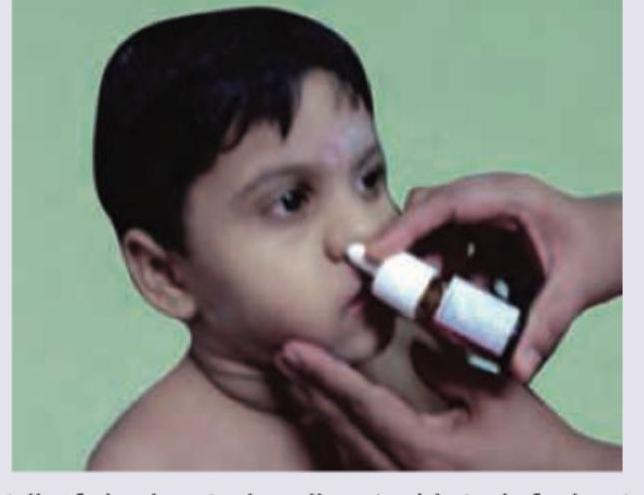
Explanation: ***Point to inner canthus of eye toward the septum of nose*** - Directing the spray towards the **inner canthus of the eye** (which points towards the nasal septum) should be **avoided**. - This incorrect technique leads to the steroid being sprayed directly onto the **nasal septum**, increasing the risk of septal irritation, crusting, and epistaxis. - **Proper technique requires directing spray AWAY from the septum** towards the lateral nasal wall. *Nostril of device to be directed into inferior turbinate* - Correct administration of **intranasal steroids** involves aiming the spray towards the **lateral wall of the nasal cavity**, specifically targeting the inferior turbinate. - This technique maximizes drug deposition on the most reactive allergic mucosa while minimizing septal contact. *Use right hand for left nostril and vice versa* - The **cross-hand technique** is recommended to help direct the spray more effectively towards the lateral nasal wall and away from the septum. - This method naturally angles the spray bottle towards the turbinates rather than the septum. *Use optimally for 3 months to avoid local and systemic complications* - **Intranasal corticosteroids** are generally safe for **long-term use** (many months to years) for managing chronic allergic rhinitis. - Limiting use to only 3 months is unnecessary, though this statement about optimal duration is less critical than the technique errors.
Explanation: ***Koplik spots*** - **Koplik spots** are pathognomonic for **measles (rubeola)**, appearing as small, white spots on the buccal mucosa. - They are a viral exanthem symptom and have no association with **allergic rhinitis**. *Dennie-Morgan lines* - **Dennie-Morgan lines** refer to extra folds of skin beneath the lower eyelid, often associated with a genetic predisposition to **atopy** and recurrent allergic conjunctivitis. - While not exclusive to allergic rhinitis, their presence indicates a heightened allergic tendency. *Allergic shiners* - **Allergic shiners** are dark, shadowy areas under the eyes, resulting from venous congestion secondary to chronic nasal obstruction and inflammation in allergic rhinitis. - This is a common physical sign reflecting the impact of allergic processes on facial vasculature. *Allergic salute* - An **allergic salute** is a characteristic upward rub of the nose with the palm of the hand, often seen in children to relieve nasal itching and clear mucus. - This action can lead to a visible crease across the bridge of the nose, known as the "allergic crease."
Pathophysiology of Allergic Rhinitis
Practice Questions
Allergic Testing Methods
Practice Questions
Pharmacotherapy for Allergic Rhinitis
Practice Questions
Allergen Avoidance
Practice Questions
Subcutaneous Immunotherapy
Practice Questions
Sublingual Immunotherapy
Practice Questions
Non-allergic Rhinitis
Practice Questions
Complications of Immunotherapy
Practice Questions
Food Allergies and the Upper Aerodigestive Tract
Practice Questions
Anaphylaxis Management
Practice Questions
Angioedema
Practice Questions
Immune Deficiency and ENT Manifestations
Practice Questions
Get full access to all questions, explanations, and performance tracking.
Start For Free