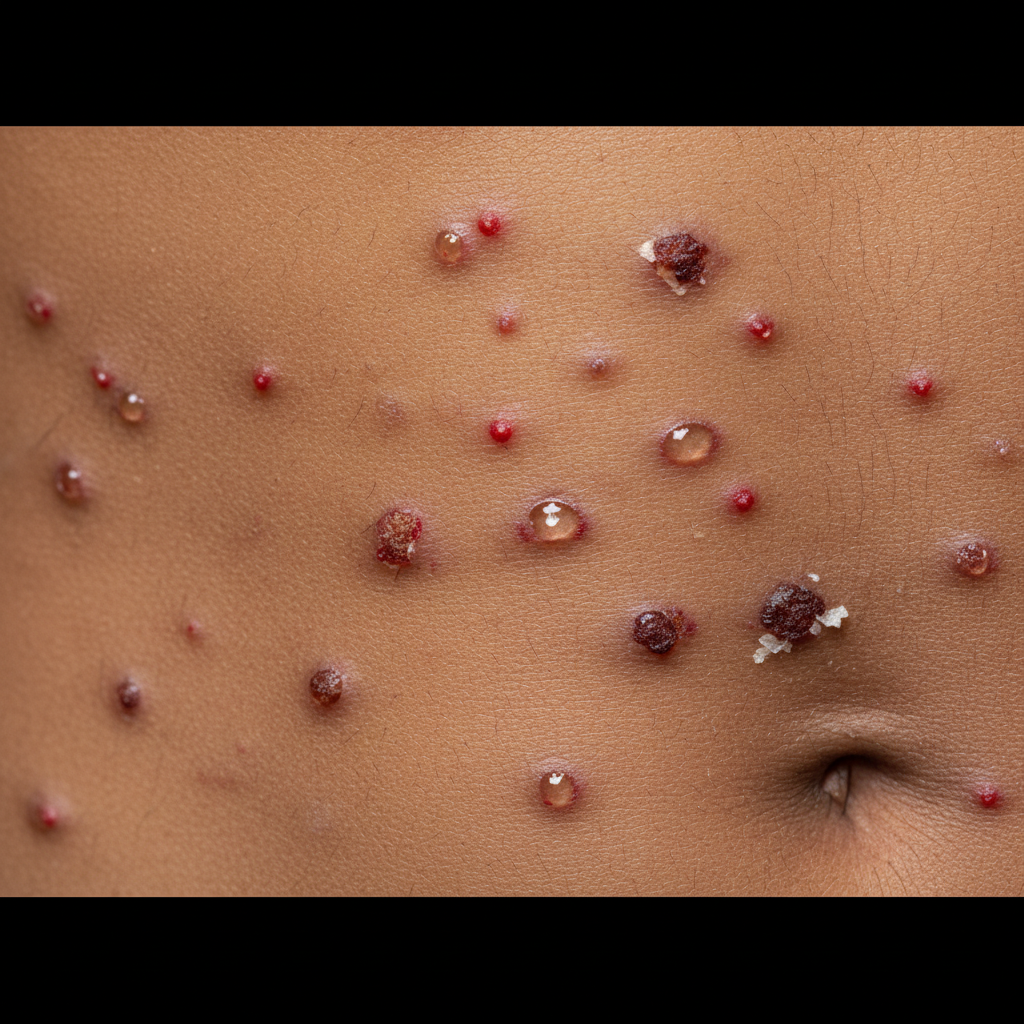
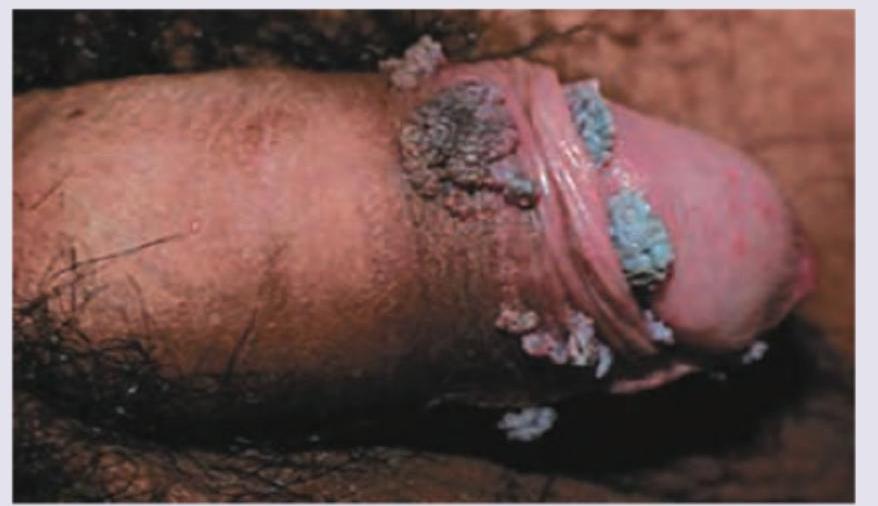
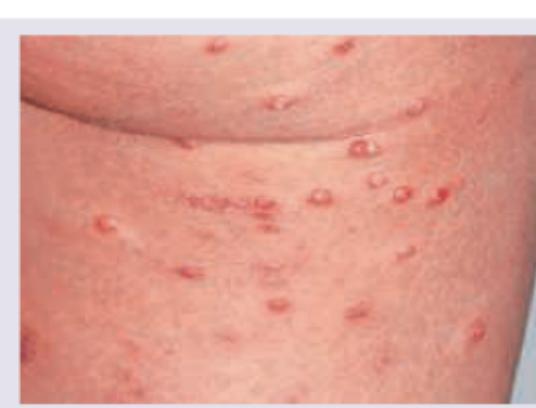
"Henderson-Patterson" bodies are seen in which of the following conditions?
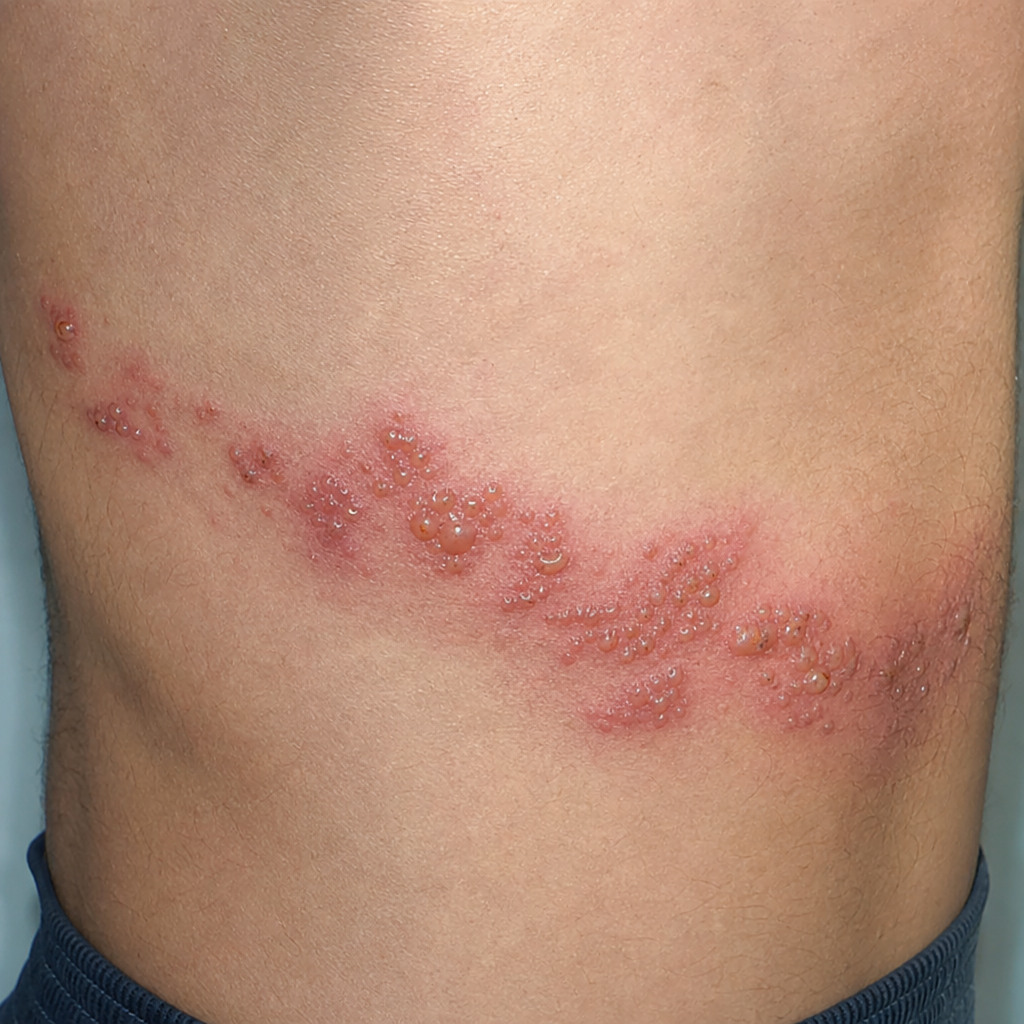
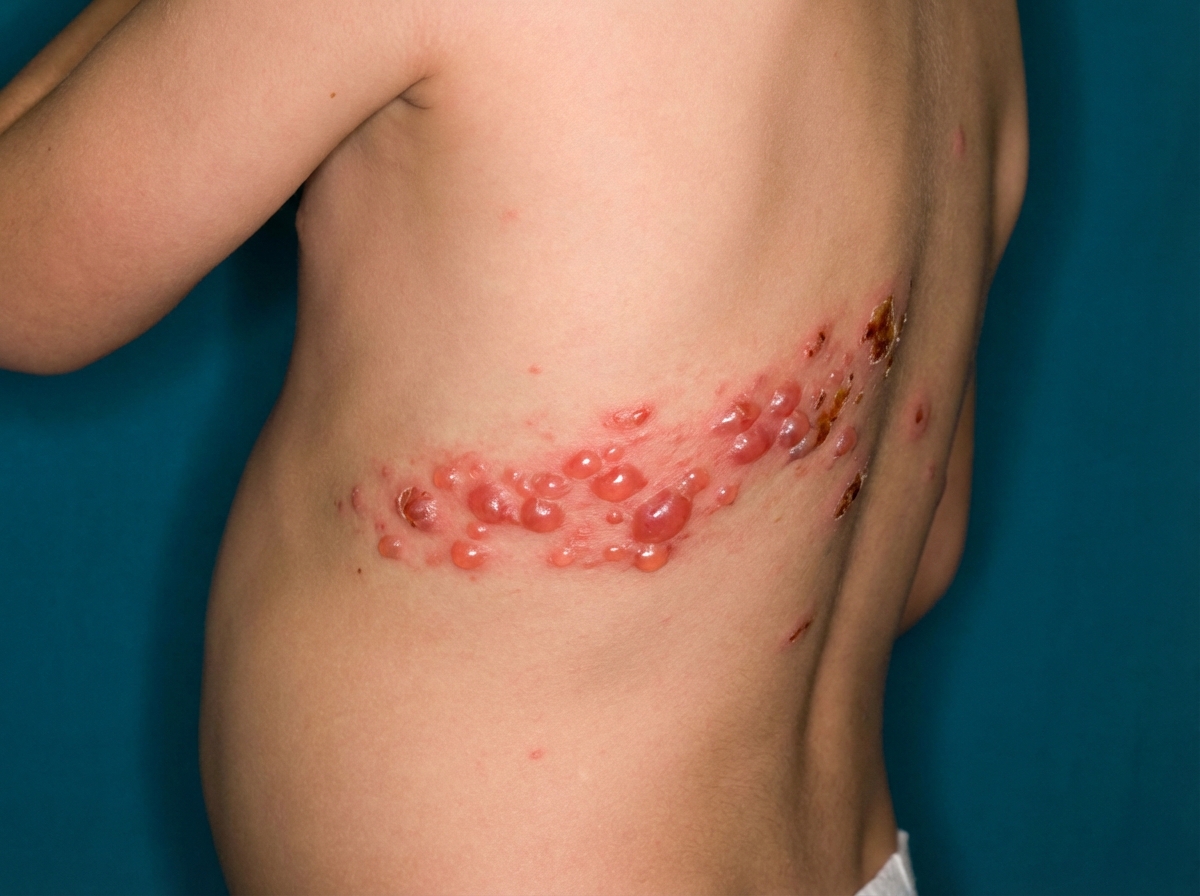
A young patient complains of shooting pain, paresthesia, and tenderness on one side of the palate. Unilateral vesicles appear in clusters. The patient gives a previous history of chickenpox. What is the most likely diagnosis?
A man presents to a dermatologist with a severe mucocutaneous rash involving most of his body, including his palms and soles. He reports a recent sexual encounter with a prostitute in Southeast Asia several months prior. Which of the following is the most likely causative agent of this rash?
Herpetiformis vesicles, which rupture and leave areas of superficial intraoral ulcers, are caused by:
Which of the following is most commonly associated with erythema multiforme?
The Tzanck test, which aids in the diagnosis of herpes simplex infection, is a search for:
Hutchison's syphilitic triad includes all except:
Human papilloma virus-8 infection is associated with:
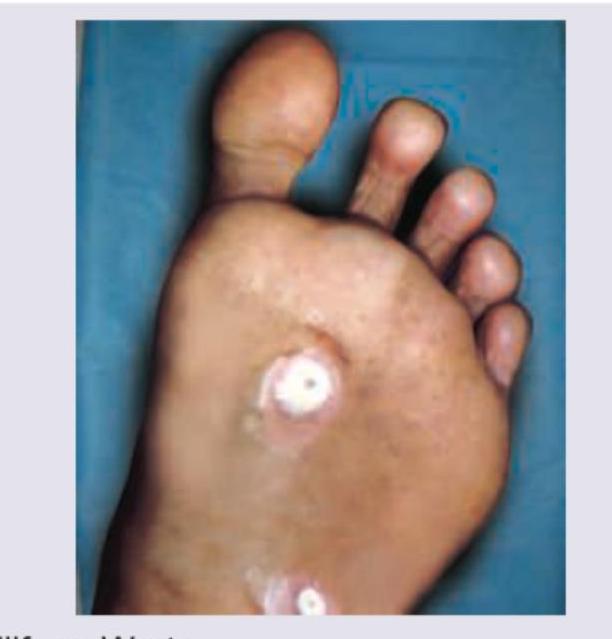
Which of the following is caused by HPV?
Which of the following statements about molluscum contagiosum is true?
Explanation: **Explanation:** **Molluscum contagiosum** is the correct answer. It is a common viral skin infection caused by the **Molluscum Contagiosum Virus (MCV)**, a member of the Poxviridae family. The hallmark histopathological feature of this condition is the presence of **Henderson-Patterson bodies** (also known as Molluscum bodies). These are large, eosinophilic, intracytoplasmic inclusion bodies found within the keratinocytes of the stratum spinosum and stratum granulosum. They contain replicating virus particles that displace the host cell nucleus to the periphery. **Analysis of Incorrect Options:** * **Smallpox (Variola virus):** Characterized by **Guarnieri bodies**, which are eosinophilic cytoplasmic inclusion bodies. * **Fowlpox:** Characterized by **Bollinger bodies**, which are large granular proteinaceous inclusion bodies found in the cytoplasm of infected epithelial cells. * **Rabies:** Characterized by **Negri bodies**, which are eosinophilic, sharply outlined inclusion bodies found specifically in the cytoplasm of certain nerve cells (pyramidal cells of the hippocampus and Purkinje cells of the cerebellum). **Clinical Pearls for NEET-PG:** * **Clinical Presentation:** Presents as firm, dome-shaped, pearly, **umbilicated papules**. * **Transmission:** Spread via direct skin-to-skin contact, fomites, or autoinoculation. In adults, it is often considered a Sexually Transmitted Infection (STI). * **HIV Association:** Giant molluscum or extensive facial lesions are often a marker of advanced HIV/AIDS (low CD4 count). * **Histology:** Shows a "cup-shaped" or "crateriform" epidermal invagination containing the Henderson-Patterson bodies.
Explanation: ### Explanation **Correct Option: A. Herpes zoster** The clinical presentation is a classic case of **Herpes zoster (Shingles)**. The key diagnostic features here are: 1. **Unilateral distribution:** Herpes zoster strictly follows a dermatome (in this case, the maxillary or mandibular branch of the Trigeminal nerve). 2. **Prodromal symptoms:** Shooting pain, paresthesia, and tenderness preceding the rash are hallmark signs of viral reactivation within a sensory ganglion. 3. **History of Chickenpox:** Herpes zoster is caused by the reactivation of the **Varicella-Zoster Virus (VZV)**, which remains latent in the dorsal root or cranial nerve ganglia after a primary chickenpox infection. **Why other options are incorrect:** * **B. Herpes simplex (HSV-1):** While it causes clusters of vesicles, it typically presents as recurrent cold sores (labialis) or gingivostomatitis. It is usually not strictly unilateral and lacks the intense dermatomal prodromal pain seen in zoster. * **C. Herpangina:** Caused by the **Coxsackie A virus**, it presents with multiple small ulcers on the posterior pharynx and soft palate. It is typically bilateral, occurs in children, and is associated with high fever and sore throat, not dermatomal pain. * **D. Behçet's syndrome:** This is a multi-system inflammatory disorder characterized by **recurrent oral aphthous ulcers**, genital ulcers, and uveitis. The lesions are ulcers, not vesicles, and are not dermatomal. **High-Yield Clinical Pearls for NEET-PG:** * **Hutchinson’s Sign:** Vesicles on the tip of the nose indicating involvement of the nasociliary nerve; it predicts a high risk of ocular complications (Herpes Zoster Ophthalmicus). * **Ramsay Hunt Syndrome:** Involvement of the geniculate ganglion leading to facial palsy, ear pain, and vesicles in the external auditory canal. * **Tzanck Smear:** Shows **multinucleated giant cells** and Cowdry Type A intranuclear inclusion bodies (common to both HSV and VZV). * **Treatment:** Oral Acyclovir, Valacyclovir, or Famciclovir, ideally started within 72 hours of rash onset.
Explanation: The clinical presentation describes a classic case of **Secondary Syphilis**, caused by the spirochete ***Treponema pallidum***. ### **Explanation of the Correct Answer** Secondary syphilis typically manifests 2–10 weeks after the primary chancre heals. It is characterized by a generalized, non-pruritic, maculopapular rash. A hallmark feature for NEET-PG is the involvement of the **palms and soles**, which is rare in other viral exanthems. The history of a high-risk sexual encounter several months prior aligns with the incubation period and progression from primary to secondary syphilis. ### **Why Other Options are Incorrect** * **Herpes Simplex I & II (A & B):** These typically present with localized, painful vesicles on an erythematous base (cold sores or genital herpes). While they can cause disseminated disease in immunocompromised states, they do not present as a generalized mucocutaneous rash involving the palms and soles. * **HIV (C):** Acute Retroviral Syndrome can cause a morbilliform rash and fever, but it usually occurs 2–4 weeks after exposure and is transient. While HIV is a risk factor, the specific distribution (palms/soles) and timing point more specifically to syphilis. ### **High-Yield Clinical Pearls for NEET-PG** * **"The Great Mimicker":** Syphilis is known for its diverse presentations. * **Palmar/Plantar Rash Differential:** Syphilis, Rocky Mountain Spotted Fever, Hand-Foot-Mouth Disease, and Erythema Multiforme. * **Condyloma Lata:** Flat, moist, highly infectious lesions in intertriginous areas (Secondary Syphilis). * **Diagnosis:** Screening with non-treponemal tests (VDRL/RPR) and confirmation with treponemal tests (FTA-ABS/TPHA). * **Treatment:** Benzathine Penicillin G (2.4 million units IM) is the drug of choice.
Explanation: The clinical presentation described—herpetiform vesicles that rupture to leave superficial intraoral ulcers—is the hallmark of **Herpes Simplex Virus (HSV)** infection, specifically **Primary Herpetic Gingivostomatitis** (caused by HSV-1). ### Why "None of the above" is correct: The question describes the classic morphology of HSV-1. While the options list other viral infections, none of them perfectly match the specific description provided in the context of standard dermatological nomenclature for these lesions. ### Analysis of Incorrect Options: * **Varicella Zoster Virus (VZV):** Causes Chickenpox. While it presents with vesicles ("dewdrops on a rose petal"), they are primarily cutaneous and pleomorphic (different stages present simultaneously). Oral lesions are less common and not the primary feature. * **Herpes Zoster Virus (HZV):** This is the reactivation of VZV (Shingles). It presents as painful vesicles in a **unilateral, dermatomal distribution**. While it can involve the trigeminal nerve and cause oral ulcers, they would be strictly confined to one side of the midline. * **Coxsackie Virus:** Causes **Hand-Foot-Mouth Disease (HFMD)** and **Herpangina**. In Herpangina, ulcers are typically localized to the posterior pharynx (soft palate/tonsils), whereas HSV involves the anterior oral cavity and gingiva. ### NEET-PG High-Yield Pearls: * **HSV-1 Diagnosis:** Look for **Tzanck smear** findings showing **Multinucleated Giant Cells** and Cowdry Type A inclusion bodies. * **Herpetic Whitlow:** HSV infection of the finger, often seen in healthcare workers. * **Eczema Herpeticum:** A medical emergency where HSV superinfects atopic dermatitis. * **Distinction:** HSV causes **Gingivostomatitis** (involves gums), while Coxsackie (Herpangina) does **not** involve the gingiva.
Explanation: **Explanation:** **Erythema Multiforme (EM)** is a Type IV hypersensitivity reaction characterized by the sudden onset of symmetric, "targetoid" (iris) lesions. **Why Herpes Simplex Virus (HSV) is correct:** HSV is the **most common trigger** for Erythema Multiforme, accounting for up to 90% of cases (specifically EM Minor). The pathogenesis involves the transport of HSV DNA fragments by macrophages to keratinocytes, which triggers a T-cell mediated immune response. Both HSV-1 (oral) and HSV-2 (genital) can precede the eruption by 1–2 weeks. **Why other options are incorrect:** * **Staphylococcus:** While *Staphylococcal Scalded Skin Syndrome (SSSS)* and *Toxic Shock Syndrome* are dermatological emergencies, Staph is not a primary trigger for EM. * **Tuberculosis:** Though TB can cause various skin manifestations (like Lupus Vulgaris or Erythema Nodosum), it is a very rare cause of EM. * **Epstein-Barr Virus (EBV):** EBV can cause EM, but it is significantly less common than HSV. EBV is more typically associated with infectious mononucleosis and oral hairy leukoplakia. **High-Yield Clinical Pearls for NEET-PG:** * **Target Lesion:** Consists of three zones—a central dusky/blistered area, a pale edematous ring, and an outer erythematous halo. * **EM Minor vs. Major:** EM Minor has minimal mucosal involvement; **EM Major** involves at least two mucosal surfaces (oral, ocular, or genital). * **Drug Triggers:** While viruses (HSV) are the most common cause of EM, drugs (Sulfonamides, NSAIDs, Anticonvulsants) are the most common cause of Stevens-Johnson Syndrome (SJS). * **Recurrence:** Recurrent EM is almost always associated with subclinical or overt HSV reactivation.
Explanation: ### Explanation The **Tzanck test** is a rapid bedside diagnostic technique used primarily for diagnosing infections caused by the **Herpesviridae** family, including Herpes Simplex Virus (HSV-1, HSV-2) and Varicella-Zoster Virus (VZV). **1. Why Option D is Correct:** The hallmark of a positive Tzanck smear in herpetic infections is the presence of **multinucleated giant cells** (specifically, **Tzanck cells**). These are formed due to the virus-induced fusion of infected keratinocytes (syncytia formation). Under the microscope (stained with Giemsa or Wright stain), these cells appear significantly larger than normal keratinocytes, containing multiple nuclei that often show "molding" (nuclei fitting together like a jigsaw puzzle). **2. Why Other Options are Incorrect:** * **Option A:** Intracytoplasmic inclusion bodies (e.g., Guarnieri bodies in Smallpox or Henderson-Patterson bodies in Molluscum Contagiosum) are not the primary finding in a Tzanck smear for Herpes. Herpes viruses produce **intranuclear** inclusions (Cowdry Type A). * **Option B:** Koilocytic cells (keratinocytes with perinuclear halos and wrinkled nuclei) are the pathognomonic feature of **Human Papillomavirus (HPV)** infections, such as viral warts. * **Option C:** While virus shedding occurs, the Tzanck test is a **cytological** examination of the cell morphology from the base of the vesicle, not a viral culture or a quantitative measure of shedding. **3. NEET-PG High-Yield Pearls:** * **Procedure:** Scrape the base of a freshly ruptured vesicle; stain with Giemsa, Wright, or Leishman stain. * **Key Findings:** Multinucleated giant cells, acantholytic cells, and **Cowdry Type A** intranuclear inclusion bodies (though giant cells are the most recognizable feature). * **Limitation:** The Tzanck test **cannot distinguish** between HSV-1, HSV-2, and VZV. For differentiation, PCR or Direct Fluorescent Antibody (DFA) testing is required. * **Other uses:** Tzanck smear is also used in **Pemphigus Vulgaris** (shows acantholytic cells/Tzanck cells) and **Toxic Epidermal Necrolysis (TEN)**.
Explanation: **Explanation:** **Hutchinson’s Triad** is a classic clinical marker for **Late Congenital Syphilis** (manifesting after 2 years of age). The triad consists of three specific findings: 1. **Hutchinson’s Teeth:** Peg-shaped, widely spaced, notched permanent upper central incisors. 2. **Interstitial Keratitis:** Inflammation of the corneal stroma leading to corneal scarring and potential blindness (usually occurs between ages 5–15). 3. **Eighth Nerve Deafness:** Sensorineural hearing loss caused by labyrinthitis or auditory nerve lesions. **Why Option D is the Correct Answer:** While cardiovascular anomalies (like aortitis or aortic regurgitation) are classic features of **Tertiary Syphilis** in adults, they are **not** part of Hutchinson’s Triad. In congenital syphilis, cardiovascular involvement is actually quite rare compared to skeletal and neurological manifestations. **Analysis of Incorrect Options:** * **Option A:** Correct. The triad is a pathognomonic sign of late-stage congenital syphilis. * **Option B:** Correct. Notched incisors are a hallmark dental deformity of the triad. * **Option C:** Correct. Nerve deafness (CN VIII) is the vestibulocochlear component of the triad. **High-Yield Clinical Pearls for NEET-PG:** * **Mulberry Molars:** Another dental sign of congenital syphilis involving the first molars (multiple poorly developed cusps). * **Higoumenakis Sign:** Thickening of the medial end of the clavicle. * **Clutton’s Joints:** Symmetrical painless swelling of the knees. * **Saber Shins:** Anterior bowing of the tibia. * **Rhagades:** Linear scars at the angles of the mouth/nose resulting from healed early-stage syphilids.
Explanation: **Explanation:** Human Papillomavirus (HPV) is a DNA virus with over 200 genotypes, each showing tropism for specific anatomical sites and epithelial types. **HPV-8** belongs to the Beta-genus of HPVs. While it is most notoriously associated with **Epidermodysplasia Verruciformis (EV)**—a rare genetic disorder predisposing patients to widespread HPV infection and squamous cell carcinomas—it is also a recognized causative agent for **Flat warts (Verruca plana)**. Flat warts are typically caused by HPV types 3 and 10, but types 27, 28, 38, and **8** are also implicated. **Analysis of Options:** * **A. Anogenital warts (Condyloma acuminata):** These are primarily caused by "low-risk" mucosal HPV types **6 and 11**. * **B. Kaposi sarcoma:** This is caused by **Human Herpesvirus 8 (HHV-8)**, not HPV-8. This is a common point of confusion in exams. * **C. Cervical carcinoma in situ:** This is associated with "high-risk" mucosal HPV types, most commonly **16 and 18**, which produce E6 and E7 oncoproteins that inhibit p53 and Rb tumor suppressor proteins respectively. **High-Yield Clinical Pearls for NEET-PG:** * **Common Warts (Verruca vulgaris):** HPV 1, 2, 4. * **Plantar Warts (Myrmecia):** HPV 1. * **Epidermodysplasia Verruciformis (EV):** Associated with "EV-specific" types **5 and 8**. These types carry a high risk of malignant transformation into Squamous Cell Carcinoma (SCC) in sun-exposed areas. * **Butcher’s Warts:** HPV 7. * **Heck’s Disease (Focal Epithelial Hyperplasia):** HPV 13 and 32.
Explanation: **Explanation:** **Condyloma acuminata**, also known as anogenital warts, is caused by the **Human Papillomavirus (HPV)**, most commonly genotypes **6 and 11** (low-risk types). These viruses infect the basal keratinocytes of the skin and mucosal surfaces, leading to epidermal hyperplasia and the characteristic "cauliflower-like" growths. **Analysis of Incorrect Options:** * **Condyloma lata:** These are flat, moist, highly infectious papules found in intertriginous areas. They are a hallmark of **Secondary Syphilis**, caused by the spirochete *Treponema pallidum*. * **Bubo:** This refers to the painful inflammatory swelling of lymph nodes (usually inguinal). It is characteristic of **Lymphogranuloma Venereum (LGV)** caused by *Chlamydia trachomatis* (L1-L3) or **Chancroid** (*Haemophilus ducreyi*). * **Chancre:** This is a painless, indurated ulcer representing the primary lesion of **Primary Syphilis** (*Treponema pallidum*). **High-Yield Clinical Pearls for NEET-PG:** * **Histopathology:** The pathognomonic feature of HPV infection is **Koilocytosis** (keratinocytes with pyknotic nuclei and a clear perinuclear halo). * **Oncogenic Strains:** While HPV 6 and 11 cause warts, **HPV 16 and 18** are high-risk strains associated with cervical, anal, and vulvar malignancies. * **Treatment:** Options include topical Podophyllin, Imiquimod, or physical modalities like cryotherapy and CO2 laser. * **Acetowhitening:** Application of 3-5% acetic acid can help visualize subclinical HPV lesions (though it is non-specific).
Explanation: **Molluscum Contagiosum** is a common cutaneous viral infection caused by the **Molluscum Contagiosum Virus (MCV)**, a member of the **Poxviridae** family (specifically a double-stranded DNA virus). ### **Explanation of Options:** * **Option C (Viral Infection):** This is the fundamental etiology. The virus replicates within the cytoplasm of keratinocytes, leading to the characteristic clinical presentation of firm, pearly, **umbilicated papules**. * **Option B (Sexually Transmitted Disease):** While common in children via skin-to-skin contact or fomites, in **adults**, it is primarily considered an **STD** when lesions are found in the anogenital region. Its presence in adults should also prompt a screening for other STIs and potentially HIV. * **Option A (Treatment involves extirpation):** Although the condition is often self-limiting, active treatment is frequently required to prevent autoinoculation. **Extirpation** (physical removal of the central curd-like core using a curette or forceps) is a standard and effective mechanical treatment. Other options include cryotherapy and chemical cautery (e.g., KOH or phenol). ### **NEET-PG High-Yield Clinical Pearls:** 1. **Histopathology:** Look for **Henderson-Paterson bodies** (large, eosinophilic intracytoplasmic inclusion bodies) which displace the nucleus of keratinocytes. 2. **Morphology:** The pathognomonic feature is a **central umbilication** (a central pit). 3. **HIV Association:** In immunocompromised patients, lesions can be **giant** (>1 cm) and widely disseminated, often involving the face. 4. **Bazzin’s Sign:** This refers to the inflammatory halo that may appear around lesions when they are undergoing spontaneous regression.
Herpes Simplex Virus Infections
Practice Questions
Varicella-Zoster Virus Infections
Practice Questions
Human Papillomavirus Infections
Practice Questions
Molluscum Contagiosum
Practice Questions
Viral Exanthems
Practice Questions
Hand, Foot, and Mouth Disease
Practice Questions
Orf and Milker's Nodule
Practice Questions
Cytomegalovirus Cutaneous Manifestations
Practice Questions
Epstein-Barr Virus Manifestations
Practice Questions
Poxvirus Infections
Practice Questions
HIV-Related Dermatoses
Practice Questions
Viral Infections in Immunocompromised Hosts
Practice Questions
Get full access to all questions, explanations, and performance tracking.
Start For Free